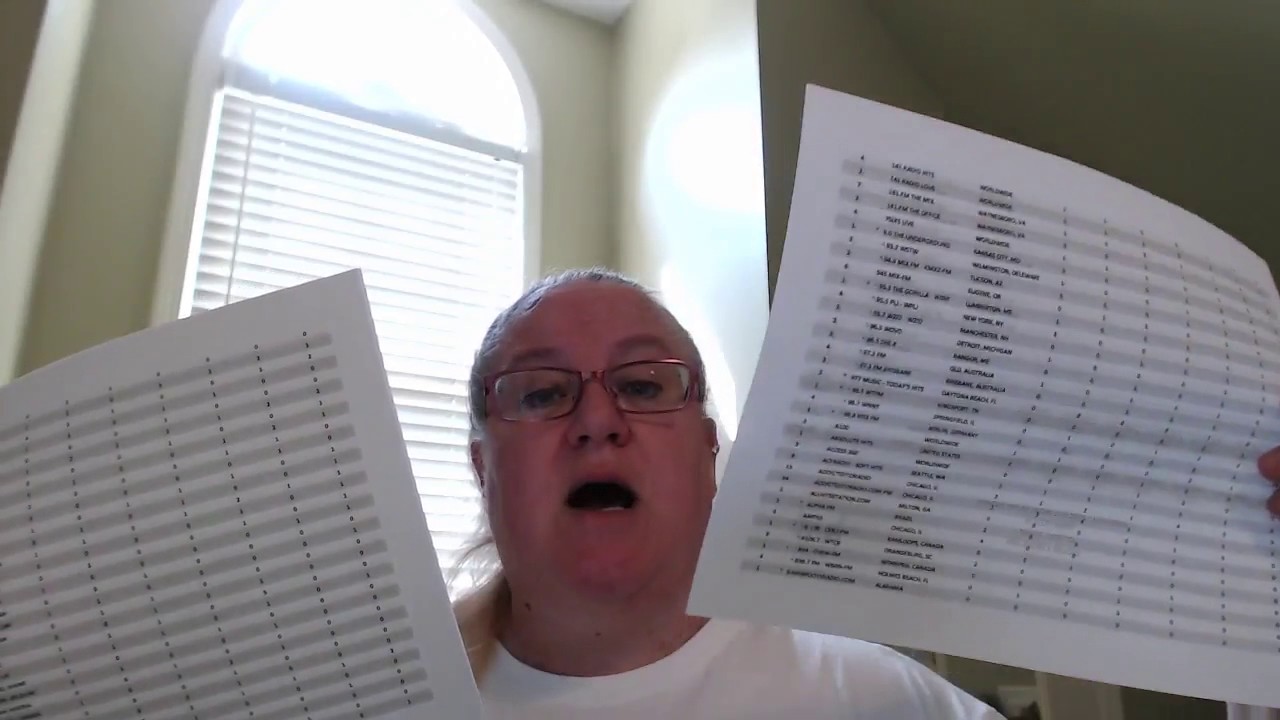
Wendy Day, founder of Rap Coalition, shows how Digital Radio Tracker helps independent artists plan radio campaigns without major label budgets. She walks through real spin data for Adele's "Hello" and a case study with rapper Trouble, whose five-state tour was built on college and internet radio instead of expensive FM pushes.
Chapters
Hi guys, Wendy Day here from Rap Coalition. I'm here to tell you how I use Digital Radio Tracker in order to help my clients, the rappers that I work with, build their buzz and their fan base. Um, but first of all, my name is Wendy Day. I run a not-for-profit organization called Rap Coalition. It's an artist advocacy organization And then I run a for-profit company called Power Moves, and Power Moves helps artists make money with their music. Basically, for artists that have investors, we help build their careers, set up their independent record labels, whatever they're trying to do in order to succeed in the music business. And, um, Digital Radio Tracker is a tool that we use in our office quite a bit. Um, it allows us to pull up different artists and songs, find out which songs are getting played at internet radio, which is important for the smaller and newer clients that we work with. Um, we use it when we are planning a tour to find out where the music is being played. Um, for us, it allows us to also go in when we start working with a new artist, I'll use it to pull different songs and different artists' music that sounds similar to the artist that I'm working with so that I can get a feel for what markets are strong for our competition. And then it gives me the ability to start marketing and promoting in those areas. My thinking is, if they like this music that sounds like the artist that we're working with, then they'll like our, our artist too. So Digital Radio Tracker is just a way for us to use realistic data in order to increase the reach for our clients, for artists. You can do this for yourself. You don't need somebody like me. You go to digitalradiotracker.com and you put in the artist name and the name of the song that you want to research. I pulled an example for you just to show you. I pulled Adele, and this is what Digital Radio Tracker looks like. And I pulled Adele, "Hello," which was a very big song. But this is for this past week, which is the week of July 15th, so the week ending July 15th. So it shows you exactly where she got played. She got 1,227 spins spins. It shows you the different markets where she got those spins. I printed it out front and back so that we could save a little bit of paper in doing this. But it shows us the markets. It, it shows you the markets that are new with that red dot, and then it shows you the markets that are terrestrial radio, which is like FM radio. They're those little blue triangle-looking things. I think they're called carrots. But it's like the little triangle bloop and it's in blue. So if I'm working an artist, I'm able to go in and see exactly where the song is playing, and I can set up a tour around where we're already getting a buzz. I can go in and work those areas on the streets and at clubs to get a feel, you know, if I were working Adele. I'm not working Adele, I just used her as an example. Um, but we used Digital Radio Tracker in building Trouble's career. Trouble is, um, a client that I've recently worked with. He's a rapper that just signed to Interscope, and by building his buzz on the street level and using every tool that we had available to us in an affordable way— because independent labels and independent artists don't have the same type of budget that, say, a Def Jam or an Interscope has. So we've got to use what is available to us, and we chose to build his career in a 5-state area and get him, get him popping regionally to the point where he had enough income from shows and from streaming that we could then put that money back into his career and build out further from Atlanta where we started. And Digital Radio Tracker was a really big part of that. It gave us the opportunity to see where he was spinning, how many times he was spinning, um, whether it was FM radio, whether it was internet radio. And we got a lot more internet radio spins than we got terrestrial radio spins, just because our budget was a little bit smaller than, um, an artist that has like a sizable radio budget. I mean, you can spend $200,000 taking a song to number 1 at FM radio, and we just didn't have that to spend. So we focused on college radio, internet radio, mix show, the affordable stuff that, you know, an up-and-coming artist can afford. But anyway, that's how we use Digital Radio Tracker. You can sign up for an account at digitalradiotracker.com and There's a newsletter that they're starting to do every month which has a lot of helpful information about the music industry, which is free. And then when you pull reports, you don't have to subscribe monthly to DRT, um, you pay per report. And it's— it reminds me a little bit of, you know, an, um, an app or a game where you buy tokens, and then as you need to pull reports, you cash in your tokens, and that way you can buy um, you know, as many as you want for a lower price than if you just purchase them consistently one at a time. But I swear by DRT. I think they're amazing. And check them out, see what you think. Thanks for watching.