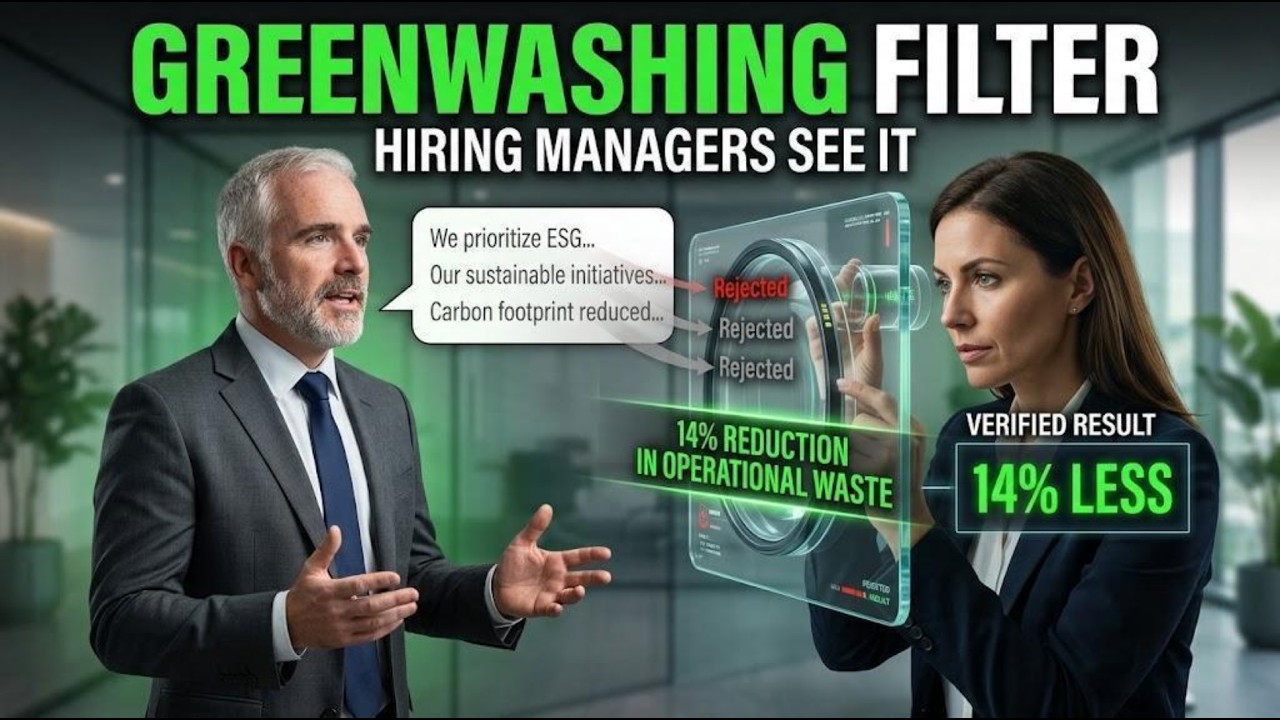
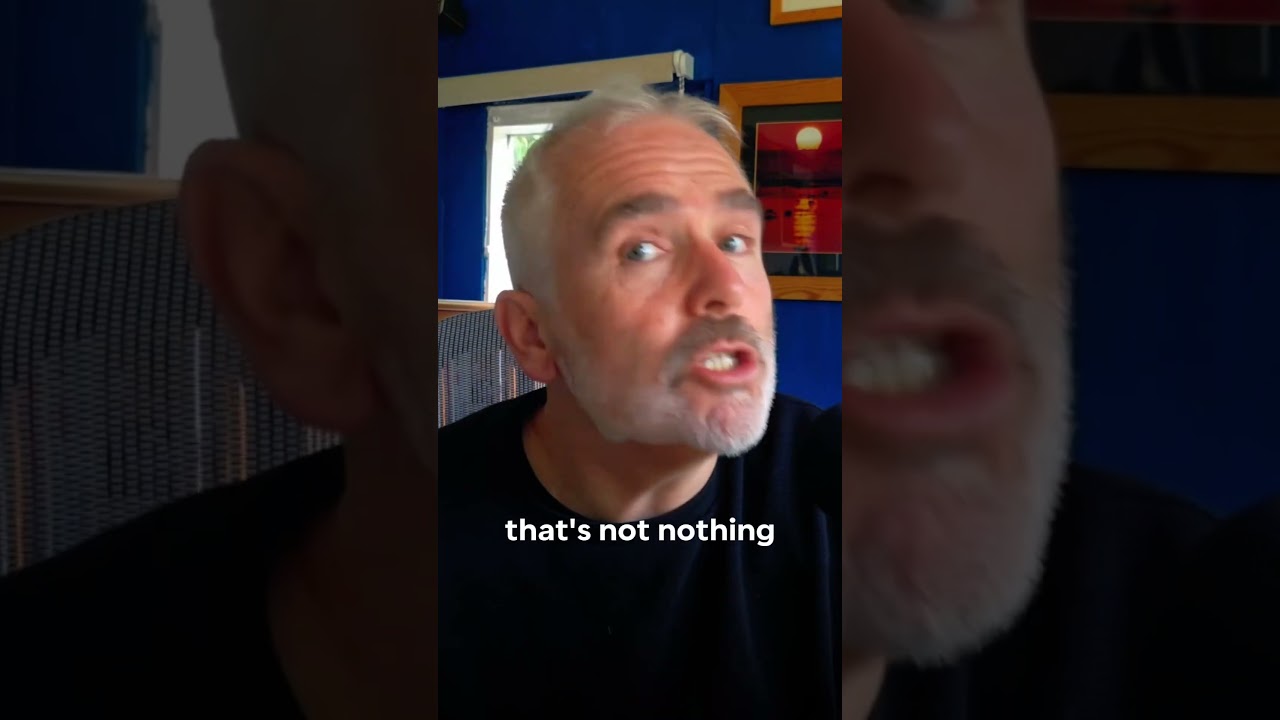
In this video, sustainability strategist Will Richardson explains why the sustainability question has become a standard competency interview item and how both candidates and hiring managers should handle it. He cites research showing that over 70% of multinational firms embed ESG/CSR competencies into selection processes to assess person‑organisation fit, and that applicants who provide concrete evidence of ESG alignment are rated higher and retain longer. Richardson argues that generic, value‑based answers are filtered out by a “green‑washing” lens, and recommends answering with the STAR method anchored to a measurable result (e.g., reducing material scrap by 14%). He advises candidates to surface a specific number from past work or, if none exists, to state the metric they would track. For interviewers, he suggests rephrasing the question to request operational examples that balance cost and environmental constraints, thereby shifting the focus from enthusiasm to demonstrable execution. He notes a broader industry shift toward “sustainability execution,” emphasizing regulatory realities such as CSRD compliance and the need to manage real budgets, deadlines, and supply‑chain constraints. The video concludes with a call to follow his Substack and podcast “Sustainability Solved.”
Chapters
Answering the sustainability question in a job interview. This question comes up in almost every interview now, and there's a reason for that beyond box ticking. Research in strategic HR management puts the figure at over 70% of multinational organisations now building CSR and ESG competencies directly into candidate selection, not as a values check, but to assess what's called person-organisation fit, whether how you actually work will match how the business needs to operate. So this isn't a soft question tacked onto the end of the interview anymore. Where do you see yourself in 5 years? It's being scored like any other competency question, which means it needs to be answered like one. Here's what most candidates lose. Research published in the Journal of Applied Psychology found that applicants who demonstrate genuine evidence alignment with an organisation's ESG priorities get rated higher on performance and go on to show higher retention after hire because the fit is real, not stated. And on the flip side, studies of hiring manager behaviour found something you'd expect, but that still catches people out. Generic, surface-level answers are negatively correlated with success. Hiring managers have effectively developed a greenwashing filter of their own. An I'm passionate about the environment and I recycle at work chips it instantly. So here's the actual fix, and it's the same one that works for any competency question: the STAR method. Situation. Task. Action. Result, but anchored to a real number, not a value. Compare these 2 answers to the same question. Low impact: I'm passionate about the environment and I recycle at work. High impact: I audited supply chain waste in my last role and reduced material scrap by 14% over 6 months. Same underlying interest in sustainability. One is a personal trait, the other is a proof point a hiring manager can actually evaluate against the job you're applying for. If you're prepping for this question, don't start by thinking about what you believe. Start by finding one number from your own work history, a cost you reduced, a process you made more efficient, a piece of waste, energy, or resource you cut, and tell that story properly with the situation, what you were tasked with, what you actually did, and the before and after figure attached. Doesn't need to be a headline-grabbing initiative. A 14% cut in material scrap over 6 months quietly delivered as part of an ordinary operational role scores higher than a passionate paragraph about caring for the planet because one is checkable and the other one isn't. If you genuinely don't have a number like that yet, that's fine too. Say plainly what you'd measure and how you'd go about it rather than reaching for a value statement to fill the gap. Specificity is what's being scored here, not enthusiasm. Now, if you're the one asking the question, the research points just as clearly as to what to fix on your side. Do you care about sustainability? Only ever produces the value statements because that's literally what you've asked for, and every candidate who who's read a single careers blog will have a version of that answer ready before they walk in. The better version, and the one that shows up in high-performing interview frameworks, is something like, can you give an example of how you balanced cost efficiency with environmental constraints in a past project? That single change moves the question from value signalling to operational evidence, and it does most of the filtering work for you before you've even finished asking it. Because a candidate without a real example simply won't have one to There's a broader shift behind all of this worth naming. Reports covered by Harvard Business Review and other institutional research groups point to a change in what 2025 and 2026 hiring frameworks actually prioritize. Less broad climate advocacy, more what they're calling sustainability execution— whether a candidate understands regulatory reality, things like CSRD compliance, and can actually manage operational resources against it. That's a meaningfully different competency to screen for than It's why everyone cares about the environment, and it's why the same generic answer that might have worked in an interview 5 years ago now reads as a gap rather than a strength. Interviewers aren't looking for someone who cares the loudest. They're looking for someone who's already had to make a sustainability constraint work inside a real budget, a real deadline, a real supply chain, under rules that are only getting stricter. So whichever side of the table you're on next time this comes up— candidate Bring the number, not the value statements. Hiring managers, ask for the evidence, not the enthusiasm. Both changes take about one sentence to make, and both are the difference between a question that tells you something and one that just sounds good in the room. Follow me, Will Richardson, for weekly sustainability intelligence that actually moves the needle. You can find me on Substack or on any podcast platform under Sustainability Solved. And please do reach out. I look forward to talking to you.