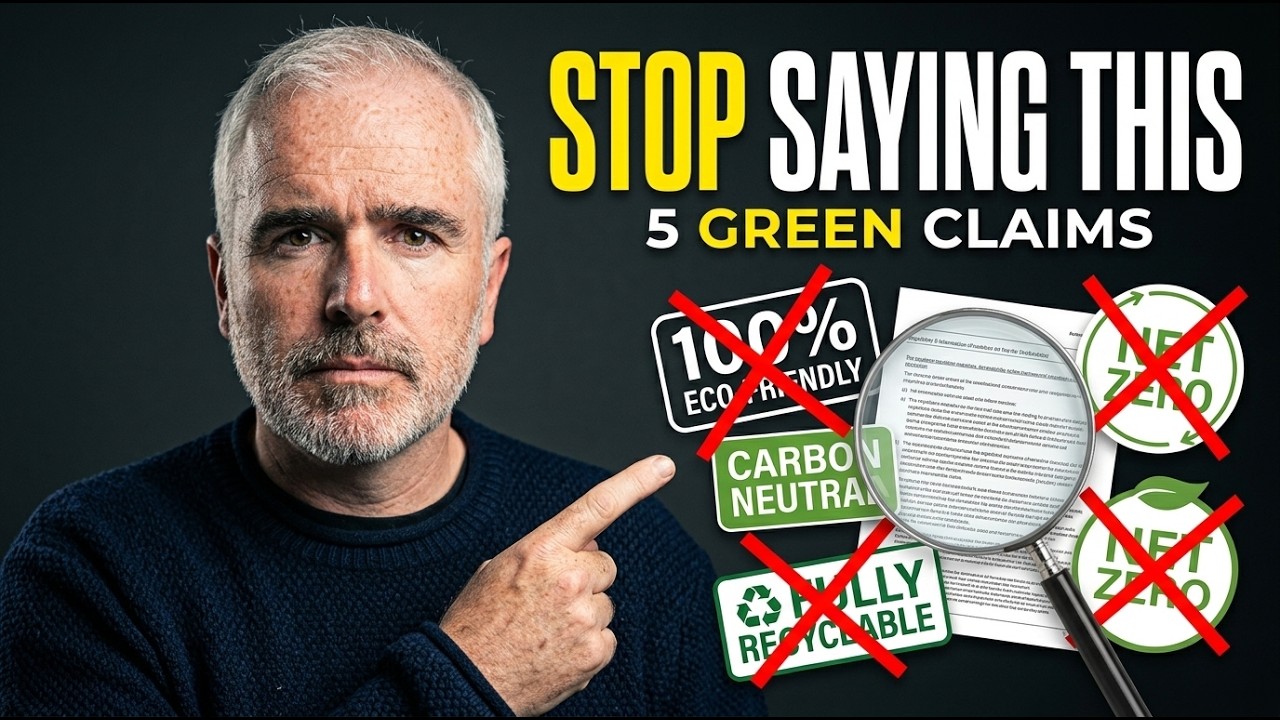
In this single‑speaker presentation, sustainability marketer Will Richardson outlines the five most common green‑washing claims that marketing teams use and shows how regulators in Europe and the United States are actively cracking down on each. He illustrates every lie with a high‑profile enforcement case – Volkswagen’s diesel‑emissions cheating, Asos and Boohoo’s self‑made eco‑badges, Deutsche Bank’s DW carbon‑neutral marketing, H&M’s “100% eco‑friendly” clothing line, and Shell’s net‑zero‑by‑2050 pledge – and explains why the legal risk stems from the gap between what is advertised and what the company’s operations actually deliver. For each claim he offers a concrete fix: disclose real recyclability rates and recycled content, use only recognized third‑party material certifications, publish Scope 1‑3 emissions and offset details, replace vague adjectives with quantified life‑cycle assessment results, and set interim, Science‑Based Targets‑validated milestones. He then provides a quick three‑question gut‑check for marketers to test any sustainability claim. The talk closes with a call to action, positioning the gap as both a regulatory danger and a competitive opportunity, and invites viewers to follow his @WillSuffsolved channel for ongoing sustainability intelligence.
Chapters
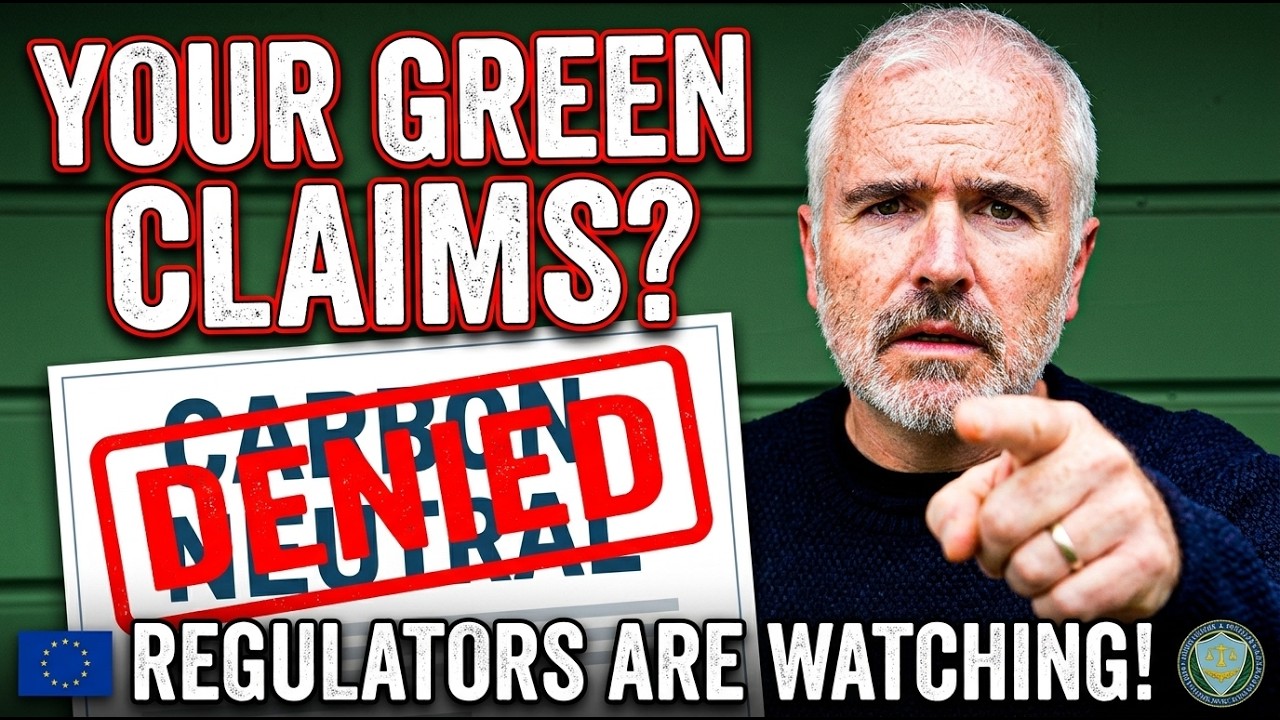
Your marketing team is probably saying at least one of these 5 things. Volkswagen paid over $30 billion in fines for exactly this kind of gap. Years of advertising its diesel engines as clean and low emission while quietly running software that only cut emissions during lab tests. On the road, those cars released up to 40 times the legal limit. That's the extreme end, the one that ends in criminal convictions. Most sustainability lies are smaller and quieter than that. Sitting in a website footer or a hang tag rather than a global ad campaign, and they're still getting caught. Peer-reviewed research on greenwashing keeps finding the same handful of patterns, and regulators on both sides of the Atlantic are now actively hunting for them rather than waiting for complaints. So here are the 5 they're watching hardest, counting down, with the fix for each and a real case behind it. Number 5: Our packaging is fully recyclable. It's the claim every consumer goods brand reaches for, and it's usually true in theory and false in practice. Because it depends entirely on where the customer lives and what their local facility actually accepts. Under the EU's Green Claims Directive, that gap between theory and practice is exactly what regulators are now testing for. The fix? Say where it's actually recyclable, what the real recovery rate is, and how much of the packaging is already made from recycled contents. Specific beats, reassuring every time. Number 4, we use certified sustainable materials. Asos and Boohoo both built their own in-house eco-labels, leaf icons, hang tags reading this like, ready for the future, and applied them to products containing as little as 20% recycled content. The UK's Competition and Markets Authority stepped in and forced both brands to scrap the self-made badges entirely, along with the thresholds behind any future material claims. The fix? Name the actual third-party certifier: FSC, Fairtrade, GOTS, GOTS, whichever applies, directly on the product itself. A badge you invented yourself isn't evidence. It's just design. Number 3, we are a carbon-neutral company. Deutsche Bank's asset management arm, DW, marketed itself as an industry leader in ESG investing while internally overstating how many of its funds had genuinely gone through rigorous environmental screening. It was raided by federal investigators, fined $19 million by the US Securities and Exchange Commission and paid a further €25 million to prosecutors in Frankfurt. The fix: disclose your Scope 1, 2, and 3 emissions alongside the details of any offsets you use, so people can see the number sitting behind the label, not just the label itself. Number 2: this product is 100% eco-friendly and green. H&M's Conscious Choice collection used exactly that kind of broad language across Thousands of garments, some of which, once investigated, turned out to contain more synthetic polyester than the brand's standard fast fashion lines. The Dutch Authority for Consumers and Markets made H&M pull the labelling from its platforms and commit funds to a settlement. The fix: swap the adjective for a number. The exact measurable impact verified by a proper life cycle assessment, not a marketing brief. And number 1, the biggest of the 5: we're targeting net zero by 2050. Shell ran that exact campaign for years, while its near-term capital stayed overwhelmingly concentrated in expanding oil and gas extraction, with no credible interim targets attached to the pledge. A Dutch court ordered Shell to cut its absolute emissions by 45% by 2030 against a 2019 baseline, and set a legal precedent while it was at it. A long-term target with nothing between now and then isn't a plan, it's a slogan. The fix: publish the interim milestones, ideally validated by the Science Based Targets initiative, so 2050 has actual steps attached to it, not just a destination. Notice what all 5 have in common: it's never the sustainability work itself that gets a company fined. It's the gap between the marketing, what the marketing says, and what the operations actually do. Volkswagen's engineers could build a genuinely cleaner engine. They just couldn't make it cheap enough, so the advertising closed the gap instead. Shell could publish an honest, harder story about its transition. It chose a cleaner sounding one instead. That gap is where the legal risk lives, and it's also where the competitive opportunity sits, because the businesses that close it honestly are the ones still standing when the regulator finishes the audits. So if you want a quick gut check on your own claims this week, ask 3 questions. Would this line survive a lifecycle assessment, not just a design review? Would the number behind it still hold up if a journalist rang and asked for the source? And is the timeline Attached to a near-term milestone, or is it just a date far enough away that nobody currently in the business will be held to it? If any answer is no, you've found your sick lie, and it's worth fixing before it finds you. This is a data problem wearing a creative brief, and it's one we can help you fix quietly on your own timeline before a regulator, a court, or a journalist does it for you on theirs. Follow me at @WillSuffsolved for weekly sustainability intelligence that actually moves the needle.