In this conversational discussion, the speakers advocate for an incremental, "marginal gains" strategy when introducing construction technology, arguing that small, daily improvements outperform large, disruptive IT overhauls. They stress the importance of preserving the familiar benefits of long‑standing paper‑based processes while gradually moving to digital folder structures, ensuring a low‑fuss, user‑friendly experience for site staff. A central theme is the creation of a single source of truth for project records that can be accessed in real time by multiple organisations across the supply chain. The speakers also highlight the need to configure and tag records so they align with contract terminology (e.g., NEC) and are usable for all parties, avoiding unnecessary data capture burdens. References to industry voices such as Robert Gerrard and Jason Lansini reinforce the message that technology should eliminate arguments over facts rather than create new complexities.
Chapters
And I think you've got to add genuine value and you've got to do it in a way that doesn't mean you have to throw everything out all at once. So make a first step and slowly grow into it. There's a great— I forgot what— I was watching a podcast, can't remember what it was now, but it was a simple chart. It must apply to everything. The progress you make by making small changes every day rather than waiting for something to be perfect.
Those marginal gains.
Marginal gains. Marginal gains.
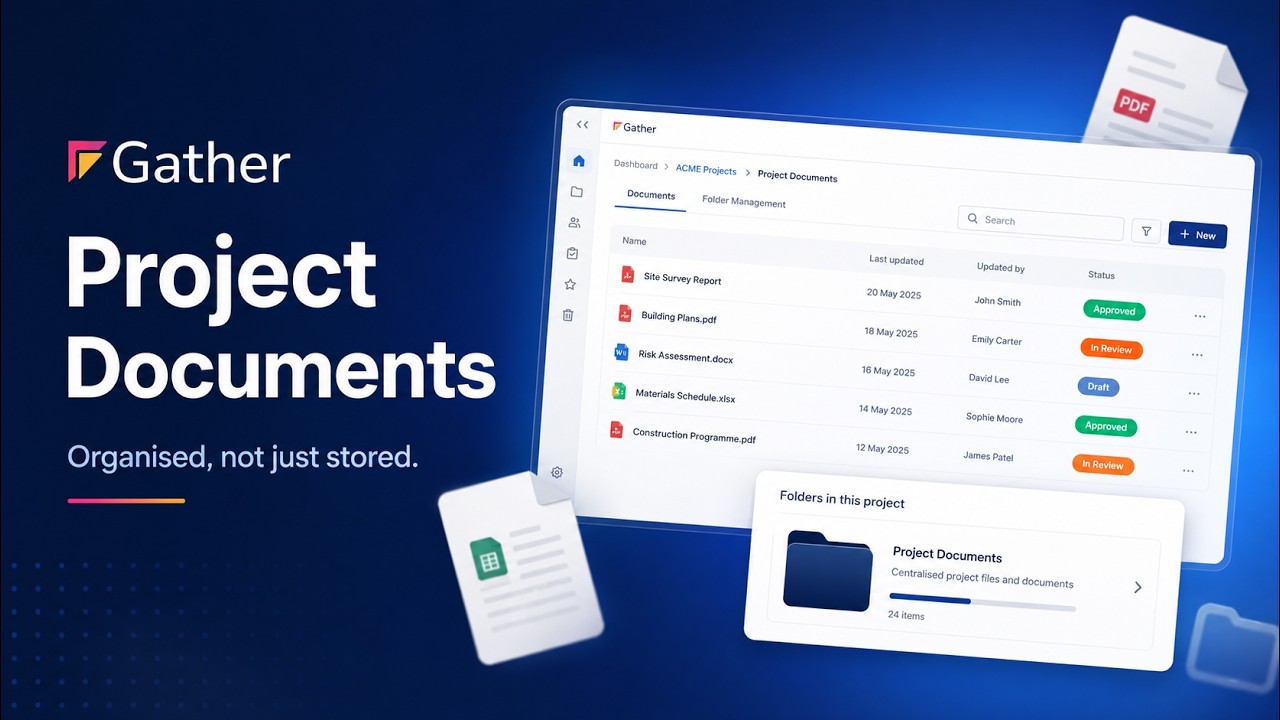
And I think we always talked about trying to preserve the benefits. There's benefits to paper systems. We've been managing projects 200 years this way. So everyone's processes are ingrained, and our way of understanding how we do work is ingrained in those paper processes. So I think with CMR and other good systems that I've seen that do similar work is that you're preserving the benefits of paper, you're creating digital folder structures, you— so that it's familiar to people. So you're not just harnessing the latest crazy bit of tech and saying, right, we're going to do it now with goggles on. And, you know, you're trying to create a world that feels familiar, but just move it slowly forward in the right direction in terms of then collaboratively having access to that data, having it in real time.
And keep it as fuss-less as possible. So unfussy, simple, easy to use. That's— all these things are crucial to if we're going to have a catalyst to changing this. But just to, I think, just to draw out the really big points here, I think what would be best practice Capturing those records as a single truth. Okay. I think making sure that if you've got 6 to 8, you know, one, two, won't be more than one minute, but 2 to 10 organizations in the supply chain. Let's try and have a single truth for the records. So I think that's really important.
Single source of truth.
Okay. Yeah. I think configuring those records so that they meet the expectation and they're usable in a valuable way to each of those parties. And also having present ways of presenting them or tagging them or flagging them against the different events and works activities again speaks to that second point. And thirdly, configuring them in a way that actually talks to the records and how they're used. So, you know, let's not call it labour plant material if we're using an NEC contract.
No, we need to look at that.
It's good feedback, isn't it? Because traditionally as a QS, I call it labour plant materials, but that's not what the contract says.
I know what you mean.
Yeah, but that's not what it says. And when we were preparing for this, I learned a few things about equipment and plant and how it's different. But yeah, we need to capture one source of the truth. We need to make sure it's in a usable format. A, we're capturing everything for everyone and not leaving out something that would be useful for another party. And then we are making it so it lines up with our contract.
I mean, the quote that your colleague Robert Gerrard says is we shouldn't be arguing about facts. Yes. And we'll steal that from him. We keep repeating it back to people because we're, yeah, in this day and age with the technology available to us, Yeah, we shouldn't be arguing about facts. That should be a simple part of the process.
Yeah.
I think what we're guilty of in construction technology as a whole, and I was speaking to Jason Lansini, who's the CEO of Aefex recently, and he was saying construction industry is guilty for making the person on site responsible for everything. We put so much pressure on that individual to capture all this information when really we want them to be delivering. So let's try and make it easy to capture those records and not this onerous task and, and not just think about What's best for someone who just needs a fancy chart or dashboard? And let's think about how we capture that data.