In this panel discussion, William Doyle (Speaker A) explains why he founded Gather (formerly Rail Diary) after growing frustrated with the chaos of paper records—lever‑arch files, triplicate pads, and scattered documents that were unreadable and often discarded. He argues that true digitisation is not merely scanning or moving spreadsheets onto tablets; it requires structured, field‑friendly workflows that let site staff capture data correctly in adverse conditions. Speakers B and C echo the persistence of legacy practices, noting that many crews still wrestle with piles of allocation sheets and ad‑hoc photo‑captures of handwritten notes. They stress the need for a simple, non‑disruptive digital solution that aligns with existing compliance requirements and the reduced workforce pressures of modern construction. The conversation highlights the cultural resistance to change, the importance of designing intuitive digital interfaces, and the broader business impact of efficient, accurate site records for payments and project communication.
Chapters
I set up Gather, formerly Rail Diary, because of a personal pain. I was sick and tired of dealing with horrible paper records that were done on triplicate pads. I couldn't read them. They weren't available when I needed that information. They were everywhere. I famously tell a story that records were in dusty lever arch files. They were stuffed down the front of people's vans. They're even in a skip because we closed down the project office and someone didn't think they were important anymore. So Records are important. We all get that. We've just described why they're important for payment, for conversation events, and a whole host of other reasons. But what do we believe as kind of people within this industry is best practice? What should we view that as?
Should we just reflect a bit more on what's actually happening or we understand to be happening before we move on to that? Because I think you've touched on one area of it. But I mean, I started on site nearly 25 years ago, and I think that most of the practices happening now are identical, almost identical to then. And, you know, we've got firsthand anecdotal evidence, or we've heard this evidence of people having bin bags of allocation sheets from suppliers under their desk that they're then having to wade through and transpose into a spreadsheet.
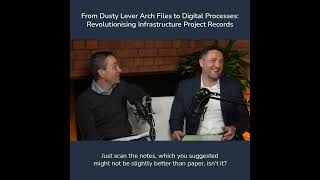
I think you're right. And I think it's easy to mistake digitization as being putting it in a spreadsheet. It reminds me, you used to criticize me. I used to— Nick said, you really need to digitize your note-taking in meetings. So I would write my minutes in a pad and then take a digital picture of it.
Just scan the notes. Which you suggest is slightly better than paper, isn't it?
You've got to do it in the right way, haven't you? So when I started Rail Diary as it was, and I met Paul, who's our CTO and ran a digital agency called Gather Digital at the time, the first thing I learned was the best way to enter data is not in a table. That's not how you enter data. That's how you interpret it or read it. But when you're asking someone to capture data on site, it's not just about going, take this fancy spreadsheet that QS has built and put it on an iPad or put a tablet. It's about giving it structured workflow, making it easy for that person in orange in the pouring rain to capture that data correctly. So yeah, the digitisation is not just making it electronic, to use your example.
It's got to be digital, but also—
sorry, I was only going to say that we need to be very careful about throwing stones and preaching about what's not happening, you know, saying that things are done this way and they have been for so many years. But part of the reason for that is that we do need to do what you're saying and make it really simple for people to then bring into their day job a process which is digitized, which does all the things that we want it to do, but, but it's simple. It's not disrupting what they're doing. It fits with the things that they've got to comply with, and we're not making their lives more difficult because we, we've got less people now probably trying to deliver more construction work than we did 25 years ago, and we're asking more of them all the time.
You're right, and the catalyst for change isn't just having a good digital solution, right?
That, that That's great.
That's a required, that's a requirement. But actually you've got to unstick the current practice in a less painful way. So, you know, I think sometimes when you're rolling out a new IT product, you think, oh, well, let's add up the training costs. Let's add up the, you know, the learning of that new system and its capital outlay or whatever. That's part of it. But there's a big bit of mobilization of actually demobilizing what's currently being done. And I think if you can do that in a way that doesn't, isn't overly disruptive, isn't too painful, and actually puts the delivery of the project and the customers at the end of that in front of mind, then you've got more of a roadmap to introducing digital.