As A Mowing Business Owner, I Haven’t Mowed a Lawn in Years

In this solo talk, lawn‑care entrepreneur Will Kelly recounts how, after scaling his mowing business to about $800,000 in revenue with a small crew, he realized that his habit of personally handling field work was holding the company back. He describes the limiting mindsets he held—"no one cares as much as me" and "I must do the work myself"—and how they created weak systems, poor training, and a lack of accountability. The turning point came when he stopped mowing, built robust processes, delegated authority, and focused on developing leaders. Kelly emphasizes extreme ownership, emotional control, and resilience as core leadership traits, and he ties his growth to personal faith and a holistic "balance wheel" that tracks financial, physical, mental, spiritual, and relational health. By the end of the video his business has grown to $1.5 million in revenue with a 20‑person team and 650+ weekly customers, operating without his direct field involvement. He urges other owners to reflect on their own bottlenecks, adopt systematic leadership, and prioritize people over profit.
Chapters
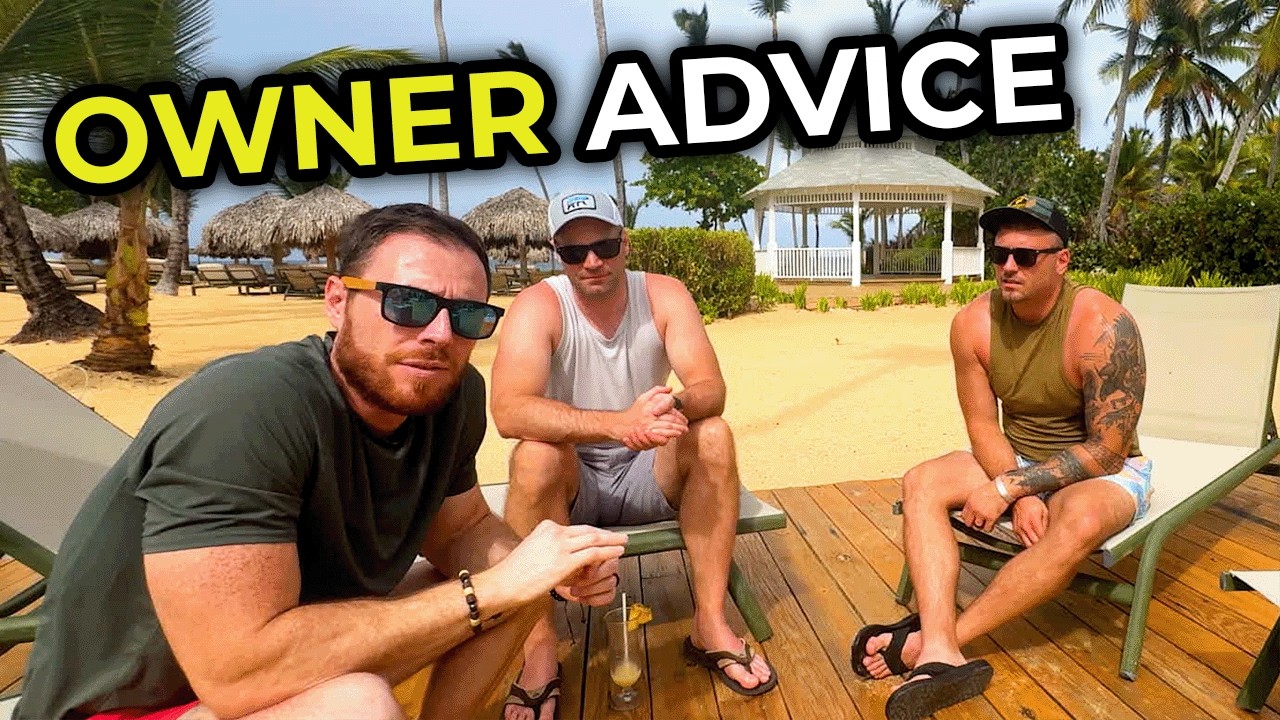
I haven't mowed a customer's lawn in 8 years. But when we were approaching $800,000 a year, I was still jumping back into the routes anytime somebody called off or something went wrong. I thought that's what being a good leader did. Looking back, I was actually holding the business back. The business didn't need me to mow better or more. It needed me to become a better leader. In the beginning, guys, when I first started, what I believed were these things. And they served me improperly. Number 1, nobody will care as much as me. Number 2, nobody can do the job better than me. Working harder fixes everything. A good leader should be out in front doing the work. Those beliefs sounded like leadership, but they kept me trapped. When you're just getting started and maybe you got 5 lawns, 10 lawns, or maybe you're looking at starting a lawn business today, it doesn't matter. A lot of those mindsets are normal. And I believe in the beginning, yes, you should be out there doing the work to showcase what it should look like for your team. But there comes a point in your career, that same mindset that got you to where you're at today is going to be the same mindset that stops you from getting to that next level. So let me share with you the breaking point that I had. So right at about $800,000 in revenue, this is about the 3rd or 4th year in business. We had roughly about 6 to 8 team members. If somebody called off, guess what I'm doing? I'm going to go out, And do their route. If something went wrong, I fixed it myself. If a piece of broken equipment went down, I would take it over to the shop. You see, we lacked systems and training and accountability. When people were late or people called out, I would give an enormous amount of grace to them. I'd say, ah, you know, because I don't personally, guys, I don't like confrontation. And so I don't want to have a conversation with someone. Someone shows up 2 minutes late. And say, hey man, what happened? Right? Like most people would be like, ah man, Will, you got that military mindset. You're too much on that. You know, we're dealing with civilians. And that's not true. That's not what a good leader does. They don't let the small things slide. If you give your team an inch, I promise you they're going to take a mile. So don't give them an inch. And I needed to learn that over and over and over again until it finally clicked. And if you're like me, I need to be told multiple times to get it in my brain. You see, I was not the leader that I needed to be. The stress followed me home into my marriage, into my relationships. I almost quit multiple times. I developed arthritis in my feet from putting so many miles on them when people would call off and I would have to pick up the slack. The business was getting bigger, but my life wasn't getting better. And so I realized something, that me going out in the field mowing is actually the thing that keeps holding us back. Not just myself, not just the business, but everybody in the organization. Every time I rescued and went out in the field operations, nothing underneath me improved. Training stayed weak, systems stayed weak, accountability stayed weak. Leaders underneath me didn't grow. Fixing today's problems myself guaranteed that I would face it again tomorrow. So what did getting out of the field actually like require? So how do you— how did I get from $800,000? Like, how do we double that and become the leader we're supposed to be? And maybe you're not at $800,000, You know, maybe you're at $20,000 or $100,000 or $250,000. If your goal is to double, you have to realize that you that I'm talking to right now that's watching this are the cap. Your mindset, your approach, the way that you're viewing your business through the lens, it's not going to get you to the next level. How did we get to that next level? We needed to build systems in the business. We needed to train people properly. We needed to hold people accountable. I needed to trust the team. I needed to stop grabbing the work back when somebody fails or makes a mistake. I had to learn patience. I had to learn emotional control, become more resilient, become an actual leader. I needed to build an environment where people can succeed without me and not be the bottleneck. So how did I change that? How did I build these systems? How did I change the lens that I'm looking at about myself and the business and the team? How did I change that? A lot of it is mindset, being resilient when most people would quit. This is the exact reason why you go another day, you go another week, or you go another month. Knowledge. One of our core values is constant improvement. If you aren't growing and learning, I believe you're slowly dying. Learning new skills. Understanding that failure is not failure unless you continue to make the same mistake. You're required to fail. You're required to make mistakes so you can learn from them and build systems around it and build implementation and training around it. Being emotionally aware. What are your triggers? I I had some. When I would get really mad or frustrated, I would just speak whatever's on my mind because I'm human and I'm frustrated and I'm angry. But that's the same type of leadership that's going to hold you back from getting to the next level. You know, when you look at the President of the United States, which this might be a bad example because we're talking about Donald Trump here, regardless of what side you're on, doesn't matter. You don't see the President coming out and getting all flustered or being angry and yelling at people on, you know, the podium and this and that, right? Or losing their cool, losing their control of their emotions. He's the leader of the United States. People are looking up to him regardless of who's the president. The president has to have an immense emotional control because if you as the leader in your business are freaking out and showing your frustrations and being disrespectful to people at times because you're letting your anger flow out, you're going to tarnish those relationships. People are not going to want to follow you. But if you're the coolest level-headed dude in there, When the whole frickin building's on fire and you have 3 1-stars that came in and you've got an employee that just quit on you and turned in his shirts and you got one of your trucks that just got into an accident today, but you're levelheaded and you say, you know what, it's a rough day today, but we're going to get through it. We're going to learn from this. We're going to build some systems around this. We're going to understand why is this team member quitting? Why are we getting these 1-star reviews? How could we have avoided that accident in the field, in the truck? That is the type of leader that you need to become in order to get to the next level. My faith grew significantly. My faith helped me become a much more stable leader. There's a really good book called Extreme Ownership by Jocko Willink. Highly recommend it for anybody that hasn't listened to that or read the book. And it talks about how you are basically in full control of everything that's happening around you. And the good news about that is you have the ability to change and fix those things. So let me give you an example. Somebody cuts you off while you're driving. You're driving to work, somebody cuts you off. You have 2 ways to react. You could get pissed, you You could give him the finger. You could yell out the window, be all angry and frustrated, ride his bumper till he's got to turn. Or you can say, you know what, maybe they're having a bad day. Maybe there's something going on in that person's life that he's dealing with a lot of stress. Taking the extreme ownership approach, you know what, I was going 45 miles an hour and he cut me off. If I would have been going 40, he wouldn't have cut me off because there would have been more of a gap. So I'm going to take control of that and understand, hey, next time if I see a guy coming up really quick, I might slow down a little bit and then just let him, let him come in front of me. Right? So that's the extreme ownership mindset. But what you'll realize is as you grow your business, where I'm going with this, and you carry that weight, you carry the pressure of the business and taking extreme ownership. And it's a valuable skill for a leader. And it's imperative for anybody that likes to make excuses or blame other people. Like, you got to have extreme ownership. But there's an element of I am not in control. He is. I am simply just the vessel that's operating what he needs me to do because he is in full control and everything happens for a reason. I firmly believe that 100%. And so the real transformation wasn't getting out of the field. It was becoming a different person. So what does my job look like now? Around $1.5 million in revenue. We have around 20 team members during our busy season. I spend more time reading, researching, learning, watching content, thinking strategically about the 2 or 3 moves ahead, improving systems, Developing my leader, building a leadership team around me that can make decisions. Because if every time they run into a problem and they come to me or you and they say, hey, Will, I'm having this issue, what do you think I should do? The old Will Kelly would just give them the answer and say, oh, we'll do this. The new Will Kelly, who owns a $1.5 million business operation that's developing his leaders, say, well, what challenge are we trying to solve? So I can get that individual to start to think and use their brain to come up with solutions. Well, the challenge is this. Great. So what would you recommend that we do? Or what solutions do you have that would fix this challenge we're trying to solve? I'm not giving them the answer anymore. I'm developing leaders, developing people underneath me to start to think through the problem so they can identify a problem, identify a solution, And execute. And when you take the time to not just give them the answer— because let's walk down that path real quick. Let's just say the old Will Kelly says, all right, I'm crunched for time, I'm busy, here's the answer, go do it. What do you think is going to happen when they run into another problem? Who do you think they're going to call? You. Why? Because you gave them the answer. They know if they call you as their leader and they come to you and they say, hey, how do I fix this? And you give them the answer, why would they go any other, other place? In the future, they're going to just keep coming to you and you start to become the bottleneck in every organization, in every team, no matter if you're at 1 person or 10 people, it doesn't matter. The reason it's called a bottleneck is because you're at the top and you need to expand the hole and let more people up. They will appreciate it because you're going to be investing into them and you're not going to give them the solution every time. You're going to teach them how to think. I now get paid to learn skills that create more leverage than mowing another property. Years ago, I would have looked at that and thought, that's not working. Watching videos, learning, educating, strategic thinking, like you're not even making any money, dude. That would be my mindset years ago. There is a bigger purpose here, all right, that I want you guys to take away with this. The business stopped being only about what I could build for myself and more so how do I have a vision so large that other people who want to buy a house, who want to buy a boat, who want to travel to Hawaii, who want to do all of these things in their life and have a better future hope for their, for their family, a brighter future. How can we set the goal so high that their goals and dreams can fit inside of where we're going? And that's where I think the true power is as you start to get momentum, when you start to build these things. And now I think about what can God do through me to help my people. I think about the people He entrusted me with. Every year I pray that he brings us the right customers and he brings us the right team members. And he has every single year. And it is an absolute incredible blessing. And it's the number one reason why we have had so much success because of the rock, the solid rock foundation that we are building this off of. You see, it's not just about making tall grass short. For us, it's about building and developing people. That is our core. That's why I get up and do what I do every single day. I'm in California right now. I don't know if you can notice, we got palm trees back here. I'm in— I'm literally in California for 2 weeks and the business still runs without me. I want to lift more people up. I don't say that to brag or boast, okay? I say that because I wake up every day and I push forward because of the impact I can make in these people's lives. I don't have to do this. I could— we could hang out in California for 3 more months. Seriously, we, we, we could, but I don't want to. I'm passionate about building a business and using our business as a ministry to help build and develop people. If you guys don't get anything from this video, it's this one thing. It's not about the money. A lot of us get into business or we pick a career path or we want to make more money. It's not about the money. The money comes and goes. You could make $100,000, lose it tomorrow, and go make another $100,000. It's honestly not that hard. What's more important are the people, the relationships, how we're helping our team become more wholesome and have a better well-being, be happier, be a good, a good husband to their spouse, a father to their children. That is the fundamental thing. In our leadership meeting, we just built this— I call it a balance wheel. So it looks at all different aspects of life. It looks at financial, like where are you at financial? 1 out of 10, right? 1 being like, man, you're broke, you're a paycheck away from losing everything. 10 being like you got a million bucks in the bank. Where are you at financially? Where are you at physically? Are we exercising our body each day? Even if it's just a little bit, you don't have to go to the gym for 2 hours or an hour and go to muscle failure every day. But can you get out of bed and do 20 push-ups? Can we do something physical, to exercise the body. Your mind is a powerful tool. What are you doing every day to grow your mindset and to get better spiritually? What, what do you believe? I've had the privilege to do a lot of things in my life. True happiness comes from believing there's something larger than this life. I believe you— like, that's imperative. Everything here is temporary. All of us will not be here if 100 years from now— 99% of the population right now will not be alive. This life is temporary, and understanding that material things or money or business and you just, oh, if I just got to $1 million, well, I'd be good. Nope, you won't. I've done it. It doesn't bring true happiness. Money is a tool and it will magnify the type of person you are. So the more you get, the more it'll reveal who you are. So believing in something, growing your spiritual side, right? This is what we talk about being wholesome. My new nickname is Wholesome Will. Mindset. Are we growing our mind financially? Where's our marriage at, right? Or relationship. Maybe you're not married yet. Physically, mentally, spiritually. Financially, all of these, we want to look at all of them because what you'll find is if one is significantly lacking, it affects all of the other ones. This is what we're doing in Military Lawn Cuts is we're helping people not only achieve their goals, not only achieve their dreams, but become a wholesome, well-being level person that is more aware of their emotions, that is a better leader so we can help impact other people and help them in their lives achieve their goals and dreams. You see, the goal wasn't to stop mowing lawns. The goal was becoming the person capable of building something that didn't require me to mow every single yard. We have over 650 weekly mowing customers right now. I literally drive down some neighborhoods and I'm like, oh, there's our sign. I didn't know they were a customer. Back in the day when we started this and we bootstrapped this, I knew every customer's name. I knew every customer's yard. Because I mowed them all. If your business can't function without you, working harder may not be the answer. You may actually be the bottleneck. So I would encourage you to do some self-reflecting. Look at yourself in the mirror and ask yourself, you know what? We'll just do it right now. Okay. In the comments, we do this once a month, by the way, with our team. Financially, where are you at? 1 out of 10, 10 being really good, 1 being the lowest. Put it in the comments. Where are you at financially? Where are you at spiritually? Do you have a relationship With God, do you believe in something? Just just believe in something. Obviously, Jesus walked on this planet. I know there's multiple accounts of him dying on the cross, a sinless man. There are over 500 people that visually saw him after he was crucified on the cross, walk in flesh form before he ascended into heaven. Mindset. Where's your mindset at? Are you learning? Are you listening to an audiobook, a nonfiction book, reading every single day? Just get a couple of nuggets. You got to get you got to get a little bit better each and every day. Otherwise, you're going backwards. Where are you at physically? When's the last time you exercised? 1 out of 10, put it in the comments below. So we have financial, spiritual, physical, mental, and relational. Those are the 5 categories. Relational being your spouse or girlfriend, whatever, if you're not married yet. I really genuinely want to know, 1 out of 10, rank those categories. Let me know. We do it once a month with our leadership team. And what that does, guys, is it, is it holds the mirror up to do some self-reflection and see what areas where you need to improve. Because if your goal is to build a larger business, you have to change. Every choice that you've made in your life, every decision has led you to exactly the situation you're in right now. And if you want to change that, you have to start looking at yourself in the mirror in these categories. And I promise you, every single day, just get a little bit better in those categories. Get a nice balanced wheel where one's not drastically low. Get them all. If you can get them all around like 6, 7, 8s, I promise you, you will be a much better leader. And you will be able to carry the pressure and stress that come with a larger operation. Guys, thank you so much for watching. Make sure you subscribe to the channel if you want to build a more successful lawn and landscape business. We'll see you guys in the next video.