Mowing Business Owner Advice!
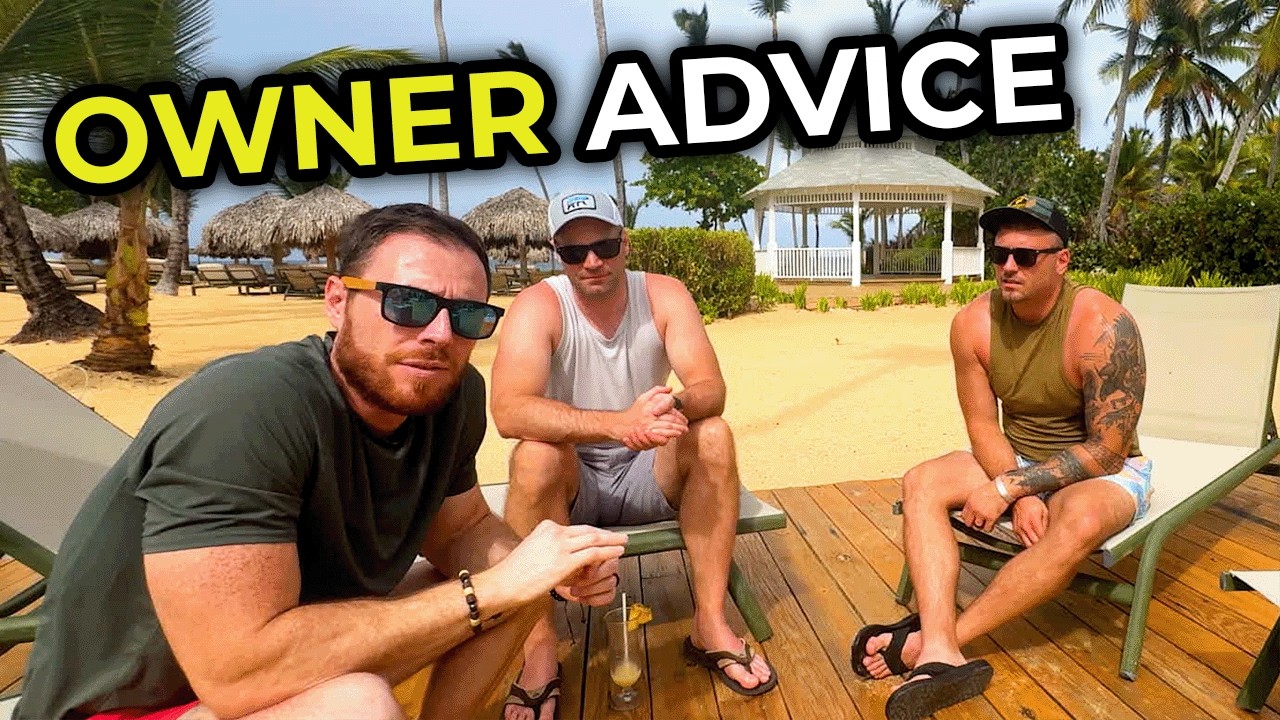
Tim, Josh, and Rob share advice for lawn-and-landscape business owners on leadership and delegation. They emphasize setting clear boundaries, using time audits to find work to outsource, and saving 20% of income early. The core shift: moving from doing the work yourself to managing people who do it.
Chapters
What's going on, everybody? I got myself. We have Tim. We have Josh, and we have Rob. We're out here in the Dominican Republic.
Hope we get this one.
In Punta Cana and Sawyer. This is Rob's first little child. And yeah, we're just gonna bring you guys some raw content today. A little bit of podcast stuff, talk business, and just talk about life. Little intros here. So Tim. Tim was in the is in the National Guard. He's a lieutenant. He's gonna be a captain. Really good dude being on the on the pod.
Do you have any words for the people? I got nothing.
I don't.
I don't know what to start with.
Tim's a great dude. He's a really, really good guy. And then we got Josh. Josh is in IT. And this dude is a wizard, by the way. Josh told me about Bitcoin before everybody even knew about Bitcoin. All right, so this dude knows a lot of things. And then we have Rob, who's in insurance. And Rob's the man. He went to Europe with us. And yeah, a lot of good guys here.
Sawyer's the future CEO of Meta.
Yeah.
Sawyer is the future CEO.
So who wants to, uh, maybe ask questions first?
I've got 2, and I'm gonna ask it in a, in a way that makes you not think about the second question. So the first question is, what does discipline mean to you?
What does discipline mean to me? I think it comes down to choosing the harder path. Like when you come across a pathway and it's like one's the easy route and one's the hard path, it's like choosing the harder path.
It's not easy.
'Cause discipline, like, is hard, right? And then I would also say— what is discipline? I would say consistency. Like, being able to do something over and over and over again, even when it's boring. Yeah, it's a good question. What do you think?
Discipline. Well, yeah, in my line of work, basically everything kind of revolves around discipline for us because we have so much of a, like, large scope in my personal career because we are Army, we're National Guard, but we work with civilian agencies. primarily and not all military force, like when I go out and do our operations. So for us, it's discipline of our own accord to display that for the other agencies and like show them what respect amongst our people means and how we respect them. And just kind of always put the people and the mission first is like our big thing. I know that's like cliché in the Army, like the Mission first, but that really is what discipline is for us, is making sure that no matter what, you're going to accomplish what you need to accomplish while protecting your people.
So that's a good answer. Do you have—
what is your definition of discipline?
Discipline, to dilute it for me, is just doing something you don't want to do because doing it is more important than— going to the gym on a day you don't want to go to the gym. Oftentimes it's like my best workout days for whatever reason. I don't know why.
Yeah.
But just doing something you don't want to do, just forcing yourself to do something you don't want to do. And it's easier as a father now, like having to— like he's crying, like I gotta do something, I don't have a choice, like I have to do it now. So that's— it's easier to be disciplined as a father. But like, yeah, having that intrinsic motivation— not motivation, motivation is the wrong word— but having that intrinsic movement To do something you don't want to do. So the second part of that question that I wanted to walk you through is, so you have discipline for yourself, right? What does disciplining your employees mean? What does that mean? The word has 2 separate meanings to me. So what does that mean to your employees?
Yeah, so that's a good question. I would say when it comes to your team, For me, number one, like always treating people fairly, right? Regardless of background, regardless of anything else. When I was in the military, right, with you, like everybody bleeds the same color. Like that's number one. Like it doesn't matter if you're Black, white, whatever it is, like we're all people and we all have souls. So caring about people, treating people very fairly, I think is, is one of the biggest things. And then when it comes to discipline, setting clear boundaries of what is and isn't tolerable and understanding that if there's a line that's crossed, we need to have a conversation. And it's because I care about them enough to have that conversation, to give them that opportunity to course correct. Now, obviously, if it's extreme, like, which we've had some extremes where we had to just fire somebody on the spot, but it was like they clearly blatantly like did the complete opposite knowing very well.
What's a, what's a, like, not going into specifics, what's an example of having to fire someone? Not going into specifics, like this person did this.
So if they clearly violate the core values.
Sure.
So one of our core values is do the right thing. You have to have honesty and integrity. The minute that's violated, it's— and especially like, like when that's violated, it's immediate, right?
Sure.
Like if we catch somebody saying, hey, no, this is it and I know it, and it's like, but they intentionally, maliciously were lying about something, easily, that's, that's like a non-negotiable.
Sure.
Yeah. And then like, like with the discipline part, if you don't do that, They'll never learn, you know what I'm saying? So it's like, even now that you guys both have kids, like, how does that— for you guys, it's like, it's one thing to talk about the team, right? But also, like, with your kids, like, what line do you draw that— or just when the kid wins, maybe they don't know, you know what I'm saying? Like, you can't set that clear boundary.
We've talked about this before. There's 2 schools of thought with anything. It's like, do you say the word no to your kid? Like, if somebody's walking up to like a fire, like, you have to say no, and they need to know what no means. Like, no is a very important word. Like, you have to understand it. But also there's this concept of like, oh, he's doing the wrong thing that I don't like, let's just move him over here and do something else.
Yeah.
Like that. I, I get where people are coming from, but there's like a lot of people that just Refuse to say the word no. No is important.
It's a boundary.
You need to be able to say no because you need a word and a thing to get them to stop immediately. Yes.
Not a, not a, oh, I gotta think about what, what does my dad want me to do. It's like, no, my dad wants me to stop immediately what I'm doing. No step back. There has to be that common knowledge or something bad could, could potentially happen.
Hopefully not.
And not only that, so Ange talks about like when you say no, no needs to mean— no needs to be like— it's a boundary. If I say no, I say it once and there's consequences if you break past that.
Yeah.
Right? Like there's always got to be consequences. So if I say no and then it's like, all right, you could have the applesauce, it's fine, then my no means nothing, right? So you got to be able to say no.
And you see that stuff in a workplace too. I've seen it. I'm sure you, you have before, and it's something I'm sure you have to implement in your business as well. Is if you set boundaries and people constantly step over them but there's no consequences, it's one step over, two steps over, three steps over. Is anything gonna happen? Nothing's gonna happen. And then you lose control.
I like to think like when you give me an inch, I take an inch. Like, I'd like to think that, but everybody— a lot of people take them on.
Yeah.
When it's like, hey, you gotta show up to work at 7 AM, it's 7:02, you're not here.
Yep.
Like, all right, hey, what can we do to get you here?
What can we do?
Because this is not acceptable. And you do it again, there's gonna be a consequence.
With my child, like, she's 6 months old right now, so it's like I've never— I haven't had to actually implement Very much of it yet because she's still trying to figure out what everything in the world is. Like, she exists here.
Yeah.
But yeah, the use of no and don't do that, or pulling them away when they're about to touch or grab a knife, you know, like off the table, you pull them back. No, no, no. Like things like that.
Yeah.
It's the small, small stuff, but it is important.
Yeah, that's good. So both of you guys have people report to you at work, right? So for anybody that maybe is like watching that is, you know, just hired their first part-timer or their first team member, right? What lessons maybe have you guys learned to share value, like share value with someone who just has like 1 or 2 or 3 people that report to them now? They've maybe never been in that position of being a leader, of being a manager responsible for these people. Do you guys, do you have what, What advice do you guys have for somebody who's experiencing that for the first time?
So like, big one I see, and I mean, I'm sure I probably to some extent did it myself when I first moved into like a leadership role, because so many people get— they have their tasks, they want their, their section to be the best, and everybody to a little bit extent at the beginning might sacrifice the needs of their People first. And the biggest thing is like, if you don't take care of your people, they won't take care of you. And you will not have the best team unless you have— unless you're taking care of people the best. So first and foremost, you have to take care of your people, but they have to respect you enough to not take advantage of that, which kind of goes back to the discipline and holding people accountable. It's a very tricky road in the beginning. I remember for me, and I'm still trying to figure it out now, and I've been in I've been an officer in a leadership role for 4 and a half years now, and it's still every day trying to figure out like, okay, well, we might be slacking right here, right now. How do we get from point A to point B more effectively without losing like the respect of people or just saying like, no, you will do this now, you have no choice anymore? And it's finding that balance. The balance is the hard part, but once you kind of find it, for me at least, everything else gets a lot easier.
So what I pulled out of that was like, take care of your people, like number one. That is the core of it. So how do you do that? Like, what does that mean, taking care of your people?
Great question too, because a lot of people see it as giving them everything that they want. Like, oh, my people want to leave early. And they want an extra day off and they want this and that. That is not taking care of your people. Taking care of your people is understanding that when they do something right or excel and your section looks good, they get that recognition. That is a huge thing. If people don't think that they're getting recognized for their good deeds, they're gonna stop doing it. They're gonna feel underappreciated, and I've seen that happen before too. Well, I've been doing all this stuff and my boss is over there getting the kudos, getting the handshakes, getting the award. And I'm like, man, I did that for him. I've heard that from people before.
I think there's— that's still a good thing though, is like, I— a strategy that I have used in corporate culture is to make your boss look good. And if you make your boss look good, your team looks good. It's kind of a cheat code. In many jobs. So if your boss is like— if you, if you think that you need to get a certain job done, but your boss thinks this, you'll do a lot better by making your boss happy than doing what you think is correct.
Yeah.
And obviously, like, if you're working on nuclear power plant, okay, like, if your boss who was talking to their boss who was talking to their boss thinks that, like, This is important. There's probably a reason why it's important.
Yes.
It's probably intelligence to cover that first. I've had a couple conversations in my career where a boss had an expectation of me and I didn't think it was important. I did it on the side, but I didn't communicate it to them. And then my boss came up to me, he's like, hey Josh, you kind of dropped the ball here. Like, why didn't you do this? And I'm like, well, I didn't think it was important. But with that said, I did do it. I did do it. I didn't think it was important, and he thinks it's important. And it's like, who's the one judging me? Who's the one grading me? That's true, you know. So it's like, it's important though.
Sorry though. No, no, no, that's, that's completely legit too. And that's why it's like, yeah, there's so many little nuances and everything's a little bit different, especially across careers too. Well, it sounds like me and you are in similar spots. It's like, I'm not at the I'm definitely not towards the top of the totem pole, but not at the bottom either. I'm like somewhere in the middle. So I'm getting information from people above and dividing tasks and trying to accomplish things. And they accomplish stuff, push to me. I do other things, push to the boss. It's like playing the middle, the middle ground. But yeah, you, you should try to strive to make—
yeah, you make your boss look happy. If you make your boss look happy, If you make your boss look good, like, you're gonna win.
If you're making your boss look good, he's thinking your people are doing really good.
Exactly.
And it's like, uh, yeah.
That's actually cheat code in corporate culture. Yeah, absolutely.
And the Army's a little different because there's a lot of the— like, you've been around and you understand, it's like a lot of times it doesn't matter. Like, feelings don't matter sometimes. You'll do this. Don't care. I don't want to hear it. Just go do it. Get out of my face. We try not to have that culture where I work at, and it's a lot healthier, but it can happen. Yeah. Yeah.
What's funny about that is when I first got out of the military and I started getting people, dude, I tried to lead the way that people do in the military like that.
And it—
poor way to lead.
Especially with, I think, with the younger generation. Yeah, they probably have like a weird thing with leadership where I need— if you just help me understand your thought process, I'll probably follow you better than just like, do as I say, not as I do.
Yeah.
Like that, people don't like that.
So like explaining the why behind, hey, we're gonna do this.
Yeah, that's good. It's like, it's like, hey, I need you to go back and remow that lawn.
Why?
Well, they've complained twice, you know, and it's like some of those, those whys might be a little bit more obvious, but I can't think of one, you know what I'm saying?
Yeah, but even like connecting, it's like, okay, so they've complained before. Okay, so, so this is the second time. Well, what happens when it gets to the second or third time? They're probably gonna cancel. Okay, well, let's— what happens if they cancel? We don't have work.
And there's, there's like, there are difficult customers.
Yeah.
There is a difficult customer that will— if you give a, this is going to be free if you complain twice, guaranteed, people will complain twice. Yeah.
One thing I got, so like when people are new to running a business, I know you've been doing it for a while, but it's hard like letting go of control to people and not trying to just be like, I need to be in control of everything. I've dealt with it myself, but Did any of your military experience teach you how to like better trust people and delegate like effectively so you're not just trying to hold on to all that control, or did that actually hinder? Curious.
I think the approach hindered, but to be honest, when I was getting out of the military, I had just gotten promoted to E-5 while I was in Iraq, and so by the time I got back and I got team members underneath me. I had like 2 people that reported to me, but I was like already— I was like 4 or 6 months away from getting out of the military, so I was going through the whole transition process. So honestly, I didn't really have people that reported to me, so I never gained that skill set in the military. And what's crazy, right, when you start a business, right, so you, you gain all of your freedom, you get your time back, you get your schedule back.
You get—
you're the boss.
Yeah.
And you're in full control. You select what services or jobs you want, what business you want, what time you're gonna work. I mean, if you want to work 3 days a week, you could. Like, it's all like pure freedom. You're doing everything. And then once you start hiring people, yeah, that's where you have to like open up your hand and be like, okay, I have to release this to somebody else. And that's a muscle that you have to work on because I held on to things way too long.
Yeah.
And, but, but it is truly a skill set. So how do I— how did I like hand it off? I think when I got to the point where I was like just eyeballs deep in work and I'm like, I can't do this anymore, and I'm like hitting my stress point, I— what I would do is do a time audit study. So I would set an alarm every 15 minutes and I would write down exactly what what I did in that 15 minutes for an entire week. And then at the end of the week, I went back and I said, okay, out of these tasks, I'm gonna put a dollar amount next to how much I would pay somebody to do this. And like sharpening blades, doing oil changes, like all these things were like $15, $18 an hour tasks. And I'm like, okay, why is the business owner who's supposed to be the most The best valuable employee to the company, which nobody's going to care about it but you. Why are they sharpening blades for $15 an hour and not doing sales?
Yeah.
So like doing that helped. And then the other piece of that is like looking at what gives you energy and then like what drains your energy. Because like you could be doing a $30 or $40 an hour task, which is good, but if you've despise it and you hate it every day and you're like, oh, this is miserable, I don't want to do that task.
Yeah.
The number one rule of business is don't go out of business. 85% of businesses fail in the first 5 years. So why not create a day that I stack as many good days as possible doing the things that actually I like doing in the business? But it's, it's hard when you're just starting because like you wear Yeah, it's just crazy.
I got a handful of thoughts on the topic. In IT, engineers are so expensive that if you have 30 engineers working on a project for a year, it can be, you know, a billion dollars, an arbitrarily large number, and it fails, it's a problem. Like, that's not good. So you need to know what people are doing, like, ASAP, and you need to know it Right, so we've got methodologies. This is an annoying answer to the question, but we've got methodologies. It used to be waterfall, now it's called something called Scrum. So you have something called a daily stand-up. You've probably heard of stand-ups before. It's a status, and everybody has— there's quests or sagas that break down into smaller projects that break down into smaller projects.
What's the status?
Stories in the past. Stories. So this is where the nugget of knowledge that might translate into your guys' industry is that a story is, it's ultimately a task that needs to get done, a piece of software that needs to get written, but it has a definition of done and it has an acceptance criteria. So like you were stating, you want to delegate something to somebody. If you say, hey, go mow that lawn. Like, so, so in software engineering, the other fun one is in college, they have one person have a peanut butter and jelly setup, and they have another person say, hey, go make a peanut butter and jelly. And if you tell a computer to do that, it doesn't know how, right? So you say, open the lid of the peanut butter. So some people take that as stab the knife into the side of the peanut butter. That's opening it technically. So you gotta be very explicit. So what am I saying? If you, if you want to delegate a task, you need to describe to somebody exactly, precisely, in pristine words, I need you to mow it diagonally on Monday, and then next week on, on the following Monday, I need you to mow it crosswise, and then the following— you know what I'm saying?
Yeah.
Be very descriptive of precisely what needs to be done. And if you have precision, then you can accept that they did it or did not do it. So if you can provide precisely what's required of them, only then can you like delegate a task super well.
Yeah, that's so good because a lot of the times like some guys that are just getting started, like they don't know how to delegate, they don't know how to hand these tasks off. And I didn't either because it's all in our freaking brain, right? But like you said, if you, if you line item it where it's like precisely do this, then do that, and you put it on a document and give them access to it, you're building SOPs and processes to, to open release that hand.
And there's, there's— I'm, I'm not the intelligent guy that came up with the thought. It's like my industry is so expensive that if we have 30 Engineers creating the wrong thing for a week, like, we're a week in the wrong direction. That's, that's a big deal. So you have to be like on point, you know what I'm saying? So that's where people created these methodologies that are precise.
Yeah, I, I talked to a younger soldier recently that wants to commission and kind of like go the same path that I did, and they were— they struggle with Delegation, and it was one of those things, and I talked to him like, sometimes it feels like at the beginning you're not delegating, you're just pawning your work off. And that's always like the thing, because, because you do— you're like, like you said, I can sharpen blades, it's not that hard. But, and also, I have other things that I should be doing, and I should be able to pass that off to somebody else, and then I can focus more on like big But as a brand new leader, you want to be the guy that's in the front of the sled. Yeah.
Pushing the sled.
Yep.
I want to be like, hey, this is how you do it.
Yeah.
Let's lead by example. And that transition to, to, from leading by example, doing the thing, to let me show you how to do it, that's not an easy task.
No, it's very difficult. And if you can't delegate effectively, you're gonna overwhelm yourself. And once you get overwhelmed, All of your people get overwhelmed.
They feel it.
Because they can, yeah, they can see and feel it. They're like, well, I can't go ask them for anything because they're overwhelmed already because they're doing the tasks they should be handing off to others and focusing on something different. And that was a, that was another like hard one at the beginning for me as well.
Yeah.
Because I commissioned as an officer in the same unit that I was already in. To put it simply, Worker bee. I went from worker bee one day to boss of the section the next day, supervisor. And it was like, well, I had all these tasks that I've been doing for four years, right? And now nobody else knows how to do them because I was a worker. Like that was my thing.
They not only that, they ain't gonna do it as good as me. Yeah, because I because I think that I do it the perfect way. When in reality, if somebody else does it eighty percent as good, I mean what what It depends on the task. If somebody else does something 80%, maybe it's good enough.
Whatever we're doing is still great, still work, it's still perfect. Yeah, I just think I could do a little bit—
I could do it better, I could do it slower.
But hey, if you're focusing on all the smaller ticket day-to-day tasks, you're not focusing on the big picture. Somebody has to focus big picture, and it's hurting everybody else because it's delaying.
Yeah. you are supposed to be going, right? And the impact you're supposed to be making. So it's— yeah, it's— there's a, there's a really good book, it's called Great CEOs Are Amazing. And the ironic part, because most aren't, right, is the, the principle, the rule that you spoke about, Josh, was if somebody can do this task to 80% satisfaction, 80% accuracy, 80% quality to what I do, we should hand that off all day because we get our time back, which is the most valuable thing.
Yeah.
Now, that just gets it started. And most like perfectionists are like, 80%, I don't want 20% errors. In the beginning, there will be, and then you're going to see them, and that's where you build those processes and those systems to get them up to like 85%, and then you get them up to 90%.
And then after a few more, a couple more months, you get to 95.
And all of a sudden what I'm learning is there are people that literally can do the job better than you.
Yeah.
Even though you think you can do it the best.
In machine learning, there's a— they, they've had people— so radiologists are people that look at x-rays of like a hand, and they, they've had lawyers, you know, these people are— they're smart people, you know what I'm saying? Take, take views of hands for thousands of hours and they beat studied radiologists. So somebody just does a task all day and that's all they do. You can get really good at it. You can get really good at it. And the only counter— so in my industry, like a lot of the best software ever written is like taking the Apollo program or whatever, people that went to the moon. Like there's no capability of having A 0.1% error rate. You can't have errors. So like there are some tasks that can't have errors and those need to be heavily guarded and studied and blah, blah, blah.
Yeah, for sure.
But I mean, there's many tasks that you can absolutely delegate and have that loss ratio. That's totally fine. Yeah.
And it's so hard because like in the beginning, you know, in your careers and stuff, like you're doing most of it and And then you transition to like delegating it, and it's a whole different skill set because you do have to be the perfectionist in the beginning. And then now, and then it's a lot of people skills and communicating and like, and all those things. But yeah, that's really good.
People skills. See, that's my older brother. He went to like a solid engineering school. He's like, there is so many people He's like, that I graduated with that were smarter than me. He's like, I'm at the very bottom. But he's really good with people, so he immediately was put into like managerial and supervisory roles, like from the start, because he could speak both sides. I don't know, that's kind of off subject, that just popped in my head. You need people that can, that can understand the task at hand that's being handed off, being delegated. They need to know how to do it themselves to an extent, to somebody else, so they can deal and do like personnel relationships.
And leaders and business owners are self-starters. It's, you know, you've got the Steve Jobs, you've got the Bill Gates that are like, man, I don't want to sit in class all day. I can, I can do this. Like, I get that I can't do the math yet. Okay, fine, I'll figure it out someday. Like, I can start. Like, give me, give me something. Let me, let me work. Let me build. Let me do. And then the stuff that I can't do, let me turn on a sales hat and let me convince somebody else to do the hard thing, you know? And maybe it's financial. Maybe it's, hey, we can change the world. Maybe it's—
well, and what's cool is when you find those people, like, I have a, uh, take care of our office manager, dude. She loves numbers. She loves— she's so analytical, and she's like, make sure everything's look at purple cheese, you look at the bank, right? She loves doing the payroll, the PPP numbers in the backend, where I'm like, you know what I'm saying? So you find people that enjoy those things and then they take over it. But like the same thing that got us to where we're at to be a manager is the same thing that holds us back to getting to the next level, right? Because like we're doing the work, okay? And we get so good at it. We show up all the time and we learn more and then we get promoted to be a supervisor. That same skill of, hey, let me get down there in the weeds and program the thing or mow the lawn. Like, that's not where you're supposed to be.
That's a beautiful thought that I wanna challenge you on.
Yeah.
It's a beautiful thought. Beautiful thought. And I thought about it a lot. So some of my favorite comedians, they get super rich and then they suck. In my opinion, I've seen certain people ascend to greatness and then now they're just not funny because they're not relatable. So like that, that— and what I'm coming back to this is like, I, I think like right now, like as you're building, I think you've got really good advice. I bet you 20 years from now you're gonna have bad advice for somebody that wants to start a brand new business.
Correct.
You know what I'm saying?
Correct. Correct. And, and I agree I legitimately agree with that. So like to a T, because I'm not in the trenches as much anymore, right? What I did back then may not work now, right? Right. And so in social media and everything, it's like changing. Yeah, 100%. I, I— that is an accurate statement. So real quick, guys, uh, if you guys like this kind of content and want to see more of it, let me know in the comments below. To wrap this thing up, you guys are both very Successful people, have families, faith-driven, good, honest men. Let's share with the people one financial advice.
The biggest thing for me is start immediately with anything financially. There's no better time to start saving, investing, planning, all of it. Start now, not tomorrow, because tomorrow becomes a month, a year, 2 down the road, and That for me now as a dad is huge. Like, me and my wife were planning for our little one many months before she was ever even out, and we had paths and everything. And then baby's born, it is absolute chaos in the beginning. You have to make sure that you have time to like— Still need to set up these accounts, we still need to like work these plans that we came up We came up with the plans. Now you got to implement, because a lot of times you get so busy and wrapped up, you don't implement what you come up with. I know there's a little more than one thing, but it's kind of all together.
So start now.
Yeah, start now. Right now, not tomorrow.
If I'm attempting to speak for myself, definitely invest. And the word invest means a million different things. The only thing that I say is don't just spend your money. Don't follow what is Common culture. I know a lot of people are chasing gambling nowadays. A lot of people are chasing Nvidia is big today. Bitcoin's big. All those things are going to come and go. Just take your money in things that are pretty safe, invest them, and do that before you buy things. And have that discipline very young. Start in your in your teens and your twenties. And before you spend a single dollar, save twenty percent. 20% of that off the bat, do something with it, then you, then you only live on that 80% for the rest of your life and it's not uncomfortable. There's like some analogy. It's like when you have $100,000, this is your fish tank. And then as soon as you're promoted to $150,000, a lot of people, their fish tank grows, and then the fish gets bigger. And the fish doesn't ever get smaller, right? The fish almost never gets Smaller fish always gets bigger. Then you get promoted again, then your fish tank gets bigger, your house gets bigger, your car gets bigger. Everybody's guilty of it. Eating out's nice, you know. Yeah, investors.
That's so good, dude. That, that is literally words from the wise. Seriously, that—
I'm— they are my words. They are my words. Just reading and looking at things.
No, it is crazy. Like me and her, or I've tried to do it for many years, is yeah, every promotion you don't you don't have more money to spend when you get promoted. You have more money to save. Yes. So I get an extra thousand dollars a month. That's a thousand dollars to save every month because I've been living on less than that the whole time.
If you have, if you're not living comfortably, then that's a different whole different story. Yeah.
And things change.
And the type of people are probably watching. are self-starters. They're go-getters. They're saving.
Yeah, to get that bump and not want to just be like, okay, well, I'm finally out of it. I need to go spend. I need to get more comfortable. But just be cognizant of it because it's easy to just keep ramping up. Like you said, the fish tank— oh, that fish tank just gets bigger and bigger and bigger.
And the fish doesn't get smaller.
And it doesn't fill your heart and soul.
No, it doesn't.
The thing that filled my heart and soul the most was that, you know, getting married and having a family, a little child and family. But just getting married first of all with the love of my life, like that was number one. And once that happened, it's like the money thing, it's just extra. It's always great to save and always plan for the future, but—
Money's nice.
You don't need it as much as I thought I did when I was by myself. Myself. Yeah, it's a nice bonus, but she's the real, the real win, you know?
Yeah, absolutely.
That's cheesy. You better send it to my wife.
I love it, I love it, I love it. Well guys, thank you so much for hanging out on, uh, the beach here at Dominican Republic.
That was very difficult. It was horrible with this beautiful beach, drinking piña coladas, you know? It's been a very difficult task.
Classy.
We're gonna, we're gonna go back to the pool. But, um, yeah, let us know if you guys like this type of content. Thank you guys so much for watching. Make sure you are subscribed to the channel if you wanna build a more successful lawn and landscape business. Thanks so much. We'll see you in the next video.








