Grow Your Mowing Business Without Burnout (Here's How)
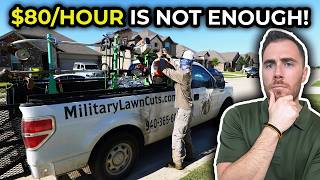
Transcript of a coaching call (YouTube video) led by Will Kelly with two small‑lawn‑care business owners. Major themes: evaluate and tune a P4P (performance‑pay) system rather than abandoning two‑person trucks; pricing guidance (they charge ~$80/man‑hour; main location charges $90; consider raising to $90+); operational profile (two trucks in field, just purchased a third, considering one‑person trucks but warned on asset utilization); equipment (zero‑turn mowers, typical yards <5,000 ft²); client base and scale (peak recurring customers = 210, ~95 bi‑weekly); seasonal cadence (bi‑weekly March–Sept, switch to monthly mid‑Oct through Feb; Jan–Feb revenue ≈ one‑third of peak); off‑season tactics (Christmas lights, pine‑straw windows, gutter/roof cleaning, prepaid season packages, automatic winter service enrollment). Will’s recommendations: gather more data, keep two‑person trucks for asset utilization, raise seasonal P4P percent (up to 40% in hot months), consider prepay offers and automatic winter enrollment to pull Q1 cash forward, and price increases where appropriate.
Chapters
Just to kind of recap everything we talked about. Nothing's broken. We just need more data and more people hired to really find out whether it's, you know, just the two guys that aren't necessarily wanting to chase P4P or if it is something that is truly broken.
Yeah, the other kind of small yellow flags that I picked up on through this conversation. Honestly, dude, 80 bucks an hour for bi weekly mowing is super fair. If you guys went up to 90, I honestly don't think you'd lose many customers. Our main location charges 90. We were making way more money doing less work. Did that kind of help?
That help?
That's good.
That was awesome. That was awesome.
All right, so how can I help?
Do you want to go or do you want me? Yeah.
So we're running two trucks right now. We have two field technicians that are running their own truck. And then him and I are in a truck together on most days, unless we're doing Christmas lights. And then we just hired an office manager kind of part slash full time. She basically just clocks in when she's working and clocks out if, like, nothing's happening. So one day she might be clocked in for eight hours, and the next day she might be clocked in for five for. It's really kind of. She's a W, everybody's a W2, but she's kind of working like a 1099 almost. And we just bought our third truck and we're thinking about switching over to one person trucks because we're running two person trucks and we're having a really hard time with like our efficiency score this past year. Yeah, this past year, like you couldn't hit P4P.
We had one guy who's no longer working with us and his, like, he was the only one who made P4P at all this whole season, and he made an extra $26 over a two week period. So pretty abysmal.
And we raised prices. We think the prices are good. We basically. One of our guys was sick a week or two ago, so we let the other guy run a truck all by himself. And his efficiency scores on every yard were above 100%, where the average between them two and a truck is anywhere from 60 to 70%.
Okay, that's solid. So what, how. How much are you guys charging per hour?
It's. We're aiming for 80 per man hour.
Okay, and then what is your radius service area?
So we just moved shops because previously we would. On average, our new shop location cuts down an extra 15 minutes per trip per day per person. So I would. We, we. Our furthest neighborhood from our shop is what, six miles. But once we get into the neighborhood, everything is within like 3 miles. We basically only service 9 to 10 neighborhoods. And once we get in the neighborhoods we like, we're super route densified. But it's like getting to the neighborhood is usually maybe like the longest drive is maybe a 20 minute drive there and back. Yeah.
But the shortest drive's like five, three to five minutes. But it's because all the cookie cutters in our town are so separated.
Yeah, like all the cookie cutter neighborhoods.
Yeah, they're building more and more around each other, but it's kind of like they just put one here, one here, and now they're finally starting to build ones around it. But in between that are just these bigger yards. They're not massive, but they're massive compared to cookie cutter yards. And we, yeah, we have some of those, but we, we kind of got rid of a lot of those last year. We dropped like, I don't know, 50 or 60.
Yeah, we, we, yeah, we like half their client list at the beginning of last year. And then we grew by 100% client list wise. And it's all just the exact clients we want is service area wise.
Nice, nice, nice. Yeah, it sounds like you guys are doing really, really well. So 6 mile radius is completely fine. Especially at $80 per hour. You guys should, should be able to make really good P4P for that. So have you guys went out yourselves individually and like ran the same routes either together or solo to see kind of what your numbers come back as?
I mean, yeah, all the routes that they run we've run in the past solo or not solo, but together. And we can pretty much. We've done, we could do a lot of these yards with our eyes closed. So I, I don't know if we're necessarily like the best, you know, example, but we could definitely hit at least 80 to 90 consistently on every single property.
Yeah, I think a lot of it is just talking like in between yards. Like not trying to, but five minutes in between yards or if one has to go use the bathroom and the other one really doesn't, so he doesn't use the bathroom. And then two yards later the other one has to use the bath. Like there's probably just a lot of waste due to just having two bodies in one truck. Not even like they're both really good workers. They could probably both hit 90 plus percent every single day on yards alone.
Yeah, yeah, that's what we see too. Generally the solo routes are a lot easier to hit P4P with our two man routes, most of them are hitting like 75, 80%, which is normal. So I guess like. So is the question like you guys are just trying to figure out how to get. How to get them more efficient or like how to implement the P4P properly or like.
Well, I think. Sorry for interrupting. I think the question is more like we have P4P implemented. We have the software where we're. We're implemented through copilot. So all that set up correctly and properly. The question is more, do you think we should commit to doing the one? Well, we're already pretty much committed to doing at least one one man setup because we already bought the truck for it. But should we try to change sort of our business model to fit more of the one man truck or should we just keep continuing to try to raise our prices higher to make the two man truck make sense? If that makes sense.
Okay, great question. So what, how, how big are the mo Is the mowing equipment? Are they. Are these all like under 8, 7, 8,000 turf square foots where you're just having like a push mower or do you guys have zero turns?
Yeah, so we, we run a ramp racks with zero turns. We. The one truck we have has a 34 inch stand on and a 48 inch stand on. And then the other truck has a push mower and a 36 inch stand on. I would say our biggest property, we don't have anything like on average everything is under 5,000 square feet.
Probably there's nothing close to an acre.
Okay.
Like 80 of our properties could take person 15 to 20 minutes if they really wanted.
Like try.
Okay, cool. Cool. Yeah, it sounds like your guys's model is like literally the same as ours.
Yeah.
So off the top of my head, if you're asking me personally, I don't think it makes sense to outfit each truck with one person because of asset utilization. The truck's gonna be easily. I mean we, we spend. We buy used trucks. So that's 15, 000. Right. If you guys have a zero turn, I mean that's probably going to be anywhere from like 3 to 7,000. So you're looking at like 22. Then you put the wrap on the truck. I mean it's. And all the other equipment and stuff and the ramp rack, it's like, I mean you're looking at like almost a 25, $30,000 rig set up to go and run that route. And so for asset utilization, it's imperative that we put two people in each truck when possible. When possible. Now again, if you're like us down here in Texas, the seasonalities do change. So in the summer we double up our trucks because of the demand. And then comes spring, fall and winter when the demand is not at its peak and we don't need as many people. Our guys do run solo, and those are typically our A players that we carry through through the winter. And so they make really good P4P because they're running solo routes. If you wanted to go that route where you're outfitting each truck with just one person. The reason why this I don't think also makes sense is because the second somebody calls off, you're gonna have a $30,000 rig sitting in the parking lot making no money.
Right?
And like, people call off a lot, by the way. Like, like, you know, they're sick, somebody's injured, somebody goes on vacation. I mean, it's just, you know, out of five, actually out of like, I mean, our main location this year had like nine employees. I mean, every week there's somebody calling off. Right. Like, so from an asset utilization standpoint, I don't think it really makes sense. But honestly, with your model like there, I don't think there's any reason why they shouldn't be hitting P4P. How many recurring mowing customers do you guys have?
Our peak recurring for this season was 210.
Yeah. With a six mile radius. Dude, you guys are like the, the only thing that I'm kind of potentially thinking how, what's your guys's retention on employees, like turnover rate, how long do they stay?
It's.
We kind of have a small sample size. We only, we only had three employees in total and one of them we fired. So our sample size is kind of small. So right now with the two employees we have, it's a hundred percent. Just because neither one of them is basically with us for the long haul. He was going to go to college and now he's kind of just sticking with us and seeing where we can take him. He's kind of signed up for the, you know, the future vision of the business. The other one is with us for at least another year. Probably he might go back to college. We're not too sure. So it's hard to say. Right now our sample size is really.
Small when it's also 210. 95 of those are bi weekly. We've had a really hard time getting weekly clients in our, in our market. And we've talked to many other lawn care companies around town. Like, we talked to a guy that had five trucks and he runs two man setups on. He wouldn't tell how many clients.
Did he say 5, 560 or something like that.
Like, basically all of his are also bi week, weekly.
Okay. So that, that, that might just be the region up there that customers are just accustomed to, like more bi weekly, which is fine. As long as you guys are tracking the data, clocking in and out of each property, knowing exactly how long it takes and stuff, you guys should be good. Yeah, man. So, so for those two employees that you guys have, how long have they been with you guys? Has it been like three months, six months? A year?
One of them has been with us since I think May, I believe May of this year. And then the other one joined us around August. Yeah, around August.
Okay. And they're both like, physically fit to.
Yeah, they're both high school. Like, they're both our age. High school athletes. Young guys, like, no, no, no medical conditions that I'm aware of that prevent them from, you know, hustling in the, in the heat.
Yeah. Okay. So, yeah, I think, I think you guys are just kind of such a bit like early to get all that data. You know what I mean? Like, you guys don't have a, a big data batch of like years of data to kind of go back and see, but it sounds like you guys are definitely right on the right path. You got a six mile radius, you have 210 recurring customers. I think it's just about like, just doing more volume, doing, doing more of it and just. Yeah, get gathering that data. Yeah, I think, I think you guys are exactly where you need to be. Even if they're, they're hitting it at 60 or 70%. Honestly, in a two man. That's. That's, that's okay. That's. That's okay. I think there is a little bit of room for improvement. And it might, and it might just be a little bit of training and a little bit of like, like, dude, every week in our team meetings, we pull up the leaderboards and we show exactly who the top leaders are and how much they're making. So again, it motivates them. Like, and a lot of that is leadership of like, again, you're just wanting to like, put that kind of carrot in front of the horse per se, for like the team and just constantly remind them of like, hey man, like, dude, we got guys on our team making 35 plus an hour multiple people and so when they come in and they see that and they're only making 20 or 22, it kind of like fuels them to kind of like, like they see what's possible is what I'm saying. And I think with you guys only have two people, there's not enough to be like that one go getter that's making tons of money. And it's like, dude, what is he doing? It's like he's just working hard. He's not wasting, talking to people in between properties, wasting time. He just gets it done, you know?
Right, okay, that makes sense because I guess kind of like the, the thing with them is they're not necessarily financially motivated, if that makes sense. So them not hitting P4P isn't really a problem for them. It's more of a, like it hurts us that they're not hitting P4P on like an emotional level. So just because, you know, we want everybody to get paid what they're worth and they're worth a lot in our eyes, I guess just in efficiency wise, they're not really hitting P for P. And can I ask you, if you don't mind? What? So during the summer we were only able to get that one guy who was working with us, who's no longer working with us to hit PvP at 40% profit sharing. Is that, is that like too high? I know in lawn care we could do like typically 33%, but I have heard of people going up to 40.
Yeah, so, so yeah, it's a great question. There are certain seasons that you may want to increase it depending on the difficulty. So like again, the, the problem is you guys don't have the data and, and I think you even just like sharing with me that like, you know, they're not really money motivated. This system works extremely well for people that are money motivated. And the right ones that come in here that are money motivated, dude runs circles around other people. Sometimes it takes a season or two to find those A players, those money motivated people to be like, dude, this is possible here. And so I don't think your guys's system is broken. I think you just haven't had enough reps.
Okay.
But as far as the percentages go, so yeah, so we actually do go up to 40% in June, July, August down here in Texas. The only reason is because it gets to like a hundred plus degrees every day.
We're in the same boat here.
Yeah. And so like production rates go down when it's that hot. Like, you know, and so instead of demotivating the team and leaving it at 33%. We're like barely any of them will ever make P4P. What we do is we just increase it to 40% and then as long as like at least half of the team is making P4P, you're, you're, you're pretty good. Like, you know what I mean? So there's other companies that do it in the spring with overgrown lawns, but we handle overgrown lawns differently. We just have them take a picture and, and leave a dispatch note and then we bill the customer for the difference and then we also pay that out in budgeted hours as well.
That makes sense. So, so from, from like just to kind of recap everything we talked about, it sounds like our actual system and our pricing as far as P4P goes isn't necess. There's nothing wrong with it. We should like the two man truck system isn't broken. Nothing's broken per se. We just need more, more data and, and more people hired to really find out whether it's, you know, just the two guys that aren't necessarily, you know, wanting to chase P4P or if it is something that is truly broken.
Yeah, yeah, for sure. So like the other, the other kind of small yellow flags that, that I picked up on through this conversation just to kind of share with you guys as far as like the P4P and Performance Pay that, that you guys are golden there. The only like small thing that I would say is like honestly dude, 80 bucks an hour for bi weekly mowing is super fair. Like if you guys went up to 90.
Yeah.
I honestly don't think you'd lose many customers.
Well yeah, that's, that's when we first joined this course everywhere on, on just to be transparent, we're in another coaching group called HSBC Home Service Business Coach. And like in that group and all over the Internet they, they tell you to do 60 close ratio, right? And that's usually where you want your prices to be is you know, if you're above 60, your prices are too low. If you're below 60, your, your prices are too high. Then we joined here and you guys are saying 30 to 40%. And I was like, you know that actually both of us were in agreeance that that makes a lot more sense because I don't mean to necessarily, you know, blow steam, but we are a pretty premium lawn care company or at least we try to be. Right?
If you're tired of guessing your way through this home service stuff, we built a shortcut inside our private school group, we give you access to every SOP document and every blueprint that we've built that took us years to figure out. All you got to do is go down in the link in the description below, join the group, and you'll gain access to all of this stuff, including myself, to help coach you and grow your business.
So would you say that the third that we should be, instead of trying to aim for that 60% close ratio as far as pricing goes, try to lower it down to that 30 to 40% close ratio?
Yeah, it really depends. It depends on the goal and, and what you guys are doing. Right? So like, if you guys are trying to, to double next year, like, yeah, try to shoot for a 60 close ratio all day. Like, like, like keep that. I will tell you though, like, at our second location, we, we were at probably like a, like a 45 or 50 close ratio, and our crews were not hitting performance pay. And I, and I knew I had go getters over there because I pulled them from my main location.
Right.
And so, and I think we were charged an hour. And so we went up to 85 an hour. We lost, I think, 10 customers out of 115, 120, and then ended the season with like 105. But we were making way more money doing less work.
I see.
And, and our goal is still to double the location next year. So, like, there are times where you, where the, where the, the close ratio is kind of like a compass thing, but yeah, man, like, anything below 30 is, is probably a real big red flag. You don't want to be under there. 30 to 50 is normal. I think that that means you're, you're, you're charging a very fair wage. You're making decent money. You may not be growing as quickly as if you were charging, you know, super cheap prices. But like, at the same time, you know, you guys just are hiring an office staff too, you know, to help out. So. Yeah, I, I think you guys are, are right where you need to be. I think 80 for bi weekly is a little bit low, but. Okay, that's compared to my region, so.
Right, compared.
Compared to your region, maybe. Check it out. But yeah, man, there's guys that charge 110, 120 an hour to mow lawns.
Right.
So inside of our community home service scalers, there are multiple people that are like charging that, so that's awesome. Yeah. And our, our main location charges 90, and we have like 350 recurring customers that pay, you know, hopefully what, what what other. What did that kind of help?
That's good. That was awesome. That was awesome. That that pretty much answered everything. I mean it just sounds like action items wise. We just need to you know, go another season scaling the way we're scaling, test out all of the systems that we built so far for our employees and then kind of just get more data to see while still raising prices. Because we are kind of in the process we've changed the way we estimate now to where we essentially just charge 1 cent per square foot. I think. Yeah, it's either 1 cent or a tenth of a. It's 1 cent per square foot. Yeah, something like something along those lines.
The SOP we forgot but yeah, the office managers got it.
Yeah. So we just charge about $0.01 per foot and I think that usually works out to be we. I haven't ran the numbers myself yet but it's definitely a little above 80 per man hour. So where we're definitely on, on track to naturally raising our prices on our newer yards. And we're planning to kind of do like as needed price raise because a lot of our current customers have amazing prices. A majority of them have like good prices and then there's like a few that really, really, really need to come up. So I think in January we're gonna probably do a lot of the ones that need to come up, raise them as kind of like a hey, the year starting this is going to be your new price. If you want us, you want us. If not, you have plenty of time to find another lawn care company. And then we usually do price raises when we hit capacity in, in the middle of the season.
We're also trying to like exponentially grow. I think when I looked last we're like 50 or 60% up from last year. The goal was to more than double but so we're gonna shoot for more than doubling again next year but probably be 50 to 60%. But what's the last. What was the other question?
I think that was an equipment. The mowing go system version.
No, I'm talking about the roof blowing.
Oh that one. That's a good one. This is off. This is a different question. So moving on.
Okay.
Seasonality wise we start bi weekly mowing in in March and we still allow people to skip services if they feel like their grass is. Doesn't need it. We mow bi weekly usually about until October and then midway through October we switch everybody over to monthly and then we, we allow people to skip services throughout the winter. So if they like a lot of the cookie cutters. They don't have any leaves to mulch. They don't have any bushes to trim. It's just grass. So if they look outside and there's literally nothing for us to do, they'll just say, hey, nothing to do. Skip your service. So in doing so, March through September is beautiful. Easy, like beautiful. Revenue consistent growth in revenue. Because we're adding more customers throughout the season, Historically speaking, October to December, we start declining really fast. And then January and February is like one third of the revenue, if not even, if not even lower. So we've remedied our October through December by introducing Christmas lights. In fact, October of this year was a record month compared to previous. Like even in the middle of season.
November, this month is going to be a record. Yeah, another record months.
So Christmas lights has solved our kind of like winter, the beginning of the winter season, but we're still looking to solve our beginning of the year. So January and February. And one of the things that we're thinking is we've changed the way we schedule our pine TR mulch installations to only install them three times a year, two months each time. So like, you have a window January and February, you have a window before, like, you know, peak heat season, and then you have a window before Christmas light season. That way we can do all the work that we really need to do during that time. So our, our current plan is to just go crazy yard signing and door hanging for pine Tron mulch installations. But we're also, because we also have takedowns, Christmas light takedowns in January. But technically the money for that has already been made in October and December. So we're not going to see on the profit and loss statement any, any money for that. But we're considering, and this is what kind of the question is, we're considering also adding roof blowing and gutter cleaning as a service, basically an upsell to existing clients for leaf cleanups and pine Tron mulch installations. And the caveat to that is we already have roofers insurance and we already have a lot of the safety equipment required to be on a roof for Christmas lights. So kind of from an asset utilization.
And we don't like opening up services.
Yeah, yeah, we don't want to open up the service.
It took us two years to open up Christmas lights and we got rid of like basically everything service under the.
Moon other than mowing. The only thing we do is mowing, bush trimming, pine straw mulch and Christmas lights right now.
But like last year in January Our revenue was one third of the peak revenue. And I don't think we want to go through that again. Even though we have a. Like we have a month's revenue saved up, a little more than a month's revenue saved up. I don't think we really want to go through that again. And if the pine straw and mulch ads and yard signs and door hangers slop, then, like, am I not. It'll be fine.
We'll make it.
But we'd like to still make a.
Lot of money, maybe have a record.
Month in January or February and keep growing through. Like, if we could solve January and February, then we're.
We're good.
We're good.
Yeah. Yeah. That's awesome. You guys are. You guys are absolutely crushing it. I. I think it's okay to expand the scope of work that you do for the very slow season when you're trying to cure those months. Right? Like, you're trying to fix that. We do the same. But then the other nine months or ten months out of the year, when it's your busy season, like, it's like, you guys are very strict. Hey, this is what we offer. This is what we do. This is our. This is where we make our money. Oh, cool. In the off season, this is what we offer. Right. So we do the same thing. One of the things that, That I think may help that January and February is. Have you guys thought about doing prepays for the season?
We. So we, we have everybody's cards on file and we just charge after each service. So how would that work? Are you saying just to offer clients the option to just pay for the entire year in advance and offer maybe a discount?
Exactly, exactly.
Yeah.
And so, like, let's just say there's. There's 30 mo visits. Give them 5%, 7% off or something where they get like 4 mo's free. Right, right. And then that's what you would pitch them. Hey, you know, prepay for 20, 26, get four free MO's. And then what you're doing is you're pulling a lot of that cash up forward, which in the meantime, you're like, man, that kind of stinks. I'm losing revenue on those four cuts. But when you pull that cash up, it. It, you're pulling that to the lowest season. And then what you can do is take that money because a thousand dollars today is worth way more than it's going to be 10 months from now.
Right.
Plus, and especially in our hands. Yeah, in your guys's hands. In our hands. Because we're going to take that money and then we're going to go pump it into door hangers, we're going to go pump it into Facebook ads, and then we're going to multiply it to grow the business even more. And then all those new customers that sign up in the spring are going to fix that lack of revenue that we just pulled forward, you know, so it kind of like evens things out a little bit more and pulls revenue up for the Q1 to kind of help that. What you could also do too, with those, like pine straws, is for your recurring customers that are those two that 210 customers that are already sign up, signing up.
I would.
I would text and email those people in January, February or whatever and just say, hey, in the month of February, we are doing pine straw for you guys, giving you guys priority service before we get busy. Once the spring rush hits, we're booked out four to six weeks.
Right.
So let's, let's pull those jobs up forward, get those ones booked that way come spring rush, all your recurring customers are all taken care of and you don't have to worry about them. All you're worried about is the new overgrown lawns and the new customers that are signing up.
Right.
And then the last thing that I would say too, on that have you got. So, so you said that you guys go monthly mo in. What is that?
December, January, February, October through March or October through February.
Okay. Have you guys thought, and I'm sure you guys have heard about winter services.
Yeah, we. We sent out a mass text to everybody this, this winter, trying to pitch winter services, basically explaining like we can come out and, you know, spend the same amount of time and do bush trimming, leaf mulching, things like that. We probably had out of those 210, only maybe four.
Yeah, it might have. It might have been in the 10.
Range, but not, not, not enough to sustain.
Yeah, I mean, we're still doing them bi weekly.
Yeah.
And their properties look a lot better than the other 200, but that's up to them, I guess.
So I think it's the way that you guys may have been. They may have pitched it or packaged it. So what we do is we send out an email and we just say, hey, you're automatically enrolled.
I see.
We say, hey, because you are our recurring mowing customers. This is how it works. We're switching over to winter services. We're still going to come every other week. You don't have to accept any other estimate. Instead of mowing we're actually going to do stuff that your yard needs, which is cleaning up leaves, pruning bushes, trimming bushes, de weeding, all that stuff. Like here's the checklist that we go down. Oh, and by the way, if there's no work to be done, we just skip you so there's no charge and it avoids you having to spend 6 to $800 come spring for, for a spring cleanup. Right. And then we shoot. We shoot. I shoot. I actually just shot the video today. I shoot a 90 second video, I send them a link and I say, hey, here's, here's the checklist that we do. And then we just tell them that they're automatically enrolled. If you would like to opt out, just respond to the email, say opt out. Cool. We'll put you on monthly mowing and let us know if you want to skip that, you know, and, and dude, I'm telling if you did, if you approach it that way. Most people don't check their emails. Most people don't care. Most people are really busy and the good customers and they trust your expertise and so you guys know what's best for the customer of what needs to get done. And so especially in the wintertime because you just switch the services over and you can include the gutter cleaning in that. You can include. We're doing ice melt this year, porches and driveway because we get freezes down here in Texas.
Right.
We're putting spigots on. Like, like get creative with it. And then all, all of that checklist adds value to the customer. And so that may be a better package for next off season as a much smoother transition. Because if we were to send out an estimate to all 500 of our recurring customers and ask if they want to opt in. Yeah, we'd probably have 20 people. Probably say, yeah, optimum. But instead we reverse it and say, hey, you're automatically enrolled. It just keeps going. You need to tell us if you want to opt out. And we retain probably about 60 to 70% of our customers.
That's awesome.
Yeah, so, so that, yeah, yeah, you just kind of flip the script on it and then, and then also like just be super gracious with the refund. Like if, if, if they didn't see the email or they didn't see the text and they show up and they're like, why are you guys here? What are you doing? Oh, cool. Let me tell you about our winter services. Yeah, I don't want this. Oh, cool. Hey, no worries. We'll, you know, we'll refund the, the visit today because it's just going to be the mo price, you know.
Yeah.
So.
Well that's, that's what I was gonna ask. I know we're, we're running over time here, but I was just gonna ask if you've ever had any like issues with, you know, people not seeing their email. But you just answered my question right there. Somebody doesn't see the email, you just give them a refund and apologize and they're probably fine.
Yes, just super lenient. Just, just be super gracious. Hey, no worries at all. Hey, no, no, no worries. Hey, we, we did send the email. It should be in there. Maybe it goes to the junk. We're going to double tap it this year with the text as well. Sending them the link of the video as well. So they kind of see that. But some, some don't open the, the video. So we'll put the checklist in there as well. But yeah, man, that, that you'd be surprised at how much revenue you can retain with just doing that. Especially on 210 customers. If you could retain 60% of those.
Oh yeah, that's like Christmas lights.
Yeah. But even when you stack that dude, like.
Yeah. Oh, you got.
You guys will be probably making great, great cash. You guys are crushing it.
Thank you. Thank you.
Cool, man. Yeah. So this I'm. We're kind of hitting, hitting a little bit of a time straight. Is there any other last, last minute questions that you guys have or was that, was that pretty much it?
When we signed up for the program it had us click this little box that said would we be interested in like more in depth coaching or something like that? Is there another tier to access you or Sam? You or Sam more? I know you can go on your website and book a coaching call for X amount of dollars. Is there like a, a different program that's hidden?
So there is something that we're working on the back end from, from an additional layer to where you guys would have more access to us. It's not fully built out yet, but I, if you guys are interested in that, we'll, we'll, we'll definitely let you know when that, that is available. In the meantime, you guys book this call today. I do this on Wednesdays two there. I do two meetings every Wednesday. So yeah, just feel free. Anytime you guys want, book another 30 minute call with me and I can jump back on and so we don't.
Have to wait once a month for it. We could just do it as long as you're open and we have a question or. Or is it like, okay.
Correct.
Yeah, because I looked at, like, next month, and it seems like half the months booked for you and the other half and it was kind of like, almost felt like a finders keeper situation. Like, if you can book it, if you get it.
It's. Yeah, it's. It's. I think it only lets you book, like, 21 days out in advance. Okay. I should go in there, probably fix that and put it out like 30 or 40 days. But yeah, it only opens up or out in advance. I think, like three weeks, which I should probably go in and fix. Maybe push out like five or six weeks. But yeah, just when the. When the slot opens on Wednesdays, you just. Yeah. Go in there and book it. There's some weeks where, like, nobody books, and I'm like, all right, cool. Like, nobody want. Needs help building their business. It's accessible for you guys. So, yeah, you guys can do it as. As many times as you want, as long as there's availability. Yeah. Feel free to utilize that for sure. That. That's one of the biggest things about being in the home service scalers, like jumping on a call like this, so.
Absolutely.
Cool, man. You guys are absolutely crushing it. So. Yeah, keep up the good work. I think your systems are dialed in. You guys, you guys are definitely squared away for sure.
Thank you. Thank you so much.
Yeah, absolutely. So January and February that fixing those two, man, would unlock tremendous. And then that would set you guys up for that to really hit the ground running come spring.
Exactly.
So cool, guys. Well, awesome. Thanks for jumping on the call with me, and I hope you guys have a great, great rest of your day.
Thank you so much. Happy Thanksgiving.
Yes, Happy Thanksgiving to you guys too. We'll see you. All right.
Bye.
Bye. Bye. Bye.








