How Mike Andes Can Turn Around ANY Business!
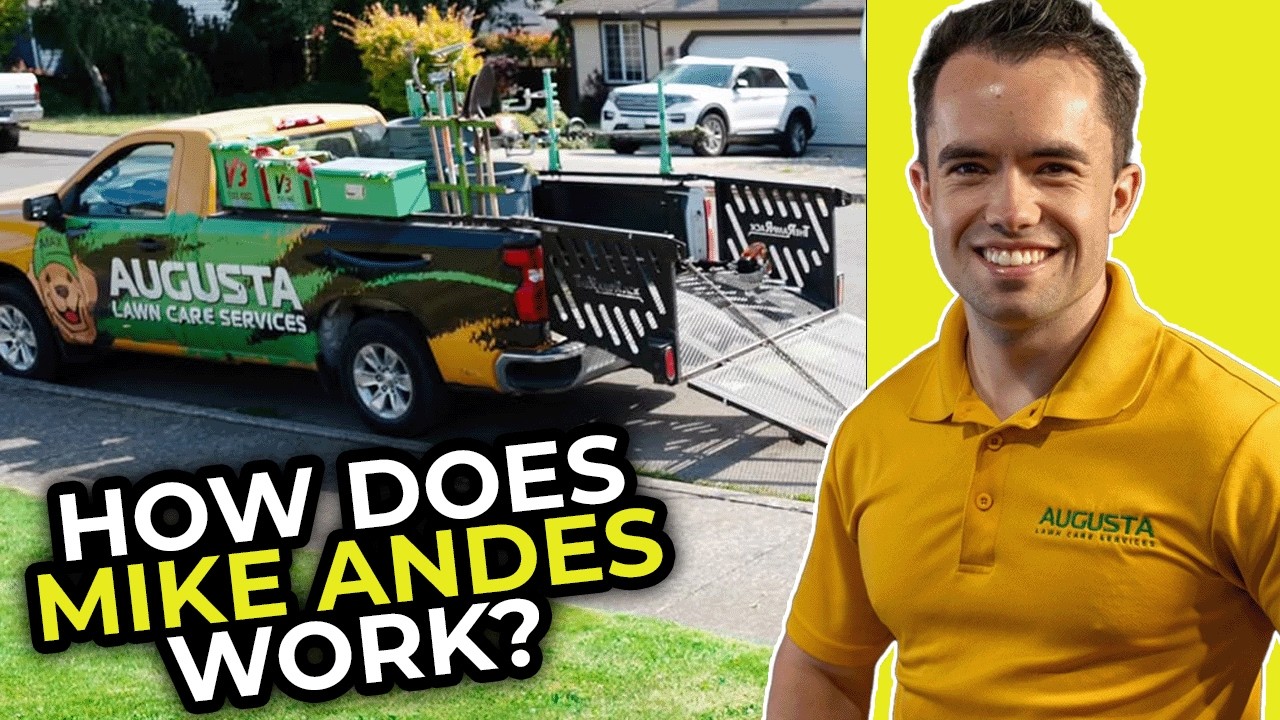
In this interview, Will Kelly and a senior team member discuss why Mike Andes is an effective leader and how his hands‑on background, freedom‑granting style, and relentless passion drive business turnarounds. The conversation covers Mike’s origin story (starting from a lawn‑mower in his dad’s truck), his habit of giving GMs autonomy while staying involved through regular P&L reviews, weekly team meetings, and scorecards. They explore the operational metrics Mike monitors (monthly P&Ls, customer acquisition cost, marketing spend, crew efficiency) and his problem‑solving framework known as “Leeism,” which uses data‑driven questioning to guide managers toward solutions. The interview also touches on hiring challenges during spring rush, the importance of clear performance expectations, and the concept of leverage (maximizing return for effort) inspired by Alex Hormozi. Throughout, the speakers illustrate how Mike’s blend of experience, delegation, and data‑centric coaching creates a culture of ownership and continuous improvement.
Chapters
I wanted to ask you, so like obviously you've, you've, you know, worked with Mike like when, when you, uh, were first really becoming like the general manager. Obviously you've had multiple conversations with him, coaching, stuff like that. What do you think makes Mike such an effective leader for working for him? Like what do you think his maybe 3— like if you had to say his 3 biggest attributes on why it Why, like, that makes him such a good leader?
In terms of what, like, yeah, well, definitely what makes Mike a good employer and like what makes him so effective at it. I think number one is that he did it himself. He did all the work himself and he knows what needs to be done. For people watching, you know, people who don't know his story very, very deeply, he started from zero. He started just pushing his own lawnmower in his dad's truck. And I tell people this when I'm hiring, it's like, this is who we work for and we want people to join and see that. See who Mike Andes is, build themselves up. He started just out of his dad's truck. You know, he's severely allergic to grass. And then he built the location up to $100,000, and then he built it up to $200,000. He— and he learned all the hard lessons about hiring and all the hard lessons about legal and insurance stuff. And then he built it to $500,000, and then he built it to $1 million, and then he learned how to do franchising. Now he's who we see, but he started from zero. He knows every step of the way, not necessarily what you should be doing right, But he knows what's going to be hard. And so he anticipates that. He's very aware of that. It's very, very helpful. That's number one. Number 2 is that he gives a lot of freedom. For him to succeed, he needs everybody else to have their stuff dialed in. And so what he'll do is it's like, this is what we're going to do. Take this, handle it, deal with that. And while you do that, I'm going to go focus on building the franchise up. Or like right now, it's a lot about franchise sales and really bolstering our Our company, our franchise. And so for him to succeed in that, everybody else has to be, you know, pulling their weight and whatnot. And seeing how hard he works, I think really inspires everybody. And it inspires them to figure out a problem on their own rather than just like, oh, Mike will work hard and he'll help me if I ask. 'Cause he'll help if you ask. But his time is so, so valuable and so much better spent really like working on the things that he thinks would make life better for everybody involved. So that's number 2. And then number 3, I really think it's his passion for it. On the clock, off the clock, he's always in business. He's always doing business. He's always working on something. When he goes out to have like free time, he does runs and whatnot to, you know, get some exercise, get some space of mind. He's still thinking about business and thinking about work and cooking up new ideas. Like pay for performance, he came up with on a jog. He came up with that, like he went up the mountain, came back down, he's like, I got a great idea. And the rest is history. And so he's always optimized. And so when you need something from him or it's like he sees something that I'm doing that's inexperienced or like I'm going down a line that leads towards a predictable Like problem that will need a solution. He's been in so much of business, and now that he's doing the turnarounds, he's seen so much consistency across the industry firsthand. He knows immediately, this is what we should do, this is how we should solve it. I'll tell you, I'll tell you this last piece about that is, um, recently Mike and I came to the agreement that he should spend a little bit less time here at the Augusta-Bellingham shop. You usually, usually used to just come to do meetings with us and get to know my crew so that he could, you know, still be involved with With his team, and we recently agreed that he should be busy doing the stuff that's more important. But when he would come in, I'd give him our profit and loss statement. This is just my scorecards. I'd watch him look at it, and it was like, here you go, Mike. Okay, this— and it like, the only reason he didn't instantly know how to solve every single problem is because it takes his eyes time to look at a page. That's it. He's just that good, and he's always in the game.
Yeah.
So it's a, it's a wonderful thing and it's very inspiring. It makes, at least for me, it makes me very willing to just keep pushing.
Dude, that's awesome. So when he would come in, so are these like, are these like for weekly team meetings or is it more like a monthly thing?
Yeah, so we used to do, uh, weekly team meetings. They were on Thursdays and we do an optional. So what it was kind of set up as is it's a good way for him to Kind of share knowledge and share information. This is something I haven't had a chance to talk to him about, but if anybody watching watches his YouTube Shorts and he's driving, because I live in the same county and I know where he's going, and when he's going basically to work. Secret Mike Andes lore is that he goes to work. I like he and I will talk about a topic, and then you might mention it in one of those shorts. And so it's like while he's driving around, he's really thinking about like this is something I want to share with people, or this is a thought that I want to express, and he would share those thoughts. thoughts like with my team and kind of spread knowledge and help me bolster the team up and get them more motivated to get educated, learn about leadership, extreme ownership, all that kind of stuff. And it was also a really good way for me to see like who on the team is engaged and is interested in having a half-hour meeting with Mike Endes every week. Yeah. And so yeah, it was really nice. Uh, but yeah, like we did, we did tone that back. Uh, and it's— I'm, I'm very happy that we did because it gives me a lot of opportunity to— now the crew will like seek knowledge from me and I'm like, oh, I actually don't know how to answer that. I better like learn something from Mike. I'm, I'm now a student again because I don't have access right away.
Right, right. Yeah, dude, that, that's awesome. And, uh, I think that's awesome too now because like you're getting that full, full ownership of it now. I mean, you're, you're taking the reins over the Bellingham location now, you know. So like for the, for the weekly kind of like check-ins, right? Like what, what type of stuff would, would he like go over with you to just make sure like he has a pulse on the business, he understands like things are healthy there? Obviously Obviously you, you said like P&Ls, like are you going through that each week? Is it a monthly thing? And then like, I guess what other kind of like maybe KPIs are you guys like looking at when, when he's there to just make sure things are running smoothly?
Uh, we would go through P&Ls monthly after they, you know, after the last month and whatnot. We look at that and he would kind of— we'd go through it with the crew so that they could like see Mike is giving me feedback in front of the team, like here's what we need to do, here's where we need to take business. And most of what we would talk about is more often than not kind of short-term pivots. So for example, it's starting to warm up, should we start sending this kind of marketing thing? Or do you think it's okay to start raising our marketing spend based off of, you know, we've raised our prices, we're gonna have a little bit more profit in the bank, therefore we could put that back into advertising. Stuff like that. We look at customer acquisition costs usually. One thing I would share is that it's never really about team culture or like, Performance of employees. One thing I think I've learned by watching him is that you can't manage somebody else's way, if that makes sense. So like the way you lead your own teams is gonna be different than the way I would lead my teams. And let's say for example, you were my general— or you were my owner and I was your general manager. It's like, I could never lead the way you lead. I have to make my leadership way work and I have to be the one to like get better. I can't just like read a— read off a scorecard. And like, these are the questions. Like, this is a Q&A that you've prepared for me. Answer these the way that it's written. Like, when situations come up or people behave in certain ways and 2 unique people interact, you've got to do it your way. And he is totally hands-off with that. He doesn't say like, this is where I want like people's minds to be, or I don't like this person because they're not working hard enough. It's just like, I've hired them. It's my responsibility to lead them and determine whether or not they're a good fit. And if they're not a good fit, you know, they wreck 10 trucks, then I get the talking. That's my problem.
Yeah, yeah, that's super interesting because like we, for our second location, we have a general manager and, um, you know, we're, we're going through that. Obviously at the main location my wife is the, is the, is the general manager, so like she, she— I've been— we've been working together for like 5 years now, so like she knows like the mindset of things, right? But like with a new GM, you know, hey, if you got a guy showing up late 2, 3 times a week, like Are you— is that what— is that the type of standard like you're gonna want for your organization? Like, it's up to you, you know? It's like, if, if you want to tolerate that type of stuff, go ahead. If, if not, like, if I was running it, I wouldn't be tolerating that, right? So it's like, it's a really weird line as like me stepping into more of like managing managers of like, like, I want to help them, but I don't want to micromanage them, but I want to give them the freedom. And it's this really weird dichotomy, man. It's I'm still trying to figure it out. That's why I was really asking about like the way that Mike handles things. Because it's like, you know, when I sit down and I, I have somewhat of like a GM scorecard that I've kind of built, right? It's like, hey, what's your close ratio? How many budgeted hours do you have on the schedule? Like how many weeks booked out? Like we, we go through that each week. Like how many yellow slips did we go through last or get last week? Right? Like we, we go through that stuff to make sure like. They're on track, but like I guess when you look at their crew efficiency and it's like let's just say it's like 50% or 60%, something crazy horrible, right? Like it's like how do you how do I approach that in a manner of like this needs to get fixed or I must see improvement otherwise like you're probably not going to see a side of me you want to see like because I know it's failing and if it continues to stay this way like. You have to figure it out. I can't go out there and babysit you and watch you the entire day and show you where all the waste is. Only you know where the waste is. I don't have time for that. All I can see is the numbers and the fact that it's underperforming right now. And so in a very nice but professional, respectful way, like, I'm wondering, like, I don't know, has Mike ever had to have like a hard conversation? Like, and that might not even be really a hard conversation. That just might be a direct, like, hey, Corey, this is failing right here. We gotta, I must see, like, this must go up next week. Like, what, what does that approach conversation look like? Yeah. Like in a nice way but stern?
I would not give you a cue from Mike. Mike is very kind of— he's very gentle about that kind of stuff. And so I would give you a cue from Lee, from Lee, because he's a very black and white— he's a numbers guy. He is all data, all analytics, all prep. And so, uh, this is, this is like I'm channeling my inner Lee. It's a Leeism. We call them Leeisms, is that, um, you take the numbers Present it to somebody and say, here's the numbers. What does that look like to you? Does it look good or bad? And if they don't know that it's bad, that's part of the problem. If they do know it's bad, you say, okay, great. What are you going to do to change it? Oh, what if I do this? And then you walk them through like, okay, this thing you're thinking isn't gonna work. This thing you're thinking isn't— why haven't we done that yet? You see what I mean? And that's like just kind of walking them through learning what they're doing wrong. And I've had that as well. What my version of it is, and I do get this from Mike, is I try to plan things out pretty— like, if I'm gonna make— if, you know, I try to plan my steps. And so if I'm gonna make a choice, I'm gonna like take the whole thing and like, here's everything I think about this, break it open, just disassemble it, Mike. And because like I said, he's been doing— he's always firing on all cylinders. He looks at it and he's like, this won't work, that won't work, that won't work, that won't work. I like this, but is it worth your time? Because it's structured around all the rest of this stuff and that stuff doesn't— And so it's like when, at least with us, it's like when we systematize everything, like within Augusta, when you try to expand the systems, you have a very solid kind of basing to compare it to. And it's like, how well does it fit that? How replicatable is it? And then more often than not, it's a matter of like, oh, what's the— there's a— are you a fan of Alex Hormozi?
Oh yeah.
Yeah. Something Alex has been talking about recently is leverage. He's been talking about leverage a lot. And it's like, how much return do you get correlated to the amount of effort you're putting in? And so you want to put in as little effort as possible to get the most return. And it's always, it's usually about something like that is like, I want to do something new. I want to take the business in this direction. Or what if we market really hard towards mulch installs? Because I've got extra mulch or something like that. And he's like, is it worth your time? Are you getting a lot? Do we stand to get a lot out of this? That's how my ideas are managed, I would say, because I try to come up with a lot of solutions to things. And I think I probably overthink things. A little bit too much. But when it comes to addressing like real problems, and I do this with my staff because I like— Lee has done it with me. It's like, here's the numbers, like close ratio. I had an estimator through spring rush. We tried something new. We hired somebody without any lawn care landscaping experience to start up, become a salesman. And, you know, we offered him like, here's a career path and this kind of asset. Let's work this out and see if this works. It didn't work out towards the end. It ended well, but towards the end It's just like the sheer volume of it, the sheer scale of a spring rush. Really, the severity of being involved with business and having responsibility in business when it's an industry like ours is in spring rush, you've got to handle more weight than your shoulders can bear. And you've got to do it until it's no longer on your shoulders. And we brought somebody in who wasn't committed to that kind of vision, and that was too much work for them. But at the end of it, it's like close ratio is low. I wasn't the one doing sales anymore, so it's not like I'm the one responsible for the closing. However, I'm responsible for the person who is closing, and so what do I need to do? And like, he's like, here's the numbers, what are we going to do to solve this problem? Because he's not, you know, doing this and this is not going right. And like, these things are good, but this isn't right. And so we kind of walked through it and he taught me like all kind of stuff about that. Uh, it's still— like I said, it still didn't work out, and, um, that was all fine and good, but that's kind of the framework that we go through for solving problems of that kind.
Yeah, I like that a lot. I think my biggest thing, uh, that I pulled out of that was like, I think I, I have so much knowledge in my brain, but like, they don't know what I know, right? Mm-hmm. The team member doesn't know that like, you know, a 50 to 60% efficiency score is, is horrible. And it's like, I think I'm failing on educating on what the boundaries and parameters are. And it's like, so the first thing you said was when you show him the numbers, you say, hey, what do you think about this? Do you, Do you think it's going well or good, bad or great? And if they're like, I don't know, then it's like, well, that's our problem. Like they don't even know that this number is bad, let alone how to fix it, which obviously we're, is what we're there for. So I think that's really good. I think I need to reflect and look internally of like what I need to do to make sure that they understand where those boundaries are. You know what I mean?








