The #1 Reason Landscapers Fail (It's Not What You Think)
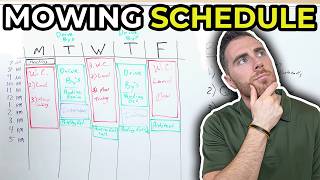
In this instructional video, Will Kelly explains why many landscapers and lawn‑care general managers (GMs) fail: they don’t prioritize the most valuable tasks. He introduces the concept of “big rocks” – the three weekly priorities every GM must schedule: sales, quality/production (training and efficiency), and hiring/operations. Kelly then describes the three “hats” a GM wears – Technician (low‑leverage, $20‑$25/hr tasks), Manager (mid‑leverage, $45/hr tasks such as training, coaching, and quality control), and Architect (high‑leverage, $100/hr tasks focused on building systems and processes). Using these frameworks, he walks through a detailed, time‑blocked weekly schedule, assigning specific blocks for drive‑by estimates, interview/hiring sessions, Monday team huddles, pending‑estimate calls, production work (weed control, landscaping, mowing), training, and dedicated architect time for SOP creation. Throughout, Kelly stresses that sales is the primary growth engine, that high‑leverage work should dominate a GM’s day, and that delegating low‑leverage tasks to team members accelerates profit. He concludes with a call to action to join a private coaching group that provides SOPs, blueprints, and personal mentorship.
Chapters
Have you ever heard the saying failure to plan is planning to fail? That is exactly what's happening in your week when you don't prioritize the most important tasks on your schedule and on your routes. In this video, I am going to show you exactly how to prioritize the big rocks in your week, because let me share with you what most people do. Most managers, most GMs, most lawn care professionals that come in, they just go through their week like in a very limbo mode, right? Monday, oh, I've got mows on my schedule, so let me focus on those. Oh, I've got some estimates on my route on Tuesday. Well, let me jump over to those. Uh, Wednesday, the mower broke down, so I need to run out and go get that fixed. We're kind of willy-nilly kind of letting the actions around us dictate our actions. The most successful people, the most successful, fastest-growing managers that I see, focus on prioritizing what actually moves the needle forward for their business, so that way they can accomplish their personal goals and their career goals, because they really do go hand in hand. Dropping either one of those will result in you not achieving your goals. So let me show you exactly how to structure your general manager schedule on your routes. This is exactly what I would do as a new general manager or getting onboarded here. So the first thing we want to do is focus on our big rocks and see what are the most important 3 things that we must do every single week that matter the most. So I'll tell you right now, I'll give you the answers to the test. Number 1 is Sales. No ifs, ands, or buts about it. That is the most important task you will ever do inside an organization. Even me. Sales is the number one thing you must master. We've got that. Now, what dictates sales? Well, this could be drive-bys, this could be penny estimate calls, this could be sending out an upsell. There's a variety of different things that can drive more revenue to your location. So sales is number one. The second thing that I would prioritize prioritize as a general manager is going to be really quality plus production, or I would say maybe efficiency. And what I would wrap this up in is honestly training slash onboarding, like really making sure that the individuals that are joining your team, number one, first and foremost, are focused on quality. We are a 5-star, zero complaint, every visit, every property type of company. And so quality, like the second biggest rock other than sales that you should be focused on. The next is making make sure once they get the quality down, now we need to pick the speed up a little bit. You can't take the speed and put it in front of the quality. You're going to have a ton of headaches that occur down the road. You need to slow down, you need to train properly, you need to duplicate yourself well so that way the individual team member that's coming in underneath, underneath you or behind you that is taking on the mows, that is now sharpening the blades for you, that is done in a correct way so it's not creating more chaos for you down the road. So training quality, that kind of gets wrapped up in like quality, efficiency, production. Number 3, we'll come back to that. The other thing that I want to mention before we actually jump in and start to build a schedule for you so that way you can see exactly how to structure your week properly so that way you're not running around crazy, just reacting to all the problems happening in the day-to-day business. You're actually planning your week and how it's going to structure so you can put the big rocks on your schedule first and then all of the problems and the fires that occur. You can squeeze them in outside of those most important valuable time, time blocks. There's 3 different categories of roles that you wear as a general manager. First one is the technician role. As a technician, this is sharpening blades, mowing lawns, doing landscaping. That is a technician's job. You could even put doing applications. Although applications is a higher-level technician, still a technician. Now, the technician, generally speaking, is about a $25 $20 an hour in tasks. Most technicians will make $25 per hour. That's the first category of things, of tasks that you can do on your schedule. The reason why it's red is because it's the lowest leverage task, although it's very important. You gotta get the work done. The next one is becoming a manager. So this is where you start to duplicate yourself, and this is a $45 an hour task. Now, how did I get that number? Very simple. When you look at the profit mode locations that are doing about $800,000, that GM has a little bit less budget hours that they're able to do because they have to wear the manager hat more often. They're doing more onboarding, they're doing more training, they're doing more write-ups, they're doing more team meetings, they're doing more quality control, they're doing more coaching, they're having more difficult conversations. This is all of those tasks that are included in being a manager. The reason why the value and the dollar goes is because you have the ability to influence as a leader the 4 to 8 team members that are underneath you. It's not just you and yourself anymore. It's you and your team. And so you're influencing and leading these individuals underneath you. And so you have a much higher value to you and to the company of the influence that you now have as a leader. The last hat that you're going to wear is going to be your architect hat. Hat. Will, what is the architect? This task, before I tell you what the architect is, is a $100 an hour task. This is just like if you can envision yourself as an engineer, an architect of a building that's a skyscraper that's being built. Every floor of building that's being built, the architect and the engineer does not walk over to the building, it starts to pick up a drill and starts drilling screws in. That's what the technician does. The architect and the engineer also does not walk over there and start pointing pointing fingers and telling everybody where to move all the steel and all the screws and all the equipment and where the windows are going in the skyscraper and all that. That's the manager role. They're managing the operations over there. These are the 3 different hats you wear. The architect stays away from the building. They get away from it and they look at it from a third-person type view where they are far away but they can still see it in the distance and they visualize, okay, if we build out that floor and we put some greenery there, some shrubs, or maybe a nice glass wall so that way guests can see in and out of the building. They're engineering, they're architecting that skyscraper, just like you are architecting your location. During the architect time, you actually don't want to be sitting there checking your email. You don't want to be mowing the lawn or spraying a lawn or conducting a team meeting because that's where you're in the operation. You have to get away. You have to get away. You got to close the laptop. You got to turn your phone on Do not disturb. So you can have time to focus on how you can build better systems so the business can run more without you being there. That's how you provide value. If you continue to get the same yellow slip over and over and over and over again, don't you think you should build a system around that? Maybe build some training around this? This is your architect time. It's you getting away, assessing all the problems and saying, how can I fix this? How can I build a system? Can I build a 3 to 5 point PowerPoint slide deck on the importance of this common complaint that we keep getting from customers so that way we stop getting these same silly complaints and we can serve our customers better and you can retain your customers longer and you can make more money and more profit for you and your team? That's what we're talking about for the architect. Those are the 3 hats that you wear. It's my responsibility here to help coach you on structuring, deciphering where we're going to put our most important tasks. Because most people don't sit back and do architect time. They're too caught up in the technician time. And if you don't schedule, that's what's going to happen. You're just going to get sucked up with all the technician time and you're going to be spinning your wheels. It's going to take you 4+ years in order to hit profit mode for you to hit your goals. I'm here to help you with that. If you're tired of guessing your way through this home service stuff, We built a shortcut inside our private school group. We give you access to every SOP document and every blueprint that we've built that took us years to figure out. All you got to do is go down in the link in the description below, join the group, and you'll gain access to all of this stuff, including myself, to help coach you and grow your business. Let's get into it. So, Will, how do we build a schedule that actually makes sense? All this makes sense, Will, what you're saying. I'm in it. I'm in it to win it. First thing I'm going to do is we're going to look at the big rocks. We need focus on what is the most important thing that actually moves the business forward. Because I can tell you it's not mowing and it's not landscaping and it's not spraying. It is sales. What we're going to do, I'm going to use the green marker. Why? Because it makes money. Come on now, guys, you gotta, you gotta know this. What I would do for sales if I was a GM, I would tell my office that on Tuesdays and Thursdays I want my drive-by schedule. I'm going to do it 2 days a week. Why am I going to break it up this way? The faster we get the estimate to the customer, the more likely they are to confirm, and the higher your close ratio is going to be. It's all and it all works hand in hand. I don't want to just do estimates on Monday and Friday, because if they call on Monday and I'm already out on my route, they gotta wait 4 days before they get an estimate. They're not gonna book, okay? They're gonna go with the next customer or company. I would rather have it generally in the middle of the week, so every other day I'm basically doing estimates. Now I know Mondays are very, very busy, probably not going to be able to squeeze my estimates in there, but Tuesday I'm going to prioritize that in my week to do drive-by 10 minutes. Same thing on Thursday. What does this look like? Generally speaking, Tuesdays and Thursdays from, let's say, 7 AM— well, actually, I gotta come in for the crew, so I gotta kind of get them out. So let's say from 8 to noon. So from 8 to noon, this is gonna be my time block for drive-bys. I'm going to intentionally block out my time for drive-bys. Same thing on Thursday. In a scenario where I don't have enough drive-bys, guess what I'm doing? I'm still focusing on sales. I'm going to pick up the phone and I'm gonna call my pending Whether I'm at the unit, hopefully I got Wi-Fi out there, or go back to your house, pick up the phone, get laser-focused. Okay? But ideally at the unit because on Tuesdays and Thursdays is when we do interviews. Well, guess what? What task is that? Let me ask you, put in the comments below. Is it a technician task? Is it a manager task? Or is it an architect task? What do you think? What is doing interviews? Are you building the architect or are you managing people? That is managing people. So it's going to be blue. So from 1 to 2, we're going to put interviews. Now we do this every Tuesdays and Thursdays. So I already know Tuesdays and Thursdays, this is gonna be the time block interviews. My interviews are pretty much packed. Now, after interviews, that's about a 7-hour day. That pretty much wraps up majority of it. This is gonna be drive-bys, guys. I'm intentionally gonna block out 4 hours. If I don't have enough drive-bys, or if I only have 3 or 4 or 5 on my route, guess what? I'm going back to the unit, picking up the phone, and calling pending estimates. Next thing, what about Monday morning meetings? Don't we have to put our Monday morning meeting up there? We do a team huddle. We pull everybody in. We go over what we did well the last week, what we need to improve on. We go through the yellow slips and then we say one thing we're grateful for. That's what gets our— sets us off right with gratitude. That's how we run team meetings here. From 7:00 to 7:30, which ideally doesn't take 30 minutes, should be like a 15-minute meeting. We're going to do meeting. Okay? That's your Monday morning huddle meeting. You see our schedule now? We're starting to, to really block out the most important things. I really like sales, and the reason for that is it grows the business the fastest. So I would actually like to carve out maybe on Wednesday, let's carve out another 1 or 2-hour block to get my calls in. And I'm gonna probably do this at like maybe 3 or 4 at the end of the day. So I'm gonna block out a 2-hour and we're gonna do pending estimate call. Why? I want to call my estimates at least twice a week. So I can do some here, I can do some here, but I know for sure even if I have a full 2 days of route, for these drive-bys, I am going to call my pending estimates there. Now we also make it very intentional that we call the pending estimate same day. So on these days, I'm also going to call my pending estimates. So I may fit this in here, pending estimates call, and then I'm also going to fit it in over here. The next most value task is actually going to be really outside of training. I mean, you're going to fit people in for training somewhere, maybe Wednesday, Monday, or Friday, or you're going to have a really good team member that's on your team that is not getting LSO slips, that shows up 30 minutes before their shift and is somebody you want to duplicate in your organization, use them as a trainer. Have them help you out. What I would do is between 8 AM, because we still got to do our 30 budget hours each week. So this is going to be blocked off for ideally weed control first. If there's no weed control, then we'll do landscapes. And then if there's no landscapes, then we'll mow. Now, if you are mowing, we need to be training. We need to be training someone else to help you out with the mows. Again, this is, this is spring rush typically. There's a lot going on. This same block I would do here, and we can start a little bit sooner. We'll start up here at like 7 because we don't need to do a team meeting, and this is going to go all the way to like 3 PM. If you get done early, maybe you don't work all the way till 3, you get done at 1, 1:30, cool. Let's go back, let's call our pending estimates. Same thing, first thing you're going to do is weed control, second thing you're going to do is landscapes. Now why do we do that? If you're $80 an hour, you make $160 an hour on weed control, plus you're the applicator. You make about $100 an hour doing landscapes, and then on mows you only make $80. So you are the most valuable team member. I'll put it into another perspective for you. Imagine your best team member, like your best team member. It may not be yours, but maybe you've been a part of our main location where you've seen what great looks like. Imagine that best team member does the most production, never gets yellow slips, always shows up on time, goes the extra mile. Imagine that. Would you have that individual sharpening blades all day? Would you have that individual taking broken equipment to the shop and back all day? Would you have them doing the, the oil changes? Would you have them on the mows all day? No, you wouldn't. You would probably put them on the landscape crews, on the weed control. You'd probably be pulling them up and training them. And the reality is, is the best team member is you. So you should not be getting stuck with all of these small leverage tasks. We need you up here doing the higher leverage stuff. All right, number 3. Sorry if I repeat myself a lot, but just trying to get the point across. Mows, and then do some training. Now our schedule's looking pretty good here. What are we missing here? What are we missing here on our schedule? Well, I would tell you a very, very important one that we're missing, and it's green. It's our architect time. When are we going to carve out architect time to build better systems, to build better processes, to build a training program or a PowerPoint slide deck that we can teach and show our crews how to improve and get better so we can't— we don't keep making the same mistake twice? Else. Let's use green again. Let's say I want to carve out 2 hours for this. It's gonna— we're gonna do this on Friday at 2 and 3 PM. We'll go 2 hours on Friday and this is going to be architect. Now during this time, laser focused. Put yourself in a room where nobody else is. Shut the storage unit. Turn your phone on do not disturb. You are unreachable during architect time. Your crew shouldn't be able to reach you. Shoot, your manager maybe shouldn't even be able to reach you. Like seriously, you need to be laser focused on how to improve your department. On how to improve your location to get better. That's what this time is spent for, so you can help build those processes. The last few things here, Friday, again, we got to get our 30 budgeted hours in. Now, we do get some from the drive-bys, so that'll definitely help. But again, this is going to be mainly weed control, maybe some landscape jobs. Last resort, we're going to mow. Hopefully we're training somebody. So you can see we've already carved out our schedule. Now we got a little bit of margin here for something. We get a little bit of margin over here, we get a little bit of margin over here, and this little bit of margin at the end of the day is where you just fill the sand in. This is where, oh, the mower's broken. So either, you know, you probably shouldn't be doing this, but if it's a busy season, if it's the fall season, then yes, you're going to be doing this stuff. But if it's a busy season, I would rather have you doing drive-bys, calling pending estimates, or doing production weed control versus taking the mower to the shop to get dropped off because it's broken. Have one of your team members do it on base pay. You, GM, are a $40 an hour employee team member for the company. If you have to run to the shop and drop off equipment in a spring rush and you need to be kind of selling more to get your location to $500,000, you probably— between the two, which do you think? You either have you as a $40 team member go and make that 1-hour drive to the shop repair, or do you have somebody on base pay do so you can call your pending estimates for an hour. We got to start to think this way in order for us to reach our goals quicker. But this is basically what it looks like. You can do this for yourself. What I normally do sometimes is I've done this before multiple times. I've audited my week. I've pulled the most important big 3 rocks that have to get scheduled. Actually, the third one on this I would say is probably hiring. And so as you can see, we did block off hiring for interviews here. We got all 3 of our big rocks scheduled first, and then this schedule, guys, is rigid. You don't stray from it. This time when you're doing drive-bys and calling pending estimates, guess what? If somebody needs you or something happens, if somebody's got a flat tire, I know it's hard as a GM because you gotta kind of put the fires out. But what we're here to do is build and develop people. The right people will figure out and problem solve and not have you have to be there every second to hold We are problem solution finders here, okay? As leaders, you know, you want to start to train your team this way too, right? Like, all of this is designed for you to not be a pinball just bouncing back and forth throughout your week on stuff that comes down the pipe. You're intentionally carving out the most important things in your schedule, and I promise you, if you follow something like this, you will go much faster than other GMs around you or other entrepreneurs that don't follow something like this. And the reason is when you look at the amount of selling we have in architect time here, like, this is high-level stuff. I mean, this is like probably 40-45% of the schedule is spent selling. That's where you're most valuable, is selling, not behind the mower. So the more time we can have you spent selling, the faster your location is going to grow, the quicker you're going to hit your goals, and the quicker everybody wins. We want you to win. We need you and you need us. And so we're here to help you, give you the blueprint on how to get there the fastest. Thank you guys so much for watching. If you're watching this on YouTube, hit the like button if you found value. Make sure you are subscribed if you want to hit $500,000 in your business.








