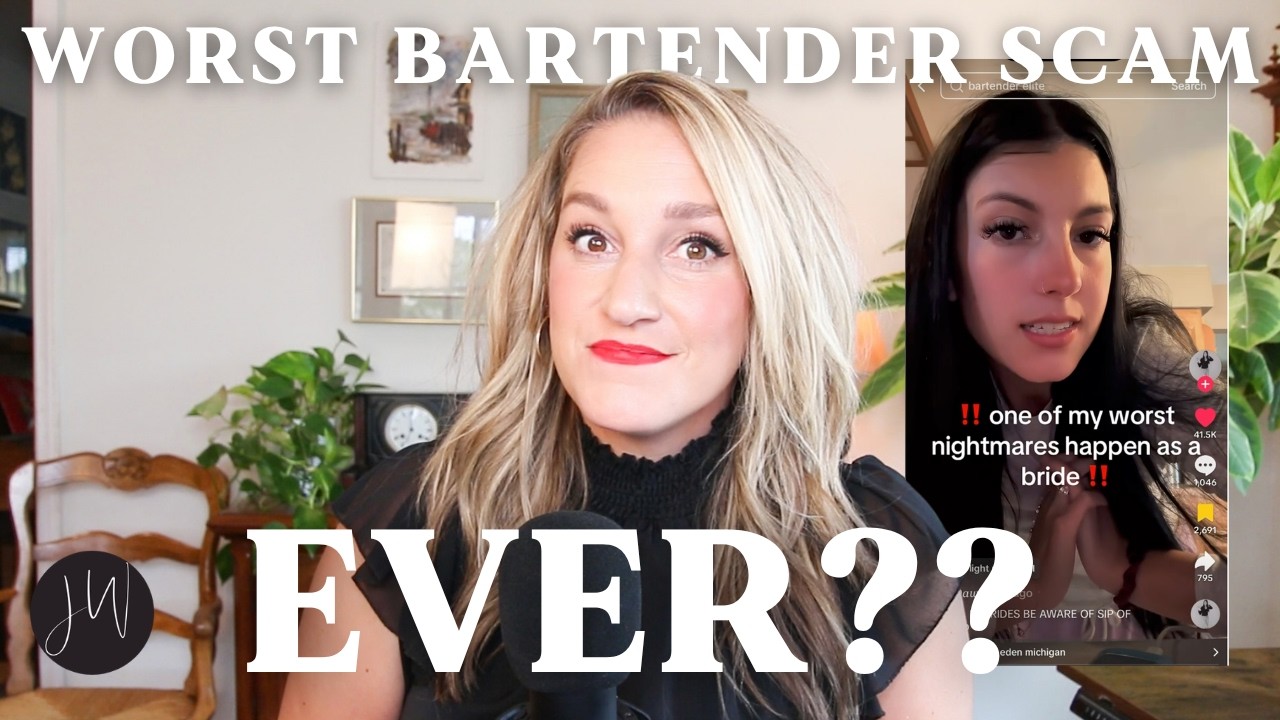
STOP Making This MISTAKE | Read Your CONTRACTS, People (with BriteCo ✨)
Wedding planner Jamie Wolfer walks through vendor contracts, highlighting payment terms, cancellation policies, deliverables, liability caps, and AI-editing rights. She stresses redlining unclear language, documenting everything in writing, and getting insurance to manage risk.
Chapters
It has come to my attention that the internet really needs to start reading their wedding vendor contracts. Okay? Or you know, just like at a baseline making sure they exist and then actually reading them. And then I realized I've never done a video breaking down wedding contracts in general and what you should be looking for. It's like an AITA but for wedding contracts. Cute. Hello, we just got our wedding venue contract and wanted to know what are certain things to look for in a contract or what are some questions we should ask? Thank you. Had to review a bunch of contracts for work projects and there's definitely some stuff that can bite you later. If you don't catch it early, make sure you know exactly what happens if weather forces changes to your plans, like who pays for alternate arrangements and what your options actually are. Also, check the cancellation policy super carefully, not just for you canceling, but what happens if they need to cancel on their side. Payment schedule is huge too. When each payment is due and what triggers those payments. Sometimes venues will want a final headcount way earlier than you expect. Oh, and definitely ask about setup/breakdown times because some places charge extra if you go over their window. Some? Many. The vendor restrictions thing caught my friends off guard at their venue. They couldn't use outside caterer they wanted because venue had exclusive deal with specific company. Would have saved them a lot of headache if they'd known that up front. This is why you've heard me talk about this before. This is why I always recommend: Can I see a list of your preferred and/or required vendors? Ask this at the walkthrough. Okay, and then you contact that vendor and you say, "Hey, how much you charge for this?" Okay, before you book, be sure that specific times and specific places are outlined in the agreement. Any non-specifics here can be a huge issue. Just yesterday in r/legaladvice, there was a bride upset that. a hotel moved her event from a ballroom into 2 smaller rooms. Her contract essentially said that the hotel would provide her space for X amount of guests at Y type tables, but that was it. While the ballroom was what she was sold on, she was never actually guaranteed it. Know and understand when payments are due, dates for specific details to be confirmed, and also any refund policies. Additionally, for venues, check to see if any of your vendors, specifically the DJ, are required to carry and show proof of liability insurance. Why just the DJ? All of them. Those are discussions you definitely want to have with your vendors before hiring them. You Ensure anything they promise you is in writing. We will get to this specifically later. And if it's significant, add it as an addendum to your initial contract. After signing our contract, we wanted to change out specific chairs in the space. Wasn't what they typically do, but they agreed and we added a contract addendum. You don't just have to do this for chairs. If you have something that is promised to you over the phone and/or in writing via email and you want to make that change to your contract, there's a specific clause we're going to discuss later that says entire agreement. Which means anything outside the agreement doesn't count. Get it in there. So without further ado, let's just jump right on into the intricacies of what you should be looking for in a wedding contract. But a quick note before we begin, this is not legal advice. I'm a wedding planner, not a lawyer, and I will be referring to a mock contract in this conversation. A contract essentially is written to mostly protect a vendor and describe the services and/or products that they will be providing for you. So your contract essentially defines your risk in this relationship, and your insurance helps you manage that risk. And that's why today's video is Sponsored by Brightco because no amount of contracts is going to make up for the fact that you still need insurance to cover any of those gaps. Thank you so much. First and foremost, do you need a contract? Well, unless you want to be like this bride, you most certainly do. Secondly, what is a contract? A contract is a legally binding agreement between yourself or whomever is paying with the vendor or venue that is providing a service in exchange for a fee. It's not an invoice, it's not a bill, it's an actual agreement between 2 parties. So let's go ahead and pull up that mock contract I was referring to earlier. First, what we see here is payment terms, fees. What's the total cost? How much are you paying them? And what are the terms of that payment? This one is left for a vendor to fill out on their own. But here's what you want to be looking for. You want to look for when is the payment due? How strict is that due date? Once you receive the bill, do you have net 30 terms? Is it due upon receipt? Can you pay with a credit card? Is there a fee associated with paying with a credit card? Is there a discount if you pay in all cash? And while that sounds kind of nice to get that discount, you don't have a paper trail to operate off of to show that you paid all that. So that's just something to be wary of. Okay, so when is it due? How can we pay? Are there any additional fees with our payment preference avenue? Are there any late fees that could be incurred if we don't pay in a timely manner, etc.? This agreement also says it's recommended to include payment for overtime beyond the time that was agreed upon. The default terms of this agreement make all payments by client nonrefundable. If either the deposit portion of the fees are refundable, this should be specified here. So as you are looking through your payment terms, You should know with great clarity how much money you get back. Most vendors have some sort of nonrefundable deposit, nonrefundable amount of money. This is typically seen in the eyes of the vendor and most of the industry as a sort of reservation cost. It's not just that, but I'm using that language here to kind of explain the reasoning behind why we as vendors request a nonrefundable deposit. We have a very finite amount of days that we can work weddings. There are only 52 weekends in the year and we can maybe cram 3 weddings into a weekend if we want to do triple headers, which most of us do not because that's extremely But if you claim a specific Friday or a specific Saturday or specific Sunday, that date obviously is no longer available for anyone else. And so we are holding that date for you. Some vendors might even engage in some of their services for you before they even take another payment. So those deposit monies go towards those initial interactions with them, be it an engagement photo shoot, your first planning session or 2 with your wedding planner, a venue walkthrough, your first handful of emails with your caterer or with your venue. But it is pretty much standard operating procedure to have a non-refundable deposit. The next section is rescheduling and cancellation policy, which we will get into in much greater depth in just a little bit because this is where things can get extremely sticky. The mock template that we're looking at here says, if applicable, insert language about how provider handles rescheduling and cancellation of services. We recommend specifying language around the timing of notifying the other party, whether a provider cancels or the client cancels, or other specific details which can circumvent potential arguments down the road. So clearly not even this mock contract is going to touch rescheduling or cancellation, which is a big deal. COVID took the wedding industry by complete surprise. None of us vendors were prepared for anything of this magnitude. A lot of times people bring up an act of God clause or a force majeure clause in a situation like this, but none of us were ready for this. So we ran into issues with things like postponing. I was poring over vendor contracts like crazy. Do you know how many of them had anything in regards to postponement? I can't even remember a single one, although this was, you know, 6 years ago, so there might have been a few that had some sort of clause about postponement baked into their contract. But most of them had nothing. We had no recourse. We had no way to have this conversation of how do we continue with our contractual agreement with one another in the face of something like a worldwide pandemic. And now, of course, we're seeing a lot more of this language around postponement in contracts in general. But a statement regarding postponement delineates the risk. It doesn't help you manage it. And with the cancellation clause, there should be 2 separate scenarios here. What if you cancel? And what if the What do the next steps look like? Again, we'll get to that in just a little bit. Now, this particular mock example that I have is for an event planner. And so this section is what they will be giving you. This could be for your venue. This could be for your photographer. These are your deliverables. What will you be receiving from this vendor in exchange for the funds that you will be paying them? This one is pretty vague. There is also an opportunity for a vendor to link to a proposal and not include all of the deliverables in the contract itself. This is something I've done in the past for sure, where I say all the things that we will be delivering, will be providing as your wedding planning service are included in this document, as in a separate document, so it doesn't become this overwhelmingly large contract that people have to wade through. But there should be something in your contract that says, here is what I as a vendor am providing for you. This is what the section says: provider will provide event services to client, including providing consultations about decisions about the event, assisting with budget preparation, researching and procuring appropriate vendors Preparing floor plans, provide general event supervision, directing entertainment, announcements, and event during the event, and directing guests at the event. This sentence should be adjusted to match the event planning services that provider will be performing for the client. So cool. So as a recap so far, we cover payments, we cover rescheduling and cancellations, and what your vendor will be providing for you in exchange for those funds. The next section you might see is something kind of like client obligations. Like, what do you need to give the vendor or the provider in order for them to complete their services in a timely and/or accomplished manner. Well, both timely and accomplished manner. And you might see some really interesting language or clauses in here. Basically, us as vendors, we need to make sure that we can access the building with all of our equipment with ease and that we have a safe working environment. You might see some additional clauses in here that look a little bit weird. And let me just tell you that when you see something like wedding planner is not a taxi service And will not be using personal vehicle to transport wedding guests, wedding couple, wedding party, or anyone associated with the event itself. Because that planner probably found themselves in a position where they had to drive someone and maybe move their breast pump out of the way to make room for the bride to sit in the front seat. Maybe that's why. Maybe that's why that clause was added. So you could see some interesting language in this specific general region where you go, hmm, That's weird. And at any point in time throughout the entirety of us describing this contract, if you come across something in your contract with a vendor and you're like, I don't know what this means, I don't know what's going on, you have every right to go talk to them about it. If someone saw a clause like that in a contract from me, I would probably laugh and be like, there have been multiple times where people assume because they're hiring us, they have free access to our vehicle to transport a bunch of goods for them, to transport guests for them, to transport the wedding party for them, or even the wedding couple. And that's just not something that we do. That's not a liability liability that we want to incur. So our vehicle is off limits. So moving on to the service terms and conditions, uh, services and compensation. Provider will provide the services specified in the statement of work, which could be a proposal or could be a little bit further up in the document as we just discussed. Client obligations. This is a little bit more of what we were talking about earlier. Client will provide provider with safe and appropriate working conditions to perform the services. Additionally, client will provide necessary support and cooperation for the provision of the services. Which may include clients' appearance at designated time and on agreed-upon location, if applicable. Yada, yada, yada. Rescheduling, cancellation. If not set forth in statement of work, which is the previous document we just looked at, any rescheduling or cancellation of the services will be subject to provider's rescheduling or cancellation policy. Okay, cool. That means if we didn't tell you about the cancellation policy, then it's the provider's cancellation policy. This is a word salad of mumbo jumbo that helps absolutely nobody whatsoever. Then we come up on term and/or termination. What does it look like ending this agreement? Well, typically the agreement ends when the wedding date is over or when the deliverables are sent after the event, such as photos, your wedding gallery, or your wedding video. Termination. This part's important. Either party may terminate this agreement upon written notice to the other party if the other party materially breaches this agreement and such breach is incapable of cure, or with respect to a material breach of capable cure, the breaching party does not cure such breach within 30 days after receipt of written notice of such breach. Basically, if you step out of bounds with something they've listed in the contract, it could be client obligations, it could be not following one of the clauses that they've added. They can essentially terminate the relationship in this language here. And when the agreement is terminated per that clause, get this, all rights and duties of the parties towards each other will expire except one, client will pay provider all amounts owed but not paid for services rendered through the effective date of expiration or termination. And 2, sections titled confidentiality, ownership, release, indemnification, and limitation of liability will Survive. Okay, so what does that mean? If you're working with a wedding planner and they've performed 5 of the 10 meetings that you're gonna have with them, but you haven't paid them for 3 of the 5 meetings, you will owe them that money still. Now bear in mind, we haven't seen any real cancellation policy in this agreement at all whatsoever. So basically it says if the client does something to like mess with the agreement, then the provider can terminate it and then you still owe them money. Language here is so important. This one does have a confidentiality clause in it, and what I want you to pay attention to is Can you make claims of vendor behavior afterwards? Is there any sort of you cannot disparage our efforts or our work at all whatsoever language in this section or in any of the sections? Basically, can you leave a bad review if they do a bad job? Because if the agreement says no, you can't. You can't say we did a bad job. Period. You signed it. Write that down. Write that down. Just kidding. You can't write that down because you can't write about it because you already signed the agreement. This next part is all shouty. Limited warranty disclaimer. La la la la. It's all, it's in all caps. Now of course, if you want to pause and read through any of this screaming language here, I highly recommend you do so. But what I found in this particular clause, in this particular section, I might be using the word clause liberally in this video and inappropriately or incorrectly. I don't know. I don't know. But in this clause, there is a section that says the vendor is only responsible, like their liability costs, their cap for how much they'll pay. Is however much they were hired for. So if you hire a photographer for $4,000 and they trip and do a header into a piece of drywall and somehow inadvertently break their camera and ruin all of the photos all in one go, this section says that the cap for their liability is however much you paid them. Can you put a price on ruined photos? Under ownership, the next part that I want to highlight is deliverables. In this section, it says, you know, if it's not clarified in the statement of work, which is another phrase for that, another term I use is proposal. If it doesn't say in the proposal, here's what you're getting, this is what would be included here. Okay, so again, I like to include that in something separate to create a very clean-looking contract. Please refer to this document to make sure that you can see what the deliverables are. If you do not have that separate document, if you do not have a contract that says refer to that separate document, then you absolutely need your deliverables here. How many photos can you anticipate receiving from this vendor, and how quickly will that turnaround be? You do need this in writing in either your statement of work or proposal. Or your contract. But I want you to pay careful attention to this statement right here. Provider may fully exploit any deliverables for its own business purposes. We're going to jump on down to a different section that's called Release. If client has engaged provider for services involving filming, recording, or photography, client hereby consents and authorizes provider to film, photograph, or record client visual materials, including client's name, image, likeness, appearance, voice, and other personal characteristics, collectively client likeness, as incorporated in visual materials without restriction. Client hereby grants a provider a non-exclusive, perpetual, worldwide, non-transferable, irrevocable right and license to publicly display, publicly perform, exhibit, transmit, broadcast, reproduce, record, photograph, digitize, modify, alter, edit, adapt, create derivative works, exploit, sell, rent, license, use, permit others to use, or otherwise exploit visual materials and derivative works thereof, including any client likeness incorporated therein. In any medium or format, whether now existing or hereafter created, for any business purpose of provider or its sublicensees, without further consent or additional consideration from client. What? They have access to your likeness forever and ever. Amen. And they can do whatever they want with it, including their sublicensees. Which is why when we're running into issues like AI photo editing, if it's not in the contract, if it's not written in or baked into this, if you do not redline some of these things because people— you can mark up these contracts and send them back and say, I'm not signing this. I don't agree to this part, or can you explain this a little bit more for me? You can request for things like no AI editing to be used on our photos at all whatsoever. And while sections like this do read very intensely, the spirit of it tends to be we want to be able to use your photos to advertise on our Instagram, on our website, etc. But I think the language here in this particular example is way too broad, way too expansive. And if I had a client signing this, I'd be a little bit concerned. I'd say let's go ahead and clean up some of this language here. Not perpetually. Not however much you want, not re-edited over and over and over again as many times as you want to. We need to kind of rein this in just a wee bit, especially in a heavily digital and heavily AI saturated day and age. I want some more protection around you. Oh, this limitation of liability is a section where it says neither party's liability arising out of this agreement will exceed the amount actually paid or payable to provider under this agreement. Okay. I thought it was the other one. It's fine. Okay. How are you doing? You hanging in there with me? I know this is a lot to cover, but we have to make sure that you understand what these different sections mean. Next is more of the general notes. One, you're working with an independent subcontractor. Okay, it is what it is. Number 2, entire agreement. This is interesting. This is extremely interesting. The language in this particular section is extremely clarifying and kind of in a horrifying way. This section says, and if you see it in any of your agreements, you'll know what this says too, that anything we talked about verbally, written, anything beforehand, it's gone. Whatever is in this agreement is the agreement. So if and/or when you're reading through your contracts and you don't see things that you talked about with the salesperson, or you don't see things that you talked about with the venue coordinator, or with the event planner who you had the intake call with, or with the caterer. You don't see any written dietary exception requirements, anything that you've discussed and/or was promised that is not included in this agreement. This one specific clause says boom, it's gone. So when you run into an issue where the services that were supposed to be rendered are not rendered and you have this insurance and you would like to take recourse, if it's not in the contract or the statement of work, you cannot pursue any recourse, period. Assignment and subcontracting. If your vendor cannot show up on your wedding day, most couples are really good about asking this question: what does that mean? What are we doing? Most vendors will include something that says, I'll find a replacement, I'll find someone for you, they'll be there on your wedding day. This is really like for worst-case scenario. In most situations, sometimes you get those vendors who will subcontract out the work and sound like they're going to be there on your wedding day, and the last minute they'll do a little bit a bait and switch on you. So you want to be really careful reading this language of who's going to be there on our wedding day and how much say do we have in who is there on our wedding day. Because if we paid for a $7,000 wedding photographer and a $4,000 wedding photographer shows up, who keeps the difference here? And what if we don't like their work? Can we approve of them? Can we talk to them first? Because I firmly believe that you should know the photographer that you're going to be working with on your wedding day. In addition to this like subcontracting or replacement situation, you'll also see, uh, if we can't make it though, we'll just refund your money and, uh, good luck finding somebody Okay, okay. I'd rather have that than them keeping all of your money for sure. Like the non-refundable deposit should come back to you in a scenario like this, and that should be really clear in the contract. Force majeure. Force majeure. The bane of every single wedding vendor's existence in 2020 and beyond. Force majeure says if something bad happens. You're not responsible. I'm not responsible. Okay, especially this one. You ready for this? It's the shortest force majeure I think I've ever seen in my life. Except for the payment of fees, neither party will be liable for failure or delay in performance to the extent caused by circumstances beyond its reasonable control. Okay, let's take a look at this Reddit thread. Hi all, my fiancé and I are in the process of signing with a venue, but after reviewing the contract, we noticed in their force majeure section it states that should anything happen out of their control— acts of God, wildfire, hurricanes, etc.— that would Cause the event to be canceled, we still have to pay the full amount. There's no complimentary rescheduling or a nonrefundable down payment. We'd pay the full price even if we didn't have the event there, which doesn't feel right. Has anyone run into this? And if so, did you try to negotiate? They do have a section that if COVID lockdown/mandate were put into place, they allow complimentary rescheduling within 12 months. Feels odd to allow this here but not for an act of God. Update: Thanks so much for the responses. We did reach out asking if they'd be open to amending it, and they made one change out of the 2 we asked. 100% getting wedding insurance, but a good reminder that it never hurts to ask. Abso-stinking-lutely. If you see a very loosey-goosey force majeure clause like the one I just read, or you see something like this that this couple brought up where you're like, I don't understand, I have to pay if it gets destroyed by a tornado? Wedding insurance. Wedding insurance. Wedding insurance. Wedding insurance. Our venue had this clause and also had another clause that we were required to buy wedding insurance. The wedding insurance covered losses for these things. OP said, I didn't realize wedding insurance covered this, so that's good to know. Again, we're not asking what happens if the screws up or if an act of God takes place. We're asking, what does this contract say I'm able to recover if it does? Because you could get something like this wording on day of coordinator contract. I'm in the process of hiring a day of coordinator for my wedding. I noticed a clause in the contract that I thought was a bit weird. Wanted to see from others if it was normal or not. In the cancellation section of the contract, under cancellation by planner, it says, quote, planner may cancel the agreement at any time. What? If the planner cancels, they must provide a suitable replacement rental company. That's not it. It's a planner subject to client's approval. Okay, good. Which shall be obtained in writing. In the alternative, planner shall refund all monies previously paid by client, with the exception of any nonrefundable deposits which were agreed to by client. Any cancellation by either client or planner will result in forfeiting the nonrefundable deposit, and therefore client will not receive a refund for that amount. To me, the second half of this sounds like they could cancel for any reason and keep the deposit, which is 50%. 100%. Sorry, 100% agree that this language is super confusing. Even though the cancellation is on their end, it seems like that's something that could easily be abused, and nothing about the contract would protect me if they just decided to be like, sorry, I'm not doing your wedding anymore, but I'm keeping the 50% you paid me already. Am I reading this wrong? Is this typical? You are not reading this wrong. Uh, as a planner, I would say, oh, we are redlining this. We are marking this up and saying, hey, we're not subscribing to this. We need a little bit more clear language here. Honestly, a lot of vendors, it's like a Cracker Jack box of words in their contracts. Many of them do not hire legal counsel to write this for them. Many of them will put something together Frankensteined via Google or AI and then not really read over it themselves because they want to present themselves as being really professional. So please don't feel awkward or uncomfortable. I mean, you might feel that way anyways, but please know that it's well within your rights to request changes and addendums to your contract to hold that vendor liable for what they said that they will be providing for you. That could be in the statement of work like we discussed, could be in the proposal, as long as that's mentioned in the contract itself that we could refer to that document, or it needs to be in under the deliverables of the contract itself because then we have something to hold them to if they don't provide the services that they said they provide or they cancel on you and keep your deposit. That's where you tap on Brightco with their cancellation insurance and say, hey, Hey, can you step in here? I have it listed out in my contract that they would be here and they went out of business. Can you help me handle and navigate this situation? Oh, we got a big fat reply from a planner. Hi OP, I'm a wedding planner also and admit I'm a bit confused by this too. Does the contract stipulate which deposits are non-refundable and which aren't, and the amounts/deposit schedule? Also, it's interesting that they say they're responsible for helping you find another rental company. I'm assuming you're renting some small items from them, like a card box or a cake stand or something, but if they're providing all the decor Items, and that's an even bigger issue. I didn't even think about that. Probably they just—they probably copied and pasted from the internet, but they make no mention of helping you source another day of coordinator. Personally, I tend to agree with you. This contract leaves you in a really vulnerable position. If the contract were to indicate that they get to keep the deposit if you cancel, the keeping of the deposit makes sense, as they may have lost the opportunity to give that date to another client and may have done some admin or other work. On the other hand, if they cancel at any time for any reason and keep the deposit, that seems really unfair at best and high risk at worst. Like if another client. Comes along whose wedding they would rather be doing, are they going to bail on you and leave you without support? I definitely keep looking. Or if you really like this person and feel you can have the conversation with them, you can ask for more clarity and a contract revision. But if they say no, I would definitely look for a DOC with a contract that protects you and not just themselves. And this is why the contract language here is so important, because if the vendor cancels on you, Brightco's cancellation policy includes loss of deposits for where a vendor fails to perform services or provide contracted goods. But the coverage depends on the wording of the contract itself. Usually right about now, couples are thinking, well, yeah, no, I get it. I'll read the contracts Thank you for telling me about this stuff. Like, I'll read it, I'll ask them to make changes, and then we'll be good, right? No. The contracts protect the vendors. Brightco Insurance protects you. The contracts elucidate your potential risk, and Brightco helps you manage that risk. Those are 2 separate entities but working interconnectedly to make sure that your event goes off as seamlessly as possible. But don't take my word for it. Is insurance actually common or just something planners push? I feel a little offended by that. Okay. I'm trying to figure out whether wedding insurance is genuinely common or whether it's mostly something vendors and planners recommend as a precaution. It makes sense in theory because weddings are expensive and unpredictable, but I don't know many people in real life who openly talk about having it. For those who are married or currently planning, did you get insurance? Why or why not? And if something went wrong, did insurance actually help? Well, our wedding insurance covered almost $10K of lost deposits during COVID A friend had her entire wedding, probably close to $50K, refunded when her partner was in a car accident and was homebound waiting for broken legs to heal. I know someone whose groomsmen poured confetti down a toilet and damaged six figures worth of plumbing in a historic building, which the couple would have been responsible for if they didn't have insurance. People don't talk about wedding insurance because there's nothing to talk about. You fill out the form, you pay the premium, that's it. It takes 20 minutes. Not with Bright Coat. With Bright Coat, I what less than five? You guys have seen me do it in a video. I'll link it right here. It's not hard. It's not expensive. It's not time-consuming. What is there to talk about? Just like literally all kinds of insurance, most people don't end up using it. But when you need it, you really need it. This is not the place to cut corners. I was also supposed to get married in early COVID, had event insurance, and got all my money back. Some of my friends were in the same position without the insurance and were out $20K or more with no wedding to show for it. But is this the same as event insurance that covers things like potential injury? This person replies so perfectly. There are 2 types of event insurance: liability and cancellation. My COVID and car accident examples were cancellation, and the confetti was liability. Most venues require liability insurance, but whether it is required or not, all couples should have both. While we're having this discussion, does anyone have recommendations for places to get event insurance? This person said, we ended up choosing Brico because it was easy to understand, um, and reasonably priced compared to the others. Worth checking out if you're shopping around. I didn't get the wedding insurance and I had to cancel my wedding 4 days before the event because my mom had a medical emergency and almost died. I ended up paying an additional $5K out of pocket to reschedule my And thankfully, it was only five K because most of my vendors honored my new date due to the severity of the situation. Cannot believe I was so foolish to think I didn't need insurance on a multi-thousand event. There are two main types: liability and cancellation. I highly recommend both. It's one of those things that hopefully you'll never need it, but if you do, you'll be glad you have it. Cancellation. It isn't just about you needing to cancel. It can help if a vendor cancels last minute, the venue double books, or even things like natural disasters, COVID illness, etc. All policies are. I read horror stories on the subreddit all the time of random things that went wrong. Get the insurance. Okay. Now, the reason we need to take an entire specific dedicated section of this video to talk about cancellation and cancellation policies and/or clauses in your contracts and in your vendor agreements is because of things like we saw exactly in that day-of coordinator contract cancellation section where it's like, by the way, I could cancel for any reason and I don't have any structured language around this. Okay. But while many people know a lot about liability insurance, they don't know as much about cancellation insurance. And so here's what it is and what it covers. I'm going to read it directly from the website so I'm not screwing any of this up. All right. Key cancellation coverages. Cancellation and postponement. This coverage reimburses you for event-related deposits and payments in case of cancellations or postponements. This includes flowers, hotels, entertainment, catering, photos, videos, transport, hair and makeup, and more, up to the limit you select on your policy. Which, from my understanding, usually is the total of your event costs. Counseling offers coverage for professional counseling services if the event is unexpectedly canceled or postponed, supporting emotional well-being. Deposits— even if there is not a cancellation or postponement, your deposits are protected if a vendor goes out of business, where they cancel by proxy. That's not the right term here, but we're using it anyways. Extra expense covers any additional costs incurred to avoid a cancellation, keeping your wedding on track despite unexpected Hiccups. Gifts and jewelry. This is— we once literally had a client whose car was broken into and they stole the wedding gifts after the event. This is— I, when I read this earlier, I was like, I didn't even know this was part of the coverage that exists. Provides security against theft, loss, or damage of wedding gifts and special jewelry. And lastly, photos and attire ensures that the cost of retaking photos or replacing attire are covered in case case of damage or vendor failure. That scenario that I shared earlier of like the photographer tripping and breaking their camera and then losing all the photos— what do you do in a situation like that? You can't get those photos back. So the additional cost of potentially booking a new photographer, because we're certainly not going with the last guy, okay, to put your gorgeous dress back on and to retake those photos so at least you have something beautiful to commemorate the event by, even if it wasn't on the exact event date. Wedding insurance isn't just about worrying that your entire event is going to It's about knowing what your contracts say, redlining them and correcting them where they need to be corrected. What happens if a vendor backs out or cancels on you or no-shows and which unexpected costs you will actually be responsible for? Moral of the story, read your contracts extremely carefully. Call attention to anything that does not make sense and feel free to ask the vendor to firm up that language surrounding the issue at hand. Redline anything you do not feel comfortable signing, which means literally taking a pen right through it and saying, I'm not signing this section. I'm not agreeing to that. And then make sure that all of the deliverables are included in a statement of work or in a proposal that is attached to the contract itself. And most importantly, what happens if you cancel, if the vendor cancels, if an act of God takes place, AKA force majeure clause, which could be a natural disaster but doesn't necessarily include things like COVID, which Brightco is the only event liability and cancellation insurance company that I know of that covers things like COVID, not just for the couple specifically, but anyone important and pivotal to their wedding day, including, you know, maybe the father of the bride. Maybe a grandmother, maybe maid of honor slash sister. You will likely not find clauses or stipulations for those in any of your vendor contracts and therefore will not have any recourse unless you seek outside coverage through Brightco. The simplicity of going through this— that comment earlier when it took 20 minutes— no, I've done it and I think it took 5 minutes total from start to finish to put all my details in and get a quote. I think I even timed it. I don't remember the total amount, but it was definitely less than 5 minutes from clicking the start button button to getting my actual quote in hand for how much the coverage would cost for the fictional event that I was looking it up for. We run into this week after week after week in all of these videos where I'm like, wonder what the contract looked like. Or like the wedding dress from hell situation where I was like, oh, you don't even have a contract. There's no recourse here. Reading through the language of like that day of coordinator contract that we saw earlier was like, I could cancel it for any reason. Nope, don't like that. Read through your contracts, I beg of you. Redline things you do not want to agree to. Ask for addendums when it's promised in writing and/or over the phone or spoken in person to your actual statement of work and/or your contract itself. And then for everything else, because the contract defines the risk, Brightco Insurance helps you manage the risk. We know what it is. Brightco helps to make sure that you're covered. So that's what we have for today's video, guys. Thank you so much for watching. If you like the video, jump on down there, like the video, and subscribe to this channel for more tips and tricks for the modern-day bride. Brightco, thank you again for sponsoring this video. I understand that Contracts and wedding insurance are not the sauciest things for us to be discussing, but this is probably one of the most important videos you will watch in your wedding planning season. I want to make sure that you know what you're reading. I want to make sure that you feel capable signing on the dotted line, and I want to make sure that for any exposed risks you might have, you have Brightco liability and cancellation insurance in your back pocket. And until next week, bye guys!