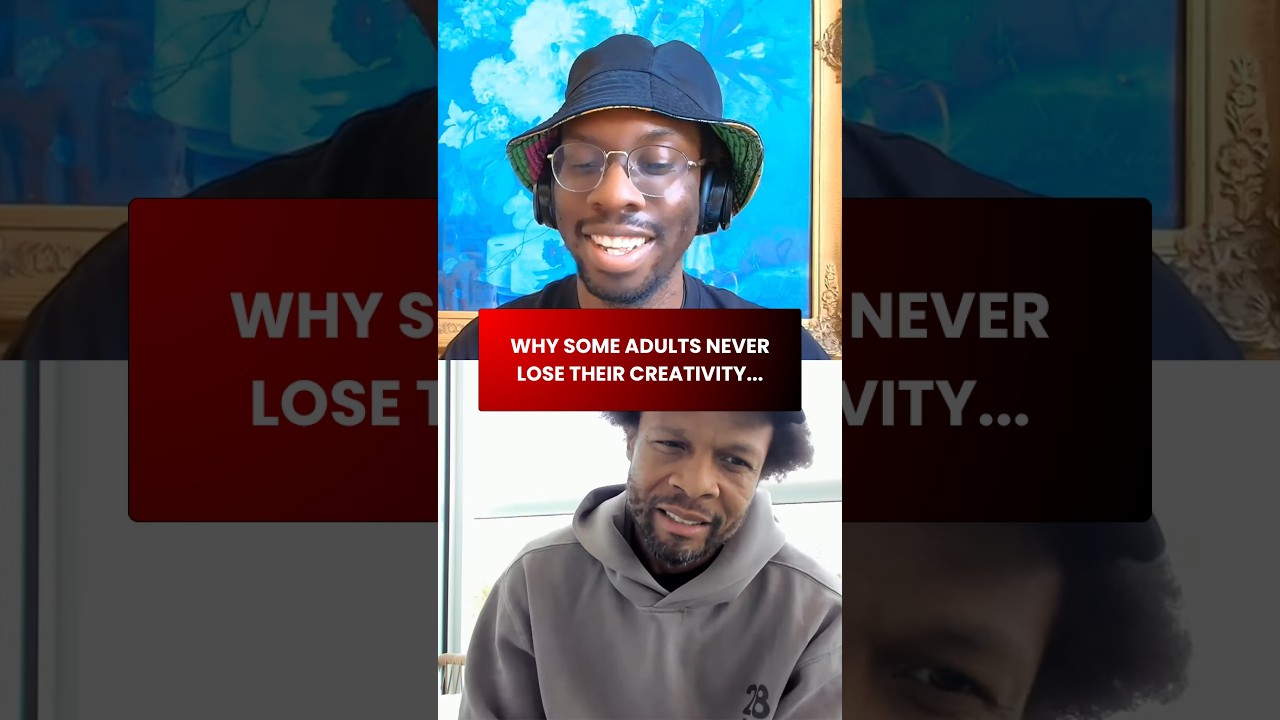
Yo and Worldwide Ty discuss aging at 42, covering physical fitness, maintaining a youthful creative mind alongside wisdom, and how rebellion now shapes business decisions. Ty shares his preventative physical therapy routine, his layered mindset approach, and how he diversified from music industry income into venture capital after earning roughly $300,000 a year.
Chapters
And we're back with another episode of the FYM Show with Ty and Yo.
Yo.
That's my man Ty. I'm Yo. And if you don't know, FYM is a show about wellness. Wellness is something you can link to your health. You can link it to your business. You can link it to your personal life. Wellness appears in many different forms. In FYM Show, we cover a range of topics that I think can always be led back to your wellness. Man, how are you feeling about your wellness right now in 2026, Ty?
I'm doing good. I am, I'm feeling really positive about my wellness. Probably about a week ago, I went to the doctor to kind of look at my back. Not that I have anything like drastically wrong with my back, but it's just been getting tight. And I remember being in high school, having like a bruised tailbone playing football. And so, um, obviously you need your back, you know, for multiple things. Uh, and so I was like, man, I want to just be— you know, I'm 42 this year— I just want to be on top of my health. Not just like thinking about, oh, how much money can I make? Oh, you know, how much sleep can I get? You know, I want to really make sure that I'm being intentional, uh, with my back. So like, I'm gonna do Uh, I signed up to do, uh, physical therapy for my back even though I haven't hurt my back. But physical therapy is not just so you do it because you got hurt. It's just physical therapy. You prepare, it can be preventative. So overall, man, I'm feeling— I'm feeling A1, man. Uh, they try to hit you with the— as you get into your 40s, you start feeling like your body breaking down. I'm not buying into that, you know what I'm saying?
You're not buying it?
Now what I did start doing is I stopped squatting because I had started back squatting a bit heavy, um, but I did— I, I— my workout started to be— I stopped putting weight on my back squat and I just started doing more leg exercises where weight don't sit on my shoulders so I don't put no strain on my lower back in that way, um, because I was like, I was getting it— I was getting into this, this heavier squatting trajectory. I had like, once I, once I was like at like 275 on like the Smith machines, and like those machines kind of like more of like they support you. So really that 275 probably more so like 235 with free weight, and I'm like knocking out 3 sets of 10. Then you're like, so I'm like, yeah, I don't need to put this much weight on my back. What am I— how is this practical? Right. Like, what am I gonna be doing?
Who are you trying to impress?
Yeah, yeah, like, am I trying to like deadlift the car or something? Like, I can still be in shape without having to, you know, squat almost 300 pounds. Like, it don't even make sense.
So ask me this, Ty. Okay, if you're 42 in your actual life, how old are you in your mind?
Me in my mind?
Yeah.
Oh man, I gotta be at least 17.
Yeah, why is that?
Because I think your mind has layers. So like my creative mind, I'm still like a child, but like my wisdom mind, I'm like 73, you know what I'm saying? Like, like when— like I just was thinking about this today, right? And I was like, um, I was doing something, I was driving in an Uber, coming back in the Uber, and us as men, we fall victim to the allure of women, right? You know, from a— rather it's a sexual thing, whatever, whatever it is, you know. And some would, some would say it's sin, you know what I'm saying, what you're doing, all your lusting. But overall, it's just the— this, this, this thing that we just have historically fell victim to, right? And so When I see beautiful women walk by me, or whatever the case might be, like, I have— I'm in a serious relationship. I can acknowledge that a woman is beautiful and be able to say, nah, I don't like— because women start approaching you differently as you get older, you know. And you don't know if a woman is flirting with you, if they're not flirting with you, you know. So you have to almost— well, at least for myself, I'm always like, yeah. Sounds like that's going to be something that's going to be a headache. It doesn't matter how fine she is, it doesn't matter how successful she is. If this is not my primary focus from a, from a dating perspective, this person is not the primary person I'm focused on dating, it's going to be a headache. And that's not an 18-year-old thinking, that's, that's a 71-year-old.
Yeah, yeah, that's a seasoned vet perspective.
Yeah.
Yeah, you've been in the foxhole and you know what you don't want to do. But let's, let's stay there in terms of like layered— your layered mindset, right? So your creative mind is 17. How do you keep your creative mind young, uh, or youthful for that matter?
I think that when you are— at least for me, Um, I do things that keeps my mind youthful, right? Like, I still like sketch little funny weird things while people are having serious meetings with me. I mean, they don't know it, but like, you know what I'm saying? Like, I do, right? I still watch cartoons, you know? Um, like, like I'm, like I'm a kid or something, you know what I'm saying? Like I, I still like joke and laugh and like things of that nature. So for me to stay youthful mentally, outside of like learning, like I just think that learning is a youthful thing, like because you're learning so much when you, when you're growing up, right? I think your learning keeps you youthful because you're learning about the younger people, you know, you learn about all these different things. So for me overall, learning, being, being a kid, you know, at certain, in certain elements where it comes like the small funny sketches or watching, you know, uh, animations or watching anime, like just things that just have more color and like youthful. And it's like, it's marketed towards certain like demographic of people that you probably don't really fit into that demo. Um, like recently I've been listening to this 9-year-old kid, Young Ralo. Um, uh, uh, and like, he's not— he's rapping about 9-year-olds, what 9-year-olds would be probably doing, right? And I'm like a fan of like what him and his father is doing online, you know what I'm saying?
Mm-hmm. Man, I think that's super cool. I mean, I was, I've been kind of interested in aging, but I had a, I took an assignment to write about graffiti. All right. I don't know if you ever seen the hip-hop movie Wild Style, but it's an old school film. It's from like 1982 and it's about a graffiti artist. Right. So as I'm doing this research in graffiti, something that I found out is that in Oakland, what they have been doing is tagging the USPS trucks. So all the mail trucks in Oakland have been tagged up with graffiti. Right. So on one side, people are like, that's vandalism. And it's obviously a deterrent to mailmen who have to deliver the mail with cartoon characters on the side of their car. But Ty, these cars are just so vibrant that they're— I just, I don't know, they kind of made me feel young. And as I looked into graffiti, obviously it's like, it was like young people in New York City tagging subway trains, right?
Right.
And in my mind, Ty, I was like, bro, it's the most dangerous thing in the world to go out at night with nothing but, uh, spray paint and cans and color a train. Like, who would do that? Fucking kids would do that, right? But it becomes a great art movement because it's like, it's youthful, it's colorful, it's, you know, it's creative.
100%.
So it made me think that like, man, why when you get older you stop being rebellious? Like, what is it about aging where you're just like, all right, well, can't do that no more? It's almost like you cut off that part of your mind that when you were like 19, you would be down to do things creative and fun and experience, like, experience rebellion, versus where by the time you turn 35, man, you ain't trying to rebel, trying to sit down.
So, so I still, I still bake in being rebellious into my age of 42, still to this day.
Really? How so?
It just looks different. Like, I might be But I might have a whole bunch of meetings and I might just buck on all of them and just not show up. I tell nobody, just not show up. And people would be like, are you joining the meeting? And then I'll just be like, I don't feel like talking to nobody today. Now it's not the same rebellion as going out and vandalizing a million-dollar property, you know what I'm saying? It's not that same level of rebellion.
It's not, it's not.
But it's on a, like a little teaspoon, right? Right? Like a little teaspoon, teaspoon. I think also I have a certain percentage of being stubborn, which I think plays into that part of like this rebellion, like rebellious kind of like ecosystem. It's like stubborn, hard-headed, you know, you don't listen, you know, those type of things.
I've heard that before.
Um, disobedient, you know what I mean? Like all of these different aspects. So I still have it a part of me because I feel like at times that is a part of being an entrepreneur. It's like you're going against what a system is saying you're supposed to be doing to try to birth something new, a new way of life, a new— at some point, like graffiti has become a point where people may pay money for people to come in and do these, these, these, these art pieces, these activations, you know what I'm saying? Yeah. So, so I feel like for me, I, I thrive daily to try to find youthful things to do, you know what I'm saying? Like, super late is youthful to me. I was up to like 5 o'clock this morning. I feel like that's a, a young person thing.
Like, yeah, you're wild. 42, being up till 5 in the morning.
Yeah, I was watching this— I was watching the new show on Netflix. And the whole time I was watching it, like, wow, I need to go to sleep. I have to go to sleep. I'm like, this is so good. And I ain't go to sleep till like, like a little bit right at 5, and I had to be right up at like 8:30. But my, my stylist ended up canceling on me, so I didn't get my hair done. So I was able to sleep in a little bit longer.
But I did want to mention, I, I saw your, uh, podcast with Ray Daniels. I thought it was really dope. Shout out to Ray. And Ray was very complimentary of Ty and I think your acts of rebellion in your business and in your entrepreneurship life. Um, and I thought it really kind of stood out to me because— well, what I want to ask you, how long have you known Ray? Like, when did you meet Ray and how have y'all been able to foster your relationship?
I met Ray while I was— I stopped working at Delta 2011. 2018. So I had to meet Ray either right before I started working at Delta or in the very early stages of it, you know what I'm saying? And I didn't meet him because I was working at Delta. I just can remember because he the first person that was like, yo, you work at Delta? I think I just see you like loading the plane. I'm like, oh yeah, what? Oh, you're on that such flight? He was like, that's crazy, because I used to work at this. Right? And, uh, wow. And so over the years, being in a relation— being in the industry, building relationships, uh, you come across people. And I used to— you know, my man Irv started interning with Ray back in like 2010.
Mm.
I'm saying, and so that's kind of like my— I don't know if that was my first introduction to Ray, or that was my first introduction to being— to know somebody that was— that's a part of like his organization that he was building, you know what I'm saying? Um, but yeah, I used to call him and ask him questions about producers and songwriters because I see that's what he was doing, you know. Anytime he would answer my phone call, you know.
I mean, he talked about how, like, you just never know what Ty will say in the meeting. Like, you'll just come in, it's just— just never know. Like, but Ty, what made you feel comfortable always speaking your mind in spaces like that? Because I do think that's also an act of rebellion. Especially in spaces where you're not necessarily, uh, seen as— you're able to say how you feel, right? You're— you tend to be on eggshells when you're trying to come up in the industry like music. Like, where did that act of rebellion in terms of just like, I'm never not gonna speak my mind, come from?
You want to know the secret sauce to that?
Please.
I didn't know no better. I literally— I didn't know no better.
Yeah.
You know what I'm saying? Like, I didn't— it's almost like when you remember people talking about slavery, right? And you would hear them like, "Best stop that, master gonna get you." You know what I'm saying? Like, so like, I never knew that I couldn't just speak my mind about how the music business— like, I just never knew that. You know what I'm saying? And by the time I learned, and by the time I learned and I learned why people say you shouldn't speak your mind, then I'm like, that's, that's stupid. So when I, when I became aware of why people run from it, and I was like, what? So you mean tell me that you're not gonna say what the truth is or how you feel because you're afraid somebody gonna take something from you? But, but this thing— I'm here because of the Lord. I'm not here because of a human. Y'all crazy.
Yeah. Mm-hmm.
Like, like, and so my— even though I wasn't reading the Bible all the time back in the day like that, I just believed in Christ. I just believed in Jesus. So I'm like, so you mean to tell me that y'all afraid of some humans to the point where you don't even want to talk about your experience because you're afraid that it's going to offend them? But you're not lying though, and you're not telling their personal business. You're not saying, oh, he cheats on his wife, I watch it all the time, every time I'm around him. You're not saying that. You're just basically being like, man, you know what, sometimes these contracts do look a little predatory and it feels like it's a ploy. Seems like everybody's getting taken advantage of. Seems like they make everything difficult even when it's simple, just to kind of like get over on mainly Black and brown people. But white people have gotten screwed— get screwed as well when it comes to music business. Bob Dylan had a terrible deal when he first started, you know what I'm saying? Like, I didn't know any better.
Well, I think it's so interesting to your point because I learned during your interview about the letter that Ray Daniels wrote in 2020, right, during like what was going on with George Floyd, which is essentially him speaking his mind. But then he talks about in the interview how that ended up having like long-term effects on some of his relationships.
Oh yeah.
And his job.
Oh yeah.
You know, I mean, but you didn't, you didn't mention in the interview how you felt when you read that letter. Like, how did it make you feel when you saw it?
Oh, well, the reason was, so me and Ray been trying to do that interview and we kept like missing each other. Well, he wasn't missing, it was me that when we really had it booked, I ended up getting sick and couldn't travel. Uh, well, I was a little under the weather and didn't want to risk it, right? So I was in town like, yo, let's do it. But I was trying to think about like, what do we talk about? Because I'm not the type of person to just get on to just, just gossip about people, you know what I'm saying? I want to have like a through line to my conversations, right? And I'm not saying that's what Ray does. I'm just saying overall, if I'm thinking about it, that's why I was like, I wonder what Ray want to talk about this, because it's personal to him, right? And when I first read that article and I told Ray, I was like, man, who the hell is this, man? This, uh, this person is not the person I know that's like hiding behind and like being anonymous. Like, what is this?
Anonymous?
Yeah. And so hearing him tell how it got to be anonymous was like, oh, that's— that'd be other people putting their fear on you, you know what I'm saying?
Yeah. True, but like, how do you not allow other people's fear to influence the way you express yourself?
But I'm hard-headed, boy. Like, I'm hard-headed. Like, a lot of the— there are pros and cons to all of these things, right? So, and when I say all of these things, meaning how you like interact with life. So for instance, if you're a person that's passive-aggressive you're, you're less likely to say things to people when they bother you, right? So that means that a person is less likely to know that you irritate them or you don't like them, and they will bring opportunities to you because they think you cool, even though passively you are passive-aggressive towards them. You don't really like them versus somebody who is outwardly like, I think you're not smart, I don't like you. right? You shut down any opportunities that's going to come to you. But on the con side of being passive-aggressive, people just think they can push you over. People think that you're not, you know, you're, you know, like, you're just gonna do whatever they say that you're gonna do, you know, you're a coward, you know what I'm saying? But you might be more passive-aggressive from the standpoint of, I'm gonna remove myself from this because I'm kind of crazy, so I'll just go and slap somebody So let me just remove myself and not respond. And that can be viewed as passive, you know what I'm saying? But it's just a protection mechanism. So for me, I just be like, yeah, that ain't my life. Like, how you all are living and deciding to live, like, I'm not putting myself into a situation that, that I had the free will to be able to control to better protect myself, right? So if I know I work in the industry that, that can got— that can just fire you at any time, I'm not gonna go and get the $10,000 a month house and the $1,200 a month car and all of the jewelry to try to look like I'm trying to appease somebody. And then knowing that I'm in a risky business, it's not— this is not like I own 4,000 acres of land that's producing money. Like, that's not the case. I deal with— man, I deal with artists who wake up one day and be like, I just want to destroy this person's life and not want to pay them anymore. Like, that's what we work in. So like, being hard-headed and being clear and being stubborn to us, to a small ingredients, right? It's a small piece of that, that pinch of stubbornness that creates fearless, you know, actions. And so I don't promote a person just walk around being arrogant, blind, stubborn, harming people, hurting people. But I do think that, um, being, uh, arrogant, a little spitch, little pinch, can, can really, really be your, your confidence. you know what I'm saying? When you're overly— you over-index on confidence, it can be viewed as you being, um, arrogant, you know what I'm saying? So like, I just try not to over-index on being hard-headed. I try not to over-index on being stubborn. I'm, I'm working out and not over-index on investing, you know, or trying to do a multitude of businesses, right? So I'm trying to like reel in things and just do them at a tasteful consumption, you know what I'm saying?
I feel you. Something that you mentioned during the Ray Daniels podcast is like music being something that's like intangible, like it's an industry of intangibles. So, right, like the value of it changes and shifts, um, or just like the value of somebody's ideas can be like, oh, I want to do this and then I want to do that. I think that's what I'm working through in terms of like, man, working in the industry of intangibles. Because it's just so— what's the word I'm looking for? Uh, it's, it's just, it's a constant change. It's like it's in constant influx. Yeah, right. So it doesn't feel like you, you're standing on solid ground ever because the intangibles are constantly changing.
Yeah, yeah.
So I'm just asking you, like, how do you— how did you, like, adjust to those intangibles or this being a risky business? Because I guess it's been risky for you ever since you entered in working with songwriters and producers.
Another secret sauce. I didn't realize it was risky until I started making money.
Really? Yes.
I mean, when you consumed in a world, right? I don't think a lot of police officers, when you ask them what's the first thing you think about the job you do, I don't think they like, oh, I'm putting my life on the line every day. Oh, it's risky, right? But yeah, because they so in it, man. You look at a police officer and be like, boy, no, them folk, why they be— they be— you know, straight, that sounds like a high-risk job, right? Now I'm not saying that they are completely oblivious to it. I just think that they working it every single day that it doesn't— it doesn't read risky to them, right? So I started being like, oh, this is— this is a little risky, when when I started making money and I had to like figure out how I was gonna diversify. And I was like, um—
Now when you say started making money, like how much money we talking, Ty? Like a little bit of money, a lot of money? Like what's making money to you?
I'll say about $300,000 a year. And I started being like, okay, okay, wait a minute, it was so hard to make this Do I put it back in this? I don't know, man. This don't— this don't seem like— seem a bit risqué now, you know what I'm saying? Like, okay, I see what you—
I see what you mean. I see what you mean. So you make the money and you have the opportunity to invest the money, and you're like, oh, do I put it back where I got it from? Comes the realization that that was kind of— yeah, like, like, but that would be—
now I'm trying to be like— especially when you— when you— because you gotta realize, like, for my journey, I've had so many pockets of success with music that led up to before I even found it. Brent, right? So I had like some songwriter successes, managing placements. But then when we did start building the Brent stuff, we had the crew success, then we had the Sunder success, then we had the Brent solo success. Mm-hmm. By this time I figured like, man, I don't kind of— I don't got all of my— I don't even think nobody else is gonna get these, you know what I'm saying? This is before—
Yeah.
F the World. This is before Wasteland. This is before any of those TikTok records start going viral. These are all just like, oh wow, like I can kind of like live my life just off of how these things is working. You know. And hold on, wait a minute, am I gonna get a fourth thing? So now I made this money, I'm like, I might want to put this somewhere else because maybe I went to this— went to this pool, the fish in this pond too many times, in this music pond, and it might not be no more fish. Yeah.
Yeah. Did you, did you talk to anyone about that in terms of like looking for some type of advice in terms of how you would navigate the realization that you were working in a risky business?
Initially, no, but as time goes, I started to ask Troy Carter more questions because I watched him like invest into another risky industry, which is venture capitalists. No, 90, 97% people fail, you know what I'm saying? Um, speaking of venture capital, you like StockX is, is live. I got in at StockX at $135, so we'll see how it goes.
Okay, all right, congrats on that.
But, um, but that's risky business. Are you thinking about a StockX they just went public, but people been investing their money into that business since 2010, 2011 or something like that. Like, it's been— so now people's gonna start to be able to get some of that money out. Um, yeah, that's a, that's a long time for your money to be tied up.
Yeah, yeah. Not knowing 2026 is when you'll finally be able to like pull some of that money out.
Crazy.
I mean, I know, I know money ain't real, but it feels very real when you think about it sitting somewhere.
Money feels very real when it— when it's— when you know, like, I got it but I ain't got it, you know what I'm saying? And so, so yeah, so that, that was— that was like my thinking is like, oh, let me ask Troy because he just went from music industry risky to venture capital risky and and hit crazy on both. Yeah, you know what I'm saying?
I mean, to me, that's, that's a very impressive resume to have success in both of those industries. Um, all right, do you got any more secret, secret sauce for us about pivoting, uh, and having success outside of—
Man, it's so important to be curious. Because when your curiosity take over, you're just curious. Like, you don't know no better because you don't know no better. You're trying to learn because you're curious. So over time, like, by the time we did our second— our second, um, series, when we started doing like the essays, by that time I had made friends and alliances. So when I started talking about the information that Tata gave me I called Ty Ty and say, hey, I'm doing— I'm writing this essay. Is it cool that I name you in this? This— I'm writing this article about how to make it in the music business through what we was doing it. He was like, oh yeah, kid, you good. But like, before then, I would just like— I'll just blurt it out a name, you know what I'm saying? But I started to respect the information people giving me behind closed doors about their life and their situation. And I was like, hey man, do you mind if I share this? Almost like a journalist, you know what I'm saying?
No, absolutely. Oh yeah, I didn't, I didn't realize you were doing that because sometimes I'd be a little worried. I'd be a little worried. I'd be like, I don't know if this person will be okay with it. I'll be a little scared. But like, I, I tend to trust you, you know. I tend to believe that Ty wouldn't tell me anything that I can't print. But there have been times where I was a little Well, I mean, you know, First Amendment is still a real thing, but you're like—
I try not to like disclose people's personal life and personal struggles unless they give me permission to, to synthesize it through a conversation, you know what I'm saying?
Yeah, I mean, I think that's incredibly respectful. I mean, you know, we, we just hit 30-minute mark. I ain't gonna hold you all day. I think this was a, a incredible conversation about a lot secret sauces that Ty has been, uh, holding on to and gathering. Just do it, um, you know, you know. But okay, give me, give me, give me one more. How— what's the secret sauce to aging gracefully?
Aging gracefully in any business. One, I think it's a combination of always staying curious and listening to the youth, right? Like, even if you're a lawyer And you historically, the— like, being a lawyer calls for you to have a certain level of experience. But I do think that your younger junior attorneys, paralegals, add value, you know, and it helps you. And hanging out with young people in appropriate settings, right? Like, I'm not talking about at the strip club, you 45 years old, you're, uh, 60 years old, you only time you, you run into younger adults is when you're in like strip clubs. No, but like going into, you know, uh, youthful conferences that probably gonna attract younger adults, you know. Um, I think Invest Fest is one of those. It attract adults of all ages, but being in the presence of youth and play and doing respectable hours to be able to ask them questions to see what they think is cool, you know what I'm saying? I think that's a, that's a really key thing to stay youthful from a mental perspective. And then from a physical perspective, what you eat, how long you sleep, right? Um, what you eat, how long you sleep, and your fitness strategy. Rather that's walking a mile a day, running a mile a day, doing 2,000 sit-ups and push-ups combined daily, whatever those things are, I think that is your youthful— staying youthful strategy.
Man, well, that's another episode of the FYM Show with Ty and Yo. You got any secret sauce lessons for us, leave it in the comments. Please like, subscribe, share with anybody that might need some secret sauce in their life. We will see y'all next time. Thanks.