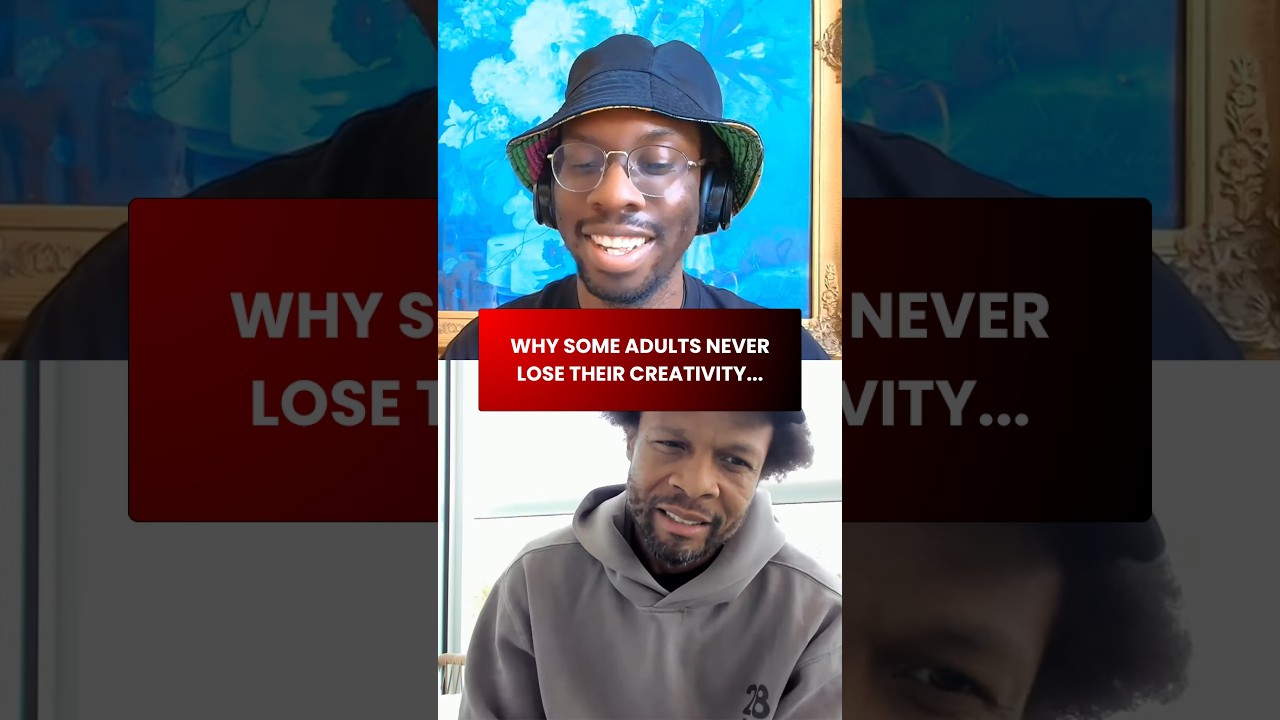
Yo and Worldwide Ty examine August's pivotal moments in Black history, from the 1619 arrival of the first African slave to MLK's "I Have a Dream" speech. They criticize schools for erasing Black entrepreneurship and inventions, urging listeners to hunt down rare books like James Baldwin's work on the Atlanta child murders and Edwin Embry's 1943 Brown Americans to fill the gaps.
Chapters
And we're back with another episode of the FYM Show with Ty and Yo. That's my man Ty. I'm Yo, and this is a little show we like to call the FYM Show. We like to have very interesting, thoughtful conversations on this series. Sometimes I call our podcast the Chatcast because sometimes we just will just find a topic, we'll chat about it and look for, you know, just very essential facts and meanings in history and business and in life. And Ty, you were really getting into the month of August before we got on today. And just August being such an interesting month with a lot of great historical moments in this month. So you want to kind of tell me a little bit about what you've learned about August?
Right. You know, our last show, you know, we talked about different milestones. But this week, it's interesting because, you know, biblically The number 8, you know, stands for renewal, um, fresh start, uh, just newness, right? And so think about the month of August. Women— I want to say 1920, women got their fresh start to be equally Treated the same as men in the United States of America.
Mm-hmm.
It was this fresh start of like I Have a Dream speech where it was nationally televised that all of the different kids, Black, brown, white, who are pure in heart, was able to get this speech and that seed, that beginning of this seed being planted about we're all one human. All the way down to the more gruesome part of it where the first African slave touched soil in the United States of America in August in 1619. So there's this overall concept of about— and then you have the Thurgood Marshall Overall history that happened in the month of August. So for me, you know, August, as we're like talking about fresh starts, renewing the end of one chapter, opening up another chapter, it's like super, super, super. Beneficial to just know what August means, you know what I'm saying? Like, you know, it's also towards the end of the summer, you know what I'm saying? It's a season, a season closer, right? So it's a new season gonna start beginning. And so I just thought it was pretty, pretty interesting because when we're here, we're talking about things to stimulate your mind, because I feel like stimulating your mind, causing you to research, cause you to get educated, cause you to learn more Also is super, super important to like wellness and and you know stimulation and aspiration so that when you leave this when you leave this show, you know we're not we're not gossiping we're not we're not talking about what's the most you know crazy TikTok you know baby gospel. Comment AI song that they heard for the week. Really trying to give some, some advantages to information that can actually make you think, make you go down the history books, make you start looking at things a little differently, especially if you're a woman, especially if you're Black, especially if you, you know, if you experience any type of hardship in your life, to kind of know where civil rights was at, you know, this huge march with 250,000 people marched U.S., uh, the United States, um, Capitol, you know.
And I think that— Yeah, yeah.
It's all— when we start talking about all this stuff, man, it's extravagant and it is interesting and it does make you kind of sit back and ponder about where life is today and what you're able to experience because of what the newness of the past created for you to actually experience that today in, in a healthy way.
Preach. Also, it's so important to know about your Black history in a time where they are taking books out of schools, they're taking books out of libraries, they are trying to remove this information and knowledge so that we don't have critical conversations about race, right? Like, you cannot erase the importance of that I Have a Dream speech. During Martin Luther King's birthday, right, we would get out of school. Um, my parents, because we had the skating rink, we would be open on Martin Luther King Day and we would play the speech in the rink.
Oh, okay.
So I would hear it every year from start to finish as people are skating around the rink. You go from hearing, you know what I'm saying, your hip-hop songs, your favorite hot song on the radio, And then for like 25 minutes, we would just listen to Martin Luther King talk to us in the rink. And it was one of those experiences I don't think I understood at the time why that was important to, to take that moment and play that speech for people in there. Because just, you know, again, you go to the skating rink to hear the hot records. You're trying to hear the song that's going to make you do your little, you know what I'm saying, your little one-two step.
Right.
And now you got this man and like, Ty, the thing about Martin's voice, man, that it was so powerful. It really cut through.
That voice, it was really—
he really was a speaker, right? He really, he really talked to your soul about what was really important at that time. And I wanted to ask you, Ty, just about what was your relationship with Black history growing up, and did you feel like you were getting the education that you kind of needed to, to understand, you know, your people?
I don't think that we was properly positioned to understand the specialness of Black history and the history around it. We learned about racism, we learned about slave trade, you know, we learned about, you know, we did, you know, you knew about Martin Luther King for multiple reasons, but I don't think they spent a lot of time teaching you about the incredible things that was created because of slavery, all the different inventions, all of the different journeys that had to happen. They didn't talk about— you would hear people talk about the Black colleges being founded by white people, but they didn't understand that in order for the Black colleges to be founded, white people had to be the part of that story because that's how boxed off Black people was from being able to provide education for their own people. When you start talking about the NAACP, it's like people are, oh, it was started by— but a lot of these things had to be started. And I don't think that they did a great job teaching us the importance of how working with all of the different races was the secret sauce on breaking a lot of these racial barriers that was broken through. Now, that's not taking away nothing away from Martin Luther King, Malcolm X, Harriet Tubman, none of these incredible Black leaders. But I don't think in school they taught us how the importance of all of the different people, the very same people that was doing the enslaving, there was a group of people that was working against that. Because they didn't believe in none of the things that was going on. So I don't think we got— we learned about— I don't think we learned enough about Black Wall Street. I don't think we learned about none of these small pocket of communities or Black communities that was very, very successful, self-sustaining, before they, um, before they got burnt down and they got, you know, created— a lake was created on top of the city, you know what I'm saying? They didn't, they didn't really give us like the brutal truth of what it was. It was like this overarching thing about slavery and the slave trade and cotton and all of these different things, but it didn't talk from a very empowering perspective. You know what I'm saying?
Mm-hmm.
And I think that's the flaw of the history. It's like, yeah, the history is the history, but there was a lot of strength that was birthed You know, out of these experiences, and there's a lot of inventions that wouldn't people wouldn't be able to operate today if some of these things wasn't created, right? They don't they don't even they don't even go as deep as talk about like the the the trademarks and patents. Those things was created to really suppress and and take away from black people. because of the amount of things we was inventing and being groundbreaking and things of that nature. So I don't think school did a great job at none of that, you know what I'm saying? So you learned that back when you get older, then it make you a little mad. You're like, yo, why y'all ain't—
Yeah.
Why y'all didn't talk about, you know what I'm saying, all of this in a way that made it make sense? Because entrepreneurship was really big in the Black community historically. And we wasn't taught that when we learned about Black history and slave trades and stuff like that.
We did not. To Ty's point, Black history to me was something that you acknowledged in February, but you acknowledged it in a general way. You just threw all the Black anything into a pot and was just like, hey, y'all did that.
Black history.
Y'all did, y'all did that. But what did we do? You know, and how do you teach that to kids who might not have access to books at home with that information and might not have access to parents that have the time to teach them? Because there's still so much oppression happening that although there's so much, you know, progress, the things that we've overcome, systematic racism is still very real.
You know, Very real.
And the fact that, like, if you break down the word systematic, that means you are in a system that was created to hold you back. That is a very hard thing to break. You know, slavery had lasted such an extended amount of time, you can't undo that in a couple of years. You can't undo that in a couple hundred years. You know, it takes a lot of time and diligence and a lot of work to break a lot of these You know, we talk about generational curses, but I think one of the things that's hard to break is systematic racism.
Right.
Breaking through that requires even more than just money. You need to get bills passed. You need to get legislation support, like the things that you need, you know. But I ain't going to sit here and preach to y'all all day about it. I will say it's crazy to think about there was a day where the first slave touched soil. You know, that's another thing about history, to know that it actually happened and not just something that's like, uh, a fictional story that was created, that was made up. Like, no, bro, like somebody flesh, same flesh that you have, had to go through so much for us to even be able to sit on these mics and talk today, you know. Um, but yeah, so I mean, I, I think it's fascinating that you have to learn so much outside of the school. Where do you feel like you got your Black education though, your Black history education, if it did not happen in school?
Well, being curious, you know what I'm saying? Being curious, man. That's where a lot of these ideas and thought process— because, you know, when you start looking at the history of these things, being Black, man, you got to find confidence to be Black in the United States of America. You know what I'm saying? And it's nothing more— it's nothing more of a confidence builder to learn about the history of past inventors, past, you know, business owners, past successful business owners, you know, what trajectories they was able to like pale in their walk in life. You know, to start thinking about how they would mobilize. You know, when you think about the Black Panther Party, when you think about the Bloods and the Crips, the origin of these 3 organizations.
Yeah.
And, you know, it was curiosity for me. Curiosity is the one that's like, yo, why this like that? You know, or why is that like this? And it caused you to dive deeper into it. So you start to learn about the first Black woman that worked at NASA. You start learning about the first Black congressman, congresswoman, right? Then you start learning about the first Black successful billionaire and millionaires and different families, wealthy families that somebody in their family transitioned that curse of not having, the lack of. And then you start learning about all these different Black families that had real, real, real influence in the cities and the regions that they was from. And you would never have gotten there, man, if you wasn't curious. So me, I was just always curious about what Black people have done in the United States of America and how that's positively impacted my life today.
Amen. You have to be curious. Uh, to your point, James Baldwin is such a fascinating writer to me because the way they talk about him, they don't always associate him with Martin Luther King and Malcolm X, but he came up during that same time frame.
Yeah.
Like watching those very important members of the civil rights movement pass away And to be the writer that he was and be the man that he was. But, you know, when you become successful, certain stories don't get told about you. Something I didn't know was that Baldwin came to Atlanta during the Atlanta child murders and wrote a book about it.
Oh, wow.
And I always, I'd always felt like the reason why the book is not really that successful is because he did not believe that the, that the young man was guilty of the murders.
Mm-hmm.
His book pretty much says, like, I think there is something else going on here that I cannot say. I think Wayne Williams is the man's name, the young man's name, is guilty. And he wrote this, like, very impeccable book about Atlanta at that time, because I didn't know that Atlanta's old nickname was, like, the city too busy to hate. I did not know that about Atlanta. Like, I did not know anything about it historically from the perspective of how it looked in the '70s and '80s. And I especially never thought James Baldwin was here.
Right.
That James Baldwin was in the courtroom with Wayne Williams. Like, what? Why would I not, you know what I'm saying? Coming from Atlanta, that would be really moving for our writers to know Baldwin was here on this soil, looking at probably the biggest court, one of the biggest court cases in Atlanta history. You got all these Black men being murdered, and to see Baldwin write about it, I was surprised that we were not taught this. In Atlanta schools.
Right.
Where I felt like, why would you not want to at least let young people know that this very tragic thing had happened in this city, and one of the most important Black writers of our time came here and wrote about it? It's because he didn't agree with the city. He didn't agree that Wayne Williams was guilty. So what happens to the book is it goes out of print and they stop talking about it.
Right.
But being curious about Baldwin's life is how I discovered that. But it was one of the last books that he wrote before he passed away.
Gotta find out.
You have to find that one, man. I'm telling you, it's, um, man, listen, I was trying to, um, man, I'll tell you this, I was trying to do a podcast about it because, um, I ended up meeting the defense attorney for Wayne Williams who was trying to get his appeal done. I met his son who happens to work in music, and he was trying to get a movie about his father's life made. And I was trying to get something put together so that you could tell the story of being a Black defense attorney in Atlanta defending a child murderer for all these Black men, because he also didn't believe that Wayne Williams was guilty. Uh, felt like they had evidence to prove that the Klan had something to do with all those murders. But of course, the judge never wanted the appeal to happen. So for years they tried to get the appeal across and they would never, uh, allow him. So he's been sitting in jail after being found guilty without having a chance to appeal his case.
Hmm.
This has been going on for 20-plus years. So anyway, I was trying to figure it out. You know, you try to go through Hollywood channels. It did not move as fast as I wanted it to, but it's definitely a movie there, Ty. I'm telling you, it's something there. It's a very special story.
Crazy.
Yeah, please do. Um, man, but I guess that's the thing about history, man. Once you start digging in, you might be surprised by what you find. And that's why it's really important that we encourage our listeners and our viewers to Do the knowledge, man. Go check out the library. Go find those books that are, you know, they might be out of print in a store, but, you know, online, man, there's a Rolodex of things that you can have access to that will piss you on to a lot of history. And, you know, we just encourage you to do that.
You wanna know what's so crazy? I got this book I'm gonna pull out, right?
He just pulled this book out.
That's a book. This book, you know, I haven't finished reading this book yet, but this book is called Brown Americans: The Story of a Tenth of a Nation. It was written by Edwin Embry. And when I tell you that if you look at this book, this book is like—
Yeah.
It went like, listen, this is how, this is how old this book is. Like, this is October 5th, 1943. This book went out of print. But basically this book— and I'm gonna start by reading it because I've been reading, I'm almost spent some time today— this book basically is written by a white man that says when Black people get their stuff together, they're gonna— it's gonna be problems. That's basically what this book says. That's why I actually got it. My friends Freeze told me about this book, and I happened to find it on eBay, and you can't really find it, bro. Like, when I tell you that this book was published in 1943, and this was like, I think, a reprint of it or something. But I look forward to actually finishing this book, bro, because it's like I'm only on page 16.
You have to tell me. How much was it on eBay?
Well, this book probably about almost $200.
$200?
Yes, bro.
Yeah. That's crazy. Now, how did Freeze know about it?
I have no clue, bro. He couldn't find it. He was like, bro, I heard about this book. It's hard for me to find it. I just got online. I ended up finding the book, bro.
Yeah, but see, that's what I'm saying. $200 is kind of expensive for a book. I'm not gonna hold you. That's very expensive for a book. Not even like a first edition. But that's what I'm saying, like, books go out of print and people never know the knowledge that's inside of them. That's a very interesting— yeah, a white man wrote that?
Yep. It's called Brown Americans: The Story of a Tenth of the Nation. Yeah.
All right, so we gotta, we gotta come back once you finish it and inform us because we all can't pay $200 for a book, but you can pass it down. We can get that secondhand knowledge.
I've had this book, I've had this book probably since before COVID Oh wow. Yeah, since before COVID Oh wow.
Yeah, you pulled it out easy too. You knew exactly where it was.
Yeah, right here. I, I bought it from Miami. Yeah, I brought it from Miami.
Yeah, man, it might be something in there waiting for you, Ty, because that— yeah, that's a fascinating subject. I just saw, um, you know, No Name the rapper has a book club. She just made a video about a white man who, uh, changed the color of his skin so that he can go into the Black community as a person of color. And to write about it specifically. Yeah. I got to send you the video where I think he went to a doctor and they gave him pills like that made him like darker, that changed the complexion of his skin. Yes, bro. Yes, I'm telling you. And she's just like blown away that some man actually went to a doctor and they agreed to assist you in doing this. And then she said, I think he, I think he went to New Orleans. This is around the time that we was in New Orleans. She said he went to New Orleans and Black people treated him like he was one of them, like, because this could just solely because the color of his skin. They was like, hey bro, where you staying at? You get— he was like looking for a hotel. He was like, well, the color-only hotels are pretty, are pretty down, you know, down, down bad. Come stay with one of us. Like, he integrated himself into the Black community. And then left and wrote a book about it. And she was just saying that the people in the community does not benefit from that type of behavior. But of course he gets a bestseller, he makes all this money off this book. But what happens to those people that were there for him, that supported him, the people that he took their stories, pretending to be one of them, you know? So is, is It's tragic when those type of experiences are true stories, that race relations have those experiences where people are like, they see the value in the Black stories, right? They see value in Black lives, but they don't want to support Black lives being able to tell their own stories. You know, it's not like he was supporting a Black person to write their stories and write their experiences.
Right.
He was like, no, I'm pretending to be one of y'all.
I'll be one of y'all. I'm gonna go all the way deep.
I'm one of y'all.
Skin change and everything.
He went undercover. An undercover brother, but not a brother.
Crazy. That's kind of crazy, man.
That's why— but that's why books are important, y'all. That's why literature is important. That's why telling your stories are important, because someone's gonna see value in your story. Someone's gonna see value in the Black experience. It might as well be you.
1,000%.
1,000%. You know, well, Ty, again, I'm checking in on you because I need to know what happens on page 30 of that book. I know the deeper you get into it—
I'm gonna knock it out now. Like, I'm inspired. I'm gonna read it. It's only, it's only, um, it's only, uh, 100— no, it's, um, about 240 pages.
Yeah.
Yeah.
Some great history, great history in there. Well, y'all, that is another episode of the FIM Show with Ty. Yo, please do the knowledge. That is the name of this episode. Do the knowledge, y'all. Yeah, especially if you are, you know, have our skin complexion and you've been on this country and you know how the school system is. We have to do our own history. We have to do our own knowledge. You know what I'm saying? So we can properly pass it on to the next generation who looks like you, man. They they need to know as well. And you know, we'll see y'all next time. Fym Show, Tyon Yo. Peace.