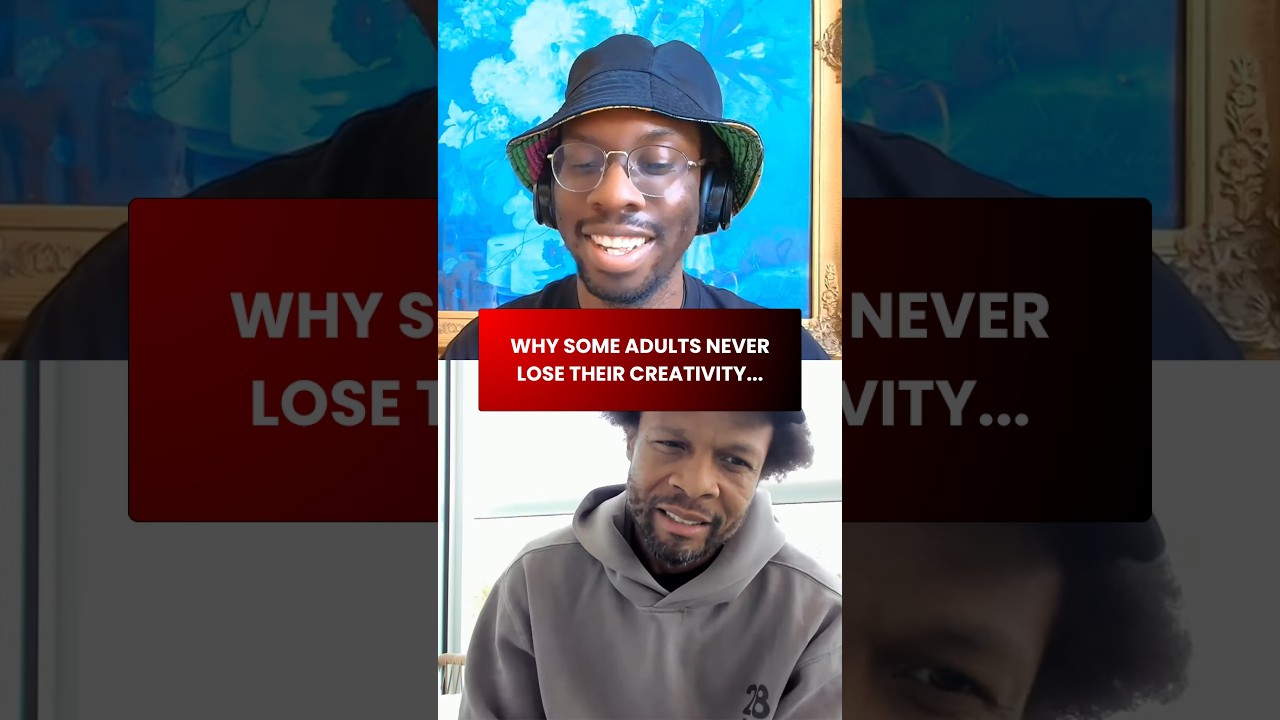
Turning “No” Into Your Next Strategy | The FYM Show

Yo and Worldwide Ty discuss turning rejection into strategy. Ty shares stories from his first year as a sports agent navigating undrafted free agents and cold leads. Yo pitched a documentary-comedy book through 17 submissions and eight rejections before finding the right timing in publishing.
Chapters
And we are back with another episode of the FYM Show with Ty and Yo. That's my dog Ty.
Yo.
And we have been doing this show for a couple years now. And one thing about FYM, it's a show about wellness, and we hope to enlighten our audience with real life stories and experiences that they can take with them and apply to their lives, to their businesses, to their careers, and things of that nature, right?
Yeah.
So, Ty, I received an email recently and I saw the R word, my least favorite word—
rejection.
Yeah, I saw the R word and I said, hey, you know, one thing about like working in, I think, like publishing or any type of industry where you send out pitches, you have to wait to see if you're gonna get your yes. Um, the longer you wait, the more you just sort of like imagine the possibilities. Very rarely do you imagine The no, you know, right? Or like, ah, this ain't for us, or, oh, we already got some stuff like this that we working on and this just ain't for us. And I wanted to ask Ty, how do you, I guess, talk to your clients and talk to people you work with about rejection when it comes to things that they're waiting on?
Um, yo, we gotta pause. Line yourself up because sometimes you're talking like half your face getting cut off. See the camera?
Yeah, right there is good.
Yeah, cool. All right, all right.
But yeah, I was asking Ty, like, how do you, how do you talk to your clients about the rejection?
So one of the, one of the earlier, earlier things I learned about talent management and managing talent as a whole, you know, I had to— I had the most wildest experience about rejection. So my first year as a sports agent on the football side, I only signed one client, right? And it was like a— it was kind of like a fluke. Like, literally, I signed him. I literally verbally— he verbally agreed to sign us at the studio, right? So, okay. I'm like, boom, I just got certified in October of 2023, and then NFL Draft 2024. So this is a player named, um, Trezman, right? So Trezman went to the Alabama University— University of Alabama, played at UGA. Oh, he finished his career at Alabama, right? Played linebacker, can play football, right? But for whatever reason, he was just like, man, there's a lot of agents that don't look like me, so I would prefer to go with an agency that looked like me. So I'm new, I'm like, dang, this is my first client. So, you know, I'm doing all the stuff that clients got to do.
Boom, boom.
Fast forward to draft night. Now we knew he wasn't going to be a first day guy, second day guy, and didn't know if he was going to be third day, but we figured he'll get an undrafted free agent contract, right?
Right.
So you know what I'm like, man, you know, he, uh, he wanted to come down to Miami, him and his partner. So I'm like, y'all come down to Miami for draft week, we'll kick it, get the good news, whatever, right? Right. I never forget this. We're at the Miami Heat basketball game, and we went right as the draft was ending. So we sitting on the floor, right, watching the game, and at halftime, pretty much the draft ended. So I'm on the phone, boom boom, and this is my first time like doing this, right? So, okay, I never forget this. One of the players— the team that I thought was gonna pick him up was the Oakland Raiders. Well, the Vegas— Las Vegas Raiders.
No.
And I remember being on the phone with the guy and he was like, you should probably start feeling other options. That's how slow it felt when he was saying it. And I was like—
He slow-mo'd you.
What? I was like, oh Lord. And mind you, he's right here in front of me because we're at halftime at the game, at the Heat game, and he's looking at me while the guy's telling me, you should probably, you should probably go with your other options. And I'm thinking to myself, there ain't no other options.
Oh shit, there ain't no other options.
Oh Jesus. So I'm looking at him, so I hung the phone up. I said, yo, Trez, Go back, watch the game. Let me work, right? Had no clue what I was about to do. Okay, talk about some let me work. So he goes back, and I just wanted him to go and watch the game so he didn't see me panic. I'm like, oh Lord Jesus! I don't know what's going on. So I'm following up with everybody on text messages and phone calls. The draft is over with now, but after the draft, it's about a twelve-hour window. that, that you could try to get you an undrafted free agent contract. Man, that thing was so dry. I was like, Lord Jesus. And so that was such a, a blow from a, from a, uh, rejection perspective, because I had to literally go back. At some point I had to go back to the— mind you, we still got the second half of the game left. So at some point I had to go back and sit beside him, right?
Yeah.
To start talking?
Knowing what you know.
Knowing that no team has called me, and the only team that I've been talking to, it was 2 teams. It was Las Vegas and Seattle Seahawks, and both of them things went cold on me. One guy, the guy with the Raiders, was like, man, they oversigned on the offensive side. I don't got no money. I'm like, Lord Jesus. So What ended up happening is, you know, we got him, we got him, uh, some— what they, they call them, um, uh, invites. They're kind of like rookie, like invites to, like, uh, they call them, uh, mini camp invites, right? You know, they'll pay for you to come in. You pretty much trying out for 2, 3 days to see if you can make the team last minute. Um, and I ended up getting 2 of those, one with Miami and one with Seattle.
Nice, nice.
And, you know, and it was just one of them things where he ended up going to CFL, right? So that was my first year. But this speaks towards rejection. And with my— even with my clients on the music side, you're really building confidence. You're just like, you're in a confidence business. The more confident your client is, the more likely they are to have a certain level of performance. But if they don't have the confidence to speak, to operate, to record, to break through, to perform, like, you're pretty much dead in the water. So you gotta do a lot of like, hype me up, hype me up. You gotta do a lot of that, boy. And I think that's just with talent management as a whole. You gotta have a confidence—
Of course.
A talent that's confident, because if they're not confident, you know, it's gonna be very difficult to get. what you need out of them, you know what I'm saying? So yeah, as a writer, you know, you pitching and you get that, that rejection letter, you know, like, like getting them applications back when you're trying to look for a job. We regretfully— whatever that, that saying is that I don't even remember because I can't remember the last time I applied for a job. But right, I know, I know that, that we're—
It's always regretfully, you know.
inform you that we went another direction. They're like, ah, no, no. But that's what—
but that's what I'm saying. Like, getting rejected from a job is, you know, you kind of get used to that. You can use that kind of early. But when it comes to something that you really care about, so, so where you like, this could change my life, I'm trying to change my life, like I'm trying to go to the league, and you get the— you get the league no, it hits a little different because You, you build yourself up to believe, I can go there, right? I can get there.
Yeah.
So I feel— so the rejection I received is our first time working with a literary agent, right? So when we got the agent, we think like, all right, we brought the agent on, this is gonna be smooth. A little smooth, you know what I'm saying? You believe, you believe it's gonna be a little Sales agent. Less, less traffic on the road, realistically, right? No roadblocks, green lights all the way, right? So when you get your first— and the thing was, with— for our process, we start pitching in March, and she let us know that I usually talk to my clients every 3 months, right? Unless I got some— something, something big, something come through. If you don't hear from me, you hear from me every 3 months, right? Cool. We start pitching in March. I think I'm gonna hear from you in April. That's me, right? That's my, my most confident self says 20 days, 30 days, right? So once we got through April, I'm like, okay, that's coming. We got through May, it's like, all right. We got through June, it was like, all right, now. And I, you know what I'm saying, you start It's me and my partner. So we discussing internally, like, she probably got multiple offers and she's going to show us what she got. That's what we thinking, you know what I'm saying? No, no one's thinking that, hey, we got, we got some nos. We thinking we just got multiple inquiries, right? And she gonna bring us all them at one time. And we get to the end of July, I looked at my email and she in there. So I'm thinking, yo, I didn't even hit my boy. I, I just read it first, man. I closed that email so fast. I closed my computer so fast. I said, Lord. So we, yo, we had, um, 17, 17 pitches were sent out. Right, seventeen.
And this is this is TV and film.
Nah, documentary publishing. This is publishing.
This is oh this for a book. Oh for the comedy book. Okay, okay, okay, okay.
Remember I told you about that right?
I'm here, I'm here.
Seven seventeen seventeen pictures went out. Boy, we got eight rejections.
Okay, okay, okay.
We still got we still got we got nine that's still out there, right?
Nine still more.
But having having eight rejections, Ty, it's like.
You only need one yes, baby. You only need one yes.
One yes, but 8 nos feel like, man, we're not even a bidding war.
This is just—
they just closed the door. We just— but then when everybody's reasoning came back was, it wasn't like no one— it's not like they didn't like the story, it's not like they didn't like the art. Again, 2 of the publishers were already working on similar projects, and one was just like, our approach wasn't different enough. They felt like We were going about it a way that wouldn't attract new readers, right? They liked what we sent over, but they were like, we don't know if this is going to attract new readers, right? But there's something that she put in the email that was really interesting. She said, I just want y'all to understand, publishing is about timing, right? It is about timing. You see, I got the clock behind me, right? And I want to ask you, Ty, about— You see, you see what I did there? All right, I think timing is hard, man. I think time is kind of hard because how do you, how do you predict when you're going to be right on time?
So timing is what we consider here at FYM an evergreen topic. You can pull this show, you're gonna be able to pull this show up at any time of the year and be able to apply it based on what I'm about to tell you. About time. So my concept when it comes to timing is I'm a delayed gratifier, you know what I'm saying? Like, I, I live in the delayed gratifier— that, like, I'm Gratified Nation. Like, Delayed Gratified Nation is kind of like how I live my life. And my shorts— my short— I ain't gonna say short, but my time frame of gambling Was my instant gratification nation, and I stopped doing that about a year ago. So I don't gamble out, right? So so now I'm full time late gratification nation, right? And with timing, I was just having this conversation with one of my peers about you know my next career, at least what what my desired next career is. Like whatever the Lord will is gonna be, then that's what it's gonna be, and I'mma just. I'm gonna just follow suit and be obedient. But if, if it's up to me and my desire heart, what my next desired, uh, career is gonna be. And what I started to realize is, so I started looking at timing and I'm like, okay.
Mm-hmm.
I look at timing from a standpoint of how long do it takes me to position myself to be in the right place at the right time, right?
Mm-hmm.
So like, for instance, like, Sundance Film Festival, right? It's one of those places where for my next career, that's, that's the— that's like the Grammys, right?
Yeah, 100%.
Right. So I'm already like, okay, Grammys have the Recording Academy, right? And if you want to get really good in with the Grammys event, you have to start participating in the Recording Academy. Right, you do. So as a songwriter, as a producer, you got to become a member, all those different things. So now Sundance got Sundance Festival, but then they got Sundance Institution, right? Okay, now I'm looking at all the different programming for Sundance Institution, and I'm like, you know what, I know I'm gonna submit a film in Sun— for Sundance 2028. So that's in basically in 2 years. Right?
Yes.
So what I'm gonna start doing today is I'm gonna figure out how to become a part— be a part of Sundance Institution.
Mm-hmm.
Because my timing is September 2027 to be able to submit for a film in January 2028.
Yeah.
So yeah, now I'm gonna start working along right now. I've been already been doing the research and my timing Is gonna be when I submit. So my timing is based on where I want to land. So I got about 18 months from today to kind of position myself so I can probably fall in the right pocket of time.
Proper, proper, proper. Yeah, but, but I guess, Ty, this is interesting because when I think about Sundance, right, like if I'm a filmmaker, I'm trying to get in Sundance I think most filmmakers will say, I'm trying to make a film, right? Like, I'm trying to conceptualize the idea that I'm going to pitch to Sundance. You're thinking about it from a different perspective. You're thinking about how can I align with what Sundance has going on within the institution and then bring them a film, essentially.
Yes, because they got, they got Screenwriters Lab, they have like this Fast Track program for producers. Uh, they have like these— this fast-track, uh, program for directors, even though I don't want to be a director. But like, they have these programs that you can kind of win, or you can get, um, advice, or you can get, um, just insight from all the different, uh, like historical and the history and the data that they have.
Yeah.
So I'm just looking at it as another— as another way to get a universally— a universal, uh, Education through film is to utilize Sundance Institution. So my timing on that might be— I don't know if I'm got— I don't know if I have good timing or bad timing, but what I do is if I spend the time really diving down in the Sundance Institution, if I got a lead time of 18, 18 weeks— I mean, 18 months. That means that I might land in the right timing, but, but my timing might not be until January 2029, right?
Right, right, right.
I'm still gonna act as if it's gonna hit in January 2028. Like, so the work I'm doing in July 2026 is really for me to actually feel the results in January 2028.
So you're gonna have to have the delayed gratification for next year, right? You're not even thinking about 2027?
Not, not, not from this. Not with this strategy. Nope.
No.
Okay, okay. Not from, not from my, my second career, because my second career, if I'm able to merge myself into that ecosystem, it increases the, it increases the likelihood that I'm gonna get my desired result.
Um, yep. Is the desired result just to get a film in Sundance, or is there something more?
My desired result is to become an ecosystem member in that ecosystem, right? So think about it like this: when you are part of a community, you benefit when the community increases or when the community decreases, right? Either way it goes. So my goal is to be a part of the Sundance community, right? Getting a film in there is one part of being a part of the community. Or I might get a call about somebody that needs to get financing for a film, or I might get invited there the first year as a financer. You know, I don't got money like A24, but there's some documentaries that we might can afford. do some financing for it, right? So it's, it's almost being treated like a buyer's market and then a seller's market, but then there's an education component to it, right?
Mm-hmm.
There's a relational component to it. So it's a layered ecosystem. And then they just moved to Boulder, Colorado. So this is the first year. In 2027, they're gonna be in Boulder, Colorado. So like, there might be some moving pieces and some relationships that I might be able to take advantage of Because it's a new city. Yes, so I'm saying, so that might be the time. So whatever that new city might be, I might be able to go in and lock in a 3-year deal with housing, or 3— I don't know, but it's a new city, so it's good to kind of like see exactly how I can benefit from that being a new city, you know what I mean?
Now, when did you start researching Sundance?
About 24 hours ago. 24 hours ago.
This is new.
This is fresh out the fridge.
This is fresh. This is a fresh strategy. I like it though. I like it though. Um, give me a little context on within the 24 hours, like, how did you build this framework for yourself though? Like, how is it just based on your— how you operate as a delayed gratifier? That you can think about this big picture, or—
So the reason why I think pretty much anybody, unless you got an idea that's just so monumental that it doesn't take you— it's just you can go start a company or something, or you've got a family business that you can just jump in— you should go to school, right?
Yeah.
Because when you're in school, education opens up doors that you really don't think about. Like, so when I was in school, I would get my school email address, and I would email everybody from my school email address as I want to be an intern. So education has taken me down a bunch of routes that— and met a bunch of people that I never ever thought that I would meet. So when I'm sitting down thinking about, okay, this is the career that I want to pursue after I finish with this management of talent Now, what do I do first? Ah, I need to get educated, right? Okay, where can I go to get educated where like the players play? Oh, I can go get educated with the players play when it comes to Sundance because it is a platform for independent films and documentaries to premiere and to be acquired. So like, for me as an independent studio guy that we want to build an independent studio, this is kind of like Coachella for me, you know what I'm saying? Like, it is. So like, regardless if I get a film in there or not, I'm going every year moving forward because now this is an educational experience for my new career that I want to do if I'm serious about it, right?
Yeah.
I'm serious about it. I gotta Go ahead and go there, look at, you know, get, get my passes, get all the different things, meet people, all of those different elements. And so for me, that framework just started building around education. Mm-hmm. How do you come to the table and be like, I want to be educated about this, this, this, and this, versus trying to get one of your industry connects to reach out to somebody that's a higher up? And now you just look like you're trying to just benefit off of being somewhere else before versus just saying, you know what, I come as an educator. Yeah, I'm 42 years old, but I still want to be educated, and I'm taking these routes and these steps. And then just— and just seeing how, how the cards fall from there.
So you don't want to cut the line, essentially?
It's gonna be a time for me to cut the line, but, but I don't know if cutting the line is beneficial today.
I guess cutting the line with your education, essentially, right? Because I guess in a way, let's say sometimes I think about it like ladders and escalators, right? You can climb a ladder or you can ride the escalator. I think once you climb the ladder a couple of times Maybe you have access to escalator and you can choose to ride or you can choose to climb, right? I would say when you're changing careers and you have success in one career, the assumption is that you can just take the escalator up, right?
Right.
But it sounds like to me, from an education standpoint, you don't want to take the, the easier track. You want to be able to get on the ground floor, learn, and then be able to work your way up.
That— but we don't know what is the easier track, honestly. We don't, we don't. We don't know the easy track. Like, the easier track might be this track. Yeah, going in, going education, you can put a time frame on it, you get like programming, you know. It might be the easier track, you know what I'm saying? We don't, we don't really know. But what I do know is that the educational route is always going to be an informal route. Right? Because a lot of the times people are like, you know what, I want you to meet this guy, this one guy. He's super motivated. He, he's, he's, he's, he could have did all these things, but he went this route, and I think he's somebody you should know, right? And you find yourself getting introduced or getting primed up for introductions because of focusing on education first, you know what I'm saying? And, and that's my— that's been my pitch.
Yeah.
that I've been sending out, like, hey, you know, I'm trying to get more educated in this world. This is what I have done in this business, but that's not my defining place. I want to start fresh, and I want to use this as a platform. Do you have any recommendations? Do you have any suggestions? And then let it— letting it fall where it fall, you know what I'm saying?
I respect it. Hmm. And I guess it's gonna be a different section, but you know, we'll we'll figure out when it comes. I was gonna say, like, in this perspect— and from this stance, but I guess you're not in a position where you're like you need this to work tomorrow, right? You're not sitting here like man, I need this film to be in Sundance by 2029, or you gonna do something else?
Right, right, right, right. That's not how time to work either. I mean, sometimes time to work like that. You know, if you want to. If you want to give the universe an ultimatum, you know what I'm saying? But I don't think, I don't think that's the good, best way to get where you're trying to go.
But sometimes rejection kind of leads you to think that like, oh, if I don't do it by this time, it's not for me. So I need to, you know, do some, do something else.
I mean, listen, you know, I think that rejection can put you on a pathway to where you need to go. I also think that rejection is not a really good measuring barometer on what success can look like for different individuals. If we knew exactly what rejection was for us every time we heard it, I think we probably would be shooting a lot higher clip of success in life. Because we'll be like, oh, that rejection was really meant for me, but that rejection really wasn't meant for me, that rejection was meant for me, you know what I'm saying? You can actually know, but you know, we don't, we don't really, we don't, we don't really know. So for me, I mean, I get rejected all the time. Like, being a manager and having to pitch artists and have to pitch stuff, I get rejected all the time. I remember—
Does it bother you?
Today it doesn't. Back in the day, it would fuel me. I'll be like, man, F this. Y'all got me effed up. I got something for y'all. Wait and see. You know what I'm saying? But it was more of a— I mean, there's so many layers of rejection for me that— For me as a sports agent on the basketball side, I have been at the front door of first-round draft picks on the NBA side every single draft since 2020, since the draft of 2020.
Hmm.
Maybe one draft I wasn't in the conversation over the first-round draft pick, and I always— I've been— every time I've been coming up short. This last time was probably the closest, but I've, you know, it's just fall short. And so for me, you know, the, the representation of talent, like, I'm not expecting just because I've been successful in music representing talent that I'm gonna actually just have a client just, just blow up automatically, because it took me almost Uh, from 2018 to— 2008 to 2018 to get a client that, that popped off, you know what I'm saying? That's 10 years right now. On the mute— on the sports side, it might take me 5 years. On the football side, it's already trending towards an 8-year with, with, with, with, um, with the basketball side of things. But luckily I have had the infrastructure that I can work on other things when one thing doesn't connect right. This past draft that just happened, that was draft number 6 still.
Yeah.
Wow. Number 6, still no client. Now we got basketball college clients now that we've been developing. So in the next draft next year, we'll have a client that we've been developing all the way up into that point. Then it'll be a little different, you know what I'm saying? Right, right, right. But it's like the the rejection side of it, you don't know. It might be pointing you towards the right thing, or it might just be challenging you to reformat and rethink your overall approach. So that's my approach right now. I'm like, hmm, how do I tack all the layers? Right? When somebody call on my behalf, I want them to be like, yo, this is one guy. He's in the Sunday Institution. He seemed to be— he finished like top 5 in like this program that you all have. I would love for you to meet him. At least they can be like, oh wow, okay, this person has already took the time to invest into our ecosystem. So he just don't come off as like a climber. He's came and like serviced the ecosystem, rather than that's a fee that you got to pay to be a part of the program. Showing up, interacting, all of those different things. So for me, It's the rejection could easily be like, yeah, I might need to rethink my approach versus this being like, I need to, I need to get out of here, this don't work for me, you know.
I respect it. I'll say this before we go, but I think that's where we kind of ended up, me and my partner, after seeing her email. Because again, I think when you, you feel like your first pitch that you feel really good about It's gonna go, right? You just think it's gonna go. You think, all right, if you're working with clients on the sports side, you know they healthy, you know they working, you think it's gonna go. But when it doesn't go, it's just— it's such an interesting feeling, Ty. It's such an interesting feeling getting that call and hearing somebody like all of a sudden they in slow motion telling you, hey, you should look at other options. That's— it's crazy. In your mind, you don't think that that's what's gonna happen. You don't conceptualize it.
Yeah, I never, I never think about worst-case scenarios. Worst-case scenarios only show up when they show up, when they already materialize. I don't think about them.
But I guess that's the thing, that's why they're so shocking. It's a shock. It's like, oh my God, you're here. Um, but the thing is to not quit, you know. Um, I've had, I had way more success in journalism than I had in TV and film. Just in terms of like just getting yeses, right? I've heard way more nos. I've heard way more nos. And I remember the no that like, I was like, I might need to go back to writing. Like, this might not be for me. It was because we got this email after like doing these Zoom calls, man. We were doing all these calls and we was locked in and like we were just waiting for them to send over like the agreement that locked us in. We was just like on, you know what I'm saying, handshake, like, hey man, we work, we work, we working. So, but we kept hitting them like, hey man, we just trying to sign. Like, we trying to sign this, make this thing, you know what I'm saying, official, official, official. Like, lock in, twin, man. They want y'all to lock in. And then they sent us an email, was like, hey y'all, we sorry, but we don't think we can do this. And when they said that, it was like, but we believe in y'all, and when it works for you call me and let me know. I said, I want to call you right now and let you know how I really feel about wasting my time. But they really didn't waste our time. It was a learning experience. We learned a lot. We had a lot of education going through that process. We still ain't got our yes yet, but I can look back on that and like, when we in these meetings now, we were way more mature. We, we know our stuff a lot more. I know we working toward that yes, but man, that, that no That, like, uh, nah, bro, I was hot. I was sick. I was really sick.
So no matter what, it's all right.
But something that's different, man, bro, it's crazy. Like, when you're doing one-sheets and you doing decks and you just sending this stuff out to people, bro, that's not— again, that's not published work, right? Like, a work that you publish, it can get seen by people years later, right? You were talking about music getting discovered later. Bro, a deck don't get discovered later. That's staying in your doc, that's staying in your email. So you're making— Somebody gonna find you later, be like, oh yeah, bro, you said this 2 years ago, you still working on this? But like, I think it's that— that's delayed gratification, man. Like, you really have to be dedicated to making those materials for someone to see until you know, over and over again, and still be like, all right, man, we gotta work on another deck. We did, we did a deck today that I was like, bro, we doing this again, again.
Deck them down, baby.
But again, that's deck them down is crazy. But it's part, it's a part of the, it's a part of the game, man. It's a part of the game. I just did not know that I would be doing that. Still waiting on my yes, right? You do it when you get a bunch of yeses, it's so easy to be like, hey, I know what to do. When you're dealing with nos, it's like, man, how we change, or how do we adjust, or how do you— how do you stay committed to the thing that you know is going to work out, but you might have to ask somebody else? You know, it's a different person that you got to ask. So anyway, man, I just want y'all to hear this because rejection is real, right? People gonna tell you no.
Rejection is real.
People gonna tell you like, hey man, like, this ain't for us, or, you know, all the things they say when you're trying to get in. But I like Ty's response, you know what I'm saying? Build up your strategy.
Gotta build up your strategy. Yeah, I think about writing is, for me, my— what was my first venture into me being talented. Well, the second venture. First venture being an athlete in high school and trying to get to the league, right? But as an adult, writing a book Was the first time that I was basically talented. And if you notice, I didn't set myself up for no rejections because I'm like, we gonna put this out myself. We gonna put this out ourselves. Ain't gonna be nobody talking about, so we don't want to publish your book. No, no, no, no, no. Be down. Thank God. And I'm gonna sell this out. You're not messing up my confidence the first time I done did something as a talent.
But but I respect it so much. I really do because so many people wouldn't write their books. Because of that, some people don't get their books made because of that, right?
Like, right, my confidence— I'd rather lose money than get my confidence messed up.
I mean, honestly, because eventually it's gonna work out. That's the thing about the book, man. Like, when people get it and see what's in it, bro, I've seen how people responded to it. Yeah, versus if it just stay up here, or if it's just— if it's just a deck. And people are just like, well, no, we're not doing that. It don't change nobody's life, bro. So, you know, I'm always gonna commend you for that. Like, my partner, he was like, do we do it ourselves, right? Let's say if those other 9 nos are all nos, do we just make this ourselves? And he was just like, I mean, we could, or we could try a different idea. You know, we're not that attached to it. We're not— it's not our story. It's— we're trying to tell somebody else's story, but I think if it was my story, then I would, I would want to say I would do what Ty did, because I think you should tell your story, right? You only get one.
I'm gonna get it out there, bro. I ain't gonna lie to you, but I'm scraping out some peace. You ain't gonna mess my confidence up. My confidence gonna be, dang, nobody bought it. It ain't gonna be— it ain't— nobody want to put it out, you know what I'm saying?
It's a different, it's a different feeling because again, timing-wise, it was like Shit, they could buy them all, but them nose was forever, man.
Them nose be feeling like they fell, I ain't gonna lie.
They do, they, they do. Anyway, y'all listen, they not—
one thing about it, 2 things to show: timing does matter, and continue to work hard, continue to put faith in what you're doing, what you believe in, and know that If you're not creating the opportunity for yourself, you do have to find the, the patience to continue to pitch your work, no matter what it is. No matter if you're an artist, no matter if you're an architect, no matter if you're a real estate agent, whatever your skill set and your talent is, the pitching of that and having the, the being relentless and not letting the nos kind of like dimming your light on how excited you are, how excited you are about something. I think it's really the, like, evergreen subject matter for this, you know what I'm saying? So, like, believe in the timing of your product. Just because you get a no doesn't mean that it's bad. Um, it might drive you to make it better and reposition it better, you know? So yeah, that's what I— that's what I would say for this takeaway for this episode, man.
And that is the mic drop for this episode of FYI with Ty and Yo. Please leave us a comment about how you deal with rejection, how you deal with your nos, or give us a motivational about how you turned a no into a yes. Believe me, those type of stories go a long way. We will see y'all next time.