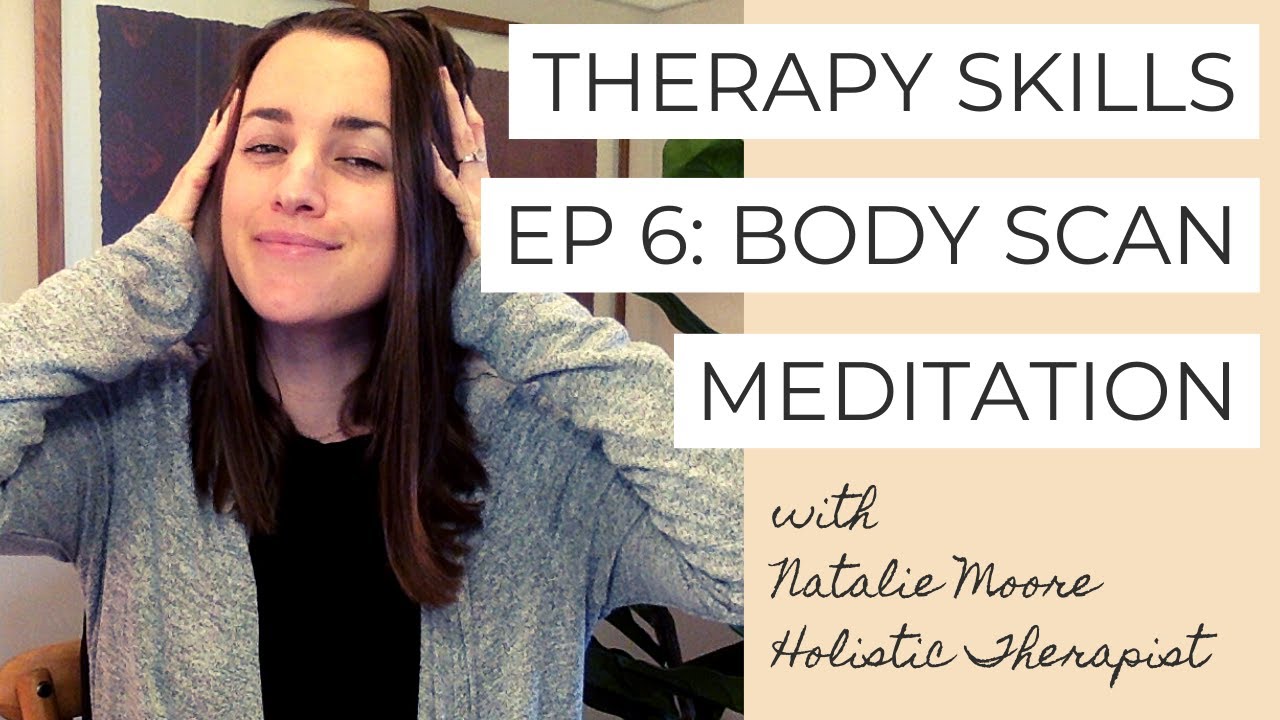
Natalie Moore, LMFT, teaches diaphragmatic breathing and how it activates your parasympathetic nervous system to calm you down. She walks through the technique step by step and invites questions or telehealth bookings.
Chapters
You know you're supposed to take a deep breath when you feel stressed out, but how do you actually do it? Hello, Natalie Moore here, Licensed Marriage and Family Therapist, and I am starting a new video series that is all of the first things that I teach clients when they come and start therapy with me. Today is day 1, and I'm going to start with the concept of conscious breathing. So what I'm going to guide you through is mindful or conscious breathing and diaphragmatic breathing. So I'll get into that one after. So let's just start with mindful conscious breathing. So as long as you're not driving or operating heavy machinery, I'm just gonna have you, you know, check in with your body. You can put your feet flat on the ground below you. You can feel your body being supported by the seat or the cushion below you. And just notice your breath as it's happening naturally without doing anything to change it. So you're just going to notice where your breathing is happening most prominently. This could be in the belly, this could be in the chest, it could be even in the sides of the rib cage. So just noticing your breathing. You can notice if it's fast or slow without judging it. You can close your eyes if that feels good. You can notice the sound of your own breath. Ah. You can notice any thoughts that you're having about the breathing. Oh, am I doing this right? Is it too fast? Is it too slow? Just notice the thoughts without giving them too much attention. And what you might notice as soon as you start bringing awareness into your breathing is that it naturally starts to slow and deepen and regulate itself on its own without trying, without doing anything special to change it. Okay, so that's mindful conscious breathing. You can do this at any time. You— nobody even needs to know that you're doing it. You can do this while you're giving a presentation. You can do this while you're having a conversation with someone. You can do this while you're eating in between bites. You can do this in the shower, anywhere where you want to give yourself a little bit of space to just be. You can do conscious mindful breathing. Okay, so The second tool that I'm going to teach you today is called diaphragmatic breathing. So diaphragmatic, fancy word for meaning that it happens using the diaphragm, which is the muscle that when we inhale fills the lungs with air, and when we exhale empties the lungs out. So it's down here. I'll show you. Your diaphragm is, is down here. And so when we when we're doing a diaphragmatic breath, and I like to have clients put one hand on the chest, one hand on the belly to inform where the breathing goes. What you want to do is instead of forcing breath into the lower belly, I want you to just imagine as you're breathing in and just visualizing that your, your belly is expanding like a balloon on the inhale and deflating on the exhale. So just imagining the belly inflating and deflating with each inhale and exhale. And as you visualize this, you'll notice that your hand on your chest should stay relatively stable and that the hand on the belly should go up a little bit with the inhale and down a little bit with the exhale. So when we breathe down into the belly, we're— we are activating the parasympathetic nervous system, which is the part of our nervous system that's responsible for helping us calm down, helps us rest and digest, and eases stress and anxiety. So that is your first lesson. Stay tuned, I'm going to have more of these videos coming out. So remember, this one had to do with conscious and mindful breathing at the first part of it, and the last part of it was diaphragmatic breathing. So if you have any questions about these breathing techniques and breathing exercises, please leave a comment below. I'm always happy to answer any questions and clarify things. Also, if you have any mental health-related question that you want to ask and have me do a video on, I'm always happy to respond to video requests. Lastly, if you liked this video, please like, comment, subscribe, share with someone that know. I'm always looking for ways to get this information out to as many people as possible, so I'd appreciate your help in doing that. Again, my name is Natalie Moore. I'm a licensed therapist in California and I provide telehealth, so that means I can work with you if you are anywhere in the state of California. So if what I said today resonates with you and you feel like I might be a good fit for helping you, please reach out. You can go to my website and book a free 15-minute consultation there. I hope to hear from you soon. Take good care. Bye-bye.