ADHD, AI, Artistry: Amber Andrews on Building a Brand that's Honest, Creative and Converting

In this episode of the See Life Different podcast, host Zaakirah interviews Amber Andrews, a former engineering student turned creative entrepreneur. Amber shares how she transitioned from engineering to art, co‑founded a design agency with her partner Brooke after meeting at Craftsy, and emphasizes the importance of authentic community—both in‑person and online—for creatives. She discusses her personal experience with adult hearing loss, her advocacy for accessibility, and how that informs her work with disability‑focused organizations. Amber offers practical business advice: be selective with clients, focus on serving creatives, maintain a collaborative process, and avoid taking any job that doesn’t excite you. She explains how her ADHD influences her workflow, the need for a trusted partner to curb shiny‑object syndrome, and her cautious stance on AI—embracing tools like Breakdance for WordPress while rejecting AI‑generated web design for now. Amber promotes free resources on her site, including a Brand Clarity Kit and guides for brand development, and outlines her legacy goals of empowering creatives and creating accessible spaces. The conversation closes with a reminder to keep social media authentic and human, rather than bot‑driven.
Chapters
The point of social media is to be social. They are looking to engage with other people, other companies, like real people behind these companies and not just some bot. Keeping in mind when you are using it, that it is a tool and you should be very selective and careful when you use it and not use it to just suddenly show up more because you're gonna turn off most of your clients that way.
Hi, I'm Zaakirah, and I am the host of the See Life Different podcast. This podcast is perfect for you if you are a Black, Indigenous woman of color ready to step outside of your comfort zone. This podcast will inspire you, empower you, and educate you on how to see life differently, whether it's in your business or in your personal life. I am a cancer survivor, brand cultivating strategist, author, and world traveler. Let's get into it. Amber Andrews has built a brand that actually converts, moving beyond vanity metrics and creating content and messaging that turns attention into real revenue. Having helped founders and creatives and product-based businesses build clear, cohesive brands that strengthen trust, sharpen messaging, and make marketing a whole lot clearer. And it's a very noisy environment right now, so she is very specific on making sure that her background brings a practical lens to business. And we're going to learn how you can build something meaningful and continue to grow without losing yourself in the process. So thank you, Amber, for being a guest on the podcast. How are you today?
I'm doing well, thanks for having me.
Yay! So tell me a little bit more about your background, because that's rare. How do you choose that pathway and find the creative medium?
I did study engineering in school for a period of time, but I never actually entered the field as an engineer. I switched majors into art because I pretty quickly realized that I wanted to have a little bit more creative freedom in my work. So yeah, the engineering background I think is more so interesting because I do have that analytical, technical side to my brain, but then I also have the creative side. So usually someone leans more one than the other. I think I just flip back and forth depending on the day.
At running a business, you do have to use both sides of the brain, especially most people start out, they only have one person. So using all of their brain, they're so exhausted by the time they actually have clients and sales and all of that. So how have you managed to do that? Because it's not just you, there's a duo right now for your business. Yeah.
So I actually started it off on my own. It was a side business that I always ran while I was working in corporate jobs. And then I could take the jobs that were a little more interesting to me and just do it on the side. And then I met Brooke, who's my creative partner, at my last job where we were both working in the photography department for a large business called Craftsy that we did like craft education content. And we worked so well together. So when unfortunately that business sold and left Denver, so we were not able to stay with them during COVID I started diving back more into the freelance side and trying to get the business to actually become a business and not just a side project anymore. And I actually brought Brooke in to help. me rebrand the business. And I knew we worked really well together because I had trained her in everything that I had learned over the years. And so I knew I could hand things off to her easily. And she helped rebrand Andrew's Artistry and then she just never left. And we both talked about how we just loved working together so much. We are such a, a strong duo.
Yeah.
when we're together because we do have different skill sets, but we also work very seamlessly in the same workflows. So I brought her on as my creative partner and we actually restructured the whole business so it now encompasses what we both do instead of just me.
Yeah, I absolutely love that. There was a time period also, pre-COVID, I think maybe it started in 2017. I had one too many clients on my own and I was looking in a Facebook group for another graphic designer/creative director, and I found her in a Facebook group, and we literally worked so well that we did start an agency where it was just the two of us, where we would bounce, bounce off clients, bounce off ideas, and it was just the most easiest thing. But I literally found her in the Facebook group. So what do you think about those communities, those online communities of other creatives that are always needing somebody to bounce off ideas with?
Yeah, I think wherever you can build community, it's important, whether that's online or in person. I have actually found that most of my community is in person. We make a strong effort to make sure that we show up in a lot of spaces where creatives gather because it— we've found that you really get a feel for who you connect with in those spaces and who you can trust, who you can refer out to other people, or bring in when you need a little extra help. But you can do the same thing in online spaces. You just have to make sure you're always being authentic, not trying to overly polish what you're looking for or how you work, because you want somebody who's going to fit and not just somebody who's good at what they do, but fit what you need and how you work.
And speaking of being able to understand you of how you work and what you need, You have a little small fact about you. You also have a hearing loss. Is that accurate?
Yeah, I lost a portion of my hearing in adulthood. It was something I did not grow up with and didn't really know what to do about. And then started finding community in that space too. So I work with a lot of organizations that serve people with disabilities, as well as those who are deaf and hard of hearing, because I have a real passion now in that community, just understanding how difficult It was to navigate some spaces, and I'm very lucky. I am able to pass in a lot of spaces. I'm able to read lips really well, and I think a lot of times when I walk into a space, people don't realize that there's a need that I have, but then I'm able to share with them how they can do better so that they can serve people who really wouldn't be able to come in and speak up about it, either because it's overwhelming or— There's barriers in place for them. So I'm just trying to use this experience of my own to help make spaces a little bit more friendly for others, especially in professional spaces, because I do think a lot of professional community spaces, networking, it's surprising how often you go to one and realize nobody has a microphone and everyone keeps turning around in circles so you can't even read their lips anymore. And I have to— have a conversation with them after about, hey, this isn't a really welcoming space for people that have hearing loss, let alone other disabilities that might be important. Yeah, just kind of helping open other people's eyes to that has been a real passion of mine now.
Thank you for your advocacy. It's definitely very important.
We all need to, honestly.
How can people make sure that they're growing their business without losing themselves in the process. What are your tips?
Oh, okay. So it's— I know it's so easy to just say, okay, I need to make money, so I'll take any job. And I think a lot of people are used to having done that for a while. But if you're running your own business, you don't want to do that. That's the point, right? You want to take the jobs that really excite you. So be picky. You can take Little gigs to pay the bills, but don't sign on to long-term things that don't excite you. Make sure that you are really seeking out the actual customers that you want to be serving. So for me, that's creatives, which is a very general term, but it also is our own niche because it's how we work. We're partnering with the people we work with. We're not just providing you with 3 concepts and then you pick and we finish it off and never talk to you again. We actually want to have multiple conversations with you, make sure we're on the same page, make sure that your vision is included in what's being created and that your voice is heard. And I think that's the reason that creatives like working with us is because we approach things from that same perspective that they want to be working within. That doesn't mean that I can't work with other industries, but my process is set up ideally for creatives. So when you're creating a business, don't just think, what can I make? But think, Who can I serve this to and what problem am I solving for them? I know we've all heard that a thousand times. What problem can you solve? But if you don't know the answer to that, it's gonna be really hard to talk to your ideal person. And you want more of them in the room and less of the others.
I definitely heard alignment. When you know who you are and you know who you serve, you know what problem you can solve, it makes things a bit easier. Is that accurate?
Yeah. Yeah. It also gives you a guideline of here is how I talk to the people that I am trying to connect to, and then you're not second-guessing yourself all the time of which, which route to take when you are approaching marketing.
I love that. And I love that you're also not taking the conventional approach to marketing because you've been doing it for so long. You also have seen how quickly it's changing. So how do you also make sure that you're not overcomplicating your business with all the changes?
That's fair. And I will admit that I am definitely always Overcomplicating things, but that's my ADHD brain that gets really excited about something and has to dive in. That's where Brooke is honestly my my absolute number one here is anytime I have an idea about something, we sit down and we talk about it, and she says, "I don't think that's something we need to be paying attention to right at this moment, but it's a good future note that we can come back to in a month or two months." Right? So having that partner that's just someone you can bounce ideas around with, and if you are a solopreneur. That partner could be somebody in your community that you're just meeting up with and helping support each other. It doesn't have to be somebody that's deeply involved in your business. You just need somebody who can help identify when you get a little bit of shiny object syndrome and make sure that when you are implementing new processes, it's something that's really going to benefit you and not, not just short-term, but stick with you. One example, we just Started working in Breakdance for WordPress, which is like a website builder that you can use within WordPress. I tiptoed into it, got so excited, and started making all of our client sites in it. Totally worth it. That one was like no question at all. I'm so glad I did that. It is a faster moving site, is so much easier for people to use. It was worth diving into. But Implementing AI as a web design tool? Nope, not ready yet. I'm not there. I'm not feeling. I don't trust it enough yet. It's not the time to really consider implementing it into design work. I also think it just takes the humanity out of what you're creating. So we're still establishing where our AI roles live for our company, and right now it's mostly research. We use it for research, and also it. Really good for my project management. Anyone else with ADHD, just plug your to-do list into some AI bot and ask it what you need to do today, because that is, for me, it's, that's been life-changing. I can actually mark things off my list in a way that I never could before.
I love that though, because not everyone has to be on the AI train yet. Yes, it's been pushed at us maybe since 2023. But I, I agree, even me, I haven't touched it. I still have Divi for my website and I haven't touched it, not yet. But I have seen people, I've been, become speakers for events where people have used something called Lovable to just pop up their website or use Canva to pop up their website. I'm like, hey, if it works for you, it works for you. But I'm not ready to see the same font size everywhere. Same thing with the graphic.
Yeah, it starts to look very repetitive. You can tell when something's built with AI, and it's shocking how many websites I've been to that I can clearly tell are made with AI and none of the buttons work.
Wow.
So I think we're not quite there yet, not ready for it to take over. I think you still need— you need humans behind the tools that AI is providing regardless. Even when we get to a point where it's really amazing, you're still going to want a web designer who's Understanding, checking the code, make sure that they know how you're showing up in the world.
Absolutely. So speaking of, how can people learn more about you, work with you, talk to you more?
Sure. So I made a landing page at andrewsartistry.com/podbrand that has some resources that I think would be really helpful for other entrepreneurs. We've got a guide on how to put your own brand guide together, kind of just starts asking you the general questions you might not be considering when it comes to your brand. And then you can always take that a step further. And then if you need help with it, you can give me a call from there. We've also got a website ready guide with our homepage design is the free accessible guide that— sorry, I'm saying guide so much. My ADHD is stuck on that word. So whatever it is that you need, we've got some different resources to help make that possible. And then if you are in a place where you feel like you've been kind of DIYing your own brand and Your marketing feels like it's all over the place and not really cohesive, you can always book a free consultation call. We can talk about your options from there.
Tell us more about the free Brand Clarity Kit.
Yes, thank you. Kit, that's the word I was going for. It's like, why am I stuck on guide? Free Brand Clarity Kit, it's the same questions that we ask our clients on intake. It just gives you a little taste of what it looks like when you're working with us, the types of questions that we'll answer, but also just I think opens people's eyes to things that maybe they didn't really consider should be part of their brand. Even just identifying where your audience hangs out. We always hear about that, but then how are you implementing that into your strategy for your own brand and showing up consistently in a way that makes sense for you? We also have some resource links to things like brand or color theory articles we've written, as well as like how to pick fonts that pair well. Just gives you a little starting point. And when you're not quite ready for the professional help, but you do need a little bit of a guide to get there. And then once you finish, if you say, no, I still need help, we're here.
Got it. Sounds good. Okay. And so one of the ways I like to end most of my podcast conversation is asking you maybe one or maybe two questions. And one of the questions is, what do you want your legacy to be?
Ooh, that's a good question. I want to make things that help creatives feel confident in where they're going. I want the legacy in my business to be that the people I have helped create websites, create brands, done brand photo shoots for, that I've just been the launching point for them and that they can take it from there and just be as successful as they've ever dreamed. And I also want to have a legacy of making spaces that are accessible for everyone. So making sure that asking the questions that a lot of people don't ask on intake that help make their experience working with me stronger, helping lead them into networking spaces and entrepreneur groups that might help benefit them. That's— I'd say, yeah, making accessible spaces and designs is Probably my biggest one there.
I love that though. And to make sure that it's welcoming for them as well.
Yes. Yeah. I don't ever want people who are— I think it feels very like outing when you have to go into a space and figure out how to adapt for yourself. But being able to enter a space where someone's already asking the questions on what you need and preparing for it, it just, it's one load off as you're starting an entrepreneur journey because it's a lot and it can be really exhausting and just Knowing that someone is thinking about all the same things as you is very helpful for giving you that confidence to stand behind what you're doing.
Good. If no one else got anything from this conversation, what is one thing you want them to remember?
To show up for real. On the AI conversation, I'm very unsure how I feel with AI still. There's, again, Huge tool for me for ADHD, very scary for me as a creative. And I think the main thing that I've come to realize as I'm going through that own discovery journey with AI is we don't want to be engaging with generated content as humans. We just don't care and don't want it. And so when we start to see something that just gives us a little bit of a It, it immediately turns us off. And especially when it comes to something like social media, if you're having AI plan and make all of your content for social media, why doesn't anyone want to be on there? The point of social media is to be social. They are looking to engage with other people, other companies, like real people behind these companies and not just some bot. So I think Keeping in mind when you are using it, that it is a tool and you should be very selective and careful when you use it and not use it to just suddenly show up more because you're gonna turn off most of your clients that way.
I love it. Thank you for being real and authentic and human, Amber.
I try. We all try. Sometimes we fail. That's okay.
Exactly. Nothing and no one is perfect.
No, honestly too, how much do you love when you see a typo nowadays? So you're like, oh, someone wrote that.
Exactly. I made one today in my newsletter and I'm like, leave it alone. They know that it's me.
Exactly. Exactly. That's why I don't try and edit it out. I'm like, no, that's a human. That's what I do.
Great. Thank you for being a guest on the See Life Different podcast.
Thanks for having me.
More from Zaakirah

Wealth, Discovery And Alignment through Human Design and Gene Keys with Danielle Eyman





Sensory Reset: Soft Stories of Joy, Belonging, and Healing Inner Child Live from Essence Fest



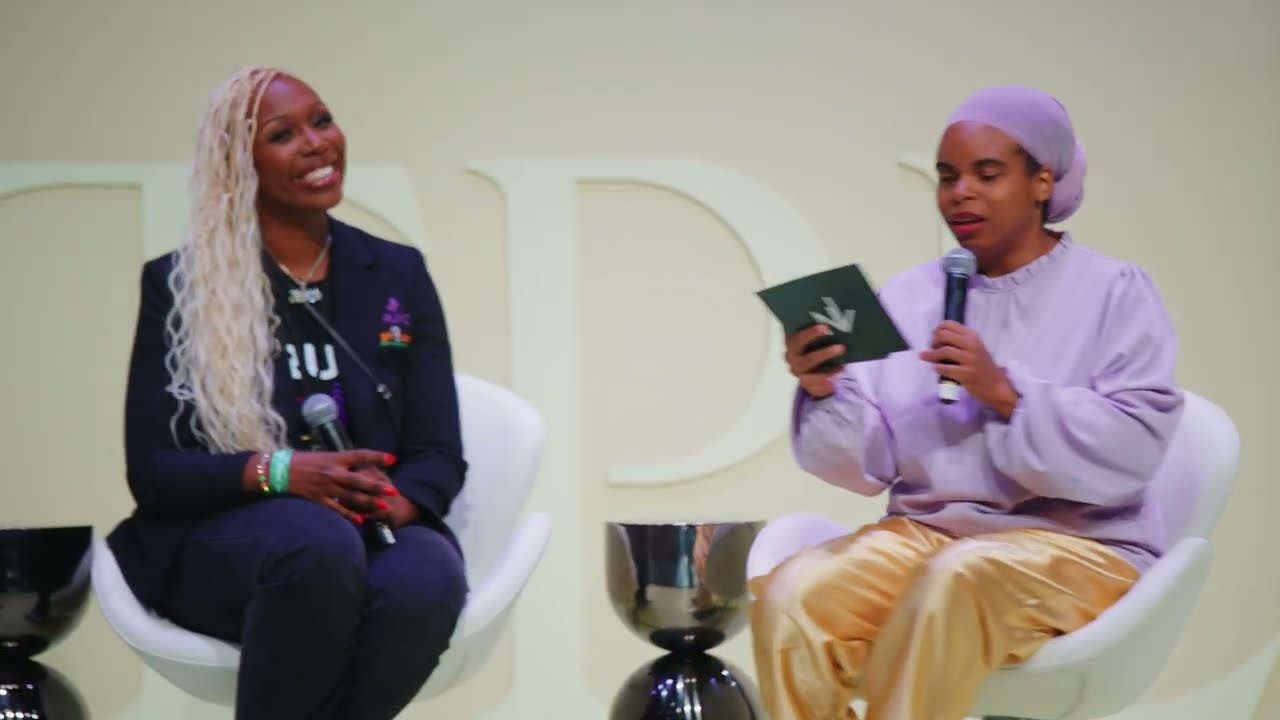
Essence Fest See Life Different Reimagine Inclusion Derra Howard, Dr. Lana M. Joseph, Lisa C. Willis