Essence Fest See Life Different Reimagine Inclusion Derra Howard, Dr. Lana M. Joseph, Lisa C. Willis
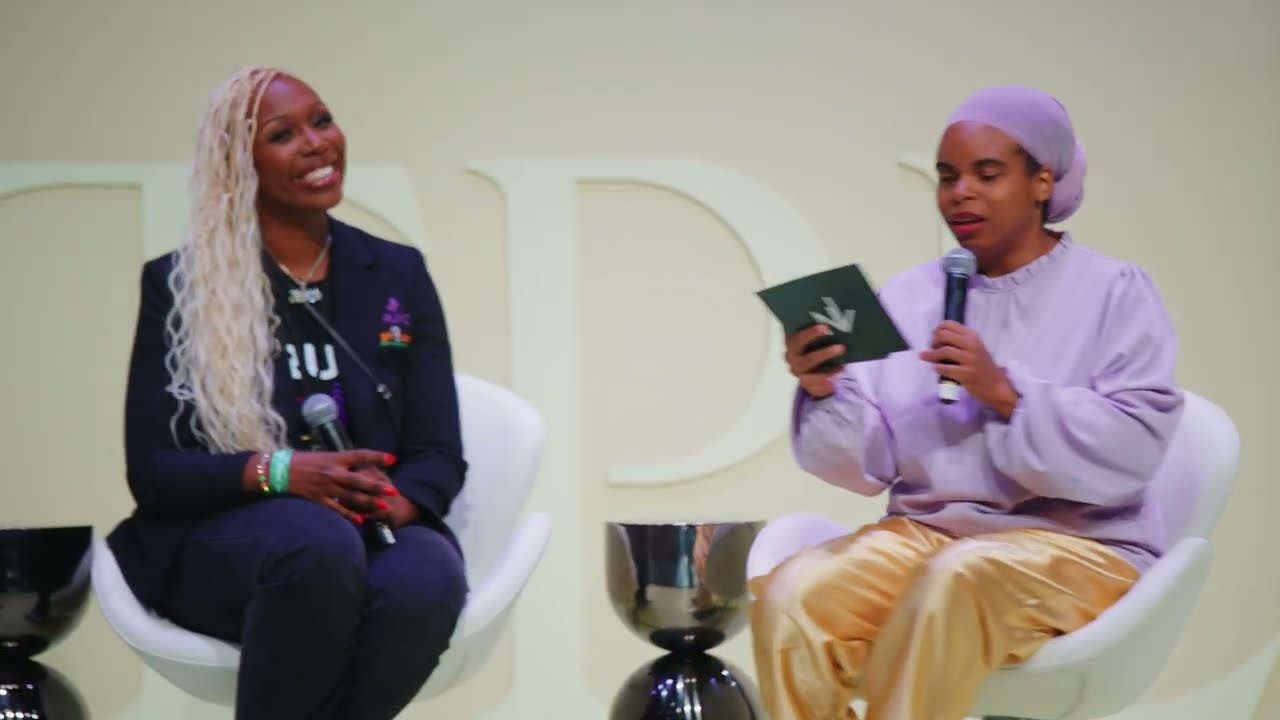
In this Essence Fest panel, moderator Zaakirah Muhammad brings together three disability advocates—Dr. Lana M. Joseph (audiologist and founder of Drums Headphone Company), former WNBA player and mental‑performance coach Lisa C. Willis (founder of Ballin’ Beyond), and Dara Howard (founder of Saving Grace Epilepsy Foundation). Each shares a personal moment when their industry failed to accommodate their disability: Dr. Joseph’s eight‑year wait for speech‑hearing treatment, Willis’s struggle to fit a conventional basketball mold, and Howard’s job loss after a seizure. The conversation moves to how navigating ableism taught them self‑advocacy, boundary‑setting, and protecting their well‑being. They define “real inclusion” as prevention (Dr. Joseph’s push for safe‑listening headphones), expanding definitions of excellence (Willis’s emphasis on multiple pathways to success), and concrete accommodations/knowledge (Howard’s seizure‑safety protocol). The panel offers concrete audience actions: get preventative health screenings, treat mindset as pre‑hab, learn seizure first‑aid, and seek out inclusive products and resources. The session ends with each panelist sharing how to connect with them online and at their festival booths.
Chapters
historically overlooked disabled voices. So we have a fabulous moderator who's going to kick off this conversation. I'm going to introduce her, and then she is going to bring on our powerhouse panel. So here to moderate this, um, wonderful discussion is Zaakirah Muhammad from See Life Different Media. Let's go ahead and give Miss Zaakirah a round of applause. Up next, joining her is Dr. Lena Joseph. And let's also give it up for the hair because she is phenomenal this morning. Yes, yes, yes, I absolutely love it. And come on in if you are walking by and you want to join the conversation. We reserved some VIP seating for you right up front. All right, next we have Dara Howard from Saving Grace Epilepsy Foundation. Let's go ahead and welcome Dara to the stage. All right, Darryl, you better come on up here. And last but certainly not least, rounding out this powerful conversation, we have the one, the only, Miss Lisa C. Willis of Lisa C. Willis and Associates. Yes, yes, yes. So with that being said, we are about to see life differently. Zaakirah Muhammad, the stage is yours.
Well, thank you, thank you, thank you. Good morning, everyone. How are we feeling? Good, good, good. I know it's still morning, so tell me again how we feeling? Good, good, good. Well, have a seat, lady.
Thank you.
Okay, so as she said, 1 in 4 people are disabled. Most of you know someone. We all are someone. And maybe you're someone who has not seen it on the screen. You've seen it in a magazine. You've seen it in a wellness space. So now we're going to talk about what that's like and how we're all committed to changing that. So I am Zaakirah. I am the founder of See Life Different Media, which means I only see you in one eye. I am a childhood eye cancer survivor, so that's the whole idea behind that. Now we're going to introduce Dr. Lana M. Joseph, or Dr. J. She has a booth right over here. She has all of her branding materials on. So what I like to do for those who are visually impaired is describe what she's wearing. So she got— Drums all branded out, all black everything, with locs as well, braided locs. And then we're gonna move over to former WNBA player, gold Olympian Lisa Willis. She's also the founder of Ballin' Beyond. And last but not least, Dev Howard. She is a fashionista, a filmmaker, and she also has a booth over here for Saving Grace Epilepsy Foundation. All right, so let's go back to the beginning, right? We know that song. Let's go back to the beginning. What was that moment that you noticed the industry that you love did not love you back? Let's go ahead and start with Dr. J. Sure.
Okay, good morning everybody. Um, so I'm Dr. J. Um, the moment that I realized the industry that I loved didn't love me back, I would Say is not necessarily related to, like, being able to have good therapy or treatment, but it was more so the access to that good therapy and treatment. Unfortunately, it took— like me, I had a speech and hearing problem that took about 8 years for me to get access as a child in order to get treated for it. And the miracle of that story is it only took 3 months for me to be cured of it. As a result, though, I started to have a passion for helping other people who experienced that same issue and went ahead, founded High Level Speech and Hearing Center in 2016. To date, we've seen over 10,000 patients. And in 2022, I said, well, okay, as a doctor, as an audiologist, how do I help to combat this issue of access. And that's to make it accessible to everyone in the general products that they use every day. So that's what led me to start Drums Headphone Company. And what we do is we really help to empower people through prevention and incorporating preventative care and safer listening into hearing devices. So that's, that's what I would say is—
Thank you.
the way the industry showed that it didn't love me back, but also me saying, okay, let me do something about it.
Go ahead, Nisa.
Hello, everybody. So I would say it started— let's go back to when I was playing basketball at UCLA. I was a guard and I wasn't athletic. I wasn't flexible. I wasn't agile. As a matter of fact, I was probably slower than most of the players that I competed against. And all my coaches would say, get low, bend your knees, be faster, don't do it your way, do it like this. And as a young athlete, I remember that making me feel like I wasn't good enough. Eventually, I started to notice something, that when the coaches— when I did things the way that the coaches wanted me to do things, I kind of struggled. But then when I said, you know what, I'm going to trust my natural abilities, I'm going to trust the way that I naturally see the game, I started making plays. I started making plays so much so that I set the record for steals at UCLA. And then the next 2 years, I beat my own record in steals. And it wasn't because I got faster. It was because I created a system for myself based on my own strengths. And that's the work that I do today with people is I help them see the opportunity in their differences as something to be optimized, as a system to be created, and as a way for them to perform at their highest level.
I would say for me is I kept losing jobs. The moment they found out I had epilepsy or I had a seizure on the job, I— there was an instant shift at my job. There was no accommodations for me. I was not treated the same after that treatment, which it made me want a place that wanted me, wanted to accept me or embrace me in that environment. And from that point on, it just made me want to start a foundation like mine and want to help people embrace who they are and people Make me want to help people embrace who they are with epilepsy. So that's kind of how my journey started. It shifted like, okay, I'm not about to hide my epilepsy. I'm not about to say, no, I don't have it. I have epilepsy and I need you to accept me at this environment and know what to do in case I have a seizure. So that's kind of what happened and what shifted me. And that's why I started Saving Grace Epilepsy Foundation. So people can accept themselves and learn how to maneuver in the workforce and learn how to maneuver in life with it, with the condition, when they're diagnosed.
Absolutely. And you actually, Deb, pointed out something very important. And actually, I realized I didn't feel like introducing the outfits. So for those of you who are joining us, uh, this is the See Life Different panel. And what we like to do also for those who are visually disabled or cannot see at all, we like to describe our outfits. So I'm wearing purple with gold pants. Lisa is wearing like a suit jacket, a little bit of green with some blue shorts. And Darryl is wearing a purple jumpsuit. All right, so moving on to the next part of what has navigating ableism in professional spaces taught you about self-advocacy, boundaries, and protecting your well-being? Now because Ballin' Beyond is all about mental health, let's start with Lisa.
Yeah.
So ableism taught me something that I kind of wish it didn't, but it taught me that when you spend so much time trying to prove your worth to people who only see excellence in a very specific lens, eventually you stop trying to prove your worth to them, but you start questioning if they're right. And so, um, for me, that's when you have to start thinking about, okay, self-advocacy. And telling yourself, you know what? My value is no longer up for negotiation by you. Or setting boundaries. You know what? My gifts, your room might not be worthy of the gifts that I have. And, um, what's the last thing? Setting, uh, protecting your peace. Some people think that is selfishness, but for me, that's stewardship because the gifts that I've been given, the gifts that you've been given, Those deserve to be protected and not defended all the time, you know? And so the best version of you, the best version of me, those are the versions that the world needs.
Go ahead, Deb.
I think the biggest lesson that I've learned is that I'm enough. I don't have to prove that I don't have or that I don't have a disability. I think at a certain age, everybody has something, and it's okay to embrace whatever that something is. So I think that's what I've— that's exactly what I've learned from it. I'm enough, and I'm okay with it. I'm okay with my epilepsy, and it's just a part of me.
And for me, being in the audio and headphone earbud industry, I find that these manufacturers Are the ones that are really pushing us towards loudness. They compete against each other based on headphones and earbuds being able to help you, or you being able to love them because they're louder. But no one says, oh, these are clearer and safer for you. And I have been able to really help the, the people, the populations of folks that are headphone users and lovers by really pushing that, really telling them, hey, like, drums were created by an audiologist and we promote listening safety. So when you become 65 years old, you're not coming to see me for a hearing aid like most of my patients, but at some point you're coming to see me because you just want to have your prevention or preventative service and annual hearing And so we are all representing different abilities up here—
hearing, vision, mental health, epilepsy. So what does real inclusion look like in your industry? What has to happen? What has to change?
Again, for me, real inclusion is prevention. I always, as a doctor, I stand firm on that. The best treatment for any disorder you have is prevention. So start early, start introducing your children to products. If we're going to be wearing wearables, like most of us around here have wearables on us, right? We're always using a smartphone, something. If we're going to use these devices and live with them, let's make sure that they're devices that are catering to our health, not just things that we're putting on for aesthetics.
So in my industry, real inclusion is about letting people or understanding that you can do it different ways and still be successful. So it's recognizing that 2 people can reach the same levels of excellence while taking 2 completely different paths to get there. Oftentimes visible disabilities are celebrated, but then invisible disabilities are treated like, like a character flaw. So somebody needs more recovery or they communicate differently or their brain processes pressure differently than other people. And we have the audacity to ask them to hide that. So real inclusion is recognizing or it's, it's expanding your definition of what excellence looks like. It's not about lowering the standards. Believe it or not, inclusion is not about creating an advantage for somebody. It's more so about removing the barriers that keep us from seeing excellence, even when it looks a little bit different.
I would say inclusion looks like accommodations and knowledge. If you see someone having a seizure, you need to know exactly what to do. You need to know that you place them on their side, let them go through their seizure, don't restrain them. And if it lasts longer than 5 minutes, call the police. That is something we need to know, and everyone should know this, because I think, I think it was last year someone at Essence had a seizure and no one knew what to do in that case. So this is something that needs to be known, especially in our industry.
So Let's fill in the blank for the audience, right? We want to make sure that those who have never seen this in the same light see it differently, right? So what is one thing you want the audience to do? What I need you to do is—
What I need you to do is go and get your preventative screenings. Go to the doctor annually. Everything that doctor tells you to do, do it, because y'all know y'all don't be doing it. Y'all know y'all don't. So actually listen to your doctor, and let's really encourage our younger children, younger generations to know what prevention looks like, not just what the treatment for a disorder or a diagnosis is.
What I need you to do is treat your mindset like prehab and not rehab. So we can't wait for a crisis to come before we're ready to start working on our resilience muscle. When you look at elite performers, they don't wait until the championship game to start preparing. They prepare well before they even know that they're playing in the championship game. So some things you could do is practice the stories you tell yourself, practice just moving on to the next thing, even if it's just a little step that you take. Practice looking for the window of opportunity when the door is closed. Practice giving yourself the grace that you give other people, and quite frankly, the grace that you've earned. Practice keeping the receipts of your excellence, because what's gonna happen is life is gonna get heavy. We all know that. And when it does, you won't have to look for your strength. You'll already know where to find it.
I would say everyone should know seizure safety. If you see someone have a seizure, just know what to do, which is place them on their side, make sure their head's protected, and let them go through it, and don't restrain them. That would help us so much in the epilepsy community. If you can identify it and help them, you can save a life.
All right, so we are coming to the end, and so you'll give everybody the opportunity to let them know where to find you. So starting with me, I'm actually here all day. So you want to learn more about vision, you want to learn more about how to make sure your content is more accessible, you want to make sure that you're still bringing joy to all of these deep, heavy conversations, you can also see me at the Unbothered and Well activation at 12:00 PM today. You can come back right over here to New Voices and see me one-on-one or one-to-many at the 3:30 Maker Studio. Where can everyone else see you online and here?
All right, you guys, so here at Essence Fest, we have a booth right adjacent to the Coca-Cola stage, right here, not far at all. Come and see us, come check out the headphones. I'm the first person who is a Black audiologist, Black female audiologist, to create these headphones. I want y'all to try them, so come check us out. And we're also found at drumsworld.com.
Um, her headphones sound amazing, by the way. So if this has resonated with you in any kind of way, mental performance, dealing with pressure and still thriving in hot water, you could find me at lisacwillis.com, on the socials at Instagram, Lisa Willis 40. And this is the only place that I'll be speaking at here. So actually consider yourselves lucky because you guys saw me live and in the flesh.
And you can find me— we have a booth as well, Saving Grace Epilepsy Foundation. It's a big sign with people with a whole bunch of faith— well, a whole bunch of faces. And come check us out, sign up to our newsletter, and see what events we have throughout the year.
Perfect. Well, I hope you all see life differently going forward, and I hope you enjoy this panel, and I hope you enjoy Essence Fest. Thank you, ladies.
Thank you.
Thank you.
Thanks.
More from Zaakirah

Wealth, Discovery And Alignment through Human Design and Gene Keys with Danielle Eyman



ADHD, AI, Artistry: Amber Andrews on Building a Brand that's Honest, Creative and Converting



Sensory Reset: Soft Stories of Joy, Belonging, and Healing Inner Child Live from Essence Fest


