Sensory Reset: Soft Stories of Joy, Belonging, and Healing Inner Child Live from Essence Fest

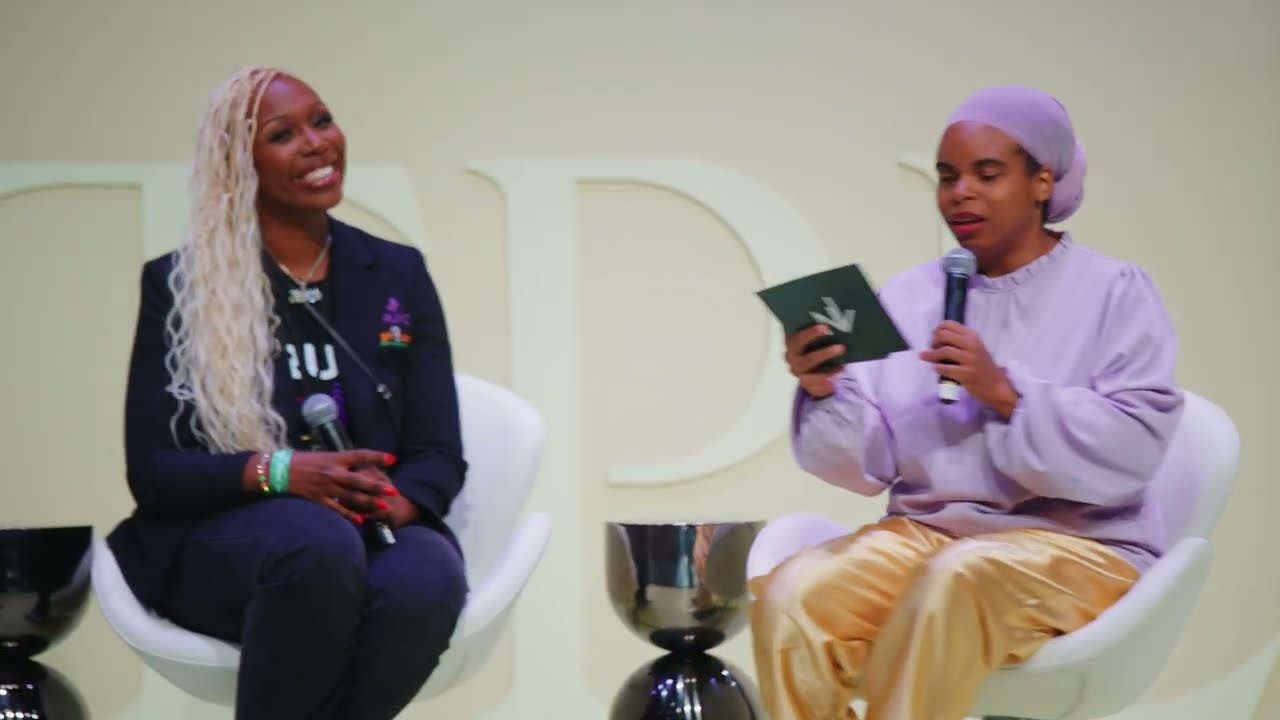
In this 23‑minute live facilitation recorded at the Unbothered & Well Activation during Essence Fest, host Zaakirah Muhammad (cancer survivor, hearing‑loss advocate, podcast host) guides a diverse circle of Black women and gender‑non‑binary participants through a series of sensory‑reset practices and reflective prompts. The session opens with a clearing ritual, then moves into guided breathing, jaw‑release, and awareness of sight, sound, and touch. Participants share personal stories about belonging, disability, and what helps them move from merely surviving to thriving. Themes of reconnecting with the inner child—through travel, creativity, and play—are explored alongside discussions of love languages, inclusive sensory design, and the importance of safe, empathetic spaces. The circle structure (keeper, anchor, participants) is explained, and participants are invited to voice unshared narratives, fostering collective wisdom and empowerment for Black women and women of color seeking mental‑health healing and joy.
Chapters
Hi, I'm Zaakirah, and I am the host of the See Life Different podcast. This podcast is perfect for you if you are a Black, Indigenous, woman of color ready to step outside of your comfort zone. This podcast will inspire you, empower you, and educate you on how to see life differently, whether it's in your business or in your personal life. I am a cancer survivor, brand cultivating strategist, author, and world traveler. Let's get into it. This is a previously recorded conversation of the Soft Stories Sensory Reset session held at the Unbothered and Well Activation from July 4th, 2026 in New Orleans, Louisiana. Live from Essence Fest. A huge thank you to the New Voices family for the opportunity to provide and facilitate this conversation, and a huge thank you to Erica Chidi for introducing me. I hope you enjoy the next 23 minutes of rediscovering your inner joy and your inner child. If this conversation inspired you at any point, please do not hesitate to interact with me on social media By searching for Illuminous One, I-L-L-U-M-I-N-O-U-S-O-N-E, or by searching for Zaakirah Nayyar. That's Z-A-A-K-I-R-A-H-N-A-Y-Y-A-R dot com.
I am Zaakirah. My name is Arabic for the afterlife. And when I was 9 months old, I had surgery in my right eye to remove the cancer. I've been a childhood eye cancer survivor since I was 9 months old. And just taking that in, it's kind of like, wow, I can't even imagine, right? So growing up, we still have to prioritize mental health. How are we going to understand that we're different, we're built uniquely different, and how do you manage your mental health from that way, right? As a result of the cancer treatment, I did lose my hearing, which is why we're trying to make sure that I can hear you okay. So this same microphone, we're going to be sharing stories, so make sure that you're— we got eye contact, all right? Not only am I Seeing you, I see you, I see you, but we're also going to make sure that I'm looking at you so that any story you feel called to share, that this is a safe space for you to share that. Okay? So I became passionate about making sure that we have sensory things because I already am using 2, less than that, right? But how do we do that in a regular world where we have to put on our Superwoman cape all the time? How do we do that? How do we remember to make sure that we are inhaling, which is what I was trying to come around and say while we were dealing with the food? Just make sure you're inhaling and exhaling. We tend to forget to do that.
We tend to have our jaws clenched, right? Is your jaw clenched right now?
Uh-huh.
We have to remember to just open up your jaw, open up your heart, open up your throat to be able to relax because we're all going through something. Every single one of us have something going on. Just because that's about cancer Doesn't make me any different from you. I'm now in my 30s, and now I kind of take that practice with me almost around the world, right? So I use travel as a way to reset my senses. Coming here— how many of you are not from New Orleans? There we go. So coming here is kind of sort of that reset for you too, right? That vacation, to kind of be around your people. That's also important as well, to make sure that you always keep that in mind. Keep in mind to breathe, keep in mind not to clench your jaws. We're also going to remember to go back to our inner child. Sometimes we forget about that, right?
So my inner child always comes out when it's travel, when it's all things creative, and when it's all things music.
I look forward to going to the concerts. Right? That's fun sometimes.
But when's the last time you actually drew something?
Not just because you have to draw something to show somebody at work, this is what I'm talking about. But when's the last time you actually drew something because that's what you like to do? When's the last time you actually took a walk because you like fitness?
Not because you want to look good for the gram.
But when's the last time you actually took a walk because you actually like to walk? Be in nature or be at the gym because that is a part of your inner joy? When is the last time you actually created something not because of work but because that's what you actually like to do?
So that's what this, this guide is going to be about.
We only have a few minutes, but this is the purpose, to spark joy, re-spark the joy in your inner child.
So I want this to be like a regular conversation.
Well, welcome to the Talking Circle. It is the IRL, lived-in experience of Unbothered. Are folks familiar with Unbothered in the room? Okay, so Unbothered is sister brand to Essence, now sister brand to Essence. It's a part of Refinery29, and it has been a place where Black women can come to hear the truth plainly to laugh through our hardest moments and has really been a big part of entertainment culture and uplifting Black women to be seen, heard, and felt, especially millennials, Gen Z. I just joined the company back in February. My name's Erica Chitty. I'm now the SVP of Brand and Editorial Content.
Thank you.
Thank you very much. And I have spent most of my life in women's health. I was a full-spectrum doula and educator for about 15 years, writer. I founded a tech company that focused on women's health information. And I like to say that what I'm passionate about is helping women tell the stories of their bodies to themselves, to each other, because if we can't do that, we can't take care of ourselves for the long haul, right? We need each other. And so this space is kind of my baby. I love bringing women together in circle environments to be able to talk, to see each other, and that's not something we really do that often. When's the last time you were in a circle having a conversation like this?
Kindergarten.
Kindergarten, probably, actually, which is some of the— for some of us, the best time of our life, really, because you— all you get to do is just sit, observe, and absorb. So what I love about this space is a couple of things. So unlike the rest of the other parts of festival, There's no stage, there's no panel, there's no speakers. We're not using any of that terminology in this space. What we have is keepers, and I will be one of— I'll be your keeper today. And as a keeper, I'm here to make sure that things flow, that you feel taken care of, that you feel safe. If someone needs a tissue, I'm gonna go get a tissue. I will pass you the mic when it's time for you to share, or if you need to share. And then we have anchors, and Zaakirah is going to be one of our anchors today. And our anchors are who root the conversation in their wisdom.
Thank you.
And hopefully help bring forward the collective wisdom in the room. So, keeper, anchor, and then the circle, all of you. So we really want to hear from you as the conversation unfolds. This is very much a flowing, open, give-and-receive space. Sound good?
Cool.
So before we start, I always open, or we always open the circle with something we call a clearing. It's just a way to kind of seal the energy in the room and really drop us into the moment. If you would be so kind as to— that was beautiful, thank you. I'm going to hand it over to our anchor, Zaakirah, to take you through a really beautiful conversation and a beautiful practice, actually. I'll take it over to you.
So before we get started with that, I'm going to let you know the purpose of this session is to guide you to relax, unwind, because we got all kinds of senses being used today.
Hearing, vision, touch. When is the last time someone asked you how you were and you didn't say, oh, I'm fine? I still do that. I'll be honest, I still do that because sometimes we don't know if we have a safe space, right? When's the last time you had a safe space to really say, I'm not okay? That one I'll let you think about. That one I'll let you think about. The next question is, when's the last time you actually felt like you belonged? Aside from here, not here. We— I know we belong here, but when's the last time you actually felt like you belonged? So that one, I will have you raise your hand and feel— if you feel called to share. And then to give you some examples, I belong when I'm also with other people who have eye cancer like me. I feel like I belong when I am also in an African country. I feel like I belong when I am at a conference that has all things creative. So feel free to share. You don't have to say anything about who you are, but where— when's the last time you felt like you belonged? I'm gonna bring the microphone to you so I can hear you, see who wants to share.
You wanna?
I feel like I belong when I'm in a space where I'm not alone. Hi, I always feel like I belong. I teach, and I teach mental health counseling, and so I always feel like I belong when we get into a group, a focus group of understanding and dealing with what's happening with them now, but more importantly, how they can go out and help the next person. I feel like I belong.
Anyone else?
Beautiful.
Who else?
Ah, we got some locked-up cages over here. I see. What helps you to Thrive, not survive, thrive. So I've already said I've survived too many things to count, and that's not even half of it, right? We've all dealt with a lot of loss this year, no matter what it looks like, right? But what would you say helps you to thrive? Sometimes we have to find those little pockets of where we are in our zone of genius, if you will. So when we're thriving, we're not fighting our other sensory because we have to hide things.
Right.
So where do you feel like you thrive?
I thrive in the gym, in the pool, swimming, and meditation.
I thrive when I'm in my life purpose and on my assignment. And I believe your purpose is to be yourself and to be a lot of it. And what that means What I would say to someone else is, you've been yourself since you were a child. Think about what you did when you were little that you still do, what natural talents you have, what natural gifts, your personality, and your life purpose is to be that. And your assignment is the gifts, what you've been doing since you were a child, is— and you combine those things and you will get joy from it. If you're not on your assignment, It can lead to depression, stagnation. So focus on those things and you'll thrive.
So I thrive when I am able to just flow and be with my natural rhythms. So a few years ago, I stopped waking up to an alarm. I just started allowing my body to just freely wake up doing— if I have something scheduled, but then I no longer feel like doing that scheduled thing, it's okay to just say, I don't want to do that anymore, or if I want to change the plan and I want to do something different. So me, for me, I thrive when I'm just allowed to just be and just flow.
I would say I thrive— there are certain things that I decided as I went through life, and there are obviously certain stressors as you're trying to build career and that type of thing. And when I really I wanted to see what I could do for me. When I, when I decided to focus on my own life and what made me happy, and not being able to do those every day, I realized was okay. But on the times that I can do, to do it and enjoy it to the extent that I could, and that made my whole outlook on everything else. Change. And I feel like I thrive in that way because life is there and there are things that we have to do every day. But when we can take a moment, however often that can be, to, to be in our space and do what we can for our own bodies, that's, that's the epitome for me. And that helps me to grow.
I feel like I thrive most when I'm able to be creative. when I'm able to help others. And most recently, I've learned that to stop playing the comparison game between myself and other people has kind of released me from wanting to be like other people and be the person and the woman that God has called me to be.
Similarly, I think that I found my inner— it's okay to say no. It's okay to be forgiven for a past. And finding inner peace within myself. As being a mother, a wife, a daughter, a sister, often I felt like I couldn't say no, and I had to depend— other people depended on me to say yes. So now I'm finding that inner peace to say no and just go with the flow, as the young lady said up front.
I'm loving it.
I'm loving the intertwining of your senses.
Right.
You're going with the flow and you're also saying no. And you're also using that to calm your inner child, right? Because think about it, if you have nieces, nephews, if you have children, they're at that age where they will tell you no. We got to go back to that inner child, right? Not say it like that. Obviously, we have more words and terminology to say that. But a lot of times that's what stirs up our nervous system. We want to so deeply be loved that we interrupt our nervous system for those who are not in that environment that allows us to thrive, right? So that also helps those who have invisible disabilities too. Sometimes we have to be more empathetic to those with Invisible disabilities. Sometimes they have to learn how to be able to say no, but also they have to learn how to be able to ask for what they need. When's the last time you actually asked someone for what you need help with? Think about when you were your inner child. Your inner child that I keep referring to is before any traumas, any bills, any responsibilities. Typically the ages of 7 to 13. What did you have to learn about who the world wanted you to be? Not who your inner child was, right? If they ask you, what do you want to be when you grow up? What was that? Who were you before the world told you what you had to be?
Hi, ladies. For me, it's been My strength. I've always had a very strong personality, and I find that even since childhood, people have told me I needed to be less, that I needed to be not so blunt, not so honest, not so direct, not so forceful, that I needed to step back. But that's not who I am. And when I'm not that person, I don't— like the questions were— I don't thrive. I'm not comfortable in who I am because I'm trying to be something that I'm not. That's— I'm not docile. I'm not quiet. I'm not— I'm big and loud and truthful. That's who I am.
Beautiful. And I love that they said it with confidence.
Who else?
So this also kind of helps answer a previous question too, where do we thrive? So before most of my trauma, I was somebody who was just very unapologetic about who they were, saying no to things we don't want to do. I love taking pictures, but as a kid, there's pictures of me just visibly showing I did not want to be photographed as well, which is something that has changed over time, especially with being autistic, as well as somebody who If we don't want to be somewhere, we're not going. So just a lot more vocal, and I think upfront with what's best for me.
Also, I want you to think about how you can— okay, we've talked about our senses, right? How you can see, hear, calm down your nervous system, touch. Okay, how many of you know your love languages? You already know your love languages? Some of you don't know what that means? Okay, so love languages also involve your senses too. If you love hugs, you openly receive the hugs, or you say people no if you don't want to receive a hug, or you need to be reminded that you are loud and beautiful and confident and intelligent, and you need to ask for that. Or you need to just be quiet, right? Say somebody to stay with you quietly, spend that quality time quietly. They don't have to try to force a conversation with you. They can just be there quietly. Or you like someone to do things for you. Maybe you're a creator and you want to take more pictures, but you don't know how to. You got to ask someone to take it for you. So think about those things as well when you're intertwining your senses, because these are all very small things to reset your senses, right? That's what we're talking about for sensory reset. It's not just about the affirmation, the meditation, the calm lighting, the music, but you're also very busy. Doing things for everybody else, that you need to use simple things, even if it takes 15 minutes, to bring back your inner child. Yeah? So now we all also like to do things for other people because that's, that's what makes the world go around, right? So I'm gonna bring it back to the disability side a little bit because that's where I thrive. That's where I bring joy. That's what I have so much fun talking about. So if people who have low vision, raise your hand. Low or no vision. Okay. What about people who cannot hear that well? You just met someone today, but okay, good. What about people who need more time to think about what they're saying? Neurodivergence.
Okay.
Good.
And what about people who cannot walk? Good, good. You're probably asking, why am I asking you this, right? Part of also sensory is also being empathetic to others as well. You want people to be more empathetic to you. You want people to accept your no, but also let's try to intertwine that for those who have disabilities. I know it's Not a safe world out there now where you can always ask someone for help. And at the same time, people with disabilities don't feel safe either. So it's kind of like, how do you really find that pathway, right? To kind of make sure that when you're being empathetic to others, that you're empathetic to yourself as well.
Yeah?
What is a story that you have not Shared publicly yet. You look at your favorite Oprah Winfrey, Michelle Obama, they tell this story that really resonates and you're like, I wish, I wish, I wish with all my might, right? What is that story that is bubbling up within you that if you feel safe to share, this is the doorway to open to do that?
I'll start.
There's a lot of grief happening. So we've all experienced a lot of loss, right? But also what happens is one of my places where I thrive is having a very, very strong intuition. And sometimes your intuition can be so strong that you don't know who to tell or what to do with it, right? So one of my superpowers is Knowing that someone is about to pass away. Yeah, but not many people handle death well, and I can understand that because it's— you're literally entering a different realm, right? How do you tell people that you actually understand what's about to happen because you got vision that no one else can get? Right. So I'm slowly but surely intertwining that into my storytelling of I see something before it's actually going to happen. I know you may not trust me, you may not believe me. There are too many scams out there, but that's one of my stories. Your turn.
I am on the verge of retirement. My whole life I've been taking care of other people, oldest of 5 kids, and I've been a caregiver just my entire life. And so I'm at a point and stage now where, is it so wrong for me to want for me to be able to go and travel and do and not be fearful that when I retire, my requirement is now to take care of the folks in my family, siblings, parent, my mother, to be able to— and I don't want to not care for her, but I've been doing this my entire life. When is it my turn? But I have not shared that with others.
It's a fear.
So before we close out, I want you to take that with you as you enjoy the rest of your day today. These are just prompts that I've showed you today of how you can reset your sensory.
Right.
So remember, prioritize your inner child, be empathetic to others, and I want you to ask yourself what you are going to do going forward to see your life through a different lens. After this session, how are you going to see your life through a different lens? Let's go inward in order to go outward. Remember to keep breathing, keep choosing you, and keep being empathetic to others.
More from Zaakirah

Wealth, Discovery And Alignment through Human Design and Gene Keys with Danielle Eyman



ADHD, AI, Artistry: Amber Andrews on Building a Brand that's Honest, Creative and Converting





Essence Fest See Life Different Reimagine Inclusion Derra Howard, Dr. Lana M. Joseph, Lisa C. Willis