What Disability Pride is and Why it matters 📱

Zaakirah Muhammad, a blind and hard-of-hearing cancer survivor, explains why Disability Pride Month matters. One in four U.S. adults live with a disability. She breaks down the Disability Pride flag's symbolism and calls out accessibility gaps in physical spaces and digital content, from captions to image descriptions.
Chapters
July is Disability Pride Month. It commemorates the signing of the ADA, or Americans with Disabilities Act, which was signed in 1990. And today, in a world where Pride Month, uh, and all of the laws are being unraveled, this video will talk about why you should care about it. So 1 in 4 of U.S. adults live with a disability, and disabilities are not always visible. The older you get, you will most likely develop a disability, you know someone with a disability, or someone could be born with a disability that, again, you cannot see. So I am Zaakirah. I am a childhood eye cancer survivor. I am blind in my right eye, and I wear a prosthetic eye as a result of a lateral retinoblastoma eye cancer, and I also have a hearing loss as a result, mainly on my right side, and I wear a hearing aid. So these experiences that I'll be talking about are not just me being an advocate, it's actually who I am and how I've lived my life and not let it define me. I've been blessed to go to over 15 countries and half of the United States, and I've also been a freelance and small business owner for also over a decade. I've been blessed to speak on stages as well, and I've been seeing a lot of the same thing lately of there's still a gap missing between how accessible you're going to be for those who have disabilities that you cannot see. So just to give even more of a context about Disability Pride Month, they do have their own rainbow flag as well. However, What pride means to everyone is very different. Like, for me, the pride is comfortable enough to tell my own story to the point where it can inspire others to confidently tell their stories or advocate for themselves. So what are the disability pride flag colors and what do they mean? So you may see one again, it looks like a rainbow. The red represents people with physical disabilities. And when we have people with physical disabilities, the ones who want to go to certain events and travel to certain places, they're the ones who need ramps and less steps to go up into buildings, into homes, into apartments, and into venues. The gold represents neurodivergent people, which means autism, ADHD, AuDHD, dyslexia, and other cognitive differences. And people who are neurodivergent often need quiet spaces. They often need blue or dim lighting. And they also need more time to utilize their senses and explain what they need to say. White represents people with invisible or not yet diagnosed disabilities. So this also includes chronic illnesses such as PCOS, PMOS, and other chronic illnesses that you cannot see, but Some people live with a level of pain that they often mask as well. Blue represents emotional and psychiatric disabilities as well. So think of schizophrenia and bipolar. And green represents people with sensory disabilities. This can also include blindness and hearing loss, deaf and hard of hearing, and low vision as well. So there's also another color on the flag that the background is actually black. So there's a lot of people who have already lost their lives to disability-related violence, neglect, ableism, and systematic inequalities. So when the ADA was passed, it was to also make sure that it is more of a safe space for those who choose to get a job to be able to not be discriminated against. But unfortunately, there's still a lot of instances where it's not really a safe place. So now there's a huge percentage of people with disabilities, about 22% of people with disabilities now are choosing to be self-employed or entrepreneurs. The pandemic definitely shined a big light on that. Some people with any physical, visible, and invisible disability were actually happy about the pandemic. They could actually unmask themselves. They could be home and work remotely a bit more instead of fighting for that at their job or fighting for it in their own business building. So Disability Pride Month is really just about recognizing that people with disabilities are the largest minority in the US, specifically the US. Of course, this is happening internationally, but these laws and these awareness months started in the US and should be more focused in the US. Because I also have been to over A dozen countries, I have seen that there's a lot, a lot of countries outside of the US that are doing a lot better about making sure that people are empathetic to those with disabilities. But I still notice that even when I interact with other creators and small business owners, there's still a big gap when it comes to making sure that their online and in-person communities are fully accessible. Yes, of course, make sure that there's enough space for a wheelchair. and make sure that there are quiet places, but also what about the content that you are posting from these events? Of course, it's very important with me being a brand strategist for over a decade now, it's very important to make sure that you do have video content, make sure that you have real-time content for people to understand, you know, the who, the what, the when, the where, the why of your event, of your product, of your service. But what if you are doing a talking face video, but not only is someone else in an environment where they actually cannot hear what you're saying, but the captions are not actually being used because people with hard of hearing or who are completely deaf don't know what you're saying, and not all of them are lip readers as well. So I see and know and believe that if you want your event, your product, your service to be more accessible, it should definitely have captions. There are a lot more programs out there now that have captions, live captions, more accurate captions. But it's also important to make sure that you are doing some image description. There are people who cannot see who use something called a screen reader. There's amazing technology nowadays to read what is on the screen. A lot of using a lot of emojis actually hurts the screen reader because it's kind of like a confusing sentence. Or not even a sentence, a confusing few words before the sentence is being read. And also, image descriptions are very helpful because sometimes artificial intelligence will not know that I, for example, am a Black Muslim woman who is disabled, who is wearing a head wrap, who is wearing part of a pink-patterned kimono, right? So being able to also describe yourself. The way that I usually say it is, how would you describe it if you are talking to an elder? an elder who cannot see as much anymore. We're also going to be more empathetic to those who are millennials and Gen Xs and Gen Ys and Zs who may not see as well. So how are you going to describe and tell more of a story, right? Branding, marketing, sales is storytelling. The most authentic brands tell stories that are relatable. But it's even more relatable when we know that, okay, someone with a physical disability, there's someone with a invisible disability, there's someone who's signing, there's someone who's reading Braille. When people see themselves reflected in media, it just helps businesses a lot more. So I'm definitely emphasizing, especially because this is what I often need when I'm going to places and having conversations, I've had to learn how to lip read. I'm grateful nowadays that the more speaking engagement I do on major stages, I also can have my phone and pull up a caption app. If I'm not fully understanding, either it's a wonderful accent or it's a microphone that has a lot of muffled feedback, if you will. So being able to have those feature— technology features is very helpful too. So if you're building a technology tool, also try to keep that in mind as well, of making sure that someone who cannot see and cannot hear can actually understand what you're building, how they should use it, why they should buy it, why they should come to this event. So if this— these were inciting tips for you, um, I am pivoting a little bit to do more consulting, not just for brand strategy. I've been helping small businesses, nonprofits, um, to not only grow their brand on social media but also make sure that you're also accessible. So how are you using artificial intelligence to make sure that you do have Image descriptions or that you do use captions or that you actually make sure that your events are more accessible and not just make sure that someone with a wheelchair can get into the event, but also is it calm and sensory overload or is it actually going to be more calming for those who have sensory overloads? And how else are you making sure that those with disabilities who are already confidently telling their story are represented on the platform, in the stage, in the media. So if you are interested in that type of consulting, definitely reach out to me. I'm also available for panels and keynotes and webinars for speaking more specifically about this, especially if you have a specific industry that you are in, whether that is travel, whether that is media, whether that is You know, finance, obviously people need to understand their own spreadsheets. So workshop panels, keynotes, I'm available, but I'm also available for making sure that if you're having an event or you are making sure that your organization is more intentional and more inclusive, even if all the rules are not letting you follow, you know, all the DIAB rules are, you know, not letting you do certain things, you're definitely going to be ahead of the game if you're still internally making changes that you can make. And then of course with traveling, having been to over 15 countries and half of the United States, I have seen both hands, both by myself solo traveling, with groups, intergenerational traveling, to make sure that your travel content is accessible for those who are traveling. Um, so yes, please visit my website. Please also check out my links as well, which will take you right there to all of the things. And if you have any other questions, you can also email me, which is the same thing at my website, which is Zaakirah and Iyar, zaakirah@zaakirahandiyar.com. Um, so And thank you for watching and listening, and I look forward to seeing you next time. Thank you.
More from Zaakirah

Wealth, Discovery And Alignment through Human Design and Gene Keys with Danielle Eyman



ADHD, AI, Artistry: Amber Andrews on Building a Brand that's Honest, Creative and Converting



Sensory Reset: Soft Stories of Joy, Belonging, and Healing Inner Child Live from Essence Fest


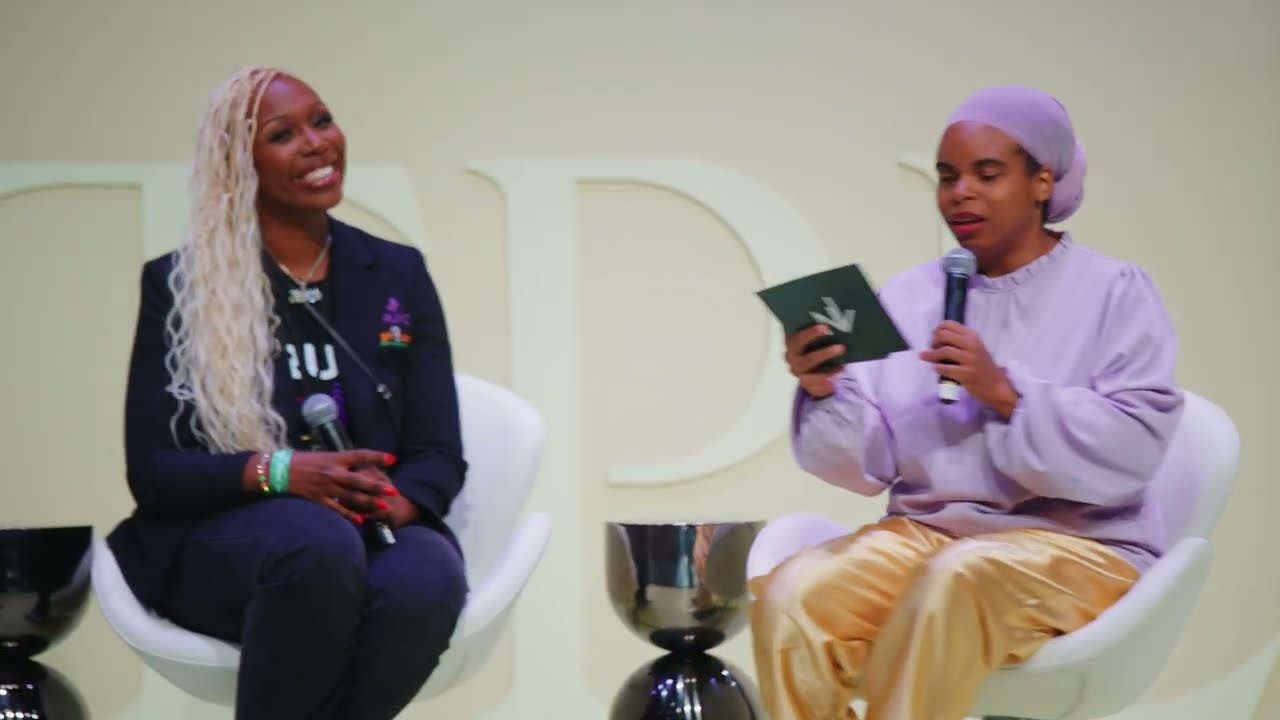
Essence Fest See Life Different Reimagine Inclusion Derra Howard, Dr. Lana M. Joseph, Lisa C. Willis