Building a Legacy through Real Estate with Constance Carter
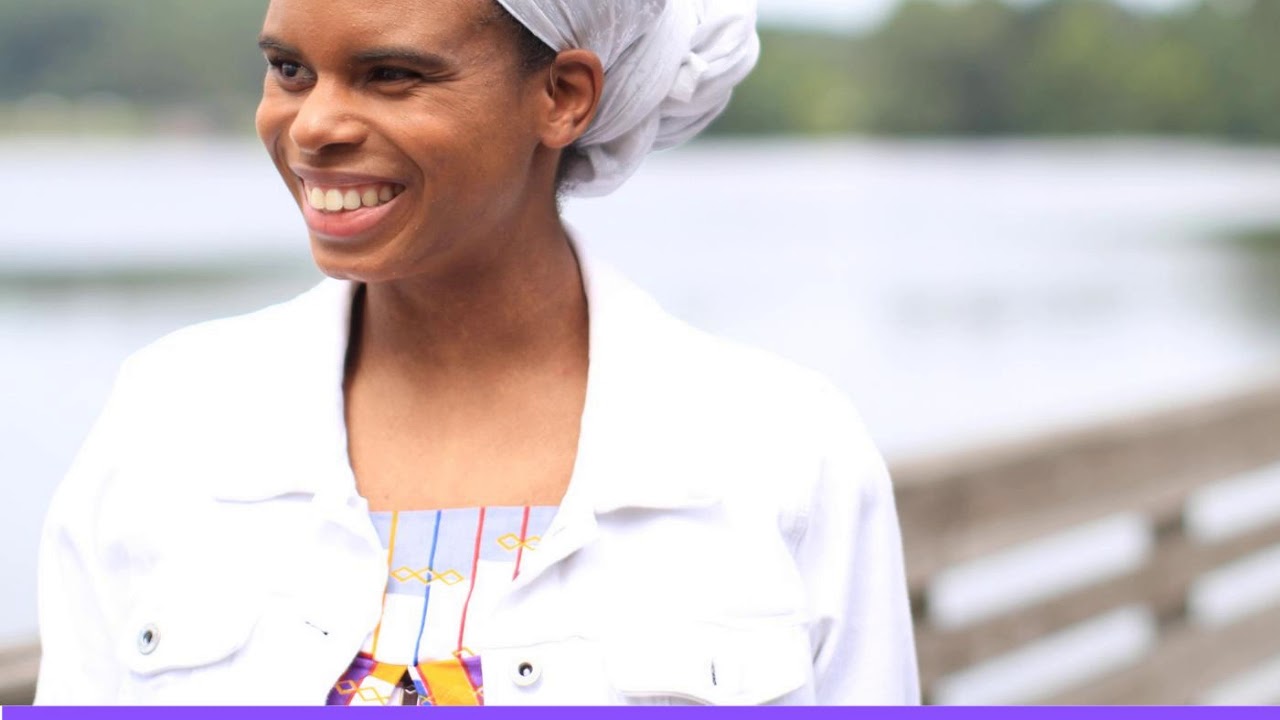
Constance Carter, CEO of Northern California's largest Black-owned residential real estate firm, went from earning six figures while overspending to bankruptcy. That collapse sparked her book The Secret to Breaking the Broke Code and a mission to teach others fiscal responsibility and their own worth.
Chapters
My name is Zaakirah Muhammad, and you are listening to the Living Legacy Podcast. This weekly podcast features women of purpose sharing stories of resilience. They are wives, artists, entrepreneurs, they run businesses, and here they will share their stories of how they overcame obstacles and how they're juggling it all. If you're ready to learn about professionalism, entrepreneurship, business, travel, life, and love, you're in the right place. You will hear real and raw stories of survival. Now it's your turn to be inspired to step outside of your own comfort zone. I am a cancer survivor, brand cultivating strategist, world traveler, and a professional photographer. I'm your host of the Living Legacy Podcast. Let's get into it. In today's episode, I get to interview Constance Carter. She is an international bestselling author, investor, speaker, and the CEO of the largest African American residential Real estate and lending firm in Northern California. She's the most prominent African American female-owned real estate firm in Northern California. Her books include O.N.E., Build Credit to Build Wealth, Keeping Score, and the latest release, The Secret to Breaking the B-R-O-K-E, also known as Broke Code. This book is aimed to help people realize their full God-given potential so they don't only change their lives but positively affect the lives of others. Recognizing that most people aren't living up to their potential, Constance lays out the blueprint of what it takes to manifest your dreams. This book is for anyone who has the courage to break generational curses and create a legacy of wealth and royalty, for those who want to reflect on their life knowing they made a difference in someone else's, and those individuals who have ever felt inadequate but believe life can be better. Constance thrives in being a catalyst to bridging the inequities in underserved communities to create transformational change and create a legacy that can transcend generations. Between running her successful real estate firm, public speaking, her many training programs, many media appearances, in addition to having a busy family of 6, her motto is truly nobody works harder than Constance Carter. We're going to talk about all of that today in Living Legacy Podcast. So thank you so much for being here, Constance.
Thank you so much. I appreciate it.
So tell me why you really started real estate.
Well, I started in real estate when I purchased my first home. I was 23 and my husband was 25. We'd just gotten married, just had a baby. So really the next logical step was to buy a house. We're both from Silicon Valley. So we were working, I was working in the IT field, but I really liked what real estate had done for me. It inspired my family members to purchase homes. And so I love the way, you know, I started helping people even though I wasn't licensed. I started saying, hey, if I could do it, I know that you could do it too. And it's just kind of something that I fell into because just watching the joy and the admiration that people had when they became homeowners is something that I just totally fell in love with. So I ended up getting my license.
You've been— you've evolved as a CEO and as a businesswoman. So you started in real estate and then what was next? You want to tell me like the order of things?
Yeah, so I started in real estate, I said, in 2002. Yeah, 2002. I had been working in the IT field for a couple of years. I was commuting. I had bought a home about an hour away from where I was from in San Jose. And so I decided that I was going to just kind of do real estate on the side, get my license. And then the opportunity came for me to get— do it full-time. The opportunity was I got laid off. So ended up getting laid off and just went hard in the real estate. Just focus, focus, focus, focus, focus. The funny thing is the day I got laid off, I came home. It was more of a planned layoff. Layoff. I got a few months severance and got some unemployment. And my husband, he was going to be kind of the primary person, consistent income. And I was going to be just working on focusing on my business. And when I came home from the day I got laid off to tell my husband, you know, this to say, hey, I'm so happy now, we're going to start this new life. He had gotten laid off. So it was just really time to focus and grind and figure out how we were going to make it work. And so just worked really hard being consistent. And just, I really got into the business to help people. And the first email that I've ever sent with just telling people, informing them that I was in real estate, it was really not, what can I sell you? But it was, what can I help you? And I really just built my business around helping people that were like me, that wanted to own a home, maybe didn't know how, didn't think that they had an opportunity to do it. And so I built my business in that way and just helping people, helping people. And I'll tell you what, as long as you help people, you'll never go hungry. So that's what I did and started, you know, just becoming a top producer and got my broker's license a couple of years later. And then it was just time at some point in 2010, 'cause I'd done it for what, 8 years in 2010, it was like, okay, now it's time to go out on your own. And so really the idea was to create an entire company based upon the core values of how I did business. And so that's what I did. I created a company which is Catalyst Real Estate Agents, or Catalyst Real Estate Professionals. A catalyst is a change agent. You know, there's meaning behind that name. And then just, you know, having a core group of people who really felt the same way I do. Not that we're so transactional and it's just about the sale, but we're transformational and it's really about helping people. So that's kind of the order and how things went.
You say helping people a lot. Do you happen to know any of your love language, your Enneagram or anything like that?
No idea. So I know that helping is my gift. Yeah.
So Based off of the 5 Love Languages, I love kind of just listening to that in any of the guests that I have. And so if you say you love helping people, it sounds like one of yours is either— but the 5 of them are giving gifts, acts of service, quality time, physical touch, and words of affirmation. So it sounds like a combination of probably quality time and also acts of service, which is basically doing things for others. Does that sound accurate?
Yeah, that sounds about right. Yeah.
Very nice. Very nice. OK, so tell me, what is the process and inspiration behind your latest book? I do want to know about all of your books, but I would say the latest book. What was the inspiration behind The Broke Code?
So the secret to breaking the broke code, you know, I have been through it. So again, like I said, when I started in real estate, I started making a ton of money, doing really well, hustling first year. I made $70,000, never made under 6 figures. However, the more money I made, the more I spent. And so then it became an ever-evolving cycle of me spending more than what I had. And so I was making $200,000, $250,000 a year, but I was spending out $20,000 a month in expenses. And so I had more month than money. And I really mismanaged my money. Didn't really understand. I got in over my head. had to end up filing bankruptcy and had to start from scratch. So what I did is I used the hardships that I had been through as the blueprint so that I could help other people. And so the book, The Secret to Breaking the Bro Code, was really around broken mindset, a broken mindset around what you're worth and what you deserve, a broken mindset about money, and a broken mindset about money management. And so we first get into, you know, the limiting beliefs and the lies that we tell ourselves and what's really truth about it and what we deserve. And so that's where The Secret to Breaking the Bro Code came from, is my own hardships, using them as a blueprint to help other people. And so how do I do that? Is telling my story, going through my journey. This is what it was, but this is what helped me to go from there to having the largest African American-owned— and we're not the African American real estate firm, we're African American-owned real estate firm. We're not African American only. were African American owned. It took me from there to becoming the largest African American owned real estate firm in California. But that was just, you know, a process of having to go through a lot of trials and tribulations to build the company to where it is today.
Now, what makes this book different from your previous books?
So all of my books are really taking my hardships and making them into the blueprint, right? So the first book that I wrote, which was a bestseller, Keeping Score, it was really Same thing. When I filed bankruptcy and my credit score fell to 379. And so what I did is I started taking classes and became a certified credit expert helping others. I wasn't doing credit repair, I was doing credit education, helping others, you know, to get their credit scores up. So then I just said, you know what, let me write a book about credit. And I sat down and wrote it and was done with it within a month and it became a bestseller.
Wow.
But that was just me taking my experiences and my hardships and creating something where other people can use it as a path or as a roadmap and to help them along their journey. And it's helped tens of thousands of people get on track. So it's, you know, it's just, it's just been a blessing to be a blessing. You know what I mean?
Absolutely. So tell me how your motto, nobody works harder than Constance Carter, came about.
So I'm trying to get to a place where nobody works smarter than Constance Carter, but I'm still, I still work really hard. Working hard to create a legacy for my family. I have 4 children and a husband. I've been with my husband since I was 15. And so just trying to balance it all. I work really hard, and I do so many things. And I do them well. And balance is— one of my mentors, Lisa Nichols, says balance is a myth, but harmony is a must. So just trying to balance it all, working hard to balance it all, but not really being able to balance it all. Because sometimes when you're great at one thing, you're not so good at something else. But I'm always in an evolution to work smarter rather than harder. But I've just been working hard to build something for my family. And that's what it's just been about, is working hard. So I go hard at everything I do. I go hard at, you know, in the love I have for my husband and family. I go hard in my passion that I have for my business. I go hard when, you know, I'm writing a book. I mean, I just— that's just who I am. So that's where Nobody Works Harder Than Constance Carter came from.
This episode is sponsored by Chime Bank, a branch of Bancorp Bank. Get paid up to 2 days early with direct deposit. It's true! Now I get paid as early as Thursday afternoon. And the best part? There's no overdraft fee, no international transaction fee, no transfer fee, no minimum balance fees, and I can deposit checks right from the app. Do you want to withdraw money from an ATM? Go to any ATM in the US and they will give you your money back. I love the fact that it automatically saves money for me. If I spend money, it will round it up and put the change in my savings account. Visit bit.ly/2ChimeBank. That's C-H-I-M-E-B-A-N-K. Now, what's the most challenging part about balancing all these many different hats?
Is being, uh, sometimes being present. Because I would say, there was one time where I asked my kids and my husband, I asked everybody in my family, on a scale of 1 to 10, what would you rate our relationship? And while I think, because I love my kids, they are my why, my reason, my husband, they are everything to me. But I didn't— I wasn't a 10, right? So I was like, I mean, for sure I'm a 10 because I'm a great mom. I'm a great wife. I don't nag. I don't do a whole lot of stuff, but— Sometimes I may not be present mentally because I always have, you know, I'm always thinking about the next move or whatever. And so they told me, I was like, you know, everybody said around 8, a couple of 9s. And I said, well, what do I need to do to become a 10? And, you know, some, some of them said, Mommy, you work hard. I know you work for us, but sometimes you work a little bit too much or whatever. So that's been kind of the struggle for me is just being present when I'm here and just trying to, you know, just trying to manage it all, just trying to balance it all. I think that's been the real struggle. But I love what I do. I wouldn't change my life for anything in the world. You know, I wake up every morning just thankful and, and ready for the day. So I'm happy where I am, but I'm always in self-improvement mode.
So what has helped you along the journey to getting to that 10?
Always being introspective, always thinking of ways, being thoughtful in the things that I can do to improve. Because that's, you know, not just saying, OK, I'm going to do it and then I'll get to it and just putting it on the shelf. It's really being thoughtful on what are some things that I can do to, to make sure that I'm trying to reach that. And that's just being intentional, really being intentional and not taking any of it light.
You've been doing it for a while. I would say if you were to reflect, it was at the end of a year. If you were to reflect, what are 5 things you wish you knew?
5 things I wish I knew today or, or back when I started.
Like when you started?
One, I wish I would have trusted my instincts more when I first started, or when God told me to start on my own. That was 2009, but I didn't actually start until 2010 because I started listening to everybody else. I went with my security. You know, the broker I was with, you know, I was a top producer. So of course he didn't want me to leave. What do I need to do to keep you? What I need to do, what I need to do. So he gave me an office and he made me a manager. Well, that was miserable. And so I, instead of me doing what God told me to do, did not trust my instincts. That's number one. Number 2, I wish that I would have knew my value and my worth as a business owner, because there's some things that I did as a business owner, decisions that I made because I didn't know the value. I let people in my business because I didn't know my value. Other people saw the value that I held, but I didn't see the value. So number one, I wish I would have trusted my instincts more. Number 2, I wish I would have known or understood my value as a business owner.
Number 3.
I wish I would have been more fiscally responsible because, you know, there were opportunities that I had back then with all the money that I was making that I could be much further than I am now. For example, if I wasn't spending all my money, I could have been buying houses when they were— these $500,000 houses were $100,000. I could have had 5 of them, you know, at that time. So I wish I would have known to be more fiscally responsible, be more economical, you know, be, be ready to receive. Now today, because I'm an investor in a marijuana dispensary, And the only reason why that's happened is because I was intentional and I was, I was ready to receive it when it was there because I had the means and I was, I had set the intention. But back then I didn't. Money came in, I, I needed, I all of a sudden I had all these big projects. Oh, I need to, you know, pay, put $30,000 in the backyard. That was just money I just may have just flushed down the toilet, right? But I was just not economical. So that's number 3. What I would have done is just been more economical with my money and less frivolous. Number 4, I wouldn't have been as conservative in terms of growing my business. Because I believe in building a solid foundation, I believe that's paramount to having a great, successful business. I think I should have been a little bit more aggressive in certain things. So I was conservative of some things. Again, and that goes back to not really seeing your value and not really understanding the value. So I wish I would have just been more aggressive in my growth strategies early on, because now that I look back and see, I know I had a great value proposition. position for the business. And then number 5, I wish I would have probably been more present when my kids were little. I mean, we take vacations and stuff all the time, and we've always done that, but God, they grow up so quick. And my daughter is now 20, and my boys are teenagers. And so, you know, nobody wants— they don't want to hang out with mama. So, you know, just going back and just You know, maybe having more time or been being more present with them when I was in the hustle and bustle trying to build this empire, just being more present with the kids.
What do you want your legacy to be aside from wealth, aside from royalty, aside from helping people to see their full potential? Where do you see yourself in 5 years? What do you want your legacy to be?
So 5 years or legacy. So, so in 5 years, I would— I want to preach the message of empowerment to people all over the world. So I want people to know that it's possible. I want people to know that a person like me with a PhD, a public high school diploma, if I can do it, because I'm not any smarter than anybody else, that everybody else has the capability to do it because it is possible. And I really actually believed that when I was on TV and I would see all those people say, you can do it, it's possible, if I can do it, you can do it too. And I used to believe that. I used to be like, yeah, if they can do it, I can do it too. And that all stemmed back from my aunt when she told me in Sunday school that I was equally as important as the President of the United States because God loved us the same. So understanding my worth at a young age, age really set the stage for me. And so I want people to know that they are equally as important as anybody else, that nobody is more important or deserves more than they do. That's super important because what I found is that a lot of people don't understand that and they don't know it. And so, you know, if I can, they can too. So spreading that message, just empowering people, I want to be doing that. I want to be one of the best motivational speakers of all times, inspiring millions to greatness. That's where I want to be in 5 years, just being able to touch the lives of of millions. So that's 5 years. Legacy, I want people to say, God, my life is different because I came in contact with her in whatever way, and for the better, of course. But my life is different because Constance Carter has walked this earth. So that's what I want my legacy to be.
Now, are you still a speaker advocate and coach and retreat facilitator for Lisa Nichols?
Yeah, I am.
How is that experience?
Oh, it's great. So what she does is, or what we do is, um, she has a speaker training, a speaker training for Um, her Ignite Your Speaking program, and she does the lesson, and, uh, her coaches like me, we come and we help people get better as speakers. So we just coach them on their speaking.
Where can we find you on the web? We can find your book, we can find out about your services, and where can we just stalk you on the web?
Oh, stalk me, uh, on Instagram. I have a website, constancecarter.com. IG is @askconstancec. Uh, Facebook, Nobody Works Harder Than Constance Carter.
Okay, very nice. Well, thank you so much for all the expertise.
Thank you for having me. I sure appreciate it. You've been awesome.
Thank you. Thank you for listening to the Living Legacy Podcast. Be sure to subscribe, follow, and download so you don't miss the next episode. If you want to learn more, you can visit zaakirahnayar.com. That's zaakirahnayyar.com. Do you have any suggestions on a topic you want to be talked about? Send me an email or leave them in a review. If you love this episode, be sure to share it with your friends. Thank you.
More from Zaakirah

Wealth, Discovery And Alignment through Human Design and Gene Keys with Danielle Eyman



ADHD, AI, Artistry: Amber Andrews on Building a Brand that's Honest, Creative and Converting



Sensory Reset: Soft Stories of Joy, Belonging, and Healing Inner Child Live from Essence Fest


