Ep 15 How I Got Started in Photography
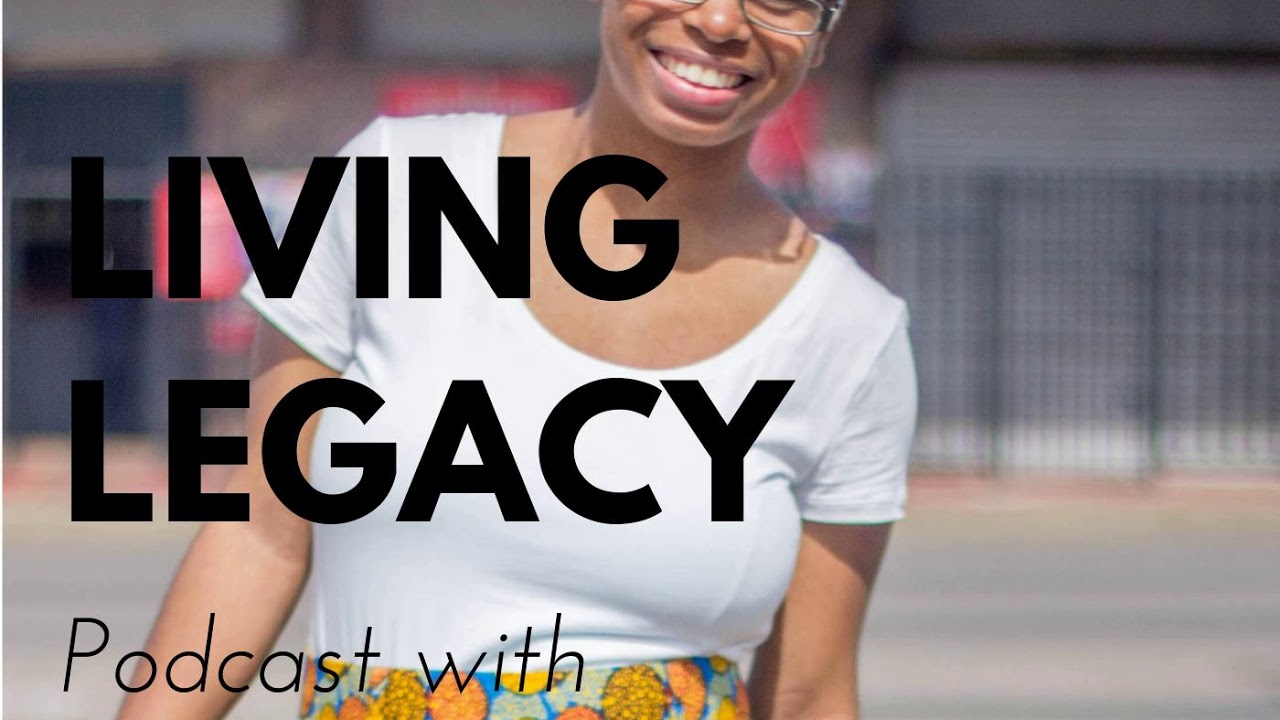
Zaakirah Muhammad lost her right eye to retinoblastoma as a child, diagnosed by a camera. She's traveled to ten countries photographing portraits and landscapes, studied at Boston University's Center for Digital Imaging Arts, and now teaches photography in Africa while building toward a photography school and book of African portraits.
Chapters
My name is Zaakirah, and you are listening to the Living Legacy Podcast. I am a brand cultivating strategist, a cancer survivor, and a camera saved my life. In this podcast, we'll be sharing stories of the very connections that I have as a professional photographer. And lo and behold, you never know, I may interview some of my favorite men. In this podcast, you will learn about professionalism, you'll learn about business, you'll learn about travel. I'm I have traveled to 10 countries so far, and now it's my turn to teach you and inspire you to step outside of your comfort zone. Today's episode is all about photography. Finding and fulfilling my purpose as a photographer. Now bear with me, this is going to be a really exciting episode to talk about, and when I'm excited, I tend to jump around. So a friend once said, are you ever not working? We were going for a stroll, walking in the city, walking in a park in Maryland, and I had my camera with me. Like, why wouldn't I have my camera with me? I was taking photos of street photography. I just graduated from school, so I was still practicing what I had learned of just taking photos everywhere I go, because practice does make perfect. I don't remember what my response was in that moment, but I know that there is a quote that goes, when you love what you do, you never really consider it work. In the first episode of this podcast, I share my cancer survivor story, but I also share how a camera saved my life. If you listen to the first episode, you will learn that I am a cancer survivor of a rare childhood eye cancer, and as a result, my right eye was surgically removed, and I currently wear a prosthetic eye in my right eye. My first camera was a Kodak Colorama camera. That was gifted to me around the age of 5. That allowed me to really just document life through my monocular vision. After using a Kodak Polaroid camera for a while, then my mom started purchasing the cameras from these— that you can purchase, the digital film camera that you could purchase from convenience stores. And then as soon as you finished taking pictures, you would have to get it developed, take it to the convenience store, the pharmacy, to get it developed. But by the time I was in middle school, I was gifted with my first digital camera. It was not the fanciest camera, but I was so excited to get a new camera. I documented all my life during middle school. I had a lot of friends and acquaintances and buddies. In middle school, and I really just documented that life. I also had the same camera up until my first out-of-country trips. The first one to Costa Rica and then again that summer to the UK, France, and Italy. By the time I was in high school is when I really started using the Nikon DSLR or digital single-lens reflex camera. My first camera I ever got was a D3000. And that is the one that I really started using during my first trip to my first African country of Ghana. This trip with the organization called Operation Crossroads Africa is also something I talked about in a previous episode. It was actually an interview with my good family friend Jacqueline Kekembo, who is very active with Operation Crossroads Africa. Then, By the time I was studying post-high school for studying professional photography, I then decided to purchase a camera, another Nikon D7000, but this time with video capabilities because we were learning in class how to be a videographer. At that time, video was growing to be huge. My first big media break was really after high school, or during high school rather. I was photographing a friend of mine who grew up in a musical family. So occasionally she would perform at festivals, she would have shows here and there. That was my first taste of music photography, and that was exciting because I love music. I listen to music with everything that I do. There's a song in my head for almost everything. But my first big media break Was a huge thank to my aunt, who was a freelance makeup artist who worked in the music and media and film and political world in New York City. My name, my middle name Nayyar means illuminous. My first name Zakira means the hereafter. So Nayyar, the illumin— the word illuminous, it's the reason why I use it on all of my social media handles. If you follow me everywhere, it's @illuminousone, O-N-E spelled out. But that's just what I bring. That's what I bring to the music industry. That's what I bring to any of my photo shoots. My style of photography is candid. I really love portraits because I really love working with people. I'm definitely a natural people person. But of course, you kind of have to be as a photographer. My classmates have said that my travel work, my travel portraits resemble photographers such as Steve McCurry. And it even makes them feel like they were there in the country, whatever country it was that I had been to. In a previous episode, I mentioned the photographer Jeremy Cowart. I studied his work because I found him as I was researching a service organization where I could be of service and still be a photographer. So he's the founder of Help Portrait. But my mom bought me photo books. Once she really got a handle on, this is what I really want to do, she bought photo books back when Amazon was a book reseller. She would order books from Life, National Geographic, and then I would learn how to order books myself from photographers who looked like me or whose style that I admired, such as Matthew Jordan Smith, Mark Liddell, Mario Testino. There was also Bryan Smith, who I had the pleasure of meeting and receiving an autograph from at Photoshop World in Atlanta. Once I did decide to move back home, back down south to Tennessee, I took a drive to go to Photoshop World. I flew— when I was living in DC, I went up to New York for the PhotoPlus Expo, and that is where I really got to see Matthew Jordan Smith in person. I did not have the book on me, so I couldn't get an autograph, but I told him about it. I told him how much it inspired me and how excited I was to discover it, you know, at the library because they had a book sale at the library. The book is called Sepia Tone, and not many people use that type of photography now, but that used to be a style right before color because there's black and white photography And then right before color was fully popular, it was— there was sepia. It was like almost color, but neutral tones of color. And that's the entire style of his book. And I even got to meet the official photographer, Chris Hollow, of the Grand Ole Opry and got him to autograph a book as well. He's been the official photographer for over 20 years. So that was exciting to meet him. As soon as I figured out who he was when I did start my part-time job at the Grand Ole Opry. It was also exciting because there was Les Everett, who was the photographer, basically the photographer before Chris Hollow. He had a— they were doing a photography exhibit at the Grand Ole Opry. For a little while. I really just enjoyed looking at that exhibit. You know, it just made music photography that much more exciting. In high school, I studied commercial photography. But my first high school, I wanted to take the journalism program. My first high school in Tampa, I wanted to be a part of the journalism program. But instead, my mom put me into the architecture program. And at first I did, I was mad, I didn't like it because I knew even then, I knew my purpose involved a camera. But there are no regrets because, because of that one year in my architecture program, I know how to read floor plans and I know how I want to build my future house. Then I persuaded my mom so I was able to study the commercial photography program at my second technical high school. So that was the program that I graduated with in addition to my high school diploma. And then fast forward to a year or half a year, 6 months after I graduated from high school, is when I found the photography school, Boston University Center for Digital Imaging Arts, as a sector of Boston University in Washington, D.C. And that's where I studied and received another certification in professional photography. But what I've observed is that only a handful of my classmates in both my classes actively still pursue photography professionally. Just like entrepreneurship is not made for the vain or the weak. But what I have observed is that almost all of my favorite photographers have a book, at least 1 or 2, 1 or 2, maybe up to 3 books, because you have to diversify that way. I haven't decided on what kind of book I wanted to launch, But it took me a while. At first I thought, okay, I think I wanna just do portraits for my Ghana trip. And then I went to The Gambia and I think, okay, maybe I wanna just do portraits of The Gambia. Then I went to South Africa and Senegal and I'm like, okay, well, I just keep going to more African countries. So how about I just shine a positive light on Africa in the same light that it was seen for me growing up? Because before I had the opportunity to travel to Africa, That's all I saw. I saw the beauty of Africa in photographs, the National Geographic magazines, in movies, films, things of that sort. I think that's probably what I would do. I'd probably start a book on my African travel to just showcase my portraits and also showcase some of the beautiful landscape in Africa and how different each country is. So they're similar but different at the same time. I was blessed to know at a young age What my purpose was. I was blessed to know or understand my gift of photographing because a family friend once said that I already by default have the photographer's eye because I have monocular vision or vision in one eye. Because most of the time to look through the viewfinder or— well, at least if you're not photographing with a phone, if you're photographing with a professional DSLR camera or medium format camera, that requires one eye. So by default, you know, the family and friends say that I have a photographer's eye. But others have just said that I have a knack of just bringing out the soul and personality of humanity. You know, so I think my slogan that I go by now is that I capture the essence of humanity. But it's all just come full circle because my ability to be such a great photographer has also helped me to Help other small businesses to have an attractive aesthetic brand for their social media because that's what Instagram is. It's an image platform. That's what Pinterest was originally, an image platform. People see images first if you post that on Facebook rather than simple text. Why do you think they started making text and— text and image? Because people are attracted to color and images. But I knew that my love for photography was bigger than me the moment I started capturing the last picture, the last professional photographs of someone. So far, I can count at least twice when it happened. Once, it was actually my audiologist. She had a son who was in the Marines and they took a family picture with me. I was their photographer for their family picture, but it was the last family picture before he ended up passing away. Today, as I'm— as this podcast is being published, today is also the anniversary of the passing of my close friend, Amas, which her name means diamond. So she definitely shined bright like a diamond. Little did I know that she had a wedding. She was able to have pretty much the wedding of her dreams. She had been married to her husband for a little while. He ended up joining the Coast Guard. He wasn't always in the military. They met, they were like teenage heartthrobs. They loved each other as a teenager. But they ended up getting married as adults, you know, after they've lived life individually and figured out what they want to do. They ended up getting married. But they didn't actually have a wedding wedding until, you know, they've been married a little while. So she got to have the wedding of her dreams. And the family asked me to be one of their photographers. And little did I know that she would, you know, pass away 2 weeks later. So I ended up being the last person to really capture professional pictures or the most professional pictures. Because this is also— she's also from the same family of the musical family that allowed me to photograph them as they performed at concerts. So So that's when I realized that me photographing, my gift for photography goes beyond my love for just capturing people and the essence of humanity. And how amazing is it for it to be full circle because my mother took a picture of me and it was that picture that helped to diagnose the cancer in my right eye, basically saved my life. Of course, all it took was my mom's Intuition, really, because, you know, she knew something was wrong before the picture was taken. But because of technology, because of a camera, because of a picture that was printed, and she was able to see that white glow in the picture and be able to take it around to more than one doctor to get the diagnosis that I was diagnosed with retinoblastoma. As I started doing more event photography, I had others who kind of wanted to be my assistant, like They would interact with me as I'm photographing or they would actually be an assistant and they just, you know, apparently somehow I just, I was more knowledgeable than them. And even if they were older than me, but not that age means anything because age is nothing but a number. Not trying to make that song reference, but— Um, I feel like there was just a lot of people who were like, okay, I really want to learn from you. I admire what you do. Like, how can I learn from you? You know, there's so many people who just, you know, when I would capture an event, they were like, how can I do the same thing? And I mean, of course, the, the, the empath in me, the giver in me, would just naturally give advice, just help them on the spot, show them how to use my camera. You know, that was the most fun part about volunteering overseas with any, uh, once I was in any African country, because Because photography is not huge over there yet, kids just lose their minds in a great way when they see themselves on camera, right? And some of them literally take it seriously when I get to obviously supervise, but let them hold my camera and show them how to use it, and they are so excited. And that's how— that's also how I just, you know, every dot is connected. with my purpose. So that's also how I realized that in my future I am meant to teach students how to photograph. I'm meant to teach African students how to photograph. I'm meant to, you know, launch a school, launch a photography studio, photography workshops. And I've been manifesting it. I've been working along that path. You know, I'm also naturally a writer. So, you know, I will write down these visions that I have. And it started to come into fruition in the summer of 2013. I was a videography intern turned paid videographer, part-time videographer for a Black business owner, a film, you know, producer. And then at one point she asked me to— she's launching a film academy summer camp. And she asked me to be a summer camp teacher. So, of course, I was there for 2 reasons. One, obviously, because they were going to be recording projects. I am her videographer, so I do need to do those projects. But also because she knew and understood my photography background. I was— I felt so honored that she asked me to teach the kids. They were elementary to middle school kids. And that was really my first chance to really teach photography. That's when I really realized that I saw a need and a void that I could fill. I finally— it took some growing, it took some time, it took some taking more courses so I can learn and educating myself a bit better. But I also realized that there is nothing wrong with failure. Because at one point, I will admit, I was afraid of failure. But that's when I really learned that that's what makes some of the best leaders. That's what makes some of the best business people, the best CEOs. They learn from their failure. They adapt to what could be better from the things that have failed. I just really have let imposter syndrome get in the way. Now, imposter syndrome, we'll talk about this in another episode, but it can really get to you. It gets to women a lot more. But it's basically this negative thought that you let get into your head, the thoughts of comparison, the thief of comparison. That you let get into your head that tell you you're not enough, you don't know enough, you're not right, you're, you're never gonna make it, things like that. You can find out more about me and my services at nayarphotography.com, which is my middle name, N as in Nancy, A as in apple, Y as in yellow, Y as in yellow, A as in apple, R as in red, photography.com. Even though I'm based in the Nashville area, as I've said plenty of times before, I love to travel. So I would love to have the honor of being your first or your last or your best photography experience. Thank you for listening to the Living Legacy Podcast. Be sure to subscribe, follow, and download so you don't miss the next episode. If you want to learn more, you can visit zaakirahnaair.com. That's zaakirahnayyar.com. Do you have any suggestions on a topic you want to be talked about? Send me an email or leave them in a review. If you love this episode, be sure to share it with your friends. Thank you.
More from Zaakirah

Wealth, Discovery And Alignment through Human Design and Gene Keys with Danielle Eyman



ADHD, AI, Artistry: Amber Andrews on Building a Brand that's Honest, Creative and Converting



Sensory Reset: Soft Stories of Joy, Belonging, and Healing Inner Child Live from Essence Fest


