Episode 16 Creative Visual Art Film and Poetry with Candace Howze
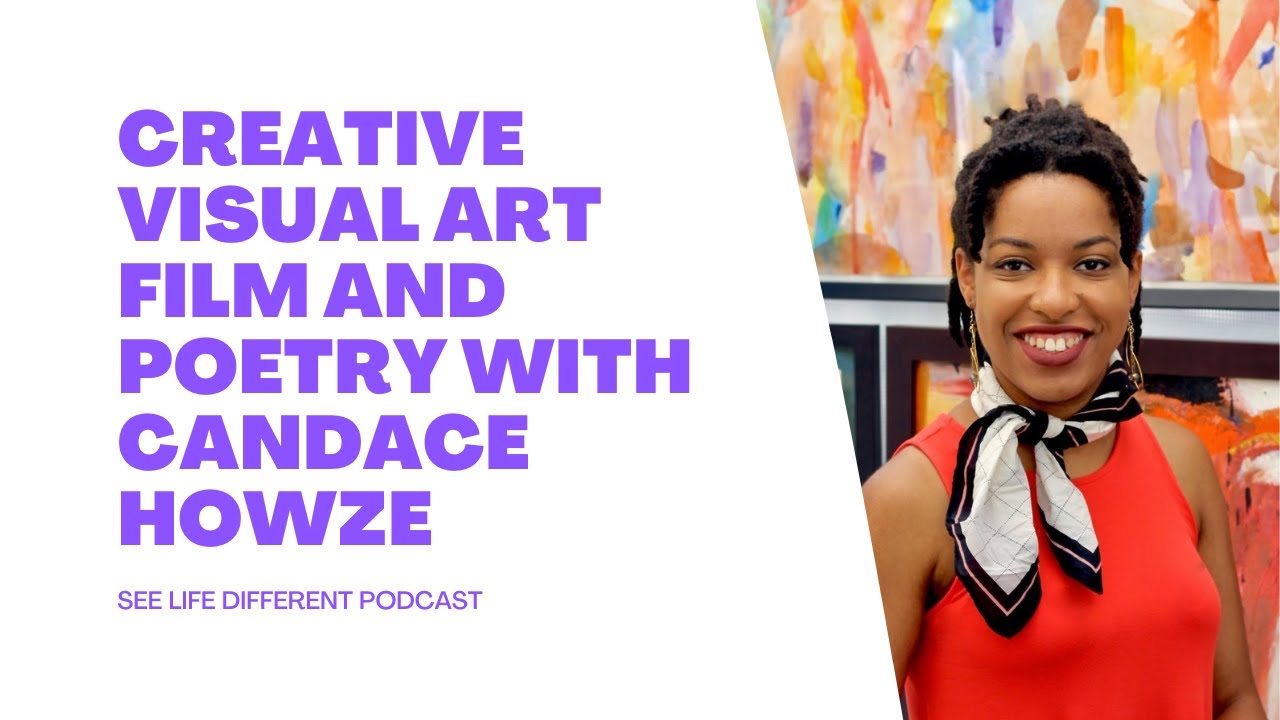
Candace Howze is a writer, photographer, and filmmaker shaped by her father's painting and daily writing practice. She cites poet-photographer Rachel Eliza Griffiths as a key influence and runs a podcast called Maraki Mentors spotlighting women creatives of color. She's visited 20 U.S. states and dreams of a life devoted entirely to writing, filmmaking, and curating collaborative exhibits.
Chapters
Hi, Candace.
Hello, how are you?
Good, how are you?
I am doing fantastic. I'm a little hot, but I'm doing well.
Yeah, it is really hot today. I don't know what's going on. It's like summer but not summer.
It really is. It's, it's crazy. It's like it should just be that nice kind of cool, kind of warm weather, but no, we're just heading straight into it.
Yeah, yeah, people really called it. They said they wish They wanted— they hated the winter and wished on it too soon.
Exactly.
So we had the pleasure to meet in a very cool podcast group, and I was just taken away by— I love finding other creatives, let alone other, you know, photographers and just artists. So any artists are just— it's like soul sisters, you know? So—
Definitely. I feel the same way. It's just the instant connection.
I don't know what it is, but Just tell, for those who don't know who you are, just tell them what kind of art you focus on.
Awesome. So I always see myself primarily, first and foremost, as a writer, just because I've written poetry, short stories, just everything since I was young. But I now probably would say I'm more kind of multidisciplinary because I do photography and I do film as well. So those are kind of like my 3 main things.
Very cool. Now, which one of the 3 do you feel excites you the most?
So I think I'm at a stage right now where photography is exciting me the most because for me it's tied to a lot of creativity. I can like create images wherever I am, or I'm going to places to like meet people or go to events and create images. I think that is for me the most exciting because I love visual things. I like traveling, I like meeting people, and a lot of times from photography everything else kind of builds for me. So whether I get an idea to write an essay or I want to turn into a film, kind of that initial image is what kind of gets my creative juices going.
So are those some of your photos on your wall behind you, your artwork too?
So this is all artwork actually that I've gotten from like different places that I've been. So yeah, it's, it's a collection of things. There's a few photos back there though.
I love it though. It's like supporting other artists. Like, why do you think that's important though, to be able to support other artists?
Just because it's such, it's such a difficult thing. I know everybody says like art is hard, and I don't mean that it's hard like in a negative way. It's just There's so much in terms of getting people to become patrons of the arts and understand the importance of it and buy it and just everything that goes along with it. So I think it's really important whenever we can to always make sure that we are supporting each other, that we're giving each other that validation and encouragement, even if it's something small, because that can really make or break someone, you know, quitting or, you know, going that extra mile.
I love it. Now tell me, why did you, or what really helped you to start being a creative? Because I feel like I've heard this quote that says, the adult creative is the child that never dies, right?
Yes, I love that quote.
Why do you feel like, what kept you going to keep those creative juices going?
So it's 2 main things. The very first thing would Definitely be my dad. My dad is an artist. He paints. I don't think I have any behind me right now, but yeah, so he paints. So I— and he started doing that. I didn't really know that he was that good of a painter until he actually started doing it full time when I was maybe like 10 or so. So just kind of seeing him pursue his art and follow that as a career, I think definitely is a huge impact on me because I see it as something that's viable and something that's worth pursuing. And then I think the second thing would be just even like in my very young adult years, you know, I used to literally write every day. Like when school was out, I would just like be in my room for hours writing. And as you get busy, you start working. I was in college, you know, I wasn't writing as much outside of what I had to do. And I just saw the difference for me, like emotionally, where, you know, that clarity that I was getting from writing, that joy, you know, sometimes wasn't there because you're getting bogged down by like all these other things. So I think seeing him doing that and realizing how I wasn't as happy not practicing my art has just kind of told me that it has to be a part of my life.
Absolutely. Now, where do you think you would be if it was not a part of your life?
Ooh, probably, probably somewhere in a hole crying. No, I'm just kidding. I would definitely— I think I would be less Probably less optimistic and I think less hopeful. I think art gives me so much hope because I'm very happy like with what I do and very content, but there's always in my art, there's always something else that I'm reaching for, something else that I want to achieve or explore. And so I think it keeps me looking forward with optimism rather than I think being stuck and saying like, oh, this is all that there is for me, which I think happens to Yeah, definitely.
I agree. So what do you think— of course, it's full of ups and downs being an entrepreneur, being a creator— but what do you think you've learned the most from your journey?
I think something that I've learned, and I feel people say it so much, but I found that it's true, is I think that it's really important in your life to To be active and to do. Like, it's easy to talk ourselves out of things and be like, oh, I'm not ready yet, or I'm not good enough, or there's too much time, or just to feel like, you know, well, I don't see an opportunity or a door, so I'm just gonna sit here and wait. But it's so important to go out and to make your own opportunities and to create when no one's looking or when no one's asked you to do something because It's in those moments that not only are you building your skill, but people are looking and they're watching you even when you don't realize it. And that's when opportunities come. Like, there were so many things. I remember in college I was really kind of getting photography going and I had my camera and I was just going out creating pictures and I was just practicing. I really didn't think anything of it. I was just like, what does this mean? What's aperture? And so I was doing all these things, but people actually saw me and then they came up and they were like, hey, Do you film events or do you do grad photos? And I was like, yeah, yeah, yeah, I do. And I didn't have a plan for it. It was just, you know, those things kind of fell into my lap to a point where I could actually become confident in them. But that would have never happened if I didn't pick up the camera or say, I'm going to take a picture, you know, regardless of how good it looks. So I think that what I've learned the most is that when something's on your mind or on your heart, you just have to do it regardless of, you know, how good you are, if you've ever done it before, who's paying attention to you.
I love it. Yeah, that's the thing. Just do it. Just Nike. Just—
Exactly. Yeah, it's so simple, but it's like so hard at the same time.
It is. But I think some people don't get that because there are different kinds of people. There's the creative, and then there's the analytical people, and then there are people who are what they call pushers. They're naturally just, just go, go, go, go, go. They have that adrenaline in them. They don't know where it came from, but they naturally have it in them.
Exactly, yeah, and you're right, regardless of what your personality is, whatever doing is for you in your field, you just have to figure it out and just take that leap.
Yeah, I love it. So where are you from?
I am from— it's so funny, I had a whole discussion on this the other day. I think you saw it on my Facebook. But everyone told me it's where you were born, so I'm gonna stick with So I'm from Ohio. That's where I was born and raised until I was like 13, and then I moved to North Carolina, which is where I've been ever since.
So have you lived anywhere else?
No, I have not. Like, I've lived in, in different places within those states, but those are the only 2 states I've lived in.
And what about travel? Where have you traveled to?
I have been to— I just hit 20 the other— yes, I've been to 20 US states, and I haven't been out of the country yet, but that's a goal of mine.
What is the country you want to go to?
Tons of them. So I want to go to Greece, Iceland, Ghana, and somewhere in the Caribbean, but I have not pinpointed yet. Okay.
Yeah, because you know, you know what you know about Tokyo. Well, Tokyo and the Olympics.
I know. I know, I know. And it's so— I've seen a friend of mine was actually showing me some pictures of Tokyo as well as like other places in Japan, and I didn't realize how they had so many geographical things like mountains plus the tropical area plus the cities. Like, I don't know, I missed that somehow. So now I'm like, okay, yeah, I want to go there too.
Yeah, something about this— well, at least the Carolinas and Tennessee, you get the best of both worlds.
You do.
The mountains, you have to find the beach kind of up here, but mountains, 4 seasons.
Exactly. Yeah, I didn't even think about that until I actually moved here and I was able to like see the mountains and see the beach, and I was like, you know, this is very rare that you have a state where you can literally like see everything in one span. And I live, I live like right in the middle, so it's kind of like equal distance to get to either side.
Nice, nice. All right, so let's see, what does keep your creative juices flowing? Because some days it's not just easy to write, right?
Yeah, it's not, it's really hard. Sometimes you— I will admit there's days like I have to tell myself just write something, and sometimes it comes out really bad, or I go back and I'm like, oh, there's something out of this. I do think there's a certain amount of of like discipline you have to have in your art because you're not always going to feel like it. So there's days you have to do it just because this is what I do. But I think ultimately what I think probably inspires me or keeps me going the most is one, other art. Like if I'm listening to music or looking at a painting or just scrolling through Instagram, I'm always inspired. It always makes me feel like, hey, you know, that idea that's floating around. You need to start working on that. So definitely being around other artists is really inspiring to me, and history is actually really inspiring to me. I know that might be kind of weird, but I've always kind of been a bit of a history buff, and for me, like, reading about things that have happened and always just kind of being blown away by, like, the parallels between what's going on now and what happened And how these same human emotions we have have been going on forever and ever. That always kind of inspires me to try to create something that draws people to, you know, to think about their history, kind of contextualize what they're going through. Yeah, that's always a huge motivator for me when I feel that I'm just kind of sitting there and I'm out of ideas.
So would you say there's 1, 2, 3, or a handful of people that inspire you?
That's a really good question, right? Oh my gosh, I feel like it's— oh man, it's probably always, always changing. Like, I know right now someone who is Really, really inspiring to me, and I was so excited because I got to interview her not too long ago, is Rachel Eliza Griffiths. And I love her just because she does pretty much everything I want to do. Like, she's who I want to be. So she does like poetry and photography and all types of, you know, just different things. She teaches. She does kind of everything that I want to do. So I'm always inspired. by her and just her versatility and her ability to like kind of go from one medium to the next. And yeah, so she is one person. Obviously there's probably many more, but I feel that she's one person that I always come back to regardless of what phase I'm in.
I love it. Yeah, I think for me, I not— well, see, for me, as photography, I've always tried to find people that look like me because there weren't that many, you know. Yeah. I'm the same way.
That's like my— I have a whole, I have like a whole, what do you call it, it's not a page but those collections they have now on Instagram where you can save people and it's like all like I have a whole page just dedicated to that.
Yeah, so let's backtrack a little bit. I don't think you've said what that age was where you first really either picked up a camera or started writing, started drawing. What was that key age for you?
So I know the first time I remember writing like a poem, I was 7. And I remember because I was— I had just found out like what a thesaurus was, so I was like finding words and like writing down words that sounded like words I knew, and I just kind of made something up. I remember I showed my parents, I was like, I wrote a poem, and they sat me down, they were like, okay, now you cannot plagiarize, and this is what plagiarism means. I was like, what is that? And so they explained it to me. I was like, okay, what does that have to do with me? And they were like, okay, so tell us where you copied this. And I was like, but I didn't. And then I cried and I was like, oh. I remember that was like my first artistic thing. Um, but I feel like, you know, as every other kid, you know, like I drew, I like made up stories and stuff. But I think that was the first time that I actually saw it as something that I could create. And I think I probably started doing things with like photography and stuff in high school because I think I got my first camera— well, I got my first camcorder when I was like 14 or 15, so I think that's when I started.
Okay, very nice. Yeah, it's crazy. Now I think I want to ask, how did— how do you make it past, you know, those naysayers? Like, oh my goodness, I would have— I would have never written again after that.
I think it was just, it's always been something to me that was, it was just kind of second nature. Like, I always felt like I had to do it, even if I didn't show anybody. I've just always felt like I had to write something, or I could be walking through the grocery store and I don't know, something comes to my head and I have to like write it in my phone. So I think, I think for me it was just, it was something very natural. It's definitely hard sometimes. Like, I've had You know, I've applied for, you know, spoken word groups, all types of things. They were like, no, it's not good. And then you feel really rejected. But I think I just always knew inside that it's just like a part of me regardless of anybody likes it or not.
So that's what you would say— would that be your intuition, your purpose?
Yeah, I think so. Yeah, I always kind of felt that that's what I was meant to do and I had— I will say I think I was fortunate enough, especially like as a younger person, to have a certain amount of like validation through that. I used to always say like writing was like the only thing that like always seemed to go well at some point, because I, as I started doing it more, I always had people say like, oh, you're a really good writer, oh, this was great. But obviously there's still those moments when you doubt yourself, even if you have that support there, or you have you know, good things happen. But I think I knew very early on, and I think my family was a big supporter in that, in that this is your purpose. Like, you know, what you do with words is special, and so you should always keep doing that.
Definitely, because once it's— I mean, it never really— you can never really turn it off, right? Because I remember one day I was just walking the street, and I think I happened to have— either I had my camera or I just had my camera phone. And we were just strolling in the park and my friend was like, do you ever not stop? Like not photograph? I'm like, not really.
It's like, I mean, no, like, it's like you stop breathing? Like, no. Yeah, it is very— it is a very natural thing. Like, you probably can't imagine going somewhere and not being able to You know, take a picture or document that. And I feel the same way, like I couldn't imagine not writing something or putting into words like how I feel.
I love it. So what is your dream life? You did describe your dream audience, but tell us more. What is your dream?
Ooh, so I think my dream life would be to Probably write poetry all the time, like all day long, like that being my main thing. And to make a few films too. I'm still like rolling around in my mind, like in what capacity, like do I want to write the script or do I want to direct it or do I just want to help? But I think my, my dream life would be just, just creating, you know, coming up with ideas that I'm writing or— bringing other people together, um, to, you know, create exhibits or just something that I can put out into the world and that be literally what I do all day long. That would, that would definitely be a dream.
I love it. Yeah. Or you can do all of it. You can do all 3.
Exactly.
I believe in the power of manifestation. So it's like, as soon as you either speak it, write it, It would definitely come true.
Definitely.
All right, so where can we find you on the web?
So you can find me on— so you can go to candacehowze.com. So that's C-A-N-D-A-C-E-H-O-W-Z-E, like zebra. And you can kind of see all of the different things that I do there. You can follow You can follow me on social media from there. My Twitter is the same thing, Candace Howes, and then my Instagram is Ace is Joy. So you can get to my writing, everything that I do from there. Yeah.
Now we find each other in a podcast group today. That means you have a podcast?
Yes. Oh my gosh. I totally forgot. Yes. So I do a podcast that is, I guess, kind of similar. So it's called Maraki Mentors. And I interview all women, female creatives in everything. So whether they're visual arts, writing, singing, it doesn't matter. And I try to spotlight and give women of color, you know, a platform, but I speak to everybody. It doesn't matter. And so yeah, Maraki Mentors, you can find it on podcast platforms. And we're the same across the board on social media, Facebook, Twitter, Instagram. And on our website.
Very nice. Well, thank you, Ken. This has been fun.
Yes, it has been fantastic. I've enjoyed it so much.
More from Zaakirah

Wealth, Discovery And Alignment through Human Design and Gene Keys with Danielle Eyman



ADHD, AI, Artistry: Amber Andrews on Building a Brand that's Honest, Creative and Converting



Sensory Reset: Soft Stories of Joy, Belonging, and Healing Inner Child Live from Essence Fest


