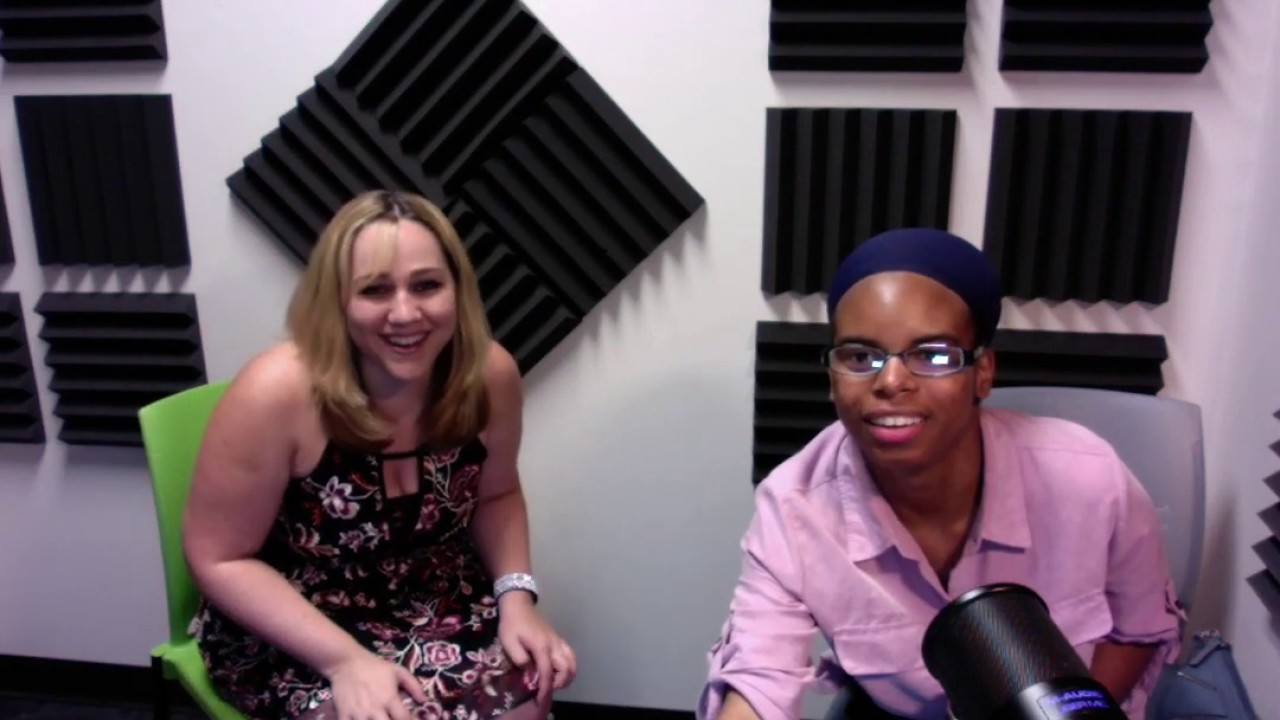
In this episode of the Living Legacy Podcast, host Zaakirah Muhammad sits down in person with Michelle Canning, a Massachusetts‑born, Kentucky‑raised banjo player, singer, and Grand Ole Opry tour guide. Michelle recounts how a childhood gift of a banjo from her grandfather sparked a lifelong passion, leading her to study Traditional Music at Morehead State University and earn a Master’s in Music Business. A chance job referral landed her at the Grand Ole Opry, where she now guides visitors and draws creative energy for her own music career. She describes the formation and evolution of her bands—from the high‑school group Rough Edges to the current Michelle Canning Band—highlighting the challenges of member turnover and long‑distance collaboration. Michelle shares how resilience, mentorship (notably from professor Raymond McClain), and a strong family support system helped her navigate setbacks. She details extensive touring across the U.S. East Coast, a memorable two‑tour stint in China, and a personal trip to Italy, reflecting on cultural immersion and the universal language of music. The conversation turns to gender dynamics in the bluegrass and country scenes, where Michelle discusses sexist comments, double standards around women’s attire, and the pressure to conform, countered by her own song “Sparkle On” that celebrates authenticity. She offers advice to aspiring female musicians: stay true to yourself, make small strategic adjustments when needed, and focus on supportive fans rather than critics. Michelle previews an upcoming instrumental titled “Banga Banga Banjo,” and outlines her aspiration to make a living playing music full‑time. The episode concludes with her online presence—website www.michellecanning.net and social handles @mcbluegrass—inviting listeners to follow her work.
Chapters
That sounded good.
Thank you. Is that all you need for the banjo?
I think so. Okay. This, um, now I know you're working on music, so was that like a sneak peek, or are you able to do that, like kind of a sneak peek of what you're working on?
That's— yeah, so that's a song that I wrote called Banga Banga Banjo.
Okay.
And I haven't, um, performed The first time I'll be performing it will be actually this coming Wednesday.
Okay.
So yes, it's kind of a sneak peek, but I didn't really mean it that way. Okay, cool.
Let me do that. All right. So today on the Living Legacy Podcast, I have one of the rare opportunities to interview in person. Michelle Canning is originally from Massachusetts by way of Kentucky, where she graduated from Morehead State University. University with a Bachelor of Arts in Traditional Music. She also holds a Master's in Music Business. Michelle Canning is my coworker from the Grand Ole Opry. She's also the first coworker I really got to really hang out with. I may have crossed paths with other tour ambassadors, because that's what she does, she's a tour guide at the Grand Ole Opry, but we're the only ones who really kind of kept in touch since orientation. We started the same day, we pretty much saw each other at the same, you know, time. And she's a wonderful, emotion-filled country banjo bluegrass player. She's the lead singer and player behind Michelle Panning Brand, and she's recognized for her vibrant stage presence. She tours several states and a few countries. She's a Leo, and I'm a Sagittarius. So when she's not touring, songwriting, or working at the Groundhog Opry, she teaches music lessons. Today we're talking about women in the industry. and what it's like being an artist and being in country music and being in Music City. Episode 12 of my podcast with Leah Masterson called Mastering the Music Business was a very popular episode, so I thought, why not bring her back and do a part 2? This time with an artist from a different perspective. Without further ado, hi, Rachelle!
Hey, Zaakirah! How are you?
Good, how are you doing?
I'm doing great, thank you for having me today.
Thank you so much for being here.
I'm happy to be here.
Alright, so tell me how, when, tell me the whole story. Who, what, when, where, how, why did you first start being involved in music?
Yeah, well, I first started when I was 8 years old. I was, I always had an imagination as a kid, and so I was drawing guitars on construction paper, and I said to my grandfather, Pepe, let's make a band. And he said, okay, well, I'll play the guitar and you play the banjo. Now I'm a little 8-year-old girl from Massachusetts. I didn't know what a banjo was. And he said, well, I'll show you. And he pulled one out of his closet and he put it in my arms and I just fell in love with it. And from that moment on, I knew that's what I wanted to do forever. And sure enough, I went through school always having the banjo in the back of my mind. And, you know, when I was finishing a test and the other kids would read, I'd be writing a song. And after high school, I said, well, I want to go somewhere where I can study traditional music and play the banjo. And so I ended up at Morehead State University. And majored in traditional music and then got a master's degree in business, and here I am today living in Nashville.
I love it. Made Music City the perfect place. So what brought you to Music City then?
Well, to be honest, I graduated college and needed a job and found one here, which I guess was a happy coincidence. A friend of mine hooked me up with this Opry job and messaged me and said, I found this online, you should apply, you'd be perfect for it. So I applied and And came and interviewed and fell in love with Nashville all over. You know, I had come and visited before and I fell in love every time I visited. And so I fell in love all over again and then I got the job and I was just ecstatic. And I moved here to Nashville. You know, I didn't know what I was going to do after college and getting that job at the Opry really made it a perfect move for me.
I love it. I love it. So what is the best part about working at the Opry? For me, as a photographer, it's amazing to be around so many other creators.
Sure.
So for you, what's the best part about working at the Opry?
Well, absolutely, absolutely, excuse me, being around other creators is really great. You know, there's other musicians like me playing all styles of music, and then there's people like you who do photography. We have a bagpipe player. You know, we have people doing so many different things at the Opry. But what I really love about it is there's a feeling when you walk into that building. that it's more than just a music venue. You can feel the presence of people like Roy Acuff, who are my musical heroes. Yeah, I didn't grow up with them, but I did. And, uh, and so it's pretty special that you can walk in there and, and feel all those feels and feel like I'm part of country music history just by showing people around.
I love it. I love it. So what is— how does being a tour guide help you With your music?
Well, you know, being a tour guide and being a performer are a lot similar. You know, your, your purpose as a performer is to make people leave wanting more, to make people leave feeling like, wow, I feel good tonight. And whatever worries were in their brain before they came in, whatever was troubling them, just goes away and they just feel good. And then you're doing the same thing as a tour guide. You know, it might be for an hour instead of 2 hours, but You're showing people around this place that has so much history and telling them about the artists that they love and showing them exactly where that artist sat, what couch Carrie Underwood sat on, and making people feel good. And so when you kind of combine those 2 things, music helps my tour guide career and being a tour guide helps my music career.
I love it, I love it. So everything is aligned, everything is connected.
Exactly.
Love it. Good. So now we're gonna get an exclusive sneak peek at one of your upcoming new songs.
Yes, this is Banga Banga Banjo. It's an instrumental that I wrote, and I'll be playing it on the road soon.
Cool. Okay. Now, resuming interview. So tell me why you started your band.
Well, I started my first band when I was about 16, and there was this bluegrass band contest at a festival called Blistered Fingers up in Maine. And I thought, wouldn't it be fun if I just, you know, put a band together and we went and played this contest? And so we weren't really going to do anything with it. We were just going to play the contest. Well, as it turned out, we won the contest, and the winning prize was a set on the main stage the following year. So we're like, oh, okay, I guess we should, you know, get together and do some stuff. And in the meantime, a friend of mine who had a band wasn't able to do a show, and so they asked us if we wanted to play. And all of a sudden we're getting these shows, and we're like, well, as long as we're doing it anyways, let's be a real band. And so we were called Michelle Canning and Rough Edges. Well, really we were called Rough Edges and then eventually at some point one of the band members was like, we should be Michelle Canning and Rough Edges, because I was kind of the lead person. So we did that. And we did that all the way through high school and even the first few years of college. And then it became a little difficult, the long-distance band thing. So I ended up closing the door, I should say, on Michelle Canning and Rough Edges, but then opening the door on the Michelle Canning Band. So I got some new band members that were more local at the time, and now we're doing the long-distance thing again now that I'm here, but it's not as long distance. So, but, um, but we've been playing music and just playing as many shows as we can, and, and I absolutely love every minute of it.
I love it. I love it. So what— of course, this hasn't always been rainbows and whistles and all that. So what has— what would you say initially stopped you from launching What was stopping the band?
Um, I don't think anything necessarily stopped me. I was a pretty gung-ho teenager. I wanted it and I wanted it bad. So, I don't know that anything stopped me from starting it. There were certainly times where I wondered if I wanted to continue it. You know, band members come and go and that's a normal part of music and, you know, people moving around and doing different things. And there was a time when I found myself With no band members because by sheer coincidence they all quit at the same time. And it, you know, it wasn't like my whole band leaving me, it was just that this one was moving and this one got an offer, you know, and different things happened. And it was like, oh no, now what do I do? But what I found was the people who succeed are the people who survive. That's what Raymond McLean, one of my teachers, taught me. And so I just kept going and I just kept chugging, and the more I kept going, the more I succeeded. And so you have to kind of take these pit stops and downfalls and use them to your advantage.
So how specifically do you use them to your advantage?
Yeah, I mean, there are some times where it seems like you can't, and then you find out, oh, well, actually, because I'm not doing this thing that I had set my sights on, I worked so hard to doing this thing that I now have the tools to do this thing that I never thought about. And I wouldn't have had the tools to do this thing if I hadn't tried to get that thing.
I love that. I love that mentality. I love that. So what helps you the most during the difficult times?
I think having a good support system is really, really important. I'm lucky my mom and dad support me with their whole hearts. My grandparents, when they were alive— my grandmother's still alive— They're always there for me. And then just a whole network of people. I have friends at the Opry. I have teachers from when I was in college. I even have a teacher from high school who still supports me. And, you know, when things get tough and I don't know how to handle something, I call my mom or I call Raymond or, you know, there's somebody that I can talk to and they'll talk me through it and they'll remind me what I'm worth.
So what are you worth?
I'm worth $1,000, baby! I love it.
So where have you traveled to? I guess I would say both personal and music related.
Yeah, so, uh, music related, I've traveled all over the Northeast. I've done shows in every state in New England. I've done New York, Pennsylvania, Some southern states, Kentucky, Ohio, West Virginia. So pretty much most of the East Coast. And then I've also traveled to the People's Republic of China twice. We did 2 tours over there. Non-music related, I've been to Italy. We went to Italy this past spring. I went to Canada and then different states across the country.
So what has been your favorite place so far?
Probably China. China was a really fun place. The culture is so different from here, and what I love about playing music somewhere versus just visiting is that when you play music there, you're not in the tourist areas. You're in China, and you're walking down the street, and I mean, people thought we were rock stars over there. You know, we would finish a show— in the States, you finish a show, then you go to your record table and people line up, and one at a time you meet people. Well, in China, you finish the show and they rush the stage. You would have thought we were the Beatles.
And—
but it's just a different culture. And so it was really fun to see their, their actual culture. And then when we weren't playing, to walk around the streets in, you know, we weren't in Beijing where all the tourists are. We were in, you know, Tianjin, this random city in China that tourists don't go to. And it was really fun just to learn another culture.
I love it. I love it. Yeah, I love being able to immerse in other cultures. I think ever since I was able to travel like that, not just travel, you know, for 2 weeks, not just travel to see a place, but as soon as I was able to really immerse in a culture, that changed my whole view on travel.
Yeah, absolutely. Absolutely. You learn so much about people in general, you know, in the bigger picture, and you learn that, you know, I keep going back to Raymond McClain. He was the director of the Traditional Music Center at Morehead State and a very big mentor of mine, and he has a song he wrote And it talks about how the same wind that he feels at home in Kentucky, it's the same wind that you feel in China or you feel anywhere else in the world. It's the same wind. And it's like that with humanity too, you know. We all speak different languages and we have different cultures, but in the end, we all have these things called hearts and souls, and we all use them the same way.
I love it. I love it. So Being a woman is hard.
You know it.
Ah, but tell, tell me your experiences of being a woman in the music business.
You know, as a kid, it never occurred to me that girls don't play the banjo. Like, I never even thought that was a thing. And as I got older, I started getting these comments like, well, you don't see a lot of girls playing the banjo. And I'd be like, oh, well, here's one, you know, I don't know what you want me to say. And, you know, stuff like that, it's— they're innocent comments, they don't bother me. What does bother me is you get comments that are sexually driven, and, you know, you wouldn't say that to a male banjo player, why are you saying it to me?
Mm-hmm.
A lot of issues that women have, especially in my case, is clothing. You know, men wear a suit and tie or jeans and a t-shirt and they're fine either way. Women, if you wear jeans and a t-shirt, well, you should have dressed up. And if you wear a dress, well, you look like a slut. And there's no middle ground there. And that's been a tough one for me. I have a song called Sparkle On and it's basically about being yourself. And for me, I like to dress up on stage. And, you know, I make sure that all the important parts are covered, I'll say it that way, but that I'm always dressed nice and pretty and respecting my audience. And so some people don't like that, and the song Sparkle On, it's on my latest album, kind of says, well, this is who I am and I'm not going to change that for somebody just because I'm a woman.
I love that. So what would you advise for What advice do you have for the women out there? I would say not just country music, but music in general who struggle with that but want— don't want to keep that from fulfilling their passion.
Just keep going. Just keep being you. And, you know, sometimes you're gonna have to change little things. You know, there are little things about my appearance that I've changed that made it a little bit more okay to wear this particular dress or something, you know. So sometimes you'll have to make those little changes, but as far as the big picture goes, be yourself, and there's gonna be people who love that. And I think, you know, it's easy to focus on the bad. It's easy to focus on the people who are, you know, upset about the clothes you're wearing or the size heels you have on or, you know, the fact that you're a woman playing a man's instrument or whatever. But there are so many more people who love you and appreciate you and respect you. And that's who you need to set your focus on.
I love it. I love it. Where do you see yourself musically in 5 years?
You know, what I would love to do with my life is play music for a living 24/7 in whatever capacity that ends up being. You know, I can't tell the future. You know, I don't know what's going to happen in 5 years, but my hope is that I'll be happy and that I'll be playing music.
I love it. So where can we find you on the web?
You can find me at www.michellecanning.net. Make sure you use .net and .com because you'll get a whole other Michelle Canning. But my tour schedule's on there, my bio, some photos, videos. You can download music on there. There's a store. And then on social media, any of the platforms, if you use @mcbluegrass, you'll get to me. So that's Instagram, Twitter, and Facebook.
Okay, well, thank you, Michelle.
Thank you, Zaakirah.
Cool. Let's see.
Is that good? I probably shouldn't have used the word slut, but—