Episode 27 Being Deaf Blind And Hard of Hearing
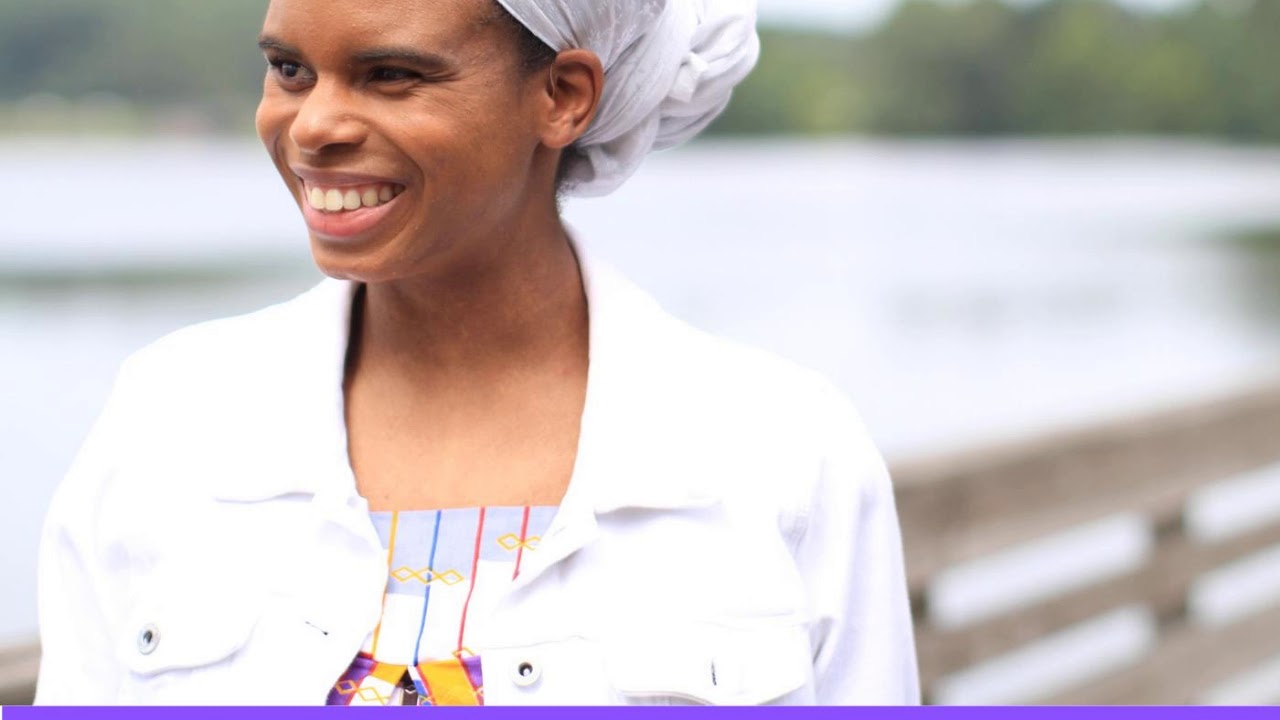
Zaakirah Muhammad, a deaf-blind cancer survivor and brand strategist, shares how hearing aids, lip-reading, and technology help her work and travel. She describes the daily challenges: missed conversations, difficulty with accents, the emotional weight of asking people to repeat themselves. She also finds unexpected advantages, like tuning out unwanted noise and predicting musical trends through bass and vibration.
Chapters
My name is Zaakirah Muhammad, and you are listening to the Living Legacy Podcast. This weekly podcast features women of purpose sharing stories of resilience. They are wives, artists, entrepreneurs, they run businesses, and here they will share their stories of how they overcame obstacles and how they're juggling it all. If you're ready to learn about professionalism, entrepreneurship, business, travel, life, and love, you're in the right place. You will hear real and raw stories of survival. Now it's your turn to be inspired to step outside of your own comfort zone. I am a cancer survivor, brand cultivating strategist, world traveler, and a professional photographer. I'm your host of the Living Legacy Podcast. Let's get into it. Today's episode is all about the deaf and hard of hearing culture. So apparently, I don't think I've talked about this, but I also don't think many people don't realize this about me. I am actually hearing impaired or hard of hearing. But the way that they actually call me is that I am deafblind. Now, I have a very mild hearing loss. But while I still have vision in one eye, I still have 20/20 vision in one eye, but no vision at all in my right eye. So technically, I'm a deafblind cancer survivor. I don't think I've really explained how life is being hard of hearing. I'm gonna talk about the good, the bad, the ugly. How am I able to survive being a music photographer? How did I survive being able to edit these podcasts? Thank goodness for hearing aids. I have been wearing hearing aids technically since I was about 3 years old. So I'm used to hearing aids. And technology improves all the time, so I've always had to just update my hearing aids every 5 years or so. Without those hearing aids, if I don't know your voice, you know, like I know the voices of my family members, everything else is mumbo jumbo. So for me, I won't be able to comprehend what you're saying. I will hear that you've said something, but I would not be able to comprehend. My hearing is declining by the day as I get older, but because of hearing aids, it's not declining as fast. Those hearing aids were expensive, but honestly, if it wasn't for the audiologists, the wonderful audiologists, a lot of them were female audiologists, I'm still able to hear. I'm still able to feel comfortable with navigating life. The thing is that I miss out on a lot of conversations because I simply won't be able to comprehend them. Throw in some difficult accents and now I really cannot participate in the conversation. I also, One, I won't be able to hear it. One, I'll miss the name of who you're even talking about. So I don't even participate in it anymore. I've also had to re-strength— strengthen myself when it came to knowing when people are backbiting about me and knowing when to not care. People backbite about me all the time because they just do not understand me, and I get it. I'm a special human being. I've also picked up on body languages. I can tell when I'm being talked about. The way my hearing and my hearing aids are set up, I cannot exactly hear behind me. So a lot of times, it's so easy for people to try to keep a conversation going and they walk away. Because I'm also a lip reader, so if I'm not within close enough of proximity to you to understand and comprehend what you're saying, if you turn your back on me, Then I really won't be able to understand what you're saying. If you're trying to talk to me and I happen to walk away because I think you finished talking, I just finished reading your lips, I thought you finished the sentence, I'm not ignoring you. I literally did not hear you. So I get that a lot. It's kind of hard. Now that I'm older and I'm working, it just gets difficult where I would need to advocate for myself and apologize like, I'm sorry. I'm sorry. I literally did not hear you. Or, I'm sorry, you're talking way too softly for me to even hear you. And then comes the difficult part about asking people to repeat themselves, which not a lot of people like to do. I don't even like to do it. So then I sometimes become insecure and I feel bad. I feel guilty sometimes because I wouldn't be able to understand what you're saying because unfortunately I would hate to ask you to repeat yourself. I especially hate asking people to repeat themselves on the phone because I guess they think because it's a one-to-one communication way of communicating that I should be able to comprehend every single thing they said. Being hard of hearing has me also very insecure about my voice. Now my voice, I, you know, gained a pretty deep voice as soon as puberty hit, but that is Partially because of the polycystic ovarian syndrome that I have, which I talked about in episode 2. If it wasn't for me not being able to adequately hear, because the level that I can hear myself is louder than the level that is projected out, so sometimes I appear like a very soft-spoken person, but simply because it took a lot of therapy, speech therapy and audiology appointments for me to be able to pick up on what's loud enough and what's not loud enough. How are you liking the Living Legacy podcast episodes? What has been your favorite so far? Leave us a review on Apple Podcasts, iTunes, Google Play, or Stitcher. It gets challenging sometimes. Being hard of hearing requires me to really advocate for myself, especially with my family. I know my parents, they've Had to be patient with me. My husband, who's had to get used to being patient with me. Just like some people will happily yell at or raise their tone to elders whose hearing have declined, does not mean that they are considered to be dumbed down. Just because their hearing is not there doesn't mean the other 4 senses are not working well. At least other 3 senses in my case, because I already have half of vision between being blind in one eye. Maybe I also get along so well with my elders because it excites me to be able to see them when they have hearing aids on. If I'm at work, say for example, I happen to see that they have hearing aids, I also get my summer camp training hat on because when I was about 13 years old, I was a summer camp counselor to both deaf and blind or visually impaired students. So that Allows me to be more empathetic to others because I know that if I can see from the back of your head that you have hearing aids on, there's a 50/50 chance that you're not gonna hear me say, hello, how are you, how can I help you? But that's just all the tough things that I have to deal with. Now let's talk about the good things. The good thing is that anything I don't wanna hear, I can tune out. So I don't— I'm not wasting my energy on anything that is not entertaining. I was able to learn a new language. I was able to learn sign language because it's important that I do know sign language just in case my hearing does go. Because even though, thank goodness for technology, now I can type a message, text a message to whatever I want to say. If I really wanted to communicate with my new friends who I know are completely deaf, I wanted to at least try to speak their language. However, even though I took a course in high school and we had Went to recitals where we performed sign language to some of our favorite voted songs. I still wanted to be able to speak their language. However, I do not interact with enough deaf or hard of hearing people now. So I've only really mastered the alphabet. But I get so excited when I see someone who does know sign language. I try to think I know what they're saying. I'm still able to enjoy music. My first time going to a music festival by myself, I enjoyed it so much because all I had to do was take my hearing aids out and it wouldn't be too loud. You know how a lot of people have to put on earplugs at a music festival? I took my, I took my quote-unquote earplugs out and just enjoyed it. I enjoyed feeling the bass of the music in my heart. And that's pretty much what I enjoy the most about music. I pick up on music beats before music lyrics. That's probably what makes me such what I consider a great A&R. You know, ironically, I always predict my favorite artist's next single. If they just released an album, I'm able to predict their next single because I know that the beats are everything when it comes to songs. Well, I hope you learned a little bit from this episode. If you want to learn more about it, definitely Google Helen Keller. Helen Keller was an amazing woman. There's also a book out by Haben Girma. H-A-B-E-N G-I-R-M-A. She's of Eritrean and Ethiopian nationality and heritage. And she has an amazing book sharing stories about living life and growing up in California as a deafblind attorney. There's a few deaf comedians if you really want to Watch on YouTube for deaf comedies. Not D-E-F, D-E-A-F comedies. I did want to encourage you to learn more about life in a non-hearing world, as they call it. If you want some dates to remember, World Hearing Day is March 3rd, or the first week of March every year. And Deaf Awareness Week is the last week of September. Thank you for listening to the Living Legacy Podcast. Be sure to subscribe, follow, and download so you don't miss the next episode. If you want to learn more, you can visit zaakirahnayyar.com. That's Z-A-A-K-I-R-A-H-N-A-Y-Y-A-R.com.
More from Zaakirah

Wealth, Discovery And Alignment through Human Design and Gene Keys with Danielle Eyman



ADHD, AI, Artistry: Amber Andrews on Building a Brand that's Honest, Creative and Converting



Sensory Reset: Soft Stories of Joy, Belonging, and Healing Inner Child Live from Essence Fest


