Episode 33 Chapter from "Seeing Life Through a Different Lens"
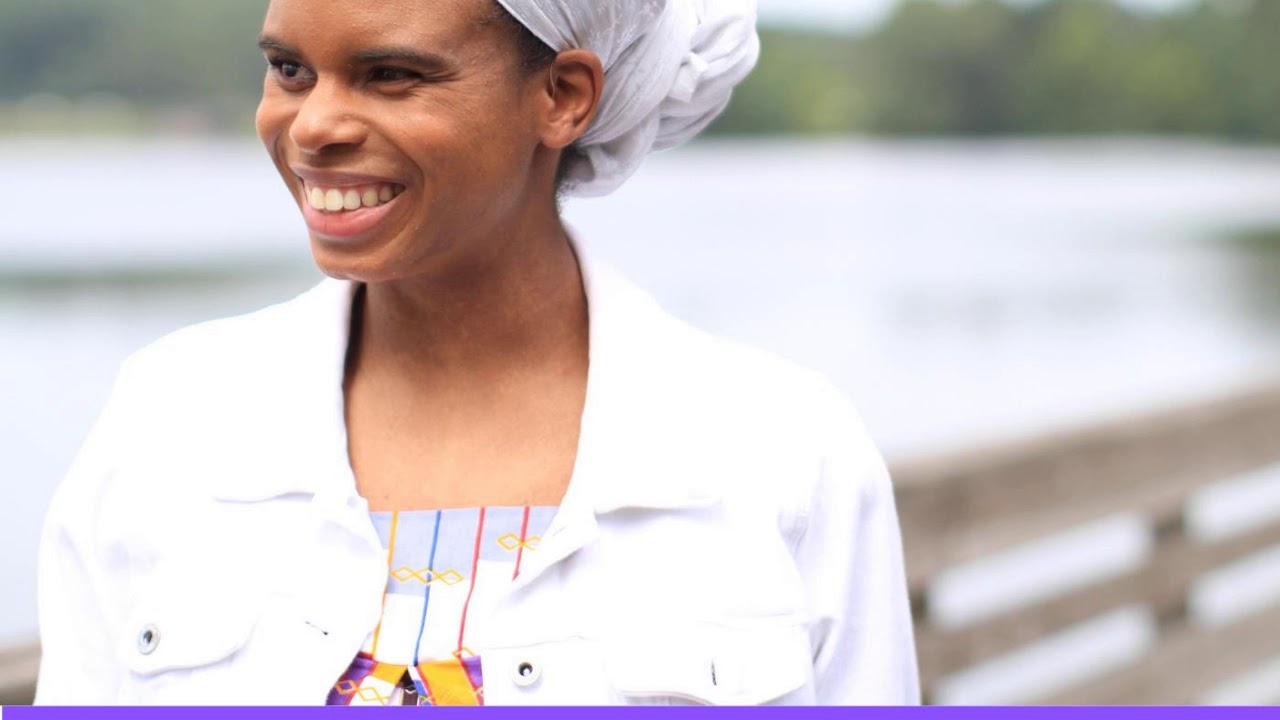
Zaakirah Muhammad, a cancer survivor and photographer, introduces her forthcoming memoir Seeing Life Through a Different Lens, co-written with her mother. The dual-voice narrative chronicles their journey with non-hereditary bilateral retinoblastoma, a rare childhood eye cancer, alternating between her mother's blog excerpts and Zaakirah's own memories across ten thematic chapters from childhood to adulthood.
Chapters
My name is Zaakirah Muhammad, and you are listening to the Living Legacy Podcast. This weekly podcast features women of purpose sharing stories of resilience. They are wives, artists, entrepreneurs, they run businesses, and here they will share their stories of how they overcame obstacles and how they're juggling it all. If you're ready to learn about professionalism, entrepreneurship, business, travel, life, and love, you're in the right place. You will hear real and raw stories of survival. Now it's your turn to be inspired to step outside of your own comfort zone. I am a cancer survivor, brand cultivating strategist, world traveler, and a professional photographer. I'm your host of the Living Legacy Podcast. Let's get into it. I am releasing a book. I'm releasing a memoir and it's called Seeing Life Through a Different Lens. It is currently available on Kindle and it will be available— the physical copy will be available on my website and on Amazon in December. The book is my mom and I sharing stories about overcoming adversity with resilience, as we share also what we learned from living with non-hereditary bilateral retinoblastoma. So, not only does this book help you to gain a better understanding of rare childhood cancer, it also shines a light on a loving and supportive community. My mom started a blog and ran, ran it successfully for 2 years, and now we are repurposing most of the content into the book. So, this book starts off with alternating chapters So it'll start off with an excerpt from her blog about the diagnosis, the surgery, initially losing my hearing. A few of the things that I've touched on in this podcast, these aspects of my life, and now in this book you get to read the full stories. I am now going to read the introduction and the table of contents. There are 10 chapters in this book. The book is titled Seeing Life Through a Different Lens. Which is a survivor's memoir on overcoming adversity with resilience. The dedication is dedicated to my father and my husband for their unconditional love and support. The book is also dedicated to all cancer survivors. Chapter 1 is called Zaakirah's Beginning. Chapter 2, Finding Out My Differences. Chapter 3, Choosing the Best Education for Zaakirah. Chapter 4, Discovering My Identity. Chapter 5, Zaakirah Becomes a Womanette. Chapter 6: Discovering My Purpose. Chapter 7: Miss Independent. Chapter 8: Getting Married and Entering Adulthood. Chapter 9: Getting Out of the Storm. Chapter 10: The Other Side of the Rainbow. There's also a few acknowledgments as well as cited works. Introduction. The 2 most important days in your life are the day you are born and the day you find out why. Quote by Mark Twain. Today, there are 9,000 children diagnosed annually worldwide. Retinoblastoma makes up 2% of all cancers diagnosed in children before the age of 15. It is the most frequently diagnosed eye cancer in children. An estimated 200 to 300 children in the United States will be diagnosed annually with this disease. Most children who are diagnosed with retinoblastoma are younger than 6 years old. The average age of diagnosis is 2 years old. Girls and boys are diagnosed at equal rates. Generally, 3 out of 4 children have the disease in one eye, while 1 in 4 children have the disease in both eyes. The 5-year survival rate for children with retinoblastoma is 95%. Retinoblastoma is considered a rare eye cancer that often has an impact on vision and hearing in young children and adults. People with hearing and vision impairments are described as having dual sensory impairments or disorders. The kind of tests used to screen for a second cancer depends in part on the kind of cancer treatment the patient had in the past. When doctors provide regular follow-up care for cancer survivors, it helps them to further study late or possible side effects of childhood cancer treatment to develop safer therapies for younger children. The following is an excerpt from my mom's blog with SunDaughter. Zaakirah is a beauty and grace in motion, a gazelle moving through this life lifting the spirits of others, tearing apart mindless dark feelings and empty thoughts of people who do not know her story. Our SunDaughter is an artist who gives an image its own life. She is luminous, joyous, buoyant. She is creative, delicate, and with a sparkling optimistic personality. Whenever I read about people who are deaf and/or blind, I already know that I'm learning about exceptional human beings. I love hearing my daughter laugh. She has a beautiful smile that fills a room with joy and light. She is so precious, gentle, and smart. She is usually quiet, sensitive, and stubborn. She genuinely cares about others and has a great sense of humor. She loves learning, traveling, and taking great photographs. She is physically strong and so determined. She is adventurous and a force of nature. She is our youngest child. When I think about our daughter, I smile. I just want to hold her and kiss her face. I'm in awe of her beauty, courage, strength, and style. When I look at her, I remember her favorite sights and sounds: Florida sunrises and sunsets, road trips, the Caribbean Sea, laughing with her girls, her photos of people and their life stories, great movies, food, music, and family time. Our sun daughter learned to write and script and swim at Montessori Elementary School. This is also where she learned to be very independent. Her favorite elementary school activity was singing Broadway show tunes in the chorus and field trips. When she was a baby, her oncologist told us that one day our child may be blind. When she was a teenager, her audiologist told us that one day Zaakirah may become deaf. We promised to give her a chance to use her monocular vision to see her world and to teach her how to be persistent and triumphant. Our goal for our daughter was to give her every opportunity to thrive and help her reach her desired level of accomplishment, no matter what. My name is Zaakirah, pronounced Zaakirah. It means the hereafter in Arabic. My mother's name, Qa'ida, means one with a strong foundation in Arabic. My mother is the most committed, driven, intelligent woman I know. I believe I have inherited her writing genes, researching abilities, and intellect. Just like the Tupac song Dear Mama, I am forever indebted to her and I could I could never make it up to her. I had my story, my version, my memory, but my mother remembered better from a parental perspective. I was 9 months old when my parents were told I had non-hereditary bilateral retinoblastoma. It was not passed on to me from either parent. However, it does mean one of my children will carry the gene. I barely remember the surgery and my life after that until our first road trips. For the longest time, I never put much emphasis on the word survivor, nor truly understood the meaning of it. I was a young adult when I began to connect the dots. Now I understand that survivor is a positive word. I met children who were diagnosed after 5 years of age and were completely blind. The fact that I'm still here with monocular vision is a blessing. I appreciate my mother for prioritizing my health and knowing when to be my friend and when to be my parent. I appreciate her allowing me to express my feelings through music lists. My favorite memories are the moments where we could just dance together. We are both Sagittarians, and when I was a child, she told me that I am her birthday present. We enjoy going to new places and trying new food. We share a love of trains, which ended up being our most used method of transportation. As I was growing up, I worked really hard to make my parents proud of me, and I felt they wanted me to be proud of them too. In this book, there will be alternating storytelling between my mother and me. She shared her perspective and experiences on her blog, I share my memories and perspective in the following chapters. My mom created the blog to share our retinoblastoma story with the international community of childhood cancer survivors. The chapters will shine a light on a non-toxic mother-daughter relationship as we both overcame the emotional struggle behind being not only survivors, but thrivers. My dad was present throughout it all, even when he was away due to work. I am my dad's daughter, according to my mother, as we have many similar personality traits, which you will learn in this book. In 2014, my mother wrote a letter and received a personalized response from our 44th president, Barack Obama, telling her that he signed a proclamation that marked September as Childhood Cancer Awareness Month. We received a copy of the proclamation. That same year, my mother got back to her graphic designer roots with the help of Pinterest and created a retinoblastoma awareness poster in support of Childhood Cancer Awareness Month. Happily retired, my parents now live in a rural community of East Tennessee. My mother has trained to be an official reader of the Library of Congress, which allows her to continue her research with access to university and government libraries. Now I'm going to read an excerpt from chapter 1. Chapter 1, Zaakirah's Beginning. The following sections are excerpts from my mom's blog, The Sun Daughter. During Pregnancy. My husband and I lived in Atlanta, Georgia. The first time we visited Miami, Florida, we talked about moving there. Even though the cost of living was higher than in Georgia, we needed more sunshine and discovered the most beautiful beaches and parks, so we decided to move. Since we were new to the city, we didn't have a physician. My first thought about being pregnant was waking up early one April morning before work and feeling nauseous. I couldn't drink coffee or eat lunch that day. Instead, I made an appointment to have a pregnancy test at the offices of Planned Parenthood nearby. The test confirmed my suspicion. I was pregnant! When I told my husband, he insisted I have the test repeated. It just confirmed the first test, and I was ecstatic about giving him an early birthday present that June. I craved tomatoes. At work, everyone knew my lunch order: spinach calzone with extra sauce. Our pregnancy in the Sunshine State allowed me to spend more time outside. I loved walking the trail along the canal after work on my way home. Approximately 6 months into the pregnancy, the doctor ordered a stress test because my blood pressure was rising. I had already changed to a part-time work schedule. After we received the test results, I was put on bed rest due to stress. I knew in my heart that something was wrong. My water broke. Our original due date was January 13th. I was rushed to the hospital for emergency delivery on December 20th. Going to the Hospital. During the 1992 winter solstice in sunny South Florida, I began journal writing. I kept a journal throughout my pregnancy. The day after my daughter was born, I dragged myself to the nursery and watched the nurses in the hospital's neonatal intensive care unit, also known as NICU, take my baby out of an incubator. That morning, I began breastfeeding my newborn. I was told that my baby could go home when she weighed more than 4 pounds. On this day, I stopped journal writing. All of my energy was dedicated to spending days and evenings at the hospital with my baby. NICU discharge. I arrived early each morning to breastfeed my prematurely born baby in the neonatal intensive care unit. I returned in the evening to hold her in my arms, feed her, and sit with her in a rocking chair until she fell asleep. The nurses weighed Zaakirah daily in order to determine when she could be discharged. Before leaving the hospital, I noticed her right eye was closed and some type of discharge had dried on her eyelid. I asked the doctor to examine my child's eye. The pediatrician said he did not find a problem. We were discharged from the unit. Thank you for listening to the Living Legacy Podcast. Be sure to subscribe, follow, and download so you don't miss the next episode. If you want to learn more, you can visit zaakirahnayyar.com. That's Z-A-A-K-I-R-A-H-N-A-Y-Y-A-R dot com.
More from Zaakirah

Wealth, Discovery And Alignment through Human Design and Gene Keys with Danielle Eyman



ADHD, AI, Artistry: Amber Andrews on Building a Brand that's Honest, Creative and Converting



Sensory Reset: Soft Stories of Joy, Belonging, and Healing Inner Child Live from Essence Fest


