Financial Literacy and Financial Legacy | How can we bridge the gap?
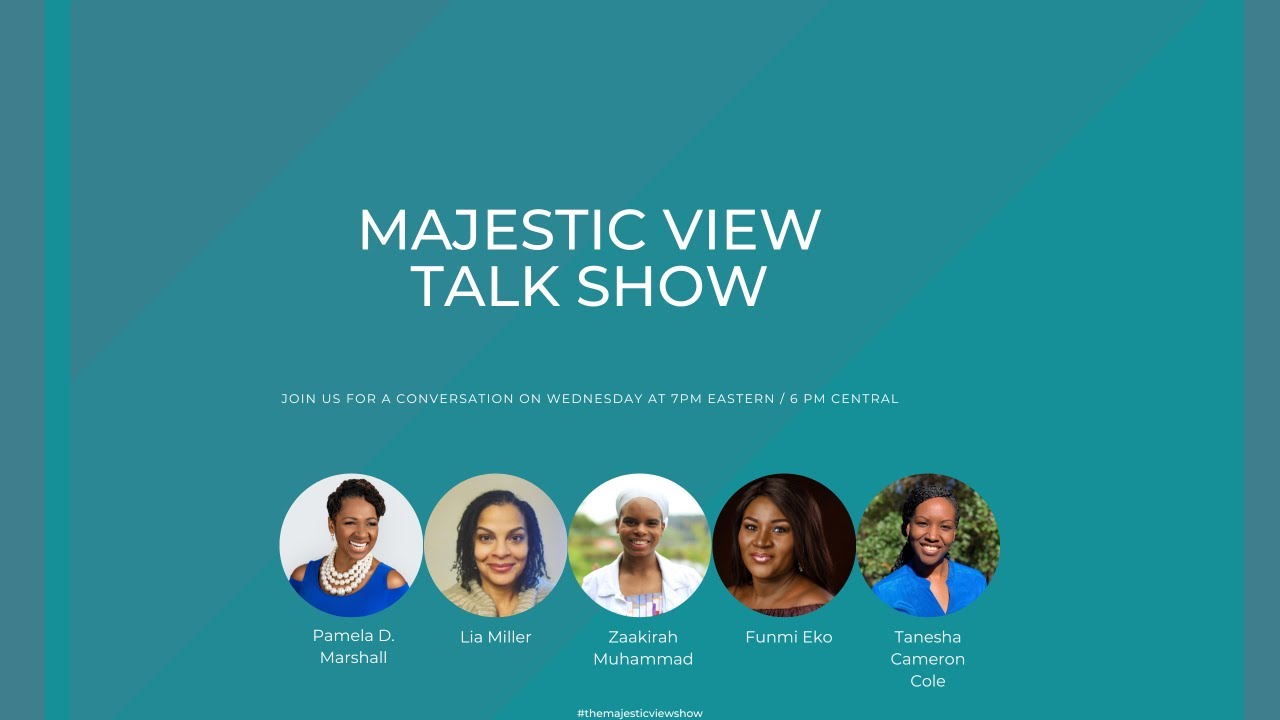
In this episode of The Majestic View, host Zaakirah Muhammad convenes a panel of women of color—Tanisha Cameron Cole, Leah World Traveler, and Fumi Eko—to discuss how to make financial literacy a regular, inclusive conversation and to build generational wealth. Tanisha, a financial educator, explains why money talks are often taboo and outlines a step‑by‑step approach: first secure a solid financial foundation (emergency fund, insurance, debt management), then automate savings, and finally explore investment vehicles beyond what employers offer. She shares practical tools (Digit, Chime, automatic transfers) and a personal spending audit that revealed hidden expenses like frequent Chick‑fil‑A trips. The panel explores how to teach children the value of money through everyday activities such as grocery‑store price checks and earning money for video‑game purchases. They address community barriers—shame, jargon, mistrust of institutions, and lack of representation—by using plain language and relatable examples. The conversation also covers the difficulty of discussing money with older parents, recommending third‑party seminars, incremental “commercial‑break” talks, and focusing on retirement security. Throughout, the speakers stress the emotional component of money, encouraging listeners to reflect on need, want, and love before spending, and to view financial planning as a legacy‑building, intergenerational effort. The episode ends with a call to action to connect with Tanisha’s Cameron Cole Collective for free consultations and further education.
Chapters
Welcome to another episode of The Majestic View. I am Zaakirah Muhammad with a majestic view from Tulsa, Oklahoma.
Welcome on board.
My name is Fumi.
We're about to— well, my name is Fumi with a majestic view from Inglewood, Ohio.
And I am Leah World Traveler with the Majestic View from Jamestown, Rhode Island.
If you are new to the Majestic View Show, welcome. We have come together to really share a unique viewpoint on all, all of the things, and we are all women of color who are in the media industry, and we have a lot to say about media, about lifestyle, about finance, about tech, all of the things. So we've come together to have a regular show where we come every single Wednesday, well, as often as possible, and we talk about all of the things. And so today we have a special guest by the name of Tanisha Cameron Cole. And Leah, do you want to tell me more—
tell us more about Tanisha?
Yes, I'd love to tell you. So Tanisha Cameron Cole and I go back a long way. We were students together at Syracuse University many moons ago. We're also sorors in the illustrious Delta Sigma Theta Sorority Incorporated from the same home chapter. And I've known her for many years and she is a wonderful human being, one who is made with a spirit of service, and she is extremely good at what she does. She's very talented. And tonight she's gonna talk to us about how we can do education of the next generation with respect to financial literacy, How we can be Generation Zero in terms of amassing generational wealth, why that's important as members of the sandwich generation, which many of us are, which means we have children and/or older parents who are aging. And so we're sort of in the middle, sort of looking out for the financial futures of our kids, but also the well-being of our parents and our own retirement. And she'll also talk about what kind of steps we can take at this stage of our lives to make better financial decisions with the future in mind. So I'll let her tell you the rest.
And without further ado, hi, Tanisha!
Hello, hello! So I am Tanisha Cameron Cole coming in with a majestic view from Raleigh, North Carolina. Thank you for having me.
Thank you for being here, Tanisha. It's so great to see you, and I'm really excited about this conversation. So I'll just turn it over to you to share with us a bit about financial literacy, wealth building, generational wealth, and any other things you think we need to take away tonight.
Absolutely, absolutely. So I am so happy to, to join you ladies today in, you know, this very, very important topic because, uh, my mission is to really make money conversations regular everyday conversations. And the one thing that, um, I know from my family and from a lot of the, you know, folks that I work with Because a lot of times money conversations become very taboo. We don't want to talk about it, we don't want to think about it, and therefore we're not gaining the level of awareness that we should to make proper decisions, to understand all of our options. And I came into this work, um, really as a, a client first, really just wanting to understand my own money situation. Um, you know, my husband and I Both worked, you know, all of our lives. We have three sons, and really wanted to understand: Are we doing the right thing for ourselves with retirement? Are we planning properly? Are we saving properly? Okay, we we pay our bills. We do what we need to do. But maybe I need a second look, and in that second look, I really realized how much I did not know. And this is after having a bachelor's degree, Syracuse University with Leah MBA. I know how to manage multi-million dollar organizations. budgets in the nonprofit space, but did not learn how to manage my own personal finance. And I really think that that's a problem. So my mission is to really make these conversations normal, natural conversations for us to think about how we're managing our money, how we're growing our assets, how are we protecting ourselves and our families, how are we planning for our future, and what do we need to do now to make that a reality. And a lot of times I think what we see see is that we have great financial goals. Like, you know, we want to purchase that new house, maybe we want to invest, we want to send our kids off to college, we want to do all of these wonderful things, but we don't always have the appropriate steps on how to get there. What is the strategy? What do I do? How do I do that? Like, I want to get there, but how do I get there? And so my role in my job, in, you know, in collaboration with some great, great colleagues across the country, is to really sit down and what I call snap us out of autopilot, because a lot of us are operating in autopilot when it comes to our money. We pay our bills, we do our things, you know, we save when we want, we buy what we want, um, and we don't always do it in a very planful way. So my services are really to help take a step back, stop for a minute, let's see what all of your money is doing in all of the different areas and accounts And really give yourself an opportunity to be reflective on what those goals are and how you get there. And so a lot of this is, is really focused on how do we start, and then how do we put actual plans in place so that we can sustain it, and then how do we make sure our kids and the next generation know how to do that same thing so that they can be in a better position so that we can help them grow a nest egg for their next steps, and then be in a position where we're not a burden on our kids. So, Lee, I think I was sharing with you earlier, um, when it comes to, you know, my plans for my future, I want to be in such a comfortable retirement position that all my sons need to do is take me to my doctor's appointments. I don't want to live with them. I don't want to have to rely on them. I want to have my stuff set up appropriately so that me and my husband can live life be comfortable. And in order to do that, we have to really make some real strong decisions today about how we're saving, how we're spending, where we're saving— that matters as well— and really understanding a lot of the strategies and the enemies to our asset accumulation and how we can grow money. So that's just a little bit about what I do and how I do it, but would love to, you know, dig into whatever areas you all would like to, you know, talk about a little bit more.
I think I'll start with saying I'm already at that point where I'm taking my parents to their doctor appointment.
Exactly, we already in it.
Yeah, and I think I'm grateful too that, um, you know, I was raised to start to have that understanding, one, of estate planning, two, of, um, retirement, but mainly, um, just the difference between investing as well. I think what I've noticed is That's not a common conversation to have, like, okay, where do we invest and how do we invest and how do you save that and what do you do with that? So yeah.
Absolutely. And, and, you know, one of the things that we, that we do think about when, you know, the first thing that comes to our mind when it— when we think about accumulating money and, you know, growing wealth are investments. And there are a number of investment tools that are appropriate. But what I always say is let's first take a step back and make sure that our financial house is set before we go into investing. And I think a lot of people jump into investing, um, to, you know, really gain that, that additional income to grow their money in different ways, but then they don't have an adequate emergency fund. And I think we learned that during the pandemic. We don't know what might come about in our next steps. So how do we make sure that we have the adequate emergency fund, which should be at a minimum of 3 to 6 months of your expenses per month saved liquid where you can access it right away if there was an interruption of your income? So, you know, really thinking about some of those basic steps first to get those pieces in order. Do you have the proper protection? you know, for your assets and what you've learned and gained so far to make sure that if something happened to your health, if something happened to your income, if something happened to your life, are you protected adequately to make sure that the next generation or those that you love and care about are taken care of in the event that something happens to you? And then we think about investment, right? So, and there are so many investment options. And one thing that, um, really upset me, um, when I got this journey of looking at my personal finance was I made so many money decisions based on what was offered to me at work, right? So they told me, save here for your 401, do this for, you know, additional savings, um, you know, get insurance here. And I, I just— I followed whatever HR told me and didn't realize that there are a number of different options out there that we could be utilizing as investment vehicles. Um, there are vehicles out there where you can invest and reap the benefits of the market gains without the risk of loss. I did not know that existed. I'm like, okay, if I'm dabbling in the stock market, I need to be ready to lose my money. There are vehicles where we don't have to do that. And so that's part of my work, is really helping people understand You have so many more options than what, what we were taught or not taught and what mainstream media tells us are available to us. There are so many different tools that wealthy Americans use every day that we just don't seem to know about. And that's a problem for me. So what we really need to do and what I'm really focused on is, like I said, having these kind of conversations. meeting one-on-one with folks to understand, okay, what are your goals? What are you looking to do? And what are some of the vehicles you can use to do that that you may not have known even exist? And that's just the beauty of this industry. The financial industry changes just like our cell phones change. So, you know, products and plans that we got last year, 2 years ago are now new and improved. There's extra benefits, bells and whistles, and all types of pieces that we don't always know. are available to us. So that, that's one of the pieces that I really want specifically for our communities of color, specifically for us as women who sometimes are really left out of money conversations and wealth-building conversations. So, um, really being able to highlight those things is very important to me, um, and very important to what I think will be our, you know, golden ticket when it comes to building that generational wealth. where we are really in a place to, to make it happen.
I would like to jump in quickly. Um, you did say information available to us, and in talking to people about finances, one, I realize there's a shame. Shame stops people from speaking up, number one. And then secondly, when they hear certain terms and terminologies attached to the financial sector, they assume that is only for the exclusive. So that, you know, because all you hear people throw, um, 6 figures around— oh, I make 6 figures and I make 7 figures— and we have it all over the place. And then you forget the— that the people who have a daily pay or biweekly pay or low income feel that they are completely left out. So, okay, they're not talking to me, they're talking to the rich folks. Um, how do you let those people in the middle class, lower class realize that financial literacy is actually for them. There's a plan for them.
Absolutely. And, and that very much is so what, what I want, because we all are in a position to be able to grow wealth. Um, and I always say it doesn't matter how much you make, it's how much you save, right? So, you know, really being in a position to look at our spending. Um, one of the, one of the pieces of homework I give to a lot of the people that I'm talking to is do your own personal audit of 3 months of your spending, right? And, you know, a lot of times there are apps and things that can tell us, okay, you spent this much on gas, you spent this much on groceries. But to really take a look line by line at your spending is a big aha moment. And I did this for myself in the beginning And what I realized, and, you know, I, I worked in nonprofits my entire career. So, you know, I have an MBA, did not go into nonprofits to make 6 figures, but to be of service. And so with my nonprofit salary, realizing that there were areas that I could be saving where I was spending. So I'll give you an example. When I did my own personal audit, I realized I was spending more money at Chick-fil-A than I was saving, and that made me mad. I was really upset about that. Now, I love, I love, love, love Chick-fil-A. My whole family loves Chick-fil-A. There are 5 of us, so one trip to Chick-fil-A is easily about $40, $45. You add on the milkshakes and all the things, right? So So when I really looked at that, I gained a greater awareness. And I think this is something that we all can do regardless of what our salary is and what our tax bracket is and what we do. We can take a look at how are we spending? Are there areas where we're leaking money? You know, we usually know some things about, you know, we know how much rent or mortgage is, we know how much our car note is. You know, I know pretty much ballpark, I could tell you how much my car insurance is. But I couldn't tell you how much I was spending on Amazon. I couldn't tell you how much I was spending at Chick-fil-A. I couldn't tell you how much I was spending on entertainment. So I think there are ways in which, you know, as the middle class, we can take a look at our savings, we can take a look at our spending. And no, I'm not saying cut out everything. I didn't stop going to Chick-fil-A, right? But it gained— it gave me a greater awareness of what I could be doing with that money. And what I did was instead Instead of going to Chick-fil-A every Friday, maybe we go 1 or 2 Fridays a month, right? And instead of, you know, spending XYZ on nonsense at Amazon, I'm going to take that money and put it into a wealth-building plan for my kids, right? So being able to identify where those pockets of savings may be is one of the biggest ways that we can begin saving even as a middle class and thinking about next steps. You know, I've worked with a number of families that do have some discretionary income at the end of the month. They do have additional, you know, money that they can put towards something, and they just don't know what to do with it. Like, Tanisha, do I, do I put it in stocks, or do I put it in the bank, or what do I do? Do I put it towards my retirement? And so that's one of the things that we provide as a service, is really taking a look at your entire financial picture to help identify what could that additional money be used towards? How can you make it grow? How can you make it work more for you? But I think as middle-class families, we do have an opportunity to do the same level of saving, use some of the same vehicles that, you know, wealthy Americans have used for decades, and be able to accumulate wealth, be able to learn some new opportunities and strategies that we can use and tailor that to our financial situation, right? So my family situation is different from Leah's, it's different from my sister's, it's different from my cousin's, but we all have an opportunity when we take a look and really slow down, like I say, snap ourselves out of autopilot and really see what's going on with our money. Um, there are always opportunities that we can tap into, you know, the strategies that have been used by the wealthy Americans for quite some time.
That actually is a really good segue, um, too, because this knowledge is out there and it exists, um, just not in our community. And I'm sure that's by design and completely intentional. So I know I feel like this is our opportunity to take that narrative back, take that information back. And one of the ways that we do that is by teaching our children about financial literacy. So I know one of the struggles that I have in my household Um, is I don't think my children have as much an appreciation of what things cost and what their value is because they don't fully understand the meaning of money. So yes, they understand like a dime is 10 cents, a dollar is 100 cents, those types of things, basic transactions, but they don't understand the value of what money is and they don't know what it means to earn money because thankfully we've been able to provide for our kids. We're a middle-class family. They're in the grand scheme of things, our kids are quite blessed. I wouldn't say that they're privileged, but they've never known lack. They've never lacked food or shelter or, you know, the basic things they need to thrive and grow. So I think it's very difficult for them to understand really what the value of money means, what it means when mommy and daddy say they're going to work. They don't really understand what that means. Or when we give them a new toy, they appreciate having the toy, but if it breaks, they're like, oh, we can just get another one. And I know you and I were talking about this, Tanisha, and I was like, no, child, no, that's not how it works. You have to take care of the things that you have. Just because we can get you something else doesn't mean that we will. You need to learn to take care of the things that you have and/or set your own financial goals to buy the things that you want yourself. I feel like that is one of the ways that we're going to try to institute in our family to help our kids understand, like, if they really want— I don't know, whatever the goal is— but they don't make a lot in their allowance, how can they set aside their own money and learn to save and learn that you have to be patient and things don't just come immediately as you want them? I'd be curious to hear some of your tips or thoughts on how do we have these conversations with our children, um, and what should we be discussing with kids about financial literacy?
Yes, I think there are some very basic ways that we can help our children understand what money really does on a day-to-day basis. So, you know, one of the things that I do with, um, with my youngest son, and this, this was really more so to help him practice his math. So when we're in the supermarket, as I'm getting items, right, and we're putting them in the cart, I'm having him track how much, you know, he's adding, you know. So, okay, this is $4.59, round it up to $5, right? This is $6. So he's understanding, okay, wait, that box of cereal that I love so much is almost $6. Oh my goodness. But this pack of meat is $6 too, you know. So really being able to help them, bring them into the conversation a little bit more so that they can be a part of that, you know, awareness building and understand, okay, we don't just go to the store and leave with all of these groceries. Now you've counted how much this costs and you see that, um, okay, last time we went, we got pretty much the same stuff, and due to what we call Our fun friend inflation, the same amount of stuff now costs $20 more. Mommy, I didn't— that, that— why? We got the same stuff. This is, this is what our economy does. So it opens up an opportunity just in every day-to-day, you know, experiences to really get them involved in understanding what money does and how it works. Um, the other piece that I've instituted in my household, because I, you know, like you, Leah, you know, my sons, I have 3 sons, right? And so I'm picking on my youngest son today. I don't know why.
I love him.
He's my sweetheart. He's 10. But, you know, he'll lose a toy and it's like, it doesn't matter. You know, we'll just get another one. It's a new toy. No, no, no, we're not about to go get another one. You need to go find that toy. So even if he's not really putting a lot of effort into looking for it, he's already ready to do something else. So being able to have those conversations in the moment, I think, are very helpful. for children. Um, you know, I've spent a lot of time even in my nonprofit work working in schools, and a lot of times you catch them in that moment, you have the opportunity to make the moment a teachable moment for them. And, you know, being able to talk about savings in, you know, in real life, like I, I tell them, hey guys, you know what I just did? I automated my savings because I don't do well just saving on my own. I need to automate it. So I set it up with my job so that this amount of money is going into account that I can't touch. So I need you all to start thinking about how you're saving too, right? And every child is very different. My middle son, he's a saver. He does not want to break a $20 bill. He won't buy something if he has to break a $20 bill. So everybody's different. My oldest son, he spends money like water. So really working with them on, okay, how do you start to set things aside? and understand the importance of saving early by having these conversations about what money really looks like on a day-to-day basis. So we can do that at the grocery store, we can do it at the gas station, you can do it with their own toys. Um, you know, my sons are really into PlayStation, and so if you want a new game, you need to work— you need to work that off. So what are you doing? Are you raking? Are you mowing? Are you wiping down some countertops? Like, what are you doing? to earn that money to get that game. And so I think having those conversations early is good. Um, when my husband and I set up the wealth building plans for my sons, we talked to them about it. You know, we shared with them that, you know, hey, this wasn't something that either of us was able to, you know, have put aside for us, but we are now actively saving for each of your futures. And this is what this will mean for you all. You'll have a nest egg for college or for your first home, or if you wanted to start a business, you can utilize that money for that and it's tax-free. So being able to have those conversations with them about what we've put in place just to raise that awareness, even in their young age, they might not completely get it, but we're already starting to at least build that acumen little by little and with each experience.
And now I have a question.
Yeah.
And so when I heard you say automation, I was just thinking also like, wow, what a change we've made in the last 20 years to be able to be able to do that. And so one of the first things that I immediately thought of when I heard you mention automation is, yeah, like now your paycheck can literally be split into 2. Now you can send it where you can send your money, where you want your money to go.
Yes.
But also, I've been— I'm really tech savvy. Like, I'm the one pressing all these buttons on this Chime right here. But, um, one of the things that I used when I— when it first came out was a program called Digit, D-I-G-I-T. And it just— you can choose your level of how aggressive or, or not so aggressive you want to save your money. This is before I then changed, you know, my online bank, because I'm like Leah and, and Boom, I travel internationally a lot. So I wanted a bank that was fee-free and that would still work internationally. And then Chime Bank also did the same thing, so I stopped Digit, but You know, that, that was another conversation I thought like we should really have. Like, okay, how can we all really start to utilize automation and literally tell our money where it goes?
I, I think it's a— for me personally, it was a beautiful tool because I just did not have the discipline to do it myself. I'm, you know, we're, we're all here being honest, right? I didn't, didn't have the discipline to do it myself. So to set up that automation was a complete life changer for me, um, in terms of building up savings. But then also automating savings into different financial vehicles is another tool that my family has picked up now where, you know, I'm saving liquid and that's for my emergency fund, right? And that's for, you know, vacations and all the things that we have planned for the year. We're setting aside that money for that. But when it comes to setting aside the money for my retirement plan, right? We're doing that through work, right? But there are other vehicles that we could be setting aside that automated savings and actually see our money grow with market interest and no risk, right? So being able to not only automate our liquid savings but automate our long-term savings so that we can build that wealth, accumulate those assets as we're aging as we're in our working years is another piece that I really, really implore us to think about and really expand on when we're thinking about our own personal finance, because it's not enough to just be saving in the bank anymore, right? Where the bank is not where our money is going to grow. It's just not. But it is the place where if we need to access our money quickly, that's where we get it, right? And so thinking about even the generational mindset with that, My grandparents saved money in envelopes and hid them all over the house, right? So that, that was their method of savings because, you know, we have historical references of, you know, not trusting financial institutions. And so my grandmother and my grandfather had thousands of dollars stashed around their home in envelopes, right? Because they did not trust institutions, right? So But what did that also mean? That the number of years that that money sat in those envelopes, that money wasn't growing. It was just sitting there, right? So could that money have been put into a financial vehicle that they could have been gaining some interest on over the course of years? That could have been a nest egg for my mom, for me, you know, for my sister. So being able to really think about the fact that I think as a community, we do know how to save, but it's where we save and how we save that we really can make some improvements on with what we have now in the financial industry. Being able to tap into interest-bearing accounts, being able to tap into automation, right? Being able to tap into these opportunities to save differently will help us grow our money bigger and faster.
I would like to jump in, um, and I'm with you on the whole not being disciplined enough to just put the money away. I kind of like have to get it automated as well, so guilty as charged. But I, um, I don't know if you see from this angle, in learning as an adult about finances, I had to learn my needs and then my wants. And then somewhere at the back of my head, I still do today, and I act I ask my kids, is it a need or a want? I ask myself if it's a need or a want. Um, could you elaborate on that a bit?
Yes, yes, I, I have to do that same thing, and I, I add another layer to it. I ask, do I need it? Do I love it? Or do I want it? Right? And so when we ask ourselves those 3 questions It becomes very easy to say, I don't really need that, I don't love it, so do I really need to spend, you know, that $20 on that blouse just because it's yellow and I think it's cute? I don't need it today, right? That $20 could be going towards my savings, right? I want to go on a trip, you know, I'm going to Cabo in June. I love the idea of that. I want that $20 to go towards that Cabo trip. That could be my next drink. Right. So, you know, thinking about it that way, I think, um, helps to streamline our mindset because, you know, our spending and our financial decisions are also tied to emotion in so many different respects. Right. So you asking yourself, do I need it? Do I want it? Really does create that pause, right, that we need to, you know, stop ourselves from over-consuming. And I think we, um, We, you know, we, we are consumers, um, by societal basis, by nature. You know, you go into the stores and now Valentine's Day is over, they have stuff up for Easter. Like, what are we doing, right? So, you know, being able to really stop ourselves in those moments. And so what, what I usually ask myself, and this has also helped me not go into the Chick-fil-A drive-through, do I need it? No, we actually have food at home. I don't need to eat Chick-fil-A right now. Do I love it? Yeah, I do, but I, but I don't love it that much. I, I love traveling more, right? I love my kids being able to, you know, do their activities more, right? So that money could be going towards that. So I think when we're thinking about those decisions, stopping and, and having that internal moment is always helpful to keep us from that impulse buying, because I'm once again guilty as well. So, you know, I try very hard to stop myself and ask, do I really need this? Is this something that I really love and, you know, would really appreciate, or is this something that I want? And if I end up in the want column, I usually at that point have talked myself out of getting it. I don't really need it and I don't really love it. So that, that's something that I do as well. And I, you know, I know there are a lot of strategies. Um, I even have, you know, some friends who use Instacart and, you know, other methods so that they don't go into the grocery store and overbuy, right? So, you know, I'm one of those people, I'll go in the store and I'm going up and down each aisle. Oh, I didn't know we— oh, okay, that looks cute. Oh, I'm hungry, I want those cookies. Oh no. So, you know, we do have to have those internal conversations with ourselves as well. And I think the questions you pose are perfect questions to to just make us pause for a minute. And I think when we get the opportunity to pause and really think about it, then we can really make the strongest decision about how we're spending.
I love that decision-making framework, and it definitely is one that I grew up with too, the need and want. But I like the extra layer of love because I don't always love everything that I buy, I just want it. So I definitely need to stop myself from doing that, um, a lot more. And it also leads me To something you said earlier about, like, the fact that we do have a reasonable legacy of banks in the United States and other financial institutions not treating our community right, or literally refusing to give us service or giving us unfair rates. You know, I don't have to tell you about redlining, those types of things. So I understand the mentality of our grandparents' generation of stashing money in the mattress or stashing money in envelopes around the house or stuffing it into nooks and crannies.
Mm-hmm.
But I still find that even though we've evolved from that point, and this isn't to say that the financial system is perfect and that we have the same opportunities as mainstream society, because we don't, but it has improved. But I still find it difficult sometimes to broach this conversation with my parents' generation, because even though I'm a grown woman with my own kids, talking money with family is always— it can be a sensitive subject. And my parents still look at me like I'm their child. So they don't necessarily want to discuss money with me, um, even though thankfully in my family we are pretty open about it. But how would you suggest we approach having these financial conversations with our parents? I'm not just only talking about like a living will, a trust, an estate plan, um, what they would like us to do if certain things would happen to them with respect to their health. I'm just saying, how do we approach conversations in general about money with our parents that we don't end up finding ourselves in a mess, or if they become incapacitated and can't communicate their needs or wants or loves later on, how do we then respect and honor those things that they need us to do if we can't have those conversations while they're still able to make those decisions for themselves?
Yes, this, this is one that, you know, I talk to people about all the time, and, you know, it's, it's, it's a tricky one. It's a tricky one because our parents' generation Um, they are very tight-lipped when it comes to money. And like you said, they look at us as the kids, like, you're not going to tell me what to do with my money. Um, so a couple of things that have worked, um, and, you know, I will say that, um, one of my greatest, greatest joys was being able to help my mom, who was, uh, 22 years— taught kindergarten for 22 years. Um, so she, you know, had a pension, has, you know, has things in order, but I was able to really help her um, with her retirement planning. And it's one of the biggest joys to be able to sit down and help your parents actually navigate something, um, that they're unsure of. So a couple of things I would say: invite them to conversations like this. So when they hear it from someone else, then you kind of just piggyback on it, right? Yes, I like that. So it's not you telling them, but you're putting them in the environment to hear it, right? Then when they get off of a conversation like this, then they're like, Leah, well, you know what? That girl said something that I really think was important. Then you have an opportunity to open up that conversation. That's one of the things that I do very often. We do virtual seminars, so invite folks to come on. But I think having the opportunity to have them listen to someone that's not you also can be helpful. Yes, third party. Then the conversation then can be a reflection after that initial conversation. So that's one thing. In some cases, it just has to be done. It's like, okay, you know what, we're gonna sit down, we're gonna have dinner, I'll cook, whatever you need to do to get them in the space, right? And we have to talk about this. And it might not be a conversation that can happen just in one setting. It might need to be in little commercial break snippets, right? And we have to be okay with having to have those commercial break snippets, right? The other piece that I've learned about working with our parents' generation is they need that processing time. They're not going to jump and make a decision right away. They want to think about it, they want to explore it, they want to read some literature about it, they want to see a brochure, they want to go to a website, they want some concrete understanding. They're not just going to go based off of what you tell them. So sometimes it is going to take 2, 3, 4, 5 conversations to get to where we want to go. But, you know, you do want to start to plant those seeds and layer that opportunity out. So those are the things that I usually advise when it comes to working with our, our parents. You know, sometimes you do need to bring a third party in, you know, say, hey, Dad, Mom, I have a financial professional that I'd love for you to be able to meet and talk to. We've been talking about retirement. I know you all are there, and the main thing that most soon-to-be retirees and retirees are most concerned about is preserving what they've saved, right? So when it comes to that piece, they want to sit down and talk about that. They want to make sure that they're not going to run out of money. They want to make sure that they have enough to withstand inflation. They want to make sure that they're going to be okay. So coming at it with that angle is also one way to actually open the door for the conversation for them, because that's something that they want to talk more about. You know, when it comes to the, you know, the conversations about end-of-life care and, you know, medical care, those are very hard. They're very hard conversations. Not happy things to talk about, but, you know, being able to come to it in a place of love and support. And, you know, I want to make sure that these things are in place so that your wishes are upheld. And if you're designating me as the person to do that, then we need to sit down and have this conversation, please. Um, you know, really coming to it with that perspective, um, I found to be helpful. But the third-party piece is my top— that's my top recommendation. They got to hear it from somebody else first. They do.
Yes, I definitely would take that as my takeaway for sure.
I like to piggyback on what you just said about, um, um, some conversations are hard to make, um, but I've also realized that in people, um, watching or listening to things, when they hear the word finance It scares them. Let's have a fight, you know, speak to financial specialists, you know, the big words tend to scare, especially people in our community. And so before we started, when you made that statement, make money conversations, would you say that these terminologies can be made simpler in order to make people less— more relaxed and make them feel like they are wanted as a space for them. Because if you use big terminologies, especially in our community, people tend to withdraw and say, okay, you're not talking to me. Yes. So would you say in your practice, in dealing with people, in getting them into the financial space— no, I said financial again— get them into the money space, have those simpler terminologies worked for you? In explaining things better.
Absolutely, absolutely. Because, you know, I think at the bottom line, um, when, when I'm working with anyone— and this is even not, not transactional, um, that's one of the pieces that, you know, um, I really pride myself on in the ways in which we work and the ways in which I was trained, um, in this business— is to really speak to people in a holistic Manner, right? Um, we're not just talking about your money so that I can, you know, put a plan in place and then be gone, right? So we build a relationship with the people that we work with so that they do feel comfortable asking the questions, right? Um, we don't use a whole lot of jargon because it's not necessary. I want to talk about how are you dealing with the fact that eggs cost $8 and they used to cost $4, right? How, how are you dealing with that today, right? Um, how are you getting back and forth to, you know, to work with the prices of gas, right? Um, and really focusing on their financial goals. So I always start my meetings with, what would you like to talk about? How do you want to use this time? What are the goals that you want to work on? And sometimes that, that even is a hard question. Goals? Well, what— I don't know. Um, you know, are you looking Yeah. Are you looking to save more? Do you want to go on vacation more? Are you looking to buy a house? So really being able to bring it to what the basic day-to-day needs are is really what it's all about, right? Because we're living, spending, saving, doing every day, and we don't always realize how our money is impacted in those moments, um, how we could be making different decisions about where we're spending, how we're spending. Just like, you know, we look at couponing and, you know, finding the right sale before we make a purchase, we can do the same things when it comes to our planning for our next steps. So I think it's so important, and I think it's been one of the major barriers, especially in communities of color, to even take on financial advice or, you know, work with— you know, I've had people that say financial planner, financial planners are for people that have money. No, if you, if you are saving and you're working, somebody needs to help you look at your money, right? And it doesn't have to be this whole big to-do, right? It's really simple things like what I mentioned earlier. Have you looked at 3 months of your spending? Do you know what that really means? What are you really doing, um, you know, when you add up all of those extras? So I think it's so important, and, you know, especially for our community, to see people that look like us and have these conversations is another piece that's very important. I know one of the things for me, I called it analysis paralysis. I was just so stuck on trying to understand it myself, not knowing who to trust to ask, that I just didn't do anything. We don't want people to be in that position. What I strive for and what I thrive on is bringing myself to the conversation. I'm Taneisha, I'm from Brooklyn, I came from not very much, I'm still trying to figure it out, but I'm here and I have some insight that I can share with you that has helped me and my family. That's what I got, right? And I have some credentials and some letters that can tell you that I'm, I'm supposed to do this, right? So being able to, you know, bring it to that level and really meet people where they are, because each of our financial situations is so different, right? We, we can't do a one-size-fits-all model with, with our money. And, you know, we also need to feel like we can trust the person that we're talking to and that we're dealing with. And a lot of times when that person doesn't look like us, we're having another extra side eye. What are you doing? How are you really looking out for my best interest? How do I know that what you're telling me is right? Being able to break down those pieces and really focus on building that understanding first really has been one of the models that I think has been very successful for me as a client, and then also as a professional, recognizing that, okay, yeah, this is really about me and what I want and what I think. You're not coming to just tell me you need to do this and you should have done that and That's not helpful at all for anyone, um, to feel that shame that, oh wow, I should have known this and I didn't, or I should have been saving like this and I wasn't. It's irrelevant now. We're going to work from today on and we're going to figure out what you want and identify the strategies that are going to get you there. And really just starting from there, um, really opens the conversation up in a way that is more genuine. Um, I really strive to also share my experience and my story that, hey, Things are not put together, you know. I'm still making sure that I'm putting things together for myself and my family, and it's, it's an ongoing piece because things change. There, there are so many differences that come about from month to month, year to year, that we can really learn about. It's a never-ending cycle, and so there's always an opportunity to understand something new, talk about something different. But coming to it with that level of humility, I think, is something that we haven't seen very much in the financial industry. So it's a piece that makes people say, no, I don't really want to do that. And I was one of those people. So I know I was one of those people. So I strive very, very, very, very important to meet people where they are in this space.
Fantastic. And I think that's a great way to just dive right into how can people really get started with that conversation with you. I know we've been sharing and you've been sharing lots of tidbits of what's it like to work with you, but how can they really work with you?
Um, absolutely. So definitely go to my website, um, www.cameroncolecollective.com. You can learn more about my services, and there's also a link to set up a free consultation. My services will not cost you anything. There's a link in there under the Contact Us portion where you can actually set up a 15 or 30-minute consultation with me. I would love to be able to talk with any of the listeners that are here. I'd love to be able to talk with you, you 3 women here, um, you know, about—
I'll call you, girl.
Think about the next steps. But that is the best way to, um, to reach me and schedule some time. You can also follow me on Instagram, uh, the Cameron Cole Collective on Instagram and on Facebook. I have virtual seminars that we host on a regular basis, so I post those on our social media sites. So definitely follow us there to learn more and be a part of future, uh, seminars and opportunities. But absolutely would love to be able to have some one-on-one conversations and consultations, um, just to really understand and explore, hey, what's, what's on your mind when it comes to your money? Let's talk about it. So you can reach me at, uh, like I said, uh, www.cameroncolecollective.com. Hit that schedule button, schedule some time with me. I want to see my schedule full. Um, so please, please feel free to reach out.
Amazing. Thank you.
And I just want to thank you for coming out tonight, making time to have this conversation with us. It's very important. And as I said at the beginning, I feel like we're only at the tip of the iceberg because there's just so much more to unpack here. And any one of the things that we touched upon tonight could be a full conversation by itself. So I really encourage all of us on this panel, as well as our listeners and viewers, to reach out to you and your team at the Cameron Cole Collective and get that information and schedule that meeting so that you can really start from where you are and get your own questions answered. But thank you for coming on the show as a guest. Thank you for coming here as my friend. I really would love to have you back. I, I think the ladies will join me in that. Um, yeah, and we can have— continue to have this conversation. But I just wanted to express my appreciation on behalf of the Majestic U to you for being here with us this evening.
Absolutely. And I, I thank you all for inviting me and giving me the opportunity to share. I would absolutely love to come back. You let me know when. I absolutely would love to come back and talk more, but, you know, thank you for having this platform just to be able to have these types of conversations. It's just so important. So I applaud you all for, you know, setting this up and making this an opportunity to share, you know, viewpoints and the majestic view. So thank you so much for having me tonight.
Awesome.
It was great talking to you.
Amazing. So to wrap up, I think I want to I want to tweak the question to how can we bridge the emotional gap? What were your takeaways? But how can we bridge the emotional gap for financial literacy and having money conversations?
Yeah, I would say for me, this is a big thing. And Funmi really got to this question earlier when Tanisha was here about we have to remove the stigma of the word finance and we have to make— use language and use, um, you know, descriptions that can be understood by everyone and doesn't feel like overwhelming. Because even for people with money, and most of us who, you know, are in working class or not, it's just too much, it's too daunting. And so like Tanisha was saying, we just sort of— it just pushes us away. So I think we need to figure out how to overcome that and use terminology and language that appeals to everyone and makes it accessible for everyone.
I would say, um, first of all, as a woman, I'm definitely going to book a consultation. Um, that's one thing, um, because has a female and has been colored, um, uh, in my brown skin, I have extra limitations even just being female. Um, and sadly, the future isn't guaranteed. There's so many layoffs going on in the high industries, in tech, everywhere. People are uncertain. So I think everybody needs that extra layer of assurance and something to lean on. fall back on and have just have that safety net, um, as a family, as an individual, as a woman. So I think that would be my takeaway, um, just have that extra layer of covering, you know, especially like it's like preparing for winter, um, you wear layers, um, so, and with the climate change, winter comes when you least expect it. They have a winter in Texas now and they didn't expect it anytime that they were gonna have winter in Texas.
Yes.
And so I think that applies to money as well. We just need that extra winter covering when it comes to Absolutely.
And then for me, I think the biggest thing was, was really what it is, is money is a generational emotional exchange. You know, I think we get so caught up in being, you know, doing the things, right? Wake up, go to sleep, work, wake up, go to sleep, work. But really, how are you really feeling about all this? And would you really want your money to go? So that was the biggest thing for me.
Yeah.
I agree.
It was very educative.
Yeah, it was.
And like I said, I— there's just so much to unpack there. I mean, just for our own planning, like you said, for me, the barriers that exist for women of color specifically, um, to building wealth and, you know, preparing for our own important financial goals in our retirement, but also being in the sandwich generation, which that's a whole other conversation we could have where we need to look towards caretaking our parents and honoring their wishes and being in a position to support them as they continue aging. And then, you know, when those of us who have children or will have children, thinking about how can we best support our kids and teach them the value of the dollar and make sure that they understand how to set themselves up for economic success too, and creating really what should be a generational legacy of wealth forever.
It's a lot.
It is a lot. She should definitely come back.
For sure. She'd love to. I mean, she really means that. So I think we will have her back.
for sure.
Yes, that's it. Well, thank you everybody for, for watching, and please continue to subscribe. Please continue to share and, and tag us, um, using the hashtag #TheMajesticViewShow, or if you know our handles personally, you can see them right there. And, um, I'm Zaakirah Muhammad with Majestic View from Tulsa, Oklahoma.
And I'm Leah World Traveler with a Majestic View from Jamestown, Rhode Island.
And I'm Fumi Eko with A Majestic View from Englewood, Ohio. Thank you so much for watching. And if you're interested in being a guest, by all means send us an email. It is themajesticview@gmail.com. We'd like to have you featured, hear your story, and just get you into the family.
More from Zaakirah

Wealth, Discovery And Alignment through Human Design and Gene Keys with Danielle Eyman



ADHD, AI, Artistry: Amber Andrews on Building a Brand that's Honest, Creative and Converting



Sensory Reset: Soft Stories of Joy, Belonging, and Healing Inner Child Live from Essence Fest


