HealtheVoices Compilation Live Podcast: Mental Health, Chronic Illness, Community Advocacy
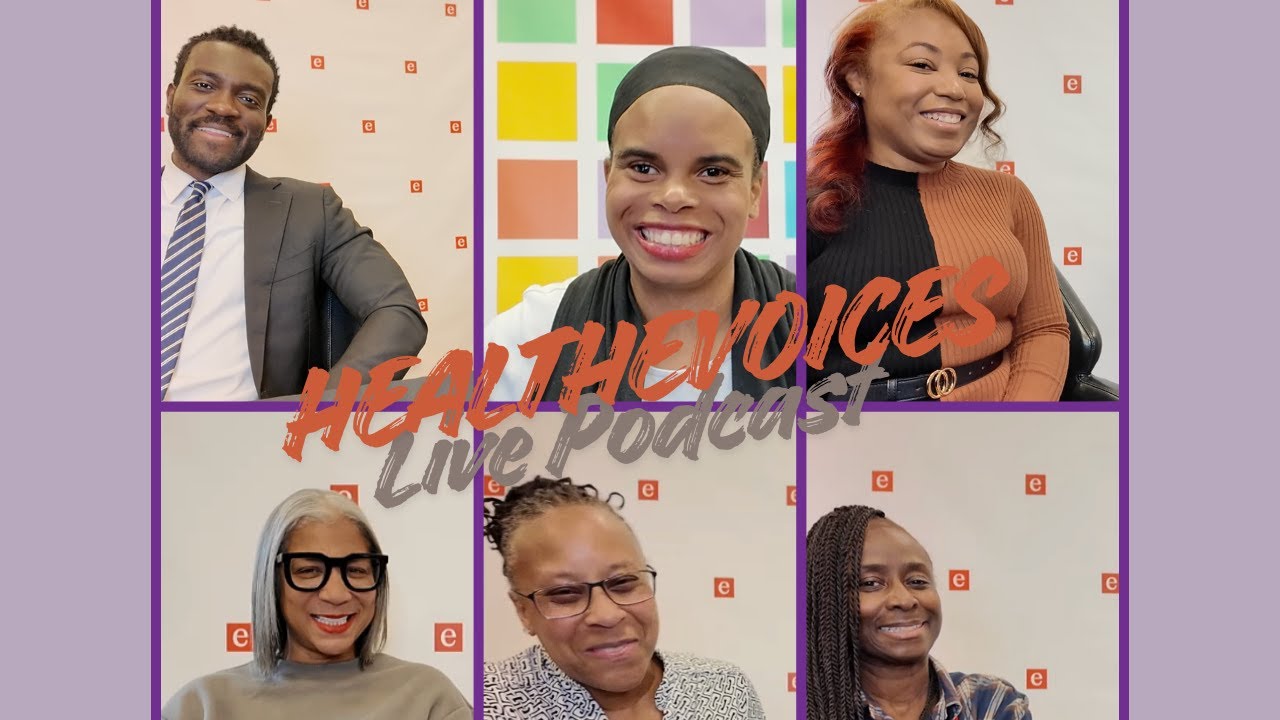
In this live episode of the See Life Different podcast recorded at Johnson & Johnson's Healthy Voices conference, host Zaakirah Muhammad—a retinoblastoma survivor, author, and brand strategist—facilitates a round‑table conversation with health advocates and creators including Dr. Kojo Sarfo, Raquel Dozier, Dori Williams, Raven Gibbs, and Yolanda Brunson‑Sarabo. The dialogue weaves personal narratives of living with ADHD, lupus, pulmonary arterial hypertension, multiple myeloma, and other chronic conditions with broader themes of mental‑health advocacy, neurodiversity, community building, and brand development. Participants share how humor, social media, and creative content (TikTok, Discord, podcasts, books) serve as outlets and educational tools. They discuss the importance of rest, setting boundaries, and embracing seasonal affective changes. The episode also highlights the inclusive design of Healthy Voices (e.g., hug‑indicator badges), the role of AI in branding workshops, and practical resources such as books, workbooks, Discord communities, and nonprofit sites. Throughout, the speakers emphasize visibility for marginalized groups, the value of peer support, and actionable steps for listeners to engage with advocacy communities online and at future conferences.
Chapters
So there's no shame in taking a break. I know it sucks. It really sucks. But taking a break and prioritizing your mental health and slowing down during the difficult times now with all that's going on in the world, there's no shame in doing that.
I believe it's important to be seen, number one, because we know as Black women, we are often overlooked. Nobody wants to be misunderstood. Everybody wants to know that someone understands what they're saying and what they're going through. And you have to be heard. You have to open your mouth. Closed mouths don't get fed.
Seeing life through a different lens. This is me pulling up to the handicap spot and the person's judging me because they don't see anything. And then me saying, I know you don't see what I have, but I do have something. And just to educate you, this is what it is. So the next time, maybe you shouldn't judge that person.
It is okay to pivot so that you can realize your best self in your future. Sometimes we get stuck in the here and now that we don't allow ourselves to see anything beyond this moment, but you can turn things around whenever you feel like it. And the other thing is to set boundaries. People cross lines that you didn't draw, so draw those lines so that you can take care of yourself in the best in healthiest ways.
Hello, hello, hello. My name is Zaakirah Muhammad. I am a brand cultivating strategist empowering you to see life differently. I am the host of the See Life Different podcast. The See Life Different podcast is for those who are marginalized and empowers you to confidently tell your story and overcome adversity with resilience, travel the world, and build your business. I am an eye cancer survivor, retinoblastoma, which predominantly affects children under the age of 13. So I have been wearing a prosthetic right eye since I was about 9 months old. And now I empower you as a creative to confidently tell your story online and offline. And I want to make sure that you are building your brand, you are building your digital intellectual property, which can include podcasts, books, speaking engagements, your own courses. I want to make sure that you are being of impact in whatever it is that makes you, you. I am filming this live from Healthy Voices, which is an annual conference by Johnson Johnson. It's for health advocates by health advocates, and it empowers you to confidently tell your story with lots of content creation tools. So Johnson Johnson paid for this background that you see, paid for my travel, to stay at the Hyatt in Princeton, New Jersey, and I'm honored to be here. I found out about this conference. They're like, hey, apply for this conference called Healthy Voices. And as I was applying, the first one I got in virtually so I could watch the virtual livestream on Zoom. And then the next year I saw the application was open to apply to speak. Now, what's unique about the application is speak and/or attend. If you're building your speaker journey, it's a great place to do both. Just simply attend, be amongst other people who are going through what you're going through. Or if you already have the confidence and the expertise to speak as a keynote, as a panel, as a workshop, you also can make your proposal to pitch that. So in 2024, I was able to make a pitch to have a build your brand workshop and integrate it using AI. So I was able to help introduce A couple of AI platforms that I use. But this is also how amazing they are with accommodating. My mom and I were getting ready to travel internationally and we were just staying with a family friend in Tampa, Florida, and it was in the middle of hurricane season. And so they had again paid for the flight and paid for the hotel and paid for the transportation, but the airport shut down and did not open for almost the whole day after recovering from the hurricane. So I could not get to the conference in time, but they were so gracious to pivot to me having a hybrid livestream. And people gratefully were in the room at my workshop. And it's so amazing to be here in person simply as an attendee. I get here in person and get to introduce myself to some people and they're like, I remember you from last year. I remember your presentation. And that's so amazing. Sometimes we forget, we just keep going and going and going and forget our why and what we're doing. And the reminders like that, especially since we don't always get to get feedback, are always amazing. I attended virtually, then I had a workshop, Then this one, I'm leading the small advocacy group, and maybe I'll even lead a keynote or a panel or something next time. They have a lot of opportunities to make sure that you are getting paid, which is definitely something rare. What is Healthy Voices? How do I find out about it? How do I sign up? Pay attention to their website and/or Instagram page. The opportunities open up around spring of the following year, and just make sure you're advocating ahead of time. They do check out your social media to make sure that You are actually advocating and talking about what your health advocacy is. Even if you're not the one who's disabled, you are a disability ally or advocate, you're welcome to apply to attend as well. Usually I'm nitpicky about conferences, especially since most conferences are not as accommodating to my visual impairment, to my hearing impairment, to the fact that I do have a chronic illness called PCOS where I can be really tired or the food's not really healthy. If you have any questions, I am everywhere on social media @illuminousone, which is the meaning of my middle name. I-L-L-U-M-R-N-O-U-S-O-N-E. That's everywhere on social media. Some places you may find it as my first, my middle name, Zaakirah Nayyar. So Zaakirah, Z-A-A-K-I-R-A-H, and my middle name is Nayyar, N-A-Y-Y-A-R, and then my last name is Muhammad, M-U-H-A-M-M-A-D. My mom and I were able to write a book together about our journey with childhood eye cancer. Seeing Life Through a Different Lens: A Survivor's Memoir on Overcoming Adversity with Resilience. So that is the book that we wrote together to talk about the cancer journey. And with me being an African American woman, a Muslim American woman, a Muslim with disabilities, so I have all these multifaceted parts of me as my identity. And growing up, being around other people who don't know what that's like, it can be challenging and isolating. And I also share how I've overcome Hence, Overcoming Adversity with Resilience, now empowering you to confidently tell your story and overcome your trauma and not be a victim of it. It's an empowerment guide, advocacy to understand about my type of eye cancer and how you can advocate for it and be educated. But also that turned into a 15-minute TEDx talk. I changed the wording a little bit to seeing life from a different lens, which is talking a little bit more about the things I did talk about in the book, such as my travels, such as Being picked on growing up and being gaslit medically. And then I have the podcast version where I have interviewed some people who also have medical disabilities, but soon eventually it will become a docuseries because I realize there's still a lot of people that don't fully understand survivorship of eye cancer. You can get the book, audiobook, ebook, physical copies on Amazon, and I look forward to hearing from you. Check out the compilation of videos that I did when I was at their content creation studio, and I got to interview other marginalized health advocates as they talk about their conditions, ranging from names that you've heard of, names that you haven't heard of, but I encourage you to be educated and watch and learn and continue to learn more about me and my eye cancer. Thank you for watching. Thank you for listening. Share and subscribe and comment, and I will see you next time. Hi, welcome to another edition of the See Life Different podcast. Live from Healthy Voices, which is by Johnson Johnson, for health advocates by health advocates. And the See Life Different podcast is an extension of the Seeing Life Through a Different Lens book, which is available on Amazon, ebook, Kindle, paperback. And now we are talking to Dr. Kojo. Yes, ma'am.
Thank you for having me.
And thank you for being here. And thank you for your advocacy. So I don't know if many people know You or follow you. I realized Instagram told me I've been following you since 2021. So that's a long time.
It means a lot to me.
Thank you so much. Yeah.
Yeah.
So for those who don't know you, who are you?
Well, I am mental health advocate. I'm somebody who has ADHD. It's a diagnosis that I have and it doesn't have me. I'm a brother, I'm a son, I'm a friend, I'm a content creator, I'm a comedian, I'm an actor. I'm a doctorally prepared mental health nurse practitioner, but mostly I'm a human who deals with human conditions, and I do my best to use my experiences and the things that I've learned along the way to help people understand themselves a little bit more.
You are also Ghanaian American.
That's correct.
I've been to over 12 countries, 4 to 5 African countries, and I know that culturally You become a doctor because it's usually like mom and dad said so.
Right. I had no choice. I had no choice. My parents are some of the hardest workers that I know, and we've been through a lot as a family. And we were people who, like many people during the 2008-'09 recession, lost our house to foreclosure. So my oldest sister was a nurse at that time, and that was 2009. Now this is almost 16 years later, and now the whole family is nurses because, you know, that going through like a medical route is a pretty guaranteed way to make a living. A lot of Africans think that, so they push their kids into law, medicine, engineering. After I graduated high school, my dad pushed me in that direction and told me to get One nursing degree, and he said he would leave me alone. He did not leave me alone. So I got the associate's degree, and I got my bachelor's, and I got my doctorate in nursing practice specializing in psychiatry. So a part of me did do it, and I got a doctorate degree for my parents. Little did I know that degree that I got would help me connect with so many people. So my parents were right in the sense that go to school and get your education. But fortunately for me, I was able to spit it into something that provides value to not only my patients, but also millions of people around the world. It's been a blessing.
Is it both comedy and social media? When did that become your outlet?
It's been my outlet my whole life. I remember being in past relationships and going through it, or being in dark spots in my life and turning on TV and looking at comedians or—
Like who?
Chris Rock.
Okay.
Chris Rock. That's my childhood favorite comedian. And as I became older, I gravitated towards Dave Chappelle. But looking at people who could take their painful experience— experiences and turn it into something that could help other people, that became my way of relating with others and just getting through hard times. And obviously with social media, I remember when Vine came out. I was working at the psych hospital as a nurse at that time, and it's a very stressful job because you're dealing with true psychosis, people who are hearing voices, seeing things. They've been up for days. Sometimes they're aggressive. Sometimes the behaviors that they exhibit, it could scare the average person. So I'll go to my car during the lunch break and I'll just be scrolling through Vines, these short social media videos, and that would give me relief for the day. And I'd be laughing at most of them.
Mm-hmm.
So when I got on TikTok, I naturally started to make those videos, the ones that I enjoyed when I was a bit younger. And it's been a great way to just lighten the load. Humor is a great way to connect with people and say things that you couldn't say otherwise.
And you're doing a great job of advocating for a lot of different abilities. One of the ones that I definitely see more on my feed is the autism.
Right.
There's so many people, like I scroll through your comments too. There's so many people who are like, wow, I'm undiagnosed. Like, how did you know? You're speaking right to me. How do you feel about those kind of comments?
Those comments make me feel good, and some people would say that my videos make people think that they have conditions that they don't have. And certainly the millions of people that watch my videos, some of them don't have autism and they could think that they have it, but there are a lot of people who are undiagnosed and they can relate to the videos. And the things that they see in the videos, they feel like it's a literal script from their day-to-day life. And at the worst, if you see those videos and you see the symptoms and you feel like you can relate to it, you will go to a healthcare provider and you will get assessed. Maybe you don't get the autism diagnosis, but you can get another diagnosis that helps you understand yourself a little bit better. So I think it's a net positive. And then there are a lot of people who They're thinking that they have undiagnosed autism, and after watching the videos, they go in and guess what? They actually have it. And they come back and they say, thank you so much, I started watching your videos and that was the first step to me getting a diagnosis and getting the proper help. So I take a lot of pride in that, and I feel so grateful that I'm able to be part of people's stories. Because when they get that diagnosis, they're going to tell people, I was just watching this one guy's videos and then it made me think that I could have autism, and I went to the doctor and then they referred me here. It turns out that I had it, and it saves a lot of marriages, it saves a lot of business relationships, and some people are able to understand and liberate themselves of so much guilt and shame when they know that they have a diagnosis. There's a lot of pride in the work that we do. However comedic the videos appear to be, that is intentional, but the fact that you can take a good message away from it means a lot to me.
We are @HealthyVoices, which is—
We are.
All about health advocacy. How are you feeling about it?
I feel great. I've worked with Johnson for almost 2 years, and I didn't know that this event existed. I know that different companies have conferences, and I know that's a thing, but this is my first time being invited to Healthy Voices. I've been overwhelmed by the positivity that I've seen here. It feels as if it's a family. People know each other here. People remember people from prior years. And it's just such a novel concept to me, to even the badges that we have, putting a green dot on there if you're a hugger. I'm a hugger, but I live in Los Angeles, California, and by becoming a public figure, I can't just hug people.
Yeah.
Like, some people may not want to be touched, or people have sensory sensitivities, or sometimes you just don't know how far you can go with somebody. So the fact that they've identified a way to see, oh, this person's a hugger, this person may not want to be hugged because of whatever complication that they have, or maybe they just don't want to be hugged. Everybody has that bodily autonomy. So how they do things here is neat to me, and it is a family, and people feel like they know each other, and that's super cool to me. So I feel so blessed that I've been invited to this conference, that I've gotten to meet people like you. People coming up to me and saying what the videos mean to them, it's just a good reminder for me to know that the videos, they are funny, they are supposed to be lighthearted, but there's real life-changing work that we've been able to do in California. So I'm grateful to be here.
It's my first in-person, um, but to attest to how accommodating they are, I was supposed to speak last year, um, branding and AI. and storytelling. And I was staying in Florida at the time, and it was hurricane season for Florida. So I was ready to go to the airport, and the airport did not open. And I kept emailing and texting Johnson Johnson. They're like, no worry, no worry, we'll make it virtual. They're very accommodating in that manner.
Wow.
And you people are good. That was the hurricane that hit like Tampa last year?
Yeah, yeah, that one. Yeah, you don't even want to remember the name, but that one.
Yeah, but people are good.
Yeah, yeah, yeah. And Just what you were saying, I get here to this conference and actually even on social media, cuz they made a post of certain people who were gonna attend this year and my face and name was on there. And so I'll get in the comments of, I remember you from last year. I can't wait to meet you in person.
Yeah.
So it really is a family vibe and those little reminders are good of they remember you, you are making an impact to keep going.
Right. And especially in today's age where it's a lot of AI, which I'm a big believer in.
Yeah.
It's still hard to connect with people. So when you see the same people over and over and you remember somebody from last year, it gives you that warm feeling of familiarity. So that's super cool.
Yeah. Cool. So what do you have upcoming that you can talk about and how else can people find you online?
So in terms of what we have coming up, or—
You doing more comedy shows?
So it's funny that you mentioned that. I had my comedy tour was supposed to kick off September of this year.
Okay.
But I put it off on hold, and I didn't realize that I was traveling so much. My girlfriend had to sit me down, and she was like, look, you're gone these weekends, and you're not getting this much sleep. So I had to take my own advice, which I hate doing.
Yeah.
And I canceled the 3 cities that we had— Atlanta, Houston, and Dallas. So I've prioritized my rest. I feel ready now. I'm ready to get back in the game, but the rest of the year we're taking it off. There could be a comedy show that we could do early December in Vancouver, Canada. So if that is a thing, I'll definitely post on social media. But the best place to find me is online. Instagram is @drkodrosarfo. How do you spell that? D-R-K-O-J-O-S as in Sam, A-R-F as in Frank, and then O. So that's @drkodrosarfo. On TikTok is dr.kodrosarfo. And that's where I started off. So that's— it feels good to promote my TikTok. Also on Facebook, that's our fastest growing platform. That's facebook.com/kojo/DrKojoSarfo. But most people use Instagram as the hub to figure out what people are doing. And I definitely post all my comedy shows on Instagram. That's the best place to check me out. And when I do reannounce my tour for next year, I'll definitely let people know. What the plan is. I do plan to start off in Houston cuz that was the original plan for this year. And Houston's a very special place to me. So I would like to start the tour off in Houston, Texas. But all of that information, along with the information to purchase my book, Feeling Good, which is a mental health workbook, it can help you work through your feelings and emotions. All that can be found on my Instagram. The link in my bio on my Instagram can take you to all these different places.
There's one more place that I saw on your Instagram. You're starting a neurodivergent community?
Yes. So the neurodivergent community that we started, I have a Discord as well. So what I did is the neurodivergent community, I'm happy you asked about that. Thank you. It means you've been keeping up with this. That makes me excited. So we have 2, the neurodivergent community, then we had the Discord and the Discord is already a community. So one thing that I've really been working on is I've been working on making things more concise as somebody who has ADHD. I tend to be long-winded in my explanations, or I tend to do 7 different things that could be reduced to 2. So I had a Discord community and I have the Neurodivergent Community, which was a paid community. The Discord was free and there's more people on the Discord. So we canceled out the paid Neurodivergent Community and now we have the free Discord. So there's a free Discord. The link is in my bio on Instagram. And I want people to go there and meet other neurodivergents. and meet people who have similar stories. Because if you're lonely in Topeka, Kansas, there may not be anybody who's in your area, but you might connect with somebody from Charlottesville, Virginia, or somebody from Los Angeles who has a similar story to you, and that can make you feel a little less alone. So the Discord is a free community, and that link is in my bio. And I'm happy that you brought that up. Yeah, I'm excited. That turns me up.
Yeah, yeah. So anything else you want the people to know?
It's getting darker. We're getting to the point where we're firmly in that seasonal depression part of the year. So I want people to know that if your capacity is reduced at any point, especially now, to give yourself some grace and that there's no shame in resting. I've had to slow things down because I didn't realize that for the past 16 months, maybe 2 or 3 weekends out of the month, I'm flying somewhere. I'm sleeping on planes. It didn't occur to me until people around me had to help me out. I didn't realize that my dog had been in Georgia for almost 2 years, my parents taking care of the dog because you can't really travel with a dog. It's been good to take a step back and I've been able to sleep better and I feel calmer. I feel more regulated. I hate the fact that I had to take a rest. I hate it. I hate taking breaks. I hate it so bad. I hate the fact that I couldn't get to the Riot Comedy Club in Houston for the headlining show. I had everything prepared, but it just goes to show that there's no shame in taking a break. 'Cause I've been able to connect more with family and my niece, her birthday's soon.
Mm-hmm.
So I got to call her and see what she wants. I'm able to be more present for my people in my life. So there's no shame in taking a break. I know it sucks. It really sucks. But taking a break and prioritizing your mental health. And slowing down during the difficult times now with all that's going on in the world, there's no shame in doing that. And it's a marathon, it's not a sprint. Just know that regardless of what appears to be happening around you, if you slow down and make sure that you're good, you can do anything. But if you're too busy taking care of other people and other extracurriculars, it comes at the cost of your own mental health and sanity. That you could be in jeopardy.
No, thank you for your vulnerability.
I appreciate you. Thank you so much. Thank you. Thank you.
So this has been another edition of the See Life Different podcast, and we'll see you next time.
Take care.
All right, well, hello and welcome to another episode of the See Life Different podcast. We are at Healthy Voices, which is an annual conference By Johnson Johnson, for advocates, by advocates. Johnson Johnson paid for our travel and our expenses to be able to be here and to advocate and to be in community. Now we have Raquel.
Hi, how are you?
I'm good, how are you?
I am so good. My name is Raquel Dozier. I'm a lupus advocate. I also have rheumatoid arthritis and type 2 diabetes, so I advocate for a few different things.
So tell us more about lupus.
Okay, so lupus is an autoimmune disease. And what that means is that my body does not know how to recognize the good from the bad, so it attacks everything. And it attacks my internal organs and attacks my skin, my joints, my muscles, and it's just so difficult to live with. But we all know that. We all know that all of our chronic illnesses are so difficult to live with. So lupus is an interesting disease because it mimics so many different other diseases, so it's very hard to diagnose. It takes about 2 to 6 years to get diagnosed properly. I first had rheumatoid arthritis, and then when lupus attacked my internal organs, which was my intestines, that's when I got the firm diagnosis about a year and a half, 2 years later for lupus. And later on, 2019 or so, type 2 diabetes due to the steroid use that I was trying to deal with lupus.
You created Lupus in Color because?
Look, I'm gonna tell you, I created Lupus in Color because when I moved from New York to Virginia, I didn't see anybody like me. I didn't see anybody that had lupus. I didn't know anybody that had lupus. I had heard of a girl, like in college, that died from lupus. But I was like, what is that, cancer? I decided to make my own so that nobody else would feel the same way that I felt, and that was lost.
And from what I can gather, it's still pretty marginalized, lupus, the statistics from what you gather?
Yeah.
I have a brother who has lupus.
Wow.
We're half siblings and he's 7 years older than me, so we didn't grow up together, but there have been many occasions where I would be in town. If I land in Georgia where my siblings are, I'll be in town and be like, hey, I'm coming to see you. He's like, nope, not today, it's a flare-up day.
Yeah, if I'm flaring, nope. Just leave me alone, leave me alone. It is, it's a disease of flares, but it can be controlled to some degree. Now we all know with any chronic illness, you can do everything right and you're still gonna flare, something's gonna still happen with your disease. But with lupus, things like eating properly helps the symptoms. It doesn't cure it, but it definitely helps the symptoms. I'm a former athlete, so I know that movement is medicine, so I use that to try and keep my symptoms But sometimes I do all that I can do and the flares come, and it's just— that's just the nature of chronic illness in itself.
So here we are at Healthy Voices, and how many times have you been coming?
This is my 3rd year. One year— well, actually it's my 4th year because one year was online, and then 3 years coming.
So what is your advice for those who are thinking about coming to the next one?
Do it. Do it. It's a unique experience. experience that really will help you understand your own chronic illness as you talk to other people that have chronic illnesses and deal with the same issues that you deal with. You will not be alone, and you will feel so at home, and you will feel seen, heard, and understood here.
There you go. And isn't that a motto you follow, by the way?
Yeah, it is, it is, it is. I believe it's important to be seen, number one, because we know as Black women we are often overlooked. And nobody wants to be misunderstood. Everybody wants to know that someone understands what they're saying and what they're going through. And you have to be heard. You have to open your mouth. Closed mouths don't get fed. So we have to learn how to advocate for ourselves in the proper way.
And so this book is here because that is the name of the podcast, but also that is also something that we talk about in the book. So this book is written by my mom and myself. Oh, I love that. So because my cancer, it's a childhood cancer. I was too young to even advocate for myself. My mom had to pay attention to everything. So then what she did was journaled up until I was 18, and then I add my perspective from what I remember. So have a look and just tell me what you think.
I was looking at your book the other day, actually a couple of minutes ago.
I—
number one, and it's weird because I just went to the same page, holistic nutrition, milkshakes, smoothies, and herbal teas. A lot of people are afraid to Really try different things. And it's important that we understand that holistic does not mean the removal of. It means the whole person. So I really enjoy that. I really enjoy that. I'm surprised that I actually went to that same exact page.
It's calling you.
And we were talking about this earlier, discovering my identity. And it's hard when you're dealing with a chronic illness to find your identity. beyond that chronic illness. And once you do that, once you get your mind right, then your body can follow. That's not to say that you're going to completely be cured of anything, but you are going to be able to see life through a different lens, and you're going to be able to really understand that I don't have to react to everything that happens on my journey, whether it's lupus or whether it's cancer. I can look at it in a different lens with maybe some rose-colored glasses on. And start from there. So I love it.
Yeah.
I love it.
Great. So how can people connect with you online?
Online, everything, every social media, even the website is Lupus in Color. Facebook. My website is lupusincolor.com and you'll find me if you put that in. Lupus, L-U-P-U-S-I-N-C-O-L-O-R.
Great.
Awesome.
Well, this has been another edition of the See Life Different podcast. Until next time.
Bye.
So hello and welcome to another edition of the See Life Different podcast, live at Healthy Voices. Healthy Voices is an annual conference by advocates for advocates by Johnson Johnson, where all advocates of all kinds of health differences come together and talk about their advocacy. We have Dori Williams.
Yes, thank you for having me.
Yes, so go ahead and introduce yourself as if nobody knows who My name is Dori Williams.
I am a mom, a caretaker, and I am one that lives with pulmonary arterial hypertension, also known as PAH.
Tell people what that is.
What is PAH?
Whenever I say I have pulmonary arterial hypertension, they always say, you have high blood pressure? And I'm like, no, I don't have high blood pressure. But what it is, my condition is basically the flow of the blood trying to go through the arteries, and it's the pressure That is pushing through the artery of the blood trying to get through, and it makes me feel like I'm winded. It makes me feel exhausted. When I go up and down steps, I'm like— so by the time I hit like 5 steps, people are like, what's wrong with you? And I'm like, it's my condition. So the blood, if you have the artery right here and the blood's just flowing all through the body, it gets to the artery. So that's what my condition is, pulmonary arterial hypertension. Diagnosed December 26th, 10 years ago. So I'm approaching my 10-year anniversary this year. I actually told my job I need to make sure they give me off so I can celebrate.
I was about to say, that's a birthday right there.
Oh my God, celebrating life. Because my doctor, when I was initially diagnosed, he told me I have 5 years. He said, you got 5 years to live. And I was like, what? And pulmonary arterial hypertension is rare. It's not very common, especially in somebody of my age. Although this community that Healthy Voices has brought me into. I have gained so many sisters who have PAH. I gained a brother yesterday. I didn't know any guy, like, one-on-one that has a condition. I called him the— not the VIP, the VID. I gave him that name, the Very Important Dude with pulmonary arterial hypertension. But this community has put me in a space with amazing advocates who are just like me. In addition to meeting advocates like you with other conditions where we can just come together and just lean on each other and learn how to advocate for the space that we're in and help others in this world and let people know how bright life is and never take anything for granted and just be happy with what God gave you and just live your best life. That's what life is about for me.
I love that. I love that.
Yeah.
And I'm glad we are here. meeting at Healthy Voices, which is always in Princeton, New Jersey.
Yes, 3 years for me.
3. It's my 3rd year. Always in person?
Yes.
Okay, okay, good. Now, for someone else who wants to come to the next one, aside from applying, what else do you think they should do in order to get here?
Get involved with community. If you are diagnosed with anything in the medical world that needs Some type of support or connection, I would say the first step is finding your tribe, finding your community, learning who those people are who have conditions like you or other conditions that you want to advocate for. Get to know those people, talk about how you can make the world a better place for somebody else, and let your presence be known. And then things like this will just pop in your lap. And when you walk in these doors, it's just an amazing It's a great feeling to be in the room with like-minded people doing like-minded things, who care, who've experienced trials and tribulations, who've risen from that or dealing with it with a smile on their face and just trying to let others know that you can fight, you can do it, and you got us.
Speaking of fighting, you are a mother of how many and which advocates?
So my daughter is 28. My son just turned 35. My daughter is type 1 diabetic, so life started as a caretaker when she got diagnosed in the 2nd grade. Her and I felt very alone in this world, even though diabetes has been around for a long time. We were just new to it. Whenever people talk about diabetes, they said, you got the sugars. I'm like, the sugars? What is that? Then I had to learn about diabetes and learn how to take care of a Second grader with diabetes who couldn't eat certain things, had to eat at certain times, who had to take medication at certain times, who had to give herself shots at certain times, who felt different in front of the other children. And I had to, as a mom, let her know that you are who you are. It's okay. You're going to fight through this and you're just going to live your life like everybody else, the best way you can. So I started off as a caretaker with my daughter. My son doesn't have any medical concerns that, that are being addressed right now, but I do have 3 grandchildren. Well, I have 4. I have an angel. And just to talk about medical conditions, my daughter was birthed with twins 3 years ago. My grandson just turned 3 October 16th this year. He was a twin. His brother was born with 37 medical conditions.
Wow.
And the main being water on the brain. So that also opened up doors to, oh my gosh, children with medical conditions and not just a 2nd grader, but babies and having to see a baby go through all that he went through. God bless him. 9 months he lived and he fought and he tried to be here. But to see my child go through that, which ties in mental Illness, because people with medical conditions tend to fall into the woe is me space where mild, moderate, severe depression comes into play, and people just go into a funk on how are they going to pull through. Being a mother of a daughter with diabetes, then a mother of a daughter who birthed a child with medical conditions. Being a mother who has a medical condition really opened up the doors for me to say, okay, you know something, God put us here for a reason, and that reason is we need to serve people in this space and let people know that, first of all, just because you have a medical condition doesn't mean you got to look like it. There are things that are present where people can see, but there are some that people don't see, and we tend to be judged because people can't I'm gonna give you a perfect example, and you didn't even ask me this question.
You're so professional and so good, I don't even have to. I'm just her audience. Oh my gosh!
So like, I have a handicap pass in my car. When I pull up at the grocery store, and on those days where I'm like, okay girl, get out this car, go get some groceries because you got to go home and cook, people look at me like, that's a handicap spot, you got that pass? And they're yelling at me, and I'm looking at them like, you don't know me. You don't know what I'm going through because you can't see it physically on me. You don't know internally what's going on in my world. And that's just very rude of you. But then on the flip side, I'm the person that says, I can imagine that you think that maybe I did get this handicap pass on a hookup or it belongs to my grandmother or my mother. But let me just let you know something. I have pulmonary arterial hypertension and it's, Even though the condition is visible in some, it's not visible in me. So you shouldn't judge me because you don't see what I'm going through. And people are like— and then it's okay. You have a wonderful day. Just be blessed. And maybe the next time they'll think about that when they yell at somebody about— and maybe you should say, oh, well, maybe I don't know. Maybe there's a reason why she needs to pull in the handicap spot. Just creating awareness This is my due diligence and it's my job on this earth. As long as I live, I am always going to be a person that tries to encourage, motivate, and tries to always say, bring that— I always say this, I want to bring that ray of sunshine into your life. No matter what you're going through, somebody is going through something deeper. Somebody has a situation that's more traumatic, but we have to open our ears to listening to the things that people are saying when it comes to medical advice, needs, concerns, and just try to see how we can help people through. And I'm just forever grateful that— I'm glad that God gave me the condition he gave me because I'm a vessel. He wants me to pour out and help other people. I'm glad that God gave my daughter type 1 diabetes, even though it's something that she didn't want. But look at— my daughter has survived. She's thriving. She's advocating. She's sharing. Let me tell you something. This is so funny. My daughter was the one who didn't want anybody to know that she had diabetes. And now she is like the one that cares for everybody. So my father has diabetes now. He has type 2. She has type 1. And she's always, what's your blood sugar? It shouldn't be this. It should be that. You need to eat this way. You need to drink this. You need to stop doing this. And I remember when you were like, don't tell anybody I got diabetes. I used to be like, girl, tell the world. Tell the world. And tell the world how you gonna be a swimmer, how you gonna be a cheerleader, how you gonna be a runner. Tell the world how you did all these things with diabetes, wearing a pump and looking like everybody else and winning those medals and winning those competitions and having those smiles on your face. And when you were cheering, how you had all those smiles and cheesing and— they call them expressions. The girl with diabetes. I'm the girl with PAH. I'm the girl who lives, breathes, deals with it every single day. I'm the girl that's gonna wake up every day and thank God for allowing me to wake up. I'm gonna be that girl that if the next person needs a pat on the back, the next person needs something to give them a boost, the next person needs a resource, a referral, anything, I'm that girl when it comes to PAH. And also caretaking and also diabetes and also rare disease.
Mm-hmm.
Mm-hmm.
Ooh, seeing life through a different lens.
Okay, wait a minute.
Seeing life through a different lens. This is me pulling up to the handicap spot and the person's judging me because they don't see anything. And then me saying, I know you don't see what I have, but I do have something. And just to educate you, This is what it is. So the next time, maybe you shouldn't judge that person. Okay, so look, listen, a survivor's memoir on overcoming adversity with resilience.
That is you.
So wait a minute, you need to tell me something. I told you a whole lot.
Sure, why not?
Let's do it. So yeah, my brain is over here thinking I need to link a video to my introduction right about now, but basically, yes, let me start with this book. This book, my mother and I wrote together about seeing life through a different lens. Yes, of course, I literally see life through a different lens because I cannot see anything over here.
Right.
But that's because that was where the eye cancer was. I was 6 months old. Well, my mom saw it when I was about 3 months old because previously, before the great changes of technology, the only way to detect this type of cancer was when you take pictures and you don't see that red glow, then you know you gotta take her to a doctor and find out what's going on. So she saw a white glow in my baby pictures. And so at the 6-month checkup, the first doctor was brushing it off. So then she advocated for a second opinion, and that second opinion said she has retinoblastoma, a rare childhood eye cancer, and if she doesn't have surgery right away, she could eventually die. But also, even with having the surgery to remove the tumor, they still said she may not even live past the age of 5. This is a childhood eye cancer. My mom was journaling from the minute she knew That I was her miracle baby, 'cause she was 40 when she had me, to the fact that I made it to my 18th graduation. So she was journaling about that, and then we just had a mother-daughter conversation in this book while also advocating and letting people know that just because you may not be able to see it, this is what's going on, and this is how you should be aware, take a look for everything. And now it's a TEDx Talk. It's a podcast. It's about to be a docuseries. Everything that you've been saying, I get it and I see you.
Oh my gosh, and I see you.
Yes.
Oh my gosh, listen, we just met, okay?
Not even 15 minutes ago.
We just met, and just like connecting with people like her and just sharing our stories and understanding what your story and what you went through. 5 years must be the number. You said something about 5 years. I said something about 5 years. Oh my gosh. But, and look, and you wear it well. You wear it well. Look at that smile on your face. Smiles are contagious. Smiles are totally contagious. So listen, I'm forever grateful that you just asked me to sit down with you and just have a conversation to express. And I look forward to buying your book and I want to encourage others. Can I see that book again?
Absolutely.
I want others to buy this book and read this book because you just don't know how to see something through somebody else's lens. It's very important.
Ooh.
It's very important just to Understand that people in life go through things and sometimes we can't feel or even understand or even relate to what they're going through. So I commend you on this, you and mom. Kudos to mom for journaling and documenting so you can get to this point. I look forward to seeing you and your podcast and the success of this book and not only this one, but another one, because I'm sure another one's coming down the line. And I'm just glad I met you.
Yay!
This is amazing. So great, great.
Okay, now we got to bring it back to you. So where can people find out more about you, find you online?
So my daughter and I have a nonprofit. It's called A as in apple, the number 4, D as in dog, E as in education, .org.
A4DE.
We have a website, A4DE. Our Instagram is A4DE as well, and I am not the greatest on Instagram. I'm gonna do better. Like, it was at a point where I was always Instagramming, and then I got consumed with life and I halted on that. But we're gonna pick things back up. But follow us. You never know what you're gonna find. You never know what kind of story you're gonna see when we post. My Instagram handle is life_dori_williams. My Instagram is just about me. It's about my life, just being happy. I don't really talk about My medical condition on my personal page. I just want people to see that I'm happy. I do have it in my bio that I am a PAH survivor because that's what I am. But sometimes I tag, sometimes I don't. I just want people to see me living my best life, and that's what I'm doing right now because I was told it wasn't going to happen. I was told that I only had 5 years, so I'm at 10 years right now. So I'm living my best life. I'm enjoying life. Again, Life of Dori Williams is my Instagram. A4DE is our nonprofit handle. A4DE.org is our website. And that's it. That's all about me living my best life.
Yeah.
Until next time, this has been another edition of the See Life Different podcast. So hello and welcome to another edition of the See Life We are live at Healthy Voices, which is an annual conference by Johnson Johnson. Johnson paid for our travel and our expenses to make sure that we are here at this conference for advocates by advocates. And now I'm talking to Yolanda.
Hello. How are you?
I'm doing well.
Thank you. Good, good, good. So tell us who you are and what you advocate for.
Okay, so my name is Yolanda. I advocate for for multiple myeloma community. It's a rare disease and it's a form of blood cancer.
How long have you been coming to Healthy Voices?
This will be my 3rd Healthy Voices experience.
And for those who have never been, what's it like? Why should they come?
Healthy Voices is the thing. It's, I think if you have a vocal platform, and you advocate, it doesn't matter, the health community, it's the place to be because the camaraderie of everyone is, it's a positive, it's a need as you yourself experience vocally.
Mm-hmm.
Giving of yourself in community. So it's important. It is very rare because you don't really have a lot of platforms as Healthy Voices allows us. So I'm very happy to be here my third time. Yay!
So my advocacy is eye cancer. So that's the first one. And then as a result of the eye cancer, it was a hearing loss. Most of it was like on my right side. So I have a prosthetic eye on my right side. hearing aid on my right side, going down to the infertility is mainly on my right side too. So that's normally what happened to the radiation treatment. Yeah, essentially I have the book, a book which is based on that story. So just take a flip through and find what chapter speaks to you and let me know what it is, what calls your name.
Here's one off. What about volunteering as a children's librarian?
Yeah, my mom was the one who was a researcher, so she's the one who made sure that I got my second diagnosis for my medical. And so as she got older, she decided to be a librarian. While she was at the African American Research Library and Cultural Center in Florida, I got to do a program called a youth volunteer librarian program.
Right.
So while we were there, actually, when I continued to learn more about my type of cancer and actually like genealogy, I learned that I am a descendant of Frederick Douglass's half-brother.
Really?
Yeah. Yeah. So it's stories like that where you discover where you came from in order to figure out where you're going, figure out how you want to advocate. So how did you decide that, okay, I'm going to be the one to do this advocacy?
Well, it wasn't intentional. Let's put it that way. This was just something that kind of happened. If you will, it intertwines the story because my mom, she was diagnosed with lung cancer in 2010. She passed away. It was like a quick transition, like 2, 3 months. And from her passing, that's what drove me into advocacy. However, I was advocating and probably didn't realize it.
Way before.
As time went on, it's okay. We've been doing this for a minute now. So I was diagnosed like over a decade ago. So my advocacy, even though I didn't realize it was advocacy, was probably around that time. But it seems so new. But in little ways I was advocating.
How can people find you online, connect with you online?
Okay, so my Instagram handle is @myelomachicke, C-H-I-C-K-E. And the same for Facebook, I think it's Another Face of Myeloma. I forget. But if you do a Google search, you'll see me. Yolanda Brunson-Sarabo.
M-Y-L-E?
M-Y-E-L-O-M-A.
That's the thing, right? We have to learn how to spell our own diagnosis.
Yes.
Isn't that something? I just assumed that, oh, you know how to spell it. But yeah.
And anything else you think the people should know?
I did write a book. I wrote a book like when I was diagnosed. It was published. I'm really bad with the dates because I was like, no, so long ago. So it's so much that has happened. I wrote a book some years back and it's called Another Face. of multiple myeloma. It's about my journey with the cancer early on and some of the things that I did. I tried alternative medicine. I share my experiences with that. Was that positive? Was it negative? But I share that in the book. And currently I just wrote another book. So I wrote a children's book called Mama's Blood Is Purple and Pink. The book is finished, it just hasn't been published yet, and it'll be available in March.
Okay, so then email list, is there like a pre-release email list type of thing?
It is actually, there is an email list.
Okay, okay, so go to the website, follow social media, and Be a part of the book.
Exactly. Yes, because if you go to the website, there's a pre-order. Yeah, so that'll lead you into— yes.
Perfect.
So make sure you get the book, make sure you follow the journey. This has been another episode of the See Life Different podcast. See you next time.
Thank you.
Hello and welcome to another edition of the See Life Different podcast, live from Healthy Voices. Healthy Voices is an annual conference for advocates by advocates with all health conditions, and, uh, it's by Johnson Johnson. So Johnson did pay for all travel just to get here safely. And now we're talking to Raven.
Hi.
How are you?
I'm well, how are you?
Thank you for saying yes to be a guest.
Of course, thank you for having me.
I'm so honored.
So tell us more about your advocacy.
Well, again, my name is Raven, and I am an advocate for mental health awareness And I started my journey based off of my own diagnosis, or my own diagnoses, and I see things from both sides of the couch. I am both a licensed psychotherapist, and I'm also someone who is journeying through my own mental health diagnoses. So that's where my advocacy started, and that's where it continues.
Good. And so I'm probably jumping the gun a bit, but you are a TEDx speaker. Oh, you found that out? I did not read that. So tell us more about the name of it in case people want to go quickly to Google it.
Yes. So in my TEDx talk, I talked about how to pivot in dance and overcoming adversity through using dance terms. The talk is available on YouTube, and it's very near and dear to my heart because before I became a licensed psychotherapist, I was a professional dancer and Due to different things happening with my mental health, I had to pivot in order to continue through this journey called life. But you can search for it using my name, Raven Gibbs.
And so where did you travel in from?
I traveled in from Durham, North Carolina. It's not where I'm from. I am a military brat. I have been moving around almost every 2 to 3 years for most of my life. Bouncing from the West Coast to the East Coast, so California to North Carolina, back and forth, back and forth, all of my life. But I think I've settled into Durham, North Carolina. Okay.
And so you're at Healthy Voices in person for the first time?
This is my first time.
How is it so far?
I have had such a good time so far meeting new people, listening to their stories, sharing my own story, hearing about what they're advocating for in the work that they're It is inspiring. I think it's the best word to describe how I'm feeling right now, just inspired.
So we're talking before you speak, but you will be speaking.
Yes.
So tell us more about what you're going to speak on.
Oh, we're going to be talking about hustle culture and how to overcome it using mindfulness techniques, going from frenzy to focus.
How did that topic come about?
Because of my own journey. Most of everything that I talk about is because Because of my own journey. But there was a time in my life where I felt so much pride in putting things on my calendar, having a million things to do, and never really taking the time to just be. And so because of that, I experienced burnout. And burnout is not a fun place to be. If you've ever experienced it, I'm sorry, that is horrible. But it is one of those things that can be used as a lesson and a tool to overcome hustle culture and the capitalism that funds hustle culture.
That's a big word. Capitalism does fund it. And how do you see it differently when it comes to making sure that it's not necessarily being a part of the rat race anymore?
Well, I see it differently because it is not A sustainable way of living. You can't continue on that hamster wheel forever. At a certain point, you are going to tire yourself out. You're going to burn out. I think of it like this: most of the time when I have my best ideas, it's not when I've had something on my calendar or it's when I've booked myself a million times. It's usually in the shower or when I'm taking a walk or doing something just mindfulness-centered is where I get my best ideas from. Taking a step back, allowing yourself to, instead of just doing, actually being, it can transform how you view life and how you participate in your life journey.
And for those who are new to setting those boundaries and speaking up for themselves, what is your advice for them?
Say no. Say no. A million times, say no. It is easier said than done, but Once you build and strengthen that muscle, it becomes so much easier to just say no. Every no that you say to someone else is you saying yes to yourself. If you are asking me to put something on my calendar, I'm saying no to something that I would really want to do. So I might have to tell you no in a loving way, but I might have to tell you no just so I can take care of me. Because at the end of the day, if I'm not taking care of me, I can't show up for you.
Absolutely. I love that. Now, speaking of showing up, where are you showing up online? Where can people find you?
I am showing up on Instagram, TikTok, Twitter. Well, X Threads. Yeah, it's still it's gonna always be Twitter. But you can find me on Facebook at Raven Gibbs. You can find me on Instagram at Raven underscore Nicole underscore, and that's also on Twitter Raven underscore Nicole. And on TikTok, it's _raven_nicole_, whole bunch of underscores. But my name was unavailable. That's what I've got.
It's a popular name, unfortunately and unfortunately.
Yeah, yeah, everyone gave their children the middle name Nicole. So in the '90s, here we are.
Yeah, great. Well, anything that you want people to take away from the conversation about anything, if you want them to remember one thing?
Ooh, if I could get people to remember one thing, it is okay to pivot. Well, 2 things.
Yes.
It is okay to pivot so that you can realize your best self in your future. Sometimes we get stuck in the here and now that we don't allow ourselves to see anything beyond this moment, but you can turn things around whenever you feel like it. And the other thing is to set boundaries. People cross lines that you didn't draw. So draw those lines so that you can take care of yourself in the best and healthiest ways.
Well, there you have it. This has been another episode of the See Life Different podcast. And until next time.
More from Zaakirah

Wealth, Discovery And Alignment through Human Design and Gene Keys with Danielle Eyman



ADHD, AI, Artistry: Amber Andrews on Building a Brand that's Honest, Creative and Converting



Sensory Reset: Soft Stories of Joy, Belonging, and Healing Inner Child Live from Essence Fest


