How to Manage Autoimmune Wellness with Dr April Moreno
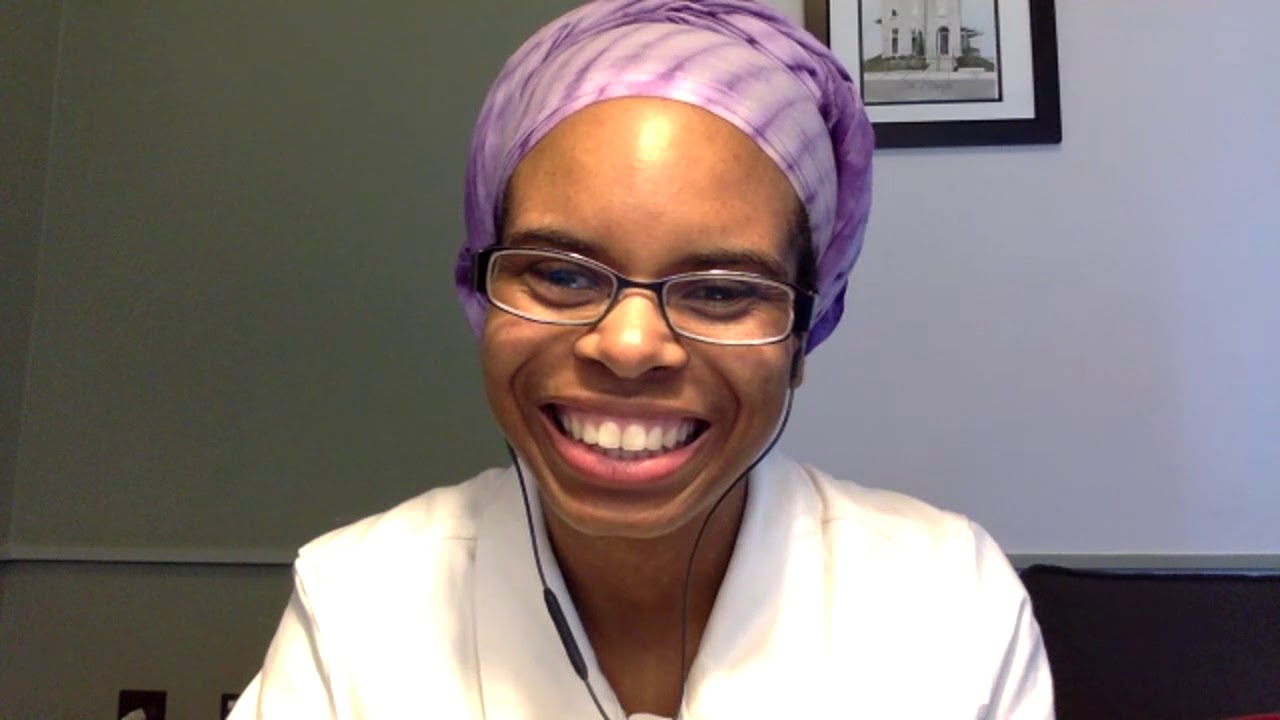
In this podcast episode, host Zaakirah Muhammad interviews Dr. April Moreno, a PhD‑trained public health researcher turned autoimmune wellness coach. Dr. Moreno shares how her own autoimmune diagnosis during her doctoral studies redirected her career toward helping women with autoimmune conditions. She explains her academic background in health promotion sciences and health informatics, and how she leveraged that expertise to create the Facebook community “Sisterhood of Limitless Living,” a support group that connects diverse women living with autoimmune diseases. The conversation explores multicultural identity and health‑equity research, highlighting disparities in diagnosis and clinical trial representation for people of color. Dr. Moreno outlines practical wellness strategies, emphasizing mindful body‑scan meditation, stress reduction, and a four‑dimensional model of wellness (spiritual, environmental, mental, physical). She discusses lifestyle considerations such as temperature sensitivity, air quality, and travel experiences that affect symptom management. The interview also covers self‑care, the dangers of chronic work stress, and her personal decision to leave a high‑paying but abusive job as a turning point toward health. Finally, Dr. Moreno provides her online resources—Instagram @DrAprilWellness, website aprilmoreno.com, and a YouTube channel—inviting listeners to access further content, podcasts, and community support.
Chapters
Hi, April.
Hi, Zaakirah.
How are you?
Doing well. How are you doing?
I am good. Thank you so much for being my podcast guest today.
Thank you so much for inviting me. I'm really excited to be here. Thank you.
So we met originally in, um, a group called She Podcast.
Yes.
But we also, um, Had the chance to interview— you had the chance to interview me.
That's right. I loved it. So many people loved it in our group.
Thank you for that opportunity. It was really my first time really talking about, you know, talking about polycystic ovarian syndrome and my autoimmune disease. So how about you tell me your story? Sure.
So again, my name is Dr. April Moreno, and I'm an autoimmune wellness coach, autoimmune wellness And basically my story is that it happened to me, and this is the very beginning of how I reached out to help other people through their journey of the autoimmune struggle. So it helped, it pretty much happened to me while I was finishing my doctorate in public health, health promotion sciences. So I was experienced in working with quality of life research, connecting with communities, helping them with like their HbA1c, their blood sugar, you know, reducing and preventing diabetes type 2. Looking at preventing undiagnosed hypertension or catching that and then preventing hypertension from happening. But those were a lot of the focus of the work that I had been doing. What we talked about as chronic disease in the public health field, chronic disease was pretty much like diabetes and heart disease. And so when the autoimmune journey began for me in my last year, writing my dissertation, I was like awoken to this whole new world of other chronic diseases and what that means from a very personal level. And so getting through that journey, uh, I guess I can share that with you a little bit later, but, uh, yeah, getting through that journey and all the different steps along the way, um, I've made it through. And after graduation, my journey and my, my purpose and my path became and began focused on helping women who are struggling with the same challenges.
Very nice. So I would say definitely thank you for using your diagnosis in positive light because we need more of that.
Yes, yes, it's a hurting world.
So you said doctorate, but what else did you fulfill your studies in?
So my doctorate was in health promotion sciences. So a lot of that was like qualitative research, health equity research. And also the other part, it was called an inner field degree. So it was also in health— sorry, health IT, information systems and technology. So really, if you want the official name of what I studied, it is the PhD in health promotion sciences. and information systems and technology. So a lot of the work I had been doing was on electronic health records, how to use online health groups, online patient networks, even like, you know, we can reach out into like Facebook groups, what that is to build social support and help people with chronic disease.
Very nice. So speaking of Facebook groups, you launched one called Sisterhood of Limitless Living. Why did you do that?
Oh, why did I do that? So yeah, definitely that was a part of after graduation, finishing with that doctorate and being like, okay, so I can do this research like within a university setting, but you know, that's not enough, you know. And I actually did connect through conferences. I started to meet people, specifically professors here in multiple sclerosis at the clinic here. And so I partnered with them through my informatics postdoc to do patient research, health disparities research, patient experience and care coordination research. So that was great. That is great, but it wasn't enough. It didn't, it didn't speak enough to my purpose. Getting out there in the community, getting out there and working with people on an individual level, getting out there and helping women You know, 75%, they say, of people with autoimmune diseases are women. So being able to go out there to the world and help other people, that was the purpose and the intention behind the beginning of the Sisterhood of Limitless Living.
Very nice. Now, what have you gained from it? What have you learned since launching it?
I've learned so much just helping people through the journey. And you know, it's like when you help people, it's actually you're helping yourself Right? So when you offer your knowledge to help people, you're actually learning from them in the process. And so I've gained so much knowledge, you know, working across so many different autoimmune diagnoses and hearing the commonalities over and over. We talk about the importance of social support. We talk about getting to that point, that crossroads of like, okay, I got tired of being miserable. I got tired of being tired. I got tired of being sick. And I decided to take this into my own hands. So the whole level of like self-efficacy, being proactive in somebody's— in one's wellness, excuse me, I always want to say like 5 things at the same time. So being proactive in one's wellness is really important. That's what I learned along this journey of setting up this group and reaching out to women, hearing from women, interviewing them. It's been like the most rewarding process, the whole interview process of hearing people's stories. and the challenges and the beautiful, like for me, it's like the most beautiful part of the Sisterhood of Limitless Living. The interviews are when, you know, we hear the challenge and then that breakthrough point where they're like, okay, this is what I decided to do. This is where I decided to put life, my life and my health into my own hands. That's like the most rewarding part of what I've been learning through the group.
I love it. And so do you find a lot of similarity between what you've gone through and your breakthrough moment between the story that you learn about?
I think so, definitely. So I'm seeing a lot of still that commonality. So with the autoimmune conditions, there are like over 100 of them now, right? And it gets debatable here and there. Some people say no, some of these are not autoimmune, they're autoinflammatory. Some of these are like, no, you know, we don't think these are autoimmune. But it doesn't matter. It just doesn't matter. We are finding commonalities along the way. We're seeing those challenges to like Pain, fatigue, anxiety, depression, numbness, and some other things as well, but really like brain fog, right? There are so many things that we see all along, all across the spectrum of autoimmune conditions. So that's kind of what I've been learning and what I've been able to connect with here. So I've seen those commonalities with my group and with the interviewees that definitely we have a common thread and it is And I'll even take it further. It's not even really about the disease. Okay, so it's about the challenge that was placed in front of us, right? And it is the wake-up call. It is whether we accept the challenge or not accept the challenge to make changes to our lives. So it's like the disease is— it's an example. It is— it's one challenge that as a group we have that commonality, but it can be anything. It's any challenge in life, right? And how do we step up to the challenge, and I see that commonality in the group.
I love it, I love it. So where have you traveled to?
Ooh, travel. Travel is like one of my most favorite things. So if you look at like my Instagram page, you'll see last summer we went to Europe and we did a river cruise. And so that's something we had always wanted to do. It was up on my— I have this like design, this Vision board here.
Aww.
It was up here. So we did it, we went to Europe. It was this really nice trip where we went to like 5 different countries and we spent a lot of time in Germany, which was really beautiful. We really loved Germany. I would just say one of the commonalities of autoimmune diseases is heat and cold sensitivity. And so I wouldn't recommend going too much through Europe in the summer because there's still not a whole lot of AC in some places.
Yeah.
So I learned that the hard way. So you can actually go into the group. You'll see some of my summer videos. I'm like sweating. I'm in the hotel.
I'm like— Unfortunately.
But yeah, so we've done that. I lived in Japan for 6 years, and that was like the most— one of the most wonderful experiences. That was from 2000 to 2006. I was teaching English. I was working in a marketing company also as a rewriter. I wasn't a translator, but I was an editor of their English documents, and that was a wonderful experience. So I loved being in Tokyo for those 6 years. I also spent some time in London and a little bit of time in Ireland. So yeah, those are the countries I've been to.
Okay, yeah, I agree. I love Germany. I have my sister-in-law, she lived there and she loved it so much.
It's beautiful.
Now what about multi-cultures? How do you feel about multi-cultures?
Thank you for asking this question. This is big. This is a huge part of everything I do. Health equity, basically, I guess I should break that down for like laypeople, lay terms. Health equity is where we look at public health, we look at healthcare, and we make sure that everybody is equitably being served. And equality and equity are not the same thing. Equality is where everyone is getting the same thing, and it doesn't serve them the same way. But equity is in a way that's designed and it's meant to serve people where they're at. And so health equity is really a focus of the research that I do. And multicultural living is— I mean, it's, it's part of my identity. Uh, I grew up as a mixed person. I'm still a mixed person. I will always be a mixed person. Um, so yeah, I mean, my mom is Asian, my father is Latino. Um, and then we found out, I just found out, I mean, I knew we had, uh, like Afro, I have Afro-Latino heritage. Uh, we went and we found out that, um, my grandfather's mother, mother is African American. So, you know, these are things that I'm learning along the way. I'm more and more multicultural every day.
So did you take an Ancestry DNA test? So how did you find out?
My uncle actually took the DNA test. We have Ivory Coast in there, but we thought we were Afro-Mexican. I thought we were Afro-Mexican, but, you know, when I went to visit some of my relatives We found out that they had gone into the records and they found— because he was adopted and his mother is African American or was African American. So, you know, so I'm more American than I thought and more multicultural than I thought. Very nice.
Well, I feel like the more the better. That's definitely what encourages the world to be a better place, you know, because there's more cultural understanding as well.
Right, and definitely. So I guess, I mean, I can keep going about the multicultural stuff. It's like my, my thing right now. Um, I was actually just hired to teach ethnic studies, and I'm so excited. That's like my, my good news of the week. I'm going to be a professor of ethnic studies. Uh, and so multicultural stuff is like, it's very central to the work that I do. Uh, in terms of like my group, I consciously make sure to reach out to diverse groups of people just across, like anyone I can think of. You know, I want to make sure that the group speaks to everybody who is going through autoimmune conditions. Oh my gosh. Okay, so when we go into multiple sclerosis research, we go into lupus research, okay? Multiple sclerosis is considered to be a Northern European disease. That is a popular perception. But the more I learn, the more I reach out to groups, because I'm part of a multicultural research network, and we're finding huge disparities in the studies and the research on who is included in clinical trials, who is interviewed, who is even being diagnosed in a timely way. So once people do get diagnosed, people of color, they're actually like more disabled. They're actually more progressed in their, in their multiple sclerosis. However, What we do find with lupus is that they have documented and identified that many people of color, particularly women of color, tend to have lupus at a disproportionate rate. So there's a lot going on when it comes to multicultural perspectives and dynamics in autoimmune research and living on a daily basis.
Very interesting. I'm glad you shared that because my brother, he's, um, he's my brother on my dad's side, but he actually has lupus. And then of course there's me with polycystic ovarian syndrome, which I've, you know, learned is very common among African American women as well.
Yeah, and then there's the thing about like genomics, and I, I go back and forth on genomics. Um, they claim, like some people say that, you know, it runs in the family. And so I guess, you know, we can see, yes, it can run in the family. If someone has one autoimmune condition, like my cousin has lupus, then, you know, then it's possible that, you know, that we're gonna get it too. But I don't like to think that way because I think genomics is one level, but then like the expression of that takes, you know, there are so many other factors in the environment that are contributing as well to the expression of what happens in our genome. So, um, yeah, there's definitely something there in the fact that there, you know, it can be genetic. But I mean, there are so many other things that we can— we carry in our genome that we won't express, you know. So it's very complex, and, you know, I think we can all like interpret that differently.
Very true, very true. So what, uh, are your tips and pointers for helping those who manage The autoimmune systems— symptoms, sorry.
Okay, yeah, definitely. So for me, the first part is really what I call mindful wellness. It's kind of like getting a handle on what's going on in the body. One of the wellness or mindfulness meditations, like the most popular one, is the body scan. If you're familiar with the body scan, it's just kind of going through from head to toe or from toe to head and just feeling, just observing what is happening in the body. So actually just taking an inventory, taking stock of what's actually taking place. What we're finding is a lot of the time with the relapses, with the exacerbations, with the initial diagnosis, the flare-up of an autoimmune condition, it tends really to happen in a stressful situation. Some people will say no, and that's okay, but we're seeing it very commonly that it does happen when people are stressed out. So what can we do to get a handle on our stress so that we can start to sit down and just get into a calm setting, calm situation, and start to feel what's going on through the body? So that's the first part. And then another part of that, what I do with people that I work with, it's addressing 4 dimensions. It used to be 10, and it's still 10, but it's really 4 dimensions of wellness. It is the spiritual. It is the environmental, it is the mental, and it is the physical. So if you look at all these different levels, how are they— how do we interact with these different dimensions to influence our physical health? Physical is like the last part. If we think of an iceberg or something like that, we think of like your spiritual, it's kind of like your sense of self even, right? Your sense of— living, your sense of community, your sense of identity with your higher purpose here on earth. So I think that's like really an important part. It's like a very foundational part of our lives here. If we don't have purpose, then, you know, it just makes it a lot harder to live and to have will to live. So that's the first level. The second level is the environment. Environment is like super important. We talk about this all the time. It's like Your community, who you spend time with, the kind of thoughts that you allow to welcome into your mind, you know, the air quality even. It's just all the different things, all the external influencers that are part of your life. So that's your environment. Then the next part is your mental health, you know, just getting a handle on that. So we see again stress, depression, anxiety. These are huge things. in the autoimmune community. And, you know, it's just really important that we talk about this because, you know, we can talk a lot about the physical, but really, you know, for me, I know, and I know other people, it began with a stress response. It began with unusual anxiety, unusual depression, different levels that we— unprecedented levels before the physical manifestation took place. place. And then so finally, the kind of tip of the iceberg is the physical health. So when people say, you know, they just got diagnosed with something, most likely it's something that had happened many years ago, that had been like kind of like different layers. And over time, you know, we see these different symptoms that have popped up over the years. We have many times gone through some kind of mental trauma, stressful situation or circumstance as part of that as well. So You know, looking at all these different layers is really what's important.
Very nice. I'm so glad you brought this up. I'm also very glad you brought up air quality because I live in Nashville, Tennessee, and as of right now, the weather, it feels like summer when it is, and it's beyond. It's so hot, and then, but then there's a mix of people with allergies getting messed up because of the pollen levels, so it's a hot mess. A hot mess.
Yikes. Yeah, and you know, I'm here in Southern California. We didn't used to have humid weather, but lately over the past 5 years, we've been noticing a lot of more humid summers. Yeah, that's no fun.
Global warming for sure.
Yeah, there's some changes for sure.
Now, what are your tips and pointers on managing the stress? The stress that we can manage. What are your tips and pointers on managing that?
Number one, I would just say self-care, right? It's like one of my favorite topics, and self-care is so important. You know, we put aside a lot of our— the things that we enjoy in life. We put aside so much because we are stressed out, we are working, we are so focused on other things. You know, so what we're finding with some of the autoimmune community is like we're seeing like Kind of like the Type A personality. I don't know if that, you know.
That makes sense.
Yeah, okay.
Go ahead and explain it. That means there are different types of personalities, right?
Right, and I don't know all of them, but I know the Type A is kind of like the one that's kind of like always trying to like prove something, trying to be the best, trying to be the most productive, trying to like constantly be doing stuff to like be like perfection. Right? And so we see these trends a lot with the autoimmune community. And then if you break it down, like literally autoimmunity is where we're attacking ourselves, literally, you know? And so it's kind of like when we're constantly trying to prove stuff out there, we're not taking time for our self-care. We're not taking time to listen to our bodies, you know, like the body scan that I mentioned, understanding what Our body needs the sleep, the rest, the nutrition, the exercise, the relaxation, and just going out and enjoying community and fun things. The things that we think are so trivial are actually like the most important things of all, you know. And so, you know, what I would say is like in getting, getting a handle on the mental health, the psychological aspects, it is number one. It's like self-care. whatever that means to you, you know, finding and getting back into the things that you enjoy with your life, reassessing your purpose, reassessing what it is you're here to do in life. Okay, so, you know, for me, the story began because I was overworking myself. It began many years ago when I was starting to notice strange physical symptoms, but then it came to a head when I went to this really abusive work situation where my boss became my stepparent. Okay, in my mind they were the same person and I was responding the same way and I was getting treated the same way.
Whoo!
And so, you know, just listening to your body, noticing these patterns, getting that self-assessment. And so taking time. So what I did, and the best thing I did, was I quit the job and it was paying so well. It was so hard. It was like a— it was like the best paying job I've ever had.
I quit.
I had to leave. Because it was just a really negative experience. And so the first part that I talk about in this journey is like this, what I call work stress to wellness. So getting a handle on, you know, assessing like, is this the right job for me? You know, spending over 40 hours of my day, spending more time at the office doing a job that is abusive, that I hate, you know, instead of spending time with people that I love and my family, you know. It's, you know, we've got to handle this. We've got to look at this and take control of what's going on because it does take a toll on our bodies. So yeah, really, a lot of it is like in the mind. It's like making those assessments, making those decisions, and noticing these dangerous patterns of like overworking yourself or trying to please other people, trying to prove your worth, your value. And I'm talking about myself here. You know, and all these things that kind of lead into an autoimmune response. And it's no mistake that these numbers are growing and growing. The autoimmune condition is an epidemic. We're seeing so many, so many new diagnoses all the time. It's— we're just seeing so many right now, and it needs to change. Something in the way that we spend our time, the way that we think about life, and the actions that we're doing, we need to slow down.
I agree. Yeah, I'm so glad that you also brought up the fact that you did take that risk to quit a job because like you said, not many people can leave a good-paying job, especially if that's their stability, that's their foundation, that's what their sense of security is.
Right, but yeah, if it gets to the point where your health is starting— you're starting to see those changes in your body and your mind, you're like, I can't do this, you know. It's like my life or my job, you know, gets to that point.
Yep, yep. Okay, well, where can we find you on the web?
Okay, you can find me— I would— I have fun on Instagram, so I'll talk about that one first. It's @DrAprilWellness. And so I'm on there, I talk about the Sisterhood of Limitless Living quite often. I present the Wednesday interviewees that we're going to I talk about my service dog. I talk about wellness. I talk about self-care on Instagram. So it's a lot of fun on there. My website is aprilmoreno.com, A-P-R-I-L-M-O-R-E-N-O-P-H-D dot com. And that's where you can find more information on the work that I'm doing, about the group. I have a blog on there. I'm getting started on putting together the podcast.
Awesome.
And so some of it's on there, but there's a lot more that needs to be uploaded. So it's a work in progress, but it's still there. And so yeah, I think those are the 2 main places I want to talk about right now, Instagram and Facebook, of course. Hello, the Sisterhood of Limitless Living. That is our group on Facebook. You can also find me on my professional page, Dr. April Wellness, on Facebook.
Very nice. Yeah, so on Facebook you can also see the video that I did. with you, Dr. April. I'd love to. And it also was also, I guess, sent to YouTube as well for those who are not a part of the Facebook group or may not be interested in joining yet another Facebook group.
Get it, yeah.
See the video on YouTube. Which is your YouTube channel?
Yes, I have a YouTube channel. I don't know exactly the name of the YouTube channel right now, but if you just do a search for Dr. April Wellness, it should come up. Yeah, I can give you that link. I'll go ahead and find it and then we can put it, you know, on the description or something.
But yeah, definitely be sure to check out the show notes and then you'll be able to have access to all the links that Dr. April shared and all the resources as well if you want to go back and— because I believe you You, Dr. April, shared so much great information. So I think this is definitely gonna be a keeper for a long time.
I hope so. Thank you. That's my goal.
Well, thank you so much for your time.
Thank you, Zaakirah.
More from Zaakirah

Wealth, Discovery And Alignment through Human Design and Gene Keys with Danielle Eyman



ADHD, AI, Artistry: Amber Andrews on Building a Brand that's Honest, Creative and Converting



Sensory Reset: Soft Stories of Joy, Belonging, and Healing Inner Child Live from Essence Fest


