Photographer to Photographer: Business of Photography with Nathan Holritz and Zaakirah Muhammad
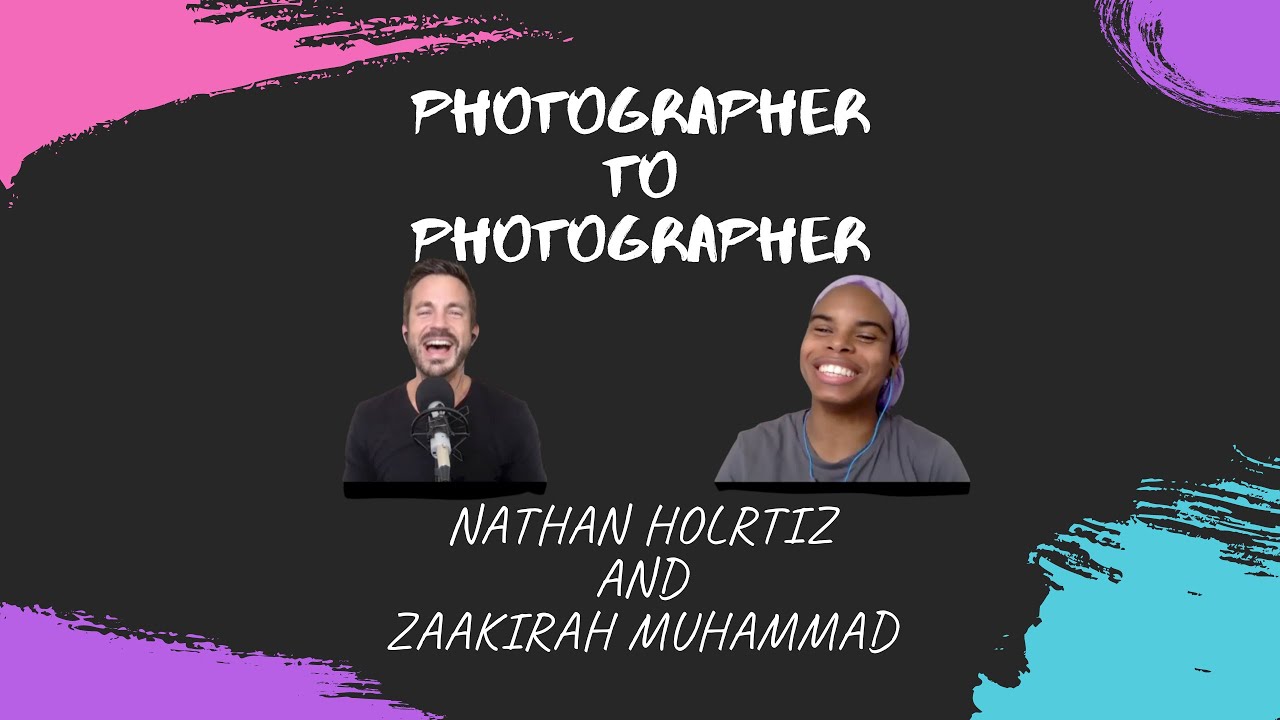
In this episode of the "Seeing Life Through a Different Lens" series, host Zaakirah Muhammad interviews photographer‑entrepreneur Nathan Holritz. Nathan recounts his accidental entry into wedding photography in the early 2000s, the rapid growth of his shooting volume, and the hard‑learned lessons about flexibility on the wedding day. He emphasizes the importance of proactive financial management, taxes, and using data to drive business decisions. The conversation covers the value of professional communities (ASMP, PPA), mentorship, and resources such as HoneyBook, QuickBooks, and accountants. Nathan explains why he founded Photographer’s Edit to outsource post‑production, how that freed photographers’ time, and the broader impact on their personal lives. He shares strategies for clear communication when delegating, the need for a well‑defined ideal client and market research, and the role of niche positioning. The interview also explores his move into podcasting (the Bokeh Podcast) as a platform for value‑adding content and soft‑selling his services, and introduces his new Miilu app that streamlines event timelines and shot‑list collaboration. Throughout, both speakers stress mindset principles—starting with what you have, focusing on passion, and making the most of circumstances—culminating in a motivational takeaway: "It’s what you make of it."
Chapters
Welcome to another episode of Seeing Life Through a Different Lens, the Photographer to Photographer series. So if you missed the first one, I did a conversation with the Atlanta-based photographer Corey Reese, and he talked about how he got started. First he was a model, and then he became a photographer, and then he became an instructor. So this time I feel like we kind of have it the other way around. So he was a photographer first And then he started going behind the scenes with editing, and then he went to podcasting. So today we have Nathan Horace, and he started out in the wedding industry in the early 2000s. And he started out just shooting weddings, and he's based in the Chattanooga, Tennessee area, which is actually not far from where I am currently. But due to the current situation, we're doing this virtually. It's still going to be the equivalent of as if we are right next to each other. And so we're going to talk about that. We're going to talk about how he had been able to be consistent with having over 400 episodes in the bulk of podcasts, which is, in my mind, I dub it as the CreativeLive podcast or series, but for minorities. He's great with diversity and inclusiveness. And I got to be on that podcast too. I believe my episode may have been in the top 10. So it's actually really good conversation. And when he's not doing all things creative. He enjoys spending time with his 2 young adult kids and friends and family, then his motorcycle and just being outdoors, just being in the lovely outdoors. And so we're going to talk about how he got started and what he's learned along the way on his almost 15-year, 20— almost 20-year journey. And then what I've learned as well from being— this year, 2020, makes 10 years that I've been Professionally photographing. But for those who don't know me, we'll talk more about that, of how I've actually been photographing technically since I was a kid. So Nathan, thank you for being here. How are you today? I know it's a beautiful day. It's definitely a beautiful day today.
Yeah, no, it really is a privilege to be here. And we were talking about that before we started recording. It's just the sun's out and I'm just naturally that much more excited.
Right. And there's something about the sun that is kind of like gives you the idea that today can be a good day and we have something to look forward to.
Absolutely. You know, there's a funny thing, and I'm not even that much of a, like, a comic book nerd or even superhero movie nerd or buff, but, um, you know, Superman gets his power from the sun, right? And, and I think that's kind of a cool representation of the significance of the sun for human energy as well. We all need to get outside a little bit more. It is a lot tougher these days dealing with COVID But I certainly just, I soak up the opportunity. So yeah, sun's out, extra, I gotta power up, I guess.
Exactly, exactly. And the good thing about both of us living in Tennessee, we have the mountains, so we can still go to lots of parks, you know, nature-made parks, and still get our vitamin D.
Absolutely, absolutely.
Awesome. Now, let's go to the very beginning. Tell us how you got into the wedding industry and why you got into the wedding industry.
I hadn't planned on it. Photography wasn't my career goal or even the natural path, actually. It was a hobby. And long— kind of long story short, I happened to be given a— or picked up a camera, an SLR. Back then it was film. This is 2000, 2001 or so, and started shooting with it. And my partner at the time put together a portfolio of images that I'd taken. A friend saw that portfolio, they recommended me to photograph their friend's wedding and got the opportunity to shoot that first wedding for $350. Lost money because I shot something like 10 to 12 rolls of film, had to pay to get that film developed, so lost money in the process. But from that timeframe, within the next year and a half or so, shot about 15 weddings, and then the next full year jumped to 30 weddings, and it just progressed from there.
So what did you learn along the way? Because weddings are not for everybody. I've had my fair share of weddings also of friends are like, hey, I love your work, can you come photograph my wedding? But what have you learned from that, from that journey?
I think a couple of things. One, the significance of learning to go with the flow and kind of be ready, being ready in the moment, right? It's in our culture these days, and I have to push myself beyond this as well, but in our culture these days, it's We, we live in this space where if we're pushed outside our little box that we live in, our comfort zone, we get super uncomfortable, defensive, emotional, and ultimately don't respond well. We don't go with the flow in the moment as well as we maybe could or even should. And so you learn the significance of going with the flow because wedding days, as much as it can be very consistent, you know, you can kind of You know generally what's gonna happen. What you don't know is what could happen along the way, and you have to learn to be flexible and go with the flow. Something, you know, something goes off schedule, some crazy person goes nuts in the middle of the ceremony, or, you know, somebody falls down on the dance floor. You never know what's gonna happen. But learning to go with the flow and just capitalizing on the moment, be in the moment, capitalizing on that moment. So that would be the number one lesson. I would say the second one, and this is something I talk quite a bit about on my podcast as well, The biggest takeaway and the biggest lesson I would encourage any photographer to really hone in on is the significance of managing your finances proactively. My business fortunately did really, really well. Unfortunately, I didn't do a great job of managing the finances. So I'd be in a much different place right now had I started, you know, 20 years ago, 15, 20 years ago, proactively managing my finances. Looking at the numbers on an ongoing basis, making intelligent decisions based on that information, A, and then B, just doing simple stuff like proactively managing my taxes. This is the kind of stuff that it may be overwhelming, it may be disconcerting, it may make us nervous, but if we don't address it proactively, and the irony is it doesn't even take that much effort if we do it consistently, if we address that proactively, we'll be in a much, much better place. creating a sustainable business and putting ourselves in a really great place financially.
Absolutely. And I think one thing that's different is because we are creative and this is a creative industry, not many people take that into account. They pick up a camera, they love a camera, and they're like, this is my new baby. But the baby— you have to file taxes on the baby too.
You do.
So it's like, that's a whole nother conversation. And I, I'm glad you brought that up because Even though it took me, it really took me studying it maybe like 3 times by the time I learned about taxes and copyright and all the legal aspects of it.
Right.
Because after all, it is a business. You have to learn how to make a profit more than you make a— have a loss. And so a couple of my favorite resources that I learned along the way was ASMP. I was a member of that organization for a while. American Society of Media Photographers. And just like the PPA, Professional Photographers of America, you can join it for a monthly or yearly membership and have meetups. Meetups are great and learn from other photographers. But they also happen to produce a book that talks about all things legal. And I, I never finished the book, but I can pick and choose from what I need and go from there.
Sure.
Now, what are some of your favorite resources for new photographers to learn?
Specifically in finance or just in general?
In general.
Man, that's a great question. Um, you know, I mean, first of all, community was one of the biggest sources of value for myself and my business partner as photographers. Being able to have conversation with other photographers who maybe have similar questions or maybe have already been there and can share what they've learned. And certainly to get encouragement from, like you talked about, getting to meet up in person even. I just, I would eat that up. It's so much fun. And it's, you know, sadly again, one of those things that we're kind of missing out on right now due to COVID, all these conferences and workshops getting canceled or rescheduled. But I would say that would be the biggest source of value. Now, that may seem like an obvious answer, you know, in a day and age in 2020 where social media is a commonplace thing. People are like, well, yeah, of course you're going to jump into a Facebook group, you're going to have conversations on Instagram. But what I would encourage everybody to do is to certainly capitalize on that opportunity because you can, you can learn so much and take so much encouragement from it. But take it a step further, and as COVID hopefully continues to die down and we're able to get out more, make the effort to actually get out and connect with people in person because The in-person connection just simply isn't the same as the virtual connection that we might also be enjoying. So, that would be the number one thing. Man, as far as resources beyond that, my suggestion, kind of along the lines of what we were talking about with finances, would be to connect with a really great accountant, somebody who can guide you in financial management. And of course, these days we have QuickBooks Online, really incredible resource. It doesn't even cost that much. All we have to do is consistently enter our numbers in, some of it's even automated. But then if you have an accountant who can also work with you to help you understand how to look at those numbers and make intelligent decisions for the sake of your business, and then of course help you with the taxes, you're gonna be in a really great place. I can't stress enough the significance of using data, in this case numbers, the money going in or going out and coming in, but then ultimately data about your website, data about the way that you acquire customers and how many of those you're actually converting and so on and so forth. Data is so, so important. And you're right, we are artist types, maybe more emotional than we are business-minded, but it doesn't have to be mutually exclusive. We can make the effort to learn what it means to look at these numbers and make intelligent decisions based on those numbers, while then, and that of course frees us up to focus on our art. So we can have the best of both worlds.
Absolutely, and I'm so glad you mentioned data because I feel like there now, of course now of the day and age of technology, there's so many resources out there to make it easy for us.
Yes.
So I definitely want to just shout out HoneyBook as an example of a great CRM platform, a customer relations platform, management platform, for you to literally manage everything all in one. One, from the start of not having to triple-check your schedule or double-book weddings or shoots or anything like that. You can knock that out. And then you can also knock out having to not know where to Google the right kind of contract for the right kind of shoot. So all of that is just in there, but of course, yes, Definitely have a CPA, an accountant, someone on your team later on. Of course, yes, learn first. I definitely attest to learning first from yourself so you know what works for you, what doesn't work for you, but then also outsource when you can, when you can get to that point in your career when you can start outsourcing. So I think those are all great tips. So I think that's a great segue into how did you begin photographer edits, 'cause I know I don't like editing photos, so I would be like, that's a great idea.
Yeah, and there seems to be kind of a mix, right? Some photographers like the editing, some are like, eh, and then some others just like, I wanna get rid of it as quickly as I can. I actually enjoy editing. I mean, like, the idea of opening up Lightroom and playing with a few images and throwing a preset on there and making it look really cool, I enjoy that. But I also didn't want to spend as much time or near as much time as I was spending editing images. Ultimately, I wanted as much freedom and flexibility as possible as a business owner. And when I was shooting weddings, I mean, at times shooting as many as 30 or 40 weddings in a year, and then having the digital files to post-produce from those weddings, that's overwhelming, right? And the last thing that we need to be doing is just being stuck behind our computer processing images. That, for anybody listening in who's actually interested in growing their business, processing images simply doesn't grow your business, and sadly, it's probably the most time-consuming element of running a photography business is that post-production work. So naturally, I wanted to figure out a way to get rid of it. I wanted to create more freedom and flexibility for myself as a business owner as well, even more than I already had as a photographer. And so I started an editing company, Photographer's Edit, both because I saw a business opportunity in the industry, but also because I wanted to get rid of the editing that was just driving me crazy. I'm kind of a bit of a perfectionist when it came to, at least when it came to that editing process, and it was just taking me way too much time. It was just eating me up. So fortunately, Photographer's Edit gave me the opportunity not only to be able to offload my editing work, but then also to be able to offer a service to the industry that gives photographers, it literally gives them their lives back. If they're gonna spend an average of about 16 hours per wedding editing their images, imagine what they could be doing with that time that could actually grow their business, building relationships in the community within their industry that would ultimately drive thousands of dollars in business. So, you know, a couple hundred bucks to outsource your editing and then be able to focus on things that'll actually bring in thousands of dollars in business, that's a no-brainer if you're a business owner who wants to grow a sustainable business. So it's been cool not only to see that business play out the way that it has, and fortunately it's grown and it's done really well, but ultimately the most rewarding thing is to know that it's made a massive difference in photographers' lives. Not only giving them their lives back, I've had at least a couple of photographers even say, you gave me my wife back, you know, because the husband wanted to connect with his partner and couldn't as readily because she was stuck behind the computer. So to be able to do something that's actually making a difference in the personal lives of these photographers, families, friends, etc., huge, huge reward for me.
Absolutely. I definitely agree with having to get that time back because I know Just remembering from my experiences of just being a portrait photographer, I think that's how I ended up narrowing down my niche to be, 'cause I've done weddings, I've done travel, and by the time I get to portraits, I love that the most. But what I love about it is interacting with the people. Now, if I gotta worry about, okay, I gotta spend the next day and a half because someone wants heavy retouching done on their portrait because it's gonna be an album cover, it's gonna be a magazine cover, then it's like, okay, so what about my friends? Yeah, exactly.
What about our friends? What about our kids? What about our partners? I mean, there's the fact that photographers, by the way, myself, I mean, I did it myself, that we're kind of, whether consciously or subconsciously, ultimately making the choice. It is on us, right? We're making the choice to do something that, A, takes away from the personal relationships in our lives, which is something that we simply can't get back. That's number one. And then 2, doing something that actually costs us time and money as a business rather than focusing our time and effort and energy on things that will actually grow our business. Choosing to edit on an ongoing basis, I get that we're gonna occasionally do a little bit here and there, that's fine, but on an ongoing basis, choosing to do that, to take that on ourselves, it just simply doesn't make sense. And fine, don't send it to Photographers Edit, find somebody else, hire somebody in-house, but please, photographers, if you're listening in, don't Allow your life to be taken over by editing when you could be, first of all, again, focusing on the relationships in your life, and then secondly, doing things that would actually make you more money. Sitting behind your computer image editing, not gonna make you more money.
No, especially if you're not— if it's not for a client that already paid you to take the photograph, and if it's not something that's going to— if you're not— if you are past the phase of, you know what your portfolio is, you know what your style is, And so, especially when we really love to do something, we can just waste hours on end just doing what we love, you know. So if you love to do it, that's all, that's great and all, but how are you gonna eat dinner?
Well, it's true. But here's the thing, again, just like art and business aren't mutually exclusive, outsourcing your editing, enjoying editing, they also don't have to be mutually exclusive. You know, for example, a lot of photographers will process sneak peeks, whether for the blog or social media or both. And so if they wanna process, if photographers listening in wanna process 50 images or 100 images, so they still get to have their hand on those images and still get to do a little bit of editing and put their work out into the world, fine, do that. And then send the other 600,000, 700,000, 800,000 images to an editing company or hire an in-house assistant that can do that for you. Because again, you could be spending that time on much, much better things personally and professionally. I swear to you, your life will be drastically different if you're willing to give that up. Now, you brought up something really interesting, Zaakirah, which is understanding. If we've taken the time to understand our style, photographically and certainly editing style, there's been so much emphasis put on editing style. If we know what that is, that better enables us to be able to outsource editing. If we're not clear about what we want, we've worked with photographers over the years who've come to us and they get frustrated with the process and the reality in some of those situations is that they're not actually clear about what it is that they want. So it's important, whether you're delegating editing work or administrative work or whatever it is, album design, as a photographer, be clear about what it is that you want. That better enables you to be able to delegate or outsource that work to somebody else. They can take that over, do that work for you, and you can go focus your time on things that'll benefit your life so much more effectively than editing.
Absolutely, and I think that's one thing that I definitely learned when I did make that shift from being behind the camera to being behind the computer guiding those with the camera. So that's when I ended up making my shift in life was becoming a brand cultivating strategist. So my frustration came in of, there's all these creatives who have great ideas, but by the time they have to narrow down the process and they want to say outsource a virtual assistant, they're like, oh, I think I need more clarity 'cause I don't know what—
Yeah.
XYZ is. So I'm asking all the questions. I mean, some of them, uh, gratefully and ungratefully, they get as far as the consultation. And so at least they know that I'm asking them the right questions of, oh, maybe I should reevaluate that a little bit because I don't know the answer to that. So it's good. Uh, you get more clarity when you have more clarity in your own business. Um, that's almost a power of manifestation, of manifesting exactly what you want.
It's true. And one of the things that I would encourage all of the photographers listening and all business owners for that matter, if you're wanting to delegate something in your business, again, editing, administrative work, email or otherwise, album design, even accounting work, practice a little bit communicating out loud. I'll do this. I've done this in preparation for podcast interviews. I've done this in preparation for video content that I was creating. I will literally, whether I'm in the car, or I'm at home, wherever it is, I'll literally say out loud the thing that I want to communicate in this piece of content. And sometimes it comes out horribly and then I go back and I just do it over again and I do that repetitively and ultimately enables me to be able to communicate that idea, that concept or those principles more effectively because I've taken the time to think through what it is I want to say so that I can communicate it well. If you're getting ready to delegate or outsource something to someone else, take that opportunity to do that. You may feel a little bit funny doing it initially, but if you can't clearly communicate, let's say in 5 minutes or 10 minutes, what it is that you are looking for from that person that you're getting ready to delegate to, then it's time to take a step back, get the notebook out, get your computer out, your phone, whatever it is, and take some notes. Jot down the big ideas that represent what it is that you're wanting to delegate and how you want it handled. And then go back and try communicating that thing out loud again. And likely when you take the time to do that, it'll help you, as you were talking about, Zaakirah, establish some clarity. And as a result, you'll be able to more effectively communicate. As business owners, most of us are sole proprietors, right? So we own a business ourselves. We don't have a team. We don't have all the staff to manage. So we're used to just internally having conversations with ourselves, right? And that's easy, or at least easy enough. But now we have to communicate those ideas to somebody else in a way that they can also understand because we don't all communicate the same way. That becomes a pretty big challenge. So I would encourage everybody listening in, if you're getting ready to delegate, learn how to simplify and clarify what it is that you're wanting to hand over. Even practice saying it out loud. Go through and write it out in a notebook or type it out in an email. Make sure that it's clearly understood before you go to that process of delegation because it's going to make it so much less frustrating a process. Delegation, it's a bit of a task. I'm still, even as a company owner and somebody who works with a team, I'm still continuing to refine my skills in delegating and effectively communicating ultimately. It does take some time. You have to invest in that process. But at the end of the day, as long as you make the effort to learn how to communicate clearly what it is that you want, it'll make all the difference in the world.
Absolutely, absolutely. And I'm glad you brought up the fact that everybody communicates differently. It's the same thing of everyone has a different love language, you know, so everyone communicates differently, everybody loves differently, everybody shows their appreciation and gratitude differently.
Yeah.
I feel like that's what makes podcasts so great because, um, the moment I kind of picked up on it for a while, I didn't get into podcasting myself because I'm like, how can a photographer have a podcast if everything's really visual? Right? But then I take the example of, well, first, definitely CreativeLive. They were doing video before they went to the audio version. And then there's another podcaster that I, well, I love him as a photographer. And then when I listened to his podcast, Matthew Jordan Smith, he has taken a lot of great photos of plenty of artists. If you look in any magazine, I mean, just look up Matthew Jordan Smith, you'll see his work.
Mm-hmm.
But I fell in love with him first with his Sepia Tone book. So I happened to walk through the library and his book was on sale and that caught my eye. And then I got to meet him, you know, at one of the conferences. And then when I learned— and I'm subscribed to his email list, I'm a fan officially, so I'm also subscribed to his email list— and then when I see that he started podcasting, I'm like, he started podcasting too? So, but it's great because there's so many creatives who listen to stuff while they're editing, while they're working. So what made you get into podcasting?
Well, I wanted to figure out a way— 2 things. So number one, everybody knows that you're quote unquote supposed to create value in some way with content, and in most cases free content, at least to begin with, right? And a few years back, blogging was the way to do that. At the time, as a company, Photographers Edit, when we were thinking about how do we create valuable content, the last thing that I wanted to do was to go into the same space that most other companies were already in talking about the same things that most of those other companies were already talking about. And so very simply, I thought, you know what, the podcasting space, we'd actually experimented with it before with a different brand. The podcasting space was an opportunity at the time. This is, let's see, 2000, wow, has it been 4, almost 4 years ago now?
Okay.
At the time, podcasting It had become or begun to become popular, but not nearly as popular as it is now. And so there was opportunity there. I didn't feel like I was getting into a super crowded space. And so that was naturally the direction that I wanted to go. It was also an opportunity. I had been kind of disconnected from the industry personally for a bit. I was dealing with some personal stuff. And so it was an opportunity to get out and connect with the industry again, because I had been very much in front of the industry in various ways in years past as a photographer. This gave me an opportunity to get out and connect with the industry. It also gave me a platform on which to ultimately soft sell Photographer's Edit. Now, I don't like to be sold to, so the last thing that I wanted to do was for this podcast to become a commercial. But I also knew that if we focus on adding as much value as possible to— you know, Gary Vaynerchuk talks— in fact, he wrote a book called Jab, Jab, Jab, Right Hook, right? So, and the notion is add value, add value, add value, and then make an ask. Hey, by the way, Photographer's Edit, check it out. But I knew it was a platform, I thought it was a platform that would give us an opportunity to be able to soft sell Photographer's Edit while, again, our primary focus being add value around photography, running a photography business, and along the way, something we've already talked about, figuring out how to run that business most efficiently so we still have freedom and flexibility as a photography business owner.
Absolutely. Now, I love that. I love that you also mentioned almost kind of like your learning journey. It's almost been in chronological order, like first behind the camera and then, uh, behind the computer and now behind the microphone. So what would you tell your younger self from 10 years ago? What would you tell your younger self, but who did not foresee the future, but what would you tell your younger self from 10 years ago?
You know, honestly, I would still, even at that point 10 years ago, I still didn't understand the significance of data. And I know we've talked about it already, but it is worth repeating because I think many photography business owners would be in a much better place if they paid closer attention, proactively paid closer attention to their, to the data when it comes to finances and the data when it comes to the numbers behind their business. Again, website, client acquisition. And really, those things kind of go hand in hand. So paying attention to those numbers and then making intelligent decisions based on that information makes all the difference in the world. And naturally, if you're doing that and simultaneously managing your money proactively, you're going to be in a really awesome place as a business owner. And it may be that you end up realizing the current business model doesn't work. You've got to pivot, you got to change, you got to modify. But as a business owner, you're gonna be in a much, much better place if you pay attention to the numbers. Again, numbers financially, numbers, data behind the way that your business is being run.
Absolutely. I think that's definitely important. I think for me, what I would tell myself for just starting out is probably more of a mindset thing, more like, don't worry if the numbers are too low, or don't worry if it seems like you don't have that many clients at the moment. Don't worry if people are like, oh, I don't like the way that I look. It's actually a mindset thing. thing. It has nothing to do with you. You keep doing what you love to do because people will come when they see that you're just as passionate as they are. They will come because you're passionate. So I feel like I would tell my younger self also more of a mindset thing of to just don't worry what— well, this was before Instagram. Let's say Facebook. Facebook was out back then.
Sure.
So don't worry about a photographer your age who already had a magazine feature. Like, don't worry about that. That may not even be your path, you know. Maybe you're meant to be known as a photography instructor, you know, with the Tamaya Colvin Education Group, with a smaller group of people, you know. So I think for me, it would definitely be just continue to focus on narrowing down what you love to do and stay in your lane.
I think that's actually really, really big. I know that many of us, including myself, kind of jumped into photography because we thought it was really cool and we liked We want to be an artist. I mean, the reasons go on. We jumped in without real clear ideas about long-term goals, kind of big picture goals. Where do we want to end up personally? How does our business enable us to get to that place? And so this is something we actually talk about quite a bit on the Boca Podcast, is this idea of a big picture view. We establish a big picture view. It makes all the difference in the world if we know where we want to be financially. If we know where we want to be in the way that we manage our time, it's one thing to make $300,000 a year, but if you're spending 80 hours a week doing that, you have no life, right? So there's a balance between the money and the time. If we're clear about those things, we understand our strengths and we know where we ultimately want to be in these regards, then we're in a place where we can be very intentional. If we're not intentional, it's very easy for us to be reactive in the moment. And like you said, get distracted by, oh, that person's doing that thing, or that looks really cool, or let me go to that workshop, or let me buy that piece of gear, when many cases these things are irrelevant to our bigger picture goals. So for photographers who have already started, they've launched their business, kudos to you, awesome. Take your time, take some time, take an hour, 2 hours, take a weekend, whatever it is, have conversation with your partner, whatever you need to do, take some time to establish whatever your big picture view might be, what that looks like in the next 3 years, 5 years, 10 years, where you want to go personally, the kind of business model that you want to develop in order to support those goals, and you're going to be in a much better place because we talked about creating a life that gives us freedom and flexibility. We can do that much more effectively if we're clear about what it is we're trying to accomplish. If I know that I want to be Chattanooga's black and white skateboard wedding photographer, that's very, very specific, but, and simultaneously, I want to make $150,000 a year, then I begin to develop my business model in order to get me a place that I can do that. Now, actually, it's slightly backwards, because if I, if I look at $150,000 a year as an income, and I look at the available market in Chattanooga for skateboarders who are getting married who only want black and white wedding photography, is that an industry? It's, it's gonna be very narrow, right? So that's where I mean, going to the very thing that I said originally, which is be clear about what it is that you're trying to accomplish financially and time-wise. Build a business model to support that. In my case, I might not be able to limit it to Chattanooga. I might have to say, you know, the South—
Nashville.
The Southeast, or Nashville, if you wanna expand it, Tennessee's black and white wedding photographer for skateboarders, or the Southeast black and white wedding, or maybe I need to expand beyond that. Maybe there's still not enough, a big enough market. But if I don't know what my end goal is, I can't make those intelligent decisions. Once I know what my end goal is, then I look at the market data. TheWeddingReport.com is an incredible source of data. You can go check out your marketplace, at least for wedding photographers, and see the data. Does that data support what it is that you're trying to accomplish? That's a good place to start. But then I can massage and adjust and even pivot if I need to with that business model in order to support my long-term goals. But it's that big picture view that gives me direction, and then I can filter out everything else that's irrelevant to that big picture view.
Absolutely, and I think that's a very important point of narrowing down exactly what it is, who your ideal client is, because I feel like that itself is a whole other conversation. I'm sure it's a vocal podcast episode as well. SEO and keywords. So yes, you've launched your website, yes, you know what your portfolio is, but when you narrow it down that you know that you want to reach people in Atlanta and Chattanooga and Memphis and Nashville, And then that you know that they are music artists, for example, that you know that they are brand strategists who need branding headshots. So once you know that, then that's a whole nother thing of make sure that it matches whenever you post on social media, whenever you are creating the backend text for your website, even the metadata in your photos. So there's so many online communities where you can submit your work and get featured. This is before even the thought of an agency, just submit your work and have it categorized as, you know, portraits, as you want to be seen or attracted. You want clients to come to you for your portraits. So yeah, it's definitely important to have that kind of data also of knowing what it is you want and how you want people to find you.
Yeah, well, ideal client, it is a very popular topic in our industry, right? But I think a lot of, in a lot of cases, photographers start with what it is that they want. What is the ideal client I want to work with? And that's an important element, but it's only one piece of the puzzle. You've got who is it that I want to work with? And then you also have will the market support or what will the market, my local marketplace, whether it's Chattanooga or Nashville or Atlanta, wherever it might be, Southeast, will my market support that? And then again, back to that big picture view, these combination of things here, will they support my bigger picture goal? So, we can't just think about what it is that we want as much as that might be fun. We have to consider reality as well, which is the marketplace data and my bigger picture goals. And now we, now we can again make adjustments to each of those things in order to get to a place where we're just totally stoked.
Exactly, exactly. It's literally like a meeting point. Like, your journey itself will eventually, it'll go feel like it's everywhere in every direction, and then it's like, like a spider web. It always, you know, meets, has a meeting point.
And exactly.
So I think we are— this has been a great episode. I think we are coming down to the end of it. So we've talked about Foca Pocket, we've talked about Photographer's Edit. Is there any other place that people can find you on the web, work with you, learn from you, the whole bit?
Sure. One other project that is brand new, I will say— I mean, we've been working on it for a while, but it's still not something that we've pushed a whole very heavily— is called Miilu. It's miilu.com. And MeLoo, very simply, is an app that enables you to coordinate with other photographers or other coordinators on an event to be able to create and manage the timelines and the shot lists associated with that event. Traditionally, as wedding photographers, you know, the, the process of creating a timeline, the process of creating a shot list, working with a coordinator, working with other vendors, has been a bit of a tedious process. You're emailing back and forth, you've got Word docs or Google Docs, and, and of course you have to be able to share all this information with a client, get their approval. It's a very convoluted process. And so we've created an application that enables photographers and coordinators primarily, but certainly other vendors as well, to create, manage timelines and shot lists for their clients and to work together in that regard through that event wedding, birthday party, bar, bat mitzvah, whatever it might be, to work together, to collaborate together on the timeline and shot list for that event. So that's a new, relatively new project. It's available for the iPhone, it's in the App Store, and you go check that out, miilu.com. Photographer's Edit, you already mentioned, sounds just like it sounds, photographersedit.com. And then the Bokeh Podcast, bokehpodcast.com. Those are the 3 big places to find me. If you want to find me personally or message me directly, it's just Nathan Holritz, N-A-T-H-A-N H-O-L-R-I-T-Z, on Instagram, Facebook, Twitter.
Perfect, perfect. Yeah, I think that's, that's definitely important, and that's what makes this conversation so great. So you know exactly what you can help with, I know exactly what I can help with, but all of it is related. All of it is creative, all of it is related to business, and so want to— they know their business, they know what their business is, but they want to focus on the other side of the creative stuff. They want to focus on photographing, but they need help with social media, they need help with branding and the messaging.
Absolutely.
That's where I come in. So that's important too. Once you do know what your message is, it's got to get out there. So we got ads, we help you with your own headshot because I know some photographers have to get you to being in front of the camera.
It can be tough sometimes.
Yeah. Exactly, exactly. And, um, I attest that to, uh, learning along the way of being comfortable in front of the camera, being comfortable with telling my own story. And so that's actually my motto, inspiring you to step outside of your own comfort zone. We've talked about that on episode 396. So that's what that is. You want to learn more about me and, uh, more of what I can offer and teach you, I'm also having a photography one-on-one course. So it's going to be— it's hand in hand, a live course where I'm also very hands-on, where of course you're going to have questions, you're going to want some critique. So if you go to zaakirahmohammed.com, you'll learn more about Photography 101, the course. You'll also learn about my book, Seeing Life Through a Different Lens, where I talk briefly about how a photograph literally saved my life.
Wow.
And also the podcast is called Living Legacy Podcast. It's more about Women of Purpose, sharing stories of resilience. But if you want the other perspective, you can listen to the Living Legacy podcast. And if there's— if no one got anything else from this session, what is the one thing you want photographers, business creatives, entrepreneurs to take away from?
There's a, there's a quote, um, that has kind of been running through my head for years now, and it's very simply, it's what you make of it. And it sounds kind of cliché and it maybe sounds easier said than done, but at the end of the day, we have the ability to decide what it is that we want and to make that thing happen. It may not look exactly like we had in mind at the end, but we have the ability to make a choice to make that thing happen. It's what we make of it, whether in the moment or in the long run. And I would just encourage everybody with that because it's easy in the moment. I mean, even in a situation like dealing with COVID I mean, this is— severely impacted my company, for example, um, even in this situation where it's negatively affecting me, it is ultimately what I make of it. And so we have the ability to make the best of what is going on in the moment. That's a reminder for myself as well, by the way. And that's what I would leave everybody with. It is what you make of it. Be encouraged by that and push forward with that in mind.
Absolutely. I love that quote. I think I have something, I probably have a quote that would also almost piggyback on it. It's been— I've heard it a lot, but what we hear may not always be what other people hear too. But start with what you have where you are, right? So that's also, uh, that's, that's, uh, gear, that's mindset, that's finances. Start with what you have where you are. So even if you really want a Sony but you really just have your iPhone, just start with what you have where you are.
Absolutely.
So yeah, I think that's been a quote that's, um, could probably resonate with someone else as well. And that's definitely challenging in this time, um, because we always want the next thing. Or I know me personally, I'm like, I'm always trying to be creative and think of the next idea, the next thing. So start with what I have, where I am, and just, you know, go with the flow and learn from there.
Yes, that's a great reminder for me too. So thanks for sharing that.
Perfect. You're very welcome. Well, this has been another episode of Seeing Life Through a Different Lens, the Photographer to Photographer series. And if you want to follow more to know when the next episode is, be sure to follow @zaakirahnayar on Instagram TV and check out Nayaral Photography on YouTube. Thank you.
More from Zaakirah

Wealth, Discovery And Alignment through Human Design and Gene Keys with Danielle Eyman



ADHD, AI, Artistry: Amber Andrews on Building a Brand that's Honest, Creative and Converting



Sensory Reset: Soft Stories of Joy, Belonging, and Healing Inner Child Live from Essence Fest


