Raise The Bar On VC, Tech, Telecommunications Industry w/ Michael Pratt | Pivet
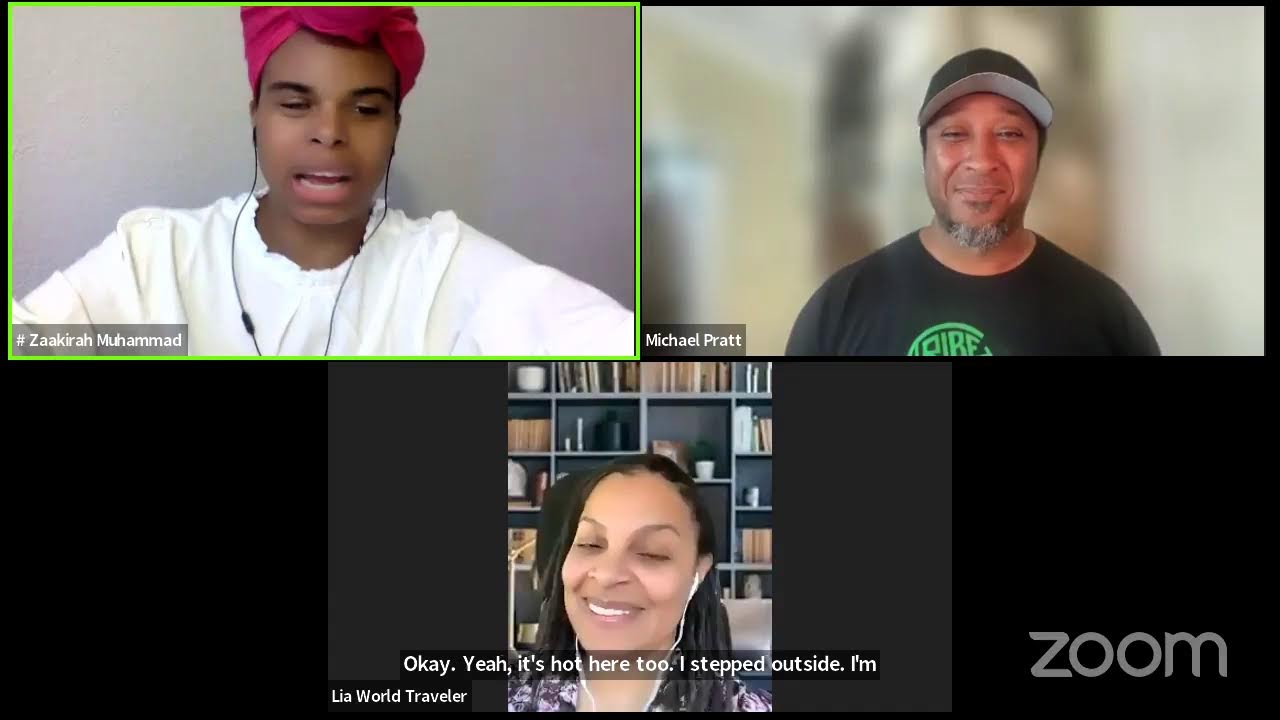
Michael Pratt, CEO of My Pivot, discusses building a Black-owned phone case company with patented biodegradable material that breaks down in 3-5 years. He covers raising capital as a Black founder, the challenges with VCs and national banks, and how My Pivot became the 20th largest accessories brand in North America with placement at T-Mobile, Target, and Best Buy.
Chapters
Welcome to an episode of the Majestic View Show. I am your host, Zaakirah Muhammad, and I am here with the Majestic View from Tulsa, Oklahoma. So today we have a very special episode and a very special guest. And so what we're going to do is give you the opportunity to, uh, leave a comment, whether you're watching live, whether you're watching the replay, to Let us know where you are tuning in from. The objective of the show is raising the bar— women in media raising the bar in all aspects of life, whether it's tech, whether it's lifestyle, whether it's finances, whether it's health and wellness. And today's special guest is Michael Pratt. Michael Pratt is the founder of My Pivot. That's Pivot with, uh, ET. So the same way you pronounce it, that's how you spell it, right? And so he has been a product manager for over 20 years, and currently he also has partnership and consulting with, uh, your favorite phone service, whether that's T-Mobile, AT&T, Verizon, Sprint, you name it. And so what he had created— he's actually part of the 1% of Black-owned companies that have been VC, venture capitalist funded. And so he had created biodegradable sustainable phone cases. Right? How many times are you dropping your phone and it costs you an arm and leg just to replace it? So Michael has produced this self-cycling technology. And so it's, you know, not only are you just going to have a phone case replaced, but you're also doing good for the environment as well. And so today, this episode especially is for you if you are really curious about what's going on in a venture capitalist world, or you are an entrepreneur, or you're on the other side of the spectrum, you are that investor and you're really curious as to what's going on in the world, especially when it comes to the BIPOC— Black, Indigenous, and people of color— who are founders, entrepreneurs, especially in the tech industry. And so without further ado, I'm going to welcome Michael Pratt. Hi, Michael!
Hi, how are you? Thank you for having me on.
Okay, yes, and thank you for being here. Um, what you're doing is super, super important, um, especially when it comes to technology. I think one of the easiest expensive that people do with that new iPhone, that new Samsung, right? And so you really kind of brought the other side of it, of what about your cases? You know, what about doing good for technology? So go ahead and just tell us a little bit more about, you know, why did you decide to do this?
Sure. Well, first of all, again, thank you for inviting me on. I appreciate it. I'm very humbled to be allowed to be a guest on your show. As we spoke about in the pre-show, you've done some pretty impressive things. So I'm hoping that beyond the show, you and I can continue to network and hopefully help each other in our respective careers. But Pivot is kind of the brainchild of years in the mobile and telecoms industry. It is literally a pivoting activity for me. This is why I named the company Pivot. And the word pivot by definition means the point in which something turns. And so for over 15+ years, I had been in the mobile industry. I worked as an employee for AT&T back in the day doing product development. I worked for one of the largest accessory distributors in the US doing product development for them. I went out and started working for various suppliers, and I learned— I became— I went into the sales and business development side of the world and learned how to do that with small businesses, helping other companies. And then at one point I decided I'd go out on my own. I started a company called Durst Crew, which was a manufacturer's rep agency. It's the industry terms. And essentially what I was is like, I used to joke, I'm the poor man's Shark Tank. People would come to me to gain access. I would help bring their products to market. I had at that moment had developed relationships with the likes of all the national retailers in the US, as well as quite a few globally and various operators globally, so that I had a trusted and known name to where I could bring brands and products and get them placed. And so I made my— the business made its money off of representing and taking a cut off of the sales that it generated.
Right.
And so it was fairly lucrative and very successful. And at some point I decided, okay, I've made millions of dollars for these brands and other people. why not do it for myself? I started Pivot with my partner, Will Marshall, who is a Samoan Kiwi. So he lives down in New Zealand and he is my head of design. And he worked for one of the companies that I represented years ago. And he is a phenomenal designer, industrial designer. And his, his cultural background and his awareness and concerns around the environment paired with mind gave us the impetus to start Pivot and to go down the path that we've gone. And so right now, what's unique about Pivot as a consumer electronics brand that is a very authentic Black-owned company that is meant to essentially— we're trying to be what I did not see in the industry already. A company that has a voice that speaks of and to my community and people that look like me, because unfortunately, I've spent many years now going into boardrooms still Or I'm the only person that looks like me. And so with Pivot, we're making a point of making sure that our marketing, our narrative, everything about how we build this business represents and looks like those that typically are not being thought of or considered. And it's an important point there because particularly within the US, African Americans tend to over-index on technology, social media. I mean, we have a name, Black Twitter, for a reason. We— Black America used to drive, I think, something like 26%, 28% of daily trend on Twitter. Like, it drove the content on Twitter. We over-index and we're moving towards having like $2.1 trillion in spending capacity and we spend on electronics. But very few companies actually talk to us directly. They just— it's taken for granted. So with Pivot, part of what we're pivoting against or away from is that type of behavior. So by being a Black-owned company and being authentic in that capacity, when you see our marketing, when you see our commercial, when you see anything Pivot, you will see people that look like me. You will see people that look like you, and you'll— and it'll be done in a— in the same way as you see with others. And we are already doing that, and that's part of the Pivot. It's part of what we're doing. So this business is meant— this brand is meant to pivot and change everything everywhere that we can. So that long-winded answer going into, you know, what is Pivot right now? Like I said, we will— and I talked about sustainability. I will give him credit as being the one who initiated it first with our business because of his cultural background and his interest. We discussed all the waste and the challenges in our market right now, and I'll give you an example, a simple example. The new iPhone is going to come out. Everyone's making cases and chargers and things uniquely. specific for this device, accessories, right? And you forecast. No one's perfect in forecasting. So no matter how well you do, there will be waste in manufacturing materials, there will be waste in packaging materials, there'll be waste in finished goods that will go into market, never be sold, and end up somewhere. That somewhere is the trash. So no matter how you cut it, no matter how efficient you are, there's waste in our industry. And this is, this is not unique. This is everywhere. Having done this for over a decade, I had the opportunity— I know intimately what kind of waste there is and how bad it is. And so that was our first point. So as a solutions-driven brand, we decided to look at how we can improve from an eco and sustainability perspective the waste scenario in our industry. Now, on average, a phone usage is about 2.8 years, and the consumer will take 2 to 3 phone cases over that time frame. Those phone cases ultimately end up in the trash. 90% of plastic in the US ends up in landfills. So we call that the 90% problem. And our solution is what we've trademarked our material as, is a self-cycle. And essentially, when you buy a Pivot product, a Pivot plastic, you're buying plastic that has been enhanced with our unique exclusive material. That means that our products, when you throw them away, we encourage in our packaging, our marketing, everything, everything speaks to Please recycle, please do the right thing. But the facts don't lie. 90% of plastic in the US ends up in landfills. So if you choose not to, or the product for whatever reason finds itself not being recycled and properly sustainably taken, taken care of, and it ends up in that 90% number in the trash, in the landfill, if it's a Pivot plastic, within 3 to 5 years, it's 99.99999%. Biodegraded. The decay agents, the bacteria that cause degradation in nutrient-rich environments like landfills, will eat Pivot plastic about the same rate that they do a banana peel. And that's that self-cycle additive. So all of a sudden, what we've done at Pivot is instead of trying to make 400 million people change their behavior, we adapted our technology and created technology and create products that meet the consumer where they are. You're already throwing it away. At least now all you have to do is choose me instead of the competitors, and you're going green and eco-friendly. You can continue doing what you're doing. If you choose Pivot, you at least have chosen an eco-friendly company with a product that will on its own self-cycle and biodegrade. So that's, that's long-winded answer for you, but that's where we are today. I think that answered you. Yeah. Yes, it does.
And I want to applaud you for pivoting, you know, literally, like you said, the people that look like us, we don't get the opportunity to do that because we want to just kind of do what works, do what we know, right? And just be consumers, you know, but not realizing that— I'm so glad you brought up Black Twitter because that's a whole nother topic and for relevant. But, you know, Black people are the biggest spenders when it comes to consumer to technology, to travel, you know? And so how can we kind of take, especially with the affirmative action, and just start to become our own bosses, get back to becoming our own bosses? Because I'm also here in Tulsa, Oklahoma, the original Black Wall Street, you know? Yes, there's a variation of it in Atlanta, Georgia. Yes, there's a variation of it still kind of sort of in New York City and kind of growing a bit more in DC. But I think what's happening now is being able to pivot in a way so that people have resources, you know, that they can be able to, no matter what, be both consumers and, you know, creators, you know. So this is a great long-winded answer. And what I'm going to do, if you're watching on social media, what I'm going to do is I'm going to share the website right now. And if you're not watching and you're just listening in, go to mypivot.com. And be sure to just go check out the website if you're like, oh, I want to see these cases, I want to see what he's talking about. So I'm just scrolling through the website right now, but be sure to go and get your own. Be sure to support and purchase as well, and follow them everywhere on social media, most likely at MyPivet or Pivet Communication. All right, so I think the next question that I have for you is, is, um, I kind of want to go back into what did you really struggle with, right, when you notice that you're going into these rooms and going into these places where you are the only one or one of few? And what did you struggle with? And for those— you did mention a couple of tips, but I'm sure there's a couple of entrepreneurs and founders who are really fascinated with that side, right? So what was that like? What was the hardest part about really making it through, through the, you know, VC capitalism industry?
So I, I will have to kind of rephrase your question because it's not what did.
Yeah, yeah.
It's what am I struggling with? It's continual. We are by no means at the level that I believe my brand and my business can go, and we are still working through. I'm actually at the stage now where we, you know, we've— we're 5 years alive, company's 5 years old.
Yeah.
And we are now, we've gone through what I consider the first round, the first milestones. And this is one of the fascinating points that I do wanna share is, as I'm learning going through this as an entrepreneur, this time owning the brand and building the brand versus representing people and representing brands. And now all of this is shouldered by me as the CEO and the founder. One of the things I'm learning is that you don't know what you don't know, right? And there's this type of experience is one that will humble you on a daily basis. And there's no room for, for just doing all of this, and I am so-and-so, because as soon as you think you've gotten to a certain level, you'll find out how much more there is to do, how much more there is to go, and how much further and harder it's going to be. I found thus far every stage, not only is it a challenge, the reward on the other side of having gotten through that challenge, oh, it's, it is, it's all there. It's worth it. It is hard, but it is worth it. I, you know, we are— I'm literally in the middle. Before jumping on with you, I was on talking to a potential investor. So we're in the middle right now. So I actually did not get any VC funding yet. We have been engaged with VC. We have been engaged with angel investors. I've tried to work with incubators. It's been a very— it's been very interesting because I wanted— I'm a little bit, if you can see the grays here, At the region. Seasoned. Yeah, I'm seasoned, right? So I've been around for a little bit. And so when I— what I experienced going into the incubator world and all the folks that want to invest in the idea, there's a lot of money out there, or perceived to be a lot of money out there for you when you're at the idea stage. And the way I've heard people talk to me is that at the VC level, everyone wants the home run. They want the big win. Oh, invest. And they really are hoping for that one that's the big home run opportunity for them. So then when you come in, as I did, I self-funded myself, um, and we got through that and leveraged the network and relationships I already had to get going. Um, I became less sexy, less attractive to VC because it's not a home run anymore. It's an incremental opportunity. It's a single, it's a double if we use the baseball analogy. And that's funny because I don't even watch baseball. But so we kind of struggled with dealing with VCs. We have struggled, to be honest, dealing with the larger national banks. One thing I would strongly recommend, and it's something I had to go through the pitfall of, is for the entrepreneurs watching, get with a regional bank. I strongly, strongly suggest not working with the national banks. It is a very difficult and I've had— I personally have had zero success with it other than standard banking, but getting the funds, SBA, any of that through the larger banks has just been a massive challenge. Whereas going in with a regional bank who are very well positioned to support small businesses and who will give you the personal attention you deserve when you're still growing and learning and building, it is worth it. And is— if anyone listening, walking away from this today hears me, If you're an entrepreneur looking for funding through banks, go through your regional banks. From my experience, I strongly suggest that. And find a preferred lender, an SBA preferred lender in your area. But we are currently going through getting a round of SBA loans for the business because as being self-funded, we got to a certain stage. We have our unique material, which gave me entry in. I had my network and relationships that gave me entry. Unfortunately, for a couple, couple retail and brand customers being BIPOC when George Floyd was murdered, some tried to leverage that, right? And they wanted— and it's a side funny story of having talked to one of our customers and indicating like, you do not get to put my face up, you do not get to show who I am in my business right now because you're wanting to do that.
Maybe.
to say, hey, look, I have a Black supplier. Like, no, like, we don't do that. You're not— I'm not here for that, right? And, but, you know, being Black has— being a Black-owned business has given some challenges, as everyone has experienced that's in my place, but is also right now opened up and given me some opportunity. But I am self-funded. We are going through SBA. We are talking now to private equity. One thing I had a mentor tell me that was interesting was, Michael, you can be 100% owner of your business and get it to $10 million, and you'll own that $10 million. Or you can give up 50% of it, get the VC funding or private equity funding, and drive your business from $10 to $100 million. Which one is a better story for you? 50% of $100 million or 100% of $10 million, right? A way to help teach and learn Again, every step there's always new learnings and new ways to understand. I'm now working on learning how to really understand debt management. Like, you have to have debt to grow a business. You have to learn. It's not personal. You don't, you don't manage your business debt the same way that you manage your personal debt. Again, lessons that I'm learning as an entrepreneur doing this for the first time, building a brand all by myself. So there's a lot of pitfalls, a lot of challenges, but the reward in knowing that I have a brand Right now that the last round of updates that we got from the consumer agency that tracks point of sale for our industry, Pivot is current— was last time we checked the number 20th largest accessories brand in North America. And by the way, we did all of this during a global pandemic. We grew our brand while everyone else was shrinking and even some going out of business. I was able to leverage the opportunities and keep pushing to where we're now number 20. Again, probably one of the fastest growing in our industry with national placement with T-Mobile. We're going into Verizon. We've been in Best Buy, Target. This October, September, October, you'll see Pivot Products global. We're going into Mexico, Canada. We're working on some new business in Western Europe as well as into India. So every step of the way is a challenge. The funding bit and the financials of this business and being able to gain access to funding has been a massive challenge, just like everyone else. And again, to your question, like what I can tell anyone trying is just have faith and keep pushing. Don't turn away from anyone. Work and talk with any and everyone around you, and someone will step in for you.
Congratulations, and especially congratulations for still pushing through, right? Because what you, you shared a lot of tips. I'm sure that some people are going to either want to rewind this video, be like, wait, wait, let me take that note, you know? Because there's so many entrepreneurs right now especially that are at that stage, right? They're early. They, they want to be that side hustler. They know that this is not the only way. They don't know how to get there. But they know that they are frustrated and overwhelmed about all the pitfalls. And so, you know, you really just gave like a really cheat sheet right then and there about, okay, this is how you keep going, you know? And that's absolutely important as well, especially when it comes to your conversation, especially as you continue to grow and continue to get more investments.
Yeah.
And so I wanna kind of shift gears just a little bit since we're now getting into the nitty-gritty of, you know, really what it is to kind of build your own brand and raise funds as well. And so what's happening right now— this is, you know, being recorded in July— and so there's actually an event called Black Tech Week. And so it's going to be in Cincinnati, Ohio. And so they've been doing it for about 4 years, but one of the major sponsors is here in Tulsa, Oklahoma, called Lightship. And so they, they kind of umbrellaed all of the, you know, Black and brown entrepreneurs that either want to just be entrepreneurs, want to explore what that's like, or they're already, you know, either early stage or pre-seed. And so for when it comes to just that sense of community, those sense of relationships that you did talk about and mention, for events such as Black Tech Week or anything else going on in Austin, Texas, where you are located, what do you really recommend? When it comes to building those initial relationships that really help people to get to where they, you know, aspire to be?
So that's a great question. And I want to start first by— I'm going to give you a little tangent answer first and then come back to it. And I do this because I think it's important just for my community, our community in general. So I go to a counselor once a month. And in our community and our culture, historically, as a Black man, you're weak for going to counseling and whatever. That would just ultimately be BS. But I go to counseling.
Counseling, therapy.
Therapy.
Okay. Okay.
Yeah, I go once a month. It's necessary at this stage of my life. I have 3 children. I'm married. I have parents that are senior. I'm building a business in a country that at times doesn't opened the door for us, right? And so, um, having someone to go to that's trained, professional, that can listen and do the amazing things that my counselor, uh, Diane does is, is necessary. So I encourage anyone listening who's ever thought about it and been like, nah, Black dudes don't do that, that's for white folks, or so any of the BS out there that negates going ignore that because it is BS and find someone if you have the ability, can afford it, and have the insurance to do it because it will help. And so my counselor Diane— for that tangent, bringing it back to your question for finding folks to work and how to do that here in Austin— I struggled for a bit with even connecting with folks that look like me here in the investment community. And not just for a bit, I still do, to be honest. Again, I think more of it for me has been that We're not, as a business, at the early stages. And so a lot of the investment opportunity that I've come across and looked into and tried to network and navigate through, and often really seeks to help those who are at the idea stage, who are really at the front end. They want— there's a lot of opportunity in there. But for my business, as I had already self-funded, got to a certain stage, I just— I've struggled to find that network of folks particularly those that look like me here in Austin. But my counselor, I struggled with it, to be very honest. Like, why am I not able to connect this way? And one of the things she made a point of, and in fact, we have what are called the F-you moments. There are the moments in counseling where she says something that I don't like and I go quiet. And she'll be like, Michael, are we having an F-you moment? Yes, we are. 'Cause you don't wanna hear what I really wanna say right now. But one of the things she told me is your community doesn't have to look like you in business, it has to be the ones who want to help you. Those who are reaching out to you are your community. You don't only need to only try and figure out how to do it with folks that look like us. And that was a revelation for me because part of what I'm trying to do with Pivot is to be a beacon in this industry where there's no one doing what I'm doing, at least from an owner perspective, and trying to be authentic in that capacity. And, and part of that is making sure as much as I can to build with others within the community, but also having to be honest with myself and understand that, listen, when you're trying to get funding, when you're trying to figure out how to get to the next step, your community is the folks that are there to help you. It doesn't really matter what they look like. What matters is that they're there, they're behind you, they're next to you, they ride or die with you, and they're there to help get you to the next level. That's who you need to be searching and working and trying to get a hold of. Preferably, it'd be someone that looks like you, because part of what we're trying to do is to build on our own, right? But be sure not to turn away opportunity just because it's someone that doesn't look like you.
That's super important, and, and especially thank you for mentioning, uh, that you are going to therapy, because we are recording this in July. It is Minority Mental Health Awareness Month, and I actually had the shirt on earlier today, but one of my favorite mental health awareness nonprofit, Black-owned, used to be big in the entertainment industry, Silence the Shame, formed by Shanti Dotson. And so she, you know, provides a lot of free resources. She has a book and the whole bit. She's based in Atlanta, Georgia. But I completely agree. I think I also, when I'm not having these conversations with, you know, entrepreneurs, I'm literally helping them to build their brand, helping them step outside of their comfort zone. And that's one of the biggest things that I tell them. I see it. I've seen it begin to, one of those, The equivalent of an F you moment with me, right? They want— I'm saying, yeah, yeah, F you, I'm not doing it, I'm doing it my way. But you know, mental health is super, super important because in order to really get over those mental blocks— because yes, the people that look like us, bring— going right back to Black Wall Street, there is trauma inside of us that we don't even know about, and it's affecting the way that we interact and pursue our goals.
For sure.
And so I'm glad you mentioned that. And I'm glad that that's also what we could all kind of find that middle ground, you know, when it comes to those entrepreneurs who are ready and open to receiving and understanding that they got to invest in themselves in order for also other people to be able to invest in them. So that's super, super—
100%.
Yes.
I'll tell you this. This is like I said at the beginning of this interview, and this conversation really is one of what I'm trying to do with Pivot right now is build an authentic brand. One that if you look under the covers, you see anything, everything you see about my company is true and authentic. And all the way down to me being honest that, yeah, I go to therapy. Of course I do. You see the mess I have to deal with to be successful. So yeah, it's something and it's something growing up that I know everyone, oh, we don't do that. Wrong. We have traumas we have to work through and getting professional support for that is necessary for you to be your best self. Your mental health is the most important part of this journey.
Absolutely. Now, we have a special— well, she's not a special guest, but she's always a guest. But we have one of our co-hosts who is here. If you are familiar with the Majestic View Show, Leah Miller is one of our co-hosts. She's traveling, so that's why if you were like, where's Leah? She's here. So she's about to pop in and ask a question. Hey, Leah.
Hey, how you doing, Zaakirah? Thank you for joining us today, Michael. This has been an interesting conversation that I've been listening to. Um, since I have my majestic view today from Portland, Oregon, on the road to Seattle, Washington. So that's where my majestic view is coming in today. And I also want to applaud your openness and willingness to just talk about some of the pitfalls that, that entrepreneurs face and the need to take care of ourselves mentally and physically and emotionally, because I think it's no secret that entrepreneurs really never stop. They keep giving and putting out and especially when you're talking about, you know, looking for funding to expand your business and some of the barriers that exist for any entrepreneur, but in particular BIPOC and Black people specifically entrepreneurs, it's going to take a toll. And I agree that we do have generational trauma that is in our DNA that still needs to get worked out. So I think it's so important that we talk about it, we normalize it in our community, and that more people consider it because I do think it really makes such a difference. But saying all that to say that I do have a question for you, um, because even though I know you're still kind of on the journey yourself and you're trying to move your company in a new direction, you've succeeded where so many others have failed. Um, what do you think is the secret behind your success? Um, and then a second question, if we have— All the aspiring entrepreneurs out there who look to you as a role model or see you as an example of what success looks like, what would be the first step you would encourage them to do? Is it to have the vision and then Okay, great. So those are my 2 questions.
Yeah, we got the questions and you are making up because I know you're going through a bad area for your questions. So go right ahead, Michael.
Yeah, so the first one is the secrets to success right now. Number one, it's funny because that's something I'm still learning how to even accept hearing because I think I've got such a long way to go. I don't feel like I've actually succeeded at this point yet to the level that folks like yourself will tell me. So being humble is, I think, one of the keys, right? Is to know that there's always more to do. And, you know, it's funny because we, our first effort with Best Buy was we worked with them and created their first Black History Month program. And they came, without wasting time going through the full story, ultimately they came to Pivot because Pivot is, probably still the only Black-owned business supplier to Best Buy, which is shameful for the history of it. It's 2023. But, and also, you know, I'll pat myself of having been the first brand to actually have a direct relationship, supplier relationship with them. But, you know, they admittedly spoke about not fully being comfortable, at least in the mobile area, in speaking to the community during Black History Month and wanting to be sure they're authentic. And so they came to Pivot. We built a program with them and launched. And one of the products we did was a— it was for the iPhone 11 when that was out. And one of the products we did was one that had the Sankofa concept on it, which ultimately is a West African proverb indicating that you stand on the shoulders of those before you. So the success that I seem to have right now is the fact that I stand on the shoulders of those that have come before me. My, you know, I, I was— I did an interview a couple weeks ago and I Spoke strongly about my parents and, and, you know, my, my father from Duck Hill, Mississippi, right? And who went to the colored school, Duck Hill School for Colored Children, which again, as a note, knowing what the Supreme Court recently did, what's sad and funny at the same time is my father's 79 this month. He grew up in Jim Crow Mississippi.
Affirmative action.
wasn't around when he was born, and it's been— it's gone already. It's shorter-lived. It's not even been one full generation of execution, and it's been taken out. And those listening, particularly those who aren't Black, think about that and go look through the history on these type of things. So I stand— I'm sorry, I got on that path, but I stand on the shoulders of those before me. So my success is really on that. My success in the, the, the business world right now with the product and such is one. I didn't go create a company doing something that I didn't already have knowledge, experience, and wasn't already a subject matter expert in. I am a gadget geek, accessory geek. I have been doing and working in this industry for years. So when I made the choice to create the brand and to do this, I didn't do it just jumping in saying, oh, I want to make phone cases and sustainable products. I already knew how to do most of what I'm doing before I chose to go out and do it myself. And they say— I forget the percentage of companies that never make it 2 years, but it's over 50% or more. And I've taught at a high school doing an entrepreneur program this year. And I told them, if I went out and curated— I love Cuban food. I would love to open a Cuban restaurant. I don't know anything about making and doing any of that. I can guarantee you I'll fail, right? So the key to success, number one, is being humble and understanding that you stand on the shoulders of those before you. You have done nothing on your own. You've done it through the help of others that gotten you where you are. So being humble and recognizing that. And then 2, do what you like and do something that you're an expert at, because that's where the success and the win will come through. Now, I apologize, the second question, because you broke up a little bit. Do you mind being able to repeat that one more time?
Oh, yeah, if we have time, unless Zaakirah knows it, go ahead and you can just say it for me.
It was I feel like she— he answered it, Leah, though. I really do feel like he did.
He did, he did, he did. He actually touched on the answer to both in that answer. So you're good, we're good.
Yeah, so that's what's so amazing about this conversation. You shared so many great gems. I know people are gonna definitely be, uh, looking at the, uh, replays. And if you are new to the Majestic View Show, You can follow us on YouTube @majesticviewshow. And Michael, go ahead and tell us where we can follow you and Pivot on social media.
Absolutely. So we are on all the social media sites as My Pivot, M-Y-P-I-V-E-T. And we spell Pivot phonetically. Our products have that phonetic spelling on it with the upside down E, which is our also brand and logo. Our website is mypivot.com. You can find us on TikTok, Twitter, Threads now, all the social media locations. And we're, we are starting to build our direct-to-consumer channel right now. So you will see going into next year a massive push of us starting to talk to your audience, starting to talk to consumers directly, and taking that opportunity in-house. But then you can also find our products nationally in T-Mobile stores across the country, full footprint. You can find us in about half of Target stores and If you're fortunate, about a third of the Target stores have a display right now in the stores that actually show our products and explain our sustainability story with our self-cycle technology. And then we are also in Best Buy stores. We will be going into Verizon in Q4. And then like I said at the beginning of the show, you'll see us starting to expand globally into multiple countries in Q4 this year as well. And I want to just tell you, thank you for hosting and having me on your show.
And say, where do you have a majestic view from?
I have an amazingly majestic view from sweaty Austin, Texas today.
It's hot. Yeah, it's hot here too. I stepped outside, I'm like, ooh, if this is what hell feels like, I don't want to be in it.
I'm telling you, I'm telling you, it's hot.
All right, and Leah, where do you have a majestic view from again?
Today I have a majestic view from Portland, Oregon on the road to Seattle, Washington, and thankfully it is not that hot. The weather is actually perfect, so come west.
Well, thank you for watching and be sure to tune in to the next episode. Be sure to share this episode and let us know where you have a majestic view from and what was your new majestic
More from Zaakirah

Wealth, Discovery And Alignment through Human Design and Gene Keys with Danielle Eyman



ADHD, AI, Artistry: Amber Andrews on Building a Brand that's Honest, Creative and Converting



Sensory Reset: Soft Stories of Joy, Belonging, and Healing Inner Child Live from Essence Fest


