When Being Deafblind is Not Enough
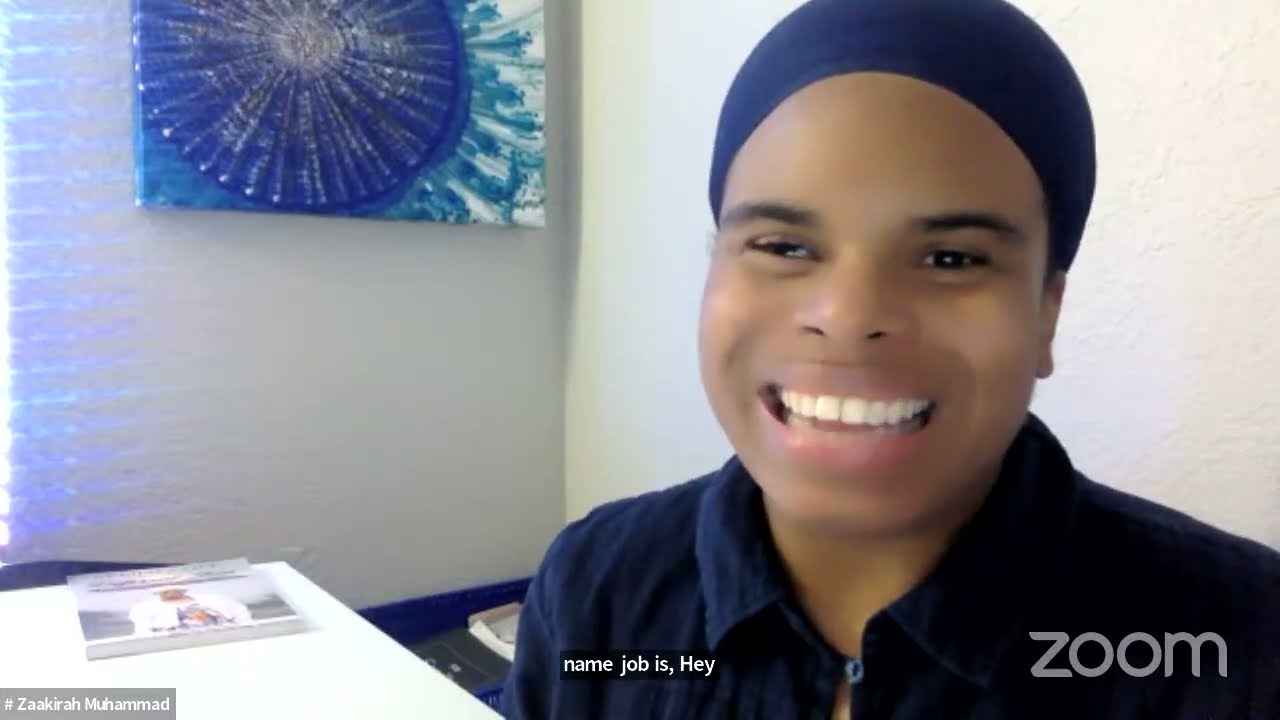
Zaakirah Muhammad, a deaf-blind cancer survivor and author, shares how she navigated retinoblastoma, partial blindness, and hearing loss through education and work. She discusses practical accessibility tools like captions and hearing aids, the importance of the ADA, and how allies can better support deaf-blind people.
Chapters
I'm glad you're here. I'm glad you're here. Thank you for joining us. Thank you for having me. All right, so I am Zaakirah, and I am the brand cultivating strategist, as well as a deafblind cancer survivor. So we are here. This is being recorded in July, which is also Disability Awareness Month. And I am recording to talk about disabilities. So I am also a deafblind cancer survivor. So I am a survivor of a rare childhood eye cancer called retinoblastoma. It is very popular amongst children between the ages of 0 to 5, where statistically, at least the time before I was diagnosed, that children between the ages of 0 and 5 did not survive past the age of 5. I'm one of the few rare instances where that's actually happening. I wanted to basically come in and talk about Disability Pride Awareness Month, ways that you can use accessibility, and also ways that you can be an ally. So I have been surviving cancer since I was 9 months old. That's when I officially had my right eye surgically removed. And surgically removed also means that I cannot see you in my right eye right now. So there's a whole story behind that. So to the point where my mom and I both wrote a book called Seeing Life Through a Different Lens: A Survivor's Memoir on Overcoming Adversity with Resilience. But also there's a little bit of mindfulness in it too, because in order to really overcome such resilience with such creativity, you kind of have to be And so it's actually more like a guide, a how-to guide, how to appear more grateful and shift your mindset to be more positive no matter what you go through. So I wanted to also use this time to talk about really what it's like being deafblind when growing up would look like not deafblind enough. So I'm sure if this is your first time seeing or hearing me, you'll probably be like, wait, what? So I got that a lot growing up. And so, you know, the older I get, the more it was just kind of really just kind of being in tune into, you know, what a blessing it is, but also how I can kind of use that as a power to be more empathetic to others. And so I'm gonna— I'm a creative, so I am gonna jump around a bit. I have my notes. You'll see me look down a little bit 'cause I do have some notes of what I want to talk to, talk to you about. But also I'm trying not to give away too much because I have a podcast called See Life Differently. The podcast is called See Life Different, and— but it was formerly known as the Living Legacy Podcast. So there's actually a few episodes that I'm going to name drop and mention for you to learn more. One about me, 2 about, um, deaf, uh, or hard of hearing, and also about visually, um, or visually impaired or blind, um, and what it's really like to be an entrepreneur and, and still, uh, doing all of the things. And so I wanted Really to kind of focus this specific conversation about technology. So, and the first thing that comes to mind is you probably now see different variations of captions on this video. And prior to the pandemic, that was not easily accessible. I have been blessed to be tech savvy. I was introduced to a computer, I believe I was 7. You know, my mom used to work in a library. And so in order to kill time, I would actually learn how to type on the computer. I would learn how to play games. I love it. on the computer. So typing became my best friend. But also, even before that, writing became my best friend, you know, although with me being blind in one eye, and what I do wear hearing aids above it, but because I'm home, I'm like, I'm not listening to anything. Especially with this video, I don't have them in my ear right now, but I'm not going to show you what it looks like. But, um, you know, I had to really adapt to other methods of technology that could still make that difference when it came to communicating. One thing that you will also notice if you get blessed to be around other humans who are deaf or hard of hearing, mostly deaf, is that if they were born deaf or were deaf at a young age, they may not speak as clearly as I do. One, I had years of speech therapy too, because I also was a thumb sucker. I have a big old gap in my teeth, but it's also that, that's really how it, how it affects everything. There's such thing as ear, nose, and throat doctors and all of it. Everything neurologically can be affected when it comes to being deaf or hard of hearing. Now me, I'm hard of hearing. With my hearing aids, I could still hear music, I could still hear voices, I can still hear traffic, I could still hear fireworks, but It, it's more amplified, but also the purpose of having the hearing aid is so that it's amplified. But also being that I've wanted to adjust to living both without hearing aids and with, because I was told at a very young age that my hearing could go at any point, the same thing for my vision, is that I've always tried to, to kind of adapt to, okay, what does it feel like to be without my hearing aid? And so I know that if I am talking to someone, I have to be, reading your lips. But there's some people that the older I get, the more people I interact with, that lip reading still won't do it because they have accents where what I think they're saying, they're not— that's not what they're actually saying, or they speak really fast. So, you know, lip reading had been another tool for the deaf and hard of hearing side. And then captions. I think that's what I was starting to say. I'm so glad that now websites like Zoom and Instagram and YouTube and Facebook now have AI, like one of the appreciative things about AI, like now there's more and more accurate caption. Now for me, if I say my name, Zakirah Muhammad, it's not going to be accurate. And the same thing goes for, you know, various other chronic illnesses and names of other blind conditions. It's not accurately being picked up in caption. Thankfully, retinoblastoma is, but that's another thing also where how can we get more of the medical terms and our unique name to be recognized and captioned? Because I'm also a creative, right? So I love to consume creativity just as much as I love making it. So, you know, it's hard to watch TV shows and movies and your favorite viral TikToks and whatnot if I don't understand what's going on, right? And so that's another thing to kind of, you know, keep in mind when You are utilizing AI. That's one of the good things why we like AI and why we need captions on TV shows and movies and award shows. And it's also why we need our writers. That's why we need our writers, because the writers are able to see what the caption cannot pick up on when it comes to correct artist name, correct terminology, things of that sort. I think now I'm gonna hop over to the deafblind side. So, um, actually, that's probably a good tip. I just moved my head to turn and make sure that you can see the book. Otherwise, I broke my stand, so it's not going to be able to stay up. But, um, you know, with, with me specifically being blind in one eye, when it came to sports growing up, I mean, that, that's hand-eye coordination, that peripheral vision that I may or may not have. So, um, being able to have, uh, tools or that using the sense of touch, or, um, this is also where hearing comes in handy. There's a lot of, um, you know, blind or visually impaired people that can hear just fine. Their hearing is actually amplified because that they're using 4 senses instead of 5, right? But for me, you know, it's being, you know, it kind of falls under both of those categories of I can see you, I can see the road, I can see, you know, the text, I can read the captions. But it also goes hand in hand with being the deaf and hard of hearing side, because if I'm not looking at you and my hearing aids are not in, if you don't have a deep voice, if you're not flashing light, I may not see you either. So, you know, there's just so many ways to be able to be an ally and to be more cautious and sensitive about interacting with those who are blind or deaf or hard of hearing. And, you know, that's also why the ADA was formed in July 26th, specifically 1990, because there'd been a lot of discrimination. I mean, naturally discrimination happened because of lack of knowledge, lack of communication, but— And it really just kind of got to the point where humans needed to fight for it in the law to really have— try to have, you know, equality and inclusion and equity. But, you know, even to this day, it was still a struggle. As you can tell, even just for BIPOC, for Black Indigenous, you know, human beings like myself, which I'm actually both, you know, it's still a fight to the point where— you know, what I do now is that, that's my goal, my, my, my source of freedom, my, my legacy, my impact, my fight, you know, is really to make sure that those who are, who look like me, who sound like me, who have similar experiences as me know that there's not just one way to live your life. You know, I think although You know, there are some laws that have passed, such as— there's some laws that have passed. I'm not going to go into the law thing. That's what Google is for. But, you know, there are some laws that have passed that made it easier for people differently abled to be able to go to school, to be able to work, to be able to live life independently. But we still have a long way to go. And so, although for me, I've been blessed to be a creative pretty much all of my young adult life, I still find moments where I prefer to be an entrepreneur. You know, I have been blessed to be able to get jobs, which actually, that's another thing that most people don't even seem to factor in, is that sometimes there needs to be training, vocational training of, okay, how do I acclimate into the world where people are not sensitive to the fact that I am different? You know, but, you know, I've been blessed to be able to choose to be, you know, an entrepreneur. That makes it easier for navigating. Like, I can choose when I want to be in noisy environments and when I don't. I can choose when I want to talk to people and when I don't, you know. But not everybody has that opportunity. So that's something else to keep in mind when it comes to why was the ADA formed? What is the purpose of the ADA? Why? And what can I do about it? Let's see what other notes. I know I kind of skipped over like the, the large part, right? But I think I wanted to leave it up to the experts. And so one of those experts that I wanted to kind of name drop is Haben Girma, H-A-B-E-N G-I-R-M-A. She is deafblind, like she can hear, I believe, I may be inaccurate, but I believe she has an assistive device to help her hear, but she had 1% of her vision left. So she had a, you know, one of those sticks that you see where people walk around and actually help them to get a sense of what's in front of them, what's to their left and what's to their right. And she had a guide dog. That's another, you know, thing. Thank goodness for the ADA to be passed, to be able to have dogs that are not just emotional support dogs, not just dogs, for show or for breeding, but for dog to actually help you kind of say, hey, like, you know, there are people here, or hey, be careful of the step, things of that sort. So they're actually dogs that get trained for that. And she had all of the things, but also she had to fight for that. She's not even American first. She's Eritrean, Ethiopian Eritrean, and came on asylum, I believe, the refugee, to the US. And so as she got to— she had the whole book on it. It's, it's, if you search her name, I don't remember the name of the book. I've got it autographed, but I don't remember the name of the book. But if you search for her book, she really dove deeply into these stories and even more so onto the political side, because she also chose to become an attorney specifically advocating for deafblind civil rights. So be sure to check that out. Um, if you really want to become an ally. And this is the part of the DEI, the diversity, equity, and inclusion, that I feel is still getting overlooked. Yes, there were organizations, major corporations in the headline for dropping these specific roles, but even though the role itself was dropped, there's still a lot of advocacy that people could be doing individually. And so this is, you know, Your best start is to take a look at H-A-B-E-N-G-I-R-M-A, Habengirma. Yeah, I think that's pretty much the biggest part of it. I think next I'll now talk about the mentality of it all. I'm sure even in your mind it's like, wow, you know, that's a lot. I wonder how they even survive. Like, how do they even make it? Yes, you're still alive because, like I said, my cancer, to the point where if it spreads too far into the brain, it could completely— mental health, it could cause so many issues later on down the road. But I'm blessed in a lot, a lot of ways to the point where I can still see, I can still hear, I can still speak, I can still do, right? But there's a lot of people that were not fortunate to do so. And so sometimes, yeah, mindset is really the biggest part of how can you really keep going and remember and understand why you're here, why you went through what you went through, why you're going through what you're going through. And so mindset really played a huge role. And I think that's where— That's been the silver lining when it comes to all of my experiences, because I was able to really just kind of get that sense of, okay, Of get that sense of— my brain just went left because I was thinking, I'm making sure that you can see this video because I'm trying new technology. But anyway, just have a sense of being able to— Sorry, my brain just went left. I'm wondering if this is even being properly recorded because I want to be able to repurpose this and I want to make sure that you are able to share this to other places. So Make sure that you can definitely leave a comment that you did see this and what your takeaways were, so that I know as well that I'm not just exactly talking to myself. Um, but yeah, so what we can do is— um, okay, great. So I do see that there is a question. I don't know if I'm able to pin this. Probably not. Okay, so I do see a question. And so one of your questions is What is the special education program like in my grade school? Now, I'm glad you asked that question. So I think I'm gonna go backwards a little bit before even going to the mentality side. Is in order to have been able to do as, you know, well as I did in school, you know, I was blessed to go to magnet schools, technical high schools. What do they call it? I think, I think it's magnet for elementary, but I've been blessed to have good education. I also had charter schools, and so that was another advocacy that even, you know, my own mother had to do. And she actually talked about that. There's a chapter, you know, in the— in this book is both my mom and I. So she talked about what she had to do in order for me to have the, you know, good life and be able to be creative and confident. So You know, in grade school, one of the most important things to be able to have such a good education was to have an individualized education plan, also known as an IEP. And so those really are supposed to start as soon as a child starts school. But one, you know, it wasn't so out there back then. You know, I'm a millennial, so, you know, wasn't so out there about, okay, If your child is different, this is how we can ensure that you have a good education, you have everything that you need. So, you know, I was also blessed to be a part of those meetings, so it's not like decisions are being made for me per se. So, being able to have the individualized education plan really made a difference to also when, by the time I became an adult, with advocating for myself. So I think I just start there, and it's actually someone who I I got to be on her platform and she got to be on one of my limited series. But Jamila Bashir, no H, and B-A-S-H-I-R. And she'd actually— I go to her as an expert. She's a woman of color and also a woman of faith who really specializes in making sure that people have IEPs. And, and, you know, that's really So something that gets overlooked, but that's also something that can be the easiest way for you to advocate, especially if you are an auntie or a parent or guardian of someone who's differently abled, who's about to get back into school, and you want to make sure that they have a good school year. So definitely make sure that they have an individualized education plan. And so I hope that did answer your question. And so now I'm going to also go back over to Basically, mindset. So, you know, the first word that comes into my mind is a lot of people will often say like, like, wow, why are you so resilient? Why are you so strong? Why are you so calm in chaos? Why are you so confident? Right? And, you know, environment plays a huge, huge role. I've been fortunate to live as long as I have, but I've also had a few of my acquaintances, colleagues, and fellow cancer survivors not survive. The easiest mentality shift that happens is survivor's remorse. Why me? Why did I survive and not them? Why am I You know, you know, some people tend to compare that comparison syndrome of, you know, this— I'm suffering more than they are. It looks like I'm suffering more than they are, you know. And so one is environment. 2 is mindset. So trying to figure the point here. So I mean, all of it really starts at childhood, you know. How am I the way that I am? It's really based off of how you were raised. Who raised you? How were you raised? How were you treated? in your social environments, your school, your friends, your family, things of that sort. But also, on the other hand, it plays a role in, you know, I had a pretty normal childhood. I mean, maybe not normal. I mean, I was doing a lot of things, all of the things, anything I would, you know, set my mind to, I was like, it was like, let's make it happen. Life is short. You know, but not many people have that opportunity or one, have the people who will rally for them before they know how to rally for themselves, speak up for them before they know how to speak up for themselves. And so, you know, I was blessed to really have that around me. And so that really kind of contributed to my expertise, to my confidence level. And so since July is also Minority Mental Health Awareness Month, The first thing I definitely could encourage is make sure that you surround yourself with people who are where you want to go. You know, we know who we are, we know what we want to do. You know, it's just all of that gets trickled down the older we get. But if you think back to ages 7 to 13, you know, what were those things that you could do hours on end before you had any responsibilities, you know, before you became the oldest child, if you had that, that, you know, much of an age gap, what were those things that you enjoyed doing? Who were those people that you really were so excited to go to about the things you were excited about? What were you excited about? And then to go back to that, you know, I think sometimes we get so, you know, I think I watched a Ed Sheeran's documentary was on Disney Plus. And I'm— I've always been a fan of his music and even more so that he just, you know, how many redhead artists are out there? But anyway, he actually said something in one of his doc— in one of his episodes, I believe it was the second one, where he said that grief, the experiences of grief really grew him up, right? Like, you know, you can be as childlike and creative and carefree and fancy-free, footloose. But then there are some traumatic experiences that would just grow you up, right? And so I've already gotten this phrase that I'm this old soul. I believe in reincarnation, so I feel like I've been there, done that for a lot of the things. But you know, it's different. You're living in the world of technology, you're living in the world of social media where there's a lot more opinions and a lot more confusion, a lot more information than actual insight and execution. So You know, it's also just being able to pocket it and just really understand that, okay, the grief, the loss, the trauma are really just stepping stones. They're very high stepping stones, but they're stepping stones to really giving you a sign of where you're supposed to be. So that's that. I believe it was insightful. I hope it was insightful. On how you can continue to be an ally and understand just really what it's like when you're interacting with others who are deaf and/or blind, especially if you had no idea about this about me, you learned something new today. You can check that off your to-do list. And I think the last thing I'll also end with is, um, if you also want to continue to learn more about what it's like Aside from, you know, my own book, Seeing Life Through a Different Lens: A Survivor's Memoir on Overcoming Adversity with Resilience, check out or Google Helen Keller. Helen Keller. She was completely blind and completely deaf. So imagine, how do you know what senses to use? How do you know what people to trust, you know, if you have those 2 senses just completely gone? So So we tend to take that advantage— take advantage of that. I'll say that right now. We tend to take advantage of all of our senses, all of our basic necessities, and all of the seasons of our lives. So start with seeing life through a different lens. And there's also my podcast, See Life Different Podcast, where I actually have a couple of episodes where I've actually interviewed a few other women creatives who are either visually impaired or hard of hearing or allies because they are parents of someone who is differently abled. So I'm gonna make sure that you can go into those places to really do your part of learning more for Disability Awareness Month. Also check out the book and TED Talk by Haben Girma, H-A-B-E-N G-I-R-M-A. And also look at books and YouTube about Helen Keller, Helen K-E-L-L-E-R. And I think that's pretty much it. So if you have any questions, feel free to also contact me on social media, @illuminousone, I-L-L-U-M-I-N-O-U-S-O-N-E. I think I can Make sure that you can see it, and you can also go to my website, zakirahnayar.com. Z-A-A-K-I-R-A-H-N-A-Y-Y-A-R. And I look forward to hearing how you're going to be an ally. Thank you for watching.
More from Zaakirah

Wealth, Discovery And Alignment through Human Design and Gene Keys with Danielle Eyman



ADHD, AI, Artistry: Amber Andrews on Building a Brand that's Honest, Creative and Converting



Sensory Reset: Soft Stories of Joy, Belonging, and Healing Inner Child Live from Essence Fest


