Zack Kass eBiz 2025
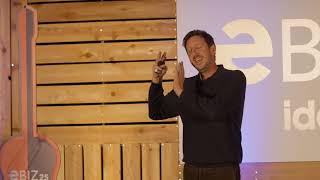
In this keynote‑style presentation, Zack Kass surveys the rapid evolution of artificial intelligence and its cascading effects on work, society, and technology. He begins by debunking the common "zombie apocalypse" narrative around job loss, illustrating through the 2024 longshoremen strike that workers’ resistance to automation is rooted more in community identity than economics. Kass argues that as machines become cheaper and smarter, the real challenge will be an "identity displacement" crisis where people lose purpose when work no longer defines them. He proposes two cultural shifts: stop asking children what career they will have and instead nurture curiosity and community, and recognize that unmetered intelligence can dramatically accelerate scientific breakthroughs—citing recent advances in antibiotics, gene therapy, biodegradable plastics, and fusion research. Kass warns that while most goods become dramatically cheaper, three essential sectors—housing, health care, and education—remain expensive due to policy failures, not technological limits. He critiques the attention economy, predicting a move toward subscription‑based models and a reduced role for visual displays, with natural‑language agents handling many tasks. Augmented reality, he says, will first serve people with disabilities as a passive side‑kick rather than an immersive entertainment platform. Kass introduces the concept of societal versus technological thresholds, emphasizing that AI adoption should be guided by what society wants machines to do, not merely what they can do. He illustrates industry‑specific dynamics with examples from mining (Rio Tinto), construction (Turner, Clayco), and consulting, noting that many sectors will see modest AI impact until they can align technology with concrete cost‑structure improvements. He raises concerns about over‑building data‑center infrastructure and envisions future repurposing (e.g., vertical farms). Finally, he addresses AI hallucinations, urging rigorous human verification for high‑stakes decisions and noting that tolerance for machine error is far lower than for human error. Throughout, Kass stresses designing AI‑augmented futures around uniquely human qualities—empathy, courage, curiosity, and humor—so that people become more human, not less.
Chapters
Now please welcome the vp, E Commerce Solutions for affiliated Distributors, Caroline Ernst.
Good morning everyone. Patrick, thanks for opening up the session. Hello, I'm Caroline Ernst from AD and I am thrilled that AD is able to sponsor the keynote today. Zach Kass is a global advisor and the former head of Go to market at OpenAI, where he built the company's sales and solutions and partner teams. Today he advises Fortune 1000 companies and governments on how to lead in an AI driven world and collaborates with the University of Virginia to explore AI's socioeconomic impacts. His new book, the Next AI and the Expansion of Human Potential, is available for pre order now and will be published early next year. Through his work, Zach's mission is to demystify AI and build a brighter future. Let's kick things off.
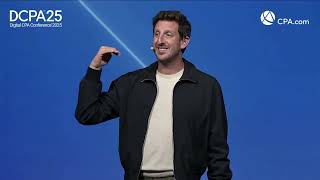
I think the most important thing that I could contribute to is helping the world imagine a future that is abundant and exciting and beautiful. I hope. I hope that I can build a groundswell to turn the narrative, which is dystopian right now, into a much more positive one. And I ultimately just want to be considered an AI optimist, someone who believes that this could be the most incredible thing to ever happen to the human experience. Morning. Thank you all so much for being here. It sounds like Post Malone was last night, which is quite impressive. So it's very nice to see so many of you. I have no idea how you're feeling, but you look good, so I actually, sometimes I get it. Last night I got in particularly late because our flight was terribly delayed and I see some of you coming back from wherever you were, so it's good to see you again. I have two asks. I make this of every group before I start. Circular tables are great for discussion. They're not very good for observation. If you're not facing me, I encourage you to do it. Now. It's not even me. It turns out sitting like this for an hour is really hard on your back. And so if you want to turn your chair, it's an invitation to do so. I promise you will not regret it. That's whether or not you actually enjoy the talk. It's just your back. Will. Thank you. The second ask is actually a bit harder, but I make it of everyone and I will make no exception here. If you need to work. If you have to be on your device during this, totally understandable. I would just ask that you do it outside. And I ask this for two reasons. One, you'll hear me talk about this more. I think that the device, specifically the display, is having an incredibly negative impact on our brain in ways that we haven't yet fully appreciated. I think most of the world's problems could actually be solved by reducing device addiction. It also turns out device addiction is infectious. So when you look at your display, even if someone else has agreed not to, they are inclined to do so. This is actually a dopamine infectious response. The other reason is I'm quite sensitive, and the house lights are bright enough, and I can see when you're not. It's a small room, and I can see when you're not looking at me. And it just hurts my feelings. It's actually that simple. And so as long as I'm here, I would just tell you what hurts my feelings. Parents. Get this one. Really? Well, parents are like, yes. Turns out strangers are very willing to do this. Somehow your children are not. I have spent the last 16 years in AI, most recently, obviously, at OpenAI. And I worked in AI long enough for it to be something that no one cared about and then to become something that everyone cared about. And I spent the last five years in 300, over 350 now of the Fortune 1000 boardrooms and with over 15 heads of state. And I now spend a bunch of time in the classroom. I'm a professor at the University of Virginia and Hong Kong University of Science and Technology, where I run what's called a human potential lab, where we're exploring AI and the future of work. And I will bring as much of that to bear for the next hour. And I will tell you how I think the world is going to shape. And I'm not telling you any of this because I expect you to believe all of it. That's not why I do this. This is not meant to be scriptural. It's meant to be directional. I want to give people the tools and the invitation to consider a world that maybe they haven't, because I think that that's pretty important today. Now, before I can tell you where we're going, I should also say there will be time for Q and A, and you should ask anything. If I cannot legally answer it, I won't, but you should feel comfortable asking anything. Before I start with where we're going, I have to tell you where we are. Where we are with respect to AI is interesting today precisely because it never was. If you worked in AI. We've conceptualized thinking machines since basically the late night. Yeah, the late 1800s, late 1900s, or the early 1900s. And we talked about AI in 1950s, early 1950s, the term was coined about 1954. And so we've conceptualized these machines that could think. But up until really 2017, people in AI were like, never mind what we're doing. Let's talk about where we might be going. It was a very conceptual idea and there wasn't a whole lot of pragmatic use cases. And that was really true until very recently. And I was showing demos of this technology. I've been showing demos of this technology for 16 years. And the demos were usually sufficient to explaining what the technology could do. And so I could sit next to you on an airplane and sort of show you everything that AI could do. And this was true even when we built better text models, GPT3 and GPT4. And it was true when we built good image models, Dall? E and even video models like Sora. I can visually demonstrate the problem happened in June 2024, when GPT4O won the math Olympiad. The test to measure how good a human is at pure mathematics. That is the point at which I cannot sit next to you on an airplane and say, look at all the things AI can do. You could not make sense of that test unless you are a pure mathematician. And there is no way of knowing if the machine is actually that good. So instead of doing visual representations of the technology, which I've recently discovered actually creates myopia anyways, if I show you what the technology can do, you can go back to someone and say, look. Look at this thing. But that's not it. So I say this. This is all I say. When someone says, what are we doing? This is all I say. We are building machines that possess human intellectual equivalence and superiority. That is the pursuit of AI. Modern AI is getting quite good at this. And it's a very easy way, whether you're Jamie Dimon or my mom, for me to frame how you should expect the machines to evolve. If we are cognitively capable of it, we are trying to build machines that can do it. Intellectual is doing a bunch of lifting and we're going to come back to that. And obviously we've gotten pretty good at this. We went from machines that could count words in a passage to exploring novel sciences in about five years. That's crazy. This is breathtaking even for people in the industry. We could not have predicted this. There was a paper written two months ago that I now talk about, and at the end of the paper, the scientists who are making acknowledgments to the people and the practices that they used in order to develop this note that above all else, they regard divine benevolence. We are at a point now where scientists are willing to say, yeah, God's good. That's why we figured this out. We don't actually know how we are making this much progress this quickly, but we are doing it somehow. Even more impressive than how fast these models are improving. Is this how much less expensive they're getting? And I. I'm still blown away by this. I mean, I cannot stress enough how incredible it is to watch the price and the cost of this technology fall so precipitously that it went from something that no one could afford, GPT4 in 2023 when we launched it, to something that basically no one thinks about anymore. And this matters, obviously, because now it's the reason that everyone cares about AI. It's not sufficient for something to be good. It must be affordable. That's important. It's even more important, in my opinion, because we live in a world where we measure human progress on basically two axes. How free are we to pursue our joy, and how expensive is it to do so? That's basically the two consistent measures of human progress. And the way that we make the world less expensive for everyone is by making critical resources less expensive. So we did this with water, and then we did this with foodstuffs, and then we did this with electricity, and then we did it with the Internet. Driving down the cost of these critical resources is what pulls incredible percentage of the population out of poverty. AI Synthetic intelligence has gone from very expensive to effectively abundant. It is asymptoting near zero. And I know this because I can run GPT4 on my device, on my CPU. It's the coolest party trick I have. I can put it in airplane mode, pull up a version of GPT4 and run it. That's tax free. It's the cost of electricity, right? That's amazing. So given this, given that we're building exceptionally good models, given that they're getting very cheap, then we can ask the question, where are we going? And I will start by saying I do not expect anyone in this room again to believe everything I'm about to say. It is not why I say it. I have no issue with you walking out of here and saying, that guy's an idiot. What I would encourage you to do is suspend some disbelief because I'm willing and capable of arguing this a lot longer than than you are. I just spend all my time thinking about this. And it's not that this is certain, it's that so much of this now Feels very directional and reasonable. I will start with what I think. I can help you with the easy stuff. It's the integration phases of the AI revolution. How does this technology actually arrive in our lives? Well, the phase we're in today is the one we all know very well at this point, the enhanced application phase. I sort of mark this self centeredly in 2022 when we launched ChatGPT. Here's a reminder to everyone in the room, this is super important right now. OpenAI launched ChatGPT in November 2022. Prior to this, we had launched GPT 3.5. Did anyone here use 3.5 or 3? Any early users of the API? Nice. You don't have to lie to me, by the way, but I appreciate it. Not many people did. Not many people did. These were not super popular technologies. They were interesting, but they weren't particularly popular and we couldn't figure out why. GPT 3.5 came out in May 2022 and it was amazing. It was a state of the art model in every way and we could not figure out why people didn't want to use it. And I watched as revenue ticked up from about 10 million to 15 million over the course of four months. And Sam would come by and I'd be like, yeah, it's going great. I was pretty anxious. And we were like, you know, what if we just gave people a simple way to use this machine? What if we gave people a really simple interface? Because clearly changing behavior is not working. And so we built a product that we thought could serve as a marketing honeypot. CEOs could come to our site, see GPT 3.5 in action, and then tell their CTO, hey, we should build something like this. And we were like, well, what's the simplest thing we could do? Let's just build a chat experience. People know how that works. So we built ChatGPT. Now, of course, what it became now is the most popular consumer product ever. But we did it at the time to just show people what the technology could do. It's a reminder to me that the application layer matters. It is not sufficient for technology to be good. It must be something that people can make sense of. You cannot force people to change a lot of consumer behavior overnight. Now, as a result, everyone now wants an enhanced application. So we're building these AI native applications and we're building these existing applications that are supercharged with the technology. And of course you saw demonstrations of that just now. But it doesn't take full advantage of everything AI can do. And that's coming next. The enhanced application phase gives way to the autonomous agents. Autonomous agents, just for clarity, because everyone is talking about it now, are machines that can take action on your behalf across web browser, across data lake and across apps. That's it. It is, as I described to anyone, a Siri that works. Actually, I started telling my mom this in 2021. It's like, yeah, we're building these agents at OpenAI. And it's, you know, she's like, what does it mean? It's like, well, it's a Siri that works. And of course, I made that joke for a long time until very recently. Well, I still make it, but very recently, two months ago, I made the joke in front of Adam Chyre, the founder of Siri. I did not know he was in the room. I said this, found out later he was in the room. He was not very impressed. In fairness, he should have built the technology that worked. But we have been promising people for a long time that agents would do things on our behalf and the technology wasn't quite right. There are technical explanations to this, but now we can do it. So now we're going to see these machines that start to do things, execute tasks and goals. There are two things that are going to happen that not enough people are talking about that I will highlight quickly because not enough is being said in this regard. The first thing that happens with agentic AI is we are going to discover very soon how many preferences people actually have. What do I mean by this? Well, a lot of people pursue professional and personal success and along the way discover that outsourcing a lot of things in their life to someone else, maybe an assistant, personal assistant, executive assistant, is very critical. The fewer decisions you have to make, the better. And in doing so, what they actually forget or they don't realize until that assistant quits or goes on vacation, is that this person is actually assuming a bunch of preferences for this person. What travel, what hotel, what airline, what groceries, what restaurant? And a lot of people actually forget that they don't have many preferences in this life until they're forced to stare at it. And when you walk down a grocery store, you make a bunch of purchases in an aisle. How many of those do you actually care about? Well, what's really interesting about agents is that we are not far now from saying fill my fridge. What we call the automation boundary is the limit to what we say we're willing to automate. It's actually a fun question you can ask over your dinner table tonight. What would you stop Automating. If you could automate everything in your life, the question gets crass quickly. So be careful who you talk about it with. But it is a very interesting idea and agents are going to force us to say what do we actually care about? In a world where I can sort of pass a lot of preferences somewhere else, what do I care about? The other thing that happens as a result of agents is somehow even more fascinating, which is we're going to redesign the Internet. So the Internet was originally built as a library. And the idea was we would put research papers in this library and scientists could come and stare at the research papers. Well, we quickly. And so it was meant as a place where you would read with your eyes and you would input with your fingers. And we quickly discovered E commerce, right? E commerce fast followed this library idea. And E commerce was good, right? It fundamentally changed the fabric of the world. And then the Internet basically became strictly an E commerce site, HTML browsable. Now, as a result of this, I argue that the Internet became. It sort of took its first step in a downward spiral that of course has arrived with social media. The Internet is a pretty terrible place, but it's not terrible because people are terrible. It's terrible because we have to design it this way. If you go to a website, obviously present company excluded, your websites are great, but most websites. If you go to a website, you realize how terrible the experience is, right? Go to your bank's website with one thing in mind. You have to tell your bank for the thousandth time, you do not want the credit card that you, by the way, probably already own. You have to navigate so many buttons to arrive in an account statement, you have to authenticate four times to get there. Everyone has an obligation to set sell you as much as they can to reconfirm you are in fact who you are. Only then probably to have some download error in your XML format. It's a mess. It's terrible. What's really incredible about the agentic Internet is we are going to quickly discover that this browsable Internet is actually quite broken. And it's not broken because it's not trying to serve an important purpose. It's broken because as we design the Internet for agents, not our eyes, we are actually going to move away from a browsable HTML Internet to an XML txt Internet. I can prove this technically, but basically the optimal state of the Internet is trillions of text files. That's it. The Internet will not be designed for your eyes in the same way that most physical commerce is actually no longer Relevant to most of us. What is relevant is very, very tactile, high end commerce. And the rest feels like commoditization. I'll just buy it on Amazon. People say now this is a pretty interesting world. And it gives rise to this new idea that is starting to burgeon among hardware software companies. It turns out if the Internet is not in its end state necessary to browse, if the HTML Internet is actually not necessary for us to conduct commerce, then how important is the screen? This is a really important idea that everyone is now staring at. And Jony, I've and Sam Altman, principally who are building the next generation of hardwired OpenAI, have decided that because the screen becomes less important, their next device at OpenAI will not have one. Sam thinks the future of personal computing is displayless. And the reason for this is what I can best describe as a natural language operating system where basically two things I think will happen. The first, we will go from a world where we have to carry our devices to a world where we wear them. Glasses, watches, rings, wallets, etc. The wearable device arrives principally because so much can be done without actually an active interface. And it's this theory of ubiquitous compute. The second, computers will no longer be things that people must learn how to use because we will communicate with them the way we communicate with each other. This is a big weird idea, but I had this epiphany at OpenAI that like really drove this home. I went home to Santa Barbara on December 2, 2022, two days after we launched ChatGPT and I showed my mom the product. It's very excited. She was the 150th registered user outside the company. And this is a woman who is terrible at technology and even worse somehow at the Internet. She has Googled full sentences her entire, well, all of my life, all of the Internet's life, and clicked on every ad. And then she'd call me and be like, what's going on? What's the matter with Google? Why doesn't it work? I'd be like, it's working exactly as intended and you are just losing your attention. War. What's amazing is watching my mom for the first time use ChatGPT, type a full sentence in, get a full sentence response, and off she went. It was very obvious to me in that moment that the future of compute is natural language. A world where we communicate with machines, where we communicate with each other. We end this idea of digital divide. A world where people cannot participate in society and economy because they never learned how to use these devices. And that is really cool. So given that, given that we're building exceptionally smart machines, given that they are getting very cheap, and given that we are now trying to integrate them such that we can have a more ubiquitous passive compute world where the machines can work on our behalf in the background, then I can present you with, I think, the biggest idea I could offer you today, which is this. I think the world will soon have access to what I can best describe as unmetered intelligence. Unmetered intelligence is a term that Boris Power, the head of research engineering at OpenAI and I coined in 2021. We've since written two papers about it. At the time, we were traveling around the world showing people GPT3 very excitedly. We would sit in these boardrooms, and we would show people GPT3. We'd put it up on the screen, and when we were done with the demo, the CEO would be like, thanks.
Is that it?
And we'd be like, yeah. But he'd be like, okay, well, tell Sam hi and, you know, get out. And we couldn't figure it out. We were like, how does this not blow your mind? Well, it is interesting, certainly, but it's still very slow. It doesn't seem very good. And as best we can tell, it's super expensive. How does this change my business at all? People would say. And finally we were like, okay, never mind. Never mind. What if, though? It got a lot better, a lot faster, and a lot cheaper? Then what? What if we built GPT4? What if we built GPT5? And when we described this scenario, what we realized is what we were describing is a future where mechanical technology, machine technology, and machine intelligence became so abundant that the cost curve continued to plummet and that we observed with intelligence what we had observed with water and foodstuffs and electricity and the Internet. The cost curve declined so steeply that it was not a resource that we considered. You use the Internet abundantly. You do not think about how much Internet you use. You do not think about how much electricity you use. And this we describe as unmetered intelligence. Now, what I should tell you is we were very quick in the first paper we wrote to make sure that we separated unmetered intelligence from this idea of universal brilliance. We do not think that everyone will be smart. That's not what unmetered intelligence means. In the same way the Internet doesn't mean everyone does research, in the same way that literacy does not mean that everyone reads, unmetered intelligence promises a future of abundant access to intelligence. What we do with it, we said, would actually determine collectively and individually our outcomes. All we could promise CEOs is that we didn't think they would be able to compete on how smart their companies were for much longer. So now I spend a lot of time, in an academic sense, trying to figure out what this means. And I will share with you what I think happens next. And I will start with the bad news. How do I think unmetered intelligence might complicate and compromise our lives? How do I think this could go poorly? And I'll start with crowd favorite. My theory of idiocracy. The theory of idiocracy is exactly as it sounds. And if you need an explanation, you're probably an idiot. But someone in the back liked that a lot. I got a good cackle. We wrote that, by the way. We wrote that line in the book. I submitted the manuscript two weeks ago. And we are still figuring out if we should keep it there because the publisher's like, we really don't recommend insulting the reader. But it is true. Idiocracy is exactly what it sounds like. It is the concept that a human will stop thinking once they discover that critical thinking is no longer of material importance to survival. Now, when I say, when I talk about idiocracy, people go, yeah, we're already there. She gets it now. I used to sort of push back, and then I realized that idiocracy actually applies at an individual level. And I don't necessarily disagree. There is incredible underlying data. And in fact, we're publishing a newsletter about it today that is suggesting that we are in a very strange short term, well, maybe medium term downturn on average, in a younger population. Gen Z appears to be the first generation in many to not be materially smarter than the last. On average, rising rates of literacy are undoing about 20 years of academic progress and rising rates of motor dysfunction. Gen Z is less likely to swim and ride a bike on average than millennials. And people hate this. And I do, too. But show of hands, how many parents in the room? Awesome. Congratulations. I have a child coming in two weeks. My first girl. Super excited. Hold the applause. Hold the applause till later. You can give her a big applause later. Zoe. Working title is doing great. So how many of the parents in the room think that your child is smarter than you were at their age? I won't ask the inverse, I promise. It's not because you're proud. You are proud. But confirmation selection bias actually says that your children are probably doing a lot better than you were. You are in this room, you are doing something in your life, you are learning, you are moving ahead, and you are passing these values on to your kids. And they have access to tools and technology that you could not have possibly dreamed of at that age. And it turns out many young people around the world are also experiencing this across for the first time ever, socioeconomic divides. We are seeing this remarkable rise in savant and genius qualities coming out of the woodwork all over the world. And while we are seeing this downturn on average in literacy and motor function, we're seeing this incredible uptick in things like AP college participation, AP score testing. More and more young people are outperforming their predecessors. The top is getting a lot better. Now. This bifurcation, I argue, is this sort of natural K curve that exists in a world with more freedom. Optionality breeds variance. The great cost in the world where you can do almost anything is that many people will choose to simply sit on their butts, doom scroll and order doordash. That's not an AI issue, that's an economic abundance issue, sorry to say. It means that you can do nothing. And you might. At the same time. Many young people are choosing to do a ton more than ever before. More chess masters under the age of 20 than above the age of 40. Incredible. Over performance across art, science and math. OpenAI and Palantir have now passed a rule. College degree is no longer required. They're hiring high schoolers. OpenAI has already hired seven people without a college degree straight out of high school. And apparently one high school dropout, though not confirmed. Pretty amazing. It is a natural K curve and something that we're going to have to come to terms with. The fact that some people in this world are going to choose to do do a ton and some people are going to choose to do nothing. It's not all is great or all is well. It's this actual natural bifurcation in a world where we let people do whatever they want. Second thing I worry about is dehumanization. This one's more sobering. The theory of dehumanization says that an individual may discover at some point that they are more interested in a digital reality than a physical one. And this one is sobering. How many parents in the room believe that your child is less social than you were at that age? And unfortunately, it's not your imagination. This is definitely evident. We are seeing a rise, a pronounced rise in reclusion and isolation, which is obviously driving depression and anxiety at probably an epidemic level that we have just never Seen in a young generation. At least the young people we used to say were happy. It's not really happening anymore. And I will say it because I don't think it's that hot anymore. And even if it were, I'd say it anyways. We should not have given kids smartphones, and we definitely shouldn't have given them social media. We messed that one up. The good news is we get to fix it. We get to stare at this and say, this is not good and we should make this better. We get to help the children, the next generation, and the current one, rediscover the importance of a physical world. Jonathan Haidt, the author of the Anxious Generation and I spent a lot of time talking about this Yuval Harari as well. And these people are very adamant that the policy is the answer. We must ban phones in schools and we must ban social media under the age of 18. I don't hate the policy measures in principle, but pragmatically, we have never observed prohibition policy working that well. Banning cigarettes is not what convinced kids to stop smoking. Same way that banning alcohol didn't actually do that. It just created a gray market. The way you do this is by one, pointing at the problem and helping everyone understand what an issue it is, and two, building better alternatives. The single best answer that I can come up with when people ask how we avoid a world where more people are interested in a digital reality than a physical one is to reinvest in the physical reality. It is that simple. In my opinion. We have long forsaken the physical spaces in which we live. In exchange for this Faustian bargain, we'll build this sprawl. Everyone can have a home. It doesn't matter that you have to drive to go to your grocery store, that you have to drive to get to your park. It doesn't matter that you sit in traffic in your commute. Everyone gets a single family home. Then we didn't even build enough single family homes. Somehow we went and gave up on the town square and we didn't build enough housing. So my argument is there is nothing more noble at this point than reinvesting in the physical spaces in which we live. And we should talk about it. There is a future of incredible digital abundance and economic abundance where we wake up and realize that the physical spaces in which we live are just not that appealing. So I travel around the world, I meet these heads of state and these community leaders, and they show me their plans for the data centers and the chip fabrication facilities and the power grids. And I'M like, that's great. Could you show me your plans for protected bike lanes and sidewalks? Could you show me your plans for tax abatements for local retail? How are you going to build a physical space in which everyone in your community is excited to go outside and be with each other that is safe and appealing, multi generational? There is nothing more noble. And one of the things I am trying to convince people of is that your local politicians may in fact matter a whole lot more than your national ones. It's not to say we shouldn't put more pressure on our national politicians, but I've sort of given up on that lot. And I am really interested now in telling my local leaders that I care a lot about what they do because they can make an impact in our lives. Our mayors, our city council members, our city administrators can do so much to change the lives of your children and their children. And we have to start treating them as important as they are. Third thing I worry about bad acting. There are two kinds of bad acting that I talk about. High resource bad acting, nation states bond villains, low resource bad acting, psychopaths and financial criminals. About 4% of the population is psychopathic and about 3% to 5% depending on the country and the laws, are financially criminally inclined, meaning they can figure out how to make crime pay even though they know it's bad. For most of human history, you had to see someone to harm them. Then we invented weapons and you could harm them from a slightly greater distance. And then we invented more powerful weapons and you could harm them from a much greater distance. And then we invented the Internet. And inventing the Internet, we discovered the nameless, faceless bad actor. What's really remarkable about this is we have never really reconciled that so much of our anxiety comes in fact from the villain that we cannot see. We describe how dangerous and scary the world is. So often when all of the data suggests it is in fact safer than ever to be alive. Physical safety in particular is off the charts on any relative basis. I've studied this very carefully now. The expecting father of a girl. It's never been physically safer to be a woman in the world. In almost any part of the world, with some exception. That's awesome. At the same time, when people describe the unease with which they view the world, what they are describing is something that I really don't think we fully groked. If I did this lecture outside in a park in Nashville. We all walked outside, we went to the park, I started talking and someone came up with a knife Just brandishing a knife or started taking off their clothes near us. We'd leave, we'd call the police and then we'd leave. Hey, Lowe's sounds great. Let's go back to the hotel. One person can make an entire common space feel very uncomfortable. When we describe the toxicity of the Internet, we are not actually describing an indictment on humans. Everyone is so quick to say the Internet sucks because humans suck. Oh, yeah? Well, why does this event not suck suck? These people are nice. This is a fun thing. It's because a few people can make a collective common feel very uneasy. That's what the Internet has given rise to. It is this thing. You cannot describe the unease that you feel wondering which one among us, the faceless, nameless actor, has ill intention, either because they don't operate on an incentive structure or because they figured out how to financially afford. And this is the thing that AI may exacerbate, quite honestly. The low resource bad actor can do harm at a lower cost than ever before. And it's something that the policymakers need to spend a lot more time talking about. And this is a crusade I'm on. Because $400 billion was lost to financial fraud in 2024. We think the number is going to be 500 billion in 2025, much of it retail. When my mom can be a called three times in two months by someone pretending to be me asking for my Social Security number, the only reason that she doesn't provide this information is because we've done OPSEC training in my house. And the only reason we did OPSEC training in my house is because we did it at OpenAI. Sam saw this. We talked about this early and often. The cost to do harm has come down so far such that a small percentage of the population can tear at the fabric of society much more easily. Long gone are the days of Robert Redford and Paul Newman in the sting that doesn't exist anymore. It's cheap, it's easy, it's gross. And so one of the crusades I'm on is also to convince policymakers to put incredible pressure to put incredible pressure on policymakers to pass policy that creates very punitive measures to prohibit and dissuade people from doing this. And we're having success. Tennessee just passed a deep fake law. If you impersonate someone using technology which is broadly defined, you can serve up to five years in prison. It's a felony offense. Florida went a step further. If you get caught attempting to steal from a senior citizen in Florida, they are going to Extradite you to Florida, where they are putting people away for up to 25 years for attempted financial crime. Good. Make it terrifying. Make this artificially expensive such that anyone considering tearing at the fabric of society using this technology is quickly reminded that we have no tolerance for it. The last thing I worry about is job displacement. Some of you work together, so we'll see how this goes. But it's always fun. I ask everyone now, anyways, how many people in this room are worried that AI might take your job?
Whoa.
Very confident bunch. There's some clustering going on here. Do you guys work together? Is this. No, Never mind. Okay. How many people in this room are worried that AI might take someone's job in this room? There we go. This is called the zombie apocalypse phenomenon. The zombie apocalypse phenomenon says that we wrote about this, says that most people believe they would survive a zombie apocalypse and their idiot neighbor would certainly die. You can observe this everywhere. Yeah, it's why people don't wear a helmet when they ride a bike. I'm a good bike rider. Of course you are. You don't have to wear a helmet, but other people should. The problem is I talk a lot about zombie. I talk a lot about job displacement. I just don't talk about it for the reason most people talk about it. Most people, when they talk about job displacement, they describe the economic consequences. What they describe is a future where machines are very smart, machines are very cheap. Machines have basically been poised to automate all of our work. They automate all of our work, so we can't actually make money. We can't make money, so we starve. That's sort of roughly how people describe. And I get to do lectures at high schools. And I've discovered that about a 10th grader can spot the logical fallacy, which is that if we automate most of our work, something profound might happen economically. And then what you realize is that may not be the issue. In October last year, many of you remember this, I'm sure. I'm sure it affected your jobs. October 1, 2024, the longshoremen went on strike. Remember this? The dock workers. 45,000 dock workers on the Eastern seaboard walked off the seaboard, walked off the job sites, and shut down trade on the Eastern seaboard Under the guide of Harold Taggett, the head of the longshoremen union, who went on CNN on the morning of October 2nd and very calmly pointed at the camera and said to cnn, said to the American people, you have no idea how dangerous I am. I will cripple you nice. I was pretty fascinated, so I could not look away. And I was trying to figure out what he wanted, which wasn't actually super clear in this interview. Does anyone remember what Harold Taggett wanted, what his demands were? He didn't want more money and he didn't want safer working conditions. Somehow the two tenants of every labor union since we organized labor were not actually his demands. His demand was a guarantee from the ports they would not automate their jobs. The picket signs read robots don't pay taxes and automation harms families. I was very fascinated. I sent him a very long, very thoughtful email. He replied with something slightly less so that's fine. He didn't want to meet with me, but a bunch of the longshoremen did. They met with us off the record, 95% male union. We met about 30 of these guys and asked them a battery of questions which we're going to publish in the book. Of the questions that we asked, four told us everything we needed to know about this issue. The first, do you believe you could be gainfully employed outside the union? Over 85% of the respondents said agree or strongly agree. They said there is plenty of demand for skilled and semi skilled physical labor. Many of you probably see this. Second question we asked, what's the most important part of your job? The most popular question in a multiple choice, pick as many as you want. Answer. Community. Community. Third question we asked, was anyone in your family in the union? 95% of the respondents, their father, their uncle, their grandfather, a cousin or a brother was in the union. And the last one, do you want anyone in your family to join the union? 90% of the respondents said yes. One of the respondents said they were going to continue having children until they had a son so that their son could join the union. It's not an economic issue. One of the questions that I realized I needed to ask about halfway through was who benefits? I said, who benefits if we automate the ports? I asked one of those guys. Now they were all conditioned very quickly to say the capitalist. That was the training. So the capitalists, is that it? That's the only people who believe in capitalism? Well, no, the port owners, they said, it's the port owners who benefit economically. I said, well, yeah, sure, but what about anyone else? Now where we left because he was willing to let me pull the string. I will ask you, who benefits economically if we automate the ports? Everyone. Everyone. Including, by the way, eventually the dock workers and their kids. We are all descendants of people whose jobs were automated to Our economic benefit. We do not think about our great grandparents who lost their jobs at mills, who lost their jobs at printing factories. We have no empathy for them. We have no regard. It's good. We've got good stuff. Look at these nice white cloth tablecloths. This is nice. This is good. We wander the earth actually every day, asking ourselves and the people around us, when is this good or service going to be better, faster or cheaper, without actually realizing that what we're asking is, when is a human going to be extricated from the manufacturing of this good or service? And we don't do it because we're jerks. We do it because we are conditioned to believe that the world should get better, faster, cheaper, all the time. It turns out most people really want everyone else's jobs to automate, just not their own. Now, this is a fascinating issue, and quite frankly, what I realized in all this is in a world where there is a lot more and a lot better food on the table thanks to automation, we may actually feel so aggrieved that there is a net loss effect because of, as best I can describe it, an identity displacement crisis. A future where whether or not we work, the work we do, changes too much. It changes too frequently for us to be able to say, this is who I am. And we are left not with an economic struggle, but with an emotional one. The question of who am I? Becomes very complicated for a species that has long attached a ton of its identity and its purpose to its career. So I have two recommendations. The first, stop asking kids what they're going to do when they're older. They're going to do a lot of things. Condition them as best you can to love the idea of exploration and improving the world around them and challenge people to find purpose and identity outside their work. It's not that work doesn't matter, it's that a lot of other things do. And it turns out the happiness function basically has said for many, many years that you are happiest when you are with friends and family and physical community. And when you die, if you are so lucky to be surrounded by those people, you will not think about how much you worked. We know this. We know this to be true. Now, now that I've sufficiently scared you, let me tell you how this could go. Well, how might unmetered intelligence reduce suffering and increase joy? And the spoiler alert here is, I think it's going to do a lot of this. The first thing that happens as a result of AI has been actually happening for quite Some time because of technology. When you study history and computer science, as I did in college, I was not a very good computer scientist. But it was this incredible exploration in the fact that the world does get better all the time thanks to history and that you learn why, thanks to computer science, technology improves our ability to do things and our potential. And this has been going on for a long time. We are about 90% more productive than we were in 1995. We're about 400% more productive than we were in 1960, and we are about a million percent more productive than we were in 1800. It is why we have so many things that our great grandparents could not have fathomed. Try describing this moment, everything going on to someone 100 years ago. You can't. That's because we have expanded our potential to do things. And I really do care about the economic consequences of this. I am very excited for it. What I'm even more excited for are the scientific breakthroughs. Because when you stare at the issue, when you're like, gosh, how would the world be better if only we were smarter? You quickly arrive at novel scientific discoveries. There are in the world 10,000 people studying the cure for cancer. That's it. That's it. Which is really sobering when you hear it. Because when you're like, God, I hope they figure it out soon. It's like a number of people that you could put in a hotel around the corner. It's not that many. And when you're like, well, why not? Why don't we care about this more? It turns out that when we're born, a certain number of people qualify for the job. And after that, a certain number of people want the job. And after that, a certain number of people get into school for the job. And after that, a certain number of people get the job. It's a super narrow aperture. AI gives us the opportunity not to print a million oncological researchers, but to make 10,000 oncological researchers 1,000 times more productive. And that's happening right now. We discovered our first antibiotic very recently, the first in 60 years. Thanks to AI, we split HIV out of DNA two months ago. Thanks to AI Baby KJ in May this year, some of you may have seen received the first ever custom gene therapy to cure it of a previously immutable disease. A disease that would have killed it by the age of four, Baby KJ will go on to live a normal life. That is amazing. And it's not limited to bio and life sciences, molecular sciences, particle sciences, material Sciences. The Japanese a month ago discovered a plastic that is biodegradable, stronger and less expensive. We are getting remarkably close on fusion. Tell everyone you know what's cool on metered intelligence. You know what's really cool? Unmetered energy. Proton batteries. And fusion energy is coming. I will bet my net worth, maybe not in five years, maybe not in 10, but in less than 50. We are on the precipice of solving some incredible scientific problems that will catapult the human experience forward. And the really cool thing about scientific discoveries is they beget scientific discoveries. The more we know about the world, the more we can learn. And some of this actually is behavioral. The Roger Bannister effect is so fascinating. Roger Bannister was the first man to run a film a four minute mile on record. Prior to this we assumed it was impossible. Roger manniston runs a four minute mile. It gets published in a newspaper. Within five years, 57 other men have run a four minute mile. We are inspired watching people achieve things that we previously thought impossible. And the flood of scientific discoveries. Once we realize that these frontiers are in fact constructs, they are not real, we assume that we cannot solve neurodegenerative disease. But we are wrong. And we will discover that very soon. As a result of these breakthroughs, I think that we are going to have a massive deflationary event. Now I will tell you, this is my second hottest take and it gets a lot of vitriol. My hottest is coming in a second. My second hottest take is that the world is going to get a lot less expensive and people hate this one. It's where I lose actually a lot of people. And recently someone asked online, but I saw the comment, has this guy ever been in a grocery store? Of course I haven't, but I actually stare at the CPI numbers as closely as most economists. I am like very, very aware of how costs are moving in part because we've written a lot about this stuff and I get that a carton of eggs costs more today than it did three years ago in a lot of the developed world. What I also have to remind people is that a carton of eggs has basically never been less expensive in human history. We have come to expect so much in this life and we are so off put when anything gets a little more expensive. So much of our discretionary spending has actually become commoditized to the extent that many people in this room would not think twice if you spilled coffee on their shirt. That's fine, I got a new one. My grandfather had a Suit, a single suit, Sunday's finest. He grew up in a world where you had one nice suit. We can't fathom that anymore. It's not how anything works. So many things in our lives have become so inexpensive. And the reason for the vitriol, I have realized in really staring at this is that three things are housing, health care, and education. And what I have to remind people is that these three things are not expensive because we did not solve them technologically. They're expensive because we permissioned them into oblivion. This is a policy failure, not a scientific one. The reason that this LCD screen has gone from $10,000 to $200 is technology and a lack of government intervention. And I'm not here to say everything should be deregulated, but when you can fly across the country for $70 and a trip to the emergency room might actually bankrupt you, we've got to ask what is going on? And the pressure that we get to put on policymakers now as we watch most things get less expensive, except for the three things that we really need to be happy. We're going to discover that every ruling class prior to this one had this incredible privilege and honor of passing their luxuries as commodities to the next generation. And ours broke the promise. We stopped building enough housing. We stopped building universities. We started gating hospitals. We stopped educating primary care physicians. We made it too hard to do the things that we need. While everything else gets less expensive, these things don't. And the really cool thing about AI is it makes the world two things. One, easier to provide these things, and two, far more apparent that these things are way too expensive. And that, to me, is the very exciting moment that we live on the precipice of finally electing officials and putting pressure on policymakers to let everything do what this LCD screen has done, get way, way less expensive. And the last thing is this. I think we get more time. And this is, in fact, my hottest take, because I think we're gonna get more time on two axes. The first one people really laugh at. I think we're gonna live a lot longer than most people think. And when people press me, it depends on the mood I'm in. Sometimes I'm like, oh, your kid's gonna get to decide when they die. And then I walk away, and people are like, that's crazy. But that's not even my hottest take. That's not even it. My hottest take is that I think we're gonna get more time back in the day. I think we're gonna work Less. And people hate this one. Abjectly hate this. No, they say, you're wrong. And I have discovered that there are two reasons why people do this. The first reason people do this, I think is identity displacement. I think it's very upsetting for people to imagine a world where their child doesn't work because they can't imagine it for themselves. The thought of retirement is deeply unsettling to people who have all the money in the world. What will I do? Who am I when I stop working? How could we possibly find joy in a world where we don't have purpose from our job that I can get? That's a psychological barrier and it's been around for a long time. The pernicious, the insidious, the really sad one is, a lot of people will say to me, the Internet promised to make me more productive and I work more than I ever have, so why would AI be any different? And I have two responses to this person. The first response is, actually we work less on average than our parents and grandparents. We work a lot less. My second response is, is, could I see your screen time? I have learned in this process that there is no more intimate question one man can ask another. I would have more luck asking most people to see their W2. And the response is, I mean, people do it very begrudgingly. Actually, not everyone. Some people walk away, but it usually starts like this. Like there's this process of denial. It's like, well, why does that matter? And they go, well, my phone's battery is really low, actually, I think it's dead, actually, I don't even know where it is. And then what people do is they finally, I'll stand there and I'm like, yeah, sure. And they finally acquiesce and they take out their phone and you can watch them. They're like, what are we about to discover together? And what I realized in the process, that there is so much shame embedded in our device addiction that we don't want to audit our own screen time. And we definitely don't want a stranger to do it. We talk about the kids. It's the kids. God, they're so addicted to their device. And then I have to remind people the average Candy Crush user is a 59 year old woman. I'm like, this is an indiscriminate issue. You can walk down a plane, start at the very back, all the way to first, go all the way into the galley. By the way, see what the flight attendants are doing, everyone. Doom scrolling Candy Crush. It's A mess. We have to be more honest about the fact that the device is, in fact, not helping us right now in ways that we thought. We've created a world where we associate screen time with productivity to such a remarkable degree that we have forgiven, especially among professionals, everything else. If I'm not on my device, I'm not being productive. And I started this by saying, could you just stay off your phones? And some of you cannot. And it's not because you're mean. It's not because you're not nice. It's because you're terribly addicted to your device. That's the issue. And so one of the crusades the last time on is to desperately convince people to please build a more deliberate relationship with your devices. The point of technology is to make our world better, not worse. And I really want to wake up one day in a world where we get to ask ourselves, what do I want to do tomorrow? What do I want to do today? And we haven't forgotten that. The, the point of living is actually to be outside with friends and family. And then quickly, how can you prepare? And then we'll go to Q and A. First, embrace adaptability as a strategy. Today I'm talking about AI. Next year, they're going to have someone talk to you about fusion. And the year after, someone's going to talk to you about Quantum. I mean, not actually, but pretty close. Like we're. That we're sort of there now, right? In the next 10 years, if you're coming to the event, someone is going to talk to you about Quantum, Someone's going to talk to you about fusion. That's what's going on. The way we wrote this in the book is we changed it a little. We basically went from embrace adaptive as a strategy, which to me actually felt too candle in the wind. And then we started to study it, and it's a little different. I think it's anchor and adapt. Anchor on your vision, mission and values. Be very clear in what you want to accomplish. Adapt to your ways and means. Be very amenable to how you accomplish your outcome. Be very open to how you achieve your goals. A lot of companies today and tomorrow are going to be very. Have very high conviction in their ways and means and very low conviction in their vision, vision and values. This is what we do. People will say they're gonna have a bad time. I assure you, those companies with very high conviction on ways and means are just gonna have a bad time. Second, learn how to learn. Young people ask me all the time what Should I study in college? What they're asking is, how do I make a lot of money? That's fine. I like incentive alignment. Incentive structures are good. The problem is I have a very bad answer as far as they're concerned, which is, it doesn't matter. There is a rapidly declining correlation between your major and your economic outcome, such that I could never with any confidence, predict what you should study that would make you a bunch of money. Moreover, it would appear that college degrees may actually start to decline so much in necessity that it is not on a critical path to any success. And in fact, actually, two months ago, for the first time in American history, the axes crossed. The median wage for someone with a college degree is now equivalent to someone without, which is pretty incredible. Maybe an indictment on higher ed, I don't know. But what's remarkable is you can still go to college and do a lot. 1 recognize that college is probably a place to make mistakes you are not comfortable making in front of your parents so that you can learn to be an adult. I also recommend going to school with a good football team. Saturdays are way more fun, actually, or a terrible one. I mean, we're hearing, you know, I guess Vanderbilt's really good now, but, you know, Saturday, either you want good or bad, doesn't really matter. But make Saturdays fun. And also, I say study something you love. Study something that you are fascinated by, such that the act of studying that thing is more important to you than getting a good grade, such that you can get a good job. Learn the mental process of mastery as an intrinsic motivation. Be inspired to learn not so that you can get ahead, but because learning that thing is in and of itself exciting. You are going to do and learn much more than us in your life, is what I tell young people. Start now. What you are learning probably doesn't matter to your future employer, but your ability to do so will last. Design around things AI cannot do. Everyone asks me, what's OpenAI going to do next? What's the next model going to do? How far are agents going to go? No one asked me, where's the precipice? Where's the automation boundary, which we started to write about? Where do we actually and critically, the question I wish I heard more is how does unmetered intelligence not change our lives? How does unmetered intelligence actually not change the world in which we live, how we work? And having done this experiment now with Hundreds of Fortune 1000 companies, genuinely, I have arrived at one of my highest conviction beliefs, which is that the way we Design a future around AI is by optimizing for humanistic qualities. This I am basically certain of at this point. And I have been certain of this. I've been sure of this, I should say, for quite some time. We were studying things like realtors. Everyone in this room who's worked with a realtor before, you know full well your realtor cannot get you a better price on a house, right? Those days are over. Why do you work with your realtor? Because you like spending Saturday and Sunday with them. You trust them. Your wealth manager cannot make you more money than another wealth manager. Why do you work with them? Because you trust them. Because you call them when you're in a pinch. That feels good. For many people, their primary care physician, they no longer select because their primary care physician provides them a better health outcome. They select them because they trust them. They feel good in their presence. And this made a lot of sense to me. And then I had an experience that I will share with you very recently that totally changed my life and sort of put me on the path to being certain of this. I am the son of an oncologist, one of the ones I described earlier. My father has been practicing medical oncology for 38 years and very recently won a lifetime achievement award from the Breast Cancer association of America. And I grew up so proud of my father, the scientist. In his time practicing breast cancer, the survival rate went from 35% to 90%. That's amazing. That's a testament of human achievement and science and something that we should celebrate all the time. And I was very excited growing up to tell everyone how smart my dad was. That's how I saw my dad. He was brilliant, and I was very proud of how smart he was. And until very recently, that's basically what I was sure he was good at. And I went to this award ceremony very excited to hear people talk about his brilliance. And people came on stage one after another to talk about his accomplishments. And just before he received his award, a former patient of his came on stage. She talked about my father for five minutes. For the first 30 seconds, she just described her patient outcome. She had survived breast cancer and gone on to live this very long and prosperous life. And for the next four and a half minutes, she talked about how my dad made her feel. She described the process of getting a breast cancer diagnosis. Going to see three oncologists getting the same three prognoses and the same three treatment recommendations. Then she said two things that I will never forget. First thing she said, she realized that the machine was now smarter than the doctor, that the next best action was obvious because the science had outpaced the doctor's ability to make sense of it. And then she said the bedside manner was obviously no longer a feature. It was the product that changed my life. In that moment, I realized two things. I realized that my father was not important to the community because he was brilliant. He was important to the community because he was compassionate and courageous. The same qualities that I loved in him, his patients loved in him. And then I realized that if medical oncology, which we long exalted as the most complex cognitive medicine to practice, could commoditize, what wouldn't? At the limit, how will we differentiate if not on how we make each other feel, is what I decided. And so when people are like, okay, well, what should I be good at in this new world? It's very simple to me. Be good at the things that we do not want the machines to do and that we don't expect them to do. Adaptability, courage, curiosity, wisdom, empathy, humor, we recently added. My dad once told me, he said, if you're willing to crack a joke when you have to tell someone they're dying, they actually quite appreciate it. It's quite remarkable what happens when we treat each other exceptionally well In a world where the machines can do so many things. We may be required, not encouraged, to be more human, not less. And the last thing I'll say is, today's the best day ever to be born. Tomorrow, it turns out, will be, too. And if you disagree with me, unfortunately, you're wrong. And I can convince you of this intellectually. Outside, I can show you all the data. I can prove to you that the world is getting better all the time, that my daughter is being born at the perfect day, and the next day would only be better. But even if I can convince you of it intellectually, I cannot convince you gutturally. Always a lot of parents want to tell me that, you know, they just feel like the world is in decline. And I. My answer for this is you're simply overexposed to negative information and underexposed to positive information. This is a confirmation bias, a selection bias, a negativity bias, and rosy retrospection which tells you the past is much better than it actually was. We are nostalgic for a past and terrified for a future, and somehow the world keeps disproving. And the reason for this is that we've been biologically conditioned by a bunch of people that literally ran away from woolly mammoths for most of our history. And we don't have to anymore. But now we have a new problem. We have a new task that we must face, which is we actually are forced to do something that our ancestors didn't get to do, they didn't have the privilege of doing. We have to start talking about a world that will get better. It is not a nicety, it's not navel gazing. I argue that hope and optimism is actually a moral obligation. If you want to make the world a better place for your kids, you have to describe to them and the people around you how it is going to get better. It's not because it's perfect. It's not because we're going to solve every problem. It's because we can and hopefully will. And so if I can be a source of optimism and hope for you today, that's great. My challenge to you is be a source of optimism and hope for someone else tomorrow. Thank you very much. You are all very kind to not take out your devices. I have a newsletter, actually, we're sending out today a newsletter on this current intellectual K curve. I will not sell you anything. I don't use social media. So this is. People are like, how can I communicate with you? This is it. You can follow on the barcode and we have time for Q and A. You're welcome to raise your hand or actually yell it out if you'd like. Oh, did someone say something? Yes, I can hear you. Question about. I don't think.
There it is, there it is, there it is.
Question about.
You mentioned that your vision is that a device less like display or display less technology. Right. How do you think ads are going to work? And do you think you're going to get. There's going to be resistance from that because of that?
Definitely. So I think first, I think that purchasing our attention. The reason the Internet was able to scale is because Google could pass the cost of the technology to the advertisers. And the attention economy was basically born billboards prior to this. But they were nowhere near effective in radio ads, of course. And no one is really arguing that the attention economy is serving us particularly well. I mean, Google will argue this, but the attention economy is sort of reaching a point where actually it's having some negative consequences. And Sam has talked about this very recently, that the problem with the attention economy is it degrades trust. When you Google something, do you. Is Google presenting you with something because it is in your interest or theirs? This is sort of one of these now timeless questions. And ChatGPT has this problem and will, when OpenAI presents you with a result, can you be sure that it is in your interest or theirs? And for a long time now, everyone has come to assume and know that ChatGPT has their interest in mind. What happens as we get sort of relatively wealthier, as we start being willing to pay for subscriptions, is that the attention economy becomes less of a necessity and the subscription economy, like the actual pay for performance, can start to emerge such that, you know, when people are like, oh, it's free. I'm like, actually, if it's free, you're the product, right? If you're using something for free, you should figure out what you're giving up. It's probably your privacy and your data, but it might be something worse, something somehow. And it's not that I think all displays will go away, but I do think that the necessity of a display will vastly diminish such that we see displays as either tools for very complex work or entertainment. And I think that we're going to have to reconcile, you know, how that works, how discovery works. But more and more, I think, is going to become natural language, because more and more can be. And the way that I think agents will probably end up working is that we are going to outsource a lot of things that we don't care about. And a lot of people are going to end up sort of purchasing things that they never really considered they needed or wanted. And a lot of people are going to take sort of more active, you know, personal agency, high responsibility roles in the process. But that we're going to see this crazy new discovery economy emerge that feels more natural language than visual. I don't, I'm not good at calling on people, so they'll, they'll call. It gives me anxiety, but. She's got a mic for you.
How do you see the role of
augmented reality in the future? I. Yeah, well, okay, I am, first of all, I'm like a hardware Luddite. I meant troglodyte, actually. Luddites destroyed machines, struggle, edits, didn't understand them. I am a. I don't really understand hardware. It's actually been one of these things. Like, I've never liked VR, I don't like video games very much and I have like an old iPhone and people, you know, it's like, I like software. Just, I always like software. So for me, I think the way augmented reality arrives is in a more practical sense, like where the glasses themselves are not meant for entertainment, but meant for, like, improving the physical landscapes in which we live. And the way I see augmented reality arriving is probably first and foremost for people who need it most. People who are, who have trouble seeing, who are hard of hearing. Right. Like physical handicaps. Then for people who are most at risk for whom augmented reality will actually like, you know, make, make their lives safer. And then eventually for, for sort of, probably the, the average person, not sort of the, the this early adopter. My expectation is it'll probably come. We. We assume that it'll sort of be on this heads of up display. But I think augmented reality could be something that doesn't have to happen in real time. Like a lot of our interactions don't require real time updating. They require post hoc or sort of post updating where it's like at the end of the day your glasses do a readout and they say these are the places you went, these are the things you told people that you would do. These are the things that you still need to follow up on, et cetera. And I think augmented reality will end up being sort of this like more passive sidekick than like a visual display that's constantly telling you about all the things in your periphery. Because I just don't. That part doesn't make as much sense to me. What I'm particularly curious about is the VR is the virtual reality because I think a lot of people are going to opt into, I think in the world of videography a lot of people will just be like, I live in a town with strip malls, that's really cold. This is a much better place to live than that that concerns me.
So my question is regarding the integration phases that you talked about.
Yeah.
In our industry setting where we are a complicated series of actors in terms of from a concept to fulfillment, B2, B2C. Should we be thinking differently about the pace of that change versus consumer? You have complete control of your desktop destiny. But when you have so many actors acting together to enforce change in an industry, is that phase different?
So one of the things that I think is very hard to make sense of right now, OpenAI's debt. How many people in the room just actually show of hands, how many people in the room watched or are familiar with what OpenAI announced at Dev Day? So there's this amazing bifurcation happening, by the way, don't get fomo. It's fine. The reason that it doesn't matter that many people paid no attention to OpenAI's Dev Day is because most of the technology at the frontier has no real risk of materially changing anyone's lives in this room for quite some time. And there are two reasons for this. One is what we call societal thresholds. Technological threshold asks, what can a machine do? A societal threshold asks the question, what do we want a machine to do? OpenAI can ship product till kingdom come. If we don't actually want a machine to do a thing, it won't matter. And increasingly we have to ask about the societal threshold because what a machine can do can sort of be limitless. Now autonomous vehicles are one of these societal thresholds that we've studied very closely. And this is one of the reasons that I actually don't chirp at people about getting agents right away. Like there is a natural progression to all this. The second issue is a lot of industries are actually just not that prone or inclined to or need to change. I mean, I spent a bunch of time with Rio Tinto, one of the largest mining company in the world. And the chairman of Rio Tinto, maybe the wealthiest man in Australia, was like, what should I do with AI? And I was like, I don't know, probably nothing. Like you own an enormous pile of land that contains most of the important rare earth, you know, in the southern hemisphere. I think you're fine. Like, I mean you probably want to make sure that you're back on office operations work a little bit better. You probably want to make sure that you're, you know, build safer mines. They're still not as safe as they could be, but like until we get to Mars and figure out how to extract rare earth out of Mars, I think this is, I think you're set and there's just a bunch of businesses like this. There are a bunch of businesses that it's like, no, you know what we need to do? We need to improve this, this thing. And AI is actually in some weird way almost a disposal distraction. The number of those businesses is probably smaller than not. But, but you know, I would, I would say, I think for people in this room, the sprint to put AI into everything is actually a red herring. Make sure that you're doing the right things, focused on the right outcomes. I also think for this room, so much of your benefits are going to be knock on meaning a lot of things are going to happen as a result of AI that just improve all the stuff you're doing. The demand for physical space is right. You're going to see just a boon in the industry, our ability to produce lower cost goods because of the way that we're improving material or particle sciences. All these things are going to have Knock on consequences that you don't actually have to do anything to benefit from.
Can I have a follow on?
Absolutely.
So thank you for that answer. Our industry, back in 2015, during that first wave of digitization, we were the second least digitized by vjooqic, second only to farming.
I noticed that by the way, when I personally noticed that.
So in that context.
But let me ask you something, did it. And by the way, maybe this is true, maybe I'm overstepping boundaries. Do you think it materially harmed the industry?
Genuinely efficiency wise, probably. Ease of transaction, ease of doing business. But in terms of growth, construction, demand drove our growth. Yeah. Right. So I don't think it harmed the industry. Could some business have been more profitable? Absolutely.
Yeah.
But overall, in terms of growth, again, that's just my personal take. Yeah, the industry did well and now we are catching up and pretty fast. So where I was going with that comment is the difference from the previous digitization to now seems to be everybody's AI has the complete mind space for a lot of people now. Right. Consumers are using it. That transition from consumer to prosumer is happening a little faster. Is AI going to be different than the previous wave?
Yes. But again, I would just go back to this. You put physical things in physical build, like yes, you are going to do well when more people want to build more things, period. And you're going to do well when the cost of building those things comes down. You can control, you can't really control demand. You can control the cost of labor to the. You can, you know, vote for policies that sort of change that. But what you really get to do is try to drive efficiencies into the actual installation process itself. I would assume is where the margin comes from. Pointing at AI and saying everyone cares about it so we should do something with it is not what I would do. I would look at it and say how can we materially change our clients cost structure using this technology? And if we can't, that's fine. The obsession that AI must change a business is strange to me. At the same time, there is probably a bunch of stuff that you get to do now that you've wanted to do for a while and my guess is most of you got into this business because how many people in this room were electrical, were actually electricians prior to doing it? So what I think is a lot of, a lot of trade is actually going to return to a more principled trade field because so much of what I remember watching electricians come to my home and they did a bunch of things that they never intended to do in getting into electrical work. They ended up doing a bunch of other stuff. And they were like, this is not actually why I want to be an electrician. I want to be an electrician because I really like connecting and building these things. I don't want to do all this paperwork. There's a chance to probably build a much better job. There's a chance to probably make these people much more productive. But I would focus on, I would focus principally on these things to make sure that you're not losing the forest through the trees. Because so much of what you will benefit from is the cost of the actual materials coming down and increased demand. So just do your best to make sure that the actual work that gets done is more efficient and better. Pedantic, I suppose.
Thank you.
Hi, I wanted to get your take and your opinion on how AI will or is impacting or may impact two areas, one of them being what we call consulting, where, you know, be strategic consulting, management consulting. It's ultimately humans telling other humans how to move forward. How will AI impact that? And the second one is, you know, in the last 30, 40 years, numerically controlled computer based machines that actually build or manufacture things have been there. But when you're talking about building things like construction, construction of a house or a road or a bridge, do you see AI playing a part in any way in that industry?
Definitely. So the answer to both is yes, I, I spend, I think I can share. So I'm the senior AI advisor to both Turner and Clayco. There's a lot that these companies can do to improve these large companies to improve efficiencies in construction. So I'll start there. Some of it is in planning, some of it's in actual building. A lot of it will come from the actual materials improvements in material and particle sciences. And of course a lot of it has to do with the knock on consequences of everyone wanting a bunch of data centers. I mean, bank error in construction favor, right? It's nice. So yes, I think we are going to build things very differently. And the truth is robotics, you know, we talk about robotics, but. But the Chinese have been sort of automating a lot of their construction for a while and computer vision was this critical missing piece. Chinese can build bridges in like a. I mean these videos you see on YouTube are not fake. They have figured out how to do incredible construction very, very quickly because a lot of it's now modularized and then the robots can do the rest. That's pretty rad. And I do expect that we're going to make meaningful improvements. The consulting piece is a little tricky. It turns out people don't hire consultants because their ideas are great. People hire consultants because they don't want to get fired. This is true. No one ever got fired for hiring IBM. It's like one of these truisms. It's like one of these lines that people said because they actually believed. And a lot of advisory work is actually a cover your ass industry. It's an insurance industry. We hired Bain, we hired BCG, we hired McKinsey. They said to do this thing, we did this thing. How can you blame us? You want a bunch of smart people in the room so that as a board or as an executive committee you can at least pass a buck somewhere. It also is true that their ideas are going to feel less novel and less interesting as more and more data and more and more intelligence arrives synthetically. And I will, I guess as long as we're among friends, we will be announcing in February. I'm going to go back to operating. I'm the co founder of a company that wants to build Palantir for the Fortune 5000. And we're going to build a model that sort of combines strategy, management consulting, business operation consulting From Bain and McKinsey with technology delivery from companies like Accenture to serve the market that is not being served right now because I want to avoid a consolidation or extinction event. There's an incredible tale of companies that have a bunch of money and employ a bunch of people that do not have the resources that the Fortune 250 and 500 have to implement this technology. And we want to help those. And my thesis is that in fact a lot of the strategy consulting is going to commoditize that we will, we will provide it because we offer an insurance policy, but it will not cost us a ton. And what the work we're going to do is actually delivering technology as fast as possible so that we can, you know, the companies know where they should keep up. Please tell no one, tell people. But we don't announce till February.
And this question kind of ties into the other two. AI has created demand that has impacted our industry because of data centers and that has a high growth that's impacted our industry the last couple of years. Aside from the land management issue and the size of some of these data centers, where do you see data centers going, especially in your vision of where AI is going?
Yeah, it's a good question. I mean how, you know a lot of you are around for the mall boom in the 80s and 90s. And so you remember what it was like when you know, if you had a piece of land near a suburb, you built a mall. And that was the slam dunk decision. And it turns out that we overbuilt malls. And I think data centers may eventually look like this. Now I don't have. This is a strong opinion that I hold very loosely. But I stare at data centers wondering if the compute requirements for inference are going to continue to decline at such a precipitous rate that we may over build data centers for inference for inference training. The next frontier model is going to be expensive. In fact it gets more and more expensive. GPT7 is going to cost $100 billion or something. And there's a really amazing phenomenon that we write about called the diminishing model return which says at some point. This one's fun, a little philosophical. The next model does not matter to you. What model is that? That's probably super intelligence, right? There's a point at which if someone's like, hey, do you want to hire Albert Einstein or Stephen Hawking? You're like geniuses. How much are they going to figure out? So I worry a little that we. I don't worry, but I probably expect that we are over investing in compute on an inference basis. Maybe not. Maybe the flops required are actually just so crazy. And we clearly messed up on power, right? We like we came up way short. We're going to need. I was talking to the CEO of Duke Energy recently and they said yeah, we thought we needed about 40% more power at the outset of the decade. In 10 years now we know we need 1000% more power and that's great because now we're going to sprint at nuclear but. And fusion. But anyway, it's all to say that I think we are in a place now where we are probably over investing in infrastructure in part because it's going to have an incredible boon on an economy and there's nothing wrong with that. And job creation, in part because the land is actually exceptionally cheap and in part because the infrastructure has a bunch of good consequential benefits. Like building a bunch of power supply near data centers is going to probably end up being good for other reasons. And the data centers may eventually become things like vertical farms. Right? You know, we're going to do things with this. But yeah, it could be that they look like malls. There are one or two that are super important and the rest of the, you know, you can Sort of repurpose. I have time for it looks like one more and I have to answer it quickly.
Typing quick. So how do you deal with hallucinations that come out of AI models? And, you know, the, the risk of, you know, a new AI model becoming, you know, 3Amodels in a trench coat and just confusing information and confidently stating things like we've seen in the legal profession, where it'll cite case law that doesn't exist or citing studies that don't exist.
So my answer to this is a little pedantic, but what I tell people is like, look, if you're using the model for a life or death situation, you found yourself in a very strange pickle, right? Don't do that. But for every person who's like, what about the model's hallucinating? I'm like, have you ever talked to another human? Do you spend time outside? We. One of the things we wrote about, the most famous, the most cited paper I've ever written, and one of my, like, one of the reasons that I get called a bunch, is our study of societal thresholds. Societal thresholds, as I mentioned, argue that we don't measure machines on what they can do, we measure machines on what we want them to do. Bunch of really interesting learnings from this. One of the reasons that societal thresholds don't move, at least with respect to AI, is that we love control. We don't want to give up control. Another is the technological thresholds are moving too quickly. So it's very hard for us to assess do we want something in our life? We don't even know if the machine can do it. And it happens so fast now that it's very hard to update. Most people have no idea how good autonomous vehicles are. Radiologists don't know that radiology has been solved by computer vision. But the third is we have exceptional tolerance for human failure and we have none for machine failure. And this is the reason that people stare at the hallucination problem as rarely as it tends to occur now. And they go, well, how can we trust a machine? I'm like, do you talk to other people? Like, have you spent time asking another human this question? And of course, some people are encyclopedic and some people are very willing to be like, I don't know. But many people daily make egregious intellectual mistakes. Not out of malpractice, not out of spite, out of ignorance and incompetence, and not because we're ignorant and incompetent people, because we have to do a bunch and we don't know the answer. So what I say to people is if you find yourself in a position where you need a precision, you need a precise answer, it is best to double and triple check lots of different things. Directionality. The machine is still way better than every human at and this is just going to continue to be true. And by the way, the prevalence of hallucinations is declining thanks to the models getting better and us pointing the information in these rag solutions. But it's simply to say, what's the alternative?
Right?
What's your alternative? If there's no one to talk to, then you're probably better off. If there's someone to talk to, then go find the expert and make sure you double check. Thank you all so much. Thanks for spending the morning with me.
More from Zack


Anchor Your Mission, Adapt Your Methods: Thriving in an AI-Driven World (w/ Zack Kass)
AI Will Change Your Life Faster Than You Think, According to Former OpenAI Exec Zack Kass