The Hidden Reason You Sabotage Every Relationship
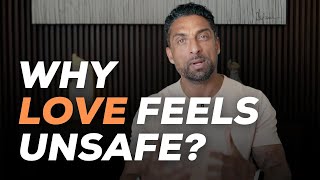
Zarak Fatah argues that repeated relationship sabotage often comes from unhealed wounds rooted in the parent–child relationship—particularly with the mother—rather than from "the wrong" partners. He uses his own dating history, therapy (a pivotal question: "When did you decide that love wasn't safe?"), and participation in the Hoffman Process (a one‑week retreat with exercises like a simulated funeral and letter-writing) to show how generational trauma and early attachment beliefs shape adult romance, and urges viewers to investigate and heal those wounds so they stop passing them to the next generation.
Chapters
If you're unable to commit to relationships or constantly finding flaws in your partners. And here's what I want you to know, these patterns aren't about finding the right one. They are actually unhealed wounds from your relationship with your mother. Now, I know about this all too well from my own personal history of dating and relationships. I've been fortunate to have had some amazing relationships with some incredible women. However, I was never able to go deep enough with them to cultivate a real sense of intimacy and love because I would always find something wrong with them. After the honeymoon stage was over, I'd start picking apart the relationship and their flaws, and ultimately I'd go back to dating. And while dating, you know, whether it be on the apps or through social media, you know, I'm looking to find women that fit that list and the criteria of what I'm looking for. But the truth is, is the qualities I desired were reflective of the triggers and the wounds that I'd yet to heal. And while we're out there and we're searching for that perfect woman, the truth is, is we are looking for the partner that's going us to heal what is unresolved from our relationship with our mom. And until we recognize that the qualities that we're drawn to that we need to heal, until we overcome that, we're going to keep finding flaws in different women and we're going to keep saying, it just wasn't right. She wasn't the one for me. Now we're out there on the dating apps and we're counting the likes on social media, thinking that we're going to meet the one who's going to solve all of our problems, when the truth is that we'll keep attracting the exact partner we need to trigger the wounds to show us where the work is to be done. Now, after years of going in and out of relationships and doing the whole dating circuit, I got to a point where I was just fed up. And I took a look at my history. I said, okay, I've had five amazing girlfriends who after we broke up, they moved on, they got married, they have kids, they're doing great. And out of those five, I'm the common denominator. So I had to ask myself, myself, what is missing in how I'm showing up in relationships or my perspective that is sabotaging the relationships. And to be honest, I didn't have that answer. So being open to coaching and knowing that I wasn't going to be able to figure out on my own, I hired a psychotherapist and we went deep into my childhood and she asked me questions that rocked me that I didn't have the answers to. She asked me one question that I'll never forget, and she said, when did you decide that love wasn't safe? And I had to meditate on that and just think back to when did I feel like love wasn't safe? And it brought me back to moments from my childhood where my parents were fighting and things were very turbulent. And I saw marriage and love as something that was dangerous or scary. And I realized at a very young age I developed some beliefs about marriage, about love that had now impacted me as an adult, as a therapist and I worked together. She asked me many questions about my childhood that I didn't have the answers to. So I started getting curious. For the first time in my life, I started asking my mom questions about her childhood, really getting to know her not as my parent, but as another human who has her own personal history and journey of trauma and experience experiences from her childhood. And I got to understand that at five years old, when her parents separated, she was taken from her mom, never to see her again, only to move in to another woman's house with another four kids. So my mom was one of eight children. So of course love wasn't safe for her at a young age. The most important woman in her life was taken away. So of course my mom has her blockages and her beliefs around love and how she needs to protect herself. Understanding my mom and knowing her history and what she's been through makes perfect sense as to how she does or doesn't express love. And getting to know my mom and her trauma and her history in a way that I can understand and process made such a huge difference for me because when I look at my mom now, I have love and compassion and empathy. And I can see her as a scared little five year old girl who just wants her mommy again, but she's never saw her again. She grew up with a bunch of stepbrothers and stepsisters and just had to fight for safety however she could. And this is how it is for most of us. We go through experiences at a young age and at that stage of our life, our brain isn't fully developed. We don't have the knowledge or the context to understand why our parents are doing what they are. We just develop a belief at that point in time about what love means, about what safety means. And then that shapes our beliefs and our behaviors and our personality and ultimately our reality. Now, one of the Experiences that really helped me to develop this mindset and have the tools to ask my mom these questions and be willing to hold space for her is called the Hoffman process. Now, this is a one week deep dive, like 247 you were off in the countryside. I did mine in Alberta, Canada. They offer the Hoffman in the USA and California as well. And it is a deep dive into what they call the negative love pattern syndrome. And this is essentially in the first 18 months of life, the patterns you adopt from your parents that shape how you give and receive love. And during that first 18 months, based on what's going in your, going on in your home, based on what your parents do or don't do, it impacts you. You either adopt their patterns or you reject their patterns. So the Hoffman process has you take an honest, hard look at yourself asking which of the patterns do your parents have that you dislike, that you have within you? Because unconsciously, these patterns that we adopt, they're running in the background, they're influencing life, our relationships, our choices, and we have no idea about that. And when someone triggers us and someone pisses us off and we don't like a quality about that person, well, of course they are a mirror reflecting back to us what we don't like in ourselves. So I had to take a look at myself and ask, what qualities do I have that I don't like that I got from my mom or from my dad? And shining a light into those shadows to see the behavior that I'm not proud of, to see where there are wounds that I am still trying to compensate for was truly profound. And had me realize like, okay, I can't be mad at my mom or my dad for what they've done because I'm doing the same thing in my own way. And I got to understand that my mom and dad did the best they could with what they knew at the time. And I'm willing to bet that the way your mom treats you is the way her mom treated her. And that is a generational trauma that's passed from generation to generation. And one of the most profound and life altering experiences I had during the Hoffman process was having a simulation funeral for both my mom and my father. And I literally went out into the field and I found a part of the meadow where I decorated with flowers. And I wrote a letter to my mother expressing my gratitude, expressing my love, sharing any memories that I have of her being able to really just say whatever I needed to. And I wrote that and read that to her at her mock grave. And by the end of that letter, I can tell you that I was so excited to go home and to read that letter to my mom in person. Because often we don't appreciate how special someone is and how much they mean to us and how much we love them until they're gone. So being able to express my gratitude and appreciation and visualize my mom's grave standing over saying whatever I needed to as my final words, in that moment, I was able to let go of the resentment, the anger, the sadness, the disappointment. Anything that I felt that I didn't get or receive, I was able to let go of. And just choosing to accept that everything worked out exactly the way it was supposed to. You know, I'm a believer that we choose our parents before we incarnate into this planet, into this lifetime. So what lesson did I need to learn by choosing my mom to raise me, to teach me what love is? And having that belief allows me to have so much compassion and empathy and appreciation for both my mom and my dad. After coming home from the Hoffman process and reading the letter to my mom, I could say that there was a massive shift in my energy. The love and the connection and the appreciation I had for her could be felt. And with this shift in energy, I could feel my mom's energy change. I could feel her being more open and receptive and she softened that protective armor she wears of that little five year old girl who's got to be tough just to survive. I could see it melting away. And you know, for many years I would hug my mom and she would just stand there stiff. She wouldn't know how to hug back because it was awkward for her. It was strange because I imagine as a young girl she didn't get hugged very often. And now when I hug my mom, my mom's like 4 foot 11. She's this tiny little thing and her little arms wrap around me and it's the sweetest thing ever. Because you know, my mom, she's 80, you know, and for the first time in our relationship, I feel the most connected to her that I ever been. And I do believe at a young age my mom and I had a beautiful connection. But I think through the fighting, through the arguments, through my mom having to work three jobs at a time, there was a distance that happened, there was a distance that was created. And I believe that's part of the trauma that I experienced is that having that love and nurturing from my mom for probably the first five, six years of my life, and then when things got tough with My father, and she had to focus on other things. That, that abandonment, that detachment of love and affection for my mom is probably what initiated that original trauma for me. So now being able to hug her, being able to hang out with her, you know, I took her to Hawai, we went on a Cruise for her 80th birthday, and we had the best time ever. You know, I'm proud to say that I finally have the connection and relationship with my mom that I always wished I did. And if you're watching this and you have a strained relationship with your mom or your dad and they're still alive, I urge you to do your best to heal this. And I understand your parents might have screwed up. They might have done some mean things to you. They might have hurt you deeply. And I can't stress this enough that your parents are only human. And as humans, we are flawed. As humans, we make mistakes. And what they did at that time was when they were a different person. Who they are now is not who they were then. Ask them questions, choose to understand them, learn about their pain, learn about their struggles and what they went through to become the version of who they are today. Because regardless of what my mom or my dad did or didn't do, I understand them as people now. And I love them and I appreciate them as two humans who did the best they could to provide for my brother and me. Were they perfect? Hell, no. Nobody's parents are. And it's an understanding and having compassion for them that I could let all of that go. Because those feelings of guilt, shame, anger, resentment, hate or frustration, those low vibrational energies will only take you down. Healing the relationship with my mother and being able to feel connected to the most important woman of my life as a child has now allowed me to open up to love in a new way. Because when you're aware of your wounds from your past experiences and you can openly communicate that to your partner, you then don't have to hide, you don't have to compensate, and you can work together to heal, heal one another. And that is the beauty of the container of a relationship where you've done this work and you're finally willing to face your wounds so you can heal and grow and love deeper together. Now, I want to end this by saying that we all have trauma. We all have incidences from our past, from our parents, that until we are willing to look at them, to heal them, to really be willing to go through the pain needed to overcome them, we will just pass them on from generation to generation. And as I said your parents learned what they did from their parents and from their parents and so on. We are the generation to do this work and recognize where we have wounds needed to heal. We do this work so our children won't have to. And if you consider yourself be conscious or enlightened or awakened in whatever sense, then it is up to you to lean in, to ask the questions, to have compassion and put an end to this generational trauma that stops with us. If you enjoyed this video and you got some value for it, please hit subscribe or like or share it with someone who you think would get some value from it. And if you have any questions, put them down in the comments below. I'd be happy to support you, however I can.