Meta Ads vs Google Ads for E-Commerce (How to Scale Both)

In this interview Aaron Young talks with Nathan Pedreiro (Bluesense Digital) about why e‑commerce brands should run both Meta and Google advertising in 2026 and how to decide which platform to prioritize. They explain that Google is essential for low‑margin, commodity or retailer‑type products and for capturing intent‑driven search and Shopping traffic, while Meta excels at upper‑funnel awareness, product education, and higher‑priced or novel products that need justification. They discuss common misconceptions—thinking Google is only retargeting or that Meta‑only brands can ignore branded search—and warn about competitors stealing branded clicks on Google. Measurement is covered in depth: they favor offline, profit‑contribution metrics such as acquisition MER, net profit, and use third‑party tools like Triple Whale for triangulation, but stress avoiding data overload. Incrementality is tested via geo‑lift experiments (state‑level in the US, custom tooling in Australia) and in‑platform lift tests where spend permits. YouTube is described as a high‑budget, upper‑funnel channel with poor attribution, best introduced after a brand has proven Google Shopping and search performance. Meta creative is highlighted as the current competitive edge; CPMs are rising, so better creative strategy is essential. For Meta campaign structure, they recommend starting with a single sales‑objective campaign, multiple ad sets each testing 3‑5 ads around distinct angles (persona + offer + creative concept). Successful ad sets are scaled by duplicating the winning angle into new ad sets rather than tweaking the existing one, and campaigns are split only when clear, defensible funnel or product differences emerge. Throughout, the conversation balances practical tactics with strategic reasoning for a holistic, multi‑channel media plan.
Chapters
As an e-commerce brand owner, should you be focusing on Meta or Google Ads to scale your brand in 2026? And to be honest, the answer is you should be using both of them. Now, I know here on this channel we heavily focused on Google Ads and we do that unapologetically, but that doesn't mean that we don't wholeheartedly believe that as a brand owner, you should also be focusing on Meta so that you can get some incremental lift and you can get better results for your e-commerce brand. So with that in mind, that's why I invited Nathan Pedreiro from Bluesense Digital so we could have a real deep discussion On when you should be using Meta and when you should be using Google to grow your brand and how those 2 channels can actually work together. So sit back and relax, and why don't you enjoy this discussion with Nathan? All right, Nathan, once again, thank you for joining me. Absolute pleasure to have you here on the channel. Let's get straight into it. And the first thing I wanted to ask is, many people may not know this, but you actually started as a Google Ads first agency, and then you've quickly morphed over in, or not quickly, but you've morphed over into Meta. So I do want to ask if you've got a business coming through, or sorry, a brand coming through and they're not spending anything on Google and they're Meta only. What's sort of the discussion you have, or what are some of the misconceptions they may have about what they miss by only being on Meta?
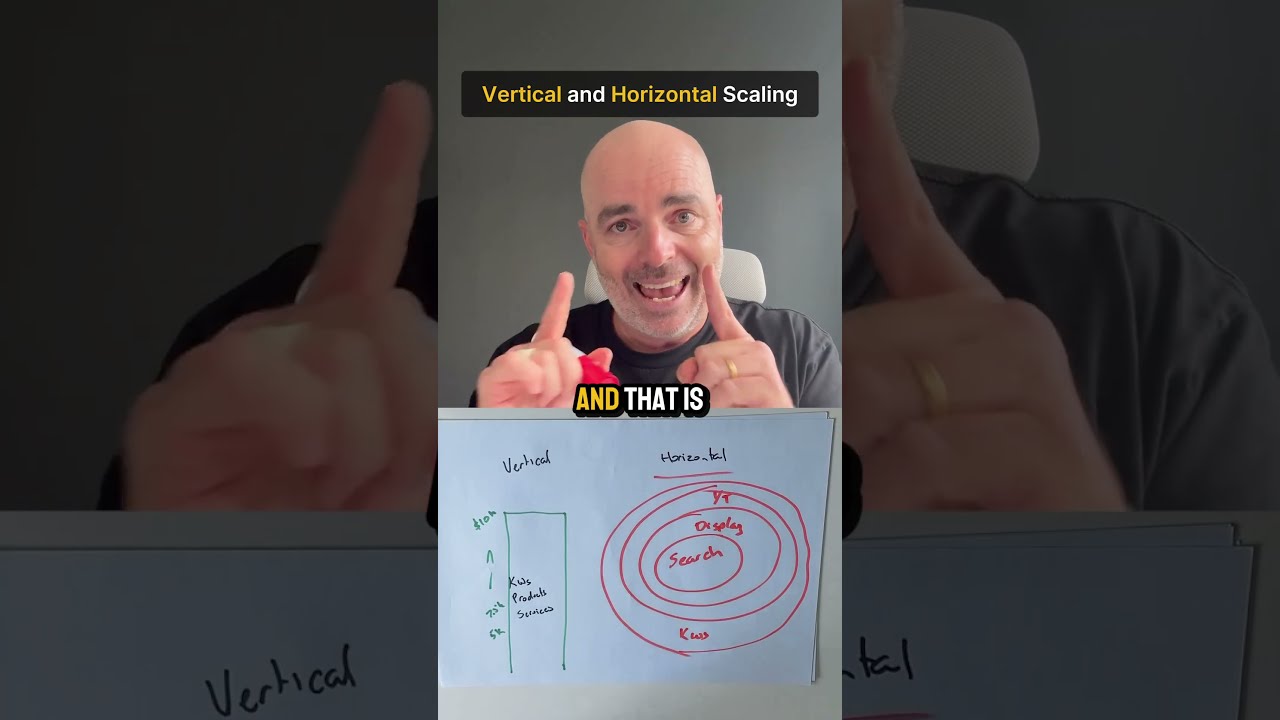
Yeah, I think there's a few things, which is that competitors can obviously take brand. So they can bid on your branded key term. Now, I don't think that's the end of the world for a lot of people, and we can obviously dig into the details of that, but where they can really lose out in e-commerce, which is who we work with, is in the shopping listings because the competitors end up saturating the shopping listing on their own branded key term. And particularly if you're in fashion or you're in supplements, honestly, niche agnostic, it kind of applies anywhere. You don't want to be losing those clicks that should have gone to you because you spent a bunch of money on acquisition on Meta. And then they moved over to Google to verify who is this brand, what's their reviews, et cetera. And then they get sucked in by a competitor who's just placing on your own key term. And then I also think there's a common misconception, which is valid in a couple industries. It's not valid in others, which is that Google is just a retargeting platform when Google is definitely not just a retargeting platform. One of, I posted a reel on this the other day and it did really well, which is when I started, the reason why we started as a Google Ads agency primarily was because before the agency, back when I was still in uni, I was dropshipping. And I had a couple of VAs and we were testing 50 to 100 products a day at peak. And people are like, how are you testing 50 to 100 products a day on a store? And it's because you just run it all into a Google Shopping campaign and you see what has search volume and it will just automatically distribute based on a target ROAS. And you'll find those little arbitrage opportunities where there's demand for a product. No one's placing on it, or at least not bidding heavily on it. And then I would find that demand and obviously saturate the listings. And I did very well just doing that.
Yeah. Do you ever take into account, cuz I know for, for us, we very much predominantly Google Ads, but we're really, really, you know, sometimes we'll push brands to spend more money on, on Meta, even if we're the minor channel. But there's quite a few brands that, and I'm thinking right now, so I think like really detailed electronics parts, motor vehicles, any motor vehicle parts, all of those things, houseware, anything to do with like taps and all of those things that may not be the brands that you're dealing with. But for me, they're the ones that are actually Google first as opposed to Meta first being on the way. So have you had to have any discussions about brands about, you know, significantly increasing their spend?
Yeah, for sure. I think so the brands that end up being heavy Google are the retailers with low gross margin. And so the reason being is that 2 things, low gross margin is you pretty much can't touch Facebook. Google's your play. That's what you have to do. Number 2 is, is this a considered purchase or are people just going and trying to find a provider of a solution. And so like the things that you just mentioned, for example, tapware, very Google-centric product because I could run ads all day long on Meta saying like, you should buy our taps. But if they're just like a relatively commoditized product without a unique differentiator that we can cut through on, on Facebook, we can say like, this is uniquely positioned and get rid of your current tap and take our tap. Unless that's available, Google is really where you're going to thrive and where you're going to get most of your volume. And that was the kind of stuff that I was selling.
Yeah. And, and I think it's an important thing. The big thing that we try to always focus with, with people is to really think about like the, the journey coming in. And you bring up a good point there that if you've got anything with, you've got a more expensive product that you really need to justify, if you've got a newer product, so a product that the market may not understand, or it may be in the same market, but then you're layering in an extra health benefit or an extra safety benefit, that's really where Meta thrives. So it's really, I guess, probably first understanding that and then moving down from there. All righty. I think we've covered a lot of this, but I will throw this one back in there. Are there any last things you want to say about how, if there's Meta-first founders, what they get wrong about Google? I think we've covered most of that, but if you've got any last comments there before we move on.
No, I think the 2 common misconceptions are that you can drive new customer acquisition through Google. And then number 2 is that it, you need to have brand placements once you get big enough on Meta. You just need to be very sophisticated once you're marketing across multiple channels, because when you're marketing heavily across Meta and then you go to Google, Google will look very good. Not necessarily meaning that Google's driving all your revenue all of a sudden. And so that's when you need to be a little bit more careful about where contribution is coming from, what the consumer journeys look like. And normally once you're already spending a decent amount on Meta, you're probably ready for that. Like that's the next step to take.
Yeah. I'm going to get you back to the interview with Nathan real, real soon, but I did want to let you know that this video was brought to you by Define Digital Academy. And at Define Digital Academy, we have one goal, which is to help you and your brand grow further with Google Ads. And if you're currently spending $5,000, $10,000, $20,000, or even more inside of Google Ads, and you really want to scale to that brand that you know you can be, but you need some extra strategic guidance, why don't you follow that link in the description below where you can apply for our on-demand program. Our on-demand program is where we partner with you so that you can get the better results for your Google Ads in 2026 so you can grow your brand. But right now, Let's get back to the interview. How do you track that? And what are the core numbers you're looking at? Do you track it offline or are you tracking it in a third-party program?
Yeah, I'm a pretty big proponent of offline because the closer that you can get to reality of your actual financial numbers is generally better. So if we launch onto Google and our profit contribution goes up, okay, we probably have good correlation that that was a good decision. And if we can look at numbers like acquisition MER, so what's our ad spend against new customer sales? And as we layer up ad spend on Google, does our new customer sales volume improve at a correlated amount that's profitable? And that's generally how we like to look at things. Not to say that we don't look at third-party tools. Like we have a lot of clients that use Triple Whale. Yeah. That's where we will look at those numbers. And it's another data point to try to triangulate what's going on. But you also want to, there's this dichotomy where Too much data's a bad thing. Yeah. Because it pulls you away from a single source of truth and an ability to make easy, quick decisions. And so you need to find that middle line for you in which you can still make, you can see reality clearly and you're not in this fog of data.
How does that, if I can ask, how does that sheet look for you? 'Cause I know we run something really, really similar. We've actually more and more moving away from tools and just creating our own internal sheets. Are you tracking that on a monthly basis or like how far back are you looking at data?
Yeah, so we have an internal software fortunately that we built. Um, before vibe coding was a thing, this was, this was built by actual developers. And we track, we track acquisition MER, MER, profit contribution, net profit, if the client is giving visibility into operating expenses. Um, so it's effectively like a full, it's kind of like a, what Triple Whale does on the Triple Whale dashboard where they'll give you all the core metrics, except we then have the ability to layer in our forecast. Yeah. underneath it so we can see how we're pacing against a forecast in real time, which is a, which is a helpful exercise for a lot of brands. And then we have some other little custom things in there too that give us visibility into metrics that other softwares might not look at. And we calculate stuff in our own way too. Um, like, yeah, I've got a couple videos on just even if you look at the Shopify dashboard, a lot of metrics are very misleading. Like even if you just look at total sales. in Shopify. It's very misleading because it has tax included. And if you're selling in Australia and New Zealand, you won't pay tax in New Zealand, but you will in Australia. And so all of your efficiency numbers look better in Australia, but they're actually— so like there's all of these little nuances which we are aware of and we've stripped out of our reporting. So it's like very clear in the way that we want to read numbers.
And if so, if you're using that data and then you're bringing in a new channel, say for example, Google, is it just essentially you're just looking at, you'll have a starting budget at Google and is it, I've always seen it's trying to balance the dollars between any marketing platforms to really see where you're getting the highest efficiencies. Is that the process you're going through?
Yep, definitely. There's, so there's kind of, there's a few different stages of proving whether a channel works. The first is attribution. So purely looking in the channel and if we have a PMax campaign that has brand excluded and it seems to be cold, we'll take that attributed number with a degree of certainty. Like, okay, this should be cold. People are searching for random key terms. I hope I hope they don't know about us. Then the second layer is looking at the financial-led metrics. And so, okay, since we launched Google and we're spending this amount, how's that flowing through into actual backend revenue, actual profitability? And then as we increase Google, what happens to those backend numbers? And then the third layer, which is only really applicable to really large brands, is doing some kind of lift experimentation, whether that is in-platform lift experiments, which Google and Meta will give you access to if your ad spend's high enough. Or a geo lift experiment, which is where you move spend around in a state and you use the other states to predict what would've happened in that state if you didn't move spend. And that gives you an incrementality measurement, which we also do. Really tough to do on Google. It's the hardest platform to run incrementality tests on.
Yeah, the way we do it, we, we, that, and that's why I think you mentioned we only do it, we do it geo-based. So whenever we do any type of uplift test, so if we're going to introduce like a demand gen or YouTube into it, We'll do it if we can state-based or country-based, but country's a little bit weird too because then you've got to take off. So I prefer to have, it's a little bit even harder in Australia, but that's why I really love somewhere like if you're doing something into the US, that's great to do Uplift tests because you can choose, say for example, Florida and California. You've got one side of each country and it gives you some real numbers on what's happening.
Yeah, definitely. Like all the Geolift packages and everything was built for the US. And so When you do it in Australia, we've built a little bit of tooling around it to be able to actually get around the fact that there's only 2 primary revenue driving states in Australia. But no, 100%, if you're ever going to like headline recommendation for Google Ads, if you're ever going to launch demand gen or YouTube, always do it as a lift test at a state level because attribution is terrible and you actually can't really see the efficaciousness of that campaign because it's so up the funnel.
Yeah. And we take it the other way. We even as well, we make sure it's about at least 90 days. We judge it at each 30-day mark. And then we're also looking at all channels. So we're looking at what's happening just across the revenue and even brand searches as a whole. And then also we actually do go back and look at individual CPCs in other campaigns just to see how there's been any effect internally there. So.
Interesting. Yeah.
All right. I want to jump on 2 last things. So you did mention YouTube and because obviously if we look at the spectrum of Google Ads, YouTube campaign is very, very different. different to what most people think with search and shopping. Is that kind of a first step that you take people through if they're coming across from Meta to Google Ads?
No.
No.
And the reason being, and I'd be keen to hear if you disagree with any of this, but there's 2. So I think YouTube is a huge unlockable channel that is underrepresented in most people's media mix and it's underrepresented in our media mix. I think we should be spending way more on it. But there are 2 issues. Number one, attribution is really poor. And so for all the reasons that you've probably discussed in other videos, and so when you just run the campaign and you look at an attributed number, it rarely looks that good, even though it might be doing a really good job.
It never looks good. Yeah.
And then number 2 is I have only seen YouTube work once you were spending a solid amount of budget on it as well. So this isn't like a campaign that I would go in and test at $50. And also it's That's also not a good test if you're doing a state-based test because you want a big enough amount of budget to be able to see the impact. And so it needs to be a relatively big budget that you need to commit to for a relatively long period of time because it's so upper funnel that it takes time for those sales to kick in. And then the measurement is really poor, which makes it a very tough channel to go into to just be like, hey, you're launching onto Google, go YouTube. It's like, well, let's start with the easy pickings first. Let's start with Google Shopping. You'll very easily see attributed high numbers there and it will be incremental. Then let's layer in brand search. Let's test search as well. If you're in an industry where we think we could cut through there, and then only once they have trust that Google is a good platform and they're like, oh, we're spending $40K a month on Google and it's like all the data says this is great. Only then would we be like, okay, and now let's layer in a YouTube test at $15K, $20K a month for 3 months. Yeah. And we can reuse all your assets on Meta to try to get this to work.
Yeah, and we're big on reusing assets. The only thing that we would say is remarketing Meta audiences across on YouTube just doesn't work. And I think it comes to— we put a— it took us a little while to work that through, and I've got a theory on it. My theory is that because Meta is so good in platform of retargeting, you're essentially retargeting people that have already said no time and time again on Meta. So we've all gone that we're finding YouTube works much better now just with a clean new audience, truly bringing in new incremental people into the business.
Yeah, I would agree with that as well.
Yeah,
for sure.
Last thing. Now I'm going to ask this question in purely a Meta noob, so to speak. But I have heard there's been a lot of changes in platform, especially over this year, increasing in costs and some metrics. How have you navigated that? I mean, do you want to explain that? One, is that real? And 2, how have you navigated that?
Yeah, it's real. So CPMs are always going up on Facebook, I'd like a small component of that is just natural inflation because it's the same thing on Google, like CPCs go up every single year. A proponent of that is auctions getting more competitive as people, as more people flood into the platforms. And especially as big orgs take more of their spend on marketing and distribute more of it into digital, that is obviously causing auction pressure as well. In terms of, in terms of how to counteract it, like it's what, You always gotta stay on the cutting edge really, which is where is the alpha at the moment in the platform? What do we need to be doing? And obviously the big thing that anyone who's watched one Meta video recently would know is it's creative. It's a lot of creative and it's a lot of good creative. And that's where our content has taken a real pivot in the last year into where we were like data nerds 2 years. If you go back and watch one of my YouTube videos 2 years ago, it's me on full spreadsheets breaking down stuff that you've like never seen before. Yeah. And now it's me talking about how to make a good ad and what a good script looks like and what even is creative strategy. Like not only like, what are we even talking about when we say creative strategy? Like they're the concepts that we're attacking now because that's where the edge is on the platform. And so you just have to, if I was to give like one line of advice for Facebook, learn how to make better ads and then make more.
Yeah, we're going to obviously in the description, I'm going to put where everyone can get in contact with Nathan, but I did want to ask, so if people were coming across and they were starting to run some Meta ads for the first time. What's the structure that you would recommend that they start with? Now, I know this is very, very generalist. It's going to be different for everybody, but an initial battle plan without knowing anything about the brand, which you would learn about the brand, but what sort of directionally would people, should they be starting with that initial structure? And then how do they slowly start to scale that spend?
Yep. So I would only use sales objective campaigns. If you're in late Jan, use Lead optimization. And then I would just keep it super simple and have one campaign. It's effectively how I would label it is a testing campaign. And then in that campaign, have ad sets with 3 to 5 ads per ad set, which are going to a different angle. So when you think about how we like to define creative strategy is that you're building concepts. And when you build a concept, it is a persona, an angle, and an offer. So what's the product that we're giving them? Who are we talking to? And then what angle are we trying to use to convince them to buy? When you're just starting, let's say this is a startup and they don't have a Google presence and they're like, I want to advertise on Meta. The persona is somewhat unknown because how do you know who you're selling to until people actually start buying the product? Because personas shouldn't be invented. They should come out of customer research. And so right now it's like, oh, we don't know who the persona is. So let's kind of, let's talk to a bunch. Let's not focus on persona testing. Let's just go, okay, we're selling leather jackets. We're probably selling to like people that ride motorbikes. That's our persona. Let's keep it broad. And then what we really want to figure out is what angle makes people buy our leather jackets? Is it that we go for the founder angle of I used to wear leather jackets, but they just weren't good because of XYZ. So I had to make my own. Is it the angle of leather jackets are so expensive if you want high quality? So we actually went and we figured out why is that the case? And we actually discovered that it shouldn't be expensive. They're taking huge margin. So here's a really good product. There's a million different angles that can differentiate your product and market, and you can make creative around that. That's what you really want to figure out in those early days is, and you're doing that bundled by ad sets with 3 to 5 ads trying to hit that particular angle. And then once you find something that works, which you will, if you test enough and you get good enough at making creative, then you scale that up. You make a lot more ads under that angle. You start to build it out and then you start doing persona testing too with all of your customer research. So you might, and this is always the case, you, you're selling leather jackets. You think it's for people that ride motorbikes. You find out, you do some customer research. It's actually their wives buying it for presents. And you're like, oh, okay. Yeah. There's a new persona that we haven't even been talking to. In our ads. Let's now start talking to that persona with different angles targeted at that. And that's how you start to build it out.
And then do you build out to another campaign or you just keep building out those ad sets or what happens down the track?
I would keep building on ad sets until like there will be a level in which you are doing very well, like probably spend is at $3,000 a day. And at that point, that's when you can start splitting out into separate campaigns. Based on like very, what I would call it is like very different funnels. And so this becomes very evident when you're selling in supplements because what you'll typically do in supplements is you'll reposition the supplement to very different audiences. And so you'll say this multivitamin will improve your ability to walk as an 80-year-old, but then you'll also have completely different ads that are like, hey, you as a 20-year-old, you need to be taking a multivitamin because the diet that you have isn't good enough. And so because there's such a core difference between not only the ad messaging and the creative, but also the landing page that you want to drive to, it starts to make sense to just treat those as almost 2 separate funnels entirely and split them out at the campaign level. We will also split out at the campaign level based on if there's very big different gross margins across products, or if there's very different product categories, it can make sense if you're selling in multiple different countries. And so there starts to become a lot of reasons as to why you would segment. But my general advice is if you decide to make a new campaign, be willing to defend it very, very hard. Because if you can't give me a really good reason as to why you're running 2, 3, 4, 5, 6, 7 campaigns, you shouldn't be running them and you should consolidate up as much as you can.
I love that thought because that's what we always say. And we go goal Google Ads campaign structure is one campaign and one ad group. Now, That will never happen. But what it does, it puts you in the position to go, why am I creating a separate ad group? And I need to have a valid reason for it. Why am I creating a separate campaign? I need to have a valid reason for it. And yeah, so I 100% love that. So, but just to clarify what you're saying there, the big thing would be once you've got a functioning ad set, don't change that. You keep the ads in there and you're more breaking out extra ad sets as opposed to messing around with, because they're an individual funnel inside of that asset group.
Yeah, that's That's our media buying approach, which is that if you have an ad set that's working and it's hitting the efficiency targets that you want, what a lot of people will do is they'll go, right, let me make more ads like this and throw them into the ad set. But when you do that, a lot of the time we see it substantially impacts the performance of that ad set that was doing well. And so the media buying principle I would think about is if something's working, don't touch it. And so make more ads around that angle. Definitely double down, triple down. But launch it in a new separate ad set as a new test against that angle. Don't go and touch what's already working because there's, there's really only downside. Like if something's doing really well, who cares about making it work 5% better? Like we want volume at that, at that point.
Yeah. Yeah. Nathan, really, really appreciate you joining me and thank you. And as I said earlier, for anyone who's loved what Nathan's been teaching here, if you go down to the description, we're going to have information about where you can get in contact with him and his company. Thanks, mate.
Thanks, Aaron. Cheers.