
Answering Your Questions Ft. Sheikh Uthman Farooq (LIVE)
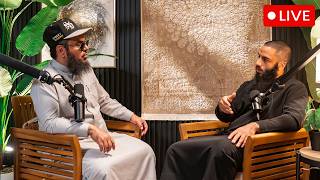
Sheikh Uthman Farooq answers viewer questions about converting to Islam, which requires belief in one God and reciting the Shahada. He contrasts biblical contradictions with the Quran's claim of perfect preservation, and advises new Muslims to prioritize belief first, then gradually abandon prohibited practices like alcohol and interest-based loans.
Chapters
Guys, give us a. Give us an audio test. Guys, in the chat, guys watching the live stream, tell us if you can see us. Tell us if you can hear us.
Put a thumbs up in the comments if you can hear the audio.
There you go.
We're liver but rather looking, but rather looking at the best of examples, but still learning how to be profitable and how to make a good income for the family, how to be able to make hijrah, how to be able to be strong and independent Muslims in this world that we live in with the guidance from the Quran and Sunnah. And then we have the segment that goes over particular ahadith, in particular ayat in depth. And then my favorite segment was the last where we go over a series. You want to talk about the subject?
Go for it, Go for it. You want it? Give them a little sneak peek. Just keep them on the hunger.
I mean, it's like a journey each episode and one builds on the next, which I think was amazing. And may Allah bless you for the ideas, you know, and we talk about everything from what not to do with pure evidences, Quran, authentic ahadith and what to do, what Amal are the most beloved. So what are the sins that you really must get away from? The most serious of sins and then the dearest Amal to Allah, subhanahu wa ta', ala, with authentic evidences. And then we go through a journey that takes you through death, the grave, the day of judgment, Jahannam Jannah. I mean, it was amazing. Alhamdulillah.
Basically, the last 10 nights cover the journey from where you are now, starting literally from the first day, which is Laylatul Qadr, up until how you make it to Jannahba subhanallah. Each episode covers from the sins to avoid, to the good deeds to do, to how to ask for forgiveness, to how to make dhikr so that you can die on the remembrance of Allah, so that inshaallah ta' ala, you resurrected on the day of judgment in the shade of the throne of Allah.
You guys, you guys got it. You can't miss it, man. This Ramadan, don't waste time with, you know, watching drama series and useless, you know, vlogs that, you know, people walking around beaches and stuff like that with haram instead. It's going to be entertaining. It's going to be fun, but educational and beneficial for your dunya, for your business acumen and your akhirah, which is your iman, your Amal. I mean, I think it's. It's going to be Top man. It's going to be Joaan, man.
It's going to be Joan.
We'll put the shaykh on the plug.
Alhamdulillah. Let's see if the guys have some questions. Shimsu is behind the camera as always. Shimsu, give them a salam Alayhiv.
I know we have an email address set up to get questions.
Okay.
And then we have questions being sent to our masjid. We have about 40,000 questions that are backed up that I haven't had time to look at.
Yeah.
So your audience today gets to skip ahead of the line.
They get to cut the line.
That wasta with Abu Lahi has gotten them ahead of the line, man.
Alhamdulillah, always putting you on the plug. So, Shabaab, please make the most out of this live stream. The only goal, inshallah, is that you ask your questions. I know 40,000 people are waiting for the answers. You get to cut the line. Make sure the question you ask is what worth it. Details. Add something specific that you know the experience of Shman Farooq is relevant so that he can help you out, inshallah. And we're going to start taking some questions. Do we have some interesting questions in Chash? We have some interesting ones.
Yeah.
So far. So far we've got some interesting ones. The first one is, how come I get emotional even if I don't understand the recitation of the Quran?
How come I get emotional?
That is a beautiful question.
Amazing.
You know, we have had a lot of people and you can watch the videos if you go to the One Message foundation channel where they were not Muslim. And a brother said, let me just recite the Quran to you. And recited the Quran. Just no audio. No, just him with his voice and subhanallah. They said, this is so beautiful. They don't know a word of Arabic. He said, it touches the heart so much. Non Muslim, non Muslims never heard the Quran before. And he said, I don't know what it is, but can I learn about it? And we give him English Quran and we have many of them ended up becoming Muslims. You know, one of the shayuk, he did an experiment in New Zealand, he was from Saudiya, and he went and just recited just Arabic poetry. But in the tone of how we recite the Quran and asked the people, how do you feel? They said nothing. And then he recited the Quran in the same tone. It's not like, you know, you can't see the difference. You can't in Arabic.
If you don't understand Arabic, you Can't see the difference.
Yeah, I mean, one was just poetry and one was the Quran. Non Muslims who had never known the difference, they don't know the meaning. They said, this second one you recited, which was the Quran, it touches our heart.
Subhanallah.
So the Quran is kalam Allah. It's. It is not the part of the creation. Allah revealed it to us. Quran was not created, it was revealed. That's why the Quran is not a part of the mahlub. So understanding that as it is the kalam of Allah, it will have an effect. Even if you don't know the meaning, even if you don't know a word of Arabic, it will touch you. And that is why many people, when they hear the Quran or, or they recite the Quran, even when they don't know the language, it touches their heart. Now imagine if you understood it. Imagine if you understood the depth of it.
What's the reward of understanding the Quran?
See, there is the reward of just reciting, which is like Alif Lam Ra, 30 rewards each letter. You get a reward. Sahih hadith. But that is just a thawab. But the real benefit of the Quran was not saying 20 and 30. And the purpose of is a guidance for the people of Taqwa. So the best thing is it guides you. It tells you how everything is in the Quran. Now what do I mean everything in the Quran? I don't mean that the Quran will say, if you want to set up a electronic banking account, you're going to go here and you're going to. That's a stupid argument people make. What do you mean everything? What do I mean everything? Meaning the base of everything in the Quran. Okay, Your salah Irka Umarkin is Jaduma Sajidin. You know all of the base of your salah in the Quran. Now the tafsil of it, the tashreeh of it, the Hikmah that was with the Quran is the Sunnah. So the Prophet sallallahu alaihi wasallam in sahih ahadith will then tell you, okay, how many ruku? How many sujood? What do you say in sujood? What do you say in ruku? How many raka and fajr? But the essence qemus salah is in the Quran, Tazkiya in the Quran. Tariq, what happened the ambiya before us in the Quran? What will happen on the Day of Judgment in the Quran? What is in Jannah in the Quran? What is the naar in the Quran? How do you deal with your wife in the Quran? How do you deal with your, with your husband in the Quran? In the Quran, all of that is so beautiful. Everything of life is in the Quran. Now Tafseelun, if you want to then implement the Quran, you see the walking Quran which is the Prophet Alayhi satu salam, the Sunnah, the Prophet sallallahu alaihi wasallam, the Sahih ahadith. They will then show you the implementation of the Quran. And based on that, then our scholars till today, even if you ask me the ihqam of crypto, if you ask me the ihqam of praying in space, if you ask me the Ikhkam or of what do we do with Zakat Having to do with 401ks, all of that, we can take it back to the Quran. But yes, we'll have to use the Sunnah. Yes, we'll have to use Qiyas, we'll have to use Ishtihad. These sciences then developed around the Quran. But that's how beautiful the Quran is. And when you know the meaning, and I don't just mean meanings as if, okay, you know Amiya or street Arabic and you try to figure out the meanings yourself. No, when you know the depth of the Quran, why Allah subhanahu wa ta' ala uses certain words, the Rabat bayn al Ayat in certain verses and Rabat baynasoor why this chapter came after this chapter I've started at Tafsir Dars. If you check the One Message foundation and check the playlist and also Masrebaat, you'll see it. You know, we're just starting with the short surahs right now. Any from the last 10 surahs and each like Surat Fil, we had to do two sessions that were about an hour long each.
Even though it's a short story.
Surat fil, there's so much to it. The language, the Nahu, the ahadith, the Asbab Nuzul, the background, not just Abraha but Dun Nawaz and how Abraha got to beat Yemen. And what does that have to do with the Hadith on Sahih Muslim of the boy and the King? Like we don't know these things. We recite the Quran but we don't know the depth of it. Imagine if it touches you and beautifies your heart just listening to it. Imagine when you understood it and you understood the tafsir of it. And the depth of the lugha, the balagha of it, how much it would honey, how beautiful the Quran would be to you when you stand in Taraweeh. You wouldn't be like, when is this gonna be over? You would be enjoying every ayah.
That's beautiful. That's an amazing reminder. We have a brother with the next question, and that one is interesting. We covered in one of the episodes, but we'll give him a sneak peek. Inshaallah. He's saying, shaykh want to make dua for wealth. Sometime doubts creeps in. How do I build true yaqeen and protect my heart from that?
First thing to make dua for wealth or for anything worldly is jais. As long as within the halal, meaning if you want to sit and say, allah, give me a trillion dollars with your niyah that you want to do good with it, you cannot make dua for haram. You cannot say, allah, let me be Hugh Hefner and have zina and things or the epstein next Epstein like, no, it's haram. Like, don't make dua for your own destruction. Because when you talk about, well, sometimes people there dua goes a little bit off, you know, but regularly you can make dua. But as Sheikh Salih al Fawzan and Imam Ahmad bin Hanbal and Ibn Khudama and others have mentioned, you should not make dua for things that do not benefit your akhirah in your salah. It's something a hakam that many people don't realize. And you can look in the mughni of Ibn Khudamar, you can go back to the qual of the earlier scholars or, you know, a recent scholar like Sheikh Salih al Fawzan and others, they said that the salah is an ibaadah in and of itself, and you shouldn't be using it for something that doesn't benefit you. In the akhirah, meaning you can make dua. Oh, Allah, give me halal rizq. Oh, Allah, give me rizq. So I'm not in need of anybody. Oh, Allah, give me a pious wife. Or for the sisters, give me a pious husband. You know, things like this. Yes.
During the salah.
During the salah is okay, because that helps your dunyan akhir.
Okay. Makes sense.
It helps your deen. But if you're going to be like, I want a Ferrari. Yeah. Like, leave that outside of salah.
Makes sense. Small question on this specifically making dua in sujood. We know that you're the closest to Allah when you're in sujood.
Yes.
And I mentioned this in some of my podcasts and Alhamdulillah is something I use many times. I make strict dua in sujood. Some people ask they don't speak Arabic and they would like to make sure they can make dua and make sure they make it specific. But they don't speak Arabic during prayer. How could they make it?
Good question. So Bina al Khilaf, there is some disagreements of scholars on issues and in many issues when we study them we look at difference opinions and you know, but I don't want to get into all that here for here I'll just give you the answer. The answer, as Shaykh IBN Taymin in Shah al Mumtih and other scholars have clearly stated, is that if you don't know Arabic, you can make dua in sujood in any language you like. Allah subhanahu wa ta' ala knows every language. Every language is from Allah subhanahu wa ta'. Ala. Allah subhanahu wa ta' ala hears you in whatever language. And the prophet sallallahu alaihi wasallam. When he gave the order that increase your dua in sujood, he didn't restrict it to only what he said or to the Arabic language. And obviously the Ummah is not just Arab. In fact, the vast majority of the ummah doesn't speak Arabic. 80% or more does not speak Arabic. So that hadith is implemented by making dua in any language you like. But like I said, the salah should be used for dua that benefits your deen. Now back to the question of the brother. We must get to know Allah subhanahu wa ta'. Ala. One of the problems is we don't know Allah. We don't know his Rububiya, how he is the Rabb, the controller, the master of everything. We don't know Uluhiya that how he is the only one that can respond to our dua. So. So he's the only one we pray to and make dua to. We don't know his asma was sifat. We don't know the beautiful names and attributes of Allah subhanahu wa ta' ala that are in the Quran that are established in the Sahih ahadith. And that's why when I taught Dars on Aqeedah we used a book called Lum atu Atikaad Mofouqdin IBN Kudama and it's on the Masjid Ribaat channel, not on OMF but on Masjid. And I think it's 55 or how many durus. And during that series we went over every single name of Allah subhanahu wa ta', ala, or the sifat of Allah subhanahu wa ta' ala that are either in the Quran or sahih ahadith, which is very important because today we don't know. So why do we have this doubt when making dua? Because we don't know Allah subhanahu wa ta'. Ala. But the reality is Allah. He is the one that controls everything. All risk, all sustenance is in the hands of Allah.
But this brother specifically feels like he's doing something wrong when asking for wealth. He feels like his near is, if you're asking for Jannah, if you're asking for forgiveness, your niyah is clear. I want to make it to Jannah. I want to be forgiven. Ola, please forgive me. But if you're making dua specifically for wealth, maybe you're making dua to have a better job. Maybe you're making dua to have a business that's more fulfilled and so forth. Is there anything wrong with this?
Nothing wrong with that. Depending on your intention. Meaning if your intention is, oh Allah, give me a lot of wealth so I can go hit the tables in Las Vegas, then yes, that's haram. That's wrong. But if your niyah is ya Allah, I don't wanna be dependent to some kafir. I don't wanna be dependent to not be able to make my salah because they won't give me time off from any work to go for jummah. I don't wanna be dependent on somebody and begging them. I want to be independent. I want to give sadaqah, I want to give zakat. I want to help the Ummah, I want to help the needy. I want to help the da'. Wah. I want to do what I can by being a part of the solution for the Ummah, you know? Then in that condition, then yes, you should make dua for that beautiful. But again, your niyya should be important. But I'll tell you personally, I make a dua. It is very personal. I'm sharing some ta top secret information here, right? Which I have made this dua since I was a child.
What's the dua?
I said, oh Allah, never make me dependent on anybody but you.
And what has that led you to?
I have never owed money to anybody in my entire life. I've never taken a loan every even if I was to buy something and my mother is with me in the investment I would write it out as her segment in it. I would never. I've never taken a loan in my life. I've never had to ask somebody. Hey, can you help me out?
Any particular reasons why?
Because I don't want to ask anybody but Allah. I don't want to beg to anybody but Allah. I don't want to be dependent on anybody but Allah. So I make this dua. O Allah, give me the risk so I don't have to ask anybody but you.
That's beautiful.
And I don't care about having a lot of numbers in my bank account, but I care about that. I go through life without worrying that, oh, I owe this brother money. Oh, what if I can't pay him on time? Oh, you know, if I'm not able, then what am I going to do? You know, I spend alhamdulillah. If I need to give somebody charity, I give without having to have that fear. And that you should make dua for, oh, Allah, give me a means of risk that I'm not dependent on anybody, that I have enough that I can give and spend and be generous with my family and take my friends out to eat and pay for my brothers and give gifts without having to worry.
That's beautiful. Mashaallah. We'll keep it going. These are amazing. I want to make sure we can go through as many as we can. Inshallah. Another one is saying, how do you know that Allah still wants to grant you the dua? You have been asking him for years and tried your best to achieve but still did not get it. For example, this brother is in a difficult financial situation, has been making dua for financial freedom for a long time. Most of the audience wants to make hijrah, wants to be able to provide for families. It's the right niyyah. They've been making dua for years. You still haven't been answered.
When you make dua, understand that the dua that is sincere and you don't have any mumania to the acceptance of the dua, you don't have any hindrances to. The acceptance of the dua is always answered. But there are three conditions that could come out.
Okay, three conditions.
Always answer. But there's three things.
Okay, what are the two conditions?
But before there, I want to explain one thing which is there are things that hinder your dua from being accepted.
Can you give us examples? That's something that.
Yes, it blocks your dua from being accepted. And I will give you the example from the authentic ahadith. It's not my opinions I'm giving you all from Quran and hadith. The prophet sallallahu alaihi wasallam gave us an example of a person who is in a desert on a way, and he's dusty like he's full of dust and he is making dua. He's saying, ya rabbi, ya rabbi, he's making dua. Now the ulema, they even give the explanation that this is somebody on the way to Hajj. Right from the Asbab of the Hadith, they said, there's somebody on the way to Hajj and he's making dua. He's asking Allah. But his dua is not accepted. Why? Because his eating is haram, his clothing is haram, his means of sustenance is haram.
But by eating, he's eating his haram. Does that mean he's eating, drinking alcohol?
So it can be eating haram, like literally with pork or maita or dead meat. Not halal, not zabiya, meat, alcohol and so on. But it's also that the way he earned that sustenance is haram. To rishwa, to bribery, this food becomes haram. And his sustenance and his dua gets
blocked just because his sustenance is haram.
Even when you deal with haram, you lie, you cheat, you steal, you trick people. Even the clothing that you buy from that is haram. The place is haram. That's why some of the hanabila from the scholars of the Hanbali Madhhabh, they would say that if a house is based this built on riba, you cannot make salah on it. That if a thawb is stolen, your salah is not accepted anyhow. That's how strict they were in this issue. So when you're doing haram, then that blocks your dua. So that's the first. That's the first one, right. Secondly, those that don't have yaqeen in
their du', a, what do you mean by that?
Ya, meaning that something like allah give me a good sustenance. But I know it's not going to happen. If you don't believe in it, it's not going to happen. Right. You know how we say in business if you fail to plan, you plan to fail, right? You've heard this, I'm sure, right?
Chef's dropping some basil.
Yeah, I know, man, I got some business stuff. Just because I don't step into it doesn't mean I don't know about it. Right?
Okay, okay.
I gotta get into it though, man. I gotta get into some business, man.
Get you, inshallah.
So. So if you fail to plan, you plan to fail, right? If you don't believe that your dua will come true, then Allah is to his slave, as you expect him to be. So you have to have yaqeen in it, right? So first, your rizq, your mains should be halal, right? You should be careful about your halal haram. Secondly, you should be upon your salah and upon your faraid. Thirdly, you should have yaqeen once you have these things, and I don't want to get too deep for the sake of time. We could give a whole dart just on this. Then understand that the dua is accepted. But there are three conditions, three ways that will come true. One, that Allah subhanahu wa ta' ala, knows that it's best for you and he gives it to you right there.
Okay?
Now, Allah, I've seen this in my own eyes, miraculous things in my own life and others around me where they would make dua and at that moment, before their hands would come down, their dua would be accepted, right? Yeah. But those are people that have made that connection with Allah that had that yaqeen they have. You know, some people, when things are good, they forget Allah.
That's a good reminder. That's actually a very important reminder if you want to expand on it.
When things are good, when life is comfortable, when they have money, when they're healthy, they don't remember Allah salah is put to the back or even they pray like Allah out, right? Zakat, you're like, ah, fine, Sadaqah, you're like, ah, tell somebody else. Ask somebody else. Right?
That's when he's in good times.
Good times. They're out there watching binge, watching Netflix and hitting movie theaters and out, you know, smoking shisha with their friends. And when they get sick, when their financials are hurt, ya Allah, ya Allah. But what happened to you when you're better? And then when they get better from that sickness and Allah makes that hardship easy on them, they forget Allah subhana wa ta' ala again.
And if you think about it, Allah subhana wa ta' ala loves you and he wants you to worship him.
Yes.
But if every time he makes your life comfortable, you go away from him,
then the hardship is a mercy.
Exactly.
Then it's bringing you back.
Exactly. That's the thing. But if you want, you'll have to be comfortable. Then make sure you stay on your deen and even more Practicing when things are comfortable. Because if you're more practicing when things are not good and Allah wants you to be practicing, then he might need to make your situation uncomfortable so that you practice.
So if you want to enjoy your
life, make sure you stay on the deen.
That's why Bil Qayyim, he quotes some of the Salaf, some of the earlier generations saying that every hardship that brings you closer to Allah is a bounty and every bounty that takes you away from Allah is an Azab. So what is the three conditions now? One is immediately you get it. Allah knows it's best for you. You've got the preconditions in there, you don't have any mumania, you get it, right? Second is that Allah subhanahu wa ta' ala knows that it's not good for you at that time. You want it right then. But Allah knows you can't handle. Yeah. Oh, we get. That's a great example. 15 year old brother, he's like, I want to get married right now, right now. Ya Allah. He's begging tahajjat ya Allah. But if he gets married, he can't handle it. He isn't the 15 year old. The old days, bro. You know, some of our grandparents and great grandparents got married at 12 and 14 and 15, but they were different. Today 30 year olds are sitting there playing Xbox. They don't want to go get a job, right? So Allah knows that that time is not right for you. Or maybe the person isn't right for
you, so what does he do?
So then Allah subhanahu wa ta' ala delays that dua until the time is right for you. I'll give you an interesting example. I might get cancelled on this one, but let's do it anyway.
We don't care. We don't care. I don't care.
We don't care, right?
I don't care. I don't care.
We depend on Allah.
Go for it.
Let's say you're for example, you're 21 years old, right? Or you're 20 years old. Let's just make it a little, right? And you want to get married, but you want your wife to be beautiful, you want your wife to be young and so on, right? Even when you get older, you want her to be young and you really want to get married right now. But maybe the perfect wife for you who will be beautiful even when you're older is 10 years younger than you. So if you married her now, she'd be 10 years old. So Allah delays it out until you're older because you know that that particular spouse will fit best with you and will be young enough that you won't get sick of her and so on, right? So these things take a lot of Hikmah to understand. At that moment in the heat, you can't understand it.
It's very important to understand that not only Allah is the best of planners, but he's the only planner. He's the only one who knows what's coming. And it's very important we keep this top of mind. When the dua is not answered personally, that's something that happens to me. I'm like, I'm making dua for this. My niyah is good. This is for halal. This will make sense. This will help me in the deed. This is not personally. I'm not asking for Lamborghini. I'm asking for something that is for the. Why is it not granted? But then you realize a few months later, you're like, subhanallah, Alhamdulillah. It wasn't granted because Allah knew what was going to happen.
I'll tell you, it's even better. Interesting example of a non Muslim. A good friend of mine owns a business. I'm not going to get into details. And he had a worker at that business. And this worker was a not Muslim guy, older guy, worked very hard his whole life. Fun guy, like a very nice guy. So we gave him da'. Wah. I sat down with him, I talked to him about Islam and he liked. He said, look, out of all the religions in the world, this is the only one that makes sense. But, you know, he was one of those guys that was kind of set in his ways. And Subhanallah, as a non Muslim, he gambled a lot. He used to go to the casinos. That was his way of wasting money, that he had nothing. He had children, you know, that he was kind of had an okay relationship with. He had a lot of ex wives. But, you know, he's just one of those guys. He won the lotto.
He won.
He won $400,000 cash, right? $400,000 he won. He was just playing the lotto, like, you know, the little two, three dollar ones. And he won. And you know, I didn't know. Nobody knew it was between. And he told his boss, who's Muslim, who told me, and I was like, wow, man, 400 grand. He's like, yeah, of course they don't give it to you right away and they tax you very heavy on it and so on and so on, right? But he Was about to run into some big amount of money. And he was, you know, he was a labor guy. Like, he had never had more than four or five thousand dollars cash in his hand. So to him, it was a big deal. So he asked my advice. He said, what should I do? I told him, look, I don't believe in the lotto system. I think it's wrong. It's haram. I'm just letting you know, clearly. But since you won, invest it. Don't go around wasting it. Don't go around talking about it. Just invest it. And then slowly, slowly let your family benefit from the investment. Don't even tell them, like, don't be, oh, I won this, right? And he was like, that makes sense. And, you know, we talked, but, you know, the nuffs, he came out and he told his whole family, like, I won 400 grand. And he's like, I'm taking the casinos. And everybody from his family, like, people that he didn't even know were related to him, started becoming related to him. You know, I'm your uncles, cousins, roommates, you know, neighbor. Yay, we're family. So this guy went to the casino. He started. He started a lot of these ones. He started dropping that cash. He was betting big, and he was, you know, he was funding everybody. He was. He was flying people out, getting them hotels after taxes and everything. The money that he had, he blew through it within a few months. He was broke within a few months. And it ruined his relationship with his children because they were like, oh, you had all this money. Why don't you give it to us? He got a divorce from his. That wife. His family stopped talking to him. His friends broke with him because everybody was asking him, pay this bill off for me. Give me this money, buy me a car. And he just didn't have the money anymore. So when you look at that type of a situation, you realize that at times, even getting this big money and this big fun wasn't good for him. He thought it was good for him. He thought he would do good with it, but it ruined his life until he went into depression and subhanallah. Nothing got him back on track except when he accepted Islam, Alhamdulillah. When he became a Muslim, and he lived a simple life after that, it solved his situation. Otherwise, that blessing that he thought was this huge saving grace had ruined his life. So understand something. Sometimes you don't know what's best for you. You think, oh, Allah, If I got $10 million right now, I would help the people of Gazza. I would help the people of Sudan. I would be helping the people all over the world, and I would be doing everything for the Ummah. But maybe Allah knows better than you that if you got $20 million right now, you'd be like, you know what? Forget those people. I'm gonna go hang out with Musk and Bezos. And, you know, 20 million is not enough to hang out with them, but maybe Allah knows that. So Allah doesn't give it to you. Right. Then you don't realize it, but Allah realizes it. So always ask Allah, oh, Allah, give this to me if you know that it's good for me.
There was some amazing questions. I want to get back to it.
So everybody got the three things? Yeah. Either it'll be given to you right away, or it'll be delayed until a time that Allah knows that it's best for you, even if that's 40, 50, 60 years later, but whenever it's best for you, or Allah knows subhanahu wa ta', ala, that it's not the best thing for your situation ever. So he will give you the ajar for that dua. You will get the reward. So every time it's accepted.
So your dua is always accepted?
Yes. And always remember one thing. Sometimes it may not be what will affect you with but those around you. You make dua. Oh, Allah, give me a second, third, and fourth wife. But Allah knows that you can't handle and it would ruin your first wife. So Allah doesn't give it to you, even if it's in the halal. So always make the oh, Allah, give me that which is best for me and those around.
Amazing. Beautiful. Now there's a sister asking.
I told you, sisters watch along.
Interesting. I have, I think, 93%.
All right. Sisters share the life with other sisters. Man, we got to get the sisters on point.
The boys are gonna start asking for introductions.
No introduction.
Who make money. Stay respectful. The sister is saying, could you speak about women pursuing entrepreneurship in general? What are the Islamic boundaries and principles for women who want to enter the business world?
Allahumma Barak, what an excellent question. First and foremost, we want to encourage our sisters to be entrepreneurs. We want to explain that in Islam you have the right, I would say you have even an encouragement in the life of the sahabiyat of not just Khatija radianha, because we will talk about Khadija radiallah, but because no doubt she was a business owner and she was an entrepreneur, and she was amazingly intelligent in business, and she had business acumen. She Knew who to hire, who to trust. That's amazing. Part of her business acumen. But even apart from her other sahabiyat had businesses, they had wealth, they used to send caravans out, they used to involve in trade. So we encourage our sisters to be involved in business, but always at the. Or not at the expense of compromising your principles. Just the same thing we say to the brothers, even with brothers, never compromise your deen. So if you're going to be in business, first thing, understand the rulings of the business. Stay away from riba, stay away from doubtful matters, stay away from cheating, stay away from misguided false advertising. The same thing we would say to the brothers.
Yeah, that was going to be my question. Is there any particular? Because these rulings are quite common. We even mentioned them during the episodes. Is there anything specific for sisters? Any rulings that apply specifically when sisters want to get into business?
So again, there is nothing that is specific, but it's. Sometimes it's different. Right? Meaning even for a brother, I would say that the way you dress has to be in accordance to Islamic rules. So even if you're going to go for a business meeting and they say, hey, we're going to have it at the pool, you're not going to be there in shorts. You're not going to be there intermingling with girls in bikini. You're not going to be there where there's alcohol, you're not going to be throwing. Where there's music and parties and you're out there trying to get into the party scene like, no, that's not halal for brothers and obviously that's not halal for sisters. So sister in the business, she cannot have khalwa with a man. But I want to. The emphasis I want, yes, I will. You cannot be alone with a non mahm man. Right?
But if we're having a one on one meeting like this, as in we're doing business together, I'm a woman, you're a man, there's no one else in
the room, you cannot sit together like this. Right?
How can we make it halal?
How can we make it so again, so when, when it is in a public setting, when for example, the woman has a mahram with her, or at least it's in a place where they are not alone. Right, that's fine. But here the emphasis I want to make is not for the brothers to zoom out because these rules are also for the brothers. So just like a sister, if she's going to have a meeting with a Man, she cannot be alone with him. A brother, if he's going to have a meeting with a female, he cannot be alone with her, right? The intermingling between the sexes in person has to be minimized, right? Meaning for brothers and sisters, right? So again, the brothers are responsible for these things as well. Now, the hijab of the woman has to be in place. Her haya, her shyness, meaning it's not just about, okay, she's covered, which she has to be covered according to Islamic tradition, right? And that's actually easier for the online platform and so on. But also the way she interacts, right? She cannot be softening her voice. She cannot be flirty in those conversations, right? For example, some sisters, when they're speaking even to their own husband, they're like, salaam alaykum halak. Huh? How's your day? Everything good, but they go to the office. Oh, hi. How are you doing today? Oh, boss man, you're looking so nice. Like, they speak softer to their bosses than they do to their own husbands. No? When you speak to your husband, soften your voice. Make your voice sensual, make your husband happy. But when you're speaking to work, it has to be professional, no? No softening the voice, no flirtation, no offbeat conversations. No how are things? How's life? That's not your business. Deal with business, right? And minimize any interaction with non Muslim men. Right again. Or even with Muslim men. I mean, minimize it. Now, of course, in business, some things you have to communicate, right? Do it via email, do it via text, do it via any platforms. Try to minimize interactions with where you are. Unnecessarily dealing with a man who's not mahramji. Right? Now, again, those are the basics. Obviously, if you go out, not to put perfume, not to dress in ways that are provocative, but that's whether you're in business or not. Those are rulings there as well. And men have those rulings as well.
Amazing. Beautiful. Barak Lafiq, a rapid fire question. I'm just reading it now. Ruling on showering during Ramadan.
During the day, you can shower in Ramadan. No problem with that. Alhamdulillah. Just don't drink the water while you're showering. When you make wudu, you can even put water in your mouth, but you don't gargle, you don't go. Because then there's fear the water will go past your throat. You can put water in your mouth as long as you don't swallow any of it. Very good.
Shabab for the ones watching the live stream. May I reward you? Ask one line questions and we'll do a rapid fire session, inshallah with the, with the Sheikh. Because I know a lot of people have questions and there's detailed questions. We'll just do a rapid session, you know, ask one line of questions, we'll bang through each other and then we'll go back to more detailed question. There's a brother who asked, who said, if Allah keeps guiding you to ask the same dua for years, especially during Tahajjud, does it mean he wants it for you? Because he's the one guiding you to make that dua.
If Allah subhanahu wa ta' ala wants it for you and guides you towards it, then it's inshallah something good. But be very careful. You don't make premises that aren't true. Meaning how do you know that Allah is guiding you towards it? Maybe it's your desires. Just because you're making that dua doesn't mean that Allah is guiding you towards it. But in the end, it doesn't matter. If it's something that's good for you, make that dua. In Qayam ul Layl, in Tahajjud, in Ramadan, between the Adha and Iqama, in the times we're accepted. If it's good for you, Allah will give it to you. And if it's not good for you, you still get dajjal for it.
Beautiful. Follow up question on that. What are best things? What are signs that Allah wants to answer your dua?
Allah subhanahu wa ta'. Ala, if he wants to answer your dua, he will answer it, right? But things that make it easy for you to get to what you are asking for is a sign that Allah wants it for you. Meaning when you pray istikhara and we'll make a video on this separately. So I don't want to go into details, but when you make the dua for istikhara, after making rakatayn, we what do we say? Oh Allah, if it's good for me, make it easy for me. And if it's bad for me, take it away from me. So if you want to, let's say you want to marry a sister and you make that istikhara and you make that dua. And now you're moving towards getting married. And then after your istikhara, suddenly things start falling into place. You know, her father gets easier with you, your family gets easier, the mihr gets easier, your promotion, right? Then you see that Allah wants it for you, then move forward. But if you made this Tikhara and then suddenly everything goes bad, she starts tripping and families start fighting and you start having all these, then you know you have to reevaluate.
Very good. A small question. And don't crash out on them. Be soft.
All right.
They're saying when to know if the business I'm pursuing is something I should carry on doing or if I should stop. They ask me specifically when it gets difficult. When I've been working for a few weeks, a few months and I'm not seeing results, should I just give up?
Never give up. If it's something good and it's halal and you have your goal, keep working hard. Those that give up don't get to their destination. Now if you see it as fruitless, like if you say, look, this is not the business for me, I'm not that guy. And if you realize that you're not going to be able to profit off of it, then don't waste your time. But difficulty should never be a barrier to accomplishing your goals.
Oh, I think the audio lagged. They said they can't hear. Can you shivab hear us? Is the audio okay?
Put us a thumbs up if the audio is good.
The audio is good.
Thumbs down if it's not
streaming.
I'm with it.
Audio is good.
Good. Thumbs up.
Give us a thumbs up.
Come on, chat.
We can hear. All right, perfect. How to keep your iman after inconsistency or burnout from Ibadah.
The best way to continue to have your iman high even when you feel like you're burning out from Ibadah is one, have a good company around you. When you have good brothers that are encouraging you, that are, you know when you're going to the masjid and they're like, hey, let's go. And even when you're burnt out, they're like, come on, let's do it. When you have a good be a saleha, good environment, righteous environment, it will keep your iman fresh. It will let you push yourself. You have to make it for people
who live in non Muslim countries, people living in the uk, the us how
can they find I live in a non Muslim country and I've built that environment, right? Meaning I chose friends. I made hijra of the heart. Meaning I first made hijra away from the environment and I made hijra even though I still live in a non Muslim country. But I surrounded myself with, with not just Muslims but brothers that I find to be on the deen, people that are pious and you can do it, whether you live in the UK or France or Germany or US doesn't matter. You can find good religious pious ballads, Quran, hadith brothers around you and push yourself to be with them. And that's the first thing. Second thing, always read or listen to lectures that soften your heart. Or read books like Ibn Al Qayyim's books or Ibn Taymiyyah's books so you realize the importance of the Akhirah. So you never burn out in the Ibaadah. Because if you spend the rest of your life at sujood, it's not enough. You know, their malaika, their angels that from the beginning of their creation till the day of judgment only make ruku. That's their entire only make sujood. And even they feel they haven't done enough. So how can we burn out from Ibad? Mmm. It's because our hearts have been corrupted. The last thing I'll say on that is if you feel you're burning out in a particular type of ibadah, of course, the farayd, there are no farayat you have to do. But I'm saying, like let's say, for
example, is, yeah, somebody's memories of Quran or is revising or is learning a
hadith and so forth, then at times switch it up, right? Like if you pray, for example, 2, 3, 4 hours of Qaamulil every night, and maybe it's getting difficult on your body, okay, Take a break, sit down, read some Quran. Take a break, sit down, read some books of fiqh, of hadith, of taskiya, maybe listen to some lectures, watch some videos of da'. Wah. Take a little break from that and then you can come back to it so you can enjoy it.
I have one. Carry on, carry on. I was just mentioning my audio is a bit low.
All right, next question, next question.
Advices for brothers and sisters who are 25 plus and are not married because there's a brother who said advices for brothers and advices for sisters. They're probably asking for it because it's difficult for them to get married.
Look, I know it's difficult, and I know it's not an easy thing, especially in the west, but you can do it, right? First thing, are you looking for the right spouse?
What should they look for? Actually, if you can give them a brief.
Yeah. So for example, you're looking. Some sisters will say, I want a man who's caring, who's religious, he's a doctor, and an engineer at the same time and owns a business and he never wants to marry anybody else. And he's super handsome and he cooks for me every day. And you know what, sister? You're going to be by yourself. You're going to be lonely for a long time.
But she's special.
She is special. Everybody's special. She needs to get on that special bus, you know, to go to that special class, you know, have that special education, right? That's not the way it is. You know, you have to be realistic, right? And there's brothers too. I want a supermodel who's, you know, a 10 out of 10 in looks and she's a munakaba and she's memorized the whole Quran and she's a great cook and she'll never talk back to me and she'll agree with everything I say and she doesn't want to mehr and. And khalas habibi. You're gonna be by yourself for a long time. You know, I'm not saying have low standards because marriage is serious, but have realistic high standards.
What does that mean?
Nobody's gonna be perfect, right? First thing, look for the deen, like you want somebody religious, right? You want somebody attractive, right? You don't want to be married to somebody and be like, you know, you don't want your gaze to be going around here and there once you're married, right? But be realistic, right? Like don't be like, oh no, she has to be better looking than any woman that's ever walked the earth, you know, because that's never going to happen. Because whoever you find somebody somewhere sometimes going to be better looking. Even if you do find the most beautiful one, she might get old, right? She might, you know, or husband at the same time, right? He might start to have some snoring issues or whatever and then you're going to be like, no, feel realistic, right? Next, don't get racist. That's another problem, you know, now it's like, I want to marry, but they have to be from my race, from my tribe, from my block. Then, you know.
Did the Prophet mention anything specific about that?
Of course. The Prophet never pushed for racism or clanism or when it came to marriage. In fact, he recommended people like Julaib radiallahu Anhu to the best Arab high families of Ansar. Even though Julaibib was somebody who didn't even have a nasab, he didn't have a tribe, he was unknown where we don't even know his father was, he didn't have a. He wasn't Arab. He was, you know, he recommended Zayd IBN Haritha. He recommended Usama IBN Zayd. Even though these were freed slaves to the best of the highest clans, including his own clan. So Bilal, Radiallahu, Anhu and others who were any people from Habasha, Salman Al Farsi, who was Persian, he would recommend them to the most dignified clans of the Arab to end this idea of racism and clanism. And many of the sahaba, like Julaibib, he was poor, but he was married into a very rich family. So the family didn't say, oh, he's not rich enough to marry into us. And on the other side, the Prophet was not wealthy and he married a very wealthy woman, Khadijah. Right. So don't worry about, oh, they have to have the same social status as us. They have to be the same race, the same tribe, the same language. No, if they're good and they're pious, meaning the best you can see, Allah knows best. You know, we don't know the hearts. And you see them as somebody who's. Who's a good fit for you, right. Then khalas get married. Now if you. And again, this is not a plug, but you know, if you can't find somebody in person, Alhamdulillah, there are apps. There are, you know, some of them are fitna packed and I don't recommend them. But like our brother who has Sunnah match, he's doing his best to keep it within the halal. You know, you can try to get those kind of resources. You can speak to the imam of your masjid. You know, you can say, look, I want to get married as a sister. Even sisters, a lot of times they're too shy to ask to get married. But this is wrong. Khadija Radianha was the one that sent the proposal to the Prophet. Sallallahu alaihi wasallam. So, you know, if you find somebody who you see as religious as see you practicing, you know, go ahead and get married.
Can you say that part again with Khadija specifically? Because there might be sisters who are waiting, just waiting for. It's been years and years.
They need to step up. Right. Khatija sent the proposal to the Prophet Sallallahu.
How to do it the right way though, without overstepping the boundaries of Islam
and saying, look, it's very simple. You know, if you see like, for example, you see a brother, even if it's online, for example, right. And you see him on the religion, you See him practicing, you see him as somebody who's attractive and, you know, obviously you can't see, like the inside of, you know, and things, right?
We have a brother, by the way. For the sake of the plug, I'm sorry, we're going to expose him. May Allah bless him. It's a brother we did a vlog with. He's one of my employees, Alhamdulillah, who also was a student in the program. And we made a plug because he's not married. And we made a video, we were joking about him. We were saying, hey, get married. Why are you not married? We did a little session and from that video everybody was onto him, specifically about getting married.
You got to do more of these sessions. Then solution right there. Let's do it right. So let's say you see somebody like that and obviously with the haya, you're not going to see the inside, but you know, you see somebody, you can reach out and be like, look, I want to get married within the Islamic proper way. And, you know, if the person is interested, move forward, right? And this is. There is another problem that we need to address here. And again, it's a little controversial, but let's get there, right? Which is people have forgotten one of the solutions to these situations, which is polygamy, right? And again, if you can have one husband and one wife and be happy, that's great, that's wonderful. Like, no problem with that. But people, you know, I would rather my daughter, and I'm a father and I have daughters. I'm saying this as very serious. I would rather my daughter be a second, third or fourth wife to a good, righteous husband than to be the only wife to a fasiq or a fajr or a sinful or a bad person.
Makes sense, right?
But this is something people have forgotten nowadays. People are like, no, you know, I'll give you an example and I hope people will think about this, right? How many sisters today, if I was to tell them, would you want to be married to the Prophet?
Of course.
Every single Muslim would say, yes. But then think about it. Other than Khatija, after that time, anybody that would marry the Prophet would be one of many wives. But imagine, right? So break that mold of, no, no, no, there cannot be polygamy. Otherwise it's not going to happen, right? And then when sisters get older, unfortunately, then desperation kicks in, then depression kicks in, then you can't have children. Why wait for that? Find a good person, even if they're already married. Get married, live a good Happy life.
Amazing. Did you catch any questions from the guys? Do you have anything specific? I'm reading, but it's going very fast. I might have missed something.
Yes, yes, there's a few questions.
Oh, there's one, there's one clarification. How deep is water allowed to enter the. Yeah, we'll skip that one. When gold and silver is volatile, how
do you know swimming?
Nice. Don't worry about it. When gold and silver is volatile, how do you know what the nasib is? We'll make a video specifically regarding the
Nisab for gold and silver. Yeah. You take the current value when you are paying the zakat. So it is volatile. Yeah, but let's say like 595 grams of silver. You, you go online that the day you're going to pay your zakat and you say, okay, how much is 595 grams of pure silver today? And you get that price and that's your nisab.
Okay.
And it's around $1,500. So right now, I was just checking the other day. So to be honest, I think all of us have to pay Saqaab. I think all of us it the nisab. You know, very seldom will you find somebody that across all their saved wealth doesn't have fifteen hundred dollars. Very good question. Right.
It says, what if a Muslim misses fast for years, can Allah.
What if a Muslim misses fasting for years?
Allah subhanahu wa ta' ala can forgive any sin in this world while you're still alive. You can even make tawbah from shirk. Like somebody could be kafir. Forget about not praying and not fasting and not giving zakat, you could be kafir and become Muslim. Right. So if you're still alive, then yes, Allah subhanahu wa ta' ala can forgive. But you have to make tawbah. You have to repent. You have to then fast and then you have to do your best to do a lot of nafal fasting because you may not remember how many fasts you missed and sometimes very difficult to calculate. So do a lot of nawafil to fill in the farayat that you missed. Even if you died and you hadn't made up those fasts, your family can make it up for you or give food to the needy to make up for those fasts and Allah subhanahu wa ta' ala can just forgive it. The only thing that if you die upon that is not forgiven are things that take you to the naar, like shirk and Kufr Salah and so on.
Beautiful Shabbat, by the way. Please let next guys coming to the chat. I'm going to crash out, ask one question. Just wait. The shaykh's going through it. Bismillah. I see some guys just spamming the same question. Bismillah. The shaykh is going through it. I want to make sure everybody's benefiting. Spam the chat one more time. The monitoring is going to ban. Everyone chill out.
Next question.
Carry on. What's the next question?
Sheikh?
So this question is at you.
Nice.
Oh, is that me?
Yeah. So somebody says that genuinely. I've been trying to figure out how I can make it in life. And I don't know what first step to take is, but I don't have money to spend on courses. What should I do?
He's trying to make it in life. He doesn't have any money. He wants to make it work. The best way is get as close as you can from someone who is making it work, because that's what you're doing. If he's referring to courses or buying mentorships or programs, whatever it is that's realistically what you're doing is getting as close to someone as you can that is actually already successful. And the reason why you have to pay is most of the time there's so much demand for it that they have to put a threshold where people would pay for. Otherwise everyone would get it. So that's what I would say. You could either get a job with someone that's just find someone that's ahead of you, and that's the cycle you're going to keep repeating. Find someone who's ahead of you. Find one thing that you can provide for them that would allow them to stay around you. That's it. Once you've done that, hang out with them as much as you can that might be working with them, that might be asking them a question once in a while. There's even smart ways you can do it. One of the brothers that's working with me here, Medina Alhamdulillah, he wants some business advice from me, right? And I told him, echi, I'll give you free advice whenever I can, etc. If you want more depth advice, we have to figure something out. As you know, I'm extremely busy. And he smiled. He said, okay, how can I do it? I don't have the money. I was like, okay, let me think through it. And I was honest with him. I told him, look, there's certain things that you know for Example, Allah, he's very good with Quran. He also studied here in the Jamia, so he knows about hadith and so forth. I was like, okay, you don't have money. So if you were to offer me even a lot of money in comparison to, you know, what other businesses could do, it wouldn't. It wouldn't be as valuable. But what you have is Tamarak Allah. You're very good with Quran. You're very good with a Hadith. If you were to share with me those type of advices, that type of benefit for me, it's very valuable. And that to me might be worth even more than money. So I might give you some of my time just in exchange of that. So that's a small example of how you could get close to people who are already successful. Spend some time with people who, for example, already running a business or already an entrepreneur already making more money than you are. It might be just someone that has a better job. Right. And find a way to just slowly get close to them so that you can see how they're behaving, so that ultimately, inshallah, you can achieve the same level of success that they have.
The next question comes from one of the brothers, and it says, I make cartoon coloring books for children.
Yeah. As long as the images have some kind of a missing element. So you're not trying to imitate the creation of Allah. Right. So, for example, if you put a line through the character, like a blank white line, or if you don't put eyes on them, or if you don't like. For example, we're working on a series of animated dawah shorts for kids, and we're not putting any eyes or noses, so we're leaving that blank so that we're not trying to imitate the creation of Allah. Subhanahu wa ta'. Ala. In that, there's no problem with it.
Amazing question that's getting asked by a lot of brothers, actually. How to control intrusive thoughts and lust.
That's a hard one.
It's hard to hear me, actually.
Yeah. Oh, sorry. We'll repeat the question. How to control. That's a brother asking how to control intrusive thoughts. And specifically when it comes to lust and desires. I know this is a very deep topic. It can be very long. But can you have some specific advice that they can implement?
One of the great scholars of Islam, Imam Ghazali, he gave a beautiful piece of advice on this, and I'll share that. And I practice that myself, and I believe in it very firmly. He said that if you want to control your thoughts and your desires and your nafs and your hawa, then there are four channels you have to control.
What are those four?
Okay. Because these four channels are to the heart. And in Islam, we know that those decisions are made in the heart, not in the brain. The brain processes, but that right and wrong and lust is from the heart.
Yeah.
So what are those four paying attention, everybody, let's go. 1. What you talk about if every time you're talking, you're talking about, oh, man, I was there, I saw this woman. Oh, my God, she was. Oh, she was Joanne. Like, if you're out there, right? So the first thing, yeah, you control what you talk about.
We talk about.
Yeah. Second, you control what you listen to. If every time you're listening to, you know, voices that are tempting and things that are temptations and hearing things about women and, you know, four brothers, I'm assuming. Right. Then that's the second. The third, which is maybe the most difficult is what you see, what you look at. And that's a big problem.
People would say, it's not my fault,
it is their fault. Some things you can't control, right? Like you may walk into a mall, there's a poster, and you see it. That first sight is for you. Allah gives it to you, it's forgiven. But when you keep looking and you go, especially when you look for it, people go online and look at things they shouldn't, they put their incognito mode and they look at things they shouldn't. And they go to different websites and look at things they shouldn't. And you know, then you are bringing that fitna onto you. So this one is the most important. Control what you look at.
Yeah.
And the fourth of those, which may be just as difficult, is controlling what you think about actively controlling. Meaning if you start daydreaming into some lust, immediately grab the mushaf, start reading immediately, put on a lecture, start listening immediately, call a brother. Look, I just need some nasiha. Talk to me. Look, you gave a very beautiful advice earlier, and I want to emphasize on that suhba, or companionship with a person of knowledge and a person of khair and a person of Islamic standing, a scholar, a student of knowledge, wallahi. It's more valuable than sitting with the kings and billionaires that you could sit with. You know, even if you are going and having lunch with Elon Musk and Jeff Bezos and Zuckerberg and Gates and I don't know which island you're Flying to together with that one. Right. With Steens and Bergs and. Right. What can they do? At best is help your Dunya, but they'll ruin your Akhirah anyway. But when you sit with those that remind you of Akhirah, those that remind you of Jannah, those that increase your Iman Wallahi billions of dollars cannot buy that because they will help your Dunya and Akhir in Dunya. They will keep you on the straight. And brother, careful. Don't do this. This haram. This is dangerous. Have some advice. And the most important thing is you will be raised with those that you love. Right? So control those four things. What were the four?
Number one, what you. Afwan, Let me start it from the beginning. What you speak about, okay? What you hear, what you see and who you hang out with, what you think about, what you think about from
that and who you hang out with will help you control all four of those. Because when you're sitting with a person of Akhirah, you can't be like, oh, my God, she's this bikini shoot. I just stuck with Allah. What are you doing? Right? You know, if you're sitting with some sheikh, you're not going to be like, oh, man, Eminem just dropped a new CD, right? I don't know. CDs are old. I'm old. That's right. Whatever, bro.
Right.
Wrapped a new track, whatever. I mean, I'm still around. I don't even know. Right, right, right. But when you're good people, you know, you're not going to be thinking about Baywatch. You're going to be thinking about, you know, what the person is bringing, Quran, hadith and so on. You're not going to be looking at, like, let's go watch a, you know, astaghfirullah, you know, whatever, bad movie together, no? So that environment will control all four
of those beautiful shaykh. I'm reading some questions, different questions, but it seems like the same topic is coming here because it's mainly a business channel. But a lot of brothers are afraid of everything they're doing is haram. When it comes to business, most of the questions I've seen was, I want to start this business. Is it halal? Is it haram? Is it halal? Now, again, there's, of course, specifics and. But what's the general opinion when it comes to doing business? Because I want to. I want to slowly get into the depth of this question specifically.
So no doubt that it is very important for anybody that's starting a business venture to Know the halal and haram of it. And I can give you general guidelines. Like riba is haram. Right? Like cheating is haram. Like, which is, you know, fooling or. But your business may be specific. Like, I can't, you know, talk about specific because I don't know what you were talking. Right.
Do you mind if we go through a few examples?
No problem. But before that, I'll give you two things. One is it's very important for you to try to get in touch with people of knowledge. Like you said earlier, be around the people of knowledge. Right.
And by the way, sorry, I'll pause you on that. It's very important you don't have a shame doing it. And you generally do it for the khair. I personally, I received so many alhamdulillah questions about halal haram. Is this business? Can I do this? Is this what's the best advice? I personally never answer those, which is why I bring people like yourselves on is there's no problem. Even though you might say, yeah, big, big channel. He would be ashamed of saying, I have no shame. I'm not a person of knowledge. I have not studied to be qualified to answer halal haram questions, which is why I would look for people who are in order to do it. And that's the same thing you should do in business. Because I see some people get their own fatwa. They say, nah, I've heard this and I've read this in the Quran. So I think I'm good. I should be all right.
If somebody gives fatwa without being qualified, even if they're right, they're sinful even if they're right. And if a person of knowledge gives a fatwa based upon knowledge, even if they're wrong, they get a reward for it. And this is based on hadith of the Prophet, that the person of knowledge, when they answer if they're right, they get two rewards. One, that they did it the right way with the knowledge and experience and research, and second, for being right. And if they're wrong, they still get one reward because they did their best with their tools. Right? For example, if I go to a doctor and he's in a hospital and he has to perform surgery on me, and being a qualified doctor, doing everything by the book, he performed surgery and it's not successful. Is he okay? He's still okay, yeah. He did everything. But if I come up to you and say, man, I got this pain, can you do surgery on me? And you take a knife and you start cutting me Up. If the police see this, even if you were successful, they'll arrest you because you cannot practice medicine. You're not qualified. Yeah.
Never do this again.
So don't. And if you're wrong, then you go to jail because you kill the person. Right? So. So never answer when you don't know. Even for myself, who's been studying off and on here and there since 1995, I can tell you. I get questions like I don't know, let me ask and get back to you. Let me research. I don't know. Haven't run into it. Right? So the first thing is never answer what you don't know. Ask the people of knowledge now. So I'll give you two general guidelines here, right? One is try to be with people of knowledge. Second, because this issue has become such a large issue and so many new types of businesses that are using AI and using technologies that many of our scholars, to be honest, don't understand, you know, when it comes to crypto and blockchain and understanding, Forex has come up. I am working with some of the brothers and some shiyuk across the world to develop a kind of a board that, that you can present your business to and they can review it and then accredit businesses for the sake of Allah. Subhanahu wa ta' ala to know halal from Haram. Very good. So inshaallah, we'll be working on that. Abu Lahiya will drop you updates on that. You know, we're looking at names and things like that. But I went to Bahrain. We met with Sheikh Nidam Yaqoobi, one of the top authorities on Islamic finance. Today I've met with Shaykh Othman Hamis in Kuwait on this. I met with Sheikh Karima Bu Zayd and Sheikh Ibrahim Zidane in the US and Sheikh Kamal and others. We've kind of come together and made a lajna right now. So to be able to facilitate that for other brothers who are starting businesses, amazing.
May Allah make it successful. I have two or three examples you might help me, Hashem. So of certain brothers who are running specific businesses, they want to make sure everything is good, they can keep it halal. The number one, the brother is a salesperson. He's saying, how can I make sure my earnings are always halal? He's a salesman. He's taking a product and always selling it face to face with people.
Well, first thing is I don't know what his product is. Right. So if your product, an assumption that the product is halal, then Sales is something good. Sahaba used to sell. They used to be at marketplaces. Sell, but don't lie. Right? Don't cheat, don't hide defects, don't say things that aren't true. Right? But within the halal, show the good of the product explanation, explain fit, give the fada' il or the virtues of the product. Nothing wrong with that. That's halal.
Is there anything wrong with making profit or taking a commission on what you do?
Nothing is wrong with making profit. Islam is not communism. We're not socialists, Alhamdulillah. We as Muslims believe in a free market as long as it's not oppressive. You know, for example, if there is a medication that is needed to save lives and I corner the market on it and I buy it off the shelf and, and then I rank it up to be where the people can't afford it and they're dying, and I'm not just making a profit, I'm making a killing off of it. Literally. Then that's haram because you're making dhulum. But if I want to sell a product, let's say I want to sell you a car and I bought the car for $10,000. And you, Abu Lahir, decide I want to buy it for 100,000 and me you agree to it. Alhamdulillah, I made 90 kran. Nothing wrong with that, right? If you don't want to buy it, go buy some other car. It's not in Islam. You don't have that any communist mindset. We're also not capitalistic to the point of oppression. But there is free market.
Is there any limit on the price you can sell your product to and
how much profit you make? Absolutely not. No, I mean, some of the books of fiqh discuss these kinds of things, but there's no evidences for it. Right?
So if I buy something for a dollar, let's say I buy a pen for a dollar and I want to list it for $100.
Go ahead.
Is there anything wrong with this?
Nope. If you buy somebody wants to pay 400 for it, that's between you and them. The only thing is you don't want to be oppressive.
Meaning no, there's plenty of other pens in the market. You can go buy another one. My pen, I'll decide to price it
400, sell it for 4000.
Nothing wrong with that.
Nothing wrong with that. Now if somebody wants to pay 4,000, that's up to them. If they don't want to pay, they buy somebody else's pen. Right. Nothing wrong with that at all.
Very good. The next one is something more related to. I have experience with it, making brokering deals, being a broker, being a middle person. What's the wording on that?
Nothing wrong with it.
What are the boundaries? We can make sure it stays halal. And what's, as you mentioned, don't lie, don't cheat. Those are common.
I mean, lying cheating, of course, things like involving riba in it or, you know, deferred payment with certain benefits and things like that. You have to be careful.
We made episodes on this, by the way, for guys, just so we'll keep it short here. There's a full episode, inshallah, that's coming that come out either before the last 10 nights or on the third night of the last 10 nights being the letter, speaking about Riba in depth, what to avoid, what's halal, what's haram, etc. Raf1, please go to the question.
But in essence, brokering is halal right? Now. There are certain aspects that can make it haram, right? For example, when you talk about drop shipment, right? In essence, if you're shipping something from another facility but you own it, that's fine. But if you don't have it and you're brokering, quote unquote, but you, you don't even know if you can get it, then you're selling something that you don't have any control over, you don't own. Yeah, and that's wrong Islamically. Right?
Can you mention the hadith?
The hadith is yad bil yad, for example, meaning hand to hand, meaning what you own, you give to as you buy. Right.
You cannot sell what you don't own.
Yeah, but again, some people misunderstand the other direction and they think yad bayad means that I'm literally holding the product while handing it to you. Obviously, in a time where you're selling shipments, you're not going to be physically holding it. Right? But we understand that you have control over and you own what you're selling. So let's say me and a company make a contract. Hey, you know what? I'm going to be getting these orders in. As I get the orders, I'm going to purchase them, but you're going to have stock on hand for me to be able to purchase. Fine, that's fine. But if I sell a product and I don't even own it, now I'm googling, where in China can I get that product? And now if I cannot, then I have to refer the money there's the problem.
Makes sense.
So brokering again, if you for example, have a lot of business partners who want to invest in something and I know a lot of opportunities and I say, hey, you know, I'm going to spend this time and effort of researching those opportunities and bringing them to you and vetting them. And for that I have a fee problem with that.
But because actually, interesting you mentioned this, that's what we do with the influencer marketing, we brokerage deals. You mentioned to me you have a few brothers that are influences that make videos etc. We go, I would go to them and I would say, for example, yourself, Sheikh. I'd say, okay, Sheikh tabarakallah, you have a great audience. Would you like to monetize the audience? Would you like to do any advertisement for halal companies? And you would say yes, but I don't have knowledge in there, etc. And I would go out of my way and find them for you, in charge of you, right? Is there anything wrong with this?
Nothing wrong with that.
What are the boundaries to keep it halal and not fall into haram?
So the boundaries of course of products should be halal, right? You're not promoting alcohol, Riba, things like this. You're not lying about your margins, right? You're not saying, oh yeah, I'm just going to take 2% and you're actually taking 20%. You're not tricking anybody in parts of the contracts, things like this. This is the basics of what make it halal. But of course then there's more details about what are you actually promising, right? Are you promising certain amount of sales? Are you promising? Are you just making the connection or are you taking it past to saying, okay, you will get this or that, you know, so without getting into like the nitty gritties of it or the, you know, fine print, the essence of it is no haram products, no Riba involvement, no false promises, no deception. You're good.
Okay, Very good. So for this specific base model, because I made quite a few videos on it, the brothers keep asking questions. Again, I'm not qualified to answer. If it's halal haram, brokering deals for influencers, helping them get partnerships, helping companies who are halal advertise with them.
Nothing wrong with that. Alhamdulillah, even if they're non Muslim companies, doesn't have to be Muslim owned things, nothing wrong with doing business with non Muslims. The prophet sallallahu alaihi wasallam and the Sahaba used to do business with people in the Marketplace of Medina that were Jewish, that were, you know, atheists, that were idol worshippers and all that.
Very good. Beautiful. You got some questions, Shams, I hope that answers the question, Shabab. I know there's a brother who has been in the question for some time. There you go. Hope you have your answer. If you ask about Ima and influence marketing, I have plenty of videos for that, have plenty of live streams that I do. About that for time, we will have the shaykh we'll speak about. We can benefit from the shaykh insha'. Allah. So by the way, Shabaab, keep asking your questions. Yes, we are reading the chart. If you see me, look, if you see me, look here. That's the shaykh over there. There's the TV with the chat over there. So I'm reading it. You can ask me any questions inshaallah and we'll go through. We have how much time until about half an hour. Yeah, we'll keep it going. Inshallah. Keep the questions coming.
So first one is, is it permissible to work in a facility that sells pork even as a cashier?
Is it halal to work in a facility.
Good question.
That sells. I repeat the question because they don't hear him. So is it halal to work in a facility that sells pork as a cashier?
So I'm going to have to differentiate between two things here, which is fatwa and taqwa. Okay, so one thing is what is the fatwaan, halal, haram. And the other thing is what is the way of taqwa? So the first answer I'll give is the way of taqwa is any facility that even houses alcohol or pork, you shouldn't work there, try to get a different job. Right. But from the aspect of fatwa, and we've asked many shukh on these issues, it's not my fatwa. We took this to many scholars because places like Walmart and stuff where a lot of Muslims work, so they said if you're not directly involved in the sale of that haram product, then you are fine. Meaning that like for example, at Costco and things, they may have pork being sold. If you're not the one making the transaction for pork, you're translating the other items that are being sold or, or you're stocking the other items that are being sold or you're selling the other items being sold, you're okay, but that's for.
I think what you're referring to is. Great, clarify. It's when they have different sections.
Yes, Right.
Because if you're a cashier, you don't know what's coming. Maybe one guy comes with milk.
The problem gets to be that if you are transacting the sale of pork or alcohol, even to a non Muslim, that's haram.
Okay, so what you're referring to is if, for example, let's say even Costco, they have a section with food and a section with this and a section with maybe shampoos and everything, maybe a section with, I don't know, items for the house.
Right.
That's okay to work within the facility where the company sells something else. Haram. But you're involved in something completely different.
Yes. So for example, a brother I know works at Walmart, right? But he doesn't work in the pork or alcohol aspects. He's not a cashier, he is a manager. Only in apparel, only when it has to do with clothing. So in his situation, we asked the shiyuk, they said that's fine. But again, he himself also would not work as a cashier there because you'd have to transact alcohol and so on and so on.
Very good. Baraklafik. It's beautiful that you mentioned this. And as an advice, as general, the first thing you mention is ideally just stay away from it. If you can find another job, get
a better job, don't be stuck in that. Some of our brothers, maybe they were refugees, maybe they were, you know, having some difficulty and they had to work certain jobs. May Allah forgive them. Allah subhana wa ta' ala is merciful. You fear Allah as much as you can. But as a long term plan, we shouldn't be working in these kind of places.
Makes sense.
Another question, sh. Is there any halal mortgage places that you know of?
A hard one. Look, we've been working on this issue and I've met with and I've talked talk to a lot of the so called halal mortgage places in the west and every major one that I've dealt with is haram. They get their money from a regular bank, they deal with riba all day long, they write a legally binding contract,
they can't hear the question. Can you ask it again? I'll repeat it, Sorry, go for it. The question is about, do you know any halal mortgage places in the West?
To be honest, so far I have not found one. A lot of the major ones that we have dealt with and meaning dealt with in the sense that they have come to us for getting approvals and I've reviewed their works are haram and that's why I never accredited them. A lot of them work with regular banks. So they're getting their money from a bank dealing with riba. So the reality is they're tricking you. Then a lot of them, the contract that's legally binding that they sign with you, has your interest rate, the one you actually have to live with. Then they write a fake contract that has no legal standing that you don't have to live by that changes the name of riba to like prophet or something. You're just tricking Allah subhanahu wa ta' ala and you can't trick Allah. It's like fishing on Saturday by putting your nets on Friday and taking out on Sunday. A lot of them have multiple contracts.
Say it again, because they missed this one alone. You have some bass. He said, you said that they're putting wraps around riba to try and wrap it and make it sound different and make it sound halal. And he said, it's like you're saying, I'm not fishing on Saturday. You're putting your nest on Friday night, collecting it on Sunday.
This is in the Quran. You know when you see the story of the people that tried to fool Allah subhanahu wa ta' ala from the Bin Israel and they were told not to fish on Saturday, so they'll put the nets in on Friday, taking out on Sunday and say, oh, we weren't fishing, but they were. So we don't play with Allah subhanahu wa ta' ala and the deen of Allah subhanahu wa ta' ala like that. Rather what you say. Some of the contracts that I have seen that are better, that are like private equity funds that cannot go into business with you, but then they usually have two contracts in one. They have a rental contract and a buying contract. You're not supposed to combine contracts in the Sharia. So one of the things we are working on as AIM authentic ILM mission in the US with Sheikh Karim and others is trying to find a halal proper qard al hasana kind of a way for people to be able to get loans. And there are some things we have in the works. Inshaallah, we hope. And we're not making any money off this. I just want to be clear, not a penny. It's really just to give a solution to the ummah. And that's one of the things that I met with Shaykh Yaqub Yaqoobi and Bahrain about as well, was to go over a lot of these different models, see what is halal and make Dua Allah subhanahu wa ta' ala makes it easy for us to give this solution for the Ummah. And again, just to be clear, I don't want to make a single penny off of this. It's just to give people halal way to be able to own houses in the us.
Very good. And also on this specific topic, we made an episode as well that come out, inshallah, about riba specifically and about how interest works, etc. And well, we clarified that Reba is not just interest as in the bank interest that you're getting. Riba is any benefit that you get attached to alone. So if I say, sheikh, can you please loan me a thousand dollars, I'll give it to you next month, inshallah. But you carry on and say, okay, let's do it, but in the meantime, I can use your car.
Yeah.
Is this halal?
Nope. I mean, if you decide to be nice and let me borrow your car any time, that's separate. But if I say, okay, I'll let you borrow money, but during that time I'm going to rent out your house as Airbnb as a collateral, then that's wrong.
Makes sense. And then the last point with that, which specifically when it comes to loans and the 0% halal loans etc, I have, I don't have the Islamic knowledge on it, but I can tell you with the limited knowledge I have all the time, it's extremely easy to find something that's wrong. They would have some one if they find if the correct wrong rule, they will break the other one. They will say, okay, we buy the house for you, but then we sell it to you for a higher price. Okay, so you sold something you don't own. How can I sign a buyer contract? Exactly, you don't own it and so forth. There's always something that's, that's fishy. And if you think about it, the reason the whole backing behind the banking system behind the river, the credit cards, is off of the interest that they're making. And if these wanna, wanna and be careful. A big warning I'm giving here is some of these companies, and this is very, very sad to see, they're so nasty. They have huge amounts of money they would pay people who are Muslim, corrupt them and have them use branding and use Islamic words and halal and rub things in sort of way in order to make the haram systems seem halal. And I've seen this with my own eyes.
I was approached by a organization that's owned by a Yehudi and they want to do a halal mortgage product. And they offered me, I think it was maybe at the time, 30,000 just to endorse it. And of course I didn't, but I do know Muslims that did. Yeah, Allah protect us.
Ameen. Ameen. But yeah, stay away from any of this. There's always something shady. And when it comes to even specifically, let's say you even get granted a halal loan. Let's say your brother gives you a loan and it's 100% halal, no interest, no benefit whatsoever, I genuinely advise you as a business owner to stay away from borrowing money. Even as the sheikh mentioned earlier, one of the best things that happened to him, Alhamdulillah, is that he never owed money to people and was always independent and never relied on anyone. But Allah, I advise you to do the same.
The.
The worst time of my life. I shared a story so, so silly and so stupid. I was Maybe I was 15, 16, I had a issues with my teeth. I was, I think I was messing up with my teeth. And they were getting very yellow when I was a kid, so I wanted to get just normal teeth whitening. I was broke. So I go to my mom and like, mom, I ain't got money. Can you please help me out? But this is an extra thing. And Alhamdulillah, may I bless my mom? She would always educate me when it comes to, is this worth purchasing? If I'm saying, mom, I need a backpack for school, she'll buy it for me. But why? Come on, you, you're a child. You want to get it, pay with your own money. I'm like, mama, I ain't got money.
Use a mis.
Yeah, use a miss word. But I'm like, no, I want to do it. I was done all the time. And Subhanallah, she's like, okay, I'll loan you the money. I'll give you the money. It was a few hundred euros. It's complete waste what you can do when you're dumb and listen to social media. But she gave me the money and I took it. I did became good. It's halal. Just fixing my teeth for two months. I had to pay it back. I was broke. So for me, like €10 would be like madness. And till this day, I went through difficult financial struggles. I had hundreds of thousands of dollars lost in and stuck in payment process and everything. It wasn't as difficult as when I was owing money that I didn't have.
It was your own mother even hard.
And she was like, Come on, you're being silly, Khalas. I'll pay for it. I don't care. And I was like, no, this is Amana. I'm gonna pay for it.
Nice.
I cannot tell you I'm being 100, Lola. This is 100% honest. I cannot remember a time where it was more difficult than this time.
It was.
It was like €400 to my mum, and she would wipe it out. She wouldn't care. I never felt so bad in terms of how heavy it was on my heart and on my. My mind. Then when I owe that money, since then, I was like, I'm never borrowing any money ever again. May Allah protect me from it. And it was halal. It was my own mother who gave me money. I promise you, stay away from noise. It adds stress. It adds so many bad things to your life. And some of the reasons of people aging people having troubles in their lives comes from stress. And one of the biggest reasons for stress is money and taking loans and committing to things you can't afford. I advise you, even if it's halal, I advise you to stay away from it.
They would say, when you're in debt, it's disgrace in the day and stress at night, because at night you're stressed and in the day you're getting yelled at like, where's my money? But there are ways to own homes and own property without going into loans as well.
But I'm clarifying this because Alhamdulillah, as a business owner who had some level of success, you live so much better living within your means, not getting out of your means. And even you see, rich people, they always say, rent, don't own. And people don't understand this. They think, yeah, but I'm different. I promise you, Alhamdulillah, by the father of Allah, are able to buy a house. It Genuinely, 99% of the times, does not make sense. I see so many people make financial mistakes, and they would. They would go and take a haram loan. Not only it's haram, but beyond that. That's. That's the first stop, should be haram. You don't do it. But even the thing they're doing does not make sense. So you're taking a sin on something that's even wrong logically right, and it's double wrong.
And that's the thing in the. In the series that's coming out, you'll see the one we talked about, Riba, we talked about the financial, how it doesn't make sense.
It destroys countries, destroys People destroys wealth. Watching the mic, I find that's ASMR for you.
All right, questions. Come on. Okay.
Another question that emphasizes a lot in Quran, but to what extent do you go with zud?
Can you just repeat the question for me?
Oh, yeah, have fun. Have one. In the Quran and the Sunnah, it's mentioned many times the Prophet was living a life of zuhud. Can you please define what zuhud means? What does that mean for brothers? Should they live a life of zuhd? How does it work and what's the limit?
No doubt that the Quran and the Sahih ah hadith and the Salaf al Saliheen, the Sahaba and others show us a great example of how to live with zuhud, meaning not being attached to the worldly life.
Is that what zuhud means?
Yes.
Does that mean being poor and broke and not having any money?
So this is the misunderstanding people have. First thing, in English, a lot of people say Aztecism or something like that, but then I don't know what that word means, so let me explain it, right? What is zuhud is when you give priority to the hereafter and treat this dunya as only the temporary abode, that is the means to get to your goal. Right. One of my shaykh gave a very beautiful example and I shared it with you before, which is that it is how a ship treads on water. You know, when you put a ship on water, it uses that to get to where it needs. If there's no water, it's on dry land. It's not going to go anywhere. It's not going to get to his destination. But it doesn't let the water come inside because the water comes in, the ship sinks.
And just like if the dunya gets inside your heart, you'd sink.
Exactly.
But then if you don't do. If you don't. If you don't do anything with the dunya, you stay in the same place.
You're not going to get anywhere. Right. How are you going to give your zakat? How are you going to give. How are you going to feed your family? How are you going to have enough, you know? So zuhud doesn't mean being broke. This is a misunderstanding people have. It doesn't mean that your clothes are dirty. It doesn't mean that your house is broke and you don't have electricity and you don't have heat. No, zuhud is that you're not attached to it. Dawud, Suleiman were kings. They had mansion they had wives, they had concubines, even in the Bible.
Right?
Right. But they were people of Zuhud. They were ambiya because they didn't let that dunya distract them. Musa had nothing. He was somebody that would move and he would live. As some of the ulema of Tariq have said, even he used to tie tree branches together and just live under that. But he was successful because neither one of them, neither the king, Dawud and Suleiman Allah or Musa on the move, allowed the dunya to be their priority. This hadith of the Prophet, this beautiful advice, is what Zuhud is about. Live in Dus Dunya like you're a traveler, Right. Right now you're traveling through Medina. You don't live here. Right. So you're not worried about, okay, I need to build a gold bathroom.
The best example was people going to a hotel room, if you can use that analogy.
So here you rent a hotel room, for example. You need to be in that hotel room. You want something comfortable, you want to be able to get some sleep. You don't want to be in a room with eight other guys that are snoring. And now you can't sleep. And now you can't make salah because you haven't slept all night. You don't want to be somewhere where there's people walking on top of you. No. You want something comfortable, you want something good. Yes. But you're not sitting there in a hotel room thinking, I need to build a gold bathroom here.
I need to start repainting the walls,
I need to put paper on the wall. It's a hotel room. Stay in it, enjoy it. Live in a nice room. Get to your destination. I was flying here. I had a stopover in Doha. Right. On my flight, when I was at the airport, I wasn't there saying, I want to build a bench here, I don't want to put a bed over here, and I want to paint this over here. Why? Is it. Because I'm just temporary transiting, right? Yes. I'll get some food. Yes. I'll get something to drink. Yes. I'll pay whatever it is to have comfortable stay. But then I need to get to my destination. If I'm sitting in my lounge building something and I miss my flight, I'm an idiot because I didn't make my destination. That. That's the. So the destination is the akhir. But in this dunya, if you live well, you have nice clothes, you have a nice house, and you have a nice car, you can be A zahid in that rasool at times had torn and patched clothes. Why? Because he had given so much for the jihad. He had given so much for the deen. He didn't have. But at times, because he given.
Not that he didn't have. He gave everything.
Yes, of course, Makes sense. And at times he had nice clothes. He had a yamini, expensive cloth cloak that was brought to him and he would wear it on Jummah and Eid and so on. Right. He had what we call the bish today or the mishla, the abaya, the over. He had a very nice one at Saratul Istigha. He would turn it inside out. That's from the Sunnah and so on. Right. So understand that zuhud doesn't mean being broke. Zuhud means that not letting the worldly life affect you. But I know people that are broke that love the Dunya more than the billionaires. You know, I'll tell you sometimes, and these are people I know, I'm not mentioning any names, I'm not backbiting or anything like that, but sometimes I go to, like, other countries, you know, places that are not so wealthy. And me and you can sit right now. And I have no idea what brand your clothes are, nor do I care. And you have no idea what brand my clothes are, nor do you care. Right. We sit here for the sake of Allah, Subhanahu wa ta'. Ala. We talk about good. We bake bread, we go to the masjid for salah. We benefit from each other. Alhamdulillah. Right. Even though I don't know your bank balance, but I assume from all the success that we hear about, it's good, right? I don't really care how much it is. But you don't care, right? I go to some places that are broke. Certainly they're hype.
Oh, my God.
What type of. Where did you get? Oh, my God. So nice. So nice.
Say Allahuma Berkshire. Say no, no, say it's very nice. There's an episode on that. There's an episode on that. The guys will see. Yeah, yeah.
What phone do you have? 17 promax. Can I check it? Yeah. Oh, my God. Allah is so nice. Now this person is broke, but they love the Dunya. If the Dunya was open for them, Allah, they'd sell their own anyway.
It's not even the pro Max.
May Allah bless you with the pro Max. Zuhud is not letting the world affect you. When somebody, when Uthman IBN Affan Radian, who equipped one third of the Entire army. When he gave away his wealth, when he bought the wealth. We talked about this in the episode about Afar Al Fan. Allah gave him more wealth, but he was zahed. You know, I'll give you one quick story from this just to end this. Yeah. A man came to ask for some need that he had. People told him, the most generous man in Medina is Uthman IBN Affan. Go to him and he's the wealthiest and this. And Allah blessed him. So he goes, he doesn't know Uthman IBN Affan Radian. Right? He comes from the outside, the Bedouin. When he goes to the house of Uthman IBN Affan, he's in the guest area. Like, you know, like when we have an area, we don't put men where the women are and things. You have a place. So he hears Uthman Radian, who's inside the house and he's yelling at one of his children, why they left the lamp on in the daytime. Like it's daytime and somebody left. It's a little lamp. And he was telling him, you're wasting this oil. Why would you leave this on? You know? And this man goes, oh my God, I came to the wrong person.
Yeah. They told me he's going to give me money.
He's obviously, he's supposed to be wealthy and he's going to give me. And. And he's out there yelling at his child just for leaving a lamb on, you know. So he got up to leave and then Uthman Udayan came and he said, hey, where are you going? He goes, it's okay, I had a need, but forget it. He said, what is it? He goes, I needed 4,000 dinar, whatever. I forgot the amount of the amount in the hadith, something like that. Uthman Radian told him, okay, here's my wealth, take what you need. Man said, you were just yelling at somebody for. He goes, no, this I'm giving you for the sake of Allah. Not even as a loan. I'm going to give it to you. A sadaqah for all my waters. Ready. But that was waste. I don't waste. This is Zuhud.
Beautiful. Amazing answer. There's a brother rapid fire question mentioned. Should we stop doing business and working during Ramadan and just focus on Ibadah?
No. Ramadan, you should work. No, if you can dedicate more time to Ibadah, you should.
Great.
But the prophet sallallahu alaihi wasallam. He didn't take Ramadan as a month off the sahaba. They used to go to the Marketplace. They used to work. They used to fight. Ramadan was the month for most of the great battles of Islam, including Badr and others that came afterwards. So Ramadan is a time to work. But focus more on the Ibaadah. Now, if Allah has blessed you and you don't need to, no problem. But if you need to work and focus.
Very good side tangent. When it comes to jummah, some people don't know if it's halal to work on jum'. Ah. Should it work, should it not?
It's absolutely halal to work on jummah. In fact, Allah, the Quran, he says that when the adhan is made, go and pray, and then when you're done with salah, go out in the world and look for your sustenance work. So I mean, again, if Allah has blessed you and you don't need to work on jummah, don't. But if you need to, it's absolutely halal. Don't miss your jummah. But after the salah, go and work. Very good.
Okay, Shamsa, you had a question?
Okay. This one is a bit. Is a bit more deen related, right?
How is all these have been deen related.
How is doing Umrah on behalf of someone else work?
Oh, okay.
How does doing Umrah on behalf of someone else work?
First thing, Umrah is not done on behalf of random people. Like nowadays, it's kind of a weird thing, you know, like I'm doing Umrah for my third neighbor down the street. Why can't your neighbor do the Umrah themselves? You know, like, that's not the way it works. Right. But there are some situations, like maybe may Allah bless your family. Maybe your grandfather passed away and he didn't have the ability, or he didn't go for Umrah and you want to do it on their behalf or the Hajj or so on. Or maybe somebody's disabled and unable to go and they want to fund you in their place because of some disability, even though if they're disabled, they don't need to go. But in certain situations, you can perform umrah on behalf of somebody else and you make the niyah on behalf of that person. Right. Maybe a husband passed away and the wife realizes that they didn't do hajj and now she's married to somebody else, but she says, hey, look, my husband, he wanted to go, he had the money, but he just, you know, things didn't work out. You know, he left his wasiha for his son to do the Umrah in his place or the hajj in his place. So she encourages her son. Now the son is old enough, he goes and performs hajj or umrah on behalf of his father. That's permissible. You make the Niyyah or Allah, you. When you say, you say like for this person. In that case, you can.
Beautiful. Amazing.
There's a question for you at university. How do you find the right brands for Ima and how do you avoid hitting up the same brands over and over again?
I want to keep these two Sheikh questions. Yeah, I have plenty of time to answer Ima questions. I'll give it to him. He has the question, how do you avoid hitting up the same companies over and over again? And how do you find new companies? Great way of doing it is generally speaking, you're offering advertisement services, which is bringing more eyeballs to a product. You say, hey, this is an iPhone. How can I get. Instead of 1,000 people seeing it, how can I get 10,000 people to see it? Most companies like Apple or any other companies would be already marketing their products with one certain way of doing it. Doesn't have to be influencer marketing. They could be doing ads on tv. They could be doing billboards. If you want to avoid hitting the same brands that you're already doing that are already doing influencer marketing, already working with influencers, you want to find new ones, go to companies who are doing different type of advertisement. For example, you go, literally, we have one of the students, Alhamdulillah, may increase him close a deal with one of the. With the airport of Toronto. He's putting sponsors in the billboards in the airport of Toronto. So that's a new way of doing it. He was literally just traveling and walking by. I was like, wait, that's a. That's a billboard. That means they're advertising something, and that's a company that means they're paying for it. Let me hit them up and literally set up a call and end up closing. Think like a $70,000 deal something along. Yeah, that's how you avoid hitting the same price.
Let me know if you need somebody to model for that.
We'll put you on the plug.
I'm banned out of Canada. I don't think they're going to put
me on the billboard. That's actually.
We should do that.
That would be so funny. That'd be so funny. You ban me.
Oh, yo, Shay, welcome to Canada, yo.
You know, we can. We'll speak about it.
Let's do it.
Yeah.
All right. That's so jawan I don't even know what you're thinking. Let's just do it.
No, but bro, that's so Jawan, honestly. And that's what shows you how you can have, how money is actually power. Let's say you ban out of Canada right now the billboards, they're privately owned and it's your company who owns it. So the government ain't gonna do nothing.
Right? Right. I.
You can pay to put your face on all the billboards and say I'm alaikum, welcome to Canada.
Let's do it.
You're banned from the country. That'd be so subhanallah.
And again, we're gonna have to do this one, man.
Yeah, that would be so funny. That was so funny. And that's a good way. Again, the Bible, as you saw, you're 70 grand. It's not, it's not cheap, but imagine what it could do. You see again, benefit of having money, how he can help you in your, in your DNA, in the shams. Other questions.
Can you share Sheikh, with us the books and papers that you give out on Daoist do in PDF format?
Beautiful question. And I have a follow up question after that.
All right, so we mostly asked the
question, can you please share with the audience the books that you share when making dawah? Do you have a PDF version? They could use it. They want to split dawah as well.
Sure. So the first thing that we do is we buy English translation of the Quran. We use the Sahih International that obviously you can find online.
Sahih International.
Sahih International, that's the one we use. There are other beneficial translations like personally for my own benefit, for my own reading and what I would suggest to Muslims is the Mohsin Khan translation. It is called the Noble Quran. Sheikh Halali and Dr. Mohsen Khan worked on it and it's printed out of Saudiya and is no doubt the most authentic. They even have a nine volume more in depth. One very good translation of the Quran. But it's not really good for non Muslims or new Muslims because the flow of the English language isn't so good. It's very accurate. But sometimes because you know the law, Al Arabiya is a fasih language. Very eloquent and deep.
Yeah, so many meanings. It's very difficult to translate what they do.
Sometimes for one word they'll put brackets and put three, four words to translate.
It's difficult to understand.
So it's hard for flow. So some revert sisters came together in Saudiya and they took that Mahsid Khan translation. They kind of just improved the English, took the Tafsir and the Hadith out just. And they made a very nice translation. It is now called Noor International, the new publishing house that has purchased it. And they have it in Spanish and French and many different languages. They're doing a great job. I visited their facility. So that is one. Right. The other book that we use a lot is called the Brief Illustrated Guide towards Understanding Islam and may Allah reward the government of Saudi Arabia. They have printed it in many different languages and they gave it out free. You know, if you can get it today, we're not getting them free anymore, we have to buy them. But Alhamdulillah, like recently we purchased, I don't know, I think like 10,000 copies that we're giving out. They have them in Chinese, in French, in Spanish. If you go to the website they have, it's called Islam guide.com or.net, but Islam guide is the website. It has that whole. I think you can order them off there as well. It's really good. It's a little brief book. It has a lot of pictures. It talks about scientific miracles, talks about Jesus in Islam, talks about the basic beliefs. We give that out and then there are other pamphlets and flyers. My great love for Jesus Led Me to Islam is one of the little books we give out. It's printed out of Sirdiya as well and Alhamdulillah. That's the basics of it.
Very good.
You gotta follow up on that.
I had a follow up on that at the end for Maghrib just came. But we'll, we'll take the last question inshaallah. Just the guys, I know you guys have some questions. We'll take literally two more minutes. Rapid fire, all the questions right now I want to make sure everybody gets the question answered. Just rapid fire, super fire, one line, bang. The question inshaallah. And if it wasn't answered, inshallah, there'll be other opportunities to answer them so we can break. And the follow up question was. And it's more of a personal one, but I think a lot of people can resonate Alhamdulillah. I go to a lot of events. I meet business owners, I meet successful brothers, etc and non Muslim ones as well. That's not the power people would resonate. The power they would resonate is I'm around people who are not Muslim who hear certain things about Islam. Sometimes of course they hear wrong things, etc we correct them. But sometimes they're interested in Islam.
Yeah.
Even to a point. I have a brother, I have a. He's not Muslim. I have a guy who literally told me, Okay, getting them breaking the fast.
When you hear the adhan, you have to break it right away.
So yeah, let's share sunnah with them as well. When you're eating dates and you take out the seeds and now I'm going to shake your hand later on the test wrap, you know the prophet used to remove the dates between his two fingers. I don't know if we got paper or something. Yeah. So that your fingers are still clean. Have one bar coffee. Let's do odds get two more. Yeah, no, I'm good.
Yeah. Appreciate of.
When I was saying I have a guy who, who was telling me that's that kind of like surprised me. I'm. I'm not as experienced as you when it comes to making da. He's a business owner, he's successful. He mentioned to me I heard a lot about Islam. I love Islam. It seems like everything checks out. And you know what? If I knew that tomorrow I would die and I had to pick a religion, I would pick Islam.
Subhanallah.
I looked at him, I was like, amazing, let's do it. And I was like, then of course, I asked it in an interesting way, but I said, of course, if, if you see the benefit and you're still not doing it yet, then surely there's something preventing you. What's in your way. And Subhanallah, my question to you is how would you handle such a scenario where I'm not going to. It seems like the person is genuinely interested in Islam. I don't want to force them to just say okay, then just revert to Islam because then you might, you know, scare them away. Has that ever happened to you? How would you approach it?
I mean, you would tell them then what's holding you back? I mean, if you know it to be the truth. I always take it from a logical perspective. Right. So I take them. Okay. Do you believe in one God?
Yeah. I mean, I think there's something. I'll role play it as the guy. Yeah, yeah. I think I heard some. Something I believe there's something, you know, strong.
So you believe in one force that created the universe?
Yeah.
Okay.
I don't know who that force is though.
No. But as an intelligent business owner, if you developed a new product and you knew this product had all kinds of great benefits, but there were certain things you had to be safety concerns about.
Okay.
Would you give some kind of instructions on how to use it.
Yeah.
In fact, it's a law.
Yeah.
You have to give your ifu, instruction for use, user manual, every car, every computer. Okay. So if our creator is more intelligent than us, wouldn't he give us some kind of instructions?
Yeah, that's true. That makes sense.
So now you believe in a creator and you believe that creator sent guidance on how to live. For example, Abraham, Moses, Jesus, Muhammad, the Bible, the Torah, the Quran.
Yeah, but there's so many ones. Which one should I pick?
Excellent. So as a businessman, if I was to bring to you certain business deals, right. And I was telling you I'm representing a certain source and somebody else was bringing you business deals as well, and they were representing the same company, but you realize that they have some discrepancies in what they're presenting.
Like they're not selling it for the same price and etc or they have
contradictions in their documentation. One mentions a facility in one city, the other mentions same facility in another city. Right. One mentions that they.
Yeah, I wouldn't really trust them.
You would not trust that. Right. But if I bring you my paperwork and 100% it checks out, you would
trust me from the company?
Yeah, yeah. So when we look at the Bible, we see clear contradictions. Today we know the original manuscripts are not there anymore, they're lost. There's age discrepancies. You can watch one message foundation. We clearly laid these out. We see that there are so many different types of Bibles, right? There's the Orthodox Bible, there is the Protestant Bible, which, you know, you could go with the kgv and then you have the niv, Then you have the Jehovah Witnesses, New World Translation. Then you have the Latter Day Saints, which people call the Mormons, that have the Book of Mormon, they have the Book of Moses, they have the Book of Abraham, they have the dnc, which other Bibles don't have. Then the Eastern Orthodox Bible have their own differences. But the Catholic Bible has the Book of Tobit, for example. The Ethiopian Bible has 88 additional books Other Bibles don't have. So which one is even the Bible? And even if you take one Bible, like the new King James 16:11 standard, I can show you more than 100 contradictions that show you that this is not something preserved. And biblical scholars like MacArthur will say these are copyist errors. So that one has errors. The Old Testament has errors, obviously, looking at ages of Isaiah and so on, you can show the video. But the Quran has no errors, perfectly preserved. Even right now you go to the Masjid. You will have somebody from memory reciting the whole Quran in this Ramadan. 30 days, 30 juz. We finish it. So you have something perfectly preserved. So you already believe there is a creator. You believe that creator sent the message and now you know which message is the correct message. It's perfectly preserved with miracles. That a man named Muhammad in a desert in 6th century Arabia could not have known those things. He could not have known the sun has an orbit, he could not have known how the fetus develops in the womb. Those things were, they're scientifically. I'll give you a book by a book author named Keith L. Moore that shows that you know, this man actually wrote the book on human embryology. Non Muslim from Toronto. Inshaallah. He became Muslim before his death. But he said studying the Quran, I tell you it is impossible for any other salooj since scientific except that God himself revealed this to Muhammad. So now that you know that you believe in God, you know who God is, you believe in the messengers, you believe that God sent the message, you believe in Muhammad, what's holding you back?
Yeah, I think you clarified for me.
Yeah. And then sometimes they might say I like to drink, I like, you know.
Yeah, that's an example. The guy mentioned, he said yeah but sir, I have a girlfriend and I did stuff in the past. And also it seems like I have to solve so many things. I mean I have my company, we have some loans and I have, you know, I have a girlfriend and I.
The first thing is whatever's in the past, in the past. Don't worry about your past. Allah will cleanse your path when you become Muslim. You're a newborn baby.
Okay, but how about what's going on right now? Do I need to change everything tomorrow?
Whatever sinful behavior you may be in, you don't have to leave all of it right away. All I'm asking you is about your belief. That's where it begins, right? Do you believe in one God? Do you believe in the message? Do you believe in the messengers? If you do, let's do your Shahada. Now that you know that that is the greatest power, the source of everything, Allah. Now that you know that Allah knows better for you, that alcohol is bad for you, why would you still drink, right? Do you think alcohol is good for you? Does it make you better? Does it make, when you're drunk, are you the best version of yourself? Do you make the best decisions? Right, so leave it right now. If you're involved in some long term loans and riba it's okay. Slowly, slowly get out of it. Because you know that the creator knows better. And you know those interest loans are bad for you, right? So like that. Get them to the Shahada first and then help them
close. Me should be a sales guy.
That's it. Got to get into sales. Man. I hate sales.
For attending the live stream. I hope we managed to answer your questions. May Allah bless you. May I reward you. Keep watching. The series and episode is going live. When is it going live, Shamsu? Soon. Inshallah. In a few minutes. Make sure you guys watch it. Stay tuned. There's amazing episodes that are coming as well. Inshallah. We recorded 10 episodes about the last 10 nights that come during the last 10 nights and the the nights between 10 and 20 in Ramadan. These are amazing episodes where we shared so many advices on business. It's a new set. You're going to see a new scenery. It's absolutely amazing. You guys know I don't hold back. It was amazing. Big also double in the chat and Jazakallah, Khair and Meghda for the Sheikh for taking his time, for spending his time. He doesn't get anything from him. I rule him. He's just getting the ajar and sharing advices for you guys for completely free. Make dua for him. Include him in your duas and Big W and Jazakallah in the chat. Enjoy your breaking of the fast. Inshaallah.
More from Eyoub

Abu Lahya: The Halal Productivity Routine #muslim #entrepreneur #business #islam


Abu Lahya: Is It Halal to Watch Sports? #muslim #entrepreneur #business #islam


Abu Lahya: How to Build a Halal Business #muslim #entrepreneur #business #islam

Abu Lahya: How to Stay Ahead of the Competition #muslim #entrepreneur #business #islam

Abu Lahya: What Happens When You FORGET Allah? #muslim #entrepreneur #business #islam

Abu Lahya: He Sold His Company for $100M... #muslim #entrepreneur #business #islam

Abu Lahya: The HALAL Way to Run Your Business #muslim #entrepreneur #business #islam

Abu Lahya: The BEST Cold Outreach Method in 2026 #muslim #entrepreneur #business #islam

Abu Lahya: How Allah Can Help You Achieve ANYTHING... #muslim #entrepreneur #business #islam