
Don’t Start a Business as a Muslim If You Don’t Know This
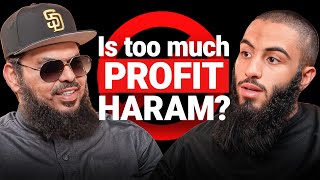
Sheikh Odman explains how profit is permissible in Islam through the story of Urwah al-Bariqi, who the Prophet praised for buying one sheep and selling it for two. Islamic business requires honesty, disclosure of defects, and avoiding exploitation. Transparent pricing builds trust and long-term relationships in today's market.
Chapters
Is it haram to make profit in Islam?
This is one thing that is there
a limit on how much I can make?
Arawah realized that his business skill set can make the mission of the Prophet easier.
Over the past five years, advertising has become very famous. That led to a trust recession. So people don't trust anything anymore.
What happened, for example, in the US it's just big fish eats little fish. If a Chinese company can make a car better, it can't sell it in the US Like Elon and Jeff Bezos, they're always trying to flex their money. But in the Muslim world, you have a lot of people that have a lot of wealth that don't even flex it.
Because a lot of people would think, okay, I want to have hasanat and I want to run business. I need to become a Quran teacher and that's how I'll get Hasanat. If you think about it, he will
be with the Prophet and with the Shuhada. He will be with those that are. Allah has raised their such ranks because of his.
Welcome to a new episode. We're in the newsa Alhamdulillah. We're in Medina, but we're carrying on with this amazing series with Sheikh Odman for taking the time.
Alhamdulillah, Wonderful.
Alhamdulillah. Very good. In today's episode, I want to ask you a question, Sheikh. Actually multiple questions. The first one being is it haram to make profit in Islam? I want to buy something for a dollar and sell it for as much as I want. Am I allowed to do this? Is there a limit on how much I can make? How can I know if my transaction is halal?
Allahu an barak. First thing, when we talk about anything Islamic, we go back to the Quran. We go back to sahih ahadith, authentic narration of the Prophet, Alayhi saaam. So we keep everything on Quran and Sunnah. And there's a beautiful hadith that I want to mention. Just when you mentioned that, it clicked really well. And Imam Al Tirmidi, Imam Ahmad IBN Hanbal, Abu Dawood, Ibn Majah, others have narrated this hadith and Shaykhun Albani graded it as authentic. So sahih hadith where one of the Sahaba Arwa al Bariqi, he's from the people of Medina. He was given a dinar by the prophet. Sallallahu alaihi wasallam to buy a udhiya or shaat ya any a sheep or a lamb that can be sacrificed as udhiya is coming up Inshaallah. He went out with that dinar. Now he could have just went and bought a sheep with a dinar and
come, gave urwah a dinar and told
him go buy a sheep, go buy to go to the market, buy an animal for udhya for sacrifice.
So what did he do?
So instead of just going and doing the bare minimum, he had the entrepreneur mind, he had the profit mindset for the sake of Allah, subhanahu wa ta'. Ala. He went and he bargained with the people selling to get two, he got two sheeps, he got two sheeps for one dinar.
So he came back with two sheeps
to the Prophet, he didn't. Now he could have, right? So now this is the mindset that Muslims had to have, we should have today. Like the Sahaba had a mindset of business, a mindset of profit and nothing wrong with that, right? He didn't cheat anybody, he didn't lie, he didn't do anything immoral. He used his business skill set. On his way back, he sold one of the sheep for a dinar.
Okay? So he came back to the Prophet with one sheep and a dinar and a dinar.
So the original dinar the Prophet had given him, he brought that back and he brought that sheep back.
So he got a sheep for free.
He got a sheep for free. And the Prophet sallallahu alaihi wasallam praised that. He didn't tell him, oh, why'd you make profit? Why don't you do the bare minimum? Why don't you do what I told you? I just told you, buy a sheep. No, he praised his mindset. He said even if he went and bought turab, even if he bought dust, he would profit from it.
Subhanallah, specifically with urwah, arwa. What makes arwah so special that he said if he could buy dust, he would still make profit.
Arw Al Bariqi is a very interesting sahabi. If you study his Seerah. He is somebody from the people of Medina and he was somebody that had a very intelligent business mindset. He was always trying to do more shooting as higher than his limits, you know, above his weight class as we say in English, right? He was always aiming higher and that's why he had a great, you know, later on he was, he was made a governor in the areas of Iraq, current day Iraq today. He was somebody that had a great role in many of the battles as well. And he would always aim high.
Do you know how he developed that skill set of always Wanting to aim higher, specifically with this sahabi.
So this is one thing that Allah subhanahu wa ta' ala blessed him with. And he was nurtured by the Prophet. People have certain natural skill sets, but they have to be developed, they have to be nurtured.
That was a trait of the Prophet. It was to always nurture. When he sees somebody's skill set, he always allows them to lean into it and grow into it.
That's so beautiful Today a lot of times when our young brothers want to get into business, we discourage them. We tell them, you know, don't get into this money stuff, just do your deen. We work a regular job, drive your taxi, you know, work a 9 to 5. Just make the bare minimum and get by. And that's Islam. But that's not the way of the Prophet. Alayhi saaam. Of course the Akhirah should be your goal, right? Even when you're didn't go and sell two sheep and pocket one of the dinars, he didn't try to cheat, he didn't try to lie, he didn't try to just work on the dunya, but he wasn't satisfied with the bare minimum. And now if he has that skill set naturally or developed, as many of our young brothers do, if the Prophet sallallahu alaihi wasallam didn't encourage it, it would have stopped him.
Okay, so there's two takeaways here.
Yes.
The first one is the Prophet encouraged him to actually carry on and do this business transaction. And he rewarded him for it, he praised him for it. But also the sahabi was. The Sahabi was honest and didn't cheat and mentioned he made the dinar, gave it back to him and gave the sheep as well.
Exactly.
Interesting.
So, so now there's a very important point also that this sahabi, why did he not just do it for himself? Meaning he could have said, you know what, it's my skill set. I'm the one that bargained it down.
Why did he not keep the dinar?
Why did he not keep the dinar? Because again, they were working towards the Akhirah, right? So they said, the Prophet is spending all his time for the sake of Allah. He's dedicated his time. He's the Prophet of Allah. He is the teacher of knowledge. He is the leader of the Ummah. He, he's the one teaching us goodness. So let us use our business skill set to help him.
You know what's interesting with what you mentioned is the Prophet not only Praised him. But the sahabi realized the prophet was busy with educating people and spreading dawah and he found his own way of supporting him. Not by spreading dawah specifically, but he was good when it comes to business. So Urwah made money and that was his way of spreading Islam.
Exactly. So this is the point of the da'. Wah. Everybody has different skill sets. Somebody may be a good speaker, Somebody may be a good writer, Somebody may be better at business and they can support the dawah financially. Somebody may be better at organizing or social media. Use your skill set for the dawah. Urwah realized that his business skill set can make the mission of the prophet easier. The prophet didn't ask him. He didn't tell him, go make me some money. Give me some money. He didn't beg him like some people do today? No. He had izzah. He had honor. But arwar also realized that, look, this prophet is spending all of his time sallallahu alaihi wasallam for the da'. Wah. If I can make life easier for him by using my skillset, my business entrepreneur skill set, let me do that. Let me save his dinar.
And he gets a reward as well.
And he gets a reward. Exactly. So look at all the beneficial points. One, when somebody has a skill set in business, don't discourage it. Don't tell them. No, no. The deen is you just do the bare minimum. You just work your job and spend the rest of the time for the sake of Allah. Don't worry about business. No, use your skill set for the deen. Right. Which is the second point. The prophet is tarbiya. How he educated, how he grew the mindset, not just from a deen perspective, from a business perspective, he praised his business acumen.
Yeah. I think in this story specifically, the prophet saw that Urwah had the business skill set, which is why he gave him the dinar in the first place to go buy in the marketplace. Because he could have sent a ton of other people. That's what I've seen as well, is that he specifically knew that Urwah was good when it comes to business. So he said, let me give him the dinar so that he can go ahead.
The right person for the right job. That's beautiful. Right? And then the next point we can take from this is how Arwa Radian, who his honesty in business, you know, he could have got, bought the two sheep, sold one for a dinar, pocketed a dinar, and brought the sheep back. And it would have been perfectly fine because he was given a dinar to get a sheep.
But he would be missing out on all the reward and all the praise from the Prophet.
He wanted the ajar for the akhirah. So he used that business mindset, that business acumen to make that profit. But he invested that back to the prophet. Sallallahu alaihi wasallam and to the dawah.
Very good. So I guess that that gives us an idea when it comes to the story of Urwah and how he used prophet in order to spread the deen. But in general, what's the ruling when it comes to profiting in Islam? If I buy something for a dollar, is there a maximum amount I can sell it for?
There isn't. Alhamdulillah. Islam is a religion that balances between extremes. We are the middle path. They were the balanced, moderate path. So in the worldly transactions you have two extremes. You have the communist mindset where your profit is restricted. You cannot make more than this. You must only sell this. You can only sell from here. You can't do this, you can't do that. And then there's the other extremism which is unchecked capitalism where big fish eats little fish. You can make dhulum on people, you can have monopolies, you can have. You can just be cruel to the people. Islam doesn't allow either one. It's that middle path. You can make all the profit you want as long as you're not being oppressive, as long as you're not cheating, as long as you're not trying to fix the markets.
By fix the market you mean make the market difficult for other people to enter.
Well, I mean difficult to enter what happened for example in the U.S. right. But the capitalistic mindset that's there, if an insurance company charges extremely high premiums or a pharmaceutical company charges where people are dying because they can't afford the medication, there's no check or balance, right? It's just big fish eats little fish. So if a Chinese company can make a car better, it can't sell it in the US Emirates or Qatar or these airlines cannot fly in the U.S. why? Because they know they can't compete with them. So instead of allowing true capitalism, which is that, you know, you allow free marketplace, they restrict them in a way of oppression to make the profits themselves. They make these fake bubbles in properties, give subprime mortgages so people that they know cannot afford will take the riba based system and then they bust the bubble, make the people oppressed make the people homeless. So that's haram. Because you're oppressing people.
Okay, so what's allowed? What are the. The lines? People can know you can make as
much profit if you buy something for a dollar. And me and you agree that I want to buy it for $100, you can sell it for $100.
And there's nothing wrong with that. It's not haram. It's not makaram.
No, no. But if you know that there is a defect in the product and you're going to sell it to me defective, that's haram.
Yeah. I have to let you know about the defects now, if you're aware of the defects and you're still fine with the value of the price and you're happy to pay for it, Nothing wrong with that.
Nothing wrong with that.
Makes sense.
There is a beautiful, beautiful hadith, the prophet said about the merchant who is amin, who's trustworthy, honest. Right. Somebody who deals with defects, allowing people to know, being open with them. He will be with the prophets and with the shuhada. He will be with those that are. Allah has raised their such ranks because of his honesty in business.
Always letting know about the defects, always letting know about being honest, what you can improve.
Exactly right. And that's, I mean, I think from your experience, how does that work in the practical business field? Meaning when somebody's honest, when somebody's mindset is not just to rip people off, but to develop the communities to help people, how does that work in business?
What's very interesting, the question is in 2026, this Hadith is even more important, Subhanallah, because we're entering an economy that we call a trust recession, where people are very scared of spending their money with people they don't trust or with people they don't know. Whereas 20, 30 years ago, people would spend money with anyone that resonates with their products. It seems like they're interested in the services, they would just buy it from them. Now people do so much research, do so much.
Do you think that's due to a lot of false advertising and marketing that's really taken off?
Exactly. Over the past five years, advertising has become very famous. So people have been advertising everything and anything, making any promises and not delivering on it. That led to a trust recession. So people don't trust anything anymore and they're looking for those people who are actually trustworthy. Because what that means, when you enter a trust recession, people think that means no one makes money. That's actually the opposite. It Means the people who hurt people and sell fake products and don't actually deliver on the services start making no money and it becomes very difficult for them. On the other side, the people who are trustworthy, the money still needs to go somewhere. It will lead to the people who are the most honest, lead to the people who have the best reviews, lead to the people who have been known for delivering a good product. And as we moving we could see in 2025, 2024, it's only going more and more towards the trust. The trust issue is becoming more and more difficult. People are less and less trusting, people with no experience, people who don't have proof of what they're promising. So it's very important that we understand how the market is moving and we adapt to it. And subhanallah again, that's what I love with this series. It's a lesson that we can apply today. But it's from hadith of Prophet 1400 years ago.
So imagine how beautiful and practical Islam is even in a business perspective that for 14 and a half centuries the same principle has worked and it's more in need today than ever before. And like you mentioned the trust recession going on, I mean when Muslim businessmen, when Muslim traders are encouraged and they are given the proper Tarbiya training or upbringing, as you would say, and doing business correctly, they can really take the
marketplace and it makes business a lot easier. I had personal clients or people I work with where I was extremely appalled by the price. Sometimes I actually have a story. I had a client in my marketing agency that was looking to buy one of my campaign. They wanted to advertise the software and I was managing the campaign for them. They offered me a bigger price than what I actually charged. They say we do our calculations, the price should be $5,000.
Nice.
I went back and did my calculations and I said, honestly I appreciate your offer but my service is worth $3,800. So if you I can use the extra money to add extra services or I'll just charge you 3,800 because that's the price. They came back to me not only be so amazed and surprised, they were like, how is this guy loyalty right there? And the thing is that client ended up being one of my biggest clients, one of my biggest openings to get all the clients and so forth just because of this honest move. Whereas I could have kept the extra thousand two hundred dollars and then made. Maybe they would not have been happy with the service and cancelled after. But because I was honest, they managed to stay with me. And longer bring me other clients, refer me to other people and so forth.
Allahu Akbar. See, another problem that I do see in the Ummah today, and we go back to the story of Arwa, is that there are Muslims making a lot of money. I mean, people think Muslims are broke, but that's not true. I mean there's many Muslim billionaires, many that aren't even, you know, they don't even let people know that they're billionaires.
I think people don't think they have money because they don't know them and they don't, they're not on social media.
And the thing is, a lot like Elon and Jeff Bezos, they're always trying to flex their money, right? But in the Muslim world you have a lot of people that have a lot of wealth that don't even flex it. They don't even get into those Forbes competitions, so on. So they're not even known to people, right? But even in the us I mean one of the famous billionaires who owns sports teams is a Muslim. His name is Shahid Khan, Pakistani descent. And he owns, I mean he owns tons of businesses and he started out washing dishes. You know, he started out working hard. He made billions literally. And he's a billionaire today. Subhanallah, the other that we had recently heard about, one of the Muslim brothers and his son, they went on a deep sea submarine and they got crushed. You know, may Allah have mercy on them. You know, I don't know why they were sitting there on those things anyway, but anyway. But he was a billionaire as well. Muslim billionaire. And there are many, many Muslim billionaires, Alhamdulillah and many Muslim millionaires. And especially this new generation in the UK and the us, Muslims are making money, but are we investing that back into the deen or not? That's another point that I think is being forgotten is that a lot of times when Muslims do make it in business, they feel like khalas, I made it. It's all because of me, me, myself. And I, I'm a self made man. And they kind of just spend it on themselves instead of bringing it back to where it actually came from, which is from Allah Subhanahu wa ta' ala and investing it back in the deen. So we can support the dawah, we can support the deen, we can grow the deen, we can make it where that fund becomes a means for a good life in Dunya and also Akhirah.
Yes. And you know what's interesting with this, it's a great way of getting good deeds for people who sometimes they struggle with specific acts of worship. I mean they're doing what's fart, they're praying, they fasting and so forth. But when it comes to learning the entire Quran, for some people it might be a bit more difficult and they might have their own way of getting their good deeds by specifically, for example, the example of Arwah who was specifically good with business in this sense he used his specific skill set. Who maybe is not the best at teaching. Maybe he. Because a lot of people would think, okay, I want to have Hasanat and I want to run a business. I need to become a Quran teacher, I need to become an Arabic teacher and that's how I'll get Hasanat. But if you think about it, you can even run a simple business. You can have a construction business and from the money you make, you can maybe fund the masjid. There's fifty hundred thousand people a day praying and you're getting all the azure because of your construction business.
That is so beautiful. I mean if you think about the sahaba, each one of them had a unique skill set. Like Urwal Baraki, the one we're talking about today. You have not seen him much in the books of tafsir. Unlike Abdullah bin Abbas, Abdullah IBN Umar or many of the Obay IBN Ka' b or Abdullah IBN Mashud radiallahu Anhom, they were experts in the field of tafsir. Right? Orwa Ibn Baraki Al Baraqi. You don't see him a lot in narrating hadith. There are hadith, he narrated no doubt, but not like Abu Hurair or Anas IBN Malik or Aisha radiallahu anha, those that were experts in this field of hadith. Now Urwal Bariqi, you don't hear about him leading armies as much. He fought Qital. I'm not saying he didn't, but he's not Khalid IBN Walid. So what is he known for Exactly. So Subhanallah, one of the things he is known for is his business acumen. This hadith that we mentioned in others, we where he was very good in business. He helped the Muslims grow their wealth. Secondly, Allah blessed him that from that he was given a lot of honor in Dunya. He was given leadership roles even after the death of the prophet. Sallallahu alaihi wasallam amongst the khalafah. He was somebody who was given leadership roles. So he did lead places and develop their economies and develop them as societies. In fact a lot of financial Policies are well known from Iraq, where he grew the economy. So Allah blessed him in Dunya. And that's an important point. That Allah, he was honest, he was good at business. He utilized it and he used it for the Dawah. So Allah didn't just leave it for the Akhirah. Allah grew him in this world. He was very wealthy, you know, before his death, Allah grew his wealth a lot, and Allah gave it to him in the Akhirah. Right? So there's some people that just worry about Dunya, Dunya, Dunya. They may make billions, but then they die and they have nothing for the Akhirah. And somebody else may live a life of zuhud, and they have nothing in this world. And they do everything for the Akhirah, but they're not able to achieve as much because they didn't use the skill set that Allah blessed them with. Right?
So we have to find a balance.
We have to find that balance. Work. Use your skill set, use your business acumen, work hard, make that Dunya, but utilize it for the Akhirah. The Dunya, like one of my shukh used to give a beautiful example. It's like the ocean, right? You have to. If your boat needs to go from one place to the other, you have to tread on the water. But you cannot let the water enter the boat.
Yeah. Because otherwise you're sinking.
If it enters, you sink. If you get away from the water at all, you just sit there on dry land on a boat, you're not going to get anywhere either. Right?
Interesting.
That balance is beautiful.
Very good. Okay, so Sheikh, now we understood a story about Arwah. We understood also that you can use your skillset in business to help acquire more good deeds and ultimately get closer to Allah from your skillset.
Excellent.
How can we summarize this so people can take this and start.
Inshallah summary, there is. Look, everybody has skills. Develop their skills. Don't discourage them. If a young brother wants to get into business, don't tell him. Don't take the risk. Don't. Don't worry about it. Just. No, encourage them. As the Prophet Sallallahu alaihi wasallam did with Urwah. Tell them, look, if you go out there and you try hard, you can do it. The Prophet ended that hadith by saying, even if he bought torab, he could make profit of dust. He could make profit. That's an encouragement. So encourage the youth. Secondly, for those people that are doing business, utilize your business for the deen. Go back and when you make a profit. Take that profit, go back and help the deen. Help the Dawah, help grow the Islamic causes. Build Masajid. Utilize it for the Akhirah. And the last thing we'll say there is, everybody has a skill set to be used for the deen. Like Arwa had his business acumen, Khalid Al Waleed had his military leadership, Abu Hura had his Hadith narrations, Ibn Abbas had his Quran. Tafseer Abu Bakr Amar, Uthman Ali Radian had their leadership skills. Utilize your skills for the deen.
Subhanallah Barakallahu Fikhsh. Amazing episode.
Always a pleasure.
More from Eyoub

Abu Lahya: The Halal Productivity Routine #muslim #entrepreneur #business #islam


Abu Lahya: Is It Halal to Watch Sports? #muslim #entrepreneur #business #islam


Abu Lahya: How to Build a Halal Business #muslim #entrepreneur #business #islam

Abu Lahya: How to Stay Ahead of the Competition #muslim #entrepreneur #business #islam

Abu Lahya: What Happens When You FORGET Allah? #muslim #entrepreneur #business #islam

Abu Lahya: He Sold His Company for $100M... #muslim #entrepreneur #business #islam

Abu Lahya: The HALAL Way to Run Your Business #muslim #entrepreneur #business #islam

Abu Lahya: The BEST Cold Outreach Method in 2026 #muslim #entrepreneur #business #islam

Abu Lahya: How Allah Can Help You Achieve ANYTHING... #muslim #entrepreneur #business #islam