
How The Prophet ﷺ Dealt With His Biggest Enemy (Use This in Your Life)
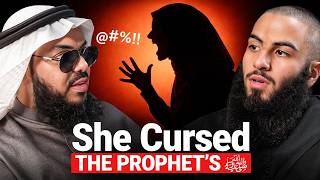
The Prophet Muhammad faced relentless attacks from Abu Lahab, his fiercest opponent. The episode draws on Qur'anic verses and hadith to show how he ignored baseless slander, maintained good opinion of others, and focused only on Allah's approval. Modern da'wah activists facing online trolls can use the same strategy.
Chapters
The Prophet (صلى الله عليه وسلم) was sitting by the Kaaba with Abu Bakr (رضي الله عنه). Abu Bakr (رضي الله عليه وسلم) told the Prophet (صلى الله عليه وسلم), she's coming and she's angry and she's going to insult and she's going to take it to a very low level.
How did he react?
The Prophet (صلى الله عليه وسلم) said, she will not see me. So then she changed the name of the Prophet (صلى الله عليه وسلم), and I'm not going to use the name, but she made it into the curse. And he was his neighbor and he was close to him and he was beloved to him and he was the harshest in attacking the Prophet (صلى الله عليه وسلم).
And how did the Prophet (صلى الله عليه وسلم) handle it?
Here's what I think of all All you haters, here's what I think about you. But this is what the Jews would say about his mother, who we believe to be pure, we believe to be an amazing religious dedicated woman. They would say that she was a woman of—
Assalamu alaikum wa rahmatullahi wa barakatuh. Welcome to a new episode. In this episode, we're speaking about people attacking your reputation, attacking your name, calling you a liar, calling you bad names. Making lies about you, making up stories, and that affecting you. We'll speak about how to handle it. We'll speak about how you can defend yourself. We'll even speak about the Prophet (صلى الله عليه وسلم) and the companions and the prophets who were afflicted by this and how they reacted. I'm super excited for this episode, Sheikh.
Me too. And this is something I'm very familiar with. I mean, because I go through it every day.
Yeah, millions of views, millions of followers. Masha'Allah, you probably have it many, many times. How do you deal with it?
'Look, I ignore it. I don't care what anybody says, and I don't care what anybody thinks. All I care about is what Allah (SWT) thinks about me.' Remember this, when you speak the Haqq, people are always going to defame you. People are always going to attack your name. But why? Because of jealousy, hasad. Because people of evil cannot stand good to spread. And even people of good at times get taken by the hasad that is in the hearts.
But what if it's close people to you? Let's say it's people you know, it's people that are around you.
That is the worst and most common.
SubhanAllah. How do you deal with it? Let's say you have a friend, you have a family member who accuses you of something that you know you're not doing, but they still accuse you.
How do you deal with it? When I started to give da'wah, it was very easy because nobody knew me. I was in 1995, I went out to the streets, Just spoke to people, street corners, drug dealers, gangsters, people on the road, as they say in the UK, or people living in the hood life, or the barrios, vatos. And Alhamdulillah, it was very easy. People were talking, I was talking, some became Muslim, some ignored me, whatever. Once the videos started to get more popular, because we didn't used to record at first, once the brothers started recording and started posting, and Allahumma barik, and MashaAllah, la quwwata illa billah, By the will of Allah (SWT) and tawfiq from Allah (SWT), the dawah grew to an international platform. Suddenly, I started to see people were changing.
Their behaviour changed?
Their behaviour changed. Why? People close to me, people in my masjid, people that were on my team, the people that I trusted, people, even family, they changed. And then the hassad that you see from the The trolls online is just— that's why I don't read texts, I don't read messages, I don't read comments. Really? Because yeah, I mean, like, I read from, like, people I know. Like, if you message me and I know you, I'll read. If I get random numbers, I just ignore them. I don't go online and read comments because, you know, if they're good, then in the end, all that matters is Allah is pleased with it. If they're bad, then all that matters is Allah is pleased with it. So in the end, All I care about is what Allah (SWT) thinks. But in the beginning, when I started seeing this and people who were Muslims were attacking me for things that I didn't do, and people were making up false lies online, like crazy, absolute nonsense, and other people were like, well, maybe, I was shocked.
How do you deal with it? Because you feel bad. I mean, even if they're lying, even if you know everything is fabricated, somehow the human is weak. Will still somehow feel affected.
So, you know, like trolls, I don't care about because there's Christians, there's Hindus, there are atheists that are just bots, they're trolls.
That's straight up lies though. That's easy to ignore. I feel like people can handle those.
Yeah.
What people struggle with is when it's either somebody they know or trust, or there's either a small part of truth or something fabricated that actually affects them. How do they deal with this?
So, for example, Abu Lahya, I know you, right? Like we've sat, we've broke bread together, we've, you know, and travel together, right? So if somebody comes and tells me that you're doing something that is absolutely out of your character as a Muslim, I should have husn adh-dhan. I should think good about you. And if there is some doubt, I should come to you and say, Akhi, here's what I heard. I just want to, you know, because I know you, I'm just going to clear it up. But for me to go online and be like, well, maybe, right? It's very low. I found it disgusting because you know me. Like, how are you going to believe something about me like this when you know me? And you are not going to come clear it up with me? Like, that is ridiculous, right? So, I was in Kuwait and I met with Sheikh Uthman Khamis. And before that, on the same trip, I was here in Madinah and I met with Sheikh Abu Lahya in Madinah, in the Haram, Majid al-Nabawi. I asked advice of both of them on this issue. And Subhanallah, they gave me almost verbatim the same advice. What was the advice? What did they say? They said, "Akhi, we see your dawah growing." Both of them, they knew who I was, they saw our videos. They say, "We see the khair that's coming from it, the people that are becoming Muslim, thousands around the world." The Muslims, one of the biggest things is Muslim youth that watch that and get that confidence in their aqeedah and their deen and their firmness, and they see no compromise and no apologizing and no watering out Islam. Sisters that are wearing niqab now because they're not ashamed anymore. Brothers that are in the masjid giving dawah with beards and thobes because they're not afraid of being called anything. So they said, we see this khair, but know this, that nobody who stands on the haqq will be without test. And the hardest test will come from those closest to you.
SubhanAllah. So if you know you're doing good, then it's guaranteed that people will attack you.
100%.
SubhanAllah.
When we read the books of jarhut adil, the books where you look at the narrators of hadith and those that criticize them, and some of the greatest scholars of hadith, crazy lies were made about them.
Do you have examples in the deen, in the sunnah?
For example, Imam al-Bukhari. Imam Bukhari, Imam Muhammad ibn Ismail al-Bukhari, the legend, the The book of hadith that is probably the most famous book of hadith in the world, no doubt the most authentic book of hadith in the world, that Imam, they call him the Amirul Mu'mineen fil-Hadith. Today we just take him as a legend that everybody from across madahib loves. Hanafi, Shafi'i, Maliki, Hanbali, Wahhabi, no matter what madhab you follow, no matter what country, people love Imam Bukhari, they teach his book in madaris, right? But in his lifetime, he was constantly attacked.
SubhanAllah.
You know, he had an issue with one of the other great scholars, al-Dhahili, and they went back and forth, and he was exiled.
Really?
And he was criticized.
So, he was kicked out?
He was kicked out.
From where?
From the Khilafah of the time, which ruled his, I mean, the part that was under him was under Bukhara and all the way into Iraq. And not just that, rumors were made up about him, attacks were made on his person.
How did he react? How did he handle it?
He continued the khair he is doing. And till his death, he was not vindicated. Meaning he died in exile. And many ulema said only his brother or a few people prayed janaza on him. But look at how Allah (SWT) raised his rank, which he didn't see in his lifetime. But Allah (SWT) knew his sincerity, Allah (SWT) knew his work. So even with all the false seers today, those people that attacked him, we don't even know their names anymore. They're lost in history. The only time their name comes up is When talking about how they attacked Bukhari.
SubhanAllah.
They are nobodies today. But Imam al-Bukhari is in every household, his name, his— look at the ajr he is getting. Every madrasa from India to Malaysia to Africa that's teaching Sahih al-Bukhari. Every sheikh from Madinah to Azhar that is basing their works on the hadith of al-Bukhari. Every household that has the Sahih of Imam al-Bukhari. Every book that's being written based on— he's getting that ajr.
Yeah, all that ajr, and he did so much good, yet in his lifetime people were defaming him. People were saying this is lie, you're fabricating things.
You know, a Sheikh-ul-Islam, Taqiuddin Ibn Taymiyyah, the famous Abu Lahya, the one that today when we talk about— if we just say Sheikh-ul-Islam, we know who is Ibn Taymiyyah. You know, his father was also Ibn Taymiyyah, Abdul Halim, Shihabuddin Ibn Taymiyyah. His grandfather was also Ibn Taymiyyah, one of the Shaykhans of the Hanabila, Majduddin Ibn Taymiyyah. You know, Al-Majd is As they say, Abu Barakat. But the really famous one, at least amongst the Awam, you just say Ibn Taymiyyah, khalas, everybody knows, right? But during his lifetime, he was attacked. He was slandered. He was imprisoned by the Muslims. And he was, you know, the Tatar were against him. They were trying to kill him.
But why did he not just give up and fall under the pressure?
Oh no, never, ever, ever do we give up. So the Sheikh, he gave me some beautiful, he said, first, know this. And they mentioned a beautiful quote from the books of Jarrat Aadeel. He said, if you ever find anybody that nobody was against, not the people of Bida'a, not the people of Shia, not the people of— Everybody loves. Then know this is a person that has never spoken the truth in their life.
Subhanallah. That's interesting.
That's interesting, right? So you're saying if everybody loves you, something's wrong.
Subhanallah.
Because when you speak the truth, The people of desires are going to hate you. You know when there's a wolf trying to make a sheep its meal and you protect the sheep, the wolf hates you. So when the banks are trying to take advantage of you with riba, when people are trying to take advantage of your deen and they're trying to get you to compromise your deen and you stand up and you say, 'No, I'm not going to apologize. I'm a Muslim. I believe in the Quran. I believe in the Sunnah. I believe in the Sharia. I'm not afraid of anybody. I'm not apologizing to anybody. Now, the munafiqeen from the Ummah and the kuffar from outside are going to hate you. They're going to make up— look, are you better or the Prophet (صلى الله عليه وسلم)?
The Prophet (صلى الله عليه وسلم), of course.
Of course. And that's what these both shuyukh told me. They said, look, even the best of mankind, Sayyid Ibn Adam, the leader of the children of Ibn Adam, was not spared from this. When he was making his own ibadah, he was sadiq, he was ameen, everybody loved him. But when he gave the da'wah, when he told them your idols are false, when he told them that they have to believe in Allah, when he told them there is a Day of Judgment, when he told them you cannot oppress people, you cannot be racist against non-Arabs, you cannot be classist against the poor, you cannot be sexist against women, when he stood up for the haqq, What happened? They said he's a kahin. Kahin is a fortune teller, somebody who deals with magic. They said he's majnoon, he's insane. They said he's a sahir, he's a magician. They said he's affected by jinn.
Speaking about the Prophet (صلى الله عليه وسلم).
About the Prophet (صلى الله عليه وسلم). SubhanAllah. The best of mankind. Before him, the Anbiya, Isa (على السلام), you know, for the Christians and them watching, right? Isa (as), the Prophet of Allah, born miraculously. What did the rabbis who were jealous of him, what did they say about him? That he is born out of wedlock. I don't want to use the word they used, but it starts with a B and it's disrespectful. So of course, as a Muslim, I have great respect for every Prophet. But this is what the Jews would say about his mother, who we believe to be pure, we believe to be an amazing woman. Religious dedicated woman, they would say that she was a woman of bad character. And again, I'm not going to use the word out of respect, but it starts with a W and ends with an E. And that's what they said in the Talmud about her, about zina and things like this, that we would never imagine saying such a thing. But he is the Nabi (prophet) of Allah (SWT). He was born with a miracle. He spoke as a child. People still accused him. Subhanallah. And the harm that hurts the most is that which comes from closest to you. But that's the hardest test.
But that's what I was going to say, because when it's munafiqeen, when it's non-believers, when it's bad people who attack you, it's kind of easier to handle it because, you know, these people are evil. They don't want khair for me. I'm not going to listen to what they say. But if it comes from people close to you, sometimes it even comes from your family, from close people to you. How do you deal with it?
Both of those shuyukh told me the exact same thing on this. Who was the harshest against the Prophet (صلى الله عليه وسلم)?
Abu Lahya. SubhanAllah.
Abu Lahya was from the staunchest enemies. Whole surah about him.
Surah Al-Lahya.
Yes. Why? He was the actual relative of the Prophet (صلى الله عليه وسلم). What relation did he have? He was his uncle.
SubhanAllah. And he was the harshest on him.
Not just that. He was his neighbor. SubhanAllah. The Jaar. In Islam and in Arab tradition, the neighbor had a lot of rights. And he had relations because his sons were married to the daughters of the Prophet (صلى الله عليه وسلم). SubhanAllah. So from so many aspects, he was very close to him. Very close to him. Not only was he just Qurashi, and not just that he was from Banu Hashim, but he was his physical blood uncle. He was his relative. He was his The father-in-law to his daughter.
He was attacking him.
And he was his neighbor, and he was close to him, and he was beloved to him, and he was beloved, and he was the harshest in attacking the Prophet (صلى الله عليه وسلم).
How did the Prophet (صلى الله عليه وسلم) handle it? How did he react?
This is the beauty of Islam. The Prophet (صلى الله عليه وسلم) made dua for him. The Prophet (صلى الله عليه وسلم) gave him dawah. The Prophet (صلى الله عليه وسلم) ignored his harm and continued his mission. SubhanAllah. And he never stooped down to his level.
Interesting. So he never argued with him or—
I'll give you a beautiful hadith. You're going to love this hadith. Do you know Abu Lahya's real name?
Go for it.
Abdul Uzza.
Abdul Uzza.
You know, in the Quran, he's never called Abdul Uzza. Why? As some of the ulama of tafsir have mentioned, which is that because that's a lie. There is no Abd of Uzza. We're Ibadullah.. So Allah called him by his kunya Abu Lahya. Tabbatida Abilhabiyyum Watab. Abu Lahya's wife is called Umm Jamil. The Imra'ah mentioned in the end, Aani, is his wife. And her name was not Umm Jamil. That was a title given to her because of her beauty.
What was the title?
Umm Jamil. Right? She didn't have a son named Jamil. This is because she was beautiful. They call her the mother of beauty.
Jamil means beautiful.
Abu Lahya doesn't have a son named Lahya. Lahya was the flame that was beautiful. You know, Arabs in the Arabic language, as you are Arab, they have a lot of words for the same thing. But there is a depth. Each one is unique. Like ibl, naqa, jamal. They all mean camel, but they are different. Female, male, age. Bakr is a strong, young, vigorous camel, right? That's why Abu Bakr, he doesn't have a son named Bakr, it's from his strong personality. Because Abu Lahya was very handsome, he's called Abu Lahya. And his wife was very beautiful, Arwa. She was beautiful, so they called her Umm Jamil. But she was also very eloquent. They were both poets. They were both educated. They were a power couple. When the Prophet (صلى الله عليه وسلم) began his da'wah, they both attacked the da'wah. And they brought the curse of Allah (سبحانه وتعالى) upon themselves. So one day, Abu Bakr (رَدْيَانِ) and the Prophet (صلى الله عليه وسلم) were sitting. And the name of the Prophet (صلى الله عليه وسلم) is Muhammad, Yani, the most praised. So she came and to insult the Prophet (صلى الله عليه وسلم). Because when Tabbat Yadaabu Lahya was revealed, she became very upset. The Prophet (صلى الله عليه وسلم) was sitting by the Kaaba with Abu Bakr (رضي الله عنه), and Abu Bakr (رضي الله عليه وسلم) told the Prophet (صلى الله عليه وسلم), she's coming, and she's angry, and she's going to insult, and she's going to take it to a very low level.
How did he react?
The Prophet (صلى الله عليه وسلم) said, she will not see me. And he would not respond to her.
He would just ignore it.
So she came and she told Abu Bakr (ra), where is your sahib? Where is your companion? Look at the miracle. Because he ignored her, Allah protected him from her. She couldn't even see him. Miracle from the Muajizatun Nabiyya. So she was there and he was there and she couldn't see him. Subhanallah. See, this is a lesson for us. When you ignore the trolls, they become invisible.
Subhanallah. When you ignore the haters, people who attack you, they become invisible.
Exactly. And you then get protected from them.
Yeah. You know, there's a saying, they say if you give them attention, that's when you empower them. Exactly. It's exactly as putting wood into a fire. You're making it bigger because you're giving them attention. You're growing the hate they're giving you. Whereas if you ignore it, at some point it'll just vanish and they'll just stop by themselves.
Subhanallah. So when she came, she tells Abu Bakr (RadhiAllahu Anhu), 'Where is your sahib?' Abu Bakr (ra) is surprised, like, 'The Prophet (صلى الله عليه وسلم) is sitting right next to me and she is asking me where is he?' And he realized that Allah had protected him. So then she changed the name of the Prophet (صلى الله عليه وسلم), and I am not going to use the name, but she made it into 'the cursed.' And out of just changing in Arabic a little bit, she changed it. And she said some very harsh words. She said some poetry against the Prophet (صلى الله عليه وسلم). So Ubayq (Rali Allahu Anhu) turned to the Prophet (صلى الله عليه وسلم) and said, "Are you going to respond to her?" So he said, "No, why should I respond to her? She's not talking about me." Yeah, because she used another name. She changed the name, so she's talking about somebody else. I'm Muhammad. So you see how he ignored her.
SubhanAllah.
He didn't stoop to her level. He could have. He could have responded. He could have gotten angry. He could have, right? But he didn't. And that is the hikmah. You know, Lut (AS), who was the harshest against him? His wife, who betrayed him. You know, when the angels came, you know who gave that news to the people of Lut? His wife. His own wife. The wife of a prophet. And that's why Allah (SWT) gives the example of her as from the kuffar in the Quran. Nuh (AS), His wife as well. And both those examples are in the Quran. His own wife betrayed him. Look at the harshest against Ibrahim (AS), his own father. His own father. So now you see the best example of this that I can give you is Yusuf (AS). Who betrayed him?
His own brothers. Blood. They come from the same parents.
Same father, different mothers, but they come from the same father. Except for Binyamin, he was from the same mother. But the same blood, the same lineage, your own brothers.
Why?
He didn't do anything wrong. He wasn't mean to them. He wasn't against them. Hasad, jealousy, an unfounded jealousy. He didn't do anything wrong. So now the advice that Shaykh Eyoub (Abu Lahya) gave to me, and I'm going to give to everybody here, is first thing, understand, if you're doing something right, somebody's going to attack you. Be ready. If you want to follow, ashaddu bala'an anbiya thumma salahin. What did the Prophet (صلى الله عليه وسلم) tell us? The hardest tested are the prophets, and then the pious, amthal fa'amthal, in that example from example. In that level, your iman goes up, the test gets harder. But your reward increases as well. Your Jannah is going to be higher, you're going to be closer to Allah, you're going to be in the company of the Anbiya. So it's worth it, but it's going to be hard. Nothing worth doing is easy.
You know, that's one thing that happened to me when I got started with this whole social media thing, because for the vast majority, Alhamdulillah, of my entrepreneurship life, I was offline. No one could know me. I always wanted to stay low-key.
Good times, huh?
Yeah, subhanAllah. Miss those times. But alhamdulillah, there's khair in it. When I started posting videos, of course, you know, people would comment, whatever. They would feel certain things. And one day I was speaking with Sheikh Asim al-Hakim, and I brought up this story to him, and I was like, Sheikh, I'm just posting these videos. I'm starting. And you know, this guy mentioned this. He curbed me straight away. He was like, sorry, do you think you're better than Prophet (صلى الله عليه وسلم)? He was like, yeah. Do you feel like— who's better, you or the Prophet (صلى الله عليه وسلم)? I was like, Prophet (صلى الله عليه وسلم), of course. He said, did the Prophet (صلى الله عليه وسلم) not get tested? Did he not get haters? Did he not get people lying about him? He was the Prophet of Allah, the best human on earth, and he had haters. Who do you think you are to not get that? So true. I was like, subhanallah.
May Allah protect him, Sheikh Eyoub (Abu Lahya). Wonderful Sheikh, masha'Allah. It's so true. And you're going to get haters. You're going to get even from within your circle, from your own friends, from your own brothers.
How do you stay motivated? How do you stay on the straight path? Because you Now we understand you have to protect yourself. We made an episode on evil eye. You have to stay steadfast, but sometimes it might get to you, it might get to your mental. And if somebody's watching this, feels motivated, but they just have that little ick, they want to make sure and feel convicted that they're on the right path, even though people attack them. Bismillah, go for it. This is very helpful. You ready? Bismillah. You ready? Let's go. You ready? Let's go.
That's it.
What is it? We missed it. What do you mean?
Just wipe it away? Don't care.
Just ignore it? Ignore it. SubhanAllah.
Will they benefit you in the akhira?
No.
Will they save you out of the naar? No. Will they enter you into Jannah? Not at all. Is your maghfira in their hands? No. Is your success and failure in their hands? No. So why are you worried about them?
It's in the hands of Allah.
In the hands of Allah only. Worry about what Allah thinks about you. SubhanAllah. That's what I do. Here's what I think of all you haters. Here's what I think about you. That's it. I brush it off my shoulder. That's it. You can post anything you like. You can make up— well, actually, every— and I want to be very sincere here— those people that backbite me at home or online or sitting amongst their friends or in coffee shops or in McDonald's or wherever, Jazakumullahu Khairan.
You're giving him good deeds.
You know, I don't have a lot of good deeds and I'm worried about making it to Jannah, but you are giving me hope. 'Your backbiting might get me into Jannah.' So on the Day of Judgment, when that hisaab is going on, and I don't have enough good deeds, your backbiting, bring it on. And if you run out of deeds, then I got sins for you to take. SubhanAllah. So I'm not worried about them. Don't worry about anybody.
Worry about what Allah thinks of you. That's it.
That's beautiful. You and Allah. If that relationship is strong, Don't worry about hassad, don't worry about ayn, don't worry about backbiters, don't worry about plotters. The whole world plotted against the Prophet صلى الله عليه وسلم. The Quraysh plotted against the Prophet صلى الله عليه وسلم. The Romans and Persians plotted against the Prophet صلى الله عليه وسلم. They sent assassins. The Persians sent 2 assassins at one time to kill the Prophet صلى الله عليه وسلم. The Romans moved their armies before Tabuk, where the Prophet صلى الله عليه وسلم went and checked them and stopped their advance. The Quraysh sent armed men from every qabila within the qabila of Quraysh to surround the house of the Prophet صلى الله عليه وسلم, to harm him, to unalive him. What happened?
What happened?
إِذَا جَا��ءَ نَاسُرُ ��للَّهِ وَ��لْفَاتِ�� وَرَئِتَنَّا سَيَدْ خُلُونَ فِى دِينِ ��لَّهِ أَفْوَاجًا Allah saved the Prophet صلى الله عليه وسلم from amongst all the plotters, all the schemers, all the people that harmed him. He walked from the middle of them. They couldn't even see him.
Everyone was against him except Allah.
And Allah was with him. And then Allah gave him that victory. He came back to Makkah victorious. Did he say, "Oh, I remember when you backbited me, I'm going to harm—" No. Forgiveness. Forgiveness. "Go into this house, you're forgiven. Go here, you're forgiven. Go here, you're forgiven." Let's do it.
Let's do it live. If you ever backbited me, if you ever did anything about us, if you ever hated me, may Allah forgive you. I forgive you for the sake of Allah. Let's get good deeds. And I forgive you for the sake of Allah. Allahu Akbar.
That's beautiful implementation right there.
Straight away, I'm trying to get good deeds. I'm trying to make it to Jannah. I don't care. Comments, that's just numbers and letters on a screen. I don't care about that. I want to make it to Jannah, bro.
And they're a bunch of trolls. They'll never say it to your face. These are just a bunch of haters that sit around jealous, burning in their own useless jealousy, not doing anything positive for themselves or their communities. Just feeling better by thinking they can type. They have no power over me, and you should not let them have any power over you.
You move forward. I heard this saying, these people who said, you can have the entire planet against you, as long as you have Allah (عز و جل) on your side, you'll be a winner. And you can have everyone on your side except Allah, and you will be a loser.
There's a hadith on this, right? Because everything, we go back to the Quran, hadith, beautiful hadith. Where the hadith Qudsi, where Rasulullah (صلى الله عليه وسلم) tells us that Allah (سبحانه وتعالى) says that if all of mankind and jinn got together to help you, they will not be able to help you except what Allah (سبحانه وتعالى) has already written for you. And if all of mankind and jinn get together to harm you, they cannot harm you except what Allah (سبحانه وتعالى) has already written. The pens have lifted, the ink is dried, that is it. Right? Everything is in the hands of Allah (سبحانه وتعالى).
So don't worry about anything, ignore the haters, ignore the bad people, ignore the backbiters. Move forward. And just worry about what Allah (عز و جل) thinks of you. And as long as Allah (عز و جل) is happy with you, then you have nothing to worry about.
Make your goals, work on your goals. And when you look, the Prophet (صلى الله عليه وسلم), he had to leave Mecca under the threat of life, where people with swords and spears and shields were outside his house. But then he focused on his mission. He continued Badr, Uhud, all of that. Allah made him victorious. وَالْأَقِبَةُ لِلْمُتَّقِينَ (Wa Al-Aqibatu Lil-Muttaqeen), Allah says in the Quran that the end victory is always for the people of Taqwa. In dunya, Allah gave him the Fath of Mecca, and huge amounts of the Arabian Peninsula tribes were entering Islam. Afwaja, in huge groups, right? And imagine his reward in Jannah. Look at Musa (AS). Everybody plotted against him. Bani Israel, his own people plotted against him. Firaun plotted against him. Who became successful? Musa (AS). Who drowned? Firaun. Who was saved? Musa (AS). So always focus on your mission. Imagine if you were Lut (AS) by yourself, just you and your daughters. No strong men, no tribe, no backing. You're not even from the people of Lut. He's somebody that was from the people of Ibrahim (AS). He was sent to the Qaum of Lut as a Prophet. Your own wife betrayed you. People are at your door, breaking down your door to harm your guests. You know, all the LGBTQ crowd. How stressed he must have been. You know, they put restrictions on him that he couldn't do good. When you let the evil spread, they restrict the good. He couldn't host guests. They put restrictions on him because he was good and clean and pure in a corrupt society. But in the end, who was saved?
Himself.
Lut (على السلام). Nuh (على السلام). These people laughed at him. They mocked him. They plotted against him. They backbited him. He's making a ship and there's no water? But then who was saved? Keep these in mind, just keep moving forward. That's amazing.
The main takeaway is, if I were to summarize it, is as long as Allah (SWT) is happy with you, then nothing else matters. And also we can see from all these stories, for whoever was attacked, for whoever was defamated and they were speaking bad about them, they always forgave them, made dua for them, and then just kept going and made sure The only one that was pleased with them is Allah (عز و جل). Nothing else matters. SubhanAllah.
Alhamdulillah.
That's an amazing episode. Beautiful.
BarakAllahu fihi.
More from Eyoub

Abu Lahya: The Halal Productivity Routine #muslim #entrepreneur #business #islam


Abu Lahya: Is It Halal to Watch Sports? #muslim #entrepreneur #business #islam


Abu Lahya: How to Build a Halal Business #muslim #entrepreneur #business #islam

Abu Lahya: How to Stay Ahead of the Competition #muslim #entrepreneur #business #islam

Abu Lahya: What Happens When You FORGET Allah? #muslim #entrepreneur #business #islam

Abu Lahya: He Sold His Company for $100M... #muslim #entrepreneur #business #islam

Abu Lahya: The HALAL Way to Run Your Business #muslim #entrepreneur #business #islam

Abu Lahya: The BEST Cold Outreach Method in 2026 #muslim #entrepreneur #business #islam

Abu Lahya: How Allah Can Help You Achieve ANYTHING... #muslim #entrepreneur #business #islam