
What Happens 5 Minutes After Death? (Islamic Explanation)
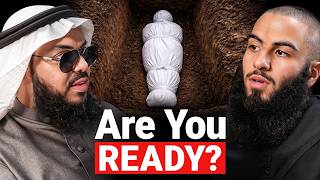
In this YouTube episode, host Eyoub (Abu Lahya) interviews a knowledgeable speaker (Speaker A) who outlines the Islamic view of the moments immediately following death. Drawing on authentic hadiths (Sunan Abu Dawud, Musnad Ahmad, Ibn al‑Qayyim, etc.) and Quranic verses, the speaker describes the appearance of the Angel of Death and the angels of mercy, the soul’s extraction, and the two possible conditions of the grave (a garden of Paradise or a pit of Hellfire). He explains the questioning by the angels Munkar and Nakir, the soul’s ascent through the seven heavens, and how deeds and sincere belief determine the outcome. The talk emphasizes that after burial a person cannot repent, urging listeners to make tawbah, perform good deeds, and align daily life (work, social interactions, consumption, dress) with Islamic principles, especially during Ramadan. Practical moral guidance is interwoven with vivid imagery of punishment (tightening grave, hammer, fire) and reward (light, pleasant faces, protection of deeds). The episode serves both as a theological exposition and a motivational call to live righteously before death.
Chapters
Imagine that point of death. Now you can see what nobody else can see, and you will see the angels of mercy smiling and happy with faces radiant come out from this life under the mercy of Allah, with the pleasure of Allah (سبحانه وتعالى). Imagine that moment. You know you made it.
That's amazing.
The Qabar is either a garden from the gardens of Jannah or a pit of fire from the pit of Hellfire. That day you can't go anywhere. And they rip— Allah is difficult. They rip that soul from the person. This person, when he's thrown back in the qabar, the qabar becomes like a pit of fire for him. They're shown their place in Jannah and they said, this could have been yours.
Can you do anything at this time?
It's too late.
Can you not ask for forgiveness? Can you not do some good deeds?
You could right now. Right now you can get up and go make tawba. Right now you can ask forgiveness of whoever you wronged. Right now you can change your life. But that day you cannot do anything.
Assalamualaikum warahmatullahi wabarakatuh. Welcome to a new episode. Eyoub (Abu Lahya), as you all know, we are human beings and one day we're going to die. Most people are afraid of dying. Not because they're afraid of death, because they don't know what will happen. Sheikh, what happens when we die? What's the journey?
SubhanAllah, this is the most important journey for a person. People don't realize, but they know, which is a very important thing to understand. They don't realize it even though they know that this is a journey coming in front of every one of us, and it is the most essential journey of our life. سبحانه الله.
Why is it so important?
This is the promise of Allah (سبحانه وتعالى) that comes true in front of the eyes of every believer and non-believer. Allah (سبحانه وتعالى) in the Quran has told us, كُلَّ نَفْسٍ ذَيْكُ تُّلْمَوْتُ, "Every soul shall taste death." And a promise that Allah (سبحانه وتعالى) made has been coming true in front of our eyes for millions and millions of times. Every single year millions of people die. Whether you're Muslim or not Muslim, whether you're a Fasiq or Fajr, whether you're a Mu'min or a Kafir or a Munafiq, whatever spectrum you may be on, from a sinful hypocrite disbeliever to a perfect believing person of Ihsan, everybody has to admit to this fact. But people don't think about it. People don't prepare for it. People ignore it. If you bring it up in a conversation, people tell you, oh, you're ruining the conversation, why are you so gloomy? Why are you so boring?
Is death a good or a bad thing in Islam?
And death is not good or bad in and of itself. For the believer, it's wonderful.
Why?
For the disbeliever, it's horrid. Why? Because when we look at this journey of death, in this worldly life, everybody gets time. Meaning a good, believing, righteous servant, can be rich, can have family, can have health, can have all the pleasures of this life, or have nothing. Doesn't matter, because this life is only a test. And a kafir, an absolute hypocrite, a person who is a waleem, an oppressor, can live a great life in this world. He can be flying around Air Force One, he can be living up luxuries and having all kinds of pleasures and have long healthy life. But that's the thing, they fool themselves thinking that this is all there is, but the reality, and that's why one of the names of death is yaqeen, and one of the names of death is haqq, that when death comes, you say that they have reached yaqeen, they've reached the reality that they should have been sure about, the surety. And many times when they talk about death, They said they have reached the truth, meaning that truth that everybody knew would come but people ignore. Now what happens on this journey? There is a beautiful hadith, and this hadith is reported in the Sunan of Abu Dawud. Imam Ahmad ibn Hanbal has mentioned it in his Musnad, and other ulama with the sanad have mentioned it. The great scholar Ibn al-Qayyim authenticated it. Shaykhuna al-Bani graded it to be sahih as well. So it's authentic narration. Now I'm going to add other narrations to kind of show you the entire journey from other Ahadith. And those are authentic Ahadith as well.
So that people can understand what happens when you die. Do you feel anything before? How does it go?
Exactly. But this Hadith by itself captures a lot of the journey.
Let's go.
Right? This Hadith begins at a Janaza right here in Madinah.
Really?
The Prophet (صلى الله عليه وسلم) went to the janazah, the funeral prayer of one of the Ansar. And after that, he sat down on a little wall that was there by the maqbara, by the graveyard. And he looked up and he looked down and he looked up, going looking up 3 times and looking down 3 times. Why? Now the Sahaba (رَضِيَنْهُمْ), like you, they were curious. They said, "O Messenger of Allah, what is this?" So he educated them, he told them, when one of you dies, and now he takes them through the journey, that the believing slave, and I'm beginning with this because I want everybody, the believers that are watching, to always have hope. Make your intention to do good so you can be from those that are described here. The Prophet (صلى الله عليه وسلم) said, when the believing slave of Allah dies, the angels of mercy, they come down, the angels of Rahma, The angels of Makfira, even Malik al-Mawt presents himself in a nice appearance. Now imagine me and you, because death will come to us all. It's a reality, right? Imagine that point of death. Now you can see what nobody else can see. The hijab or the COVID between ghayb and wahir, what is apparent and what we cannot see, like the malaika, will be now lifted for you. —So you can see the angels. —You will see the angel of death. You will see the angels around him. So if you lived your life on the halal, if you lived your life obeying Allah (SWT), staying away from haram, doing what you can to the best of your abilities, nobody's perfect, but you were trying, then you will see Malak al-Mawt, the angel of death, with a good appearance. And you will see the angels of mercy smiling and happy with faces radiant. And it will be with the glad tidings that they come to you. They said, oh, Abdufallah. Imagine they call you out by the names you like. They call you Abu Lahya. Ya Abu Lahya, you know, ya Eyoub, come out from this life under the mercy of Allah, with the maghfira from Allah Subhanahu wa Ta'ala, with the pleasure of Allah Subhanahu wa Ta'ala. Imagine that moment, you know you made it. That's amazing. That moment.
That's a motivation to do good deeds now.
You made it. And they bring a cloth from the cloth of Jannah, they shroud you. Now your soul and your body is detaching, but now you're taken up to the sama above, to the sky. You know, there are 7 samawat. The first sky, the first sama contains all the stars that we know, all the galaxies, all the universe as we know it is just the first sama. How do we know that? Because Allah subhanahu wa ta'ala in the Quran in Surah Al-Mulk, ba'da'udhu billahi min ash-shaytan ar-rajim, wadizayyina as-sama'ad dunya bi masabee'ih. Allah subhanahu wa ta'ala tells us that we beautified the sky, the sky of the dunya, the first sky with lamps. All those stars, all those galaxies, the Milky Way, everything that scientists have even dared to dream about is just the first sky. Then there is a second, third, fourth, fifth. When you are taken to the sky, the malaika, that are the Ahlus-Sama, the people of the sky, they're welcoming you. They welcome you. Imagine, they call you by name because they know you. The malaika, they saw your good deeds, they saw that you were doing righteous, they know you. They say, "Marhaban, ehlan wa sahlan," whatever words they want to use to welcoming you. They welcome you and say, "Ya Abu Lahya." They call you by the best name that you like. "Welcome, you were from the people of the samaa, come." And it's open, second, third, fourth, fifth, sixth, seventh, until Allah subhanahu wa ta'ala grants you his mercy, gives you glad tidings, say write his name in the Al-Layeen, in the people that are successful, but then put his soul back because Allah subhanahu wa ta'ala promised that he would raise us and Allah fulfills His promises, so your soul is put back in the Ka'bah. Okay. Now, in the Ka'bah, what happens to you? This hadith mentioned, and I'm going to add some from other ahadith as well to give you the full picture. In the Ka'bah, then two angels come to you. The angels that come to you, Munkar and Nakir, these are angels that if you are righteous, you will not be afraid of them. They will come and ask you, "Man rabbuk?" Who is your Rabb? SubhanAllah. That day, the reality of what you believe will speak. Not what you think, but what you have in your heart. How you behaved. See, in dunya, even a munafiq, even a kafir who's pretending, who's a jahsous or whatever, can say, "My Rabb is Allah." They can lie. They can lie. Some people, they play parts in movies and they play a Muslim and they say La ilaha illallah, even though they're kuffar. You know, there was Antonio Banderas, he's a famous actor, he played a Muslim role in a movie and you see him in the movie writing La ilaha illallah on sand and mentioning Allah and things, but he's not Muslim. It's not in his heart. Anthony Quinn played Hamza (RA) in The Message, which I don't recommend anybody to watch, because you don't want to think of some kafir actor when you think of Sahabi. But in the movie, he's saying, "La ilaha illallah," he's saying, "Allahu Akbar," he's saying, "Allah is my Rabb." But that is a fake statement that is from the tongue with your mind.
So how do you make sure you answer correctly?
That is the key to success. When you live your life giving precedence to what Allah has ordered because you know He is your Rabb, When it's time for salah and you got a meeting and you think, forget the salah, the meeting is more important, then who's your Rabb? That's deep. When you think, I can't have a beer because people will not get me a job, people will not hire me, I will not be able to make a living, who do you think is your Raza? When you fear governments more than you fear Allah, when you're afraid to speak because you're afraid of being cancelled because you're weak in understanding the Rububiyyah of Allah subhanahu wa ta'ala, how Allah is the controller and the master and the owner of everything, then the reality is that in your heart Allah is not your Rabb. You have not built that yaqeen. When you violate, you know, for example, let's say you have a business meeting and they say, you know what, we're going to have it at the bar with some drinks and some girls and some music. Now the test comes. If you know that Allah is your Rabb, then you say, sorry, I can't do that. Let's go have some coffee. Let's go have some tea. Let's go have an environment. I'm looking forward to the meeting. I want to do business with you, but I don't go to those kind of places. But if you're at the strip club because you feel that And so many Muslim businessmen, you know, they're there. Why? Because they feel that that business deal would only come through haram. Then they don't understand who is their Rabb. So that time, that kafir, that fasiq, that fajr will not be able to respond. He'll go, "Haha, hahua." He'll be stuttering. Even though he knows the answer now, but that connection of what's in his heart will come out. And then he will be asked, 'Ma dinuk?' What is your deen? What is your religion? Islam. Now it's very simple to say Islam today, but what is the most important of the physical ibadat of Islam? Salah. That is Islam. If you don't pray your 5 times salah, then are you living by your deen being Islam? Or are you just saying that? Do you have to give zakat in Islam? How many Muslims don't give their zakat? Do you have to fast Ramadan? Right now in Ramadan, there are Muslims that aren't fasting. May Allah protect us. Does a woman have to cover up her beauty in Islam? How many of our sisters are not caring about hijab or niqab or abaya? None of that. Does a Muslim man not have to stand up and defend the deen and protect his family. How many of the youth do we have in this ummah today who don't care that their sister's at the club with somebody? They don't care that their mom's out drinking. They don't care that their wife's working with some kafir guy and going out to Christmas dinners. How many Muslims are out there now posting pictures with Christmas trees and, you know, smiling at Santa Claus and, you know, what is your deen then? Not by name. So that day, if you didn't live by Islam, then you cannot say Islam. Ha ha ha ho ha, you stuttering. Then you're asked about the Prophet (صلى الله عليه وسلم). In some of the narrations, you'll be shown an image of the Prophet (صلى الله عليه وسلم), and you'll be asked, who was this man sent to you? Some of the weaker narrations even mentioned, man nabiyouk? Who is your nabi? So this is your question now. Who's your Nabi? Now how easy is that question? Muhammad ibn Abdullah, Abu al-Qasim (صلى الله عليه وسلم). Easy. But, but do you live by that? Do you live by the Sunnah? When somebody tells you this is the Sunnah of the Prophet صلى الله عليه وسلم, do you say, "Akhi, in my culture we don't do this"? When somebody tells you it's a sahih hadith, it's established from Bukhari and Muslim, Mutawatir, authentic, this is the way the Prophet (صلى الله عليه وسلم) did it. Do you say, in my madhab, we don't do that? When somebody tells you, this is the way the Prophet (صلى الله عليه وسلم) did it, do you say, nah, not nowadays, I'm a modern Muslim. In my time, I don't do that. Right now, American Muslim. This is European Islam. This isn't the desert old school Islam. We progressive Muslims. Nowadays we have women leaders in salah. Nowadays we have mixing and dancing and backflips and dhikr and mawlid and— Eyoub (Abu Lahya), who are you really following? If you don't live by the Sunnah, then you cannot answer that. Ha, ha, ha. Then, a separate hadith, but it mentions that they will hit you with a hammer a sledgehammer so hard that if the screams could be heard, it would kill everybody on earth. But Allah subhanahu wa ta'ala made it that we cannot hear the adab of qabr. Or imagine, we couldn't even sleep. So such a harsh punishment would come to those that failed this test. And that qabr will become an adab. Another separate hadith that mentions that the qabr will tighten Like the interlocking fingers, the Prophet (صلى الله عليه وسلم), in this narration, he interlocked his fingers.
SubhanAllah, that's for those who couldn't answer. Yes. Because they didn't live by Islam. Exactly. How about those who actually lived on Islam and always strive to achieve halal and always stay on the deen?
What happens to them? Excellent. For the person who lives by the laws of Allah (سبحانه وتعالى), the person who lives by قَالَ اللَّهُ وَقَالَ الرَسُولُ, the person who does their best, nobody's perfect and nobody expects perfection. For them, they will be asked, who is your Rabb? They will say, Rabbiallah. You know, it's a beautiful hadith where the Prophet sallallahu alaihi wasallam told us that when the malaika ask Umar ibn al-Khattab, he will turn the question on them. Because Umar, you know, he lived by it, you know. They will ask him, who is your Rabb? He will say, Rabbiallah. And who's your Rabb? Like, he is so— Allah gave him that Rabb, you know. So the believer He will say, 'Allah is my Rabb.' They will say, a voice will call out, 'Abd has spoken the truth.' He will say, 'Islam, Deeni Islam.' It says, 'He has spoken the truth.' 'Nabi Muhammad صلى الله عليه وسلم, he has spoken the truth.' The qabar becomes wide. In authentic narration, the Prophet صلى الله عليه وسلم said, the qabar is either a garden from the gardens of Jannah or a pit of fire from the pit of hellfire. Now this is your choice. Don't blame Allah, don't blame others, don't blame your father, don't blame your mother, don't— you have that choice, you're watching right now, you have the choice. How you choose to live is how you will reap in the qabar. In that qabar then, for the believer, a window to Jahannam will be shown. It will be said that this would have been your place. 'But because you controlled your desires, you stayed within the halal, you did what is right, you obeyed Allah, you obeyed His Messenger (صلى الله عليه وسلم), a window to Jannah will be opened. He will get the breeze of Jannah, he will see the paradise that's there.' And a separate hadith mentions that this time will become very short. It will go very quick, as if between two salawats, Dhuhr and Asr, or so on. SubhanAllah. And he will then, subhanAllah, pass that phase, and that qabr, he will see a shining face. He will see a pleasing person. And he'll ask him, who are you? He said, I am your deeds, your amal. It's a good-looking person that comes to him. Good-looking person. SubhanAllah. And he'll say, you protected me in the dunya, I will protect you from now on. You know when you protect your amal by keeping your ikhlas, by not showing off, by not destroying them with insincerity and things like that, then the amal protects you in that Ka'bah. Then when they are raised on the Day of Judgment, you know there is nothing but success ahead. That's why Uthman ibn Affan (RA), he used to cry the most at the Ka'bah. 'Even more than when he heard about Jannah and Jahannam.' They said, 'Why?' He said, 'Because this is the first step. Whoever is destroyed here knows there's nothing but destruction ahead, and whoever makes it knows that there's nothing but success ahead.' Now again, this is for the believer, this is for the person who lives by Islam. But the person who doesn't, the malaik of adab, the malaik of punishment, will come. You know this is in the Quran. 'Wannashatati nashta,' right? This is for the merciful. But 'wannaziati gharqa,' who are they? 'Naziati gharqa' are the adab, the malaika of adab. Surah Nazyad, look at the tafsir of this. So these malaika who are malaika of punishment, they will come with malak al-mawt, and malak al-mawt will come with the most disgusting appearance. Just the sight of it would kill somebody. You're already dead. There's no death now. Imagine they come with darkness, not any white and black, but a darkness. And when they come at you, you feel that fear. You want to run away from them, but you can't. That day you can't go anywhere. And they rip Allah is difficult. They rip that soul, they rip that soul from the person, and the hadith mentions like if silk is taken over thorns or ripped over something. You know when a cloth is stuck and you're ripping it and it's tearing it apart. Like that. And that's just the first step. That's just the first step. There are weaker narrations that even mention this is like getting hit by a thousand swords and so on, but even if you just take this narration, that's difficult. Wallahi, we can't play with this. And then when they go to the sama', the samawat are closed. The malaika dahilus sama' say, no, you're not welcome. They said, you have a foul stench, you smell, you have the worst smell, we're not going to let you in because you were a person of dunya. SubhanAllah, why do you have a bad smell? Because this is the person who has sinned, this is the person who's rebelled, this is the person who disobeyed, who— the sin has an ugly nature to it, it blackens the heart, it brings a stench. Even in dunya we don't see it, But in the akhira you see it. So here the Ahlus-Samaa call him by the worst names. Imagine some name that you hate being called, they call it to you, what are you going to do? Like in dunya, you want to fight. "What'd you call me?" You want to fight. You can't fight them. They'll call you by the worst names and they say, "You're not welcome." They'll close it off. Your soul will not descend. And then Allah subhanahu wa ta'ala says, "Write his name amongst those that would be punishment." 'But put him back in the grave because Allah (سبحانه وتعالى) promised to raise the good and the bad, and Allah fulfills His promises.' Can you do anything at this time? It's too late. Can you not repent?
You cannot. Can you not ask for forgiveness? Can you not do some good deeds? You could right now.
You're watching. You could right now. Right now you can get up and go make tawba. Right now you can ask forgiveness to whoever you wronged. Right now you can change your life. From this video, from this message, from this moment in this blessed month of Ramadan, in the last best nights of Ramadan, you could change. But that day you cannot do anything. Once Malak al-Maut pulls that soul, once the soul reached the ghar ghar, which is the last point You cannot make tawba after that.
You know one saying you mentioned to me on one of the other episodes? You said once Malak al-Mawt taps your shoulder—
That's it. But the thing is, you have that opportunity now. Allah has given you— if you are alive, you have that opportunity. It's not too late. It's not too late. This person, when he's thrown back in the qabar, the qabar becomes like a pit of fire for him. They're shown their place in Jannah, and they said, 'This could have been yours.' Well, what sin was so beloved to you? What sin was so beloved to you that it ruined this, what you could have had? And then a window to the Ghar is opened, and the heat and the smoke and the dust, and that will come upon you. And you will feel that. And when those malaika come and you answer wrong, the hardship we talked about already, he will see an old, weak man there. He will say, 'Help me! Look at what condition I'm in. Help me!' You know, it's like one of those horror movies that people see in this dunya. You know, when somebody's in this really rancid situation, they see a glimmer of hope, they see somebody that maybe can help them, you say, 'Help me!' You're in the qabar by yourself, you're lonely, you're isolated, you're claustrophobic, you're tied, there's fire, you know, from the nahr burning your face, you say, 'Help me!' And that person says, 'I cannot help you. I am your good deeds. You didn't protect me, you didn't keep me. Today I'm too weak, I can't do anything for you.' because we didn't protect our deeds, we didn't work on that, that day they cannot do anything. And understand this, it only gets worse from there, it only gets worse from there.
SubhanAllah, what a contrast between the positive and the negative, subhanAllah.
We don't realize, you know, Allah (SWT) has made 8 doors to Jannah and only 7 to the Naar. Why? Why? Because the mercy of Allah is always more than His wrath. There's more, but we have to take that step. Now you know what's ahead. What are you going to do with it?
You know the good as well as the bad.
What are you going to change in your life from today? What sin are you going to leave? What good deed, what akhira-focused life have you not been living that you should start living? Alhamdulillah, you got money, great. May Allah increase it, may Allah give you more. Work hard. But then what's the point if you take that money and you go and buy haram with it? You go and buy, you know, subhanAllah, Muslims today sometimes waste millions of dollars on haram paintings and they put it up in their house. It's haram to put up paintings of humans and things. Millions, "Oh look, this is a Picasso, this is a da Vinci, this is some gay European dude painted it," right? And they don't think that with that money what good they could do? Imagine the dawah you could do with it. Imagine the khair you could do with it. How you could give nusrah to the deen of Allah subhanahu wa ta'ala with it. Imagine the opportunity we're missing in Ramadan. Every minute that you're not making dhikr, every minute you're not making dua, every minute that you're wasting doing nothing. Change it. You have that opportunity now. What will happen in the qabar is absolutely dependent on your decisions today.
Nothing else to say. It's no joke.
The angel of death doesn't warn you. If he taps on your shoulder, too late. Ain't no coming back from that.
We still got time now.
As the Prophet (صلى الله عليه وسلم) said, The intelligent person is the one that does the actions that will benefit him after death. Are you an intelligent person? Ask yourself. وَالْعَاجِزُ, the foolish person, incapable person, is the one that persists on sins, saying, "Allah is Ghaffurur Rahim." 'I feel like getting up and going making falafel right now.' 'I feel like not doing anything anymore but just asking for forgiveness.' No, that's not Islam. In Islam, yes, you have to work. Yes, you have to have a family. Yes, you have to live in this dunya. But make all of that an ibadah. Make your work an ibadah. Make it that your work, your business is a means of you doing khair. That your family, your children are a means of you having sadaqah jariyah when you're not here. Even when you go and work, even if you're doing business, even if you're— make your niyyah for Allah and then live by that.
More from Eyoub

Abu Lahya: The Halal Productivity Routine #muslim #entrepreneur #business #islam


Abu Lahya: Is It Halal to Watch Sports? #muslim #entrepreneur #business #islam


Abu Lahya: How to Build a Halal Business #muslim #entrepreneur #business #islam

Abu Lahya: How to Stay Ahead of the Competition #muslim #entrepreneur #business #islam

Abu Lahya: What Happens When You FORGET Allah? #muslim #entrepreneur #business #islam

Abu Lahya: He Sold His Company for $100M... #muslim #entrepreneur #business #islam

Abu Lahya: The HALAL Way to Run Your Business #muslim #entrepreneur #business #islam

Abu Lahya: The BEST Cold Outreach Method in 2026 #muslim #entrepreneur #business #islam

Abu Lahya: How Allah Can Help You Achieve ANYTHING... #muslim #entrepreneur #business #islam