Do Pandemic Babies Speak Less?
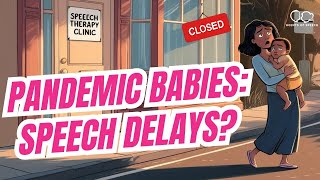
Ming from Agents of Speech explains how the pandemic slowed language development in young children across vocabulary, grammar, and social skills. Less time with caregivers and peers, plus too much screen time, created measurable gaps. High-dose language input and removing specific bottlenecks like verb flexibility can help close them.
Chapters
How has the pandemic affected your child's language development? Now we have some answers. After 5 years. There is a paper that I'm going to share in the link below. You can go check it out. And I'm going to tell you the answer is yes. But at the same time, the data is skewed towards US and European countries where the data is gathered. There's not much data for multilingual environments such as Asia and so on. So take this, all this with a grain of salt, and I'm just going to tell you the research says yes. Right? So I'm going to quote and read off now. The author says findings suggest that although caregivers and educational practitioners can make a significant positive impact to enrich environments, the pandemic brought about a decline in language development in multiple domains and four years following the initial lockdowns. So it goes on to say that we can make positive impact. Right. Which is great. And this is why we're doing these videos, by the way. And if you're new here, this is, this channel is Agents of Speech. We help parents teach their children to speak at home. Okay. And the language domains that the author was talking about are social communication, vocabulary, morphosyntax, literacy, language of schooling, as well as general communication skills, school readiness, and other areas of academic progress. So this all makes a lot of sense because when children are at home, you cannot expect. Because everyone's working from home, including myself. Right? Everyone. Everyone. Right. So then you would, you would understand parents don't have a lot of time to teach their children. Right. So if you don't have a lot of siblings or cousins or whoever to chat with, your social communication is going to go down. Right? The, the general communication skills, school readiness is going to go down because no one's going to get your child ready in terms of putting the bags here, put on the socks, whatever. These things tend to be more lax at home as well. And academic wise, it's really difficult to teach anything at home. We know that because we try. We teach parents what to do on the speech therapy side. And then for vocabulary and more full syntax, these are like, don't matter what morphos and text means. It just means grammar, basically. But then why is that a decrease in vocab, especially when children are learning so much on the screens, Right. No matter what their kindergarten teachers or who or whatnot? Because a lot of these screens, screen time, the language that comes from screens are more nouns. They're literally just nouns. So then the vocab is skewed towards one category. So they don't have enough of different things and they don't really know how to use it because they, your child probably just watched it through a screen and learned that word in a particular context of what the video was about, and they couldn't really bring it back into real life. Okay, so morpho syntax is also the same. You need to have enough different vocabs to make a certain sentence. So then if you're. Especially when we see a parent that say, oh, my child is a, has been a lockdown baby or a pandemic baby and they've spent their whole lives looking at screens, you will see that they don't truly understand morpho syntax. And then a lot of them are being labeled as gestalt language processors. So when this happens, it's because they learned the language and chunks. So the screen or class time doesn't give over devices, doesn't give the child the flexibility to learn how the words and sentences are used in real life. So then they just remember a whole chunk. Just as if like when I was young, I was trying to learn Japanese and French through tape recordings and then I would just memorize those stuff and thought it meant one thing. So still to this day I only use a few gestalts, as you may to for French, I only know those. One of them is this literally means I go fishing. That's all I can remember. I cannot use it functionally nor well enough. And that's because of how I learned French. So that's just an example. And because of this general decline of language ability, and I do see it, by the way, in serving clients, I've been teaching speech therapy. I'm doing speech therapy since 10 years ago. So I would know how the trajectory has been going. And I can tell you, subjectively speaking language is, especially for four or five year olds, they really took a little dip. Especially for my clientele and my kind of industry, the people who I see, right. And then you have the CDC in America reducing language milestones, making it a lot more easier for a child to pass milestones, right? So then these double whammy, these things, it creates like a pull and a push tension for therapy services. So there's a lot more of wait and see, right? Because everyone is speaking less. Right. So because all the parents, they grew up with children who spoke more before the pandemic, they all rushed to speech therapy. But then speech therapy says, oh, the milestone says this. Not speech therapy yet. But at doctor's clinic they would look at the CDC milestones. Oh, it's all still okay. We can still wait and see. So then you get a lot more people waiting for services, Waiting, waiting and see if they still need services. They put their foot in the door and signed up and you have a crazy long wait list, right? And what happens is that because during the lockdowns of two to three years, we had no speech therapy at all, maybe at the most 20% because we need to clean the offices, wipe it down and then come in and then you have to screen them and whatever. So what happens is that the void of the two to three years of lockdown creates irreplaceable wait list of two to three years. Right? And then you add on all of this language impact on children and plus the reduction of language milestones of the cdc, which can be a whole different video. It's a little bit crazy that they would do that. It's definitely not solving problems. It's basically just moving a goal post and calling a day. And I'll make a separate video about this. But this is not all doom and gloom, right? It's about what we can do. Okay, so what we can do, and the author of the other research has also talked about how caregivers and educational practitioners like myself, you're the caregiver here, right. Can make a significant positive impact in rich environments. Whenever you're dealing with something. And I want you to put on the lens of treating something, treating disorder, treating something that is curable, right? As people say, oh, it's not curable, whatever. But then the thing is in terms of language delay, speech delay, that's something that we can do to help children catch up, right? So when we want to start a treatment, we always want to start with a high dose, right? So children learn how to talk given their language inputs. So I want you, if you're watching this video and thinking what can I do? Is to give a lot of good high dose language input. Okay. And I'll just give some examples here. No, no question. No asking questions. Don't quiz the quiz your child, right? Don't speak in super long sentences that your child doesn't know what to react to. These are some examples. We go into a lot more examples. If you go into our free courses, which is on a platform with a, with nearly 15,000 parents inside. Now go to ww.agentsofspeech.com course. Watch one of the free courses inside called the micro course. You'll get exactly what I'm talking about here. High dose language input It'll take around an hour for you to learn. So put it on two weeks feed on the community and watch it, go through it. And you know exactly what to do. Okay, number the last thing I want to say is if you are looking to help your child, if your child was a pandemic baby or however you would like to say it, and me saying the word pandemic or Covid multiple times in the YouTube video is going to get it less. Get less eyeballs, probably. But you need to do some serious work at home. If you're that kind of a parent who wants to be hands on and you think that was speech therapy or ABA therapy or whatever, therapy isn't enough for a child right now. I want you to take out 10 to 15 minutes of her time, sit your child down and teach him or her just one thing at a time. Okay? So you see there are lots of facets in language, right? But in general, after a lockdown, what we see is that it's the social problems, it's the vocab problems and it's a grandma. So syntax morphology problems. So we need to pick one. Okay. We cannot do all at once. As much as you want to do that. As much as I want to do, that's not going to happen. We have to choose the thing that is limiting your child's language performance the most. We'll take that limiter away, your child grows and then another limiter appears. Right? So in chemistry, if you studied high school chemistry, it is the rate determining step or business. It would be like, like there's multiple ways to say this term in different subjects. But what I mean is there must be something that is causing a bottleneck, right? So we need to find that. And most usually if your child is at non verbal, like no words at all, the bottleneck is that he doesn't know how to do verbal imitation. So do that if your child is stuck at. Just now I was talking to a parent who joined one of our coaching programs and his child was stuck at I want or eat chips or drink water. Two word phrases just for asking for things, requesting for things. The limiter here, the bottleneck is that she cannot use. She doesn't have enough vocab, she doesn't have enough verbs. So we're going to do that. Or if they have enough verbs, then the bottleneck would be they don't understand how to change, interchange the words flexibly. So then we do the same object that it might be cookies as I eat cookies, but then we do a bunch of different verbs. It might be open cookie, right? May or may not make sense depending on where you're from. It could be put cookie. It might be crack cookie, right? Frank cookie, whatever it is, eat cookie. And if, and if you're into like cookies, a jar, and with a cup of milk, you can do dip cookie. There's a lot of different verbs that you can do with the same object, right? That is actually the bottleneck, right? And then one level up would be a bottleneck. Would be like a child doesn't know how to answer questions. They would just repeat the question or just label something. Even if you ask, for instance, this cup, I'm like, oh, what is it made of? Or what color is it? And child's still going to say cup, right? Then that's the bottleneck, and that's what we need to teach. So, yada, there's loads of different bottlenecks that we're talking about, okay? So if, especially for a child who has been through a lockdown, which is most of the kids now, there must be bottlenecks that has. That's one domain, what we call a language domain that is not yet well developed. And if we develop that part, it's going to help your child to excel in terms of language development. Okay? So if you're serious about this, go through a lot more of our music videos, right? And if you. And I think you should go through the free courses that we have, go through the micro course, go through the introduction course, and then depending on your child's language level, just choose some of the other courses that we have, right? All you got to do is just to go ww agents of speech.com course. Look at it. If you have any questions, ask all the parents and therapists inside that group. We have 15,000 parents inside, right? So there must be someone who can help you. I'm inside. Occasionally I will give my inputs. But then don't take this for granted. This is all for free. Check it out. And if you like this video, go watch this next one. All right? See you.










