Does Oral Motor Exercises Help Speech Development
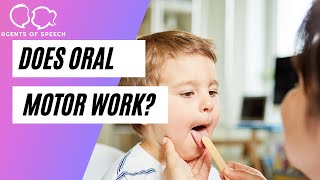
Ming explains that oral motor exercises help kids build skills for speech, but only if you pair them with actual speech practice. Do the exercises, then practice the real sounds you're targeting. Use them as stepping stones, not the main event.
Chapters
Hello, this is ming here from agentsofspeech.com today in this video, we want to talk about oral motor exercises. Okay? It's an exciting topic, at least to me. And a lot of parents have been asking Meng, do I need talk tools? Do I need whatever. Is this going to help? Are there any oral motor exercises that will help my child increase their speech ability? And their answer is, depends on. On the child, what you're working on and how can we use oral motor exercises to help them with certain sounds, certain words, and so on. Right? So aural motor should be. And it is a stepping stone towards the ultimate goal, which is for your child to use sounds like speech sounds and words. We use oral motor because a child cannot do a certain sound or a sound within the word or whatever. Okay? And so we cut up all the skills and see, like, okay, how do our mouths move? Like, for instance, if we're doing the L sounding, oh, we know that the tongue goes up. Therefore, we're going to teach tongue elevation. Right? Teach them to elevate their tongue up to the top so that they can get the placement right. When we're breaking down these motions of our oral muscles, we can find easier oral targets that we can do without having your child to speak yet. All right? So we're moving towards our goal. Okay. Step by step, Right? The most basic thing you have to understand as a parent from the motor to the speech transition, is something that is very difficult. All right? For some children, it's nearly impossible in the beginning. All right? So that's why oral motor tasks have their place in therapy, is because, oh, it's the next best thing, like, before they speak. But we, for every oral motor task, we must have a speech goal in mind. All right? Or else you're just really teaching them how to just do the oral task, like, for blowing, what are you trying to teach? Right. Or else, you know, a child would just know how to just blow. And some people will say, oh, yeah, blowing as a prerequisite, meaning they must have this skill in order to talk. I think sometimes it's true, sometimes it's not. Especially for, like, children who have apraxia, they can say a word and don't know how to blow, you know, And I've seen that in adults as well. All right? So I'm not totally sure about that. But development, mentally speaking, yes, blowing does come before, like saying some certain sounds. But we should always have a speech sound in our mind most of the time. When you're using talk tools and you're blowing at horns and sucking in straws and so on. There's always a speech goal that the therapist is trying to do. I'm not going to share any of this here because, you know, I know what you will do. You hear that? And you will try it. For instance, I'm going to share one, right? The K sound. Oh, yeah, yeah. I'm going to learn how to blow and then I'll do the case out. Doesn't really work that way. You need to have like middle steps in between to link them together. And the funny thing about motor to speech is that your mouth can move in different ways and achieve a similar sound. Okay? And that's the funny thing. So it's different for nearly everyone, I think. That's what, that's what I believe. I believe there are research that will be more coherent and me than me trying to express it here, right. So we must practice the sounds right after we do the oral motor exercise. There's no point in just doing it. And of course, there are some prerequisites towards, you know, oral motor actions, like oral motor movements, right? So let me give you an example. For instance, just now, let's talk about the L sound. Like the tongue needs to go up. But what if the child cannot do the tongue going up? Then we need the oral motor exercise that bridges the tongue to go up. So we're not going to do the L sound because we don't. We haven't even hit that place. So what we can do is the tongue left and right and then slowly move the tongue up diagonally until you hit the top. All right? I've tried this many times. It works. And then after that, when the tongue is at the right place for the right amount of time and then you can try with the speech sound. Okay? So you see, it's a stepping stone, right? We're working towards something. That's what, that's what I wanted to talk about in this video. And by the way, at the end of the day, the final goal is always to talk, right? For the child to talk, there's no point in learning how to chew like a chewy tube for like 10 times each side like with real strong and good form and so on, right? The analogy and example that we use at agent of Speech all the time and is that, hey, let's say you're trying to teach or train to dunk a basketball, right? You can do a lot of, like, you're gonna have to squat a lot, right? With a lot of weights on your back and so on. But you can only squat so much. It doesn't mean that you will know how to dunk. The only way to learn how to dunk is to do all the, all the exercise that will help you with elevating yourself and at the same time, trying to dunk, right? You need to try to dunk. Even if you fail, you learn and you go towards your goal and you learn the motor skills to do so. You need to teach your child to speak even if those speech sounds are a mess. Okay? That's what I'm talking about. You need to use those middle steps and help it become easier, okay? Doesn't mean you're not going to try again. Okay? And by the way, when I'm talking about this, right, imagine you're teaching, like, vowel sounds, okay? And you're teaching your child to spread your lips like that for E, right? But hey, think about it. If you try to say, like, when we're talking, our mouths don't really move that much. If you try to think about it and look at yourself in the mirror when you're talking, when you go E, you don't even spread your lips. Like, for example, if I'm trying to say E right now, I don't have to go E like that. I can just move my mouth minimally and say E because it's more efficient. And then, you know, actually the tongue does most of the moving and the shaping to, To. To make the vowel. So therefore, you really need, there's no amount of, like, training in terms of oral motor to tell your tongue how to go and to make them make the E sound, right? And there's a joke that, you know, a senior therapist told me about. I wish there was a device where, you know, you can just put it inside of the child's mouth and make the tongue shape in order for them to make that vowel. But there isn't. There isn't something like that yet. At this moment in time, we have to make sure that the child is practicing the speech sounds even if they're failing. The oral motor is just something as a stepping stone. Don't put all your efforts into oral motor. Your child needs to try the sounds. They need to practice, practice, practice. You practice what you get. You practice chewing tubes. You get, like, huge muscles here, right? But you don't get the speech that you're trying to, like, shoot for, right? Hopefully this video gives you more clarity about, like, oral motor and what you can do as a parent, what you need to ask your speech therapist and how to understand like, if they give you oral motor practice at home, then at least, you know, okay, what am I shooting for? What am I trying to do? It's okay if they screw up the sounds. Right. Or motor is just like an adjunct, a stepping stone towards what you want. Right. So that's it for this video. Thank you so much for tuning in. And if you haven't, you should go to agentsofspeech.com checklist to grab a free list of tools and toys that we recommend parents to do when they're starting home therapy. Okay? So thank you for tuning in, and hopefully I'll see you in the next video very soon. Bye.










