Does Speaking Multiple Languages at Home Cause Speech Delay?
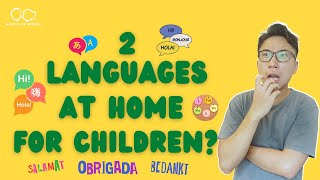
Ming from Agents of Speech explains why multilingualism doesn't cause speech delay in children. Speaking multiple languages at home doesn't impair development, and the video offers practical advice on how much language exposure kids need.
Chapters
Will speaking two or three languages impair a child's speech and language development? The answer is no. That's a short answer. Okay, so I've answered the question. You can skip on and watch a cat video if you want to, but at the same time, if you want to learn why, please keep on watching. So first, number one, I want to talk to you about the global language context, right? The whole environment. I'm in a different country now. Now I can see that multilingualism is going to stay. It's not going anywhere. In fact, it's going to go even crazier. Let me give you an example. I'm bilingual. I speak two language fluently, I would say. And I speak two languages. My wife speaks like three. And at the end of the day, when we have children, my kid's going to speak like four languages or at least be exposed to, right? And I look around, everyone is speaking at least two, right? So there's no point in doing monolingual because you're just going to handicap your child when. When he or she gets older, right? There's no running away from it. In fact, nowadays to get into kindergarten, you must speak three languages. They do. Like in Hong Kong, they give interviews in three languages, trilingual. And you might think that's obviously ludicrous, but as we're getting into the new age, people are opting to learn Chinese, people opting to learn Spanish, right? Because there are huge populations in China and Latin America, right? And also English is still going to be a huge thing because the biggest population in the world is India right now. And like 90% of Indians speak English, right? So it's not going anywhere, really. And even Southeast Asia, it's like I, I can go on and on, right? I'm not going to talk about that anymore. So number two thing is that you have to understand the reason why children are speech and language delayed, okay? The number one thing is that their language acquisition mechanism, okay, that's a huge word. I just, I kind of made it up, right? So what it is is that when children acquire language, they have a problem acquiring the language. It's not about learning a specific language, so to speak, right? It's very different from a first language learner and a second language learner. So let's say I'm learning a different language. I will reference to my first language and I will think about the grammar. And I already know what's a past tense, what's the article, what's a noun, what's a verb, whatever. I know where the places are supposed to be. For instance, if I'm learning Indonesian, I realize that the adjective comes behind the noun instead of in front, like Chinese and English. Okay? So because I have that knowledge, I can think about it in that way and I will know, oh, the grammar is like this in this language. Oh, I get it now. Right. And I can make rules up. So language at the end of the day is a set of messages that have rules defining it, right? So if a child has a problem acquiring those rules, then that's basically speech and language delay. Okay? So other than that, parents always ask me, okay, I've got like three languages going on inside the house. That's so normal now, okay? And then the parents will say, especially the mom will say, ah, is it going to like, affect the kid? Well, I already told you no, Right. The reason why to this is because it doesn't matter what types of language you're giving your child, right? As long as you don't mix it, we generally know that it's a different language. Okay? And as a bilingual person, or you are a bilingual person, you're watching this in English and you have a mother tongue like I do, and we're conversing through this shared language called English, right? Now, the reason why is because us bilingual or trilingual people, we require more input. We need to learn words more than one time, right? If you're like me, if you talk about a car, right? And in English, it's car. In China, it's not. Right. In Cantonese and Indonesian as mobile. And then there's many other, like, you got to learn the same word many times, right? And as long as you don't mix code when you're talking to a child, you won't confuse them. Okay? And I see this happen a lot, especially in Southeast Asia. They mix the whole thing up, right? And maybe like, they have a new language called Singlish, which even I don't understand at times because they mix up all the words. And those words are actually Singlish and they're not really Chinese because there's a different intonation to it. Okay? So I'm getting ahead of myself. So basically what I'm trying to say is, as long as you don't mix code with your child, you won't confuse them. Okay? So I'm looking at a study here. And they did a study between speaking only English and speaking English and Spanish. Obviously, this is in America. And they did a study after, like, five weeks. After five weeks, they saw that just using English, they would have deprived the child's language input by a significant amount, and they didn't acquire as many words. Whereas they use both languages and bombarded the kids with the both languages, they actually saw a very significant improvement. So I'll put the study inside of the. Of the description box below, and you can take a look yourself. Okay? So always think about these things. So how do you go about it? So make sure when you talk, stick to one language only, all right? And use the rules perfectly, okay? Do not use a Chinese grammar in English. Do not use the English grammar in Chinese. Do not use a Japanese grammar when you're speaking Germany German. Okay? That. That's the rule here. Do not mix the words inside. Do not put the words even if it's the correct place to put them. All right? Keep it the same. But you're going to say, oh, but my kid makes codes all the time, right? We do it all the time, right. As bilingual and trilingual speakers. Right? That's fine. The reason why is because when children are acquiring language, they will mix the codes up because now they have to retrieve from three different language systems, right? Not you have a whole language system and you have to think about where the words are, right? So. So for instance, if a word comes more frequently to me in Chinese, I will grab it and I'll try to say it, right? I'm. I. If you are someone like myself, you will think of a word in a different language, you will translate it back into English and you try to say it out, right? This happens many, many times, and it's vice versa, right? Sometimes an English word is more frequent, right? And then you change it into your mother tongue and you say out. So like, when your child makes code, it's because of that, but we don't want to confuse them with what's going on inside of hits. That's why we want to keep it as clean as possible in only one language. Okay? And of course, you can see one line in English and the other line in Spanish. And it doesn't need to be the same thing, but just don't mix the two lines together in one sentence, Right? Okay. If you get what I mean. So one line in English, one line in Chinese, right? There's an ongoing recommendation going on where the parents speak in different languages and they keep it that way. So father's Chinese, they speak Chinese. The mother's American, she speaks English, and let's just keep it that way. You know, the grandma is from another province in China, so they speak like Hokkien or whatever. So everyone's speaking three languages and they only stick to that role. That's impossible. That's not natural either. Okay, so what I would say is, stick to what I just said just now. Okay? You can speak in one sentence in one language and then the other sentence and other. Right? And there are also studies going on where, like, they're trying to get the caregiver to describe and talk to a child in, in one sentence, English, and then translate it to their mother tongue, which also works. As long as you don't mix it up, then it's fine. Because once you mix it up, it makes it even harder for the child to compute. Okay, so that's the end of this video, probably. I think I've answered the question pretty nicely. I don't think that mixing the languages would make language acquisition harder. In fact, it actually adds more richness to. Towards everyday life because there are words that suit a cultural setting more than the other. Okay, so it makes sense to speak Spanish in some places and some. Some actions, some things that you do culturally speaking can only be expressed in Spanish. Same as Chinese, same as English. Right? That's it for you. Okay? Throw away that worry right now and think the world is going to be even more multilingual than right now. Okay, you know what to do already. Okay, but bombard your child with both languages. Just don't mix them up. All right? You don't have to stick to the same language for one person. You don't have need to have language roles. That's just tiring and very unnatural. And there are some studies debunking it right now. And obviously there will be people giving that recommendation and, you know, like, let's see if you can keep it up. That's my, that's my general advice. You know, like, I myself, I speak when I talk to my. My loved ones, my. My family members. It's a mix. It's a mess. So, yeah, that's pretty much it. So if you enjoy this video, please let me know. And you have any questions, anything you want me to add, please put it in the comment section. And if you haven't, Please go to agentsofspeech.com checklist to grab a free list of tools and toys if you have it. Okay? So that's it for this video. I'll see you next week. Bye. Bye.










