Does Your Child have Speech and Language Delay?
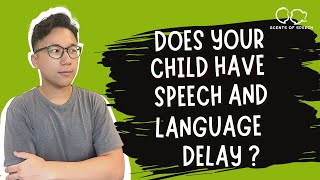
Ming, a speech therapist, walks through language milestones from age one and a half to five, helping parents spot whether their child might have a delay and when to get them assessed.
Chapters
Hey, this is Ming here, a speech therapist from agentsofspeech.com today I want to talk about, does your child have speech and language delay? This is something that a lot of parents ask me and I just want to clear it up. In this video I will talk about the minimum, the minimum, what your child should be doing at a certain age group. So we'll go through one and a half year old, two year old, three year old, four year old, five year old and up. So let's start off with one and a half year olds. So one and a half year olds, a lot of parents would be saying, oh, is it too early, is it too late? Whatever. General rule of thumb for me, at the very least, after looking at different speech and language milestones around the world, I believe at one and a half, that is the quote unquote latest, a child should be understanding and using single words verbally. Okay? So if a child is using single words already at one and a half, then you can wait until two. All right. If your child is one and a half and he still doesn't have any single words verbally, then you have to see a speech therapist right away and do assessment. Okay. So at the age of two, okay, receptive language wise, meaning how much they can understand. Okay, they should be able to understand what questions like what is that? What Whatever. What is that? Whatever. Right. The second thing they should understand is binary choice questions, meaning, do you want the apple or orange? Okay. You can also like give it to them visually, right? If they can understand it and tell you, oh, do you want apple or orange? And they say orange, then they understand. The other question that they should be understanding now is yes or no. For instance, is this a book? And if they say no, then great, which is the correct answer, whatever, that you're holding up. Okay. So expressively speaking, meaning how much they can talk. Two year olds should be able to speak in two word phrases and it doesn't matter if they're grammatically incorrect at this time. Maybe it's just mommy eat or drink water or kickball or whatever. Like as long as there are two words and, and they can use it interchangeably, then it's fine. What is not fine is that if they say I want this, I want that, I want whatever, I want, I want, I want, I want, or this is whatever this is, this is, this is. Those are called carrier phrases and frozen phrases that I, at the very least, I don't really regard them as a two word phrase. I would regard them as a carrier phrase. Right okay. So at age 3, receptively speaking, how much they can understand again is to, to be able to understand who and where questions. And these are not just like who is that? Where is this? Like that, that. Those are just labeling. It's the same as what. So for instance, who's wearing glasses? Ming. Right. Who is wearing gray shirt? Ming as well. So and I don't want the child to remember these things or who cooks the dinner or like, well, like who catches the thieves. And they're supposed to remember like policemen or whatever. Those are just remembering. I want them to think and look and for instance, where is the cushion on the sofa? Right. So they have to look and process the language in order to understand. Like to answer your question. Okay, so these are the minimum requirements receptively for, for a three year old. All right? Expressively speaking, at three, they should be able to speak in three word phrases. And it doesn't really matter at this moment in time, it's still acceptable for their grammar to be incorrect. That's still fine. And what a three word phrase would be. Mommy, drink water. Like a svo, subject, verb, object. Like very, very simple language. Cat sitting on floor. So sometimes on in the. These are functional words, they don't really count into as a meaningful language unit. Right? It doesn't like linguistic unit, whatever you call it. Right. It's not really a, a meaningful word that it's, it's functional to make it more grammatically correct. Right. So like cat sitting on floor I would consider as a three word phrase. Like linguists might say, Ming, you're wrong. Whatever. Just put them in the comments. If you think so, we can have a discussion. Right. But at the very least, they should be using three word chunks, okay. Not the carrier phrase. And frozen stuff. Like I want water is not a three word phrase. Okay. At the very least, from my perspective. Okay. So if your child at three hasn't hit these goals or able to do these, go see a speech therapist. If he or she can, then you can wait a little bit. All right. At age 4, receptively speaking, should be able to answer why questions. So for instance, why is the table wet? Because I spilled the water. Okay. Other questions like why am I crying? Right. Why is he crying? Because he broke his leg or whatever. Like because he fell down and he's bleeding, he hurt himself. Like these simple why questions. Your child should be able to like look and answer you with because as well. Like say after, like using the conjunction connective because. Right? And then expressively speaking, your child should be Speaking in full sentences now. And everything is like 70 to 80% grammatically correct. And they can describe events in a sequence. So for instance, if they talk about, oh, what happened in the supermarket, and they'll start to say, oh, first we went to the supermarket, then mommy grabbed the drinks and Coke and whatever, whatever, biscuits, and last we paid at the cashier. So there's like, a sequence. And they can go more than one utterance at a time. Like, one sentence at a time. They can go the whole thing, like maybe three steps, four steps. And they use connectives like first, then last, first, next, whatever, morning, in the morning, and then at whatever, what, at noon, whatever. They can use these kind of connectives to tell you, okay, if your child is not hitting these, then go see a speech therapist again, get an assessment. All right, the Last one is H5 and up. And why I say H5 and up is because age five, this is where, like, children start to become able to speak in complex sentences and are close to adult form in terms of verbal language. Not written, not reading. What, not writing or whatever, just verbally. They speak as well as me and you should do informally. Okay, not telling them. They're able to, like, give a keynote speech or whatever. Like, not like that. Just normal conversation. They're able to hold themselves. Right. So in terms of receptively, we can answer, like, how and when questions. So how is like, how do you play this game? And they can tell you in steps. Oh, first you roll the dice, and then whatever, whatever. So that's a how question. And then the when question is like, it's not the remembering thing. It's not like, oh, when do you brush your teeth before bedtime? That's not. That's just a remembering. It's just a remembering task. So what is a when question that uses the brain. It's like, for instance, they have to recall something. When did you get your stuff done last time? Like, when did you clean your teeth last time? Right. Or when did you go to Japan? Right. Or whatever. And then they say, oh, July, whatever. Right? So these are the questions that they should be answering at 5. And expressively speaking, we talked about, like, complex sentences. Example would be what we call a relative clause. Right? For instance, the boy who wore the black shirt is a sentence already is kicking the ball. So there are two sentences embedded. Like, that's. We also call it embedded sentence. So there's a lot of names for the same thing. And also, they're able to tell stories. So it doesn't matter what kind of story as long as they are telling a story from start to finish, it might be Three Little Pigs. Whatever, whatever. As long as they can do it, then great. If they can't go speak, see a speech therapist. Okay, so that's the end of the video. If you haven't, go to agents of Speech.com checklist for free list of tools and toys we recommend you to get before you start home therapy. Okay. And out of everything that I've talked about today, these are general, like, loose guidelines. Okay. Don't take it to heart, but if your child cannot do these, then you should really go see a speech therapist for a full speech and language assessment. Okay. So thank you for tuning in. I'll see you next week. Bye. Bye.










