Gestalt Language Processing = Autism?
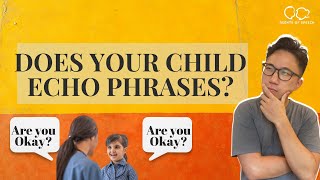
Ming from Agents of Speech explains gestalt language processing, where children learn language in multi-word chunks instead of single words. Gestalt learners often struggle with verbs, which the speaker calls the "glue" of language. Therapy focuses on teaching verbs, script-based play, and expanding contexts.
Chapters
Let's talk about gestalt language processing. And this has become quite popular in this space, especially for parents. I see it in Facebook groups a lot. So let's talk about it right here. Well, what's gestalt language processing? Gestalt, the word basically means whole. Okay. Basically, bear with me with the semantics here. So gestalt language processing means the child learns in chunks instead of units, which is the opposing theory, which is called analytical. So analytical and gestalt. So these, although opposing, are not mutually exclusive. So if you read inside of the textbooks and the research, which I will link some below, it's just that people will learn both ways, right? People meaning even me and you. I'll give you an example later. Right? Like gestalt and analytical, some children will learn. Most children, actually everyone will learn in units. So you will learn dog. That's the first word. And then you might learn the word white. So you say white dog, and then white dog walking. So you add one by one by one, grammatically speaking, linear, right? Linearly. Gestalt is like you learn the whole thing. It's like let's walk the dog. It becomes the default meaning for taking the dog out. Right? So these two are not mutually exclusive. We use these as tools to learn language anyways. Okay, so let me give you an example right now. Do you know some phrases in the foreign language that goes in the whole way? Right. For me, a bunch. Right. So first of all, if you watch Terminator, hasta la vista, baby. Right? Right. I don't know what that means. That means buy or in some language. Right. And so I don't know what the chunks are. In fact, I can't even say it correctly. I don't know which one is which. I don't know how to separate those words. Okay, you and I have these, right? For instance, in Japanese, there's. There's loads. For instance, I learned good night in Japanese, oyasumi asai. Right? I have no idea how to cut that out. I don't know. It's just a chunk to me. And it's the same to a lot of children. Everyone has this. And everyone will learn language analytically as well. Okay. What is the crux of this problem is that when you learn these chunks, children are using it in the wrong language context. That's the biggest problem. So when we think about words, we call that language form. The form of the language meaning what word are we using? So for instance, we go back to that example of let's walk the dog, right? When you say let's walk the dog. The meaning, the form is let's walk the dog. That's the. That's a sentence length. That's the words that they use. But the meaning and the use of it, the child might get it wrong because that's the only form they have. So when, when they say, let's walk the dog, it might mean that I want to go take a walk, whether if there's a dog or not. Right. It might also mean that the dog looks tired or the dog's hungry. And there's. Let me give you a real example. That happens a lot. And you'll say, oh, man, my kids like that. Maybe. Okay? So, oh, lot of my clients, my students, they fall down and say, are you okay? As a chunk that they learn from their mom. Because their mom would say, are you okay? The first thing, or are you hurt? Right? And then the kid would be like, are you okay? Are you okay? And. And holding on to their knee like this, right? Are you okay? So that's the gestalt part that they got from the mom through many, many repetitions, and they found it. Oh, that's. That's amusing. Let me use it. But they use it in the wrong way. Meaning they don't understand that it was a question answering. You know, they didn't say, I'm. I'm in pain or I hurt myself or I'll cheat. Right? So it's the wrong use of language that's the problem. It's not that children are doing the words in chunks, right? So how do you deal with this? Even though I've told you that everyone's language learning is a mix of both units and chunks, which is analytical and gestalt. So it's a mix of both. Right? So you have to make sure that your child has enough words, enough words to combine words into sentences and phrases. Right? So the common theory out there on the Internet and in textbooks is 150. And the. And the word count just goes up. Some people say, oh, no, it's not. It's 500. No, it's not. It's 250. Doesn't matter. It's arbitrary. What I mean is your child needs to have enough words in order to mix them together. But here's the biggest problem. Most children who are delayed or on the spectrum, whatever diagnosis that they have, which I always say, don't think in diagnosis. Like, as a whole, think about the language profile. How, how are they using language and so on, right? The problem is that they have too many nouns. Instead of having not enough verbs. So why are a verb so important? So let's say they don't have a verb, then they cannot create a sentence. And in linguistic terms, okay, I'm not a linguist. Please don't crucify me for saying the wrong thing here. A lot of times the noun can only serve as a subject and an object, right? Or sometimes like, it could refer to a concept like colors, numbers, whatever. Okay. But it can never glue words together, right? So you know how we always say subject, verb, object, verb is in the middle. And some languages the verb is elsewhere, right? But most of the time in English, Cantonese, Chinese, that I'm familiar with, and I also know a little bit Indonesia now is that the verb phrase is the phrase that is right after the verb. So anything that is to do. Like if you think about every word, every sentence that we say, right? Ming wearing glasses, right? The wearing becomes the verb, right? And it glues that the subject and object together. Or else you can say ming glasses, and it doesn't make sense, right? So how do you teach children with gestalt language processing? You know, this tendencies is to teach them more verbs, right? That's. That's the, the end of it. To teach them more verbs. Teach as many verbs as. As you can. And then once they know the verbs, you can put like the objects behind it or the subject in front of it and slowly build it out and make sure they can use those words flexibly. Okay? In fact, that's exactly how we do it in speech therapy most of the time. Okay. And there are some times where we use gestalt language to our advantage, which is script therapy. And what is that you're asking? Okay, so let's say you're using a doctor's kit, right? You're using. It's like you're bringing the patient in, you're pretending, and you're trying to use a scripting to help with their play, right? So because the language cannot analytically break down such a huge chunk as. Such as, okay, next patient, please come in. Is too long, but it becomes a script that's fun. And. And now you can teach play, right? And later on, when the play catches up, and then you can use the play to teach a language. So it's like play and language are two things that you must teach play in order to have the context teach a language. Because remember, at the end of the day, what's the biggest problem with gestalt language processing or just children who are language delayed, is that they're using the wrong phrase. The Wrong chunks for the wrong reason and the wrong use. Right? So therefore you need to explode their play so that you have more contexts and more uses that you can do and then you can match it back with the correct phrases, words and whatever. Okay, so the last thing I want to talk about is echolalia and autism implications, right? So a lot of videos and articles online is like, oh no, your child doesn't have autism. Your child is echoing because they acquire language by gestalt language processing. Right? Look, so I told you, as I told you just now, all of us, we have this tendency to learn language and phrase and chunks, right? And that's because sometimes we didn't sit down and systematically learn the words one by one. Even if we learned those words one by one, those weren't unfunctional enough for us to use it. So for instance, when you go and learn a foreign language, what do you learn first? The numbers, the colors. Right. Greetings. Greetings. All phrases. You don't even know which is which. Right. It's the same as children. If you go to kindergarten, what do they learn first? You know, numbers, animal names. Right. It goes by themes. So you might have farm animals, sea animals, whatever, their own nouns, man. So at the end of the day, they don't have that to glue those words together. Okay, so does it have autism implications? Well, actually, yes and no. Okay, so you see that autism children, they will script a lot, they will echo a lot. Okay. And that's because the interests are different. The interests are niche, right? So therefore when they do have this gestalt language processing going on, what they do is that they take that language and they use it for self entertainment purposes. Okay, so does it mean that all of these are on the spectrum? No. Okay, so I think for this time and for your own mental well being, don't think about it that way. Just remember, okay, if your child has this gestalt problem and you think they do, in which most of us do when we're learning a new language or just acquiring language in general. Right? You have to go back and teach them the glue which, which are the verbs in the language, or else it's going to be very difficult for them to put the units, one by one, the analytical units into phrases and sentences. And you might ask, what about echolalia? Okay, so echolalia happens when a child is thinking about something else than before, right? Or they might be using the wrong phrase for the long wrong language use. And that's the, the fastest language that could, they could grab from the Brain because they've been thinking about it all day long. So a long time ago, I learned French, and I went to a French preschool. I actually, French was the first language that I learned in school, basically. Okay, don't ask me why, but it is how it is. So now I've forgotten all of my French, but I've learned French again in middle school. So all the words that I know are in chunks. So, for instance, if I say I go fishing, it's J sui al pesh. But I don't know how to cut it up. I know J is me, right? I. And then I don't know, whatever. So when I meet my French teachers now, that's probably the only phrase that pops in my head. And if I didn't have any social restraints to restrain myself from saying the wrong thing, I will probably say that. I'll probably just see them and say, which is. I ride a bicycle. That's the only thing I remember, right? That's pretty much all I remember after, you know, like, how are you? Whatever. And then the next thing in my head would be, which is a chunk. And so, if you get what I mean, like, children, they don't have as much of their prefrontal cortexes aren't as good as ours, so they cannot limit and try to hold themselves back from saying something inappropriate. So therefore, they would go to the fastest processing, the fastest language chunk that they can, they can retrieve to get what they want or say something in order to have fun. Have you ever sat next to a child during Star Wars? Okay, maybe you haven't, or maybe not nowadays. Is Marvel, right? Maybe Infinity War, Whatever. Whatever. That children love to watch. Now you sit next to them. It's not their first time watching it. They're going to say the scripts. They'll say the words right before they even come out. And that's annoying. And so is echolalia. Is it really autism? No, not really. It's just that a lot of children, they cannot really hold themselves from saying inappropriate things that they can just grab right away. And it happens to you and I as well. It's just that we're able to, like, just calm down and just decide what to say, not say in this case. All right, so I hope this was helpful and useful. If you haven't, please go to agentsofspeech. Com Checklist to grab a free list of tools and toys we recommend you get to get when you start home therapy. All right, so that's it for this video. I'll see you next week. Bye. Bye.










