How to Teach Children Grammatically Correct Sentences
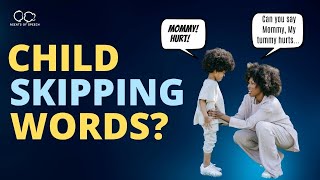
Ming from Agents of Speech teaches how to move speech-delayed kids from phrases to full sentences. Start by finding where they drop words, drill everyday sentences with color-coded tools until they say each one five times independently, then practice in role-plays like supermarket scenes. Structured repetition builds grammar better than play alone.
Chapters
Is there a way to teach speech and language delayed children to speak in full grammatical sentences right away? The first thing is your child needs to be at least be at phrase level, meaning they can say functional phrases like can I go toilet or whatever, these kind of phrases. But then when they try to make their own sentences, they miss out certain words like articles, the functional words that make the sentence full, whereas the message is intact. Meaning if the child says it hurts on me, right? You, you know that she's saying it hurts on my knee and she's omitting the my, right? So how do you get a child to say the full thing? So recently coaching client of mine, she reached out after watching a course and there's a concept called, called the breakdown level. So she identified her child's breakdown level at able to make full grammatical correct. And I told her, look, we can approach this a few ways, right? We can keep on going the route of playing with her and giving her as much language as we can, right? And hopefully one day she'll get it. But as of this recording, she's around five or six and we've tried a lot of these techniques already. She went from non verbal to, to now being able to speak in phrases and sentences. And because I know the client, I know the child through looking at videos through the Internet. So I can tell the mother, look, what we can do here is to try something that is more structured, right? And we need to target sentences that she's been using every day. So we need to make a list of functional sentences that she has screwed up before, that she had made mistakes before, where the mother has prompted and tried to teach the correct form, and the child has attempted that as well. If you're still following, it means that we need to take all the errors that we hear from everyday life, make a whole list of it, and then sit her down on a structured setting and go through them one by one. Okay? So at this point in time, some parents or some therapists will be frowning. They're like, wow, that's very backward. Why would we do like more structured stuff? Why don't we do more child led therapy? The thing is, if we always allow the child to lead, what's going to happen is that children will take the path of least resistance, meaning they will skip those words because they're more comfortable with doing that. So a lot of times when we're doing therapy, we have to push children to go outside of the comfort zone. So now that you have a list, there are a few ways that you can Go about this, you can do a Google search about a term called colorful semantics. It's a way that some speech and language pathologists like to do sentences. And I do believe it will help, especially if the colors are something that will help a child. And by the way, in the beginning, it's not a cue or prompt just yet. Don't think that you'll slap some colors onto a sentence and magically your child will be able to identify which ones are noun, which is adjective, which ones are articles, or whatever. You have to build it up. You need to use it over and over again. That's why you want to keep the variables as little as possible. And that's exactly the reason why I'm asking you to use sentences that your child has been saying and has been making mistakes before. Because we take those sentences, we write it out with colors, then we can give feedback according to it. So a lot of times what, what happens is like when parents give feedback, it's not specific enough. So then if you have a visual representation and also color coded, then it's easy to point out. Look, you missed out the red one. See this one? Can you try again? It hurts on my knee. Can you try this one? The red. Remember to say it and then it'll be much easier for you and your child to identify what's missing within the sentence. Right. So you go through the functional sentences one by one, and the target is to get your child to say the sentence five times without any help. And you're going to say, wow, that's a lot. Yeah, because to break out of a bad habit. And recently I went to physiotherapy, by the way, I, I learned the motoric side of, of therapy rather than doing like, language stuff. Right. And the, the therapist said to me, like, when I was walking, I wasn't activating certain parts of my leg, and therefore I couldn't do causes strain on my ankle. Right. So therefore I had to do exercise. That was a lot of repetitions, a lot of repetitions. And this is what we need to do for speech and language therapy too, Right. It's going to be boring, it's going to be robotic, but at the same time, what's going to target is it's going to drill that concept of what words are missing, what kind of sentence length you're looking for. It's going to drill into your brain how to give specific feedback about the language outside of the table tasks. Right. So it's going to help you a lot like that. Okay, so where do we go after all these functional sentences that we picked out from every day from listening to a child, right? We move on to guesses that we think your child might use at school or everyday life, right? So this is where script therapy comes into play, right? You can do something called a role play, but there's a script involved acting, right? So you can use the same way of what you were doing before with the functional sentences, and you guess it. So maybe it's ordering something at the restaurant, at McDonald's, at whatever. I'm not saying that going to McDonald's is something that's good. I'm just saying that it might happen in your child's life. And therefore, you need to find those opportunities to write a script for them. For instance, paying at the cashier at the supermarket. You can write a script for them in colorful semantics, and then you can take turns being the cashier and the customer. So then you keep on doing that, training your child to speak in full sentences and a grammatically correct fashion. And then what's going to happen is like when next time you do go to the supermarket, it's the best time to actually try to generalize what you learned and you try to home, right? So this roleplay, the script therapy, obviously you need to have some props. You might need a supermarket cashier, toy thingy, right? You might need a bag, you might need a bunch of like fake or real groceries, so, so to speak, and you create a script. Okay, A very good example that I have, and I'm thankful that I have this example, is that before we had a client who was 12 years old, autistic girl, we did a lot of script therapy with her and she loved the Toy reviews on YouTube, so we did a lot of those. She finally got to a point where she didn't require the script to do a toy review, and she made videos about it and pretended to be a YouTuber. And then fast forward later on, the school saw her improve so much, they asked her to be the MC of the Christmas Ball or whatever. And then there was a script. And because of that script, she memorized it, she remembered it, and she didn't need the script when she was there. And everyone was so like, they were mind blown. And you might say, okay, how do we get rid of scripts? How do you get rid of written cues and stuff? The biggest problem right now with a lot of children who are language delayed or autistic. Autistic for that matter, is that they don't have this mental representation of what it means to be Grammatically correct, Right? That's why we need to use a very structured approach to teach them. Imagine if you were learning a foreign language, what did you do? Just imagine. Just remember back how you learned your first language, how to write, how the grammar worked like the first language you would. You won't need someone to teach you what the grammar is, right? You learn it by just absorbing and understanding it and using it naturally, right. As a second language, then what you need to do is to someone to tell you the rules, right? But if someone tells you the rules, it's very hard for you to generalize. The best way to learn a grammatical rule or how a language works is to actually use it over and over again. So just like playing an instrument and a musical instrument, you learn the intervals, chords, whatever. I'm not a musician, as you can tell, is to keep on copying what someone else has been doing. Just covering a song, okay? It's the same as language. You want to cover as much stuff as possible. A lot of great writers, what they do is copywriting, just copying someone else's writing over and over again. Like my wife's grandpa, he loves just copying poems, Chinese poems. And then therefore, when he needed to to make his own poems, he has that structure inside of him and he can pull out whatever that he learned over the years. So that's why we need to do a lot of this. Until a child can make their own sentences grammatically correct, okay? It's one thing to tell someone the rule explicitly. It's another thing for them to learn it through a lot of repetition through, like, copying others who are masters of the craft. So. So that's all for this video. If you want to learn more and you want to have that breakthrough, go to www.agentsofspeech.com course. Get the free courses. Watch it there. Think about how you can apply it to your child. And then once you've gone through some of the stuff you can ask inside of a community with. Right now, as of this recording, there are 13,000 parents inside that community. There must be something that someone has encountered that is similar to yours. Watch those courses, ask your questions, and then you know it'll be a lot better. You're not on this alone. Okay, that's all for today. Thank you so much. See you later. Bye.










