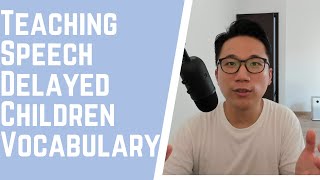
Ming from Agents of Speech shares how to build vocabulary in speech-delayed children: model words directly without asking questions, repeat targets often, keep it playful, and use flashcards and toys. Start with receptive instructions instead of quizzing, vary word categories, and act out verbs to make learning stick.
Chapters
Hey, what's up? This is ming here from agentsofspeech.com I'm a speech therapist, and today I want to talk about teaching more vocab. Why is it important? Well, number one, there's a study. There's a lot of studies out there saying that the more words that children have, the more likely they will combine the words and make sentences. You know, there are different numbers to this. Some people say 50, some people say like 100, like 200, whatever. Doesn't matter. There's no bad thing about learning more vocabs. So this is actually apparent Question. How do I make sure that, you know, my child learns more vocabs with me? First of all, I want to talk about teaching, like a YouTube video. Okay? Think about the YouTube videos that your child is obsessed with. I have a few students who love vegetables. I don't know why. And then he can tell me, and she can tell me all the names of the vegetables. Even asparagus. That's crazy. How did she learn it? Through YouTube. So therefore, it's an effective way to actually learn words, right? So. So we should learn from it. We should learn from those viral YouTube videos that earn a lot of money on YouTube by teaching children vocab. So number one is that they don't use any questions. They have no questions at all. They show you a picture and then they say, asparagus, tomato, whatever. So they don't go like, hey, what is this? Or like, hey, tell me what. What this is on the screen. Never. They just tell you exactly. Just boom, like that, right? So that's the first thing that you need to learn from them. Number two is just keep repeating it. How many times does your child watch a certain YouTube video? My student probably watched that video like 20 plus times in the span of an hour that mom told me. And I saw it in real life when she was waiting outside. She kept on watching it, keep on repeating it. Number three is keep it light and fun. How many times have you tried to teach your son or daughter some words and it becomes like, quits, right? It's just because we grew up being quizzed a lot doesn't mean when we teach children needs to be like a quiz. So look at those YouTube videos. How did I make it fun? They say it in a funny way. Like, they say tomato, they go upwards. Try out something that makes your son or daughter feel happy about it. Okay? This is what you need to learn. You can find a fun activity to do together. One of the things I do a lot is I Do use flashcards, but I use it in a way that it's fun. Okay, so what we can do it is like we can make up a game, paperclips on the flashcards. Use a fishing rod that has a magnet and put pull them up or something. I don't have it here right now, but I hope that you can imagine it. And what else you can do with flashcards is you can fly and flip it away like a card. So you can just go on YouTube and learn how to flip a card and just learn from it and just flip it and you're the toy, right? Number two is to use toys. If you have a lot of toys like I do, then, you know, you can use toys to teach vocabs. Number three is worksheets. One particular parent showed me that, you know, using worksheets and circling is actually a good idea, right? It's actually a good idea because the child likes it. It's like playing a game on iPad and you see something and then you circle it, right? So that's something that you can try. Or you could color in some of the stuff. Like, one of my students, he loves animals a lot. So what we did was we taught him some simple instructions. And add his vocab. For instance, can you color the tail brown or something? Can you color his paws green? I mean, it's going to look really at the end of the day, but at the same time, you're teaching your child a lot by doing that. And at last, I want to give you a few general tips. Okay, Number one, start with instructions. Don't ask them to talk. Don't ask them, what is this? What's that? Don't make it a quiz. All right, So I always start off with, like, instructions, which is only receptive language only. You can say, hey, show me where the apple is. And then they pick it up and they say, see apple? That's good, right? Or you can do like the parent was telling me, right? Circle the banana. And then they go to the worksheet and they circle it, right? Or maybe you can say, oh, can you kick this watermelon, please? Or something. So it starts off with an instruction. They don't need to talk, they just need to act. They need to do it. They listen into it, and then they know which one it is. Okay? Secondly, use different categories, like people. I know food and fruits. You guys do a lot. I do a lot. And try occupations. Do some verbs. You can do verbs with some flashcards, or you can act out and you might ask how Do I do verbs with like instructions? Well, you give them like a toy animal and you ask them to show. Show me jumping. And then they will take it and they will jump using the animal. Or like show me walking and they walk with it or something. Or show me sleeping. And then they just put them sideways and they're like sleeping or something. Different categories of vocabs. Not only just nouns, not only just food, not only just vegetables, not only just animals. Okay? Do a lot of things so that later on you can put them together and make sentences out of it. The last tip is very important. You have to have a kind of sign that tells your child that something is going to finish, right? That training is going to finish at these times. Right. So what I usually do is I put like four cards on the table. After they get it all, they say it all or they like, they show me all of the flashcards. They can go, or they can do something else, they can play with something else, they get the reward, whatever. So it needs to have end date. What happens a lot of time is that the parent shows me, oh, this is how I teach vocab. They get a whole stack of flashcards. You go, like, what's this? What's this, what's this, what's this? Hey, how long does it take to finish that stack? You didn't tell the child? If I were you, I would take out and say, okay, there's five. One, two, three, four, five. Okay, finish and then you can go play whatever. Right? You gotta let them know. If you don't let them know, they're gonna go crazy. So with that said, this is all I wanna share with you. If you haven't, you can go to agentsofspeech.com checklist. That's a checklist for all the tools and tips and toys, actually that I recommend to you. If you wanna start home therapy right now because of the pandemic or. Or for whatever reason, and that's the end of this video. Let me know in the comment section below about what you think about these tips and tell me if you have any questions. Right. I'll see you in the next video real soon. Bye.