Is Your Child "too LAZY" to Talk? | www.agentsofspeech.com
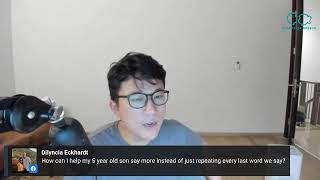
Ming argues that when parents call a child "too lazy" to talk, the real issue is the child sees no compelling reason to speak. He shares the case of an autistic preteen who preferred typing because talking felt like too much effort, and offers practical fixes: make communication payoff clear, set child-owned goals, use gestures as a bridge, and shift from predictable rewards to random reinforcement.
Chapters
Hello, guys. Welcome to our Monday lives again. And today I want to talk about if your child is too lazy. Too lazy. Okay. And quotation marks and why I want to talk about this is basically that's one of one of the top 10 things that parents will tell me, whether in real life or online. So whether your child is too lazy or not, it might be true, it might be not. Usually the case is, yes, people are lazy in general, people do are quite, you know, like, even if you're talking to your significant other or a family member, you do not want to talk once you get home. You know, like, especially like just to share with you a little bit. When I started my journey as a therapist, I remember coming back from work and I just don't want to talk at all because I was so, so beat up, you know, just so tired from work. So would it be that your child is the same after, like doing a whole load of therapy, coming home and then they're like, man, I don't want to talk anymore. I've been training to like, do things over and over and now, like, you're making me talk again. Well, the answer is yes and no. Well, let's talk about, like, why it would be true. So if you are continuing this sort of the sort of, like if you're going towards your child and asking them to talk and pushing them to talk for some for a reason that they cannot see, then it will be very hard. So that's why you might think that, oh, they're too lazy when it's so easy to talk. Well, the first thing I have to tell you is you never forget about that because if it were easy to talk, they would have talked already. They would have spoken and they would have, you know, like, talk to you a lot. Right? So the biggest problem here is actually that they don't have a reason to talk to you about. Right? And the counter argument about like, being lazy or not, right. Is first of all, your child, if, you know, like, as I said, talking to you, they would have done it, right? That's first thing. Second of all, if they knew exactly how that talking would make it into like a social, like a fun social interaction, they would have done so already. So you also see this in a lot of like text teenage, like kids, right? They don't want to talk anymore. I don't see a point. Every time they speak, they don't seem to be understood anyways. So actually the more I've worked in this field for, you know, like, for some time now, I wouldn't say, like, how long is in around 10 years nearly. So the, the number one thing I see that we don't, we misunderstood children who are on the spectrum or like, who just, just speech delay is that they also have similar emotions as typical developing children. Right. So a lot of times when you talk to them, it feels like we're giving, we're trying to make them into something that they don't want to be or they don't understand why we're trying to push them to become someone like that. Or it's like subconsciously they feel like we are putting our, our, our hopes and dreams onto them and saying, hey, hey, yo, listen up. You should be doing this right now. Yeah. So what's the point of talking if they don't agree about that? And why would they listen to us? Right. I've had that before. Right. No, everyone has that before. I guess so. Right. Adult puts their hopes and dreams on the kid and the kid doesn't want to. I mean, you might have been a part of that as well. So you need to understand, even those whose language isn't that good, they can still feel the sense that what they're trying to do to you doesn't align with their own values as a child. Right. So that's why when you see a kid around like three or four, it's much easier to like, force them to talk. You know, Force them. Right. And some people, oh, don't use the word force, like guide them. Well, most of the time we are in the beginning, we are bribing them or else, you know, how do we, how do you expect them to change? Right. And by doing that actually helps them to see, oh, actually talking has its merits. That's why we do it. Right. And that's why we try our best to create, create environment where they want to talk to us. Yeah. So as they get older, like around like 7, 8, 9, like those times are pretty hard because they start to feel like, oh, these stuff that you want me to do, it's not that important because I can still live my life like this. So I'll become lazy. I don't want to talk. I know you'll give in. I know this will happen. And you know, this really struck me when I was talking to a parent from Indonesia. Her daughter was. I forgot how old. Must have been around 10 plus or 9 or whatever around that age. 9, 10, 11. Okay. And she told me that the, the, the daughter was on the spectrum and on verbal and she was too lazy to talk. Right. But the Funny thing was she was having trouble with saying vowels even, right? But she could type, she could read, she could write, she could type on WhatsApp. And I must have shared this on what's on this, on these lives before, because it really, like, changed me on another level. You know, it just made me feel like, oh, now I understand more about these kids, you know, Like, I'm okay with teaching them when they're coming to me, but what if when they're at home with you and nothing works? Right? So back to the story. The daughter texts, the mom asked for different, like, things from the supermarket, like chips or whatever. And then one day her mom just decided, hey, I'm going to ask the kid, why do you not want to talk? Why is it so difficult for you? And then she replied in broken English, right? Although she's in Indonesia, she's still like, English is still her primary language for some reason. Okay, we'll talk about this subject later on. But basically what it is is that she typed, mom, you know, talking is hard for me. And I don't see a need to, like, talk so much as. Well, I don't need. I don't see a need to, like, go through all the pain and suffering to learn how to talk. Because if I, you know, if it were easy, I already have done it. And this is something that I hear a lot of autistic people say. Oh, if I. It's easy. I've already. I've. I've done it already, if it's easy and whatever, right? So you see, it's sometimes it's that kind of mentality that they have, right? They're very extreme. So they feel like, dude, there's no use for talking. Who cares? I'm just going to be home, I'm eating, I'm watching tv. That's my life. Yeah. I'm not saying that they, like, of course for us, we're like, dude, you're such a freeloader. What the heck are you doing? Grow up, man. Like, although you're nine, but still look at the people around you. And whether you like it or not, from my perspective is like, there's going to be an age where, you know, like, no one's going to be able to attend to them as we would right now. And it's becoming more and more. How to say, it'll become more and more dangerous for them to have this mentality. And this mentality is in this, in its sense is kind of like, I'm too lazy. Like, that I'm becoming lazy I don't see a point, right? We have that saying, and actually in China right now they call it lying flat. It's like a, it's like a new, new thingy that's going on. It's like, I don't see a point working so hard, having like, whatever, you know, it's better to just lie flat and not have kids and not do, be, be productive because all this is not useful, right? So you see, even, even those who are slightly above school age are having these kind of thoughts in their head. Whether or not they can express it to you or not, they're having these thoughts, right? You can see it from the eyes. You're like, oh, again, what are you? What do you want from me? Again? Like that kind of attitude that you can see. And obviously the only way we can change them is to change our approach, right? That's the only way we can change. Because it was our approach that created this type of laziness or what I would say, like helplessness, kind of. So what should we do about this? You know, like, there's always, you know, it's always like that. It always feels like we are trying to pull someone to become something that we want them to do, especially within the family. And whether or not that's, you're the one who's being pulled or you're the one, like, you're the one pulling, that doesn't matter. What I mean is, from now on, if you have that mentality that your child is too lazy, then it's time for you to change your approach. All right? Why do I say this? Because I had a breakthrough recently about, like, teaching a autistic adult, okay? And she has been nice, she's been improving in many ways, but at the same time, just to share with you guys, not telling you the name or whatever, and you know, it's just things have been really tough with her family. And somehow I was like, because I was working so closely with the family, I was a little bit involved and I didn't like it, right? So what I, I told her, I told the, the my student. I was like, dude, you gotta change this. What would you do in that situation if someone else was doing, doing some cbt, you know, some cognitive behavioral therapy, that kind of stuff, right? What is your mentality on this? Right? I'm asking her, what, how do you think about this? Why would you think about this? Keep on asking whys, right? And at the end of the day, she said what the nine year old was saying as well. She was like, if, dude, Ming, if it was easy for me, I would have done it. And her voice was like, just irritating to me. I'm like, dude, you're a full grown adult. And you're saying this to me as if there's like some sort of helplessness in you that you cannot like, go. Like you just can't see it through. So all these things are very common. Like if you go down, like any type of, like, if you think about all the psychotherapy that we're trying to deal with, a lot of times is about getting someone to change and take action and change their lives by themselves. Because all help at the end of the day is self help. You know, that's just something that Bruce Lee said long time ago that I remember, which is very true, right? If you don't do anything about it, no matter what people how, like how people help you, you're still not going to be able to do it. So I told her, this is the breakthrough, okay? So I told her, dude, what do you want to do when. When you're like, what do you, what's your dream? What do you want to do? What is it that you want to achieve? What do you want to become, right? And she's like, oh, I want to become like, like a, like a philanthropist. I want to help people, whatever, with the knowledge I have and to also spread the awareness of like the sort of difficulties that we as an autistic people face. I'm like, okay, cool. So as this person that you imagine, right? And you cannot do this with like primary school kids, you can't do this. But okay, you can, maybe you can do this with secondary school children, but the language needs to be very good. We'll talk about the non verbal ones a little later, all right? So if you have any questions right now, just let me know. I'm just telling a story. And I, and I asked her, like the, the person who you want to become, right? How would he or she react in this situation, right? And then she said, oh yeah, she would be like this. I'm like, yeah, exactly. So why aren't you doing it? If you want to become that person, then you'll never become that person, right? If you always react this way. And then, you know, like she suddenly became silent. You know, kids, just people, especially autistic children, they all have comebacks, right? They always have some sort of like ridiculous comeback. She had no comeback, right? So this is what a lot of my supervisors when I was a junior therapist, they would say, oh, when you're treating Adolescents, autistic people, you need to be so logical that they cannot say anything back to you, right? You need to be good at arguing at the end of the day, you know, like, good. Thank God I had some training when I was younger, you know, going up in the school I was in and whatever. I had some training just arguing with people. So I think I'm pretty good at it, I would say. So at the end of the day, like, she was like, oh, man, you're totally right. I should, you know, like, if this is what I want and if, like the stuff I'm saying and doing right now is not allowing me to go there, then I should change. And I'm like, yes, man. There's nothing I can do to help you. It's not like, you know, if at the end of the day you cannot perform, then it's your problem, you know, and you have to take serious self accountability towards that, right? So if you can get a child up to that point, then you're going to succeed. And this is where the breakthrough came in. She told me that, okay, I told her to set her own goals from now on because she has to envision who she wants to become, right? And she started to write. After she wrote the goals, she started to say, like, she told me that I'm. I'm so at ease and so happy about the goals I set, that I'm gonna do it every day. Like, and she's been doing it without anyone's help. And she's like, before, when she was younger, all the goals that were set for him were set by someone else, and she didn't understand why, and it resulted in a lot of anger. And I think this thing isn't just about like, just autism in general or speech delay people. It's just even for us, right? If someone, if your personality is such. I'm part of them. If someone tells me, dude, your fate is like this. This is the goal that I want you to achieve. You need a. I still remember, like when I was doing my master's and then my supervisor was like, oh, you really need to get it going, man. You know, you really need a. You really need a. Whatever. And in my mind I was like thinking, why would you say that to me? Why is that? I need to grow according to your goals. And I remember I was. I was teaching, I was learning about adult cases, like strokes, aphasia, you know, swallowing cases. And then all the reason why I took the masters was because I just wanted to teach kids. You know, I wanted to teach ASD people in general. That's why I wanted to become like, I wanted to get a speech therapy license to become better at teaching language. That's all I care. I didn't even care about the title or whatever. I just thought that it would be a good idea for me, right? So that was a goal I set for myself. And so what I'm trying to get to you now is that for the laziness to go away. The laziness is for them to start to understand why they're supposed to talk, why they're supposed to improve. If you don't give like a compelling reason why, why would anyone do it? Yeah. So why would anyone? This is kind of higher level, high, like a high level thing, you know, like in our courses we do talk about, like, if you go to agents of speech.com, right, you'll see some courses talking about exactly what, what, what skills or what things to target. If your child is speaking one word or like no words, and we're like, next, like probably tomorrow, whatever. We're doing a pre sale of the speech clarity course. The crash course is like a four week intensive that you can follow and so on. Like, don't worry, I'll talk about that later on. And Carrie Anne says, if I'm getting your name incorrect, please let me know. Says my child gets, tries to get away with one word for everything. So you have to understand for each level of language. If your child can speak like his or her language is good. And you can talk about what I talked, like what I said just now about letting the person understand the goals, right? And this is fundamentally very therapeutical. If you talk about any type of therapy, right? There must be a reason why someone came to therapy for help, right? And because children cannot be the person who came to you for therapy, they will never be 100%, like receptive to you, you know, to me, because they never ask for help. Whereas, you know, for adult cases, they're like, oh, please help me, I can't talk. Or please help me, I'm stuttering, please help me. Whatever, oh please help me, I have depression, whatever that type of therapy is, right? So for this, Carrie Anne, for children who don't get you, you have to make sure for them to understand why they have to speak more. So I've talked about this many times. I talked about many times when a child's stuck with one word, make sure to let them know why they need to speak in more. What do I mean by that? So usually what parents do is like, oh, one Word is too short. So I'll let, I'll get my child to say like, I want whatever. Right? I want chocolate, I want cookie. I want what I give me. Whatever give me. That's a frozen phrase and that's a carrier, like what we call frozen phrases or carrier phrase level. Right. So what's the difference between the meaning of I want cookie and him just saying cookie? There's literally zero semantic difference. Meaning. There's no, there's no difference in meaning. Right. Whether they say I want cookie or cookie, at the end of the day, the language function is still for you to give them a cookie. So why would anyone take such a long winded approach to get the same result? That's kind of crazy to me. So that's why fundamentally speaking. I'm not saying that you're doing this, okay, Carrie Anne? I'm just saying in general. That's what I observe. There's literally no reason why anyone would say more than that other than for politeness, you know, other than being polite and being social. Right. If a child doesn't understand politeness and, and being social, then you teaching him or her like I want whatever will never work because they think that all they have to do is cookie. Right. So what are you supposed to do? Add a verb in front of, right? Cookie. What? Show cookie. Whatever. Oh, you. Oh, give cookie. Oh, okay. Or eat cookie. Or open jar. If they say like jar and it's like, oh, what do you mean by jar? It gives them the whole jar. Right? Or cookie, it might give like a big piece and a small piece and you just give him a small piece. It's like, here we go, cookie. And then he's like, ah, cookie. I was like, oh, you want big or small? Make sure there's like a contrast in the words so that he understands why he's supposed to say more words. Because it becomes more specific. Right. And he's getting away with one word is because he doesn't need to be specific to get what he wants. Right. So hope that answers your query just now, Malaco. Sorry if I'm getting your name incorrect again. My son prefers to point out what he wants. Well, there's loads of. If you go back to the videos about how to get your child to, you know, you know, do an open palm with you, that would help you a lot. And the most important thing is because he's already using gestures. You need to expand more uses of different types of gestures. You know, not only pointing, they're like, I'm just repeating myself over and over about this gesture stuff. Do it, man. Don't you know, like, there's a parent who talked to me and said, hey mang, I got your course. I don't see any like new information from what you talk about from YouTube and your course. Well, obviously there are, but you know, like, because parents are always looking for like some new information. It's kind of like a dopamine hit, you know, I'm saying, oh, I learned more today. I'm going to like. But it's not like you're going to use it. Okay. I myself buy a lot of online courses. No, no matter. For my own profession, for stretching, for whatever hobby that I have. So the thing about it is the stuff I say here, you have to take action about it and don't think that there's like new information that will change the game for you. Because there isn't. There's only like to get results in everything in life and literally everything. Find something that works and keep on repeating it until it doesn't work. And then find another way and keep on repeating it until it doesn't work. Right. So that's why I'm doing these lives, because it's working, People are watching. People are like learning stuff. That's why I keep on doing it or else I wouldn't have done it long time ago. Right. So again, go, go there. If, if watching all the videos in the YouTube channel or on the Facebook page is too much for you, then go to agentsofspeech.com micro and grab the course. Yes, you have to pay. But then at the same time, I've created all the stuff you have to know and one short course really quickly for children who are not really verbal. Okay, so Carrie Ann says. Oh, makes sense. Thanks. Yeah, nice explaining. Right? Explaining why he has to speak more is very important. And at the same time, showing is more important at that age where you know, if he's trying to use one word, he probably isn't very good at language. Not to discourage you, it's just fact. Right. So it's, it's, it's more about like showing why he has to do more than one word because the more specific, the faster he gets the stuff he wants. Right. And the other thing is, you know, if he's getting away from one word, how about his play? Does he talk when he plays? That's something very important. Because if all of his language is like need based and he doesn't have or she, like, I guess it's a he. Right. I'm just Guessing. Okay. That he needs to. Oh, there you go. It says he. So he needs to play and use language with you for fun. All right, all right. Christina says, my son is starting to say two to three word level. And I'm happy. Congratulations. Just that there are sometimes you won't do what my command because. Okay, focus. Otherwise I have to tell him that I'll give him a treat or then watch. Yeah. Then that's the time he'll do it. Yeah. The thing is. All right, so why are you giving those commands? Is it in a. Is it in, you know, like a teaching setting? If it's not, then, like, you know, like, even for any kids, 60 of what commands you say are also ignored. Human nature, you know? So, yeah, I mean, like, I guess you have to start giving him treats and praising him randomly without telling him as a bribe. So you should go away from bribing towards telling him, dude, whenever he does listen to you and you find out, oh, he did do it, then you should give him a treat or praise him immediately so that he thinks that he also always needs to be on, you know, focused because he doesn't know when you're going to give him something. And you're. And you're. What you're doing is you're rewarding the behavior of him just doing what you tell him to do. That's very important. Right? So that's what you. You got to do. You gotta. Sometimes if he doesn't listen. Right. So inside of a course, we talk about how to get your child to. Inside the full intro course I get. Get how you get your child to do whatever that you want him to do. Like here, you say that, oh, eat your food, sit down, whatever. The thing is, what you should do is like, if he doesn't answer, then do it. You tell him, hey, man, you didn't do it. And then you grab his hand and you do it for him. And then after he does it, you praise him and you give him a treat, right? So you do it for him so that he must. He cannot run away from it. So he's like, okay, so there's no consequence if I ignore you. But if I ignore you, there's like, you have to think about in a very economic way, right. What makes sense for him. So if he ignores you, there are no consequences. But if he ignores you, he also gets like a bonus chance that you might say, oh, if you do it, I'll give you a chocolate. So anyone with a, with half a brain would think, I'm going to Ignore you until you give me a bra. Until you bribe me. Right? So what you need to do is to. If he doesn't do it, you didn't tell him, and then say again, dude, you didn't do it. Go pick that up, take his hand, pick it up, say, good boy, and then give him a treat. So then he knows that, oh, the only way to get the treat is to abide by your rules. Not to. Not. Not to ignore you and then get bribed. And then. And then, you know, so on and so forth. If you understand what I mean. Okay, Someone in the Facebook group says, hi, me, My son only say the beginning of words. Example, open. He only said, oh, that's fine. That's developmentally okay. As long as you just keep on going. Right? And. And like, you can go on Facebook or YouTube and look at the video about how to. Like, I forgot the link. But you can check something like one syllable or something like in search agents of speech, one syllable. So the gist of it. Well, obviously I still want you to watch that video, so I don't need to repeat myself so much. But what you need to do is to take up two fingers. You go, oh, pen. Take his hand and say, o, Pen. Good. Your turn. Oh, Ben. Good boy. What's that? Oh, what's this? Pen. Pen. Good boy. So do this many, many times, right? Until he gets it. Okay, Yoda best. I guess that's the man, whatever that TG show name is. That's baby Yoda. Anyways. Hi, Ming. My nephew is five years old, but I cannot say the meaning. Can't say meaningful words. A few moments he said a meaningful word, but I don't know how to persuade him to say that again. He has speech therapist for years. Okay, that sucks. That's difficult to do. Let's see what else you say. Is it okay if he cries over not getting what he wants because it forced him to talk with word? How to stop bribing? All right, so the thing is, if he doesn't have any meaningful words, start off with gestures, as I talk about a lot. Right. Seriously, if you need more help, you know, just reach out or join the course first. Walk through that first. Because the most important thing is you don't force him to talk. Is that he. Like, if he. He wants something from you and the sounds coming out are meaningless and he's pulling your hand and so on. The most important thing is still to give him a different way of. For him to express his needs with you, which is most probably gestures. All right. That's very important. You have to remember that. All right, so how do you stop bribing is that you need to create something that you guys enjoy together. You get what I mean? If the only function for language is to request for things from you, then, dude, there's seriously very little things you can do in teaching him. The only way you can do it is, is to find something that he enjoys with you or another adult. Most probably those are toys, right? And once he has that function of wanting to play with you, and then you can teach the words that accompany it. Right. Okay, let's keep on going. So someone in the Facebook group again asks, my son will pee in the toilet but will not poop in it. Run to put on his pull up and then put poop. Okay, so, yeah, we have this question many, many times. I guess I should put it inside of update my toilet training workshop. So what worked about this? Like, obviously, I'm a speech therapist. I'm not a toilet training expert. You know, toilet training experts have been saying, ming, you're overstepping. You're not supposed to do this. Whatever. I don't know. I'm just telling you what, what works for me, right? What works when I tell parents to do so pee in the toilet but won't poo. Well, the thing is, put on his pull up and let him sit on the toilet to poo. Always think about how to make the thing closer and closer to the behavior that you want, right? So if you force him to just poo inside, it's not going to end well. The kid's going to get like, very anxious and doesn't know what to like. What, what do you expect of him? Like just poo there. That's crazy, right? Baby steps, man. So put the pull up on, make him sit on the toilet, and then he can poo while sitting on the toilet with his pull ups, on, if you get what I mean. Right? And slowly, when he gets used to it, just loosen the pull up more and more and more, right? Until at a point where the pull up is just hanging onto him and he's just pooping onto the. Onto the thing. And what you do is like you. What I tell parents to do when it works, right, Is to show him that you will put the poo poo from the Pampers into the toilet and tell him to flush it and say that, yes, poo poo goes in the toilet. That's right. And then once he does it, reward him. Reward him with something. Okay, I know it's rather disgusting. To transfer poop from a diaper into the toilet bowl to flush. But I assure you that this gives them a visual representation of what they are supposed to do and what is right. Okay? So I want you to do that. Try that out now. Okay? So. All right, Very cool. Very good questions. Keep them coming if you want to. I'll be here for another few minutes. What? Maybe the poop is so hard he needs soft. Maybe. Maybe. I wouldn't know. I wouldn't know, man. Yeah, keep the questions going. So I, as I was telling you guys, the thing about being too lazy or not really depends on the reason why. Behind it, you have high functioning children, you have low functioning children, you have children who don't have language development as well as others by the same time. The crux of it is this. They didn't ask for help. They don't know why. They want to talk more. Right? They don't understand the meaning of it. Okay? And I want you to understand this is basic human nature. And it doesn't change how, however old, young or smart, not as smart you are, right? You must see the end and the reason why to do something in order to take massive action. If you don't see the reason why, no one's going to take action, right? If they're okay with the present, why would anyone change? Okay. And I'm saying this because it's just. That's basically what I didn't think about before. I was like, ah, kids come my way. I'm going to teach them. I'm going to make it fun for them. I'm going to like, you know, like just wow them with funness and toys and stuff and make them talk. Right? So, okay, fine, fair enough. I could do that to a certain extent. But what happens after when they go home? They don't care. Like, parents don't know. You know, you can't turn on the Disney channel or change yourself into a Disney character 24 7. So what are you going to do? Right? The, the biggest thing is like to let them know slowly, is about why talking is fun, right? Why communication is important, why changing behaviors are so important as well. And that's something to you as well. This might sound kind of wishy washy, right? Just, you know, you need to understand, even for you, even for parents, for mothers that I talk to, changing mother's behavior is rather difficult as well, right? So a lot of parents will say they have too much information and they're in a state of paralysis because there's too much info coming. Their Way. Right. And I try not to say too many different things in my lives and my videos. I just want to get the message across. Right? So that's what I mean, you got to be careful about. You got to be careful about wanting more info and not changing. Okay? So you have to remember that you've got to be the person who changes first, if you know what I mean? Right. It's not about the new thing or like eating some. Okay. Some of Jennifer says, like, okay, there some supplements that work, right? Yeah, there are. But at the same time, like if, if you don't behaviorally change, like change your behavior no matter what supplements you take, is it going to be better? Yes, it's going to be better. Right. There's loads of don't ask me about, like, supplements, what to eat or whatever. You know, I've seen stuff, work, stuff that doesn't work. But at the end of the day, what these biomedical or dietary stuff is that it normalizes the kid to become at a comma state or at a state where they feel more in control. And then therapy becomes more effective because their mood is elevated, you know, like they're just more present and they're more focused and so on. And it's the same for us too, right? I mean, if we have certain supplements that will help you. And of course, I have some supplements that I really like as well for myself, and I actually can feel the change, but it doesn't mean that it will make me do the things that I have to do today. Right. You know, the, you know, this video doesn't shoot itself. You know, I don't become a better therapist by taking more supplements. I get a better. I become a better therapist by seeing clients, by interacting with you. Right. I become a better teacher by teaching you through these lives. Become a better speaker by talking here. So you have to remember it's the same, but at the same time, the big thing is why does the child need to work so hard? Because it's damn hard work. Right? So you have to remember, start with the why first. Right. Even there's even a book on it. But it's this type of human nature we kind of overlook when times, when it comes to, like children who are younger or we think that they don't, they won't understand. But you know, nine times out of 10, they actually have these kind of thoughts because you can see from their mannerisms, their attitude, their way of living, they're just don't want to do it anymore and they're becoming lazy and they Just lying flat on the ground and become a piece of thing, a piece of meat. Sometimes that's what I feel. It's like, dude, you know how to do this. You know exactly what I need you to do and you're not doing it. And you would rather just lie on the floor and just protest. Just. I just feel that way. Okay, so let's do one last question and then I'll be heading off. So, Delencia, sorry if I'm getting your name wrong. How can I help my 5 year old son say more. Instead of repeating every last word we say. Well, this type of repeating is actually beneficial to a kid, right? Is actually fine because that's a sort of echolalia that helps a child develop. Every kid goes through that. So you gotta understand that's fine first. And don't give him too much stick for doing so. Because when he's repeating every last word you're saying, you know, there's some like, I don't know, if you, if you say that, tell me in this manner, right? It's actually common for a lot of children to do so, but it's also like, is this pathological or not? I don't think so. At the very least. What I mean is children who have like tics or Tourette's or something, they always repeat the very last word, you know, like. But I don't think you're asking in this fashion if it were that, that path. Like, it's, it's very easy to tell if you're asking in this kind of manner. I guess it's just a developmental echolalia that we're talking about here. So what you need to do is instead of like, if you repeat every last word we say, probably the, the sentence by itself is already too long for him to digest. So why don't you think about simplifying the sentences you're going to tell him. And if he repeats the last word, you repeat the whole sentence again to him. And maybe make it simpler. If you say that something like the cat is sitting on a table, like right now the cat's sitting on a table. And then he says table, right? And you say, yeah, that's right, cat's on the table. Okay. And then let's see what he says. If he just repeats the last word again and they say, yeah, that's right, it's on the table. And that's it. Right? So you don't have to pester him, you don't have to force him, you don't have to do these kind of things with him. Just make sure that he feels safe with you and your help. Like if he's only repeating a last word or even worse, last sound, most probably the sentence was too long for him. All right? Or if he's repeating last word after your question, it means he doesn't understand your question. So simplify it. Make it easier. Okay? Systematically talk as much as you can, but in a simplified way that he can actually digest. All right? So that's my little tip for you. Okay? So that's it for tonight, guys. I'll see you guys next week, Monday. And be aware if you're on my agents of speech.com that email list that I'll be launching a pre sale for the new course about like, speech clarity, teaching your child how to say specific sounds and clearing up some questions that I have from a lot of parents saying, oh, what's apraxia of speech? Is this apraxia how to solve if my child doesn't have the l sound, S sound, you know, like whatever, what do I do? So on and so forth. So it's going to be a pre sale on that. Keep your eyes open because it'll run for a week for like a discounted rate and then it'll just become one of the courses that I sell on the website. Okay, so that's it for now, and I'll see you guys next week. Bye. Bye.










