It Takes 2 to Talk Book Review
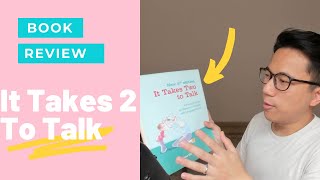
Ming (Agents of Speech) reviews the Hannon Center book It Takes Two to Talk and highlights practical, evidence-based guidance for parents and caregivers. Key takeaways: the book defines stages of early communication—Discoverers (exploratory, pre-verbal), Communicators (non-verbal signals, jargon), First-word users (single-word vocabulary building; ~50 words needed before combining), and Combiners (beginning to join words). It also categorizes common parent interaction styles (Director, Tester, Helper, Watcher, Entertainer, Mover) and urges caregivers to become a "tuned-in" parent who follows the child's lead, mirrors the child's interests, teaches verbs and gestures, and focuses on being generous rather than demanding in communication.
Chapters
Hey guys, Today I'm going to talk about this book. It Takes Two to Talk. There's a lot of parents who ask me what book to read when they start the journey. My name is Ming from agents of speech.com and today is going to be a short review of this, this book here. I wanted to do this because so many parents, actually nearly like three to four parents per week ask me about like, it takes you to talk. Is it worth it? Is it whatever? Obviously it's a little more expensive than any other book out there. And basically it's because it's professionals writing this book. So. And it's by the Hannon center and the Hannon program, which is very, very scientific research based. All of the stuff they talk about is evidence based. And you know, research takes money. That's why it's a little more expensive. All right, here are my main takeaways for the book. And it's me as a speech therapist telling you what I learned from this book and what you should look out for. First of all is that there are stages of communication for children. And if you go online and you search into like the Google rabbit hole, right, you will see what are the milestones, whatever. It gets pretty confusing. And why we don't talk about like milestones that much in Agents of Speech is because it's not actionable. I mean, I tell you that, oh, children by two should be like this, should be like that. There are videos of that all over the Internet. There are articles about that all over, okay, you can watch those, you can read those. It doesn't make you confused. And fair enough. But what we focus here in Agents of Speech is what you can do at home, right? So first of all, knowing the stages of communication from this book is important because you will know, okay? It's an easier and dumbed down version number one. Number two is that now you have something to, to reference to about what to do to put them to the next stage. Right. First stage is called discoverers. And discover is just basically a child who likes to discover the world in their own way. You know, you would see like children putting stuff inside of mouth, like trying to push stuff over. They're trying to discover things and they don't have any type of words or particular sounds, right? So they're pretty passive. This is where children try to climb up and get stuff on their own and so on at any time. This is my own interpretation alongside with my experience. So it might not read the same inside the book. But anyways, that's how I see it. Okay. Numbers. Stage number two is what they call communicators is where they have a lot of non verbal communication to you so they understand that they cannot do things by themselves. Right. At this stage, children are crying, you know, pulling your hand a lot. You know, they are trying to make sounds, but it sounds like a jargon meaning not really a word. And this really makes the child pretty upset at times because they cannot use the words to effectively talk to you. Right. So therefore they result to a lot of other ways to get what they want. So they are communicating, but not in the most appropriate way, which is talking. Okay. The third step is where the book calls first word users. Okay. And what these are is basically just children using word by word. And study says that children need to have at least 50 single words in order to combine them. So here they're stacking up their first words, they're learning certain words. They can say mama, they can say give, they can say want, they can say, I don't know, cookie, milk, whatever. And most of these children are stuck with more nouns than verbs. They. So I would say, I would strongly recommend you at this point in time, you teach more verbs. And we talk about it a lot. I've nearly talked about this so many times on, on camera is that you need to teach a lot more gestures. Okay. But during this book, they don't really talk about that. They talk about how you should be interacting with the child and in a very simple way, which I like a lot. Okay. And stage four is what they call combiners. Combiners are children who are starting to put words together, even if it's like two words in a phrase, three words in a phrase, even if it's not totally grammatically correct. They're trying, they're trying to use their own way of like putting words together to make sense of the word. Then it's fine. This part is a good read in this book, I think. Okay. Secondly, the other good read is the types of parents and, you know, all those, you know, personality tests, horoscopes or whatever, you know, they. They put different people in different categories in certain categories and you feel like, oh, that's totally me. Well, this book does it quite well with parents. And because I've seen multiple, like, oh, a lot of parents. Okay. I can attest that these are true. Okay. So there are a few called director, a tester, a helper, a watcher, entertainer, and a mover. Let me just say that each of these are distinctly. I can think of someone who is like that Who I've met before. So for instance, a director is one of those, you know, type A parents who are not, I wouldn't say helicopter. Right. That, that would be bad. What I mean is they're type A, they're trying to teach, so they're directing. Oh, take that over there. Take that Lego, put it on top. Good. And then get that thing and put it over. So when you direct the whole play, you don't give enough opportunity to see what your child wants and what he wants to learn with you and what is his interest. What happens is like the, the, the parent will come to me and say, yeah, he can play this, he can play that. Um, but he never takes initiative. And the biggest problem is that directors, director, like parents do not provide like opportunity for the child to actually show them what they like or how they would play. Right. So that's director. Sometimes when I watch them, what happens is that the child will try something and then the director will. That the parent will actually change the way of playing. It's like, nope, that's not right. Okay, do this like that. So it becomes difficult to, to have a two way play. It's a very one way thing. Okay. Second type is called a tester. I've talked about this loads of times and I believe that being an Asian, Asian guy, I would say that Asian parents are more of a tester. They would always ask, what's that? What does this cow go every opportunity, right? What, what color is it? You know, where do you put this? Always testing, always asking questions to squeeze language out of the children. So the tester type also eliminates a lot of the two way. It's more of a one way interview and it creates a lot of stress in children, as I always say. So that's one another type of parent, the third type of parent is like a helper. So whenever the child falls down is like, are you okay? Let me help you get up. One, two, three, like that. Or like they drop something and then they help them wash it, they help them, whatever. Just too helpful. Okay. When that happens, that feels like you're a nanny more than a parent. Okay. And I would say that most of the nannies are actually helpers because by, by default they are a helper. Right. So this happens a lot with parents and also a household where that the helper does the most playing with the child. And why help. Being a helper is not ideal is because there's not enough opportunity for the child to learn what to do when stuff goes wrong. Right. So when things go wrong or things fall or things break or he needs someone to help fix a certain toy. That's a, actually a very good opportunity to communicate. So if you delete that out of the whole, the whole thing, the whole interaction, it becomes hard to, for the child to actually have an opportunity to speak up. Okay. The fourth one is called a watcher. And this is more towards like dads, fathers who don't want to play with the child. Not necessarily where they would buy a toy that is like super engaging, fun or whatever, but they wouldn't play with the child but just sit on the sofa, sit by them, like sit at the side and just watch them and talk about it and feel good that the child's having fun. And I've seen this many times. I don't mean to be like, obviously these are stereotypes, right? But I don't mean to put you in a bucket. What I mean is I see this loads of times and you must, you know, have these kind of traits or else you wouldn't be watching this video. You know what I'm saying? Watcher is, I would say more of a dad thing. And the other one is, the other one type that is more of a dad thing is entertainer. So entertainer is where, you know, the parent becomes clown basically. And they go and they keep on like they put on a show and it's super tiring. And that's when the parents will tell me it's super tiring playing with the kid. You know, how do you do this all day? That's what I always hear, right? How do you do this all day? You know, I play with him for five minutes, I'm sweating. Well, because you're entertaining him too much. And it's a very, it's still a one way show because you are the person guiding the whole thing. You're making up stories and you get reinforced because your child's laughing and they find it funny. Like watching entertainer is more of a dad thing. Okay, so mover within the book it talks about where, you know, the, the parent is always hurrying, trying to do other things. They are especially those with like two or three more kids and they start to like, I wouldn't say neglect, but what it is is that they don't have, they don't think that they have the time to actually finish the play with the child. So they move very quickly. And I see this a lot in families with more than one child. That happens a lot. And especially if the, if the parents are actually professionals. And I'd see this a lot because Whoever who comes to me in Hong Kong are professionals because they can, they can actually afford private speech therapy. And that's what I do. Right. So I see a lot of this as well. So what you need to do is to read through, if you can read through this book and then go through the different parent types and identify what kind of things that you're doing right now that they describe that are not ideal and then move towards what they call a tuned in parent. So a tune in parent is more of a someone who has, who's doing all that stuff, doing all the things, all the techniques that they talk about and also in a way that they are looking for, like actively observing and looking for what the child wants and what the child is looking at in order to create some communication opportunities to teach words, interactions and so on. Okay? So I cannot go through the whole thing here. Okay, you need to read it if you can. And the last thing I want to talk about here is how to be generous instead of demanding. The types of parenting that I talked about, all of them are very self centered. Okay? And I'm not saying this to like poke at your parenting because I'm not a parent yet. I can only tell you from like a communication standpoint that sometimes when you do these things, it turns the child off in terms of their willingness to communicate with you. Okay? So how to be generous? A generous person doesn't need to be a parent or a teacher or whatever, or a therapist like myself. A generous person is a, is a person who goes to the child with a heart of trying to give. Okay, try trying to give them language, trying to teach them, trying to give them fun, all the things at the same time, okay? You don't need to just give fun because if you just give fun, then what's the difference between you and a robot, you know, or those robotic dogs we used to have when we were kids, Right? So those were very fun. Was it like language fulfilling or does it help with our social. No, you need to remember, be generous, okay? Be generous with your language. Be generous with what you tell them. Don't demand words from them. Do not demand that they play the same way as we do. Because obviously the children and they have their own ways. Remember when we were young, okay? Remember when you were young? For me at least even a watch, I could imagine about different things. If we look at a watch right now as an adult, we wouldn't think of to play with it. We would only know to put it on and get on with our lives. And you have to understand that children, their brains are wired differently. We don't share a lot of common entertainment. So you need to be generous to see what entertains them and then help them to develop the language that goes with it. What the true meaning of following a child's lead isn't by, you know, watching them and being passive, letting them do everything. That's besides the point. A lot of people say follow the child's lead. That is very true, but no one talks about what it means. Okay? Following the child's lead means that you look at the child, you think, what he likes, what is he looking at, what is he, how is he playing? And then try to use these elements to mirror. You know, mirror it and then slowly and then until they feel like, oh, you get me. You know, how I like to play, you know, what sounds I'm making, you know, what toys I'm. I'm doing, you know, what I'm looking at. Great. And then they will be receptive to what you're about to give. Therefore, you need to think about following child's lead as a way of mirroring your child as a way to, like, look from their eyes. If this were like a training not for parents, but for a corporate training for, like, sales, it's the same thing. You need to look at what they want. Start from where that person, what they. What's in for them, right? Why? What are you coming into? What are you bringing into the whole situation? Are you here to disrupt their play? Right? Are you here to direct how to do things? Are they. Are you here to, like, test everything they say, you know? Are you here to just watch? Are you here to just provide, like, fun and entertainment? What are you trying to do? Right? You need to accept how they play already. You need to go in and let them know that I understand. I am following your lead. Okay? And until then, when they're totally ready, and then you can teach. Those are my takeaway from the book, It Takes Two to Talk from the Hannon Center. If you have any questions, you can go down and tell me. Okay. If you haven't, you should check out our home therapy checklist. It's at agents of Speech.com checklist as a list of tools and toys that I recommend parents. Okay, so that's it for today's video, and I'll see you in the next one. Bye. Bye.










