Keep Speech Delayed Children Happy By Making Them Right! | www.agentsofspeech.com
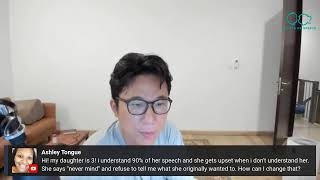
Ming from Agents of Speech explains how to help speech-delayed and nonverbal children learn without repeated failures. Use errorless learning with immediate prompting, break tasks into smaller steps to see what they can actually do, and reward desired behaviors consistently. The session covers selective mutism, stimming, joint attention strategies like peekaboo and swinging, and when to get formal speech assessment.
Chapters
Hey, guys. Welcome. Running a little late now, so let me just start as more people join the live. If you're watching this on a recording, great to have you here. Just skip forward to the parts you want to listen to. We don't have time stamps at the moment. It's too much work. So I'm just gonna go ahead and talk about our, our topic today. So I'm pretty happy because. Just a little more banter. Okay. I'm pretty happy that we've been doing this live without a break for a very long time for, I think, a year now. So I'm pretty stoked that we're still doing this. And yeah, let's dive right into it. So when I talk about keeping your child happy, it means that there's less tantrums, it's easier to teach your kid. It's far easier to control them, to manipulate them. That's a bad, That's a bad word. What I mean is to keep them, you know, under instructional command. And I really think that it's pretty easy to do. And this realization came from two places. Number one, I've been working with a, with, with a child, actually, just over the Internet. Right. And we've been talking, I've just been talking about, I was just talking to this, this, this ABA therapist who's a stay home therapist who goes to the therapy, goes to the, the client's house and checks on the kid. All right? And we, we had this debate about, like, how to do therapy. And she previously worked at an ABA center I will not name. And if you know, then you know. Right? I always talk about, if you consult me privately, then I will talk about it, but I won't do it publicly. Okay. And don't DM me or whatever, because that's not consulting me privately. That's called DMing me. If you want to know about this kind of stuff or ask me for advice, then, you know, do it the proper way, which is to do a consultation. Right. So other than that, what, what debate we were talking about is about how to give her, the child, a good learning experience. And I was taught, I was saying, don't let the kid fail. I've talked this, talked about this a lot. I've talked about this inside of our courses. We don't allow the kid to give the incorrect response. And even if the kid doesn't know what the heck's going on. Right. So what does that mean? If you think about it, if a kid, when he or she is like, learning from you, and all the time what happens is that it's always a bad experience, right? They're always getting something wrong. You're always reprimanding them. They're always saying, hey, that's wrong, it's not good. All that stuff that can be all prevented, you know? So I don't know how many times I've said this before. I've had this parent who took the micro course and then asked me, hey, Ming, I've done this already, but he's not speaking yet. So I'm just going to wait until. I'm just going to try my best to wait until he talks. And sometimes when he cries, if he gives up, then I'll give up and I'll give in and give him the reward. So what's happening here is that the mom inadvertently has rewarded the kid for crying because whenever the kid gets frustrated, cannot do anything, cries, and then the mom gives in and therefore it becomes a problem because now he or she, the kid didn't learn to talk, but learned to cry instantly. And get. And learn that whenever mom is trying to teach something is frustrating. Okay, now skip back to the new student that I have who's working at home with an ab therapist from a undisclosed ABA center before her learning from that place. And she was like, ah, my. My paradigm is from this ABA center. And then she says a lot of jargon that I don't really understand. So I had to literally search up for it because I've only been working as an ABA therapist for like, I don't know, like a year, less than that. Maybe like eight months. Yeah, eight months, I think. And I've. I don't know a lot of those jargons that he. She was talking about. She was talking about, oh, so you want me to do everless training? I'm like, yeah, I think that sounds right. So her. She had a lot of arguments with the mom because the mom was like, hey, I don't get it. How come every time the. My, my, my. My daughter needs to get inside, so I'm like, my cats are running around, so. Needs to get into such a bad temper when therapy happens, right? And she's kind of, I would say, nearly in her early teens and she started therapy at like 2. The mom is. Is very hardworking, as far as I know, but the kid is still not talking. And since day one, therapy has been brutal to the kid and it has never been happy and they haven't seen the results they wanted. So now we're trying something else. What. What she called errorless learning. All Right. And as far as her part, if you're watching this, don't get it. This is the wrong way. Right. I'm just trying to see what works. If it doesn't work, then don't do it. Right. I'm just saying, like, if it works, then keep on doing it. But if it doesn't work, just try something else. Okay? This is something to all you parents out there. Like, if you cannot, like, you find out you're doing something, it's stressing out, the kid is making them cry, you're waiting too long or whatever, then that's not the way to go because you're just stressing them out. All right? So I'm just, I'm trying to tell the story. So the therapist says I'm supposed to. Why am I supposed to tell her or give her a hint when she already knows what's going on? Right. I should ask her, see her response. If she doesn't, then I'll prompt her. Right? And then when I prompt her, she does it then. Good. That's her first point. Second point was why should I reward the child if that's something that she's supposed to do? All right. Okay, now some counter arguments to that with, with us adults that are not on the spectrum or don't have any problems talking. Okay. Number one is if you, if someone, like, if you don't know how to do something or you don't, like, you don't want to do something without a prompt, then you will start to guess, right? So let's say that, Let me think about what, what, what things you get prompted with. I would say maybe you're, you're, you're learning to buy something from. Okay, let's say that back in the day, I was learning to, to play a Japanese game without any English or Chinese things that I can read on it. Right? So back then, I was, I was just guessing stuff. So I didn't know this is a true analogy. Okay? So I didn't know that to, to get my. It was about Digimon. Okay? I'm revealing my age here. Right? So Digimon. And then to evolve it, I had to get the special thing that you can only get it at a certain stage, right? So I finally figured it out. But then I also learned error pattern, like something that I shouldn't be doing. That was an extra step. Right? So let me come full circle to it. Give me a moment. All right, so what happened was that I went to this. The top of the map came back down, and then refreshed the map so, so that I could get this thing and then go back in. And then every time I would try this over and over again. Turns out I went to a mall in Hong Kong. Hong Kong kids are so much smarter than I am. Like I'm a Hong Kong kid, but like Hong Kong kids are so smart. They told me that, hey, you don't need to go up that, that way. All you need to do is go around in a circle and refresh itself. So I learned the whole sequence of going up there, going back down and, and I like, if, if I accumulated all the time that I've spent doing that thing, I would have like made my digimon a lot higher in rank. Right? So that's, I'm coming full circle. If you keep, teach the kid to, to like ask them to do a response. Like for instance, hey, say, say like touch your head, does nothing. And then you say oh, didn't do anything, touch your head. And then you help them. They're going to learn the whole thing. They're going to think, okay, so you're going to say it once, I'm going to say nothing. You say it again and I'll prompt you, that whole thing becomes what an ABA called antecedent, right? The thing that precedes the thing that is before the behavior to happen. Okay, so if you do that, it will give, it will teach your child a whole chunk of stuff that is meaningless. That's number one. Okay, if you are teaching a kid who is not that verbal and doesn't understand language that well and you're using that method as like, you know, just testing them or whatever and allowing them to fail, what's going to happen is that they're going to learn the whole chat because they don't know how to take negative feedback. You know. So for instance, if I teach like a kid, non verbal kid to just like do clap hands, you know, like the universal therapy activity, clap your hands or whatever, like in kindergarten, right? So if I say hey, you didn't do it, you didn't do it, do you think that the child would understand it? No. Like to take negative feedback is something that is learned. Okay, so if you haven't taught a child to take negative feedback, which is a whole different topic, I don't think it's that difficult. It's just, you know, in a nutshell, it's just keep on repeating, repeating the same process. And then like when they're wrong, say that, hey, you didn't, you didn't do it or you did it wrong. It breaks the cycle. And they learn that, oh, this phrase or this tone means that I did something wrong, something like that. Right. But I'll go into detail if you guys want to learn more about it. It's more technical, right? So do not do that. Do not let your child fail. Keep them happy by giving them the prompts right away, okay? Don't even try to test them because we do do tests. We do like we do ask them to do things without any prompts. And we call that an ab. Is called probing. I just learned that. And in speech therapy, it's just a pretest, what we call like a pretty pre treatment. Like before we teach anything, we check whether they have learned something or not. Right? Their base level of understanding. And then we go in and do our therapy. But never do we keep on testing the kid. Because if you keep on testing as a kid, does a child learn? No. All right. It's like to learn for a test, to go prepare for a test. What you do is you keep on doing past papers without looking at the answers. That's just stupid, man. You're not going anywhere. Okay? So don't do that to your kid. Especially if they're not like they're non verbal yet. Okay? You're just signing the sentence to. To. To fail. You know, that's number one. Number two, the. The therapist says, why should I reward them? To do something she's supposed to do or she knows already. That's fatal error, man. So, so rewards are like I asked her, right? So I asked her, so what's the use of a reward? And she's like, right? Well, so that positive. I don't know. So that behaviors will continue, right? Correct. So what if you don't reward it, it will distinct. So it doesn't matter if the child knows or doesn't know it, right. If it is a desirable behavior, being very behavioral right now, being very aviat right now, why do we reward it even if they know it is because we want it to keep on happening. Right? That's why I'm saying you got to keep on making it. You got to keep on rewarding behavior that you want to happen again. Right. And I see Angela says my kitty is sneaking on you. Yeah, she is actually sleeping on my arm right now. I cannot move my. Let me show you. I cannot even move. See, I cannot move my hand right now. Anyways, back to the thing. So I was saying you cannot do that. You must reward the kid for whenever a behavior happens when you want it to Happen again. One of the things that we look past when we're trying to teach is that, hey, man, if I don't want this to happen, I'll punish it. Number one. Number two is if you can do it, then. Okay, good. All right. Like that. That's not cool. That is not cool. Because if you punish a behavior, kids will actually avoid punishment, right? And avoid punishment doesn't mean they will do the same. The good behavior, they might do another behavior to get to avoid punishment. Okay. It's just like us jaywalking, right? Like crossing the road without looking at the traffic lights. Funny, there's not a lot of traffic lights here in Indonesia. But anyways, you know, like, we try to avoid getting caught by doing things differently, such as looking around to see if there are any cops. Number two, running faster and cross the road asap, right? Finding spots that are safe instead of just doing the damn thing, which is like waiting for the light to come on, Right? So, you know, there are different things, you know, and there are alternatives too. Like there are. Oops, I pressed it again. So you can go on a bridge. Nope, that's too far. Right? Do I get rewarded? How rewarded do I get? Right? You have to think about these things. So before I keep on going, let's see about the comments. Tell me where you're watching from as well so that, you know, like, I'm not talking to Wall most of the time. I don't ask this, but, you know, let me know where you are and what you're learning from me. So thanks, Ella Murugu. Sorry if I'm getting your. Your name wrong. Watching. Oh, for the last four sessions. Thank you very much. Yeah, I'll keep going. I'll try my best, man. It's. It's been difficult trying to like, keep on doing this on a weekly basis for like a whole year is difficult. So I don't know if I've done it right or not or wrong. So my son understands my own language and our second language, but not able to speak so much. Have jargon, word, meaningless. Okay. So that's very difficult to know. You got to see a speech therapist, you know, I guess you gotta. You gotta see a speech therapist. I don't know whether it's a speech problem or language problem. Okay. And just search on the Internet, speech versus language, and you'll know what. What's going on. All right. Yeah. So Angela's from Florida Keys. Nice. Very nice. Learning for my son. Non verbal. Okay. Sorry to hear that. Non verbal. I wonder what the diagnosis Is you can let me know about that. Okay, so let me keep on going about like keeping a child happy. Since we're on the topic of non verbal children. So people might like parents always ask me, okay, so how do I get my child to speak? Because you talk about not letting the child fail. But every time if I ask them a question or if I tell them to say this, say that it's not going to be, it's not going to be worth it, it's not going to work. Right. Because all they're going to do is just look at me. Well that's why we tell you to step one, step down and do like mouse shapes or whatever. Right. And see if they will do it or not. And mount shapes is something that you can do a physical prompt with. And we've been, if you go onto our Facebook or YouTube, you will see this video. Like we have two videos that I've had the luxury to edit. I don't like editing. That's why there are only two videos of, of our success stories. There's actually quite a bit more obviously. Right. Number one is because of parental consent we cannot use that many videos. Number two is that I have so many videos I don't want to cut it and edit myself. And if I ask someone else to edit it, it wouldn't have the natural progression I want it to be to have. That's why I've been lazy. I know I should be to show you guys more about what I mean. But anyways, if you watch those two, you'll see that if a child cannot speak, we go down to like gesture level, mouth shape level to see if we can just prompt them to do one thing and copy us and so that there's a higher chance that when we ask them to do something harder, they might do it. Okay. And this might take a long time because we don't know whether it's the unwillingness to do it or their, their true ability to do so. I mean the ability level, right. So that's why we need to go down one level and make the, the whole thing a lot easier to build their confidence. Number one, a lot of parents love to say it. Ah, they don't, they don't seem to have confidence. Well, I don't know, maybe it's too hard. Right. Number two is that it's somewhere attainable so that you can, you can guess whether oh, is, is it that they're unwilling to copy or is that they cannot copy. That's a huge distinction. Right. So let me keep on going. So Kui Yan says, oh, hey, Kuyen, what's up? Sharing topics weekly. I'm doing. I think so. I'm trying my best. All right. Okay. So Angela says it's, you heard, not, not confirmed, I guess ASD and selective mutism. Okay, so selective mutism is only when to. For those who initiated. Damn. It's really hard to say this word. Is that selective mutism is like, they only talk here and not with other people. Like, maybe they're talkative at home, but then in a certain environment, they shut up. You know, just like me at the makeup store. You know, I'll just shut up. Don't want to say anything. Right. So the problem about, like, selective mutism, about nonverbal is that how isn't. Like, where's the selectiveness? That's my question. Right. If they're always nonverbal, then where's the selectiveness? Selectiveness, man, it's really hard to talk today. Soggy. Is it soggy or soggy? I guess watching from usa, so many USA people. That's nice. Wasn't speaking, but we're into some new words. That's great. Yeah, keep on going, man. I mean, if there are new words, just keep on teaching more gestures, if you may. As long as there's meaning towards the gestures and the sounds that you're using, then it's great. Oh, Victoria's from London. Great. Okay, so I think, like, at 2 years old, Victoria, we wouldn't call him non verbal. We would call him pre verbal because he is not yet. He's not yet. Whatever, you know, like, he's not yet. It's not even up to the point where we can call him non verbal, you know, non verbal is like, oh, man, I've tried everything non verbal. Right. Preverbal is like. Is like. Like they haven't yet spoken yet. So I believe it's preverbal because there's a lot of babbling. So that's a good sign. All right, so Angela says it's confirmed diagnosis. So, guys, if you see, like, DX A X, T X, it's just a lazy way for us people to write. So DX means diagnosis, TX means therapy, or AX means assessments. RX means RX is what? I forgot the whole. I know the meaning. I forgot the whole thing. It'll get back to me. Never mind. Yeah, that's the problem with, like, cases where people say selective mucism is when no one knows anything. You know? Like, the longest time I've been in this field, not very long, actually. Less than 10 years. I would tell you that, you know, like seven or eight years now is that no one really knows anything. To be honest. Like everyone's just kind of guessing. Even with diagnosis. I'm going to get stick for this. Like people are going to say, what the hell man? Like, of course we know. But the thing is we don't really know. I just met a autistic girl. No, I didn't meet her. I met her parents and then she was non verbal but she could type on her phone at like what, nine years old or I forgot how old. I always forget. Us meet a lot of kids nowadays on the, on, on the Internet, which is a blessing, right? So she can type, she wouldn't talk and the only vowel she could do is like that, right? And she would type to her mom and dad like, oh, I'm hungry, please come back soon. Like that, that's crazy, right? And then she would say like, oh, I don't know, I don't see the point of talking or imitating. It's so like, it's so hard, it's not worth my time, that kind of stuff. So mind blown. Because I've been working for this long, I haven't seen a nonverbal child type so well and have like sentences and newly perfect grammar to add to it. I find it pretty crazy. So your, your child might be in that camp that he doesn't understand why he's supposed to talk. Like what's the, what's the meaning of communication? Right. Speaks clearly about once a year. That's, that's crazy to me. You know, like for me I think it's quite, it's quite, how to say astonishing that he talks but once a year. So I think this comes back to the willingness to communicate and can we find something to like, you know, find something that he is interested in and get to him. Right? Because like agents of speech, you know, we have courses and stuff. We also have a membership for people who have gone through all the, like some courses first. Right. Um, and then one of the parents was saying, hey man, I mean I, I've been listening, I've been hearing so many more words recently. And that's because, you know, we finally found something that was fun for him and he wanted to talk. So, you know, having reason to talk is also very important. And I always talk about this, this student of mine and she only started really talking when she found him. Her calling, which was to teach kids. Blows my mind. Anyways. Sharon says from Malaysia, very nice. So if we keep Giving reward. When kids manage to follow instructions, will it make them all only do it when they feel like it? What if it's kind of the responsibly, like, killing them? Yeah. See, kids don't understand what is the responsibility. That's number one. And number two, right? How about us adults, People still litter on the. On the. On the streets, right? Like, if you look at, you know, you can see like a can on the floor, like, two meters away from a trash can. It's also that guy's responsibility, right? I mean, an adult can be so irresponsible. Think about a kid who is, like, below the age of five, you know, you cannot just think that, oh, for sure they're gonna do it because they're responsible for it. They have a moral code or whatever. This is how I'm gonna raise you. You're gonna do it when I say it. It's easy for typical developing children because they understand your language and you can, like, tell them the reason why. But for children who are language delayed, it's very difficult. Sharon, I would think that it's better for you to reward them and praise them whenever they do it and make them do it and, like, pick them up with them and then reward them. It makes a lot of sense. Remember, ever less. Don't let them fail, all right? Don't even let them have the chance to, like, throw it again, you know, after they pick it up, maybe, you know? So I would say. And your other question is, will it make them only want to do it when they feel like it? Well, you know, like, isn't that even worse if you tell them to do something and they do it and they get nothing? Right? Isn't that even more up to their mood then I would say that I would. You know, how we teach someone something is, like, if you go back to, like, some of the videos that I did about rewarding on YouTube and Facebook as well, one example that I use is a very, like, a adult example, is that the fan in Vancouver, Richmond, where there's a lot of Asian people, they love jaywalking because we're Asian and we want to, like, We're Chinese. We want to go get somewhere fast, right? In Richmond, there's a lot of Hong Kong people. I've been there. Great dim sum, by the way. Real good. I also spoke a lot of Kanto, so I was pretty happy. Anyways, so how they tackled with tickets was by rewarding whenever someone did the right thing. They gave them, like, pizza coupons or whatever. And then actually, out of 10 years of, like, increasing the ticketing and punishments by rewarding good behavior. Their traffic. Their traffic, like the breaking law, that kind of stuff actually decreased by a lot. Okay, so what does that tell you? Right? Random rewarding of good behavior will increase positive behavior because you feel good about yourself, right? You want kids to feel good about themselves. What if you did something correct and it was your responsibility anyways, but someone found you when someone saw it, even though you. You thought no one saw you, came up to you and said, hey, man, I really respect and like what you did and here have something from you. From me. I love that you're doing this. Right? And by the way, that's why I'm doing all these lives. You know, when I started off this live, there were no one, like, like a year or two ago, two years ago now, there was no one watching, right? There's literally no one watching. I still kept on doing it. The reason why was because someone like, DM me out of nowhere and said, hey, man, I learned so much from you demonstrating how to play with a toy, you know, and it was shared inside of a group. And I thought that, hey, man, if this, you know, even if this doesn't make any money, I'm okay with this because I'm helping someone, right? And that's that internal reward that you want the child to have, and that comes off from external rewards first, right? Because I was doing these lives in the premise, like, I didn't tell you, the reason why I started this was to start an online business about, like, about the stuff I know is to make money. But at the end of the day, what kept me going wasn't the money, obviously. Right? So that's what I'm telling you. So soggy. Sorry, it soggy? Is it soy? I don't know. So does stimming automatically mean autism? No, stimming does not automatically mean autism. You can go back and watch videos about stimming that I've talked about. Everybody stims. Just that autistic people, they stim inappropriately. Right, Sorry. Drinking water. Do they grow out of it if they're asd? Stimming never really goes away. It just changes from form to form, even for typically developing people. Even for me, I shake my leg a lot. I've talked about this a lot on this channel. It just became something else. Right? It might be just trying to calm and breathe properly, that kind of stuff, you know, like stimming still comes. It just comes in a different way because it's a. What's that? Called is that. It's a sensory. It's a sensory need. That. That's the word I'm looking for. Okay, cool. So Kuyan says, wondering how to attract non verbal three to share attention. Is that you already like, I remember. Okay. Share attention. Well, you need to have a game, right? Like, I think the problem here, Koyan, is that a lot of parents, they see like the symptoms for autism and then they say, oh, I need a. Like, the symptom is lack of joint attention, Lack of whatever, lack of this, lack of that. Then I will try to teach them this, that, this. Right? So symptomatic approach to teaching stuff, right? That's what we call symptomatic approach. That's not cool. That's not cool. Right. And why I say this is because if you do like a symptomatic approach, then you are literally just training him to have attention with you. That's all. You're not teaching him to communicate. That's why so much time I've talked to you was telling you to just focus on imitation first. Right? So after he imitates, then he'll start to understand some words, right? So if you ask like sharing attention, right. We can talk about playing games, right? Playing games is the most naturalistic and the best way. So as I told you, stack, find more toys that you can play with them and then just naturally play with them without asking him to say anything or do anything. Just stop at the times where it's supposed. Like there's some suspense. See if he looks. If he looks, just reward him. Right? Look, I mean, look at the toy, not at you. Okay? You can also do peekaboo. That's also cool. You can also do like tickling. That's also nice. You can also do like flying up if he's, you know, if he's light enough and you're strong enough, a lot of those things will share attention. They will look at you. They will try to look at your hands. They will tap your hands. Right? Remember that swinging thing I was talking about? That's also very cool. You can also do that. Hey, Raz, what's up? Good evening. Judy's tasty treat. Wow, this might be a legit YouTube channel. Not like mine anyways. Nearly three and a half years old, doesn't respond. If we talk to him, we're asking questions like, what is your name? Okay, Try to jump on the bed. Hand flapping, nose, sort of. Yeah, Judy. You know, if anyone here, you know, this thing is literally what I was talking about in a YouTube video. I. I shared like last week about virtual autism. Right. But not to give you, like, I hate it when I say something and then parents are like, oh, tell me about what virtual autism is or whatever. And it's not the point. What I mean is, if a child knows nursery songs, colors, numbers or whatever, count, whatever, and then he pulls your hand. Join the micro course first. Like, watch over there. It's like, it's just this one hour online course that you can watch. Just go to Agents of Speech Micro. Okay. I'll just post it here if you like. The reason why I'm. I'm asking you to join is because I don't want to repeat myself and I don't want you to go through all the. All the videos I have on YouTube because there I already answered all the burning questions that have answered like thousands of times. Okay. Yeah, it's really. It's really a tough task. A tough task. Yeah, it's really hard. It's really hard for parents. All right. Sharon says, okay, I have another kid, easily frustrated, angry to himself. He couldn't answer his homework. Losing and playing games. Gonna build toys. Almost like somebody that's competing with him. He required feel so stressed. It's fine. You can do it. Well, first of all, you can tell stories about this. It's called social stories. You can search online. Social store. Excuse me, Social stories. Okay. And you can search online for that. You can just make it up. Okay. You can draw it out. And there's a moral of the story, right? Okay, so for instance, let me just find one. I cannot give this to you because copyright. Don't ask me for it. Let me just show you. Give me a sec. For instance, if your child is really good at language already, then this. I'm sorry, I'm just finding this story. You don't need to use this, by the way. You can just like. Because I bought, like, I bought these, right? And I scanned it. Like, not me, but you know, the. My Xbox bought it and we scanned it. But I use. I use it for educational purposes. But I cannot share. Share with you. Right? Let me just share my screen, right? If you can see this. Okay, so let me just close this so you can see. So you can make up a story like this. Or like buy a story like this. Or just get a book and just tell him the story. Like, about how, like, he lost and he got angry. And then I'm just simplifying it for you. Just do it in your own way. Okay. And then. Oh, because he was so angry, he left with other friends and he's all alone and doesn't have anyone else to play with, right? So that the moral of the story is, don't get angry because, like, no one wants to play with you. That's all. Right. So you need to make up stories for yourself. I cannot give you any, okay? Because first of all, copyright. And second of all, I don't know your child well enough to do it. Okay? What is vocal stimming? Okay, so Henas asked it two times. Vocal stimming is just that, you know, kids are using the voice for self entertainment, right? For. What's that called? For sensory needs. So for instance, if you are singing in the shower, technically your vocal stimming, okay? So technically you are. So vocal stimming. Stimming is whenever, like the thing you're doing that the kid is doing is not really, what's I call it, it's not really socially acceptable. So for instance, like this kind of stuff. Like this kind of stuff. Like. And then like this kind of stuff, this kind of stuff, right? Those are stimming, right? So vocal stimming would be like kids who goes, whatever, or start saying nursery rhymes out of nowhere for no particular reason. That might be also tied to echolalia, for instance, but that's stimming. But technically speaking, if you're singing when no one's watching, you're also vocal stimming, okay? So don't take it too personally. That's what I'm trying to say. It might be or might not be, but learn about the function and how to give them another way to express their. To get their social, like, not to get their sensory. Sensory needs satisfied. All right. Ashley, my son, my daughter is three. I understand 90% of her speech. She gets upset if I don't understand her. She says, never mind. That's funny. Well, you can't change her. You can't change her from being frustrated because you don't understand, right? I mean, it's impossible. So I guess like one thing is that you can ask if it's something that is really important, you can tell to draw it out, right? Or draw it out or like add more gestures and so on. That would help. Okay, if you have like an iPad or like a whiteboard or a piece of paper, actually draw out what you mean, man. What do you. What do you want? And then she tries to draw and so on with gestures and stuff. Teach her some sign language as well so that she can get her like her stuff, her message across. Okay? And most importantly of all, if There are some sounds that are missing that you don't know of. You need to see a speech therapist, right? To get her speech up to speed. Okay. So I believe if she says never mind and refuses to tell you, then you cannot change that because you already got pissed off. So I think it's your response. You can, you don't need to say I don't understand. You can guess, right? That's what I always do. And I don't understand what kids are saying. I will just ask, I will, I will say like an open ended question you wanted to do in this way or whatever. Like, you know, sometimes you can ask her to say like repeat, come again? That kind of stuff. But sometimes it's just being a little more smart. If you can understand like half of it, then, you know, you, you can use that phrase to ask questions that are open ended so that they can like help you understand. Right? And yeah, that's pretty much it. That's what I do. And if it say never mind, then you don't need a bugger, you say okay then, and that's it. Right. And don't need to keep on bugging her. Right? So the more you stay silent, the more the kids want to say like talk back to you. That's human nature, right? Imagine you say something, your husband doesn't care and then like, and then you're like, you're not even even listening. And then, and then he's like, okay, the more you want to just get back at him, right? So like some psychological tricks, right? Yeah, yeah, there are some sounds. I think that's exactly the cause, right? Because just check it out. Do articulation test. Okay? A speech test. Articulation test at local speech therapist. Because I can't give you without like I cannot know without listening to your kid and seeing her mouth and like doing a test on her. So that's it, Right. Okay, cool. So that's the end of today's live. Thanks so much for everyone joining. It's been great. I'm still trying my best to keep up with the weekly lives. It's very difficult, you know. So I really enjoy it when you guys are here talking to me so that I'm not like talking to a brick wall. And if you haven't tell your friends about agents of Speech.com, let them know about more stuff. Like let, let them know about what, what, what we're doing here, what we're trying to do. We're launching like two more courses very soon probably. I'm working my, trying to work on it. And if you haven't, you should check all the courses there, see which ones are suitable for you. As I always say, you can start with the micro course, which is agents of speech.com micro. It's just a very easy course for anyone to like consume within an hour. Okay, so that's pretty much it, guys. I'll see you guys next week. And we will still have coming into December, it will be Thanksgiving and not Thanksgiving. I don't even know the holidays in usa right? But I know it's Christmas so we will still be doing these. And I'll let you guys know in advance if you guys are on my email newsletter then you will know that oh if I'm canceling or whatnot. So go there and let me know. Go to agentsofspeech.com Sign up for that email list at least and you will be notified. What's going on? New stuff, free content or new courses, whatever over there. Okay, so that's it. Good night or good morning or whatever. And I'll see you guys next week. Bye. By.










