Keeping Facemasks on Your Speech Delayed Child
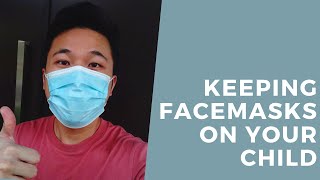
Ming walks through how to get a speech-delayed or sensory-sensitive child to wear and keep on a face mask. Start with desensitization: let them touch and play with masks first. Then try practical fixes like cloth liners for comfort, rubber-band ear extenders, and reward systems. Gradual outdoor exposure works better than forcing it.
Chapters
So we're going live. If you're joining us here today, we're going to be talking about keeping a face mask on your child. And if your child is, you know, on the spectrum, speech delayed in any way, it's going to be difficult or going to be difficult to keep it on. And I've asked you on Facebook, on Instagram, I'm actually doing it on Instagram as well here. But if you're watching this on Facebook, that's great because we have a Facebook group that, you know, I usually do live on and it's easier for me to tell you on the Facebook group. It's much easier. So if you're on Instagram, give me a dm, I'll send you a link to the Facebook group. Although, you know, Facebook, a little more old fashioned but it works. Okay, so first of all, the first question I want to ask you or you guys is that can you put the mask on or is it a question of keeping it on? So I asked it in the Facebook group and a lot of you guys are saying like half, half. Some of you guys say, oh, it's actually easier to keep it on. Right, it's actually easier to actually put it on. But you know, and some children, it's very difficult to get them to even put on. They just like throw on the ground and run away. So first of all, you know, that's what I wanted to ask you. Okay, so let's talk about the easy stuff first. Let's talk about keeping it on. Keeping on is easy. Okay, so I'm the reason why I want to do this is because I'm actually going to do it on, do this whole thing with my client and this is a client that I've helped with like cutting his hair and whatnot. Hi Wilbert, how are you? Right, so whilst keeping it on is much easier. Right. So you have to think about why he or she cannot keep the mask on. So the number reason is always that, you know, is it too hot? It's something you have to ask yourself. Is it too stuffy meaning they cannot breathe? Are they not used to it yet? Is it too itchy? Right. So usually it's just these few, few reasons for anything that, you know, it's don't like touching or feeling or putting on or whatever. Okay. I had a client that, you know, I had to teach him how, you know, use a razor to his head. So it's around the same stuff, right. It's intrusive, it's not that comfortable. That's why People don't like it. Right? That's why your child doesn't like it, in fact. So for too hot, there are some things I want you to try. Hello. I want you guys to try. So I see more and more people joining us here. That's very nice. So if it's too hot, then you have to think about, okay, when does your child take off the mask? So if it's too hot, then you have to create breaks in between and make sure that you wipe out the sweat every, I don't know, five minutes or something. So, you know, you have to test what's the limit of how long your child can actually keep the face mask on. And I realized that, you know, some of my clients, actually, I should call them my students, right? Now, my students are very particular about how they wear something, how long they can wear something for, and how willing are they doing it. Are they willing to do it with you? Right. So if it's too hot, then remember to wipe off the sweat every, I don't know, five minutes or something to make sure that they don't take it off because it's too hot. Number two, if it's too stuffy, then, you know, start off with a cheaper mask. You know, right now, if you're in Indonesia, it's very easy to buy some mask that is super thin. You know, the really cheap ones with like one ply, one layer of stuff, just go for it. Buy that one first as like a decreasing step as a way to make it easier for a child to actually like it. Right. And then slowly increase into like a thicker one. All right, this works, right? This works. And the reason why I say this is because that's exactly how I helped a student before with, you know, with wearing socks. Start off with thin socks, that's what I told the mom to do. And after like two weeks, he could go on with regular ones. And then if they're not used to it, you're not used to having mask on. Right. So what do you do? Well, I'm going to tell you a method we'll be talking about in a bit. And it works like wonders because, you know, it's just a very systematic way to do something. Okay. It works with adults, works with children, and I might say adults, because I've got a student who's in, a mature student, right. And we've been using it to decrease some of the sensitivity issues that she has about toilets. Okay. We'll talk about that in another video if you're interested. But if you're not if your child isn't used to it. It's not within their routine. Then you have to be able to systematically make it easier for them. Okay? All right. So if it's too itchy. Right. If it's too itchy for a child, then you might need to put a cloth under the mouth. Right? Under the face mask. Sorry, under the face mask. And what kind of cloth? You meant like, something that's really, like, breathable, Something that's not. That's very soft so that you eliminate all these possibilities. All right? Eliminate all these possibilities. Okay. And once you do that, it's much easier. It sets your child up to succeed, not fail. Okay. Every time when we put it on, we, like, you know, strangle the kid or something. You know, like, hold them down. The dad holds them, holds the kid down, and the mom tries to, like, loop around the ear. I've seen it a few times in the supermarket. It's a disaster. Don't. Don't try to do that because you know your child's gonna kick you. Right. If they're older than, like, four, they're probably stronger than you think he is. Okay? So be careful. All right? Set it up so that it's. It's set up so that they succeed. Okay? And don't try to do these things outside in the public before you try out at home. Okay. You have to be able to get your child to be wearing a face mask and watching a TV with you, like, for extended period of time. Okay? All right. Yep. So Nikki asked, can you give tips for introducing it for the very first time? That's a great thing. I was about to go into it because I just wanted to make sure that the people who are watching this, who start from having, you know, they cannot keep it on so that they know what to do first. So introducing a face mask is very similar to introducing anything to a child. Okay? So I've written some notes here. Let me take a look. Right, so you need to think about. The first thing you need to think about is, is your child already scared of it? Okay? That's the worst thing that could happen. All right? I have a student who, you know, I have to not have to. I want to teach them to be not scared of scissors and razors so that he can get his hair cut, you know, because now we're in quarantine. He can't go to the barbershop. Okay, so is your child already scared of it? If not, then great. But if he is already or she is, don't make it don't, you know, be careful not to make your child scared of it? And this is where, you know, the bad experience of you trying to force your child into, you know, getting on. So you have to be very mindful of it. All right, so how do you introduce a face mask for the very first time? Okay, you have to remember if your child is somewhat of a speech and language delayed, a lot of things that you say they won't understand. For instance, they won't understand that, you know, right now everyone's wearing a mask. That's why you have to wear. Doesn't work like that. You know, children don't wear shoes at all, and they run around on the street because they don't like the sensation. And it's the same with face masks, right? So there's no need to reason. No need to reason with your child. You don't need to say, like. In a long sentence, you'll say like, oh, Stephen, look, right now everyone's wearing a face mask. If you don't wear it, you'll get sick. When you're sick, that's bad, you know, then you can't go to school. You don't need to say that stuff, right? When you're introducing something to a kid, you just need to make sure that they're not scared of it. And how do you do that? Well, first of all, you have to make sure it's in a task situation. So you always want to control. Right. Control the variables. Because once they're anxious about the situation, once they're anxious and they're scared of something on the face that might be a little bit too sensitive for them. And for Vonnie here, I see Vonnie's online. Bonnie, especially for a kid, if your child doesn't like you touching their face, then there's a high probability that if you put a face mask on them, that's gonna be a huge problem. Okay? So be careful. Right, so let's talk about the specifics. All right? This is a very. This kind of training, or shall we say in a more technical term, it's called desensitization. Right. How do we do it? First of all, you have to put the face mask on the table and make sure that, you know, they can see it. They can see there's no threat. You're not trying to put it on. Right. And you want to slowly increase distance between them and the face mask. Okay. And what I mean by that, Put it on the. On the table and play with it like a toy. Okay? Play with it like a Toy. I'm sure that you. You had, like, some, you know, if you watch reality TV show before, right, Someone's scared of, like, snakes. They try to, like, make them play with, like, snake toys and whatnot. So this is kind of like that. But obviously it's not too psychological for them if they're not scared of it. So basically, just tell them there's no threat for it. Play with it, you know, throw it around, let them, like, put it on a doll on the face. If you have multiple dolls, great. Put it all around, let them put it on you and then do some funny things with it. Maybe blow inside with the face mask on and go like that. Do some funny things with it, right? And once you get past that face, when they are able to, you know, play with it, put it on their face, whatnot, the next step is to, like, have it as a task to put it on, right? And this is where Vonnie's gonna be like, oh, man, this stuff again. Because I've been talking to her about teaching her child as well. And the real thing, the real thing you have to do now is to find a reward. A reward that your child likes, right? So it might be biscuits, it might be whatever. It might be like screen time on the phone. But if you don't have a reward, they don't understand why they have to listen to you, right? There's no reason why they should put a face mask on because they don't understand the reasons behind it. So what you should do now is to take that thing out, take that reward out, and then sit them down and tell them to touch it, right? Touch it, put it up their hand like this. After you get here, when they get, like, physically uncomfortable, you say, oh, good job, and then give them a reward. Okay? This is super systematic. I know it's very robotic, but if you do it, I'm sure, I'm sure if you systematically increase it like that, because I've done it a few times already, right, in my career about different objects and things, that they will be more accepting of the, of the, of the object. And for now, it's going to be a face mask, okay? So if you have any questions right now, you can ask me. I'm looking at the comments section. And whilst you're doing that with the face mask, you have to keep in mind that the reward needs to be in small chunks, okay? You cannot give, like, a whole chocolate bar because they're going to eat it for like, 30 minutes. They've got a small mouth, they've Got a small stomach. We're talking about kids here, okay? So what you need to do is to chop up the chocolate, chop up the biscuits into small pieces. And if you're using a. A phone, using like an iPad, then you need to get the phone back in like five seconds or 10 seconds, okay? And if you cannot do that, then just stick with food. Because what. Why food is nice for therapy in the beginning. In the beginning, okay? I'm not talking about when they're like 20 something or something. Why food is good is because once they eat it, it's gone. They want more, right? That's why it's easy to do therapy with food, okay? So once they establish that if they are able to touch it and feel it and hold it, you know, from their hands slowly up to the shoulder, and then they get rewarded, they would want. They would know that, that this is something that we desire. Because whenever they do it, I give them reward. So slowly, you put it all the way up here and test. The keyword is test if they are sensitive around the neck or not. Okay? And especially because a face mask is very. It's not that great because it hooks onto the ears. Ears here are very easily sensitive. A lot of children, if you play with their ears a little bit, it gets very red and it gets very, very, very uncomfortable for them. Okay? And me included, I've got really sensitive ears, man. If someone touches my ear for a little bit, it turns red. I don't want to show it here. It's already a little red because I was like scraping it. So what you need to do when that happens here is a good advice. If you're living in a Muslim country like I am right now, then hallelujah, okay? I don't mean it in like a religious way. It's just that if they have face masks that have like a ribbon, you know, like a, like for the hijab, you know, like it goes around your head instead of on your ears. Those are great because it doesn't like, hook onto your ears and it makes it less sensitive for the kid. So you can actually tweak your face mask to do that. You can put like a rubber band around it and put it around here so that it doesn't touch your ears. It will be less sensitive for a child if they have problems with the ears, right? So let's go back to the whole. The whole sequence, okay? You have your reward, you have your face mask, and you're moving up towards the mouth. You're testing if it's even Slightly sensitive or not. And then you're deciding whether what kind of face mask to give your child. That's all cool. All right. Once you get here, you can start to just put the face mask on them like this and count 1, 2, 3, 4, 5. Okay? Just go, 1, 2, 3, 4th, 5. And then give them a reward, okay. So that they know that this thing is supposed to be here. Okay. And slowly you should increase the time, right? You can go up to 10 and then later on you just stop counting. Because if you always count to 10, then they will always want to take it off when you say 10. So this is where you should just put it there and just stop and just wait. You just go like, oh, good, putting it on. You know, you just keep on praising them. You're gonna say, oh, right, that's good, good job. And then do not take it off. If they're like, they're like trying to get out of the situation, right? You should take it off when they're just totally calm, when they're totally fine, when they're just sitting there and be a nice boy or a nice girl. So once they like, you know, if they sit nicely and you take it off, give them a reward and tell them, good job, nice. Putting on the face mask and having that kind of feedback is very important because they're pairing with what you say. Pairing with what you say, good job, nice. Putting it on, whatever with having it on, right? Having the face mask on, that means when you, when you go on the street, when you say these kinds of words, it tells them that they have to wait. Like your child needs to wait. They're doing a good job already. They understand the situation. Okay? So, alright, so once you put it here, 5, 4, 3, 2, 1, or you know, you don't count at all. And then you take it off and you reward them. Next step is to try to put on the ear loops, right? So systematically, what's the next step to do? Like, logically, when we put it on, what we do is we put the, we put the nose part with the wire on first and then we loop it, right? So that's what we should do with them. We should like put it here so that they know it goes around the nose and down here, all right? And then maybe you should like pull it so that extends and put it there and do the same thing, all right? Until, you know, do it the same thing, the same thing. Like 5, 4, 3, 2, 1, 10, 9, 8, 7, 6, 5, 4, 3, 2', 1 or something like that. Or 1 2, 3, depends. That doesn't matter how you count. Right? But you have to get to a point where without counting, they can stay there for quite a long time, and then you reward them. Okay? So you see, teaching face mask is actually. It can be a very long process, and by doing it the way that I'm describing it right now, but introducing the way that I am describing right now eliminates most of the possibilities of going wrong. All right. Or making them scared. And the reason why we're doing this so systematically. Right. Is because we don't want them to fail. All right? We don't know. They cannot tell us why they don't like it. Number one. Number two is it'll be impossible for us to explain why they need the face packs on if they are delayed in any sort of way. So with that said, then we go on to, like, the next steps, right? The next steps is that we try to put the loops on. Right? We try to put the loops on. Okay. Once we get the loops on, we're, like, half done. And you might say, dude, we're only half done. And, yes, we are only half done. And the reason why I say this is because now it's about, you know, getting them to do everything around the house with their face mask on. There's no point of them sitting down on a chair, like, being rewarded all the time and keeping a face mask on. They would think, your child would think that all they have to do is to, like, wear a face mask indoors while sitting down. That's the wrong objective. The objective is to get them outdoors, put the face mask on, and have it kept on. Right. So what we should do now is basically having it looped on. Right? And then we will take the face mask off every now and then whilst they're doing something on the table. So you might want to set up a task where it's just puzzles, something that they know and know how to play. Okay. Puzzles. Car parks, car slides. If they're a little older, then, you know, they might. You can actually let them watch some stuff that is not their favorite stuff, of course. And anything that requires them to focus a little bit and play. Once you get that going, once you get that going, then what you can do is to increase the task so that they walk around the house. Okay? They have the face mask on, and they know that they will be rewarded. And you tell them to, oh, can you go to the kitchen and get me something? If they understand that, then it's great. If not, then you can just hold their hand. And go somewhere else and play with a puzzle in another place inside the house. All right? Might be in the study, might be in the toilet. Doesn't matter. Just keep the face mask on whilst doing something else. And once inside your head, you feel like, oh, okay, that's long enough for me to start to reward them. Then this is what you will do. You take off their face mask and say, good job. Nice putting a face mask on. Nice doing it. That's correct. You give them the reward. So now inside the house, they've been. Your child should be able to walk around the house, do things in the house, play, work. I don't know, study with the face mask on and be rewarded every now and then. It's random, Random. They don't know when, right? That's the beauty of it. You don't know when. We're not micromanaging them. It's just that if they put the face mask on somehow, somewhere mom or dad is gonna, like, suddenly come in and say, good job, and then give you, like, a reward. Okay? So once you're able to do that, then you're ready to go outside. All right? And this is where, like when I was talking about, like, you know, you gotta choose your face masks correctly, right? So you have to choose the face mask so that it gets your child to succeed, right? So don't fail. So make sure that you have. You. You should put, like, a soft kind of fabric between the mouth and the face mask so that it doesn't get too itchy, so that it absorbs some of the sweat. And you will still have to wipe off the sweat, sweat every like, five minutes or so, right? And use, like, a cheaper, thinner mask. Okay? Go somewhere that's safer, right? Don't go to the supermarket yet. Go around the block or something, okay? Where it's like, outdoors. And then what you want to do is like to use that thinner mask and with that fabric to make them understand that it's not too bad. Not too bad. So once you're outside, you will have to have a system, system set up rules so that your child knows what to do. Number one is that you will have. You will have to have a time and place to take off their mask, to take a break. Because truth be told, even us, we get stuffed up, you know, it really is very hot, especially in, like, a place like Indonesia or even if you're in a cold country having a face mask on. Actually, it's still August, right? It's still summer for nearly everyone. It does get very hot. So you have to have a system. You have to tell your child that there are certain checkpoints where they can take off their mask. For instance, if you think it's safe inside of a singular toilet cubicle thing that has no one else inside, you can take it off and let them breathe and wipe off the sweat and breathe a little bit more. Or every time they go inside the car, they can actually take it off. They need to have checkpoints or else they're gonna not like that experience. Okay. Even for us. You see everyone on the streets, right? They keep on, like, putting it down a little bit, like, whatever. When they talk, they put it down to talk. That's besides the point. No one should ever do that. You should only, like, put, like, take off the mask if you. There's no one around and it's safe. So you should teach your child the same. Right? Have some systems around the situation. How long. Right. How long do you need to get to a checkpoint? If you can. If you can. If you can, then, you know, do it as often as you can in the beginning and then slowly fade it out. Right. Another method is to use a timer. Let them know that, okay, in 15 minutes we're going to take it off, meaning you're for sure that you can get your stuff done in 15 minutes and get back in the car. Right. So let them know that there is a time limit to their suffering because of the suffering. Putting them and a mask that they're not used to. They don't know why. It's going to be like a torment for them. So be careful. Right. Let them know when the stuff ends. All right. When they can take a rest. Right. Okay. So once you're at that point, you can have reward good behaviors and also give chances. And what I mean by that is that we're talking about already your child is out with the face mask and they're walking around nicely. They're not taking it off that often. So you would give some chances, right? So for children who are of higher language abilities, who understand a little bit more, you can do that. You can say that every time they nearly touch their face mask or nearly take it off. What you can do then is to reward them and say, hey, nice, I saw that you were about to take it off, but you didn't do it. So, you know, you get an extra sticker or something. Right. Or if they like to touch their face mask and pull it down to the. To the nose, which is besides the point again, by the way, then what you can do is that Every time they do that, they get one less of a chance. And they have to understand that you cannot do that to a three year old or like a four year old with who doesn't understand questions. Right? You must be someone or a kid who is already telling you short stories. Those are the children who can understand these rules, right? So if your child is someone who is of higher language ability, like slightly higher. What I mean is you can give chances. Like you get three chances to pull down your mask if you get, if you like, if all three chances are gone, you get nothing. You have no rewards and nothing like that. Okay? So but if they do not touch the face mask during the whole trip, during that, I don't know how many minutes, then you can actually, what you can do is actually say like, hey, you have, you still have three chances left. So you get all three. I don't know what ice creams, I don't know. Three minutes of iPad time for one of my clients. There's three meatballs. Bakso. Right. I don't know how to say it nicely, but you get what I mean. All right, so what else can we do for children who understand. Lina knows what I'm talking about. So what else can we do? Social stories are very, very powerful. Okay, Some studies say that you know social stories. Actually not some studies. I'm quoting someone to quote that study, right? So I don't, I'm not sure about the study, so don't quote me on that. But what happened was that someone said that someone, some other professional told me that social stories works on children who don't really understand stories yet too, right? So if you tell the story about what you're supposed to do, it will still help them to understand what they should and should not do. Okay, so what, what is a social story if you're not, if you don't understand it? It's just this make do story about certain behavior that they shouldn't do and see it in the third person so that they don't feel judged. Right? That's the whole idea about it. So for instance, if I, if me, I've got a problem with eating potato chips at night, then someone will, a therapist will tell me a story, a social story about why I shouldn't. So very quick example would be, and by the way, these kind of social stories, you do not, you do not need to have cards or pictures. You can just have like a whiteboard like here and you can just write, draw whatever on it, right? You can do whatever you want. Okay, so what do you like? Let me give you an example about my potato chips addiction at night. Let's say that I have that. So what do you do? Is that. Hey, I just saw a question. So, Julia, sorry about that. How about toddler? Can we apply those strategy with them? Which strategy are you talking about? Are you talking about the social story or whatever? If your toddler is smart and they're already understanding you 100%, nearly. At least, like 80%, then you can use social stories. Okay, so let me give the example of the social story first. Okay, so what, for instance, like, you have to make up a character. Let's say Tom. So you say one day, Tom, when he got back home, he brushed his teeth. It was about to be bedtime, but he suddenly felt hungry, and he wanted to eat chips. So he went down to the kitchen, got his potato chips, opened it, and started eating. He was very happy. It was yummy. And it was delicious, right? And the next day he woke up, and he realized that his teeth just. Just started to become, like, bad and he had bad breath. And on that day, he also went to the dentist, and the dentist said, hey, if you keep on doing it, you're. Your teeth is gonna fall out and all that jazz, right? So after that, after that, you can talk about the story character deciding not to do it anymore. You can say, oh, so Tom decided that he will not eat the potato chips because he doesn't want to have bad teeth. That's end of story. And then once your social story ends, to make sure that your child totally understands about what the story is about, you can ask, say, like, hey, I don't know your child's name, right? So what happened? And then they will say, oh, Tom likes to eat potato chips, but it's not supposed to. And then you can ask, like, so why is he not supposed to, like, eat potato chips? And the toddler or the kid will say, oh, yeah, because, you know, you'll get bad teeth and whatever. If they can answer like that, they practically know why. Okay, so for your face mask, you can say that, you know, the story would be certain. I don't know. Susie goes down to the street without face mask on. On the streets, there's signs saying, face mask. You need to have the face mask on. So she was denied from the. She was denied to enter. She cannot go in the mall because she didn't have a face mask on, and she really wanted an ice cream, but she couldn't go in because she had no face mask, right? So then she went back home to get her face mask and then walked in and everyone praised her. And that's the end of the social story. Okay? So when you do that, it's much easier to teach your child if they have some form of understanding and language. Okay? For face masks, don't talk to them and reason with them about, oh, if you don't have your face back on, you're gonna get like, coronavirus and you cough and you have a fever and you go to the hospital and it's very unhappy. Talk about their immediate benefits, right? You cannot go into a mall, you cannot eat certain things, you cannot play with the whatever because you don't have a face mask on. You cannot go to class, you cannot learn from their favorite music teacher, like, I don't know, Mr. Stevens or something. So with that said, that's what you exactly need to do. Okay, you have to let me summarize a little bit. For children who already can put on the face mask but need to, cannot keep it on, you know, think about why, is it too hot, is it too stuffy, is it whatever. Make sure that they feel comfortable with their face mask and make sure that you keep them dry, wiping off the sweat. Make sure that you have checkpoints for them to take it off and take a breath, right? These are for children who cannot keep it on, for children who cannot even put it on. Then what you need to do then is to actually systematically teach them how to touch it, feel it, play with it, put it on dolls, put it on. Everyone put it on. Your grandma, grandpa, you know, yourself, whoever, just go up, put it on. And everyone's like, yeah, face mask, right? And after that, you want to sit them down and systematically put it on them. Okay? This is when it doesn't work. You know, when you're trying to put it on, they're like, ah, like that, right? Even after they're able to put it on, you put it on this guy, put on that guy. They still need that training. That means they need to sit down and systematically increase, you know, desensitization, right? So start off with the hand, let them touch it, go up, up, up, up, up, up, up here. And by the way, all this training, you need to reward, reward, reward, okay? You need to reward with the best stuff because if you don't give a salary, they're not going to work, right? Same with an employee. Think about it in that way. There's no benefit for them. There's actual no benefit if they don't understand why they need to put it on, which, like 80% of kids don't understand anyways, so don't even talk about kids. Adults as well, right? So like you go up, up, up, up, up, up, up, around on. Just put it on here, like hold it to the mouth and just wait, right? You wait for a bit and then once it's okay, you reward them. Okay? The duration, increase it slowly. It might be one second in the beginning. It might be just like, oh, good job, here you go. Or it might be like five seconds in your head. Or you could count it out. But be careful that you don't count it out every time or else he or she will be very mad that if you don't, if you don't count, it means there, it's there forever. You get what I mean? Right? Especially if they're very rigid, right? So at the end of the day, you want to start like increasing the difficulty by, you know, putting it all the way, covering your mouth, duping it. If they're very sensitive at ears, use a rubber band and make it so that you know how the, how the aunties do it as well, right? Like they put a rubber band and it just tie a knot and make it so that it doesn't touch the ears. Right? So that's one method. The other method is that if you are living in a country in like Indonesia or a Muslim country, they have one for females who wear a hijab, right? That is like a whole line that doesn't touch ears. Those are great. I use it sometimes. I like it because it's comfortable. At least a little more comfortable than the ear loop ones. Because if you wear glasses already, it's really doesn't help. It gets very annoying. Okay, so try that. If they can do that, then slowly you keep it on. And then you keep on rewarding, of course. And then you need to ask them to do things not only on table but around the house. Okay? Engage them with different activities. Make them do puzzles, make them play with toys, make them watch something, make them do like homework, whatever. And then once they realize that they can do stuff whilst having a mask on, then great, you can start slowly asking them to go outside, right? And choose somewhere that you can feel safe. Right? Maybe just around the block, around the garden, whatever. They still have their face mask on. Have your rewards close to you, right? Have a box of snacks that you know your, your child likes. Okay, so try that. Try that. All right, so I'm gonna hang out for like another five minutes here. It's basically the end of my information. If this was like, good. Let me know if it was bad also. Let me know. Right. But yeah, I'm gonna hang out here for like a few minutes just for questions about face masks and specific. Give me specifics about, you know, why, what, how they feel, how your child like or not like the way that you presented to them or something. Just let me know here for another few minutes. I'm going to take some water. Be right back. So do not be shy. Just type it out. Thank you, Julia. Julia says thank you for your tips. Very well thought. Yep, that's great. Thank you. This is a little slow, right? If you're watching me right now, what I said, it might be like a few seconds and then when it bounces back that you've typed out something, then, yeah, you know, it will be a little slower. But, you know, I'll just wait for a bit. Okay, here we go. Yeah. So Lakeisha. Lakeisha. Sorry, I'm very like. Please let me know if I got your, you know, if I butchered your name. Just tell me how I. I'm supposed to say it. So Lakeisha says my son doesn't like touching things. Touching. Doesn't like things touching his face. So I think gradual method will help. Yes, it will. So you have to be careful, though. If he doesn't like things right, then you have to be starting with your hands first. All right. Starting with your hands first. So what I mean by that is. What I mean by that is if your child, even your kid, your boy, doesn't even like your hands touching his face, then he is rather sensitive around his face. Like, you have to start off with something easier. Okay. It might be like your hands first. You, like, rub it around. There are some tools you can buy on the Internet which are just for this thing. It's called a sensory bean bag for face. So I don't know how to like, I'm not. I'm a new guy towards, like doing Facebook lives on the computer. So I don't know how to show it to you. But, you know, it's called a sensory beanbag for the face. So let me reply to you here. Sensory. You're like Robin around. Oh, man. Let me. Sensory Oopsies, right? You can buy on Amazon because I know you're from. From the U.S. right? It's like a little kidney. Looks like a kidney. That's a beanbag. So those are nice. And then slowly you can put the face. Face mask around that bean bag. That will help them relate, right? And it's much easier for them to accept it because they already accepted the beanbag or they have already accepted your hands. Right. So your child must have already accepted something on their face. So if they hate anything on their face, don't try the face mask. You need to establish something that's more welcome. Okay, so tell me. Yeah, like you said, do look for that. It is good. A lot of occupational therapists actually use it a lot for sensitive face. And the. If your child. Anyone who's watching this, if your child is sensitive at the face, I think this is a good thing to use. Right. Because that's what I was recommended, and I use it too. Right. As a matter of fact, is if I cannot touch the face and they have speech errors, it'll be very difficult to treat those speech errors because I cannot go there. So sensory on the face is very important for me as well. All right, let me know if you guys have more questions. Here. Drinking some water. Whilst we're waiting. I'm just gonna tell you some of the potential, like, problems you're gonna get into. The first thing is getting the timing correct, right? So what I mean by timing is there are times where, you know when you're counting down in your head and then your child gets angry because they're like, hey, I thought the last time you were only doing, like, one or two seconds. How come now is so long? So what you need to do is that you need to praise so much, that becomes like a soothing mechanism for them, you know? So what happens a lot for me, I can only speak for myself, right? Is that whenever I say, like, hey, good, if I'm doing something else, like sitting down. Some kids cannot sit down, right? So it's basically the same thing. They're not used to it. They don't like the feeling of sitting on a hard chair or whatever. They would rather sit on the floor so that their legs are somewhere else. Those are also sensory issues, I believe. I'm not sure. Do not quote me on this, but I think so. So what happens then is that you will go into a place where when you do it for extended period of time, when you put it on, you're able to put it on. That's pretty easy, right? Because you're just increasing it gradually. Right. The problem is the timing. So when you increase the time, they're gonna get pissed off. So what you're gonna do is to keep on praising the whole way. You just keep on saying, oh, good job, good waiting. Good job not putting it on. That's right. Being positive about it actually helps. Okay. It's not some wishy washy thing that, you know, like some mindset thingy going on. It's like it's soothing. All right? Just imagine someone, you know, you're doing something, but you're in a foreign country, someone tells you in a very reassuring way, then you're most likely. You're more likely to keep on doing it. Okay. Even if you don't understand it. So keep on praising. Keep on praising. Especially if you pair the praising with the rewards that you get. Right? That's very powerful. Your words become more of a reward. All right? So keep on praising when you don't have, when you're increasing the duration. And that also goes for going outside. You know, when you're outside, you're able to do that. You have to keep on praising your child. You know, I keep on saying, hey, good job, good job. Nice, nice. Keeping the face mask on. That's great. Excellent. High five, Whatever. Or something. And sometimes rewarding out of the blue works very nice. Because when. When things are random, they don't know when it will happen. They're more likely to do it. Right. Okay, so I got Lin Lina has a question about, you know, being rigid about certain materials or brands. All right, so this is a little off topic, but I think it will happen with like, high functioning, high functioning ASD children who are rigid on, like, what kind of materials, what kind of brands of face mask that they use. Right. So a good way for Leena, especially for her child, because, you know, working with me is that you can actually put a cloth in between first, right. As a medium. As a medium. So that when you change the brand, change the material of the face mask, you have a constant which is the cloth. But you have to. You have to introduce the cloth first. So what you can do is like, you can tell them to touch the cloth. And I know that she doesn't like holding it. Right? Just doing that all the way here and let them know that this cloth is cool. It's nice. Let her know that, you know, you can put it around here. And after that, tell her to put a little bit like a small cloth in between the face mask, see if she's okay with that. And then a big face mask. And after that, tell her that, okay, we're gonna change face mask with the cloth constant. So what we're actually doing, we're making her rigid about the face cloth, you know, the cloth in between the face mask so that we can change the brand and the material of the face mask. That's what I'm thinking about when you ask me this particular to your child, but anyone other than that, hi, Agnes, how are you? Anyone other than that? If they're rigid for certain materials and brands, I would say that just don't let them know about it. That's preventing is always the best, the best way to do it. Right. If they already are, then tell them a social story like I've talked about just now. You can rewind back. And lastly, what you can do is that you need to find something that is very similar and just change one aspect of it. All right. Or just use some stuff that has no branding on it, right. And then just throw all the face mask inside, like a, like a big bag, a plastic bag. And don't let them know. That's the best way, if you ask me. Okay, So I think this is the end of our live video here. And if you have any more questions, just post in the group. The Facebook group. If you're on Instagram and you want to be on our Facebook group for parents, then, you know, send me a dm. Just send me a dm, Let me know. We will do these lives periodically. I'm trying to do it every week, Monday at this time at night for me just to check in and talk about special topics and some Q and A's, so. So on. Right. So if you're not on the Facebook group, DM me on Instagram. And if you are on a Facebook group, let me know. Okay? So just before we leave, Lena Ashley asked. She's so sensitive and so particular that she could know it. Yeah, she could. She could. That's why I told you to. For her in particular, Right. You have to make a rigid about something else first and then use that to change. Right. And then slowly decrease the cloth size and get rid of it. So she, she has. I talk about Lina's child, right. It's very easy to teach something that's also very hard. Right. First of all, you need to get her rigid about a certain routine and then you can do something else about it. Okay? So thank you so much for hanging out, everyone. It was great. This is better than what I usually do. There's. There's less people, but everyone knows what's going on. Instead of me just going online for no reason. Right? Just talk about stuff. Right? So next week we will be doing more live videos and, you know, let me know what you want me to talk about. Anything. We'll do anything about, you know, today we talk about face masks. I'm a speech therapist. Shouldn't be like, there shouldn't be like crisscrossing path about that. But anyways, I do have some experience in doing that. So let me ask me. We can talk about any topics from, you know, from talking about first words to like, all the way to like storytelling and academics. Academics I'm not that good with. Okay. So bear with me with that. But other than that, it's just any topic I'm very willing to go ahead and, and explore with you. Okay. So I'm going to go off now. Thank you so much for everyone hang out and that's all.










