Living with Apraxia of Speech - An Interview with Jordan
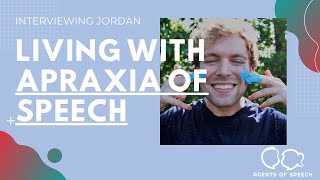
Jordan, a social-media creator with developmental apraxia of speech, was non-verbal until age 5 and had intensive speech therapy up to five sessions a week. By age 12, familiar listeners could understand him. He uses coping strategies like writing lists, rehearsing, and voice-level apps, and says parents should celebrate milestones and expect therapy to be long-term.
Questions this video answers
Age 5
Until about age 5
Sessions were 45 minutes long, up to five times per week for several years; later reduced to once per week for ~2.5–3 years
YouTube: Jordan Christian; Instagram handle: Jordapraxia; Facebook: Fighting for My Voice / Life with Verbal Apraxia
Yes — he took voice lessons around age 10
Chapters
Hey. Welcome to our first ever interview on Agents of Speech. So today's interviewee is Jordan. He is a person with apraxia of speech. He's very brave. He has a huge following on social media. And I'll link all the handles of his Facebook, Instagram, YouTube down below in the description box. And just before we dive into the interview, I just want to say I am very, very sorry. And that's because my mic wasn't working and the Internet was unstable because I'm in Asia and he's in USA and it's too far. How we can get the most of this interview is not to watch the whole thing.
Okay.
That is going to be very long. So what you can do is to go down in the description box and see the timestamps about what questions I asked and then listen in that. Okay. It will be a little choppy, but I believe that you'll be able to.
Understand most of what we were talking about.
Okay. So without further ado, let's dive in.
Yeah.
Hi. Thank you.
Thank you for joining us. Joining me, actually, for this interview, you know, it means a lot to me because I have quite a handful of children, students who have apraxia of speech. That's why. I don't know why. After I move countries and this is a whole separate story, right. I moved countries in Indonesia, and then I think here, it turns out there's a lot of who have a practical speech. And some of my students came across your page, especially the parents, and they showed me, hey, this guy called Jordan. He's really cool. And so I reached out to. And you were very nice.
That's so awesome.
Yeah. I appreciate your videos. Yeah. No words.
Thank you. That's kind.
If you're seeing this the first time, if you're seeing Jordan the first time, you can find him at Jordan Christian on YouTube. I'll link it in the description box on Facebook. He's quite huge. He's called Fighting for my voice, My Life with Apraxia. He's got a huge following there. And on ig, on Instagram, it's called Jordapraxia.
I know. I try to, like, morph those two names.
Yeah, it's pretty cool. It's pretty cool. All right, so the first question I want to ask you way is if you were just like a very casual question. So I see that you like coffee a lot, right? And so.
Yeah, I love coffee.
So if you were to choose one drink, you know, just to. You could only order one drink in your. In your entire life from now on, like, which one would it be?
Oh, that's hard. Probably cold brew coffee. I love cold brew coffee because it's more of that strong taste than, like, iced coffee and more light. And I like very strong coffee. So probably cold brew is what, a dachi.
Oh, that's really cool. I would actually choose cold brew as well.
Really? It's so good.
So good, right? So smooth. Recently in Starbucks, you know, they came up with that tap thing that looks like beer. That's actually, like, cold brew. That's pretty good.
Oh, yeah, yeah. Because I. Yeah, because I actually worked there for six months or so or eight months, and it looks like we were pouring other drinks besides coffee, but it's just coffee.
Oh, yeah. You were working in Starbucks for six months. That's awesome.
Yeah, I think it was six months or eight months. I'm unsure the ones. The whole Covid hit, and I decided to take a break from work and stuff, so.
Oh, makes sense. Makes sense.
Yeah.
Yeah. Where you're in Connecticut, Right? I might be getting this wrong.
From North Carolina.
Oh, North Carolina. Sorry, sorry.
And not very geography.
How's the current situation there? Not to get to, you know, current affairs or anything like that, but how is it over there at your place?
How is it in North Carolina?
Yeah.
Oh, for the COVID Sorry, the mic's kind of breaking up. Okay. For the COVID We're actually in stage two right now. We haven't moved yet. There's a bunch of people here don't want to wear their mask and stuff. It's like a whole thing. And so people aren't very happy and people aren't willing to comply, which is why we're stuck in stage two, because we've been in stage two now for months. Like, it hasn't used up, so. And we're actually the third state in the USA that has the strictest restrictions, actually. So I was surprised. I'm like, wow, we can't handle this.
Oh, yeah. People not wearing masks is a huge issue. But this is off topic for another topic.
I know. Whole different topic. People might. Yeah, people might get mad. So you probably won't dodge it.
Probably not. All right. Okay. So what is actually apraxia speech? Because, you know, there's a lot of professionals out there having a few different definitions. You know, parents come to me, they say, hey, what is. What's the difference between dyspraxia and apraxia and childhood apraxia speech? You know, does it mean that they grow out of it? That stuff? So let's get it out of the way. And let's talk about, like, if you were to define aos, right, apraxia speech in this one sentence that, you know, parents will understand most of the time, what would it be?
It would probably be that it's. How I like to say it, is that your brain has trouble sending your mouth signals to accurately move your tongue, lips, and jaw, which is basically just fancy words to say that really your mouth doesn't really. It's not on the same page as your actual brain, because, of course, we actually know what we want to say, but, you know, it just doesn't always come out. And our mouths can have trouble, like, trying to move to accurately produce our speech rate. So. Yeah, because, I mean, we. Because, I mean, there's no doubt that we actually know what we want to say, but we just have trouble moving our facial muscles and stuff.
That's cool. That's a really good definition. And one of them, you know, after a parent, you know, I tell them about this, right? They would say, oh, do I need talk tools? You know, does my child need to, like, fight stuff? And maybe I do, whatever. But I just wanted to, like, add a little more to what Jordan was saying. A practice speech isn't something that is to do with, like, muscle weakness. Right. It's not something.
Exactly.
Exactly. There's nothing wrong with your muscles. They're strong, strong enough to talk. It's just that there's not a good connection between the brain and the mouth muscles. Right. It's a sort of in coordination to some extent. So I just want to share with you and ask you this question as well. When I was interning in a hospital, someone got a stroke, and then they got apraxia. And then he described to me, he said, now talking is like writing with my left hand. I know what to do, but, you know, it's just not happening. So do you agree with this or, you know, what are your thoughts about that?
I would probably say so. It's like, I mean, you just know. You know what you want to say, but of course, your mouth doesn't really comply with. With. With you. Because I've actually talked to a few adults that have had acquired a. Acquired apraxia of speech, which is what you were talking about. And they find it very friendly, frustrating, because they're used to being able to get their words out. But then once this, you know, stroke happens, or it can also happen because of brain injury as well, it's like they have so much frustration and stuff, and it's like, her, like, because I've actually. There was a person in my life who actually got acquired apraxia of speech from a stroke. And he said that he was so. He just so frustrated. He would, like, bite his, like, teeth like this because he would get, like, so mad. So it is, you know, definitely hard. But if you also have acquired apraxia of peach, I could imagine that being kind of more hard because I'm used to apraxia now. That's all I've ever known. But if I could once. Without an troubles, I could imagine.
I see. Cool. Sorry, it's breaking up a little bit. I think it's my Internet. It's breaking up a little bit. I think it's my Internet because. Is it better now?
Okay. Yes, we're back now.
All right. Sorry about that.
So.
I shouldn't say that. I would supposedly just make a lot of people unhappy. Anyway, we talked about, like, you know, you were saying that acquired apraxia, you know, someone that, you know, when they wanted to say something, they get very frustrated and they would. Their teeth. So this is like something. What we call, like, a secondary behavior. Right. Because you're getting anxious and then you're starting to have, like, jitters. You're starting to have, like, butterflies, and you're angry, like normal people have, as well. On the top. For me, it's shaking my leg, you know, when I get very, very nervous, especially if I'm, like, talking on stage. Being an MC for my friend's wedding, first time, I was shaking my leg like crazy, so. So I would imagine that for someone who has apraxia, they would have something similar. Right. They would have these problems, too. So I was meaning to ask you about. Are there any, like, cooperative issues, like, other than apraxia?
Yes. So I. Yeah. So as I. Disorder as well, which is kind of. It comes from the apraxia itself. So it's kind of like the co. Occur, if you know what I mean. Yeah, I mean, like, I used, Like, I used to get, like, really anxious, like, because of the way I talked and, like, because of my, like, voice and stuff. So the anxiety actually came from the apraxia itself. But it's a, you know, different disorder, but they kind of play off of each other. So.
So just now your mic was like. I mean, my Internet was kind of shaky. So the disorder was general anxiety disorder. Right. Okay.
Yeah.
So this does happen a lot, more than anyone can imagine. I have a student right now when he talks, he would only talk to. With the mom next to him, and Whenever that would give him, like, anxiety attack. And then you ask him, why aren't you talking? And he would say, because I'm shy. But, you know, if he can hear that, you know that, you know he's having an anxiety breakdown.
Right.
He cannot really express himself. And how he deals with it is actually by, like, just laughing at me whenever I talk to him. So we'll talk about that later, hopefully.
Yeah, of course.
But first of all, now the question is, like, when were you first diagnosed? And, like, what was the experience? Like, what kind of instruments did they use? Like, what kind of terms did they use? Sorry, it's a whole load of questions.
Yeah, so It's. I was 5 when I was dia Dia nose. And they had used the term apraxia of speech, I'm pretty sure, because it wasn't recognized by the American Speech and Language foundation. So they used apraxia of speech. I was five. I'm not sure what type of things that they used to it because my mom actually didn't find out until months later because the S on page is never told her. And then she found out during a meeting and she was like, apraxia. What's that? And then. Yeah, so I was five, though. So I wasn't as early as some kids, because I know that some kids now get dia Dia nose early as like 18 months or like 3 years old. But I was more of a light bird.
I was like, well, yeah, to all those parents who are listening right now, in all the Fans of the SLPs, you know, Apraxis speech is the most misunderstood thing out there in terms of being a diagnosis.
It really is.
Yeah, it really is. Right. So don't worry. That's a label. Right? A practice of speech is a label. And what I like to say to parents a lot is that, hey, even if the label is this or that doesn't matter, the thing about it is as long as we know what you can and cannot do, and we just focus on what you cannot and can and use their advantage like this strengths to help them out when you're talking, then that's fine. The therapy doesn't change because of your label of apraxia. Okay, so that's great.
So you.
You did it when you were 5 and your mom didn't know about it. And, you know, you know, therapists do get anxious as well, making a diagnosis in CAS health speech, especially, because, you know, then you have to go through all the tests, especially in America, and write reports just to justify. So there is a reason behind why you know, there are later diagnose. You know, there's a later pattern for diagnosing children with apraxia. Yeah, that's great. So you were five, were you speaking then and sound words? Like when was the first, first time that you could speak the word according to your mom? Of course.
Yeah. So I was actually non verbal until the the age of five. I make like noises and stuff. But you couldn't comprehend. Comprehend what I was trying to say. And I could be understood by other people. When I was age 12, when it wasn't this time, very close friends of mine and my family could because they were around me so much and they gotten used to my talking and stuff. But other people couldn't pick it up though. So I was five. I just really get out what I wanted to say, I did to say words.
I see. Okay, so you start to talk in words at 5. You were non verbal before that, and then by the age of 12, people started to understand what you were saying.
Yeah.
Okay. That's pretty consistent with what I know. That's pretty consistent. Okay. So to all the parents out there, there's a lot of, you know, there will be progress, there will be improvement. Okay. Especially for apraxia. And this is what I've been seeing at, you know, working as a speech therapist. You know, apraxia is something that takes a long time and it does get added every day. That's something that you must keep on doing in order for the speech to become better. So that's great. When you got to 12, people started to understand you. But you know, during that time, do you remember that?
Yeah.
You actually understand all the language people tell you, right?
Oh yeah.
Okay, cool. And then as I was talking about my student. Do you have a fear of people not understanding you and you would rather.
Not talk, as I actually did when I was a kid. But it was more so. It was more so of a valid. Concern though, because other people really couldn't. So I would get really anxious or I would get very fearful of maybe them not being able to under me and such. So I actually did have an interpreter in my second, third and fourth grade year just because the teachers and stuff really couldn't get what I was trying to say. So there was a really block there.
That is so cool you had an interpreter with. I wish that, you know, people would do it more so like this in Asia.
It's awesome.
So did you actually learn asl, like American Sign Language to supplement your talking?
Actually, I did not. But I do actually write. I would Have. Because I feel like that would have helped me with my frustrations and such because I would get so frustrated over not being able to talk to others and stuff. So I do actually. And I do actually encourage parents to take. Advantage of things like that because there's no actually using the child, you know, not being able to communicate their needs and their wants if we can have something that helps them.
Yeah. So that's great. Thanks for saying that. I mean, that's what I advocate as well. You know, it's what we call cultural communication. Right. If you can't use a certain way of like talking, then we use our bodies and we like gestures and stuff. Right. Especially if, you know you're speaking a foreign language and someone doesn't understand you. It's basically what you were doing because you need an interpreter.
Right? Yeah, I did.
It sounded like a foreign language. So therefore, you know, having some other sorts of sign language will help a lot.
Yeah.
Don't hesitate. And it doesn't. It doesn't. It will not hinder your child's speech progress if you.
That's key.
Yeah. Right.
Yeah. Oh, no.
If I teach them to use sign, they'll keep on signing and just stop talking.
I know that's what people actually think. And I'm like, that's not true. Please don't think that. I'm like, but parents worries.
Well, coming from you, it's more powerful than coming from me because, you know, you know, it's very difficult being a therapist telling these kind of things because you're not walking with the walk. Right. You're just saying, oh, I know better, but doesn't mean they would trust you. And sometimes I doubt myself too, because. Yeah, no, I don't know enough. Right. So, yeah, that's all cool. So all up to 12, you had an interpreter. How was your speech therapy schedule or training like back in the day?
So as I had went to the beach five times a week, it's. My sessions were 45 minutes long and I went for seven, seven years. And this was also in the summertime as well because my mom was like, you are not getting any breaks. You are going to be gym and such. So I went for seven years during that time, As I actually attended one time a week for. I think I went for like two and a half years or around three years. So that was one time a week. But back in the day, it was five times a week.
Wow, that's. That's a lot of speech therapy.
It was a lot. I got burnt out. Yeah.
And it Shows that, you know, it shows how much your mom cares. Right? It really, you know, if a mom would come to me, like, five times a week just for speech. It's a huge sacrifice if you think about it. I love when you go. You would know that, you know, you need to budget your time to go to the center, you know, sit in and then go back. That's like three hours gone, basically. So kudos to your mom. She must be very supportive. She must be a great parent.
Yeah, she is.
Yeah.
Thank you.
How is she? Does she do a lot of home practice? Because you as well, like, after speech therapy?
Yeah, it's. We. It's. We would work at home and such, and she would help just try to. And encourage me to talk as much as she could. She had never wanted me to limit myself because of it. So she would try to encourage me as much as possible to talk. So it was a lot of pep talk and stuff, which helped, though. It did, yeah.
That's important. That's very important. It's something that a lot of parents. I don't want to point fingers. It's not pointing fingers or anything.
Right.
It's just a different culture. Whereas, you know, here, what I see a lot, and especially for me, too, because I grew up as an Asian, a lot of parents would tell their children to, hey, do this. Do this exercise without telling them why, without prep talk, without motivational speeches, you know, without telling you what the importance is to be able to speak nicely. And therefore, children get very discouraged easily, especially when you just fail over and over again. So this is the message to all of you. You know, learn from Jordan's mom here, who is very, very, very encouraging, and just keep on going and encourage them to really speak. Even if, you know, you stumble, you fail, you fall down and, like, have tongue ties and making knots and stuff. Tongue ties, the wrong word. But, you know, your tongue just, like, stick together. Right.
So just keep on trying.
Exactly. Just keep on trying. So did anyone ever think that you were selectively mute back in the day? They would think about a skin. You know, what they think. So.
It actually never got brought up. It's. I would be kind of quiet around other people and such. Like, I just, like. I just, like, wouldn't talk to other people because I was afraid that they wouldn't understand what I was trying to say and such. So I was kind of selective with who I talked to. And I just was also very anxious that, like, maybe a person would be, like, mean or. It's also, like, a bunch of Kids thought that I was talking a different lang. A different language than I would, than what I was talking. So that did make me more anxious to talk to others and stuff. So kind of this fear. I just, like, I want to avoid that as much as I can, but I never got diagnosed with it, but I do think that I did have some type of form of. As a kid.
Okay, well, it must have been very hard. And that's why I wanted to, like, you know, go deep a little bit more. Because this is a huge issue, right? It's a huge issue that children with speech disorders not to even talk about lactation on the spectrum. Right. Which. It is a huge correlated type of disorder. Like, all of my. Not all, but 50% of my students who have AOS practice speech are on the spectrum as well. So. Well, I want to ask for advice about, you know, how to deal with these meanings.
Right.
Me, children, police, and giving you special treatment. Like, how did you do it? How did you, like, get through that part of your life?
So it's. I. So it's. I just really didn't know how to. If I'm honest, I tried the best that I could with people that were mean to me. And so I would. I would try to shut them out as much as I could, or I just would act like I just really didn't care. I had a. Had this, like, nonchalant sort of vibe, like, I don't care, blah, blah, blah. But it's actually one of my very close friends during this time, if he saw that I was getting picked on or bullied or anything like that, is he would actually go home and tell his mom, and his mom would actually tell my mom because I also wasn't able to all of the time tell my mom what had went on at school once I got home and such. So it's actually. Friends of mine also watched out for me and told their parents, which would tell mine, and then my mom would be like, oh, so this happened. And I would be like, yeah. But I just wasn't able to really say it. So I just had very good friends during this time, and I tried to just block them out. It's kind of actually worked. So.
Yeah. Yeah, that's great. That's great. Thank you so much for being comfortable with sharing this kind of experiences.
Yeah, of course.
Yeah. And what you're saying is totally correct. Ignoring bullies, you know, in textbook, we're talking about textbook execution is always ignored. Right. Having a nonchalant approach and everything. I'm really, really happy to Hear that you had really good friends to look after you. That's very important.
Yeah, I did.
Yeah. And you know, these things you cannot force on other people. You know, they have to want to help you. You. And you know, it comes as a blessing, really as a blessing. And, you know, it's good that you have angels in your life. You know that along the way. Yeah, it really is. They really work and they still are. And, you know, let's take a break from the emotional stuff. I wanted to talk about more about like how you do things practically every day. I see that you're doing a lot of videos, you're speaking a lot. How important is it for you to practice or write things down and try it out before you actually go on camera or speak to someone?
So it's. I actually, as far as list goes and stuff and writing things down, I actually write things down all of the time. And I live my life by actually making lesson stuff because honestly, my brain, I come up with all sorts of things and I feel like I have to write things down to keep up track. But as far as practicing goes, such as I do kind of practice what I'm going to say and such before I get on it is when I first. It's when I first began to film, which was a year back. I would keep on trying and trying to film until I felt like I got it right. So I would actually probably film 20 before I actually came up with one that I felt like was good enough to post. Now I probably do it maybe twice, if that. But if I'm honest, it's because I don't want to keep on. I'm like, this is good, we're going to post this now. But I feel like me keeping on with that has actually helped me my talking as well, because I actually wasn't talking all of the time prior to my page and stuff. But once I made my page, I began to talk more than I did because I was talking to my camera, I was getting on lives, I was talking to people over the phone. So I started talking way more than I once did. I talk a lot now.
Yeah. Okay. So you would do 20 takes in the beginning. That's similar to me.
It's a lot.
Yeah. Because you're not used to being on the table.
Yeah, right.
I actually. So I would keep on like reshooting myself. So I totally get you.
It's not like, yeah. Until you got it how you want it.
Yeah. It's more like, you know, you're kind of. You want to get your best image of yourself to the Internet. That's what I think at least.
Yeah, you do.
But yeah, it's important to write things down. Right. What I'm hearing is that, you know, you're saying your brain comes up with a lot of different things and by writing it down, it really organizes your thought. So in therapy terms, right, we say that it takes away a certain cognitive load so that, you know, you can focus on, you know, just talking. Is this something that you think is true or is it just, you know, it's just a habit of you just writing things down?
It is. Can you repeat that question one more time? Because we might kind of messed up. I'm sorry.
Of course. You know, the Internet sucks.
Let's go.
So, you know, with writing things down, it's in therapy, what we call like decreasing cognitive note. Right. Would you agree that you're actually helping yourself to like being flattered in mind so that you can focus on talking? Or is it like just a habit that you write things down and it, you know, helps you out that way?
As I think it's both. I think for me, writing things down and stuff, my brain isn't as packed versus if I write things down and such, I'm able to properly process what I feel. Or maybe it was bugging me and such because I am also very self aware of my talking and my speech and such and what may be bugging me and stuff. So for. For me personally to be able to write down what I'm having troubles with and how I can work with those really helps me just prepare for next time and kind of keep like a mental check when I'm talking and such. And I'm like, okay, so like I'm having trouble with. Let's say I'm having. I'm having trouble with s Blend sounds. I need to use my speech strategy, which I use easy on set for that. I need to use easy on set for that Next. Simon, breathe out my word. So I'm not having as much trouble with it. And if I am, what do I think is contributing to that? And is there any thoughts that I'm also having that aren't helping me? Am I just having a thought of, man, this isn't going to get out If I do have that thought, I like to push that thought aside and just say, I cannot get out this word yet, but I will be able to. I just need to give my time, give myself time and patience. Because of course I have to have patience with myself also because other people can and that's nice. But if I don't have patience with myself, that's not going to help me. So keeping that in mind.
Yeah, that's a great answer. I want to highlight like three things that you said, like three important things. Number one is that being self aware is, you know, is a therapist dream. You know, for me, if a kid is self aware, I'd be so happy. You know, kick them out.
Yeah.
Asap. Right. Because then they can be their own therapist like yourself when they need to use like certain techniques at certain times. Right. So the second thing I want to highlight is that, you know, for. I'm getting all tied up. So for the uninitiated what a. What an easy onset is. It's basically a stuttering technique. Right. A technique we use to basically de. Stress yourself what that really is. Right. Not to go on to the word super hard on the get go so that you don't screw up the whole word from the beginning. So we'll talk about that a little bit more later. And third thing I want to talk about was that I forgot already, but so that's why I need to write things down too, Right? Yeah, that's cool. Let me think about what I was saying. Right.
Yeah, of course.
Let's hop on later on. Okay, that's cool.
Yeah, of course.
Yeah, cool. So you were talking about like the techniques, right. Easy onset is one of them. You start off with like an easy sound. Usually what we tell you to do is like with the air exam, like an H. Right. Or an S, something like that. So you have to start soft and then you go into the work. The other techniques did have you encounter that has been very, very helpful.
So it is. I have also used a bunch of hand gestures as well. It's actually when I, when I try to get out an S word, I'll actually do like this. So like let's say let's think of an S word or an S blend school. It's hard to do like this because hand gestures just help me and stuff. And I used to actually do like this and I used to pronounce each syllable. So I would go like syllable and I like syllable. So I've kind of been using hand gestures more. I just find that they help as I've also used tapping, but I don't use tapping as much now. I did as a kid I would, I would tap non stop but it really helped. So that's why I would tap my foot or my fingers. But I feel like I found out that hand gestures help Me more. So I kind of picked on to that. It is something else that has helped me too in the past. And stuff is also an app on my phone too, that I've talked about some because I actually used to talk very, very quiet to the point where it was like a whisper. So I actually found this app. I can actually pull it up right quickly because I just needed to be self aware of how loud I was talking and I wasn't sure. So once I actually went into SA beach, we actually began using like a mic and a laptop and we would record myself talking and then see how loud I talked. But this app has made things a lot easier. Easy, easier practicing things because I'm able to have it from my phone and stuff. I'm trying to find it now.
Let's see.
Got so many things. Well, I have actually like three apps of them, so I can pull out, pull off one, pull up one, but it basically tells you how loud you're talking. The Deb sound is right here. So like right now I'm talking actually at 81, which is where I want to be. I want to be at least 65 is my goal. So anything. So 65 and above is an A in my book. So just trying to make sure that I'm also talking loud enough because if I'm not, then it's easier for my words to kind of get lost and stuff. And me kind of like not being consistent with my talking and kind of having more like pauses and stuff. So just also making sure I'm projecting my voice enough.
Okay, cool. Yeah, that's really, really cool. Because we use actually just me and myself, right? We use similar techniques too, especially for the hand gestures. Oh yeah. I do remember what I wanted to highlight before. So when you said that you couldn't get a word out. What happens to a lot of children with apraxia is that they find an easier word to say. So they have exactly a whole repertoire in their minds about what words to say. So you keep on hearing them, they keep on saying the same things over and over again. They use the same word, even if it's not like it's a stretch to use it at that situation. And then only like the therapist or the mom will pick up. It's like, hey, man, stop doing that. Try your best to say what you want to say. So yeah, yeah. So the gestures work very well. Just want to highlight that. You know why we use a gesture for like S sound or S sound or whatever could continuous sound is because it's a continuous Sound. We use it to like to draw a line, right. Make our minds think that, okay, it goes longer than it should. And these things, if you're watching this as a parent, you need to understand these prompts, these cues, these gestures you have to build. Doesn't just work. It needs to pair with your speech and then when you use it, it will become sort of help. And just to say a little bit more, the tapping is very good. It's more of a stuffing skill. Again, stuffing kind of technique. Just because you go on beat and then you don't screw things up. It's much more natural when you're speaking in Chinese because we go by syllables. But in English, it's a stress time speech, meaning there's ups and downs and you don't always go like in the same beat. Right. So it becomes. What the problem is about it is that it becomes a little robotic. And this is something you have to overcome. It does, yeah. So this is. And also for Jordan, he used to have a volume problem. This is also a self awareness thing. He didn't have that awareness. Right? He didn't have it. So you found something external to help you build that awareness, which we all need as people. So now he externalize, internalizes that feeling from like, from like information from a phone. Now he knows, Right. So sorry to add so much stuff to it.
So that parents know it's cool. Yeah, of course.
And these things we all, we all need to use, right? For instance, for me, if you use a Fitbit, you're already using this kind of stuff. You already know, like, oh, today I walked a thousand steps. I feel it. Then you don't need to see the Fitbit anymore because you know that you're at that level already. Right? So all these things, Jordan, that you are using, right? It's about prosody, right? And what is prosody? Just let me define it real quickly. It's all the ups and downs, the volume, all the things that you say. And like in speech that is not related to the sounds, right? The toning, the tone, tonation, the stress, the volume, you know, the speed, all these are to do with prosthetics. Right? So I see that, Jordan, you have a lot of ways to help you out in terms of that. So did you have ever problems with like dealing straight in English, like getting the stress correct? You know what I'm talking about, right?
Yeah, like, let's say like making sure that you, that you rise at the end of a question, Right?
Yeah.
Yeah, that's what I had too because I wouldn't rise and it wouldn't sound like I was trying to ask a question. It sounded more like I was saying like a statement. So I had to become self aware of that and also keep on trying with that. Which was hard because I was like, I'm not used to this because I was so monotone at one point where it was like I didn't rise or didn't have very much like tone in my voice and such. So I actually did have to learn as well how to put emotion into my voice, which has also helped since I've begun to film as well because I want to make sure that people know that I'm happy and stuff. So I've actually learned through that too how to do that because I keep on practicing and practicing and then I get used to it.
Yeah, that's being self aware too because you don't know that you're being monotone right until you see yourself on camera. You're like, hey man, I didn't sound that happy at all.
Yeah, kind of sounded mad.
Yeah, I want that. So we have some time left around like 5 to 10. If you could stay on for a little longer, that'd be excellent because I've got quite a few questions I wanted to ask you. So I've got two questions from parents who are your followers and they actually told me to like talking.
So.
One of the questions that she asked was when you're emotional or anxious, how do you get yourself to express yourself? And the reason behind why he's asking this is because once that kid is anxious, he's like a stolen statue, you know, he can't talk. I was talking about the kid who just laughs when I talk to him. That's that one. So how do you get yourself to like open up, de stress yourself?
It's, it's a lot of self talk with my own self inside of my own mind and stuff. So it's about telling myself to make sure that I'm breathing right and I'm taking breaths and it's also. Making sure during this time that I'm not being judgemental about my talking. So also trying to view my speech as something more objective so I'm not getting wrapped up in the emotions behind it. I'm being more logical at that point. More. Yeah, if I take notes and I take my time, I'm going to be able to say what I want to say. Just be patient with myself. Then maybe hearing myself talk and then being like, oh, I feel like I don't sound that, well, I'll kind of push that thought aside and I'll just be like, okay, this is how my voice sounds and that's it. And we kind of leave it at that. So it's not getting wrapped up into that, not feeding into that emotional part that's playing out. Just trying to. More logically, if that makes sense.
Totally makes sense. So it really comes down to like what you tell yourself. Right. What's that self talk going on inside your mind? So that's a really good advice.
Thank you.
At the same time it's, we have to, you know, as a parent, as a therapist, I feel like there's a lot to learn from this. It means that, you know, it's just not the techniques, it's not the speech. Because you know, even with athletes, they cannot perform the same way every day. You know, you catch someone, they're not going to do as well as they do. So that's why sports psychology is such a big thing nowadays. Right. And I feel like this is something we have to think about if we're coaching a kid to talk. So to the parent who requested this question, who's watching it right now? Yeah. This is what we have to build for your child. You know, positive self talk, being logical instead of emotional when stuff hits his head. These are the things that you need to be careful about. And another parent, she asked, was there a turning point, like a sudden improvement in your overall speech abilities? If yes, what do you think the reasons are?
So it's, I actually made a lot of improve, improve improvements in my third grade year. I do think it's because I just had a very good essay LP that really worked with me and essentially knew what I needed and such. And it's also, I think part of it also was the year prior I had a different SLP because I have new SLPs, like every single year I went through SLP. But my SLP and my second grade year told me that I would, that. Well, she told me and my mom that I would never be able to talk on my own and we should just accept that. And during that time when I heard this, I thought like, no, like I'm gonna prove you actually wrong is what I thought when I was young. So I felt like I got more motivational as well, which really played part. And I felt like my SLP during this time was also very positive and was very encouraging as well. I was also learning to like read and write during this year. So I felt like that also gave me a lot of self confidence as well, because I was learning how to read and when I learned how to read, I was like, so happy and so excited to read. So I just felt like a lot of good things happened during that year, so.
See, that's great. Yeah. This question is because, you know, the parent is looking for that next breakthrough because. Yeah, yeah, our speech therapy has been steady. We've finally. Just to share with you, we finally got those lens done, you know, the L L sounds. We finally finished that. She's super happy. But, you know, we're looking for that next breakthrough. And why we say that is because, you know, people, we improve in stepwise fashions. Right. We suddenly have, you know, we have inspiration. So I guess the biggest takeaway for me, which I want to highlight is very important is that to surround yourself with people who are positive and act as if it's going to happen. Right. That's what I always try to do, at least.
Of course.
Yeah. And be careful when you hear Jordan say, when you said that, you know that SLP told you, hey, you're not going to talk anymore by yourself. You're not going to be able to do it yourself. That kind of motivation might backfire for your child. So you have to. It depends on your personality.
It might, yeah. Because I mean, that could have really hurt a kid and could have just encouraged them. But I kind of had this different attitude about my software. This I got something on my mind and such that I was going to do. I am very determined to do it no matter what I have to do. But not every kid's like that. So it is very important that that wasn't a good thing that was actually said, but it did kind of make me mad. And I just was like, no, I'm gonna prove you wrong and talk. And yeah.
If that SLP is like seeing you right now, I mean, you know, she or he would say, damn, I was wrong.
I know. Like, dang. Okay, now he's really talking, huh?
Right. So I'm not like too. More questions if you don't mind real quick.
Yeah, of course. That's okay.
You get really tired after talking for a long time. Like for instance, with me right now, if you engage in a conversation for an extended period of time. Because I have a student who if I talk for a whole hour, she would fall asleep. The instance that I get off soon, you know, so. Yeah. Did you have that problem? And how did.
Yeah, so it's after. Kind of summarize mental exhaustion. It kind of feels like, honestly, your brain is physically tired and it Feels drained. I mean, it can kind of feel dull. So it's what I do to personally help me is that I make sure that I drink enough water, which also helps my throat. If my throat gets tense, I try to drink enough water and stuff. And as I'll also eat as well because, of course, food gives your brain energy. What do as well is that I give myself a break and do something that I enjoy that is relaxing to me. And honestly, that's just being on my phone and chilling. Not really, you know, doing much. Just taking a break and kind of distracting myself. And then it will start to kind of soothe. So, yeah, those are kind of things that I've learned how to pick up on that have helped.
It's a real thing that, you know, a long time you do feel drink. Right. Those all good suggestions. Do stuff that's other than talking. Right. Then just recharge yourself mentally. Yeah, that's great. All right, so, you know, this is the last question I want to ask you about. Is that a lot of ALS children or people, they love to use sync as a way to express themselves, and it's also beneficial also the speech ability in general. So what. What have you. Sorry, I'm stuttering now. So have you ever done any, like, singing practices and stuff? And has it helped you at all?
So it's. I actually did take voice lessons when I was 10 and.
11.
I didn't do them for the apraxia itself. I actually just wanted to take them at that age. I did find that singing was a whole lot more easy for me. I actually didn't have any issues at all, which I think is why I kind of wanted to at. Wanted to at that age, because I was having so much trouble talking to other people that doing this was a different way to express myself. So, yeah, it was a whole lot more easy.
That's cool. Which is generally a more. You know, this is the last question I wanted to ask you. Right. So I want to ask this because a lot of children are using it as a way to help them out in terms of speech. And there's a whole load of reasons why, like, singing is easier than talking. Like, obviously it's a routine. Obviously there's a structure to it, and there's like, help and guides along with the way. Because you sometimes just sing along with someone, that's much easier. As with a lot of children when they have aos, they want to start speaking with you. They want to copy you, which is one of the hallmarks, apparently for American speech. So, yeah, that's one of the things that you try to look for. So, yeah, if you are a parent and you want your child to, like, try this out, this is totally something I encourage and suggested. And as Jordan said, it's really cool. It's much easier than talking to some extent. So before we go today, I just really wanted to say that, Jordan, I really appreciate your time. I know that you're super busy with your.
Thank you.
Everything that's going on right now, I really appreciate that you're sharing your thoughts and emotions, tips and strategies that you have right here. Is there anything you want to leave to the audience from my side or your side, especially those parents who are listening?
It's. I would probably leave off with that. I'm sorry. Sure. That parents have tons of questions and such. And I feel like parents can also be so unsure about themselves and if they're doing enough, if they got their child help, help sooner, what would it be like? Right now I feel like parents can really doubt them. But I would like to encourage parents to really self. To really stop with the self doubt and know that you are doing what you need for your child as long as they're enrolled in speech therapy and you're getting them the appropriate help that they need, that you're doing enough. And it's also not in your control as well. Because I feel like so many parents will try to go to these extremes to help their kids and they mean. They mean so well, but they can really burn themselves out and they can try to go here and there and they can just, you know, get exhausted. So just know that you're doing the right thing if you're getting your kid help. And it's also, you know, it's not like an easy fix. It's not fixed. It takes time, it takes effort. But to also just really sell the great. Every single milestone that your kid has. Because it's not a competition or anything. It's just about having your child be able to express themselves and hopefully one day be able to talk on their own.
That pretty much sums up how I feel as well. And obviously, I'm my parents. So for me, for me, I'd say just let me rant a little bit before we get off this call. I totally agree with Jordan here. You say it very, very well. It's not a competition. Parents burn themselves out and kids. And really the key thing to take away from this interview here is that it's not a fix. Right? It's not a fix. The key word, there's no Magical fix. It's going to be a long fight and it's about coping as well. Teaching your child how to cope.
It is. Exactly.
So how, Jordan, how you went through all these, like when you're becoming more by auto, you still had to think about how to be more self aware with your volume, how to learn how to use your gestures and try to fade it away and not let people see your gestures. I can see that is happening with you. These are all coping mechanisms. You're trying to decrease the number of help you're giving yourself in order to speak yourself.
Right.
So really it's to find out strategy that will help your child the most. Stick with it until it works and then try to hone it down. Right. So that's what I wanted to say. Thank you for, you know, for this lovely interview. Sorry for Internet and all your.
Thank you.
Yeah. So if you want.
That's okay.
Yeah, it's cool. Right, so just a parting thing. If you want to find Jordan, you can find him on YouTube, on Facebook, on Instagram. His handle for Instagram is Jordan Prexia. Again, his Facebook where you know, he probably has more audience there. It's called Fighting for my voice. Life with my Life with verbal apraxia on YouTube. It's Jordan Christian. All the stuff will be in the description box below. Go check him out because he has great content out there. We'll help you to understand more about your child and if you're a professional like myself, it will shed some good light, know at least for doing something and more about how to do it better. All right, so thank you so much, Jordan.
Thank you. I appreciate it. All right, you too. Bye.










